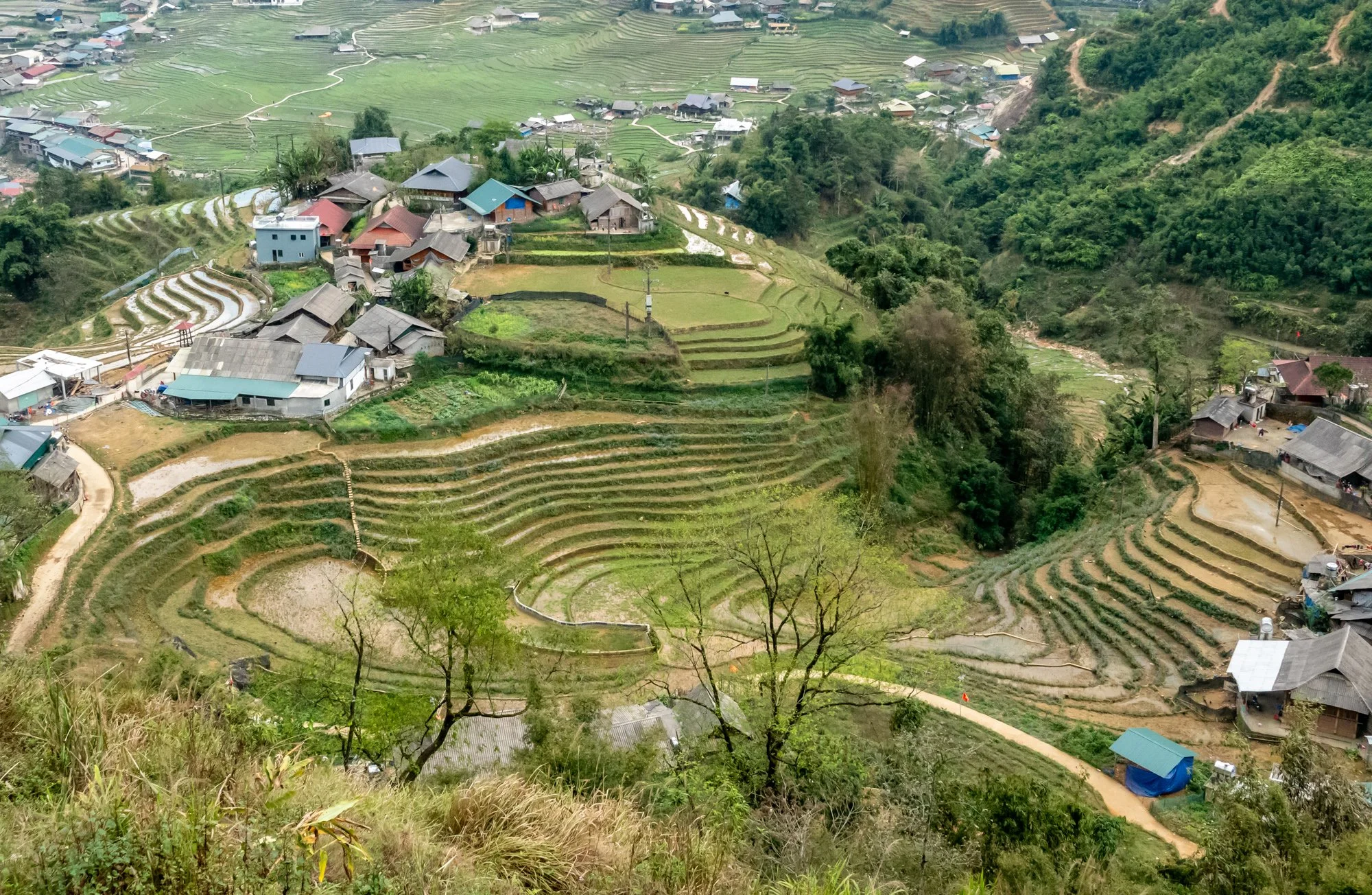
China: Silk Road and Guangdong
In October/November 2025 Grace and I went to China on two different tours both organized by WingOn Travel Company of HongKong: first an 8 day tour of the Silk Road and then an 11 day tour of Guangdong with a few days in Shenzheng and Hongkong on either end. For the Silk Road tour we flew to Dunhuang and made our way west to Urumuqi by bus and train and then returned to Dunhuang to fly back to HK. The Guangdong tour was by bus to cities in the province. For myself, one of the problems is that all of the WingOn guides who accompanied us spoke in Cantonese, which everyone in HongKong speaks but I do not. This was especially problematic on the Guangdong tour which featured long bus rides filled with stories from the guide. On the Silk Road tour the local guides all spoke in Mandarin which was a relief.
Silk Road
The Silk Road is a historically important area of China, as it represented the first connection that China had with the Western world. It is featured prominently in ancient literature and folklore. For example, probably the most well-known story that all Chinese children learn is the Journey to the West (西遊記), a fanciful account of a real-life 19 year journey in the 7th century AD by the Buddhist monk Xuanzang to India and back to find and retrieve Buddhist scriptures. Many of the stories in the Journey to the West take place on the Silk Road. So the famous characters in the story, the Monkey King (Sun Wukong), Piggy (Zhu Bajie), Buddhist monk (Tang Sanzang) are celebrated at many sites in this area. Part of the mythology of the journey is the ruggedness of the environment, traversing the intimidating Gobi and Taklamakan deserts, along with the likelihood of meeting bandits and raiders.
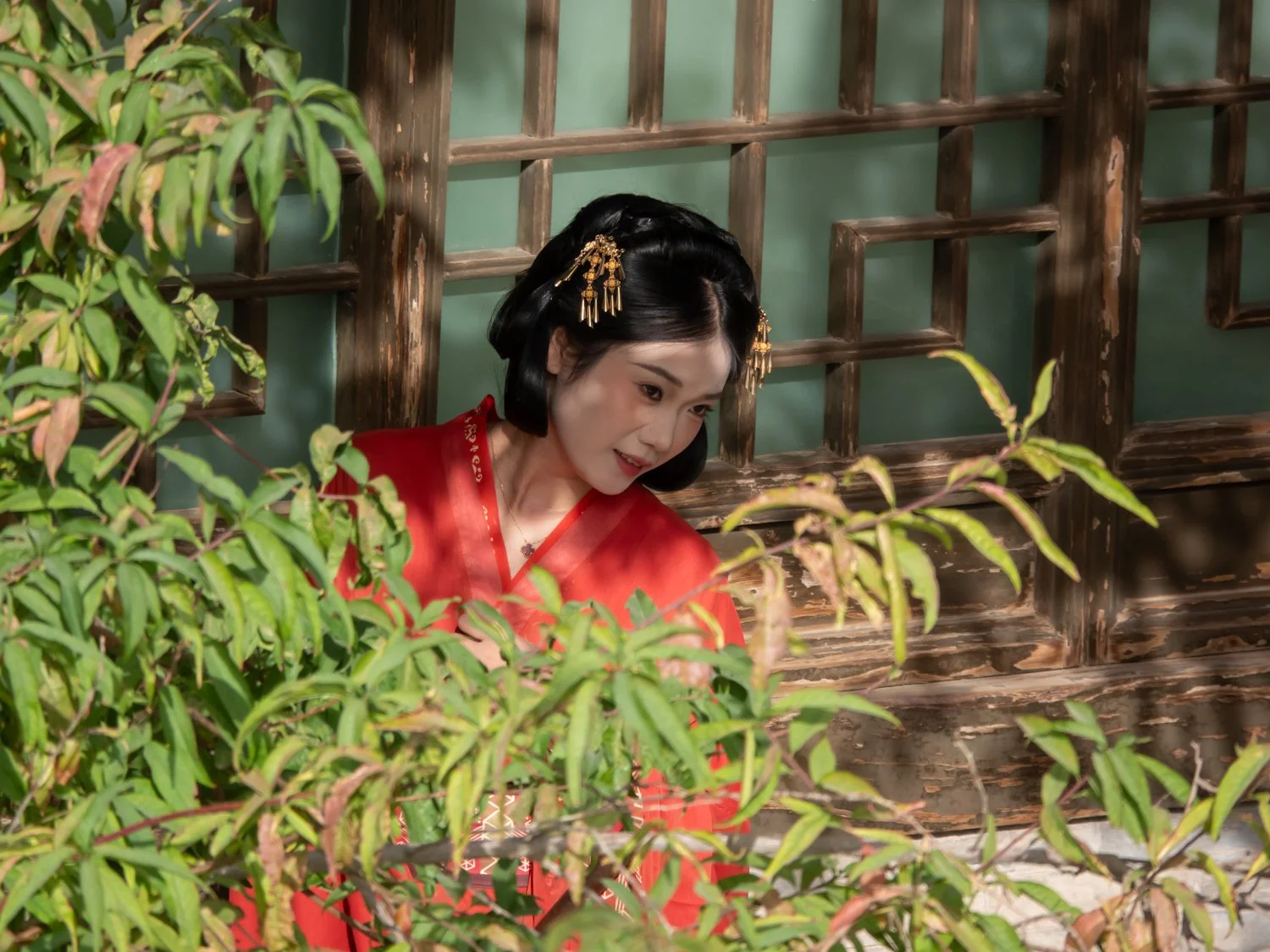
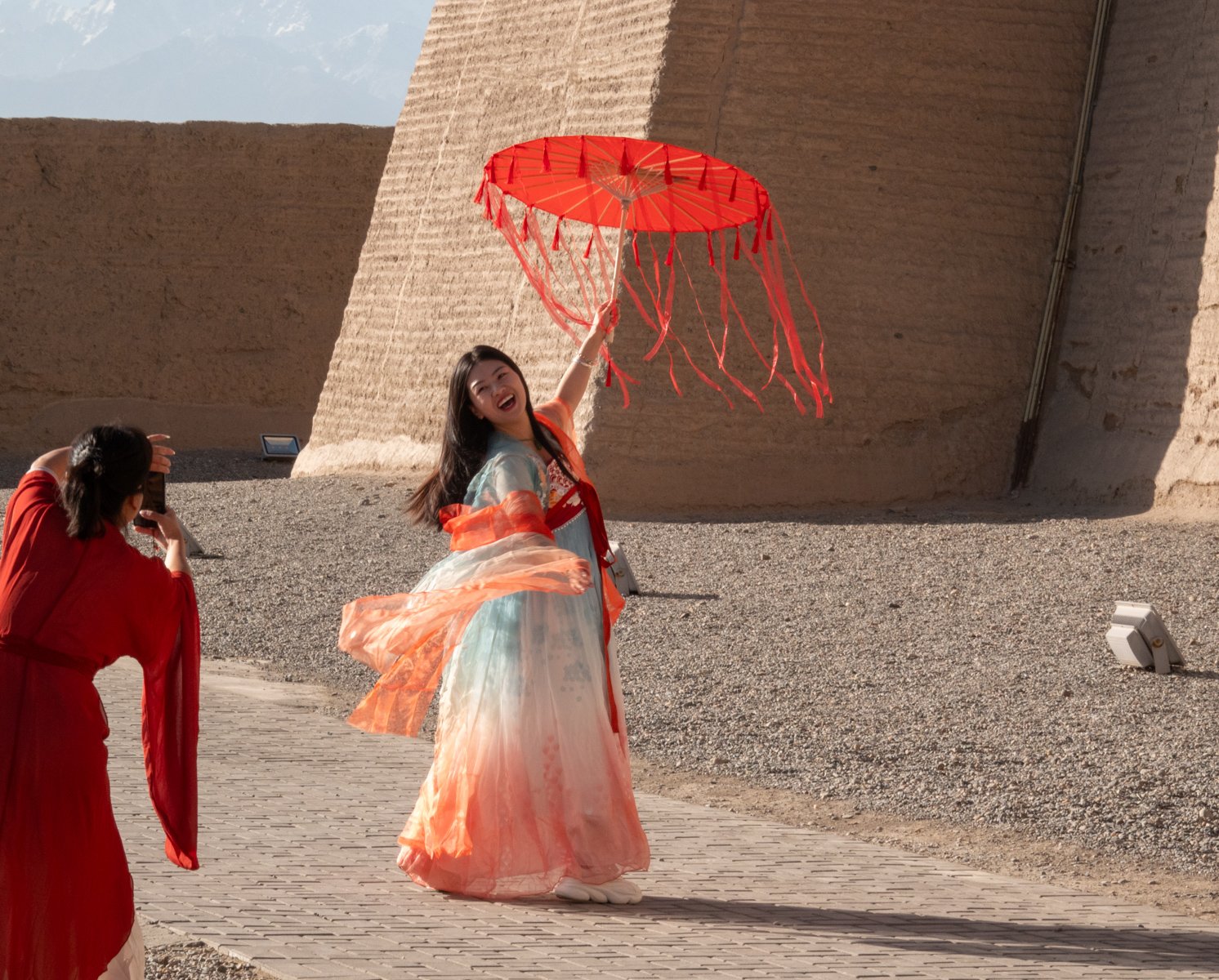
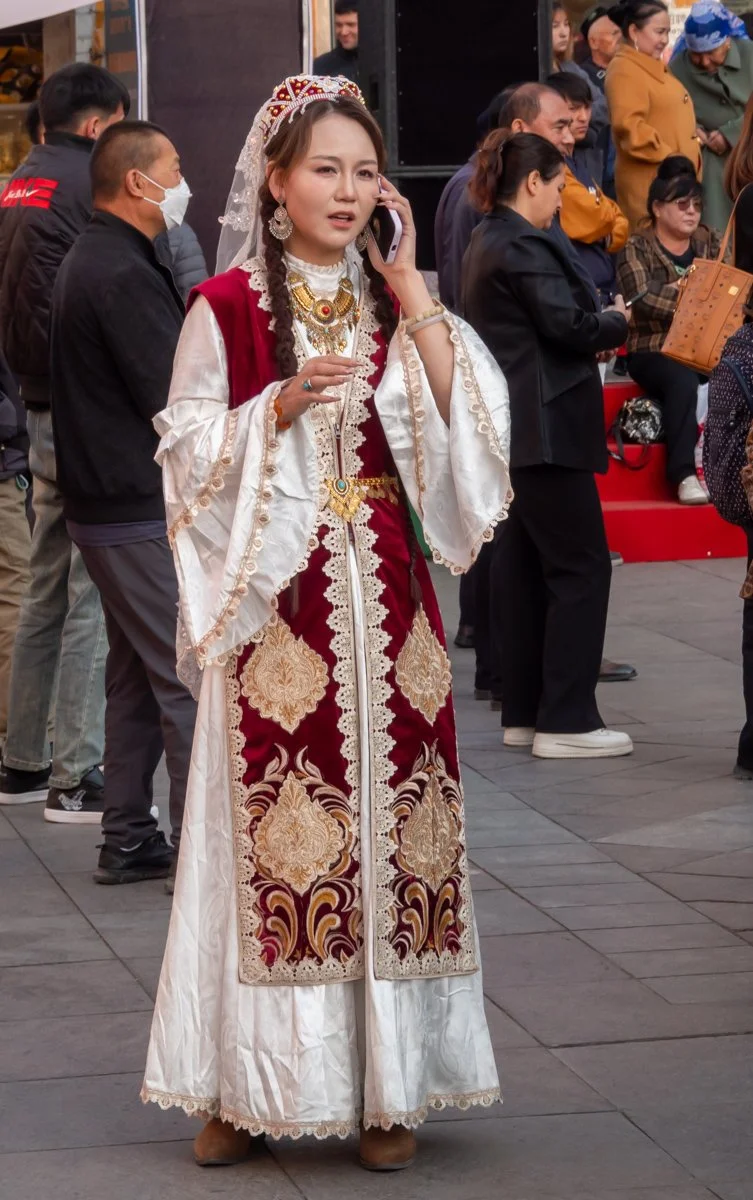
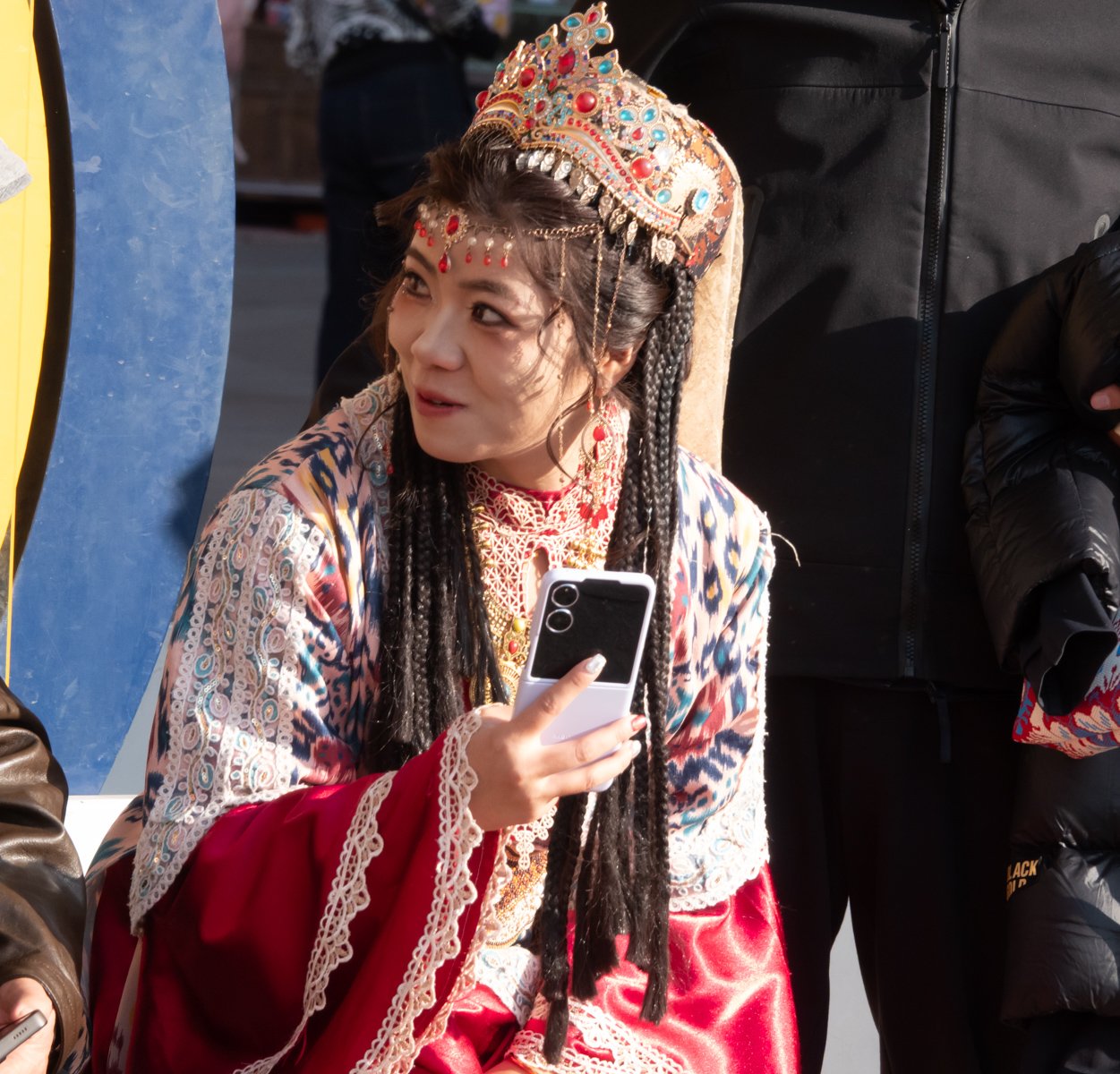
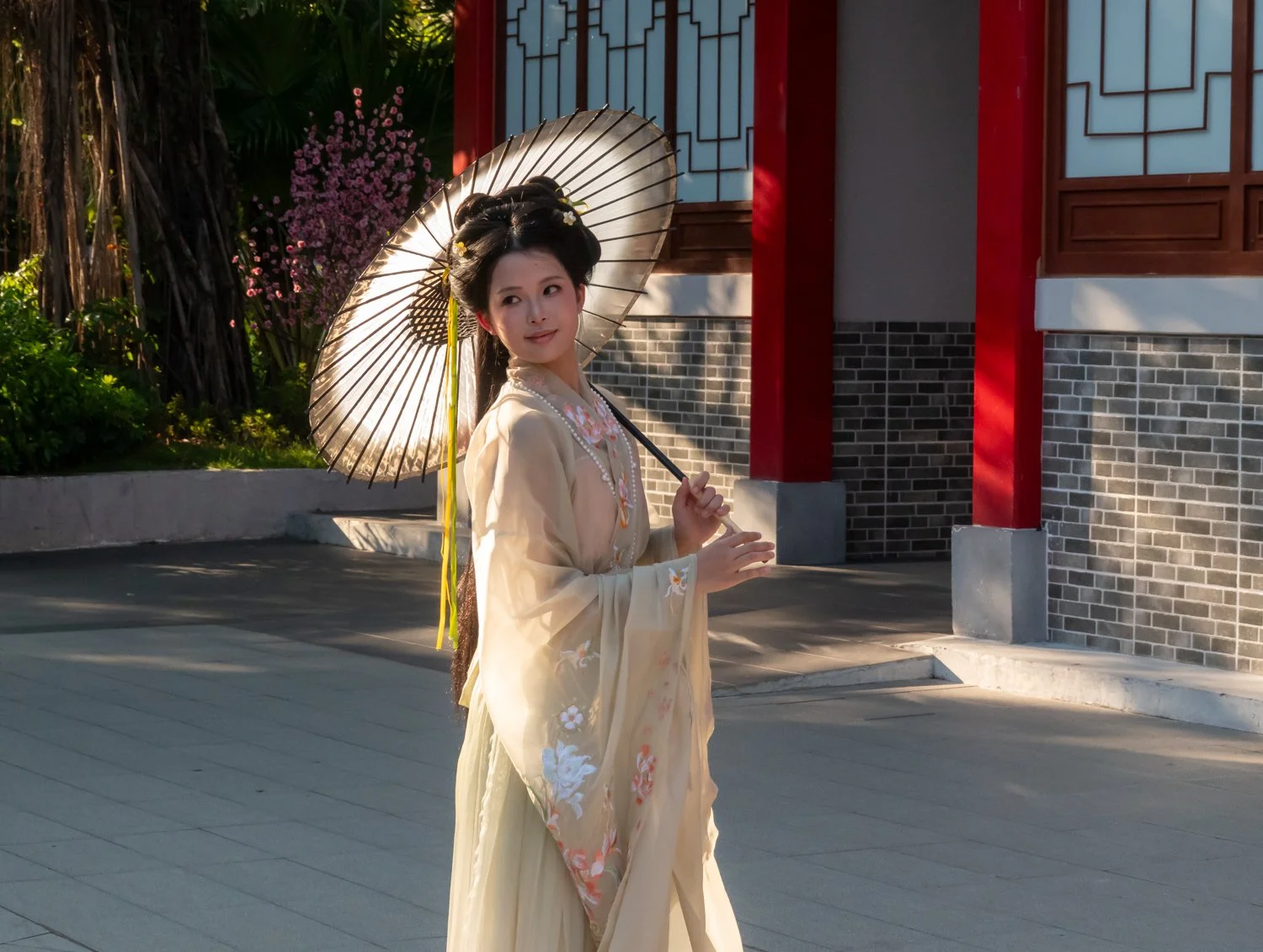
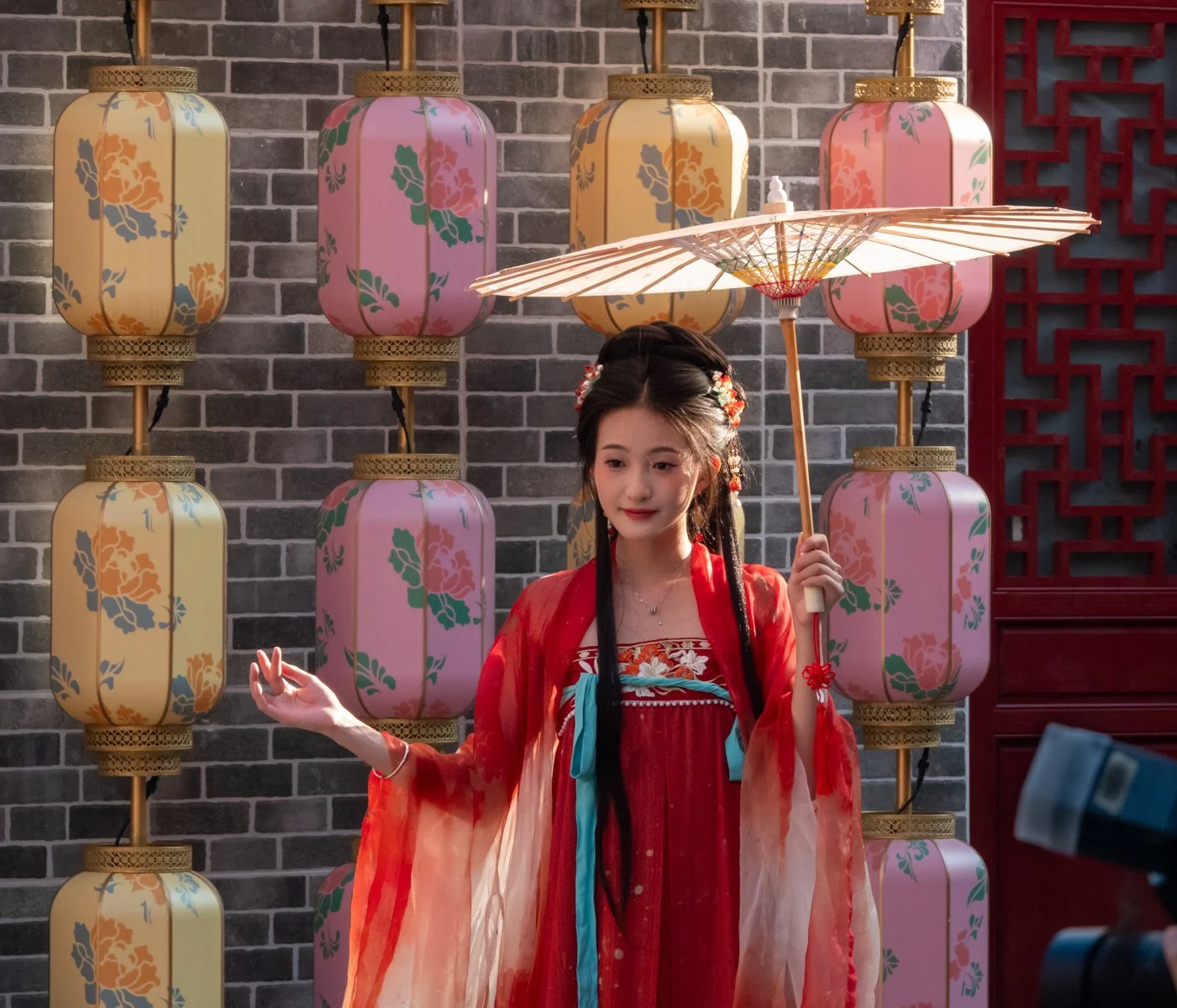
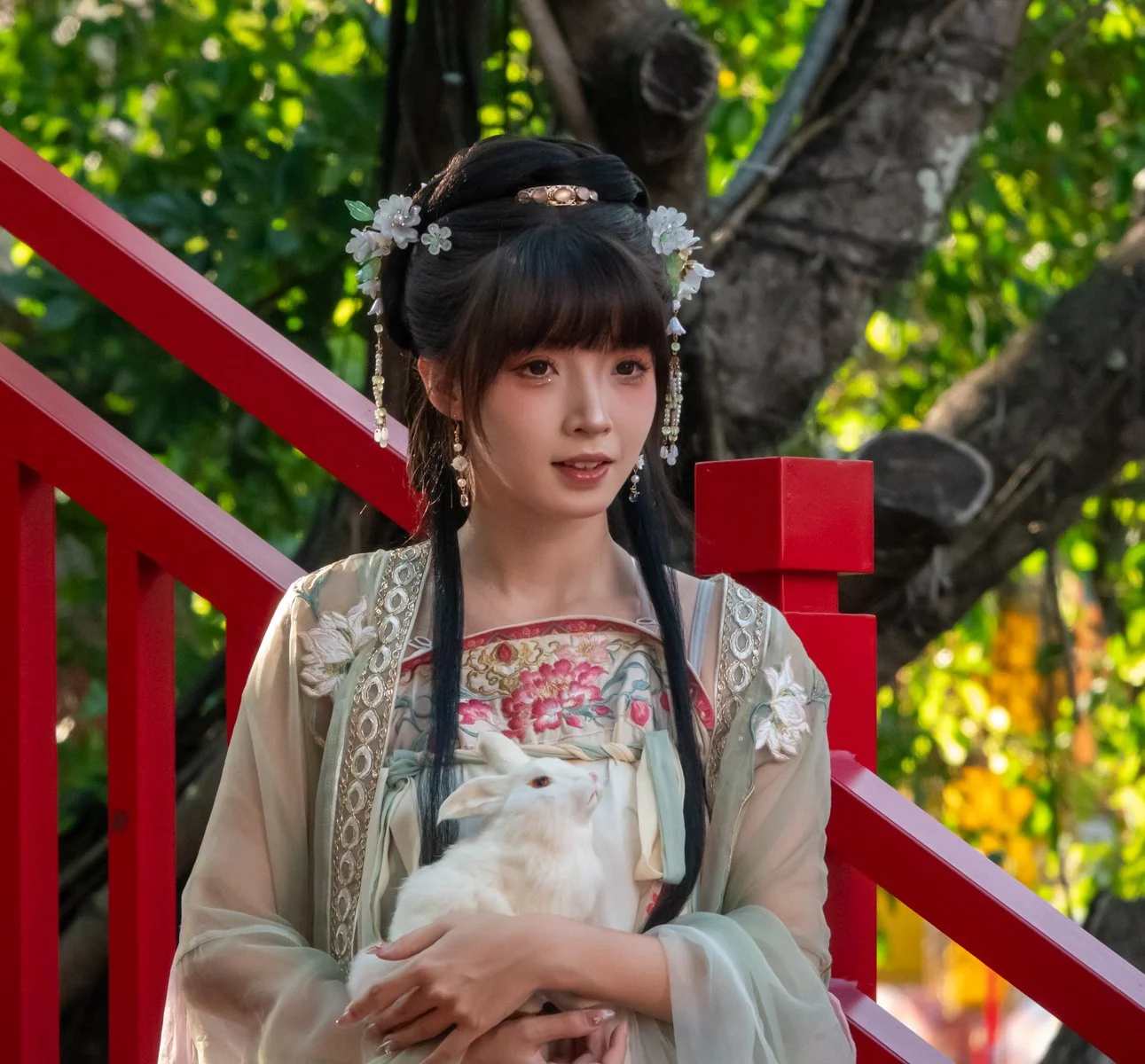
In addition to the characters in Journey to the West, another common sight is to see young women dressed in traditional hanfu (汉服) style and posing in front of ancient temples or landmarks.
Along the many miles of desert, there are a number of sites of great interest and historical importance (Mogao Caves, Jiayuguan, etc.). Inevitably, these sites are crowded with Chinese tourist buses. wind turbine and solar farms. Between these few attractions are endless miles of vast desert punctuated with solar and wind farms. The government is also building additional sites to attract the tourist trade.
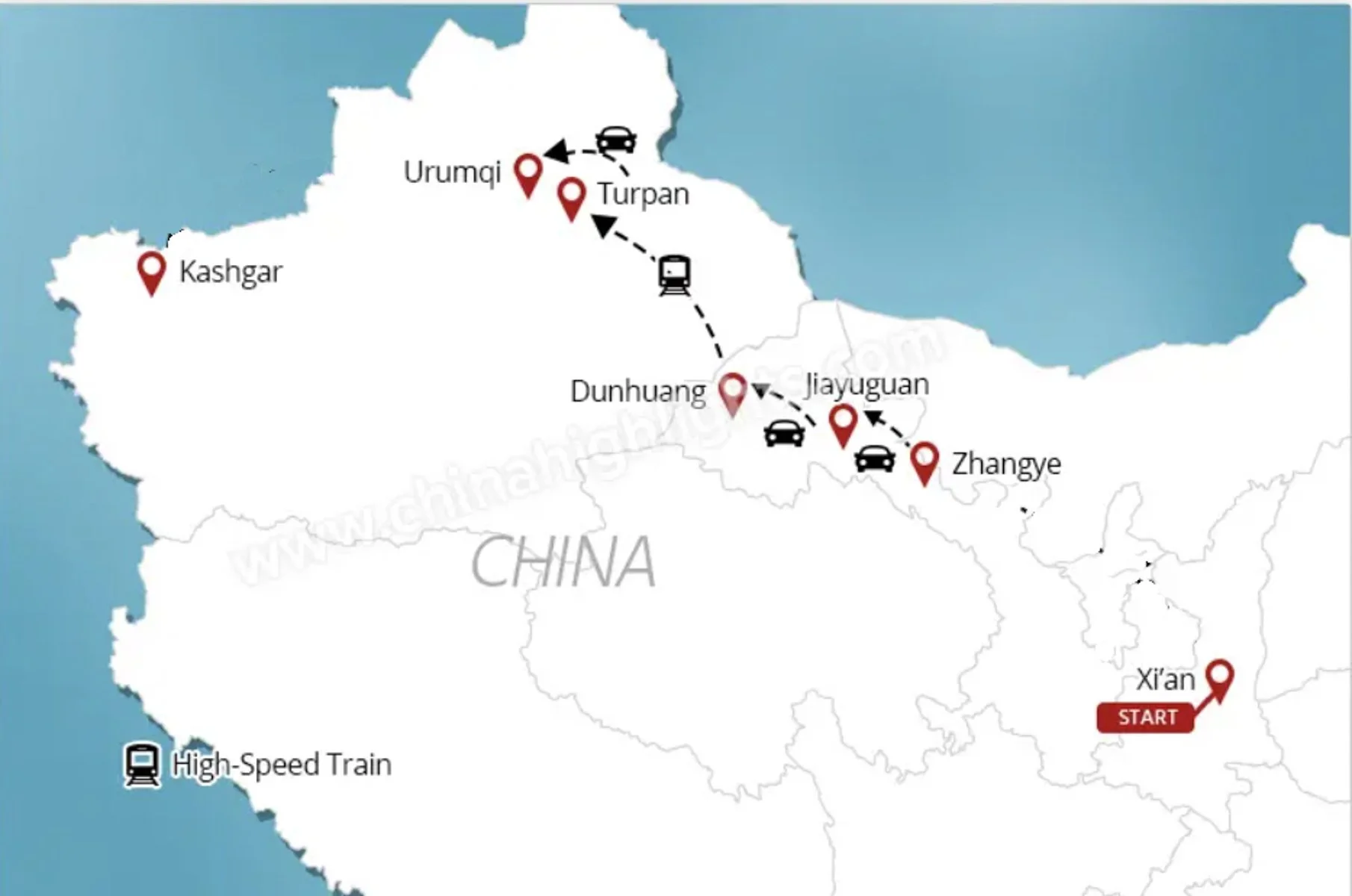
We flew from Shenzhen to Dunhuang, made our way by bus and train to Urumuqi and then back to Jiayuguan, Zhangye and Dunhuang before flying back to Shenzhen. The tour took 8 days.
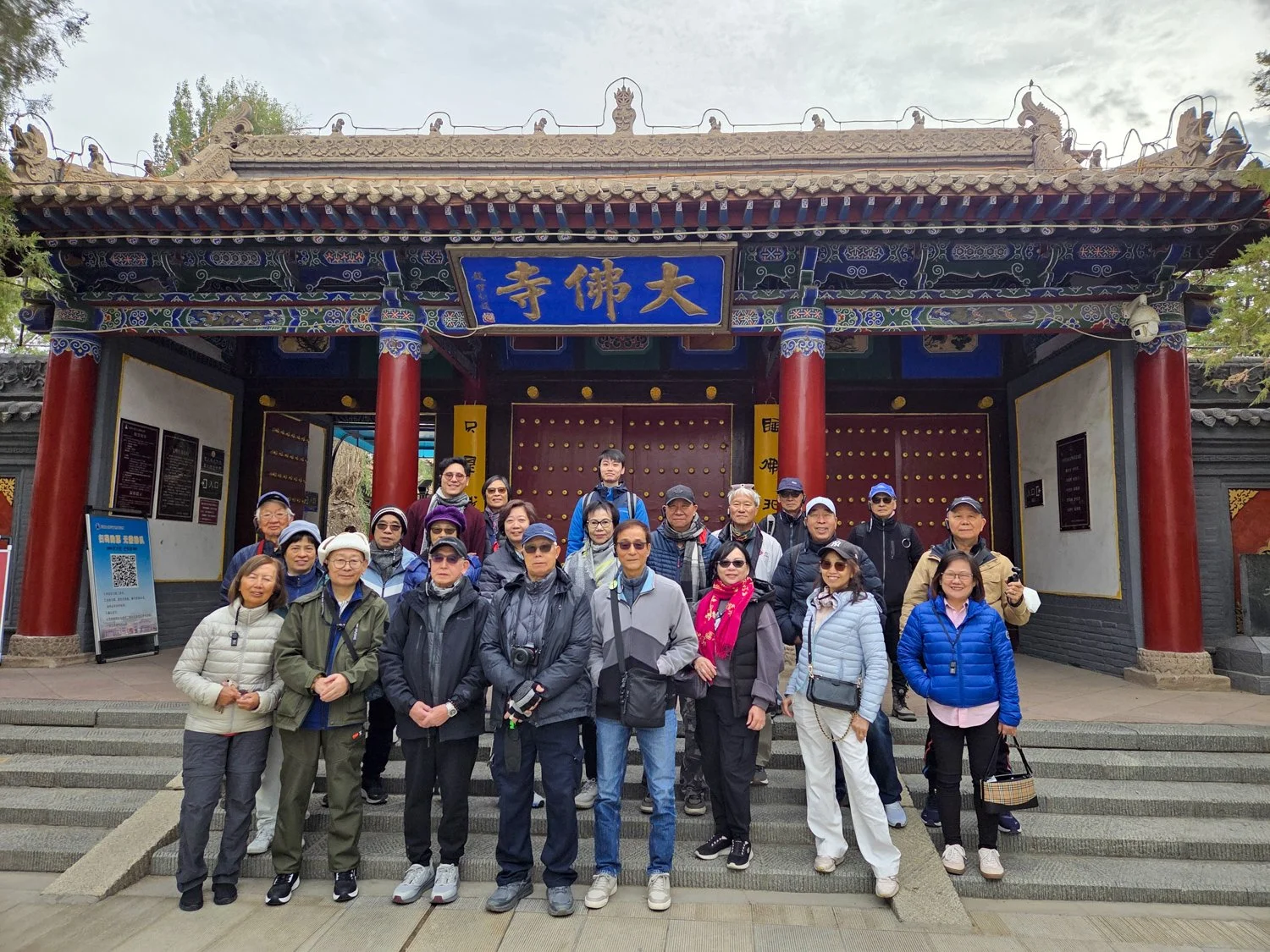
Our tour group
Dunhuang
Our first stop in Dunhuang was to see the White Horse Pagoda, which commemorates a famous horse Tianliu who accompanied the Buddhist monk and translater Kumārajīva and carried many Buddhist scriptures to Dunhuang from the western fringes of the Silk Road in the fourth century AD. Kumārajīva famously translated the Diamond Sutra which was found in the Mogao Caves and is considered the earliest dated printed book in the world.
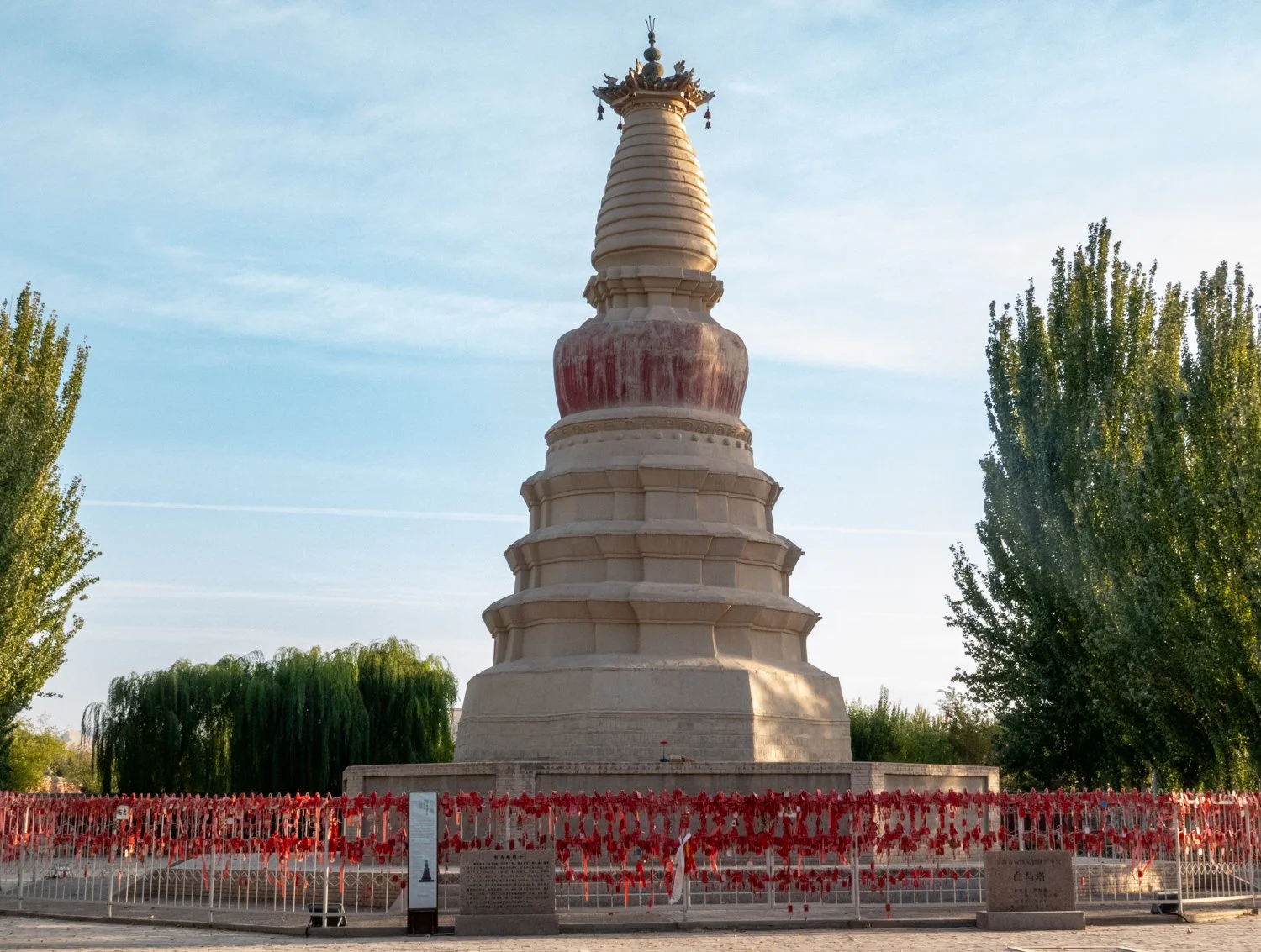
White horse pagoda (白馬寺)
The first evening in Dunhuang we went to the lively Shazhou night market. That night happened to be the Mid-Autumn Full Moon. In addition to the various different foods and crafts for sale, a common sight at many places along the Silk Road were young women dressed in traditional Dunhuang hanfu dress, which are inspired by the flying apsara (feitian) costumes found on the Mogao Caves.
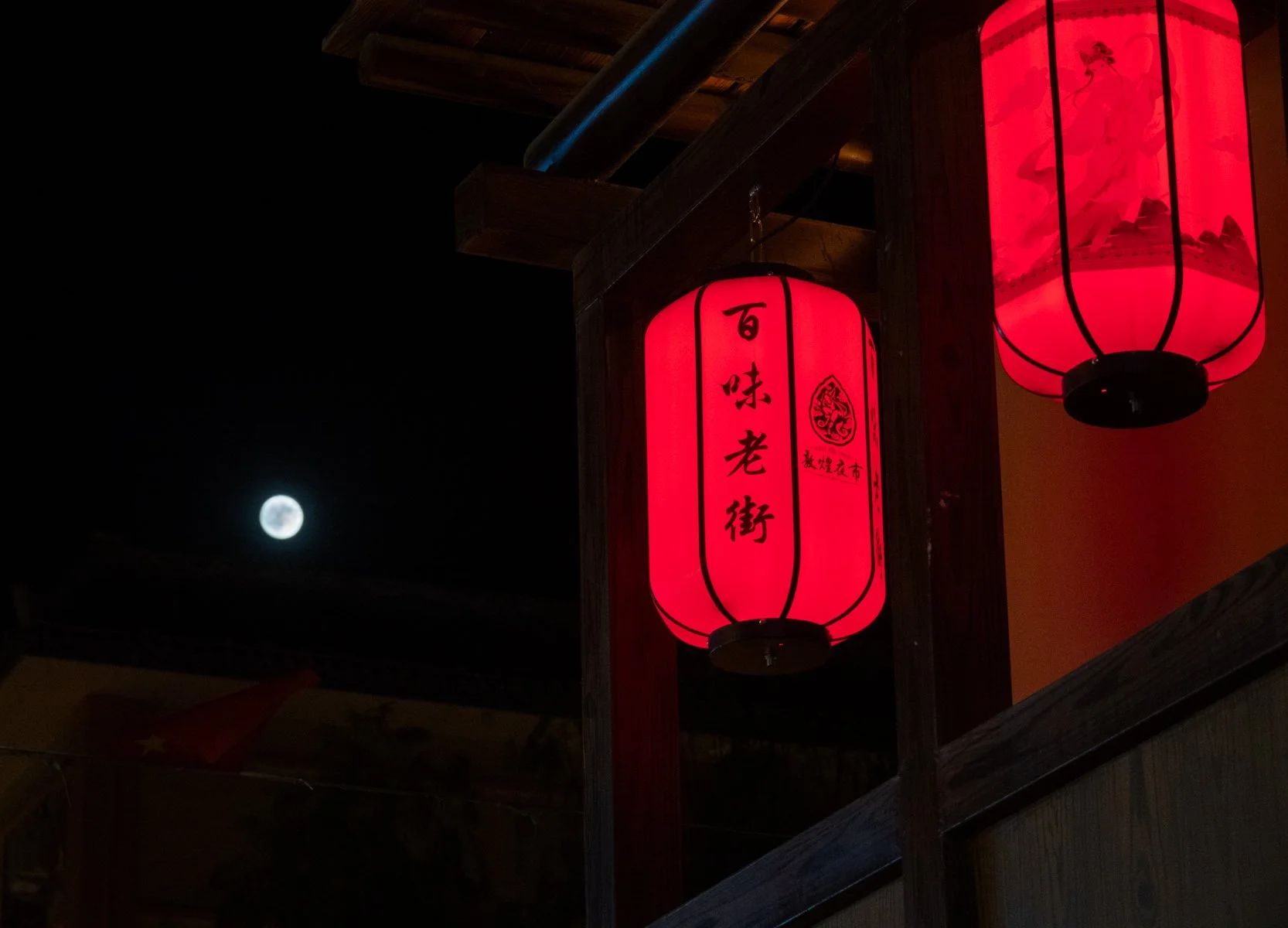
Mid-autumn full moon at the Hundred Flavors Old Street in the Shazhou Night Market in Dunhuang
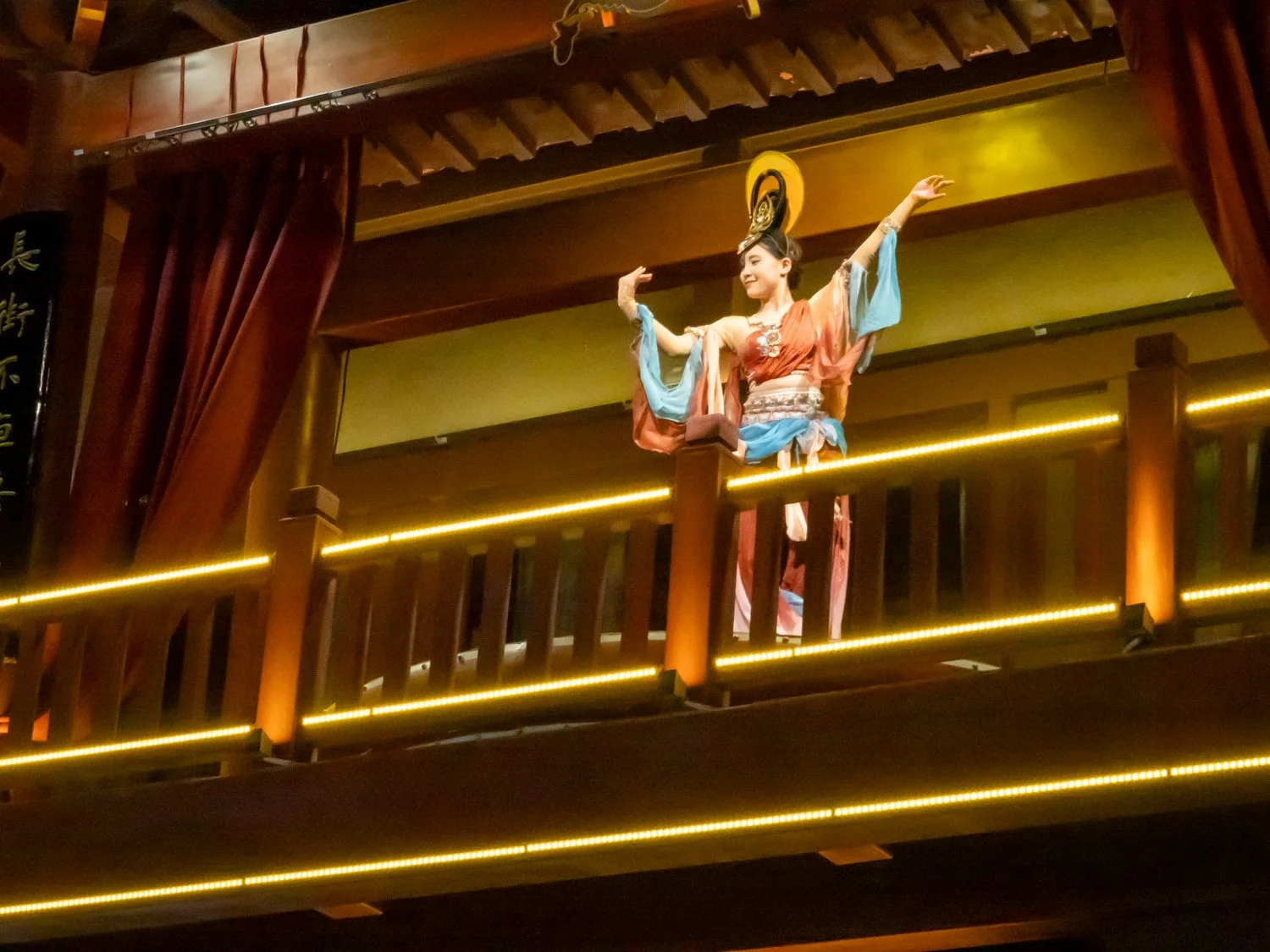
Entertainment at the Shazhou Night market
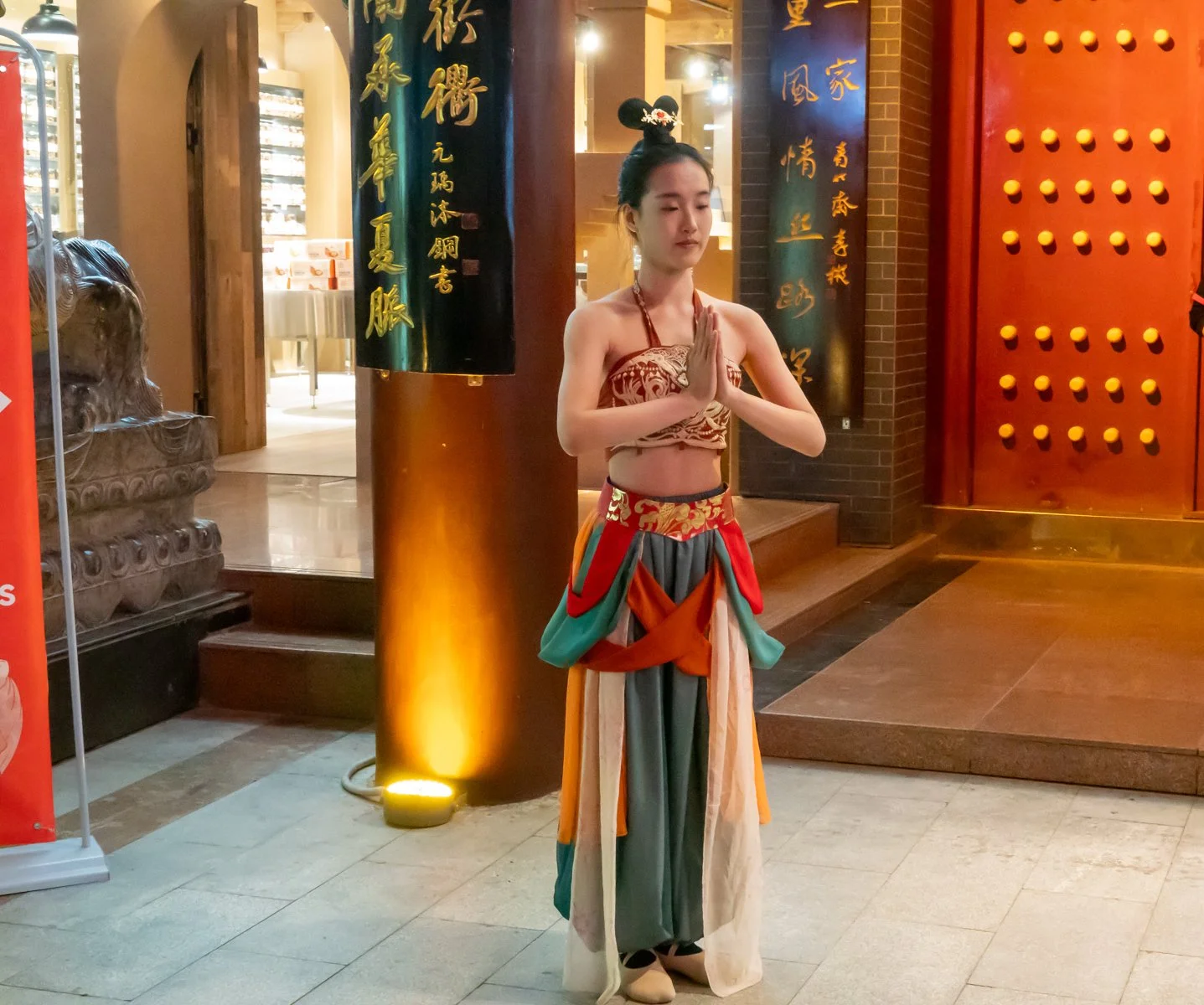
Woman dressed in traditional Dunhuang Apsaras style
Mingsha Mountain and Crescent Spring (鳴沙山和新月泉)
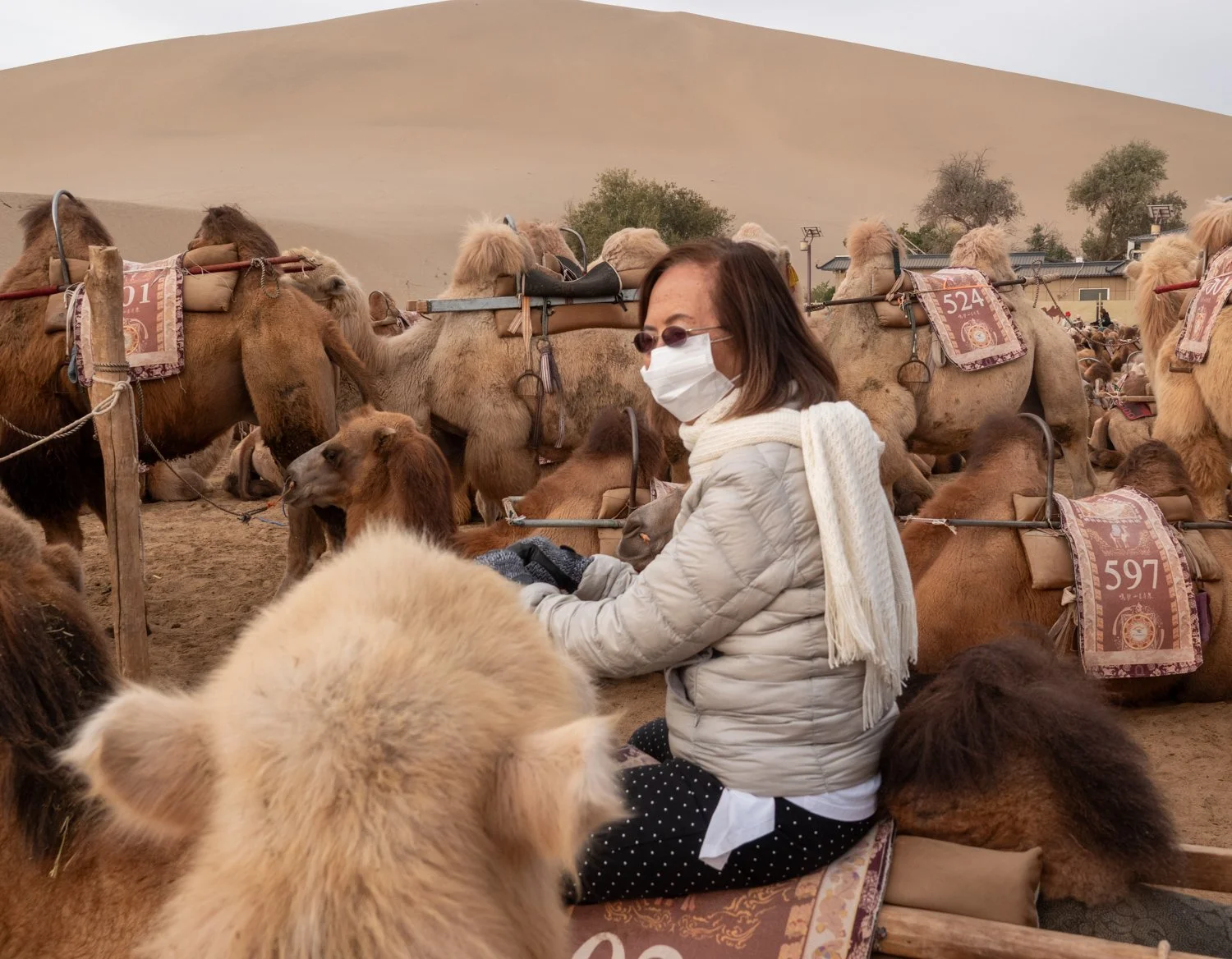
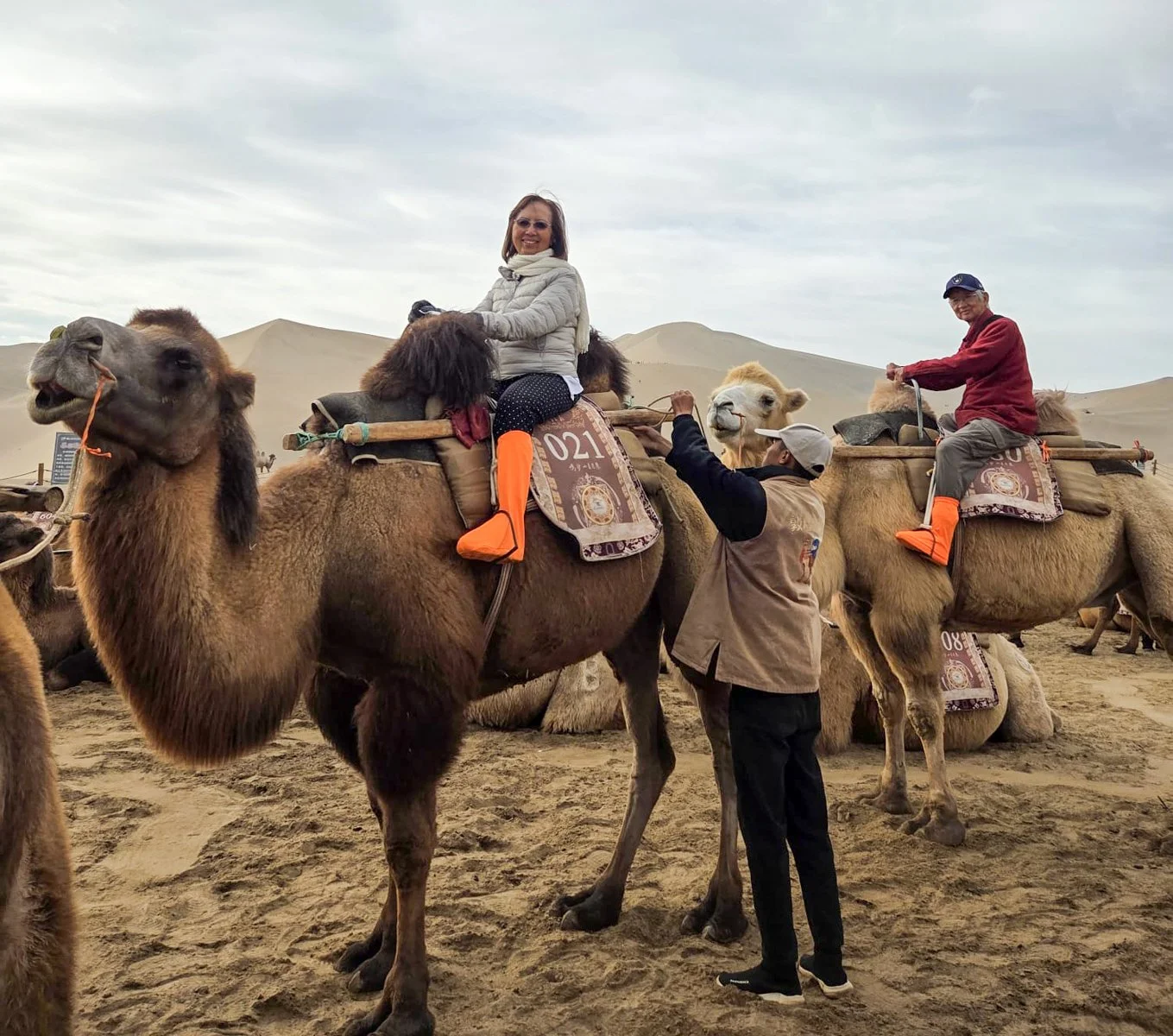
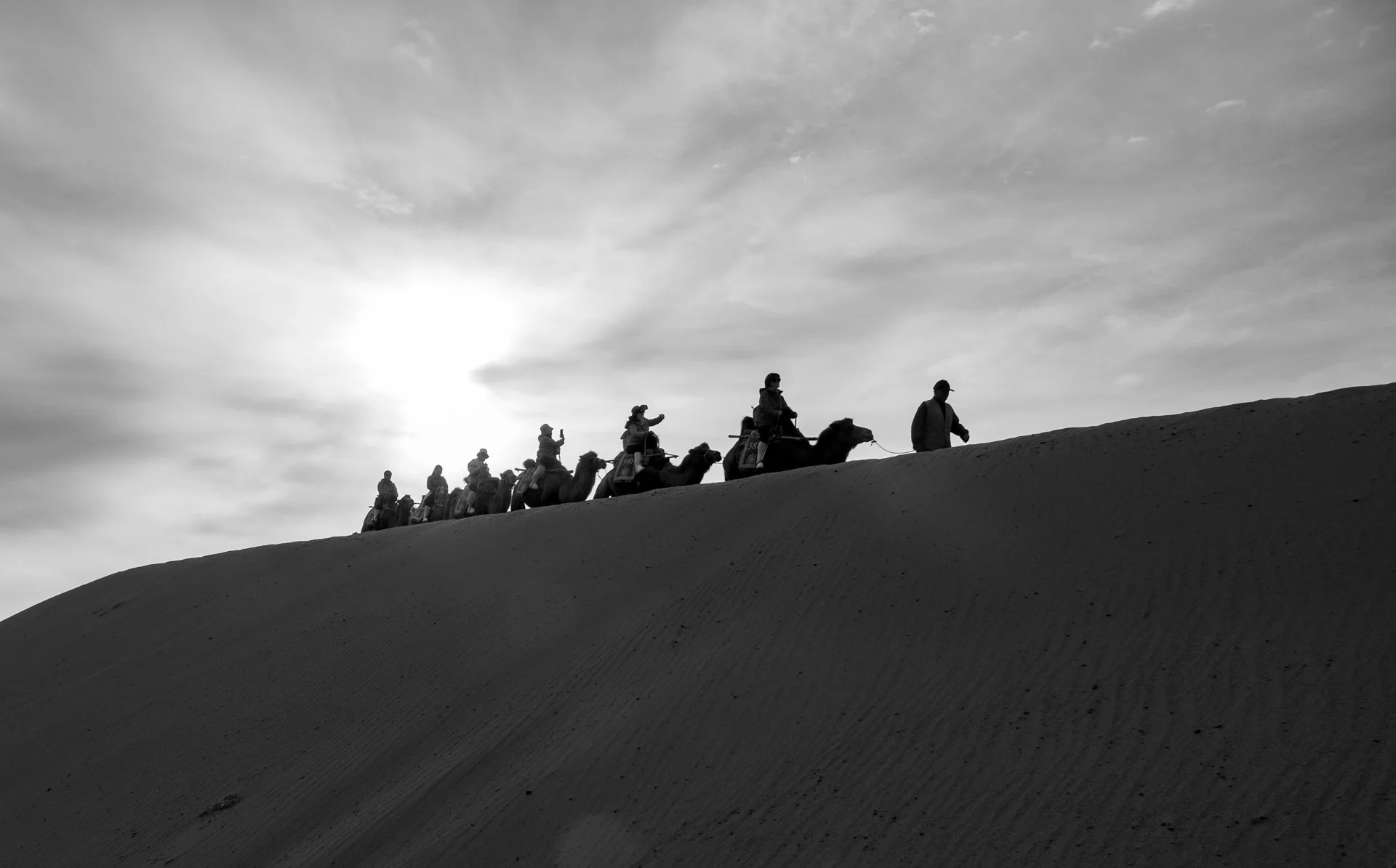
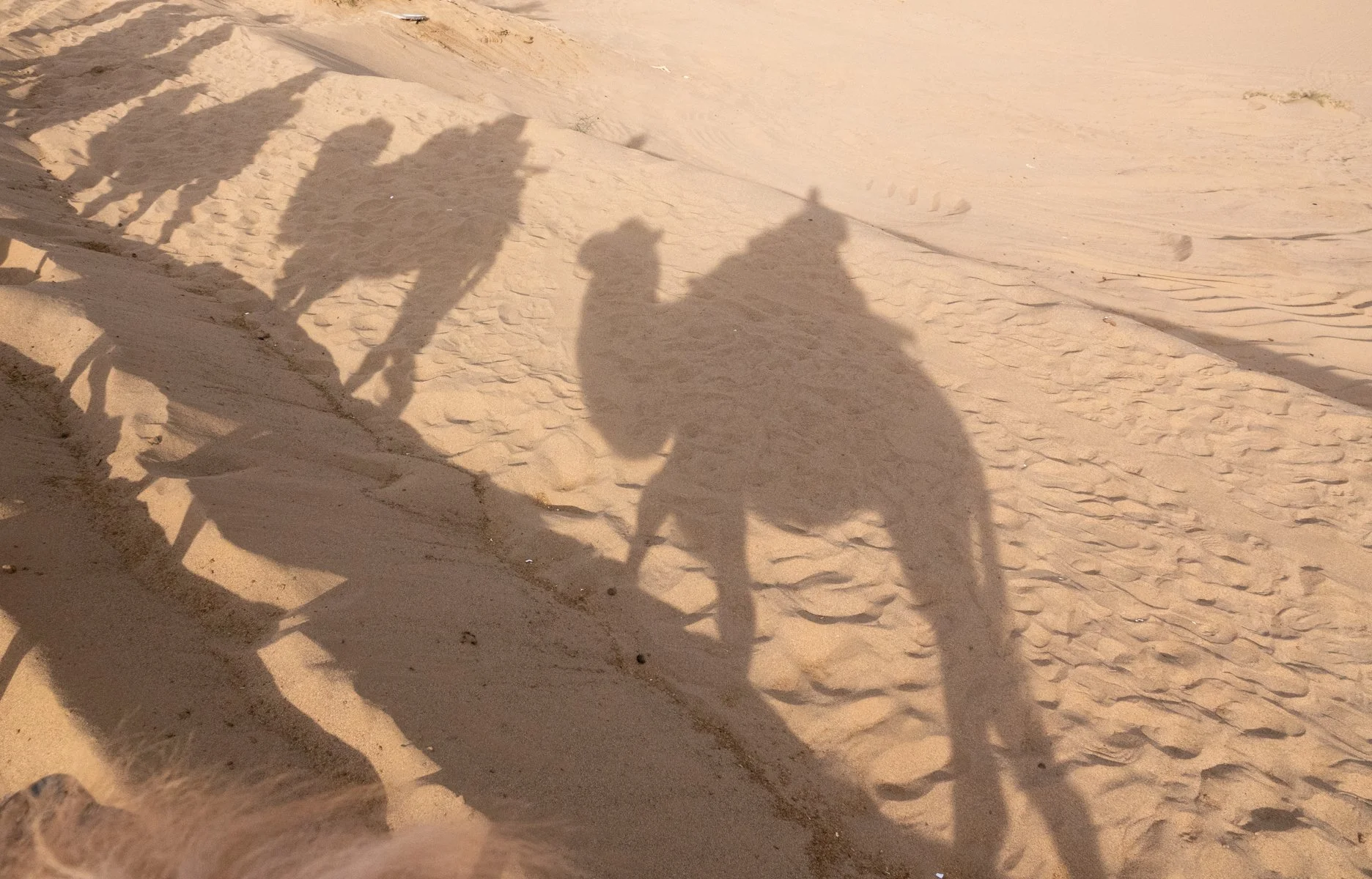
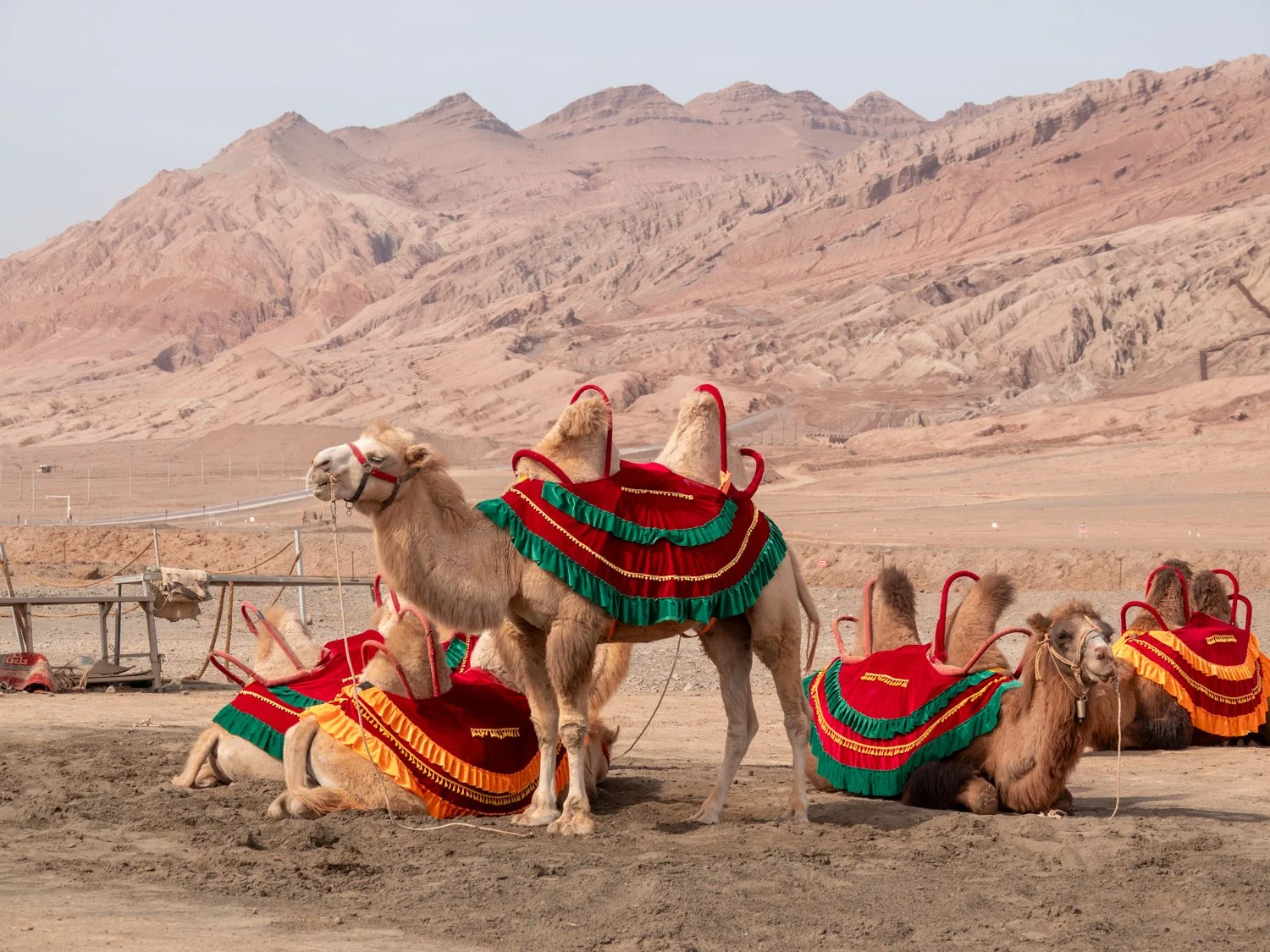
The singing sand dunes are the largest sand dunes in China and a popular spot for a short camel ride in the desert and to hike up and slide down the towering sand dunes. Camels, of course, were an important part of the development of the ancient Silk Road.
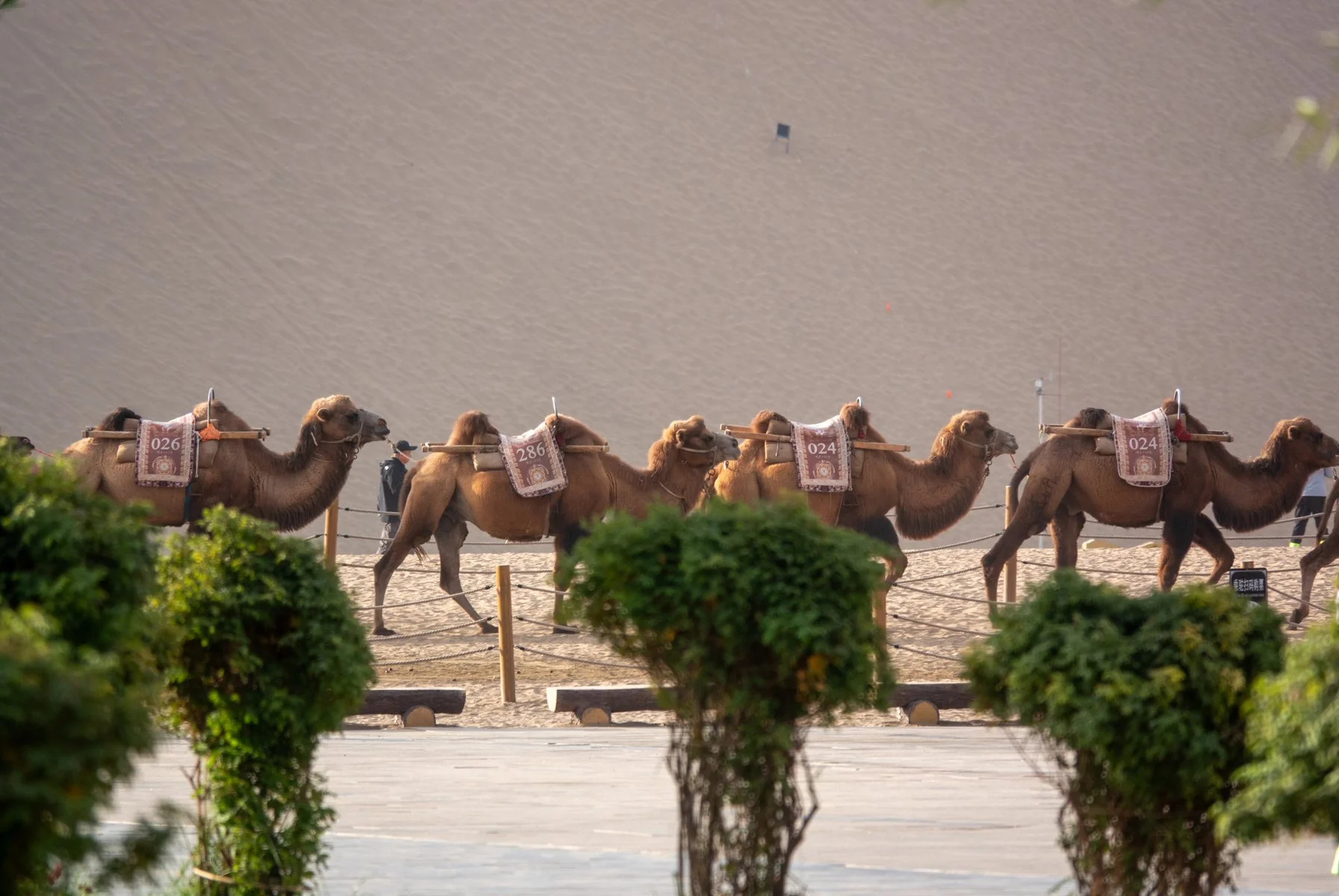
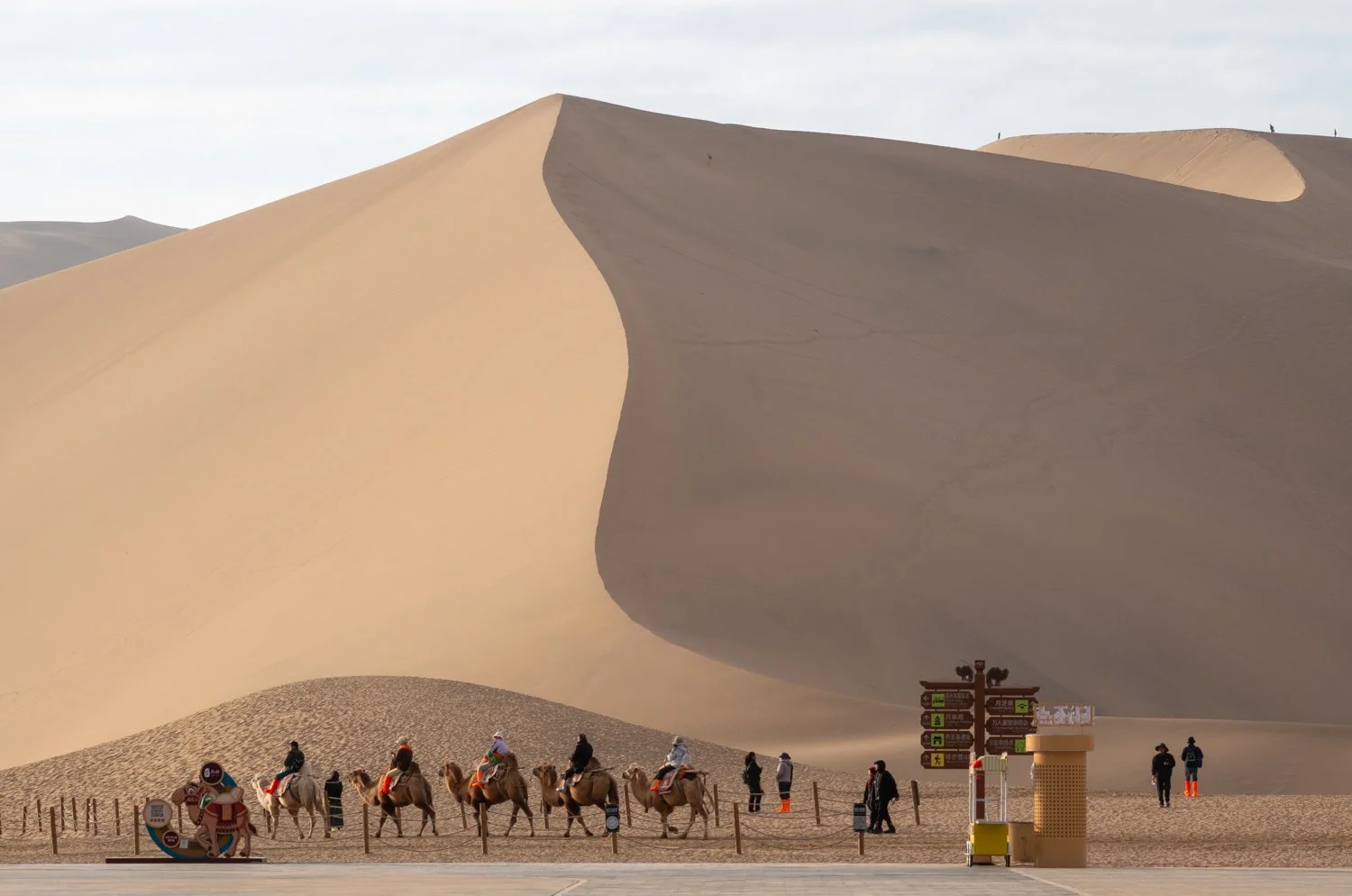
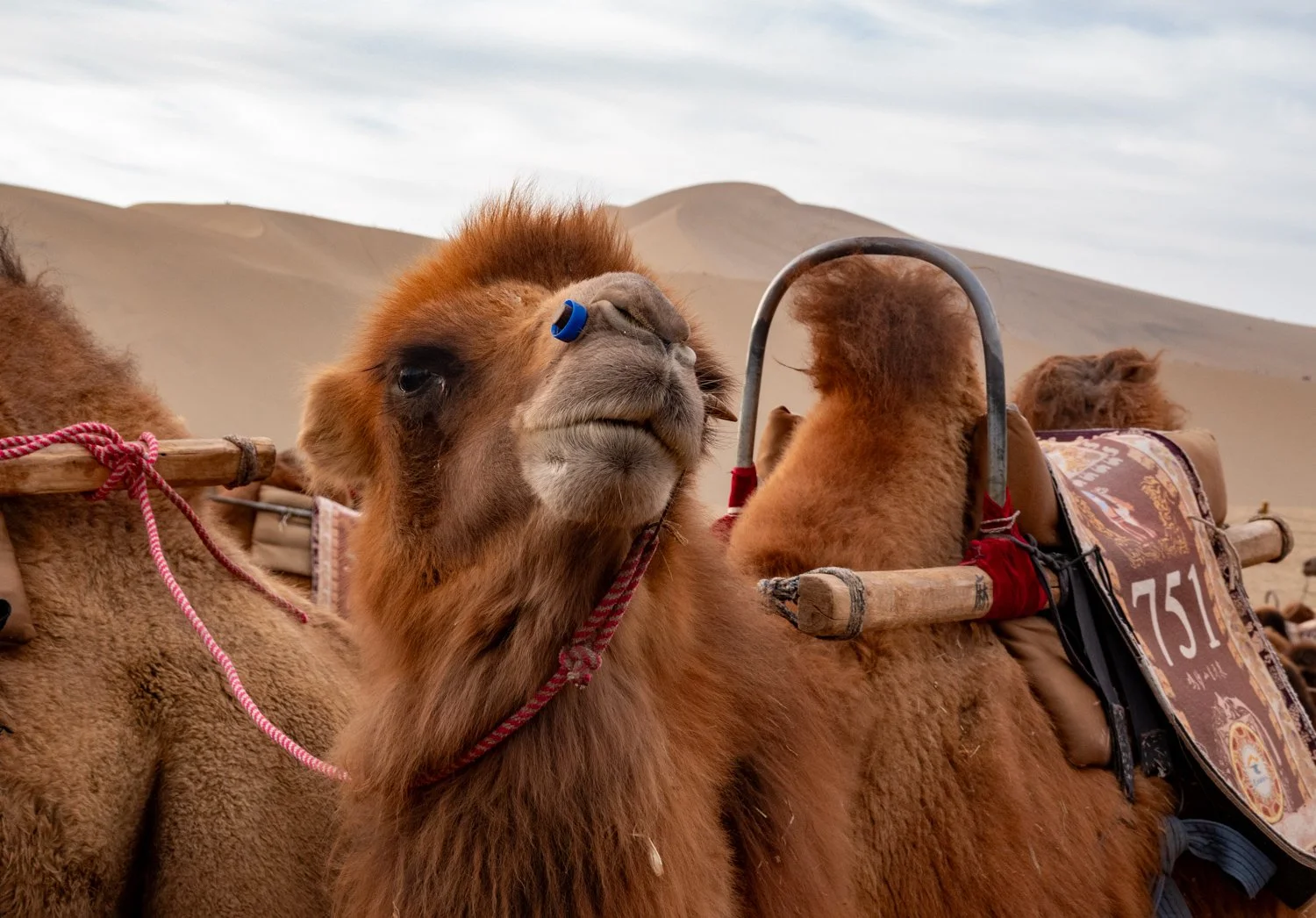
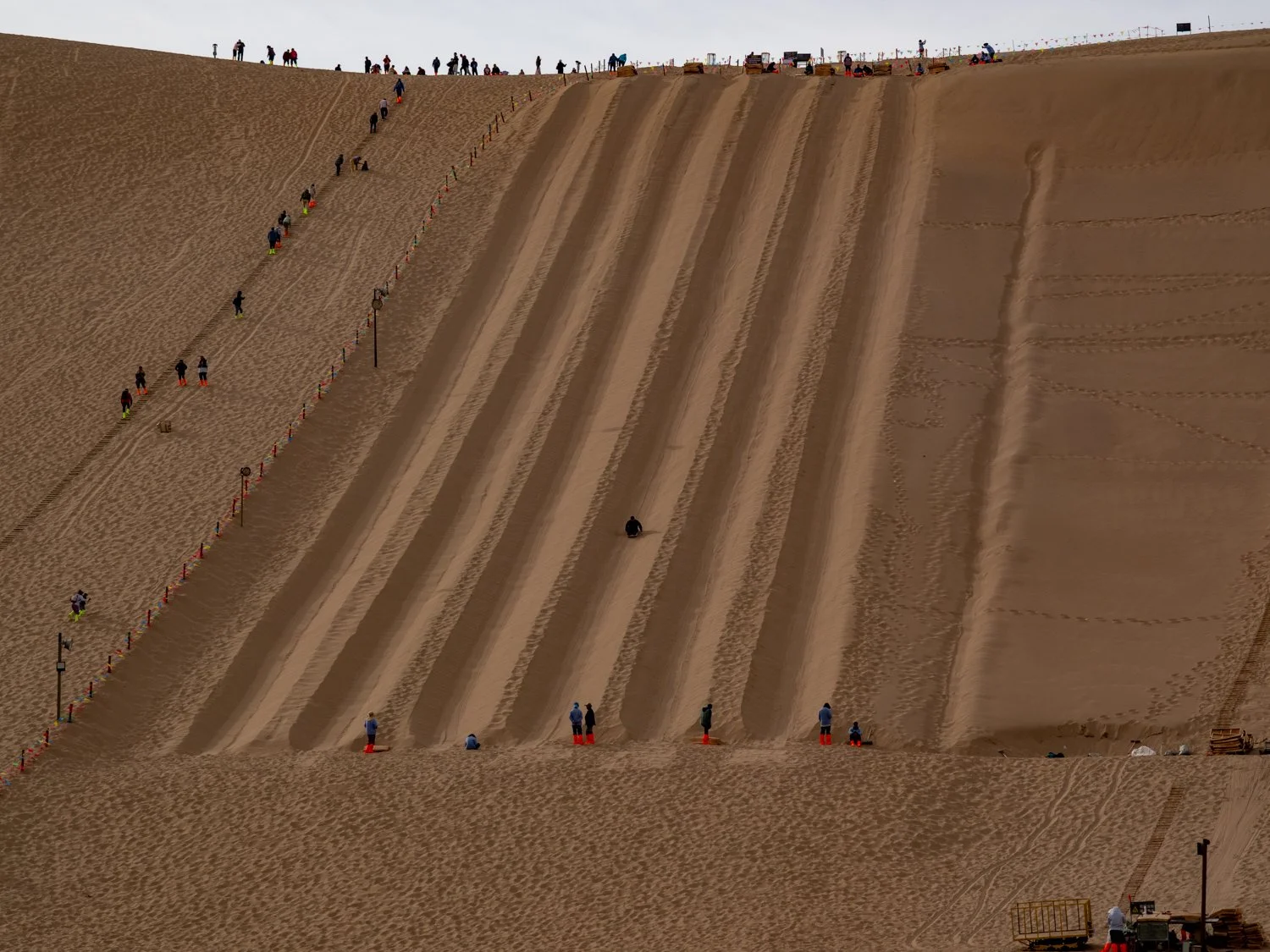
The big sliding hill
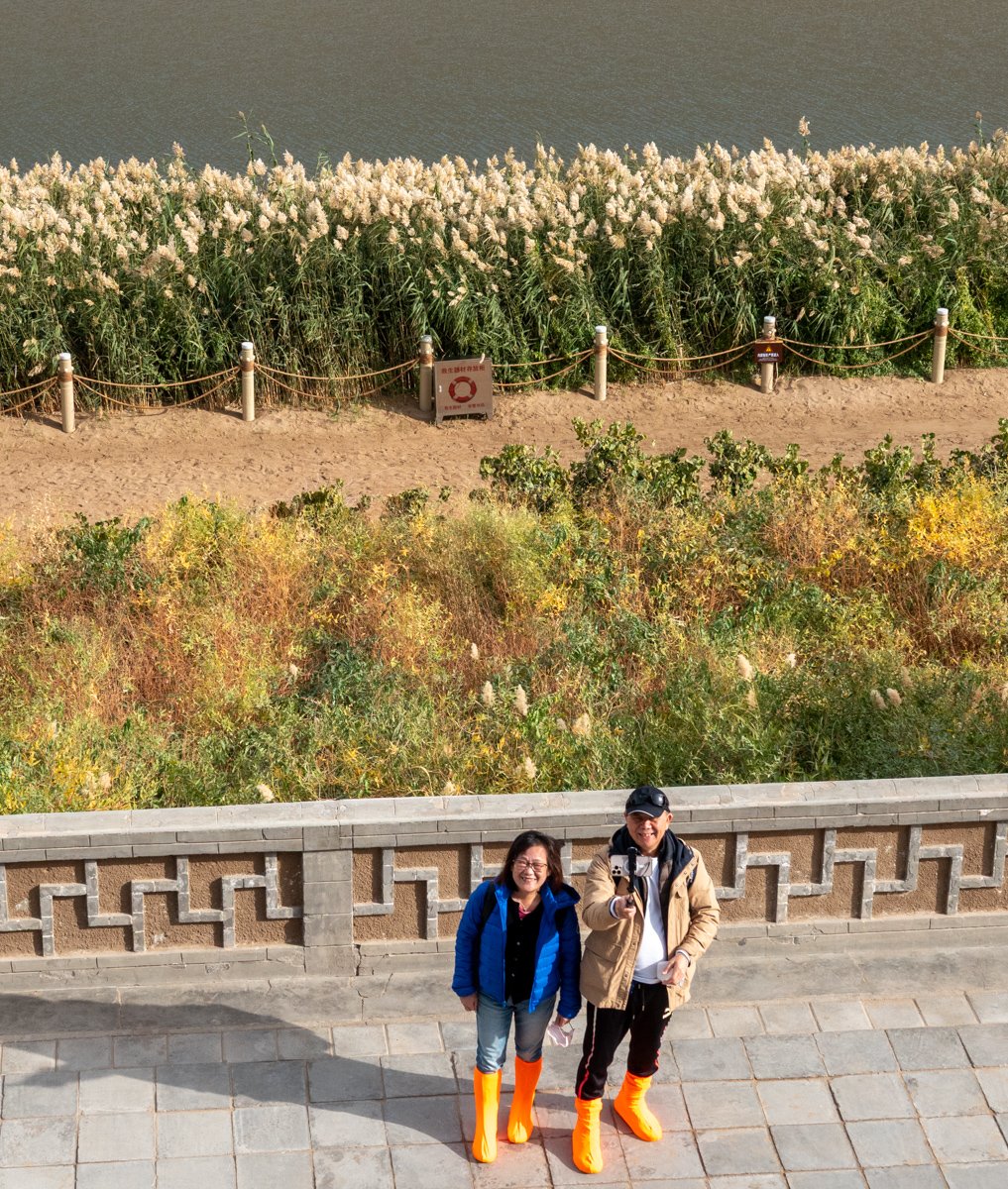
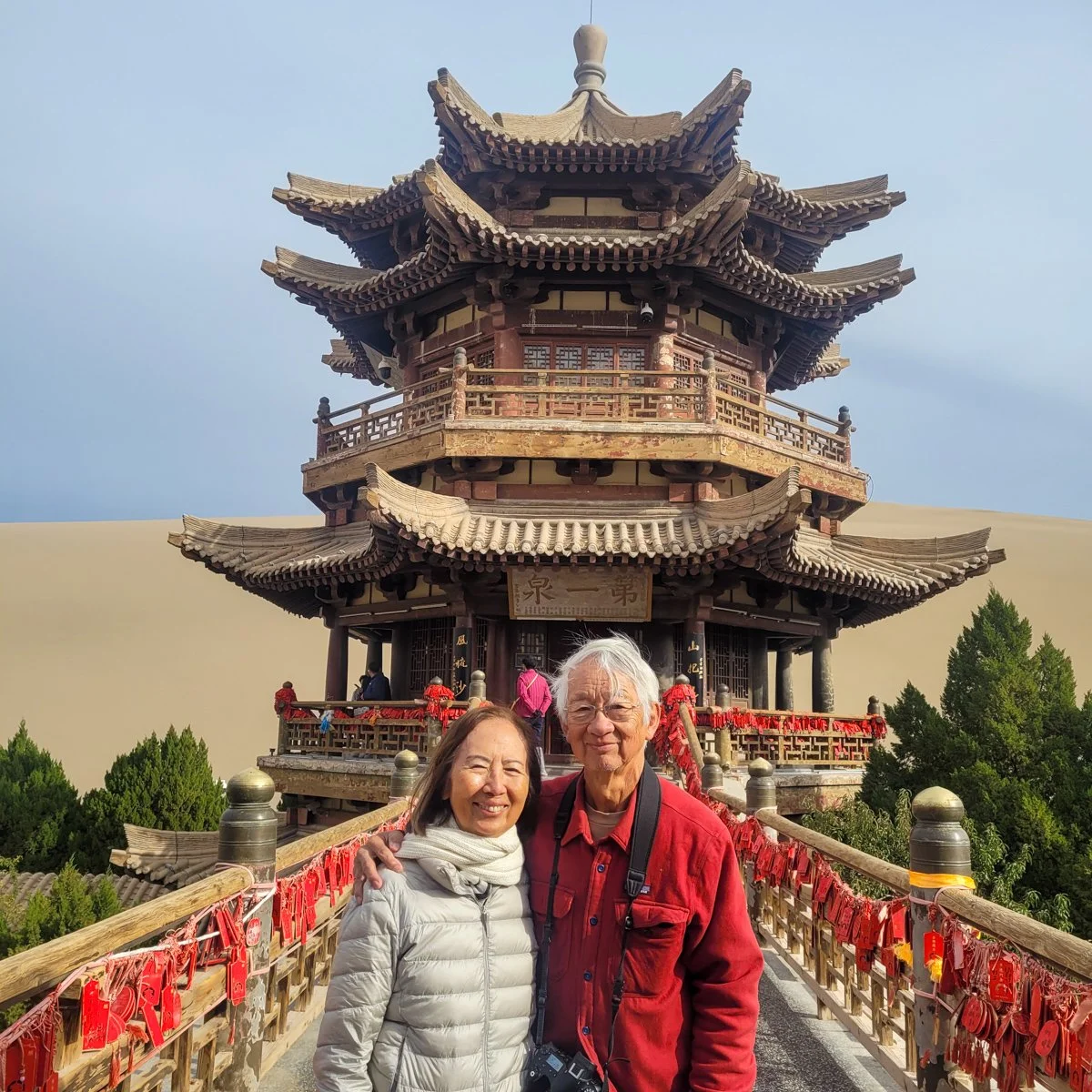
At Crescent Moon Lake
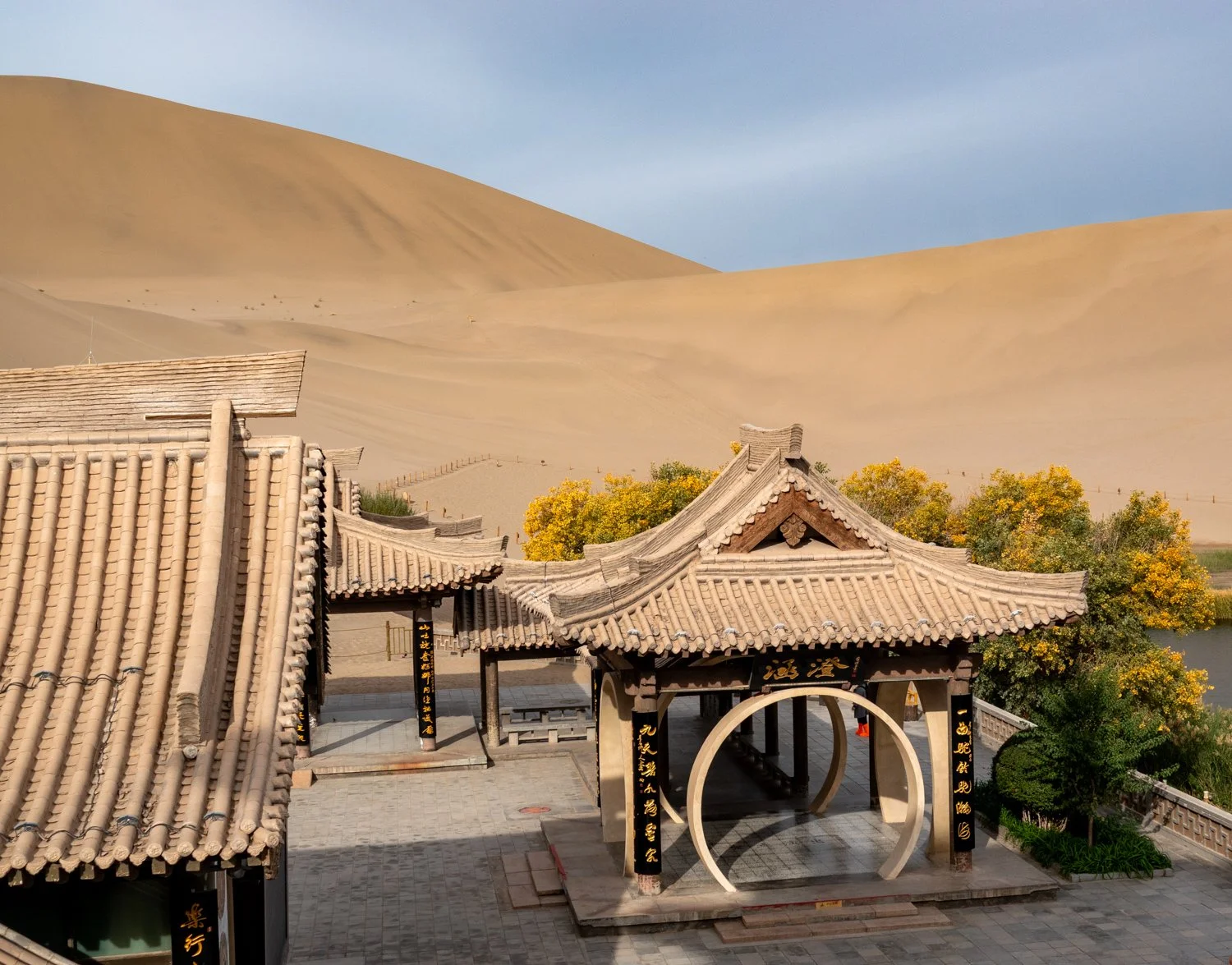
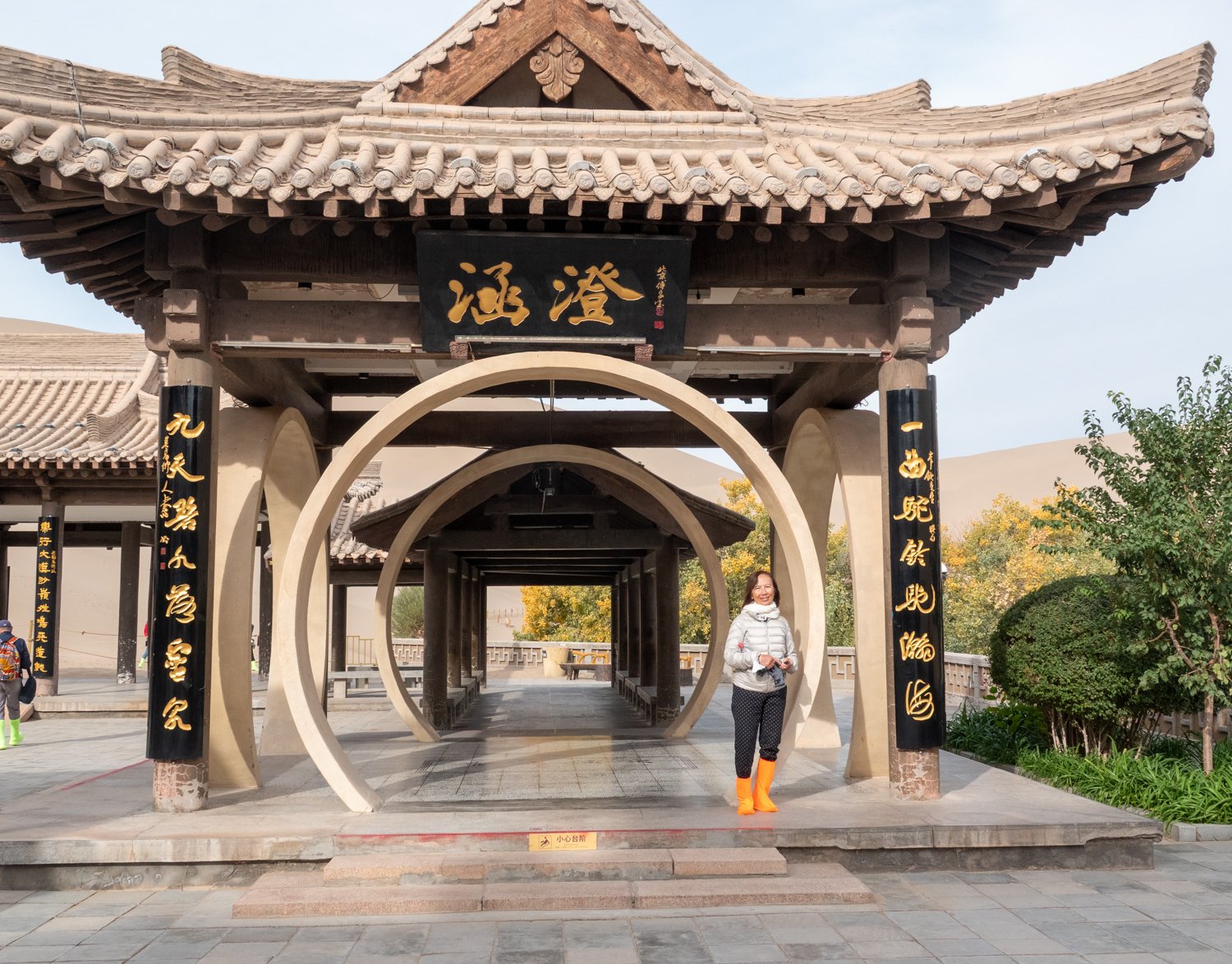
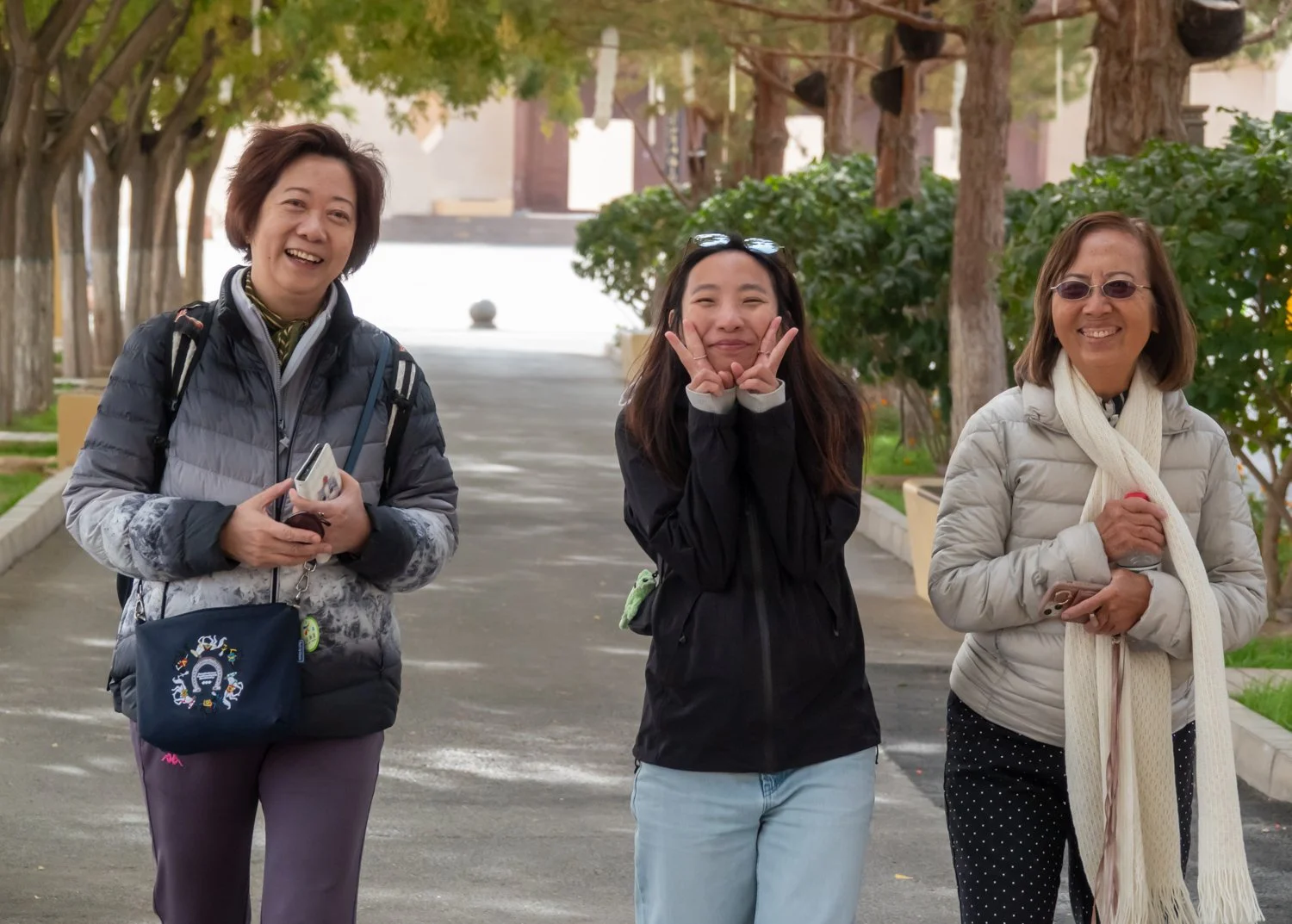
Our tour guide Doris (middle)
Mogao Caves (莫高窟)
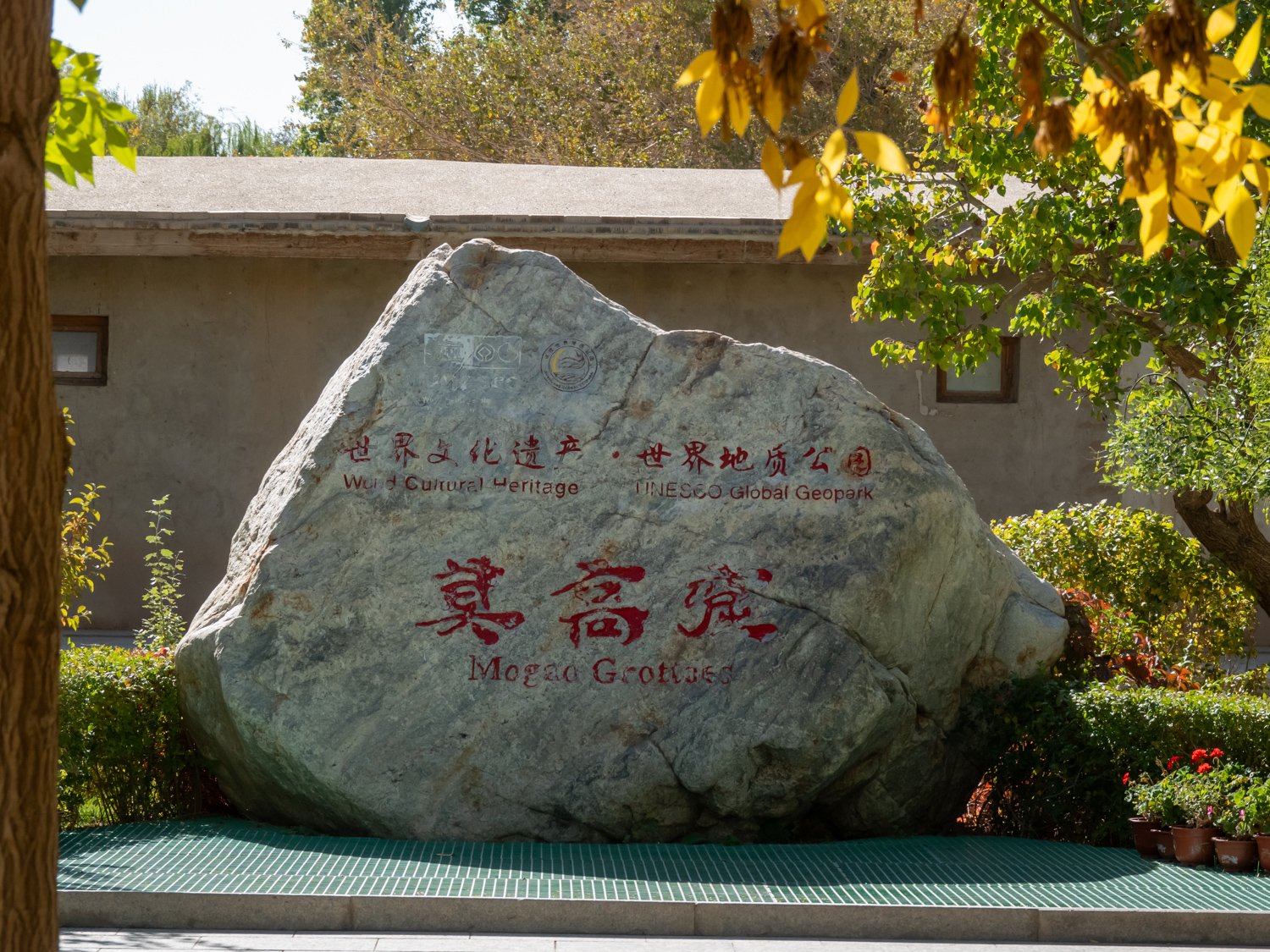
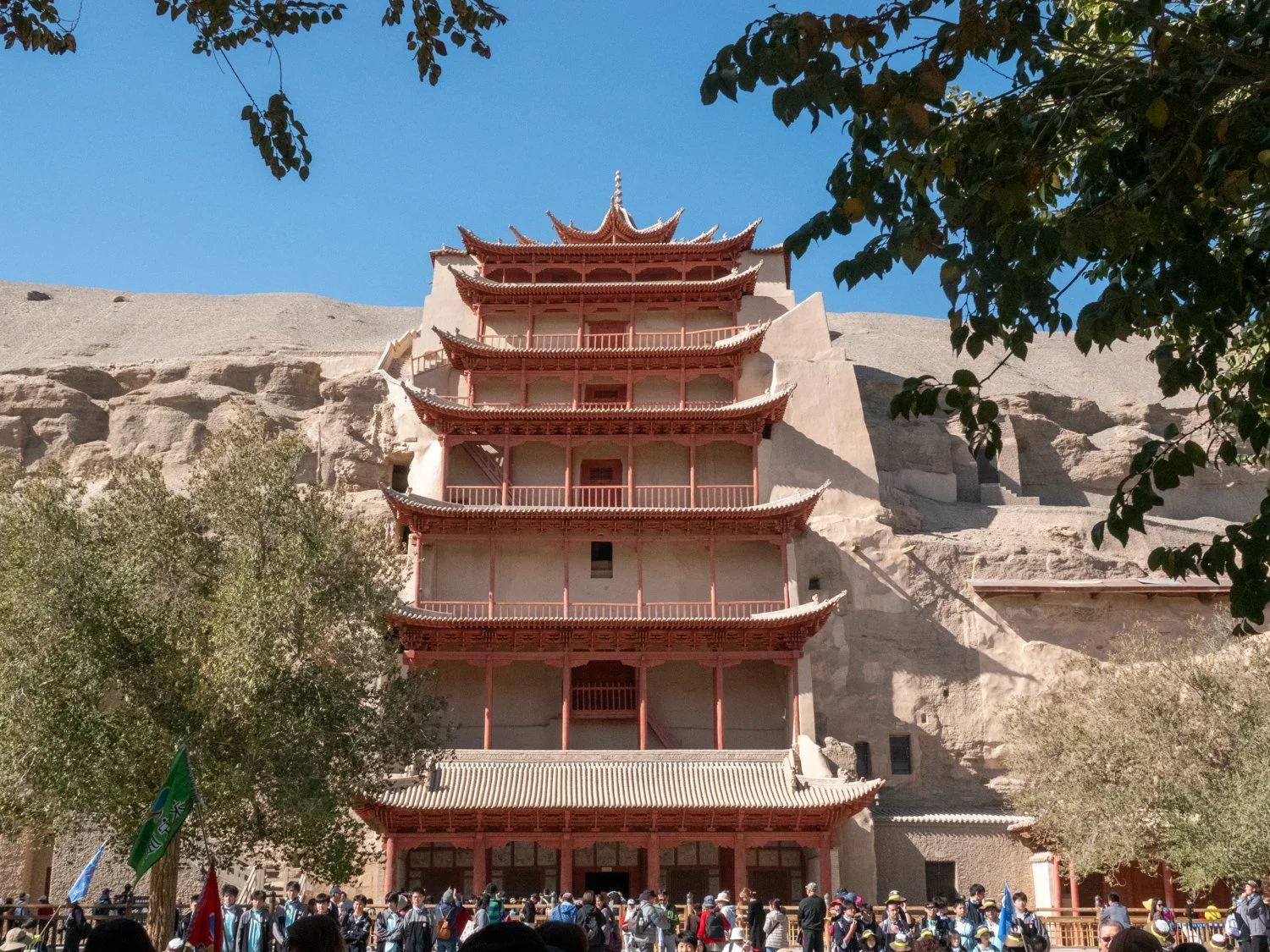
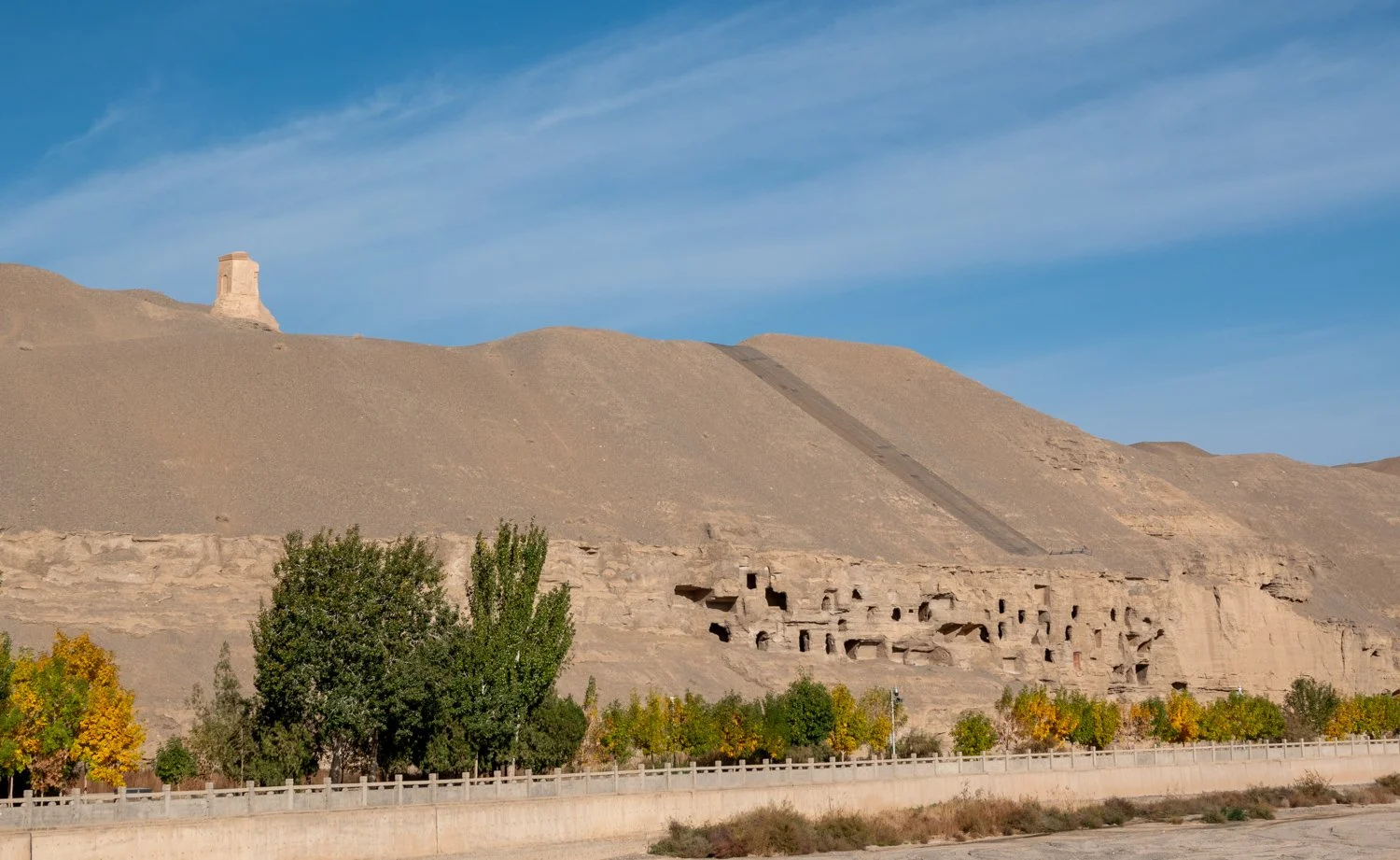
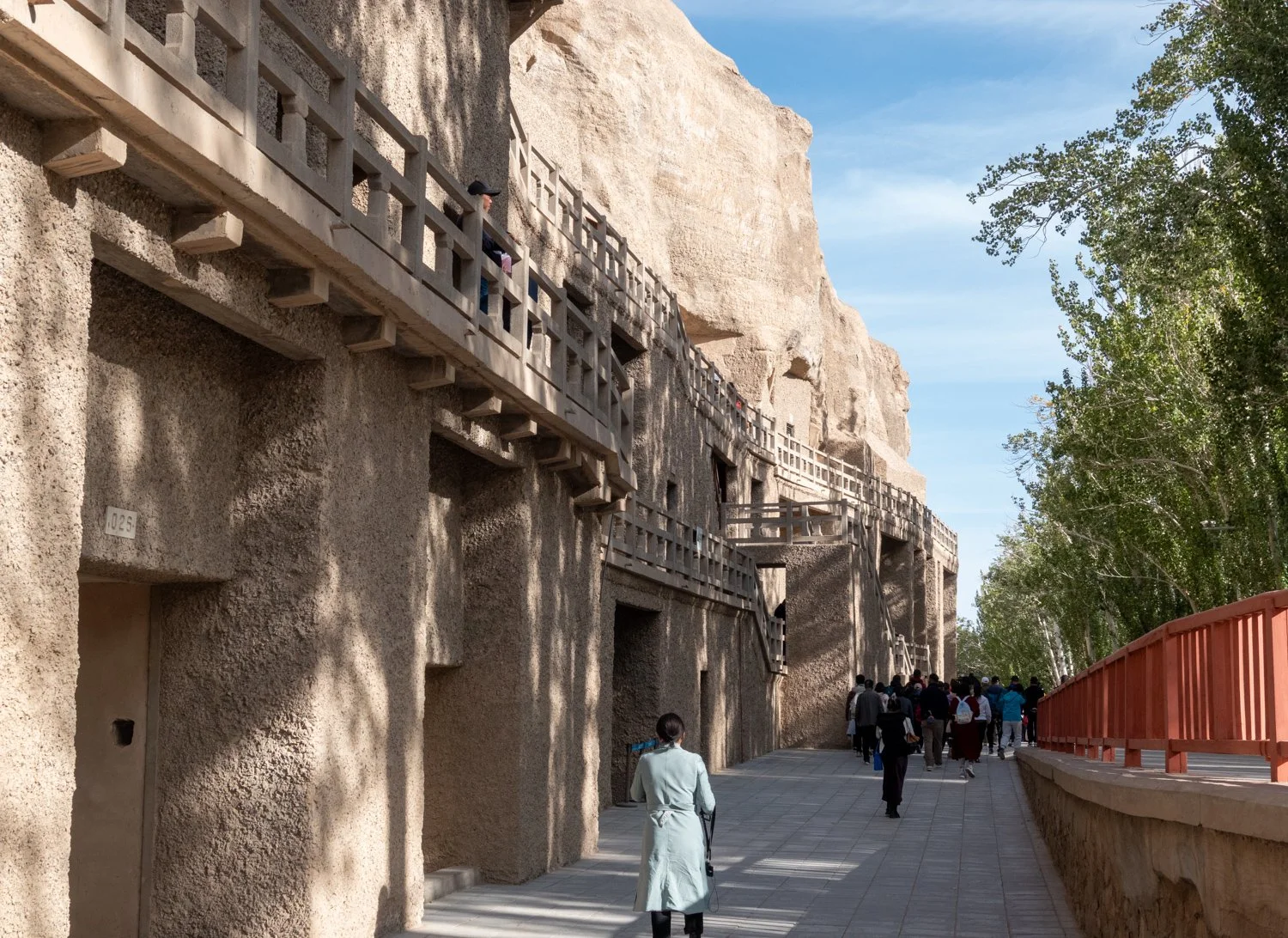
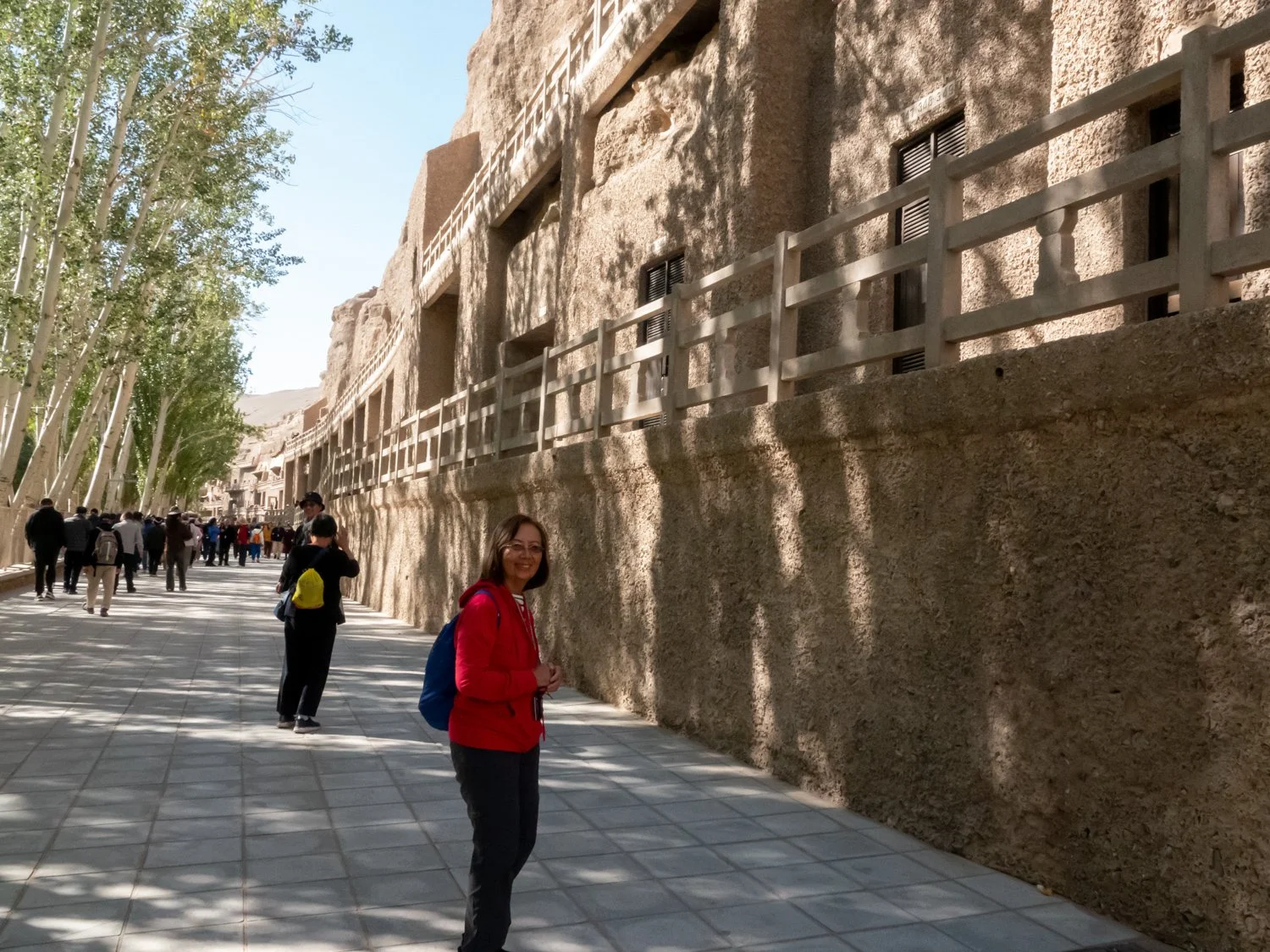
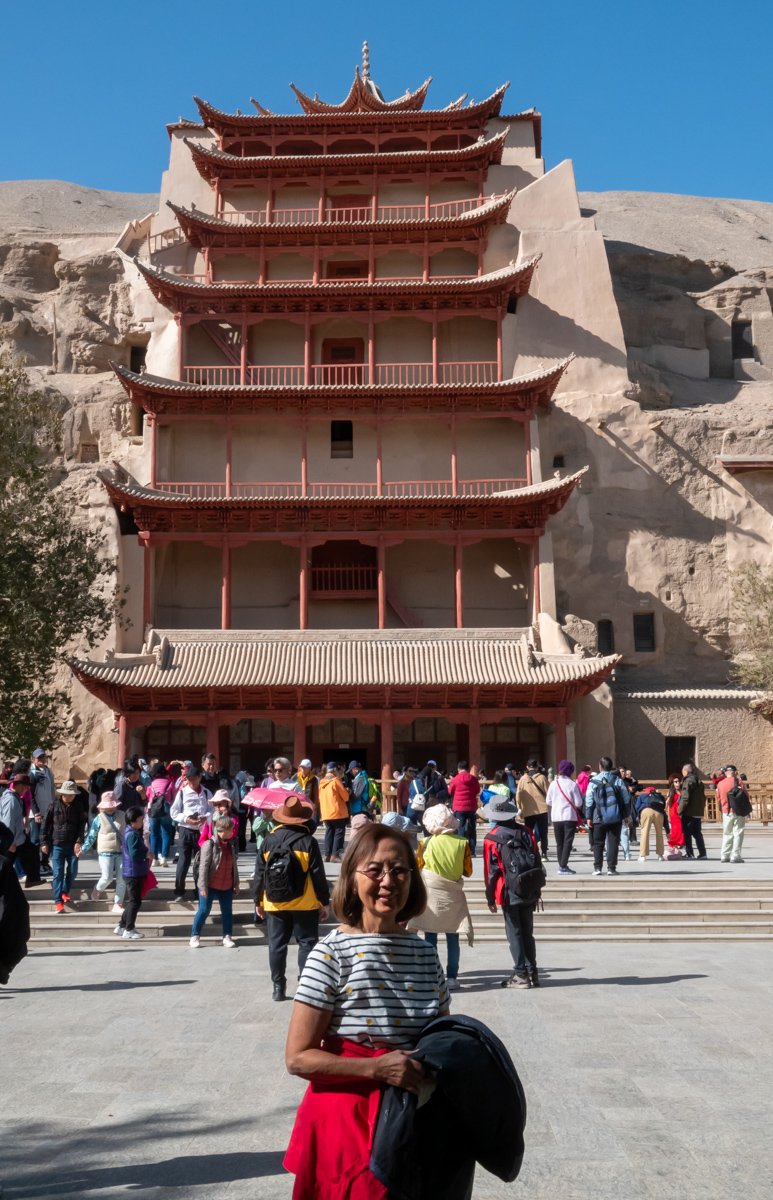
One of the highlights on any visit to the Silk Road, the Mogao Caves represent the world’s greatest collections of ancient Buddhist art. There are almost 500 caves, only a small percentage of which are open to the public through guided tours. Unfortunately, photography is strictly forbidden inside the caves but some images are available on-line here and here and here.
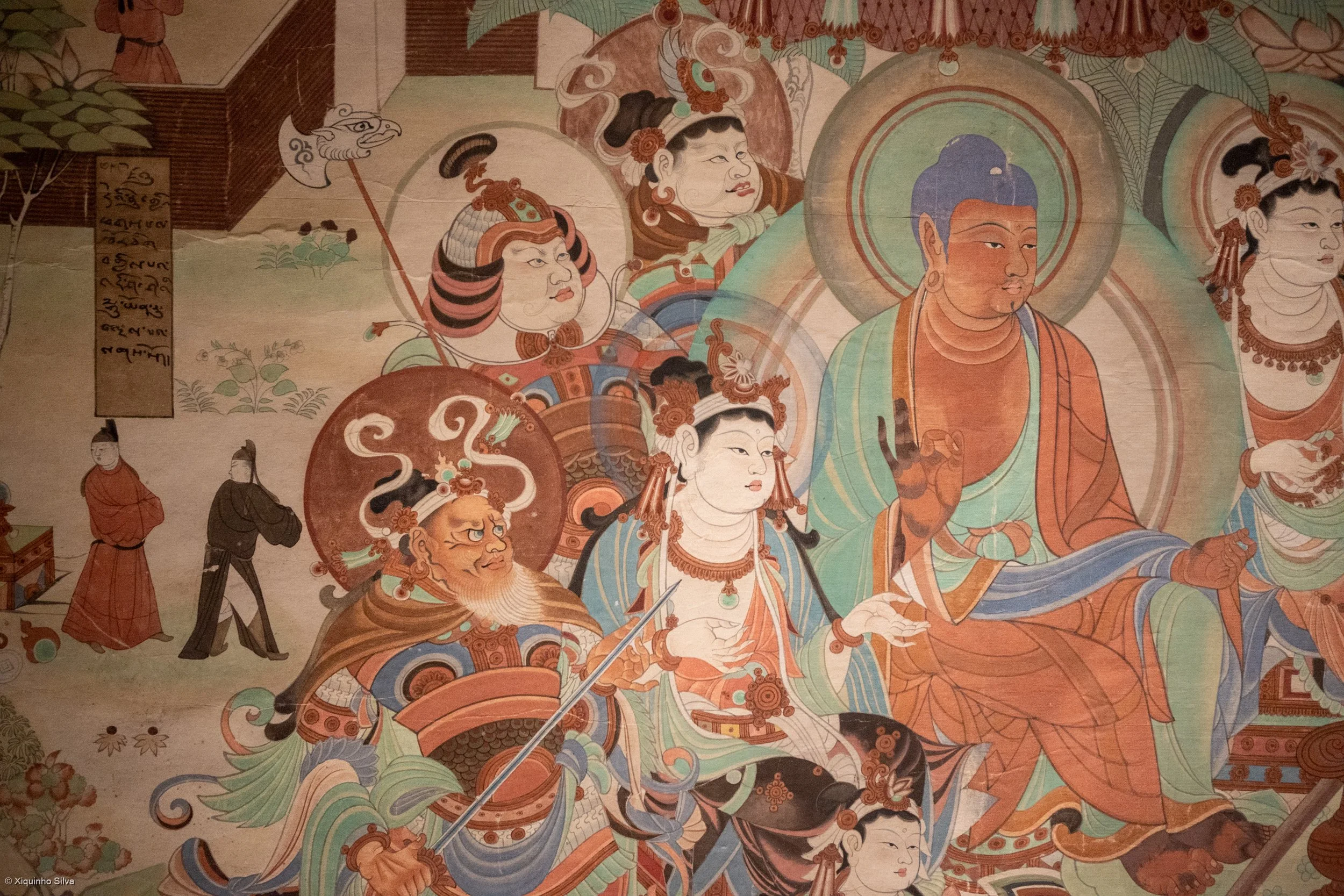
A typical example of the art in one of the caves (https://upload.wikimedia.org/wikipedia/commons/f/ff/Mogao_Caves_%2854376977152%29.jpg)
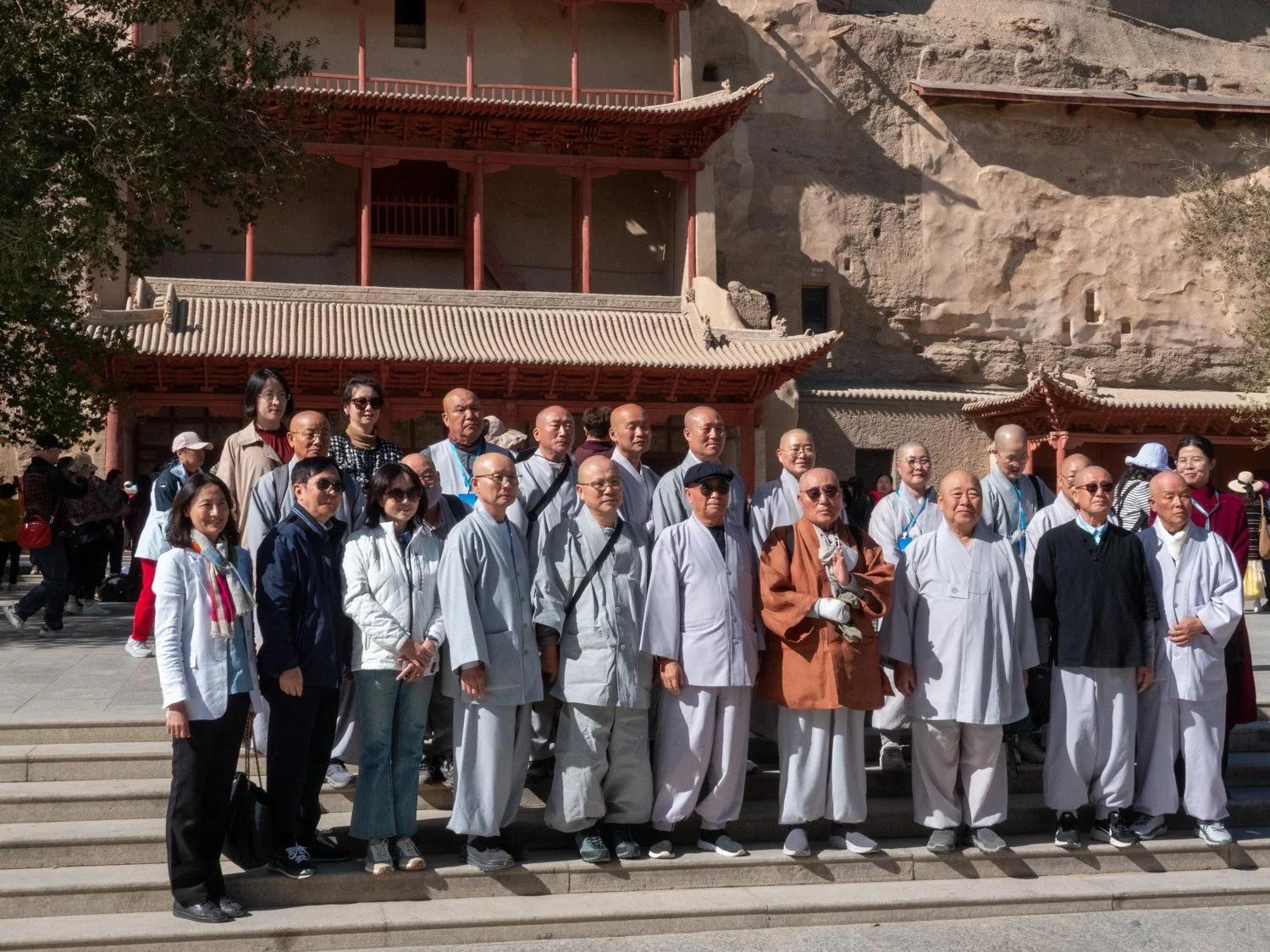
Monks at Mogao
Jiayuguan (嘉峪關)
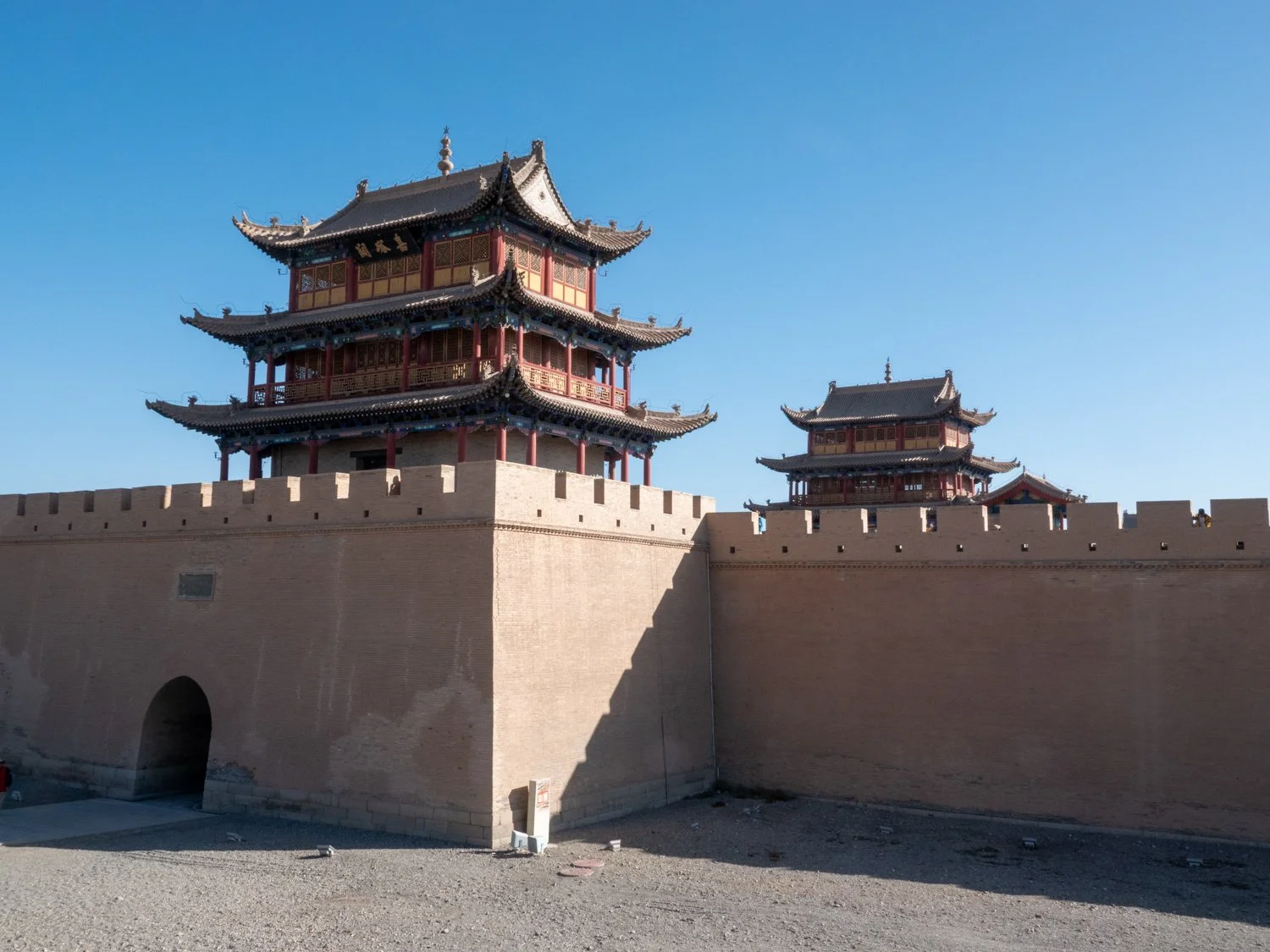
Jiayuguan is famous as the western-most fort of the 14th century Great Wall. In traditional Chinese lore, the regions beyond Jiayuguan are beyond the limits of Chinese civilization, the fearsome Gobi and Taklamakan Deserts.
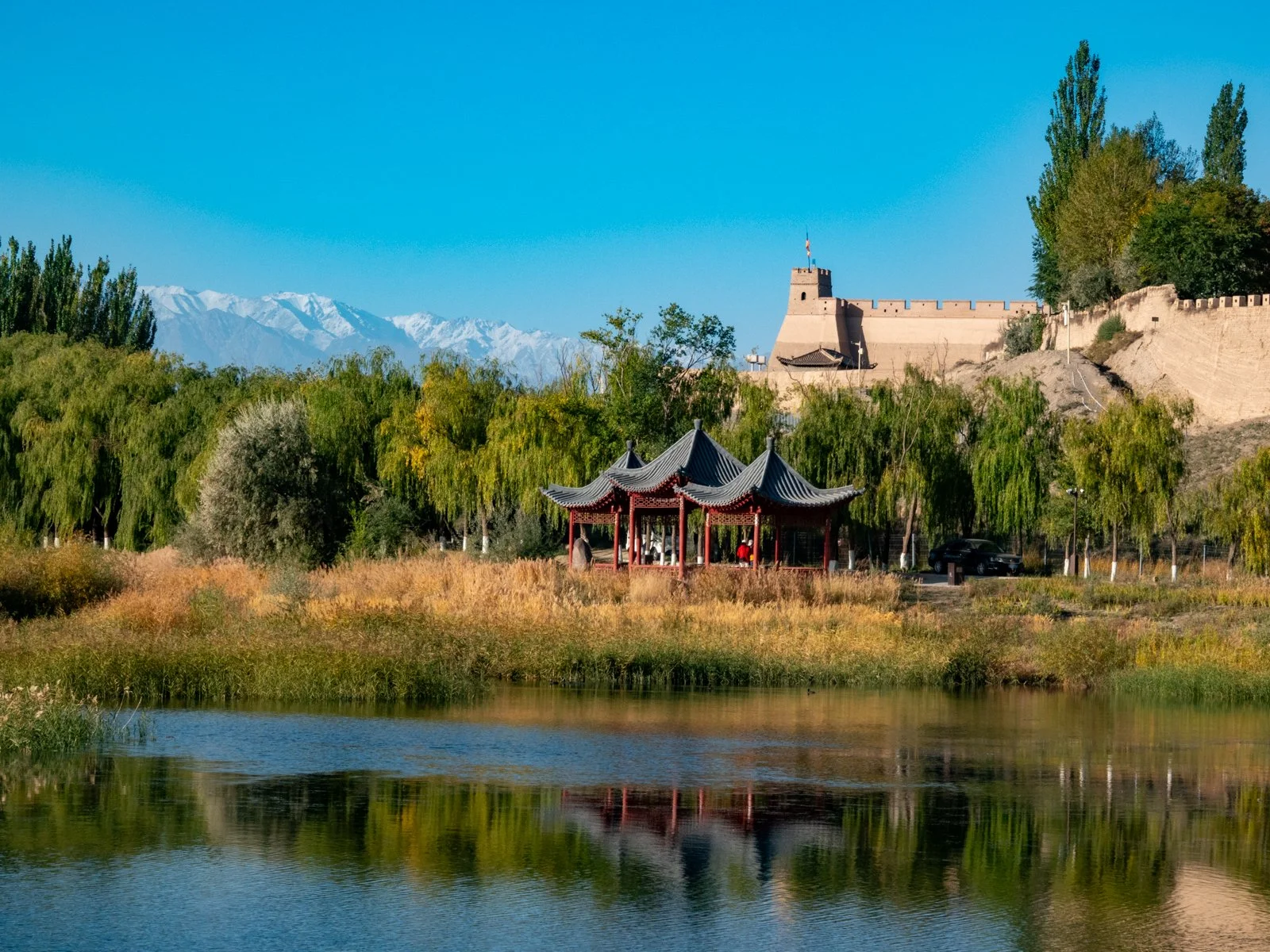
The Nine-Eye Spring Lake at Jiayuguan with Qilian Mountains in the background.
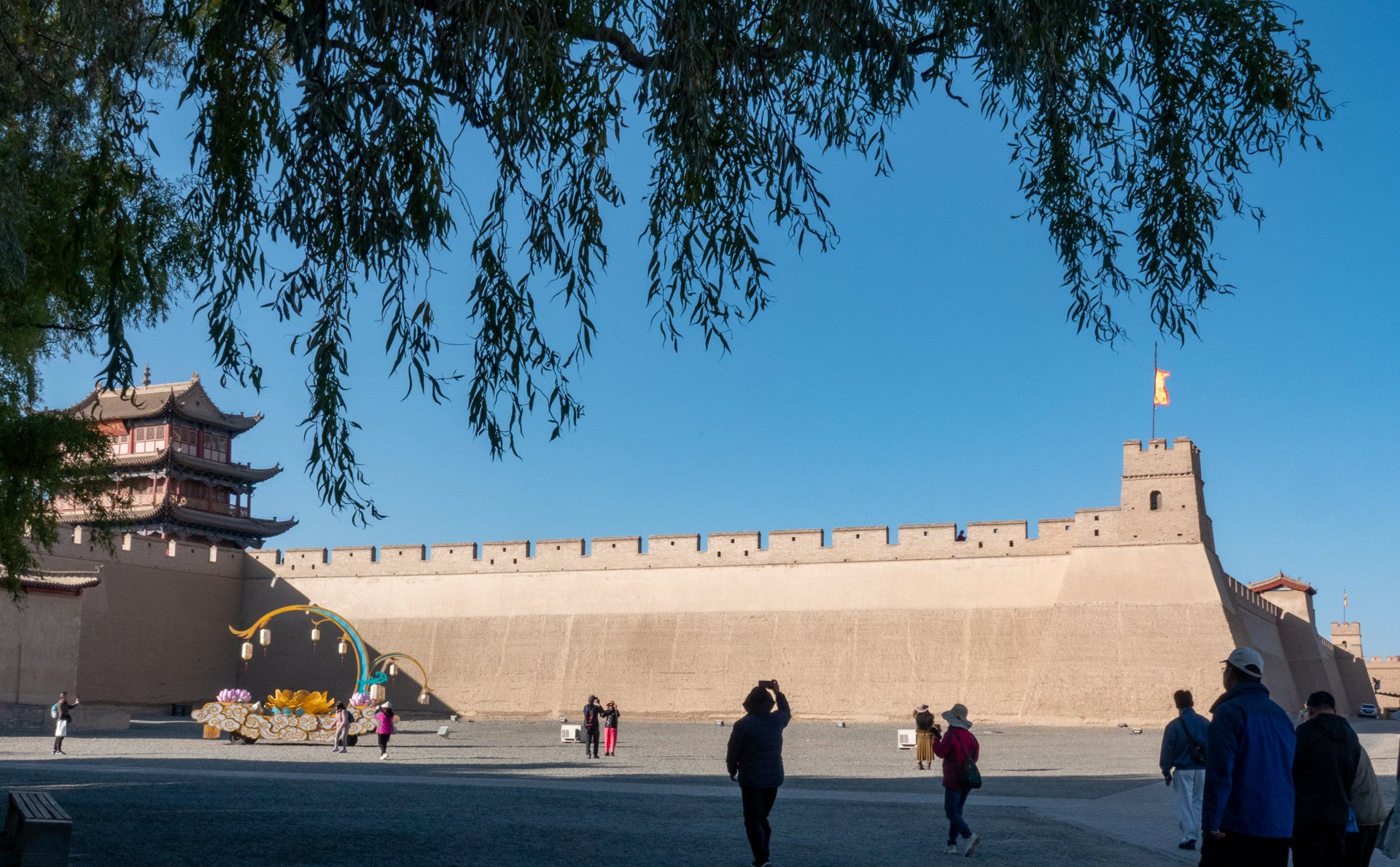
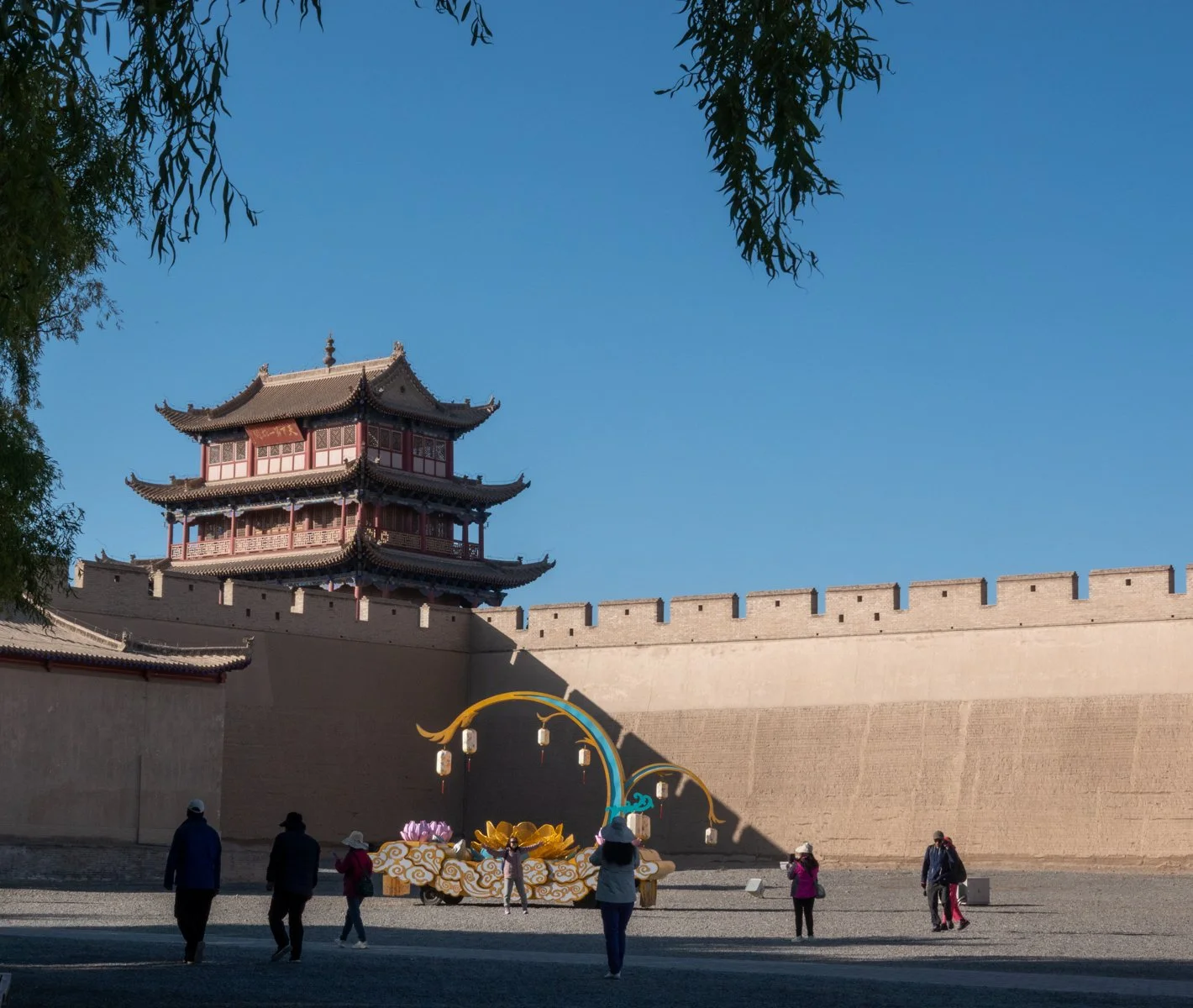
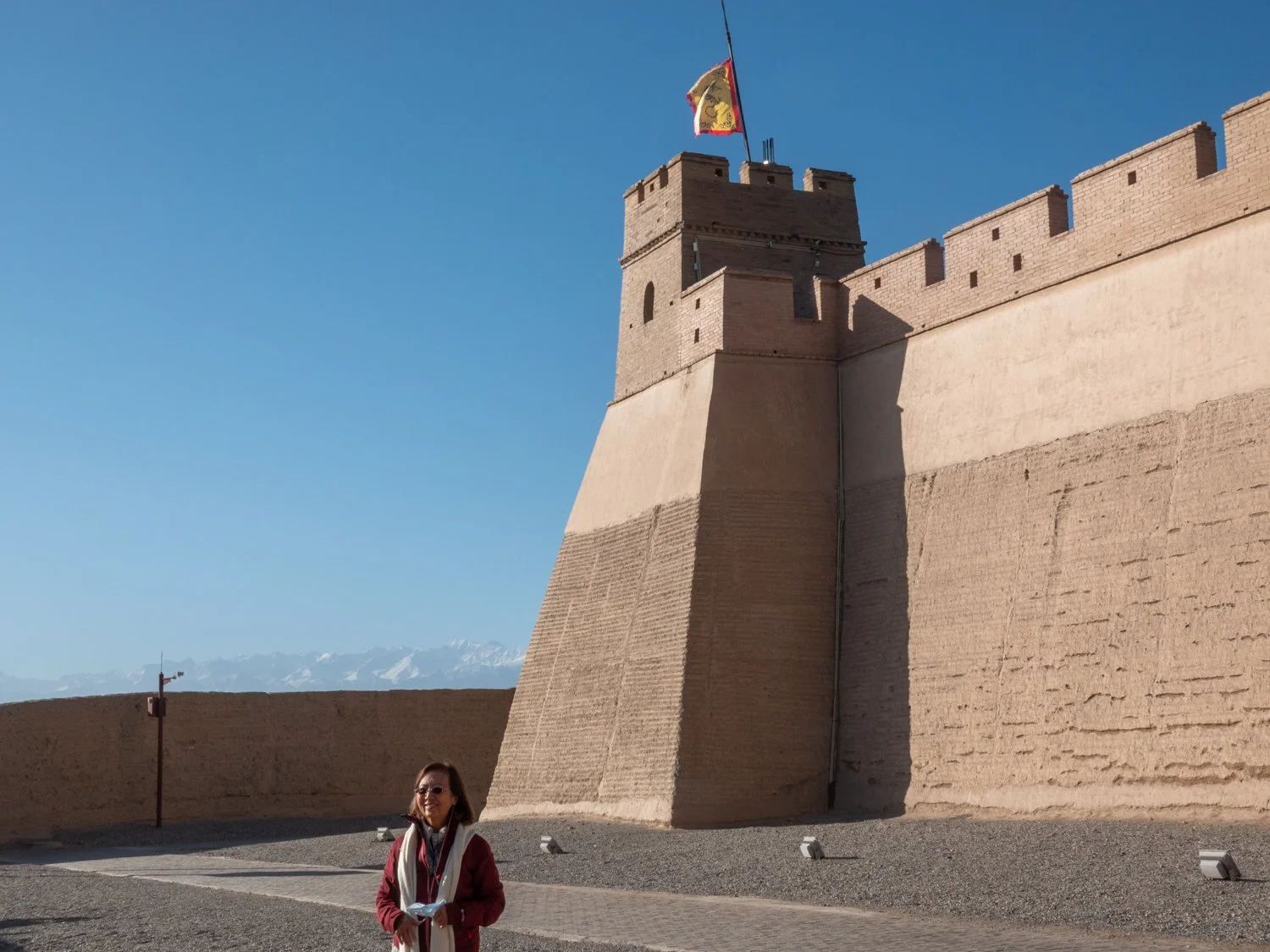
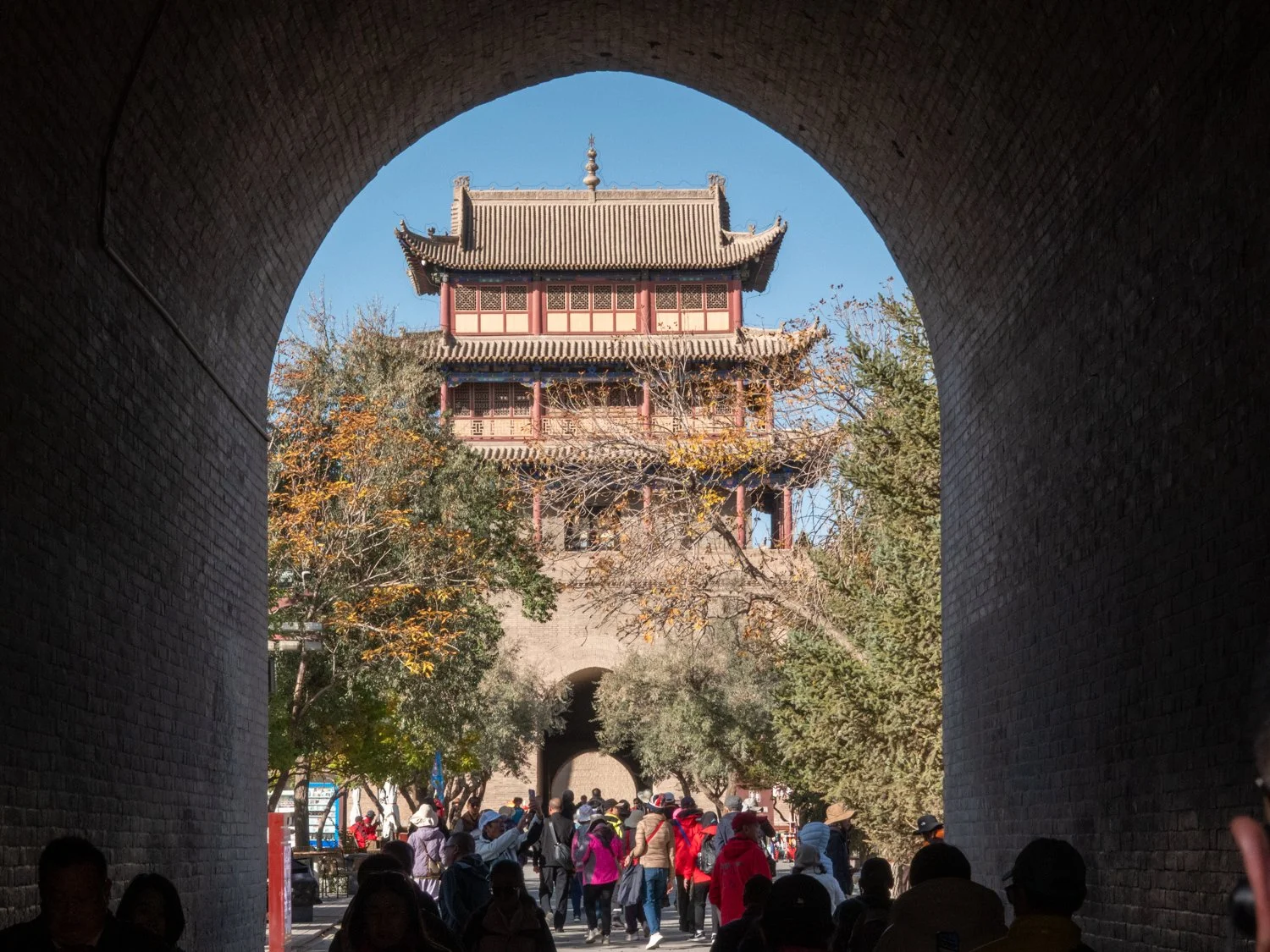
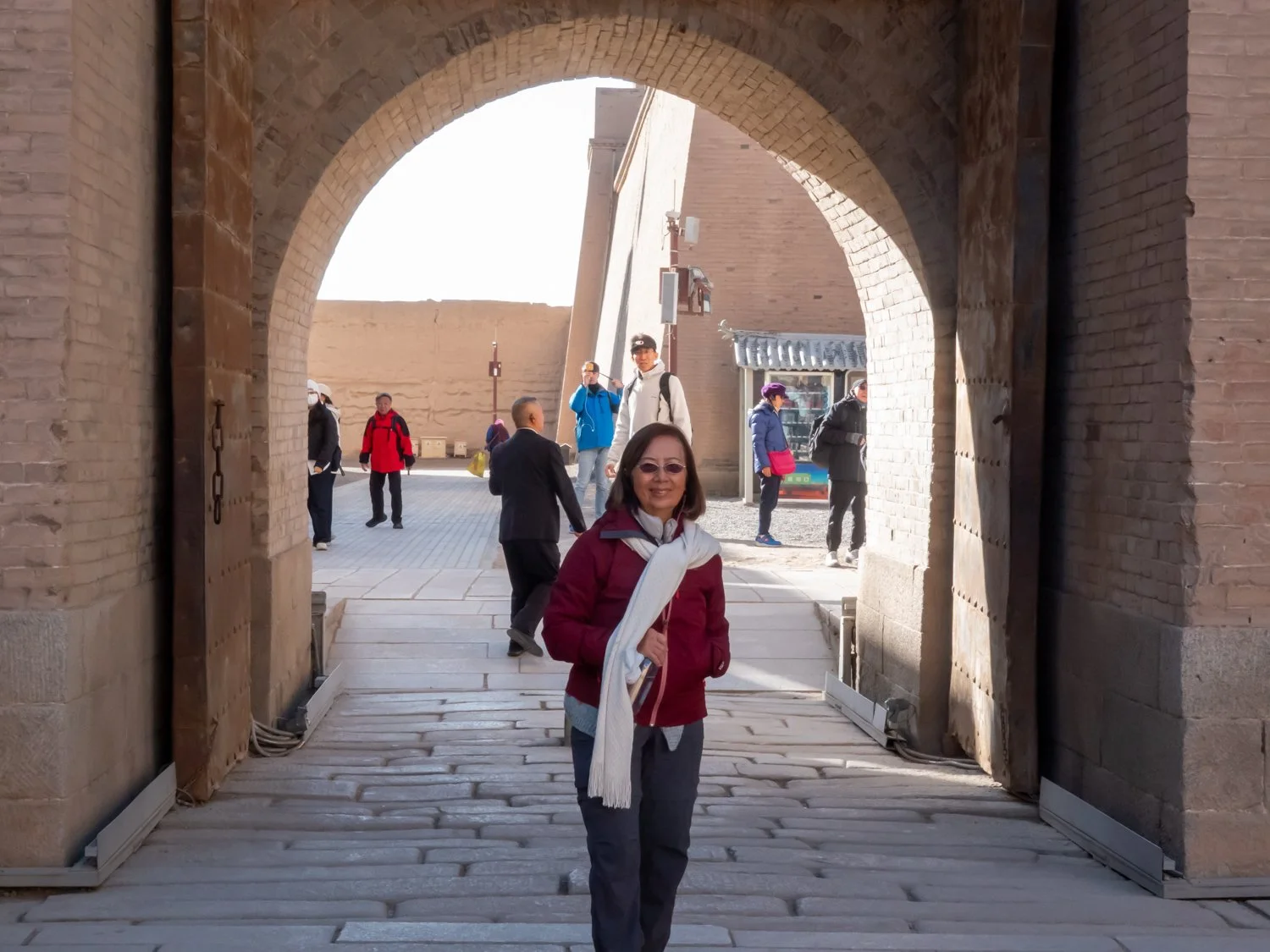
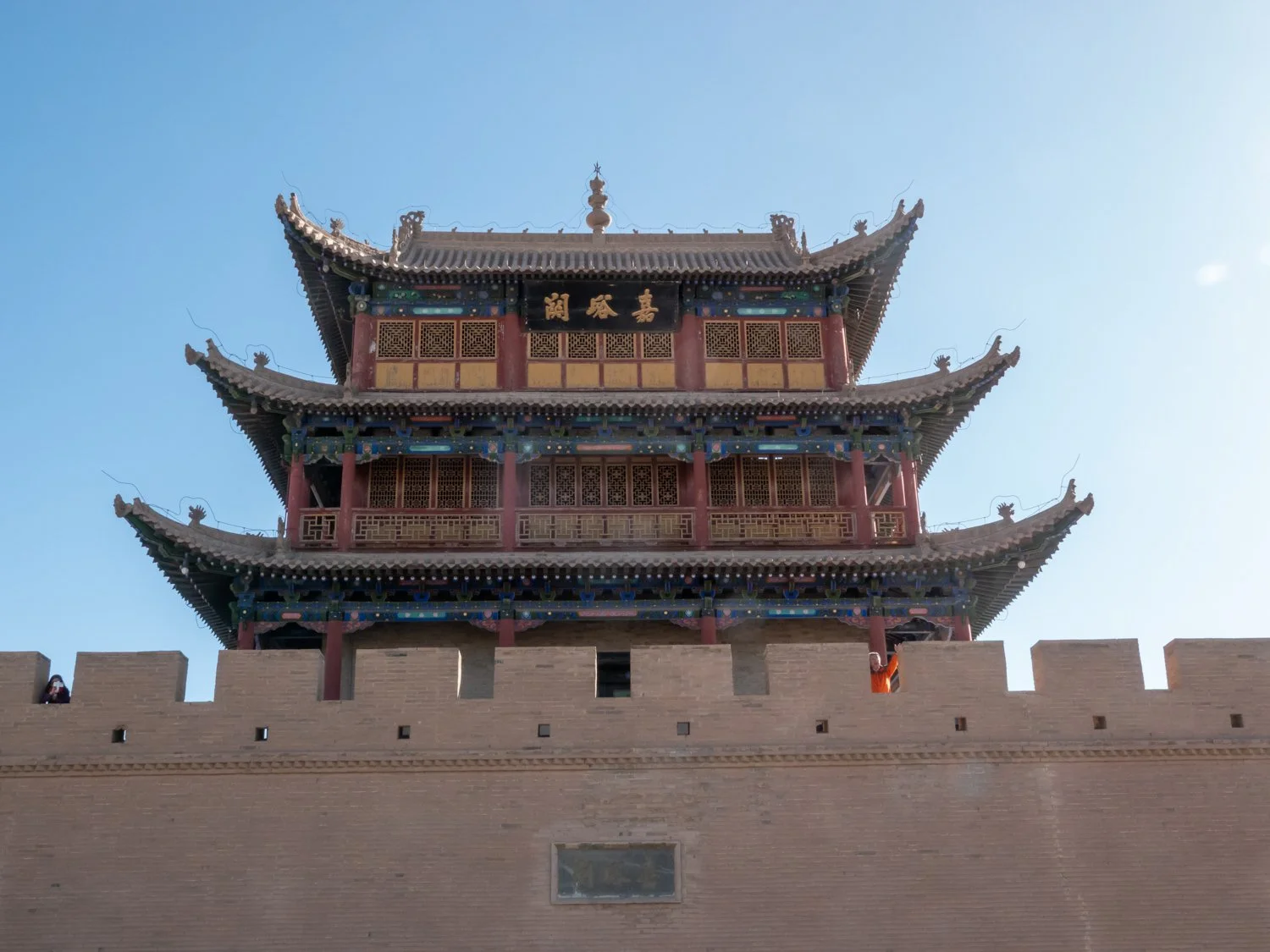
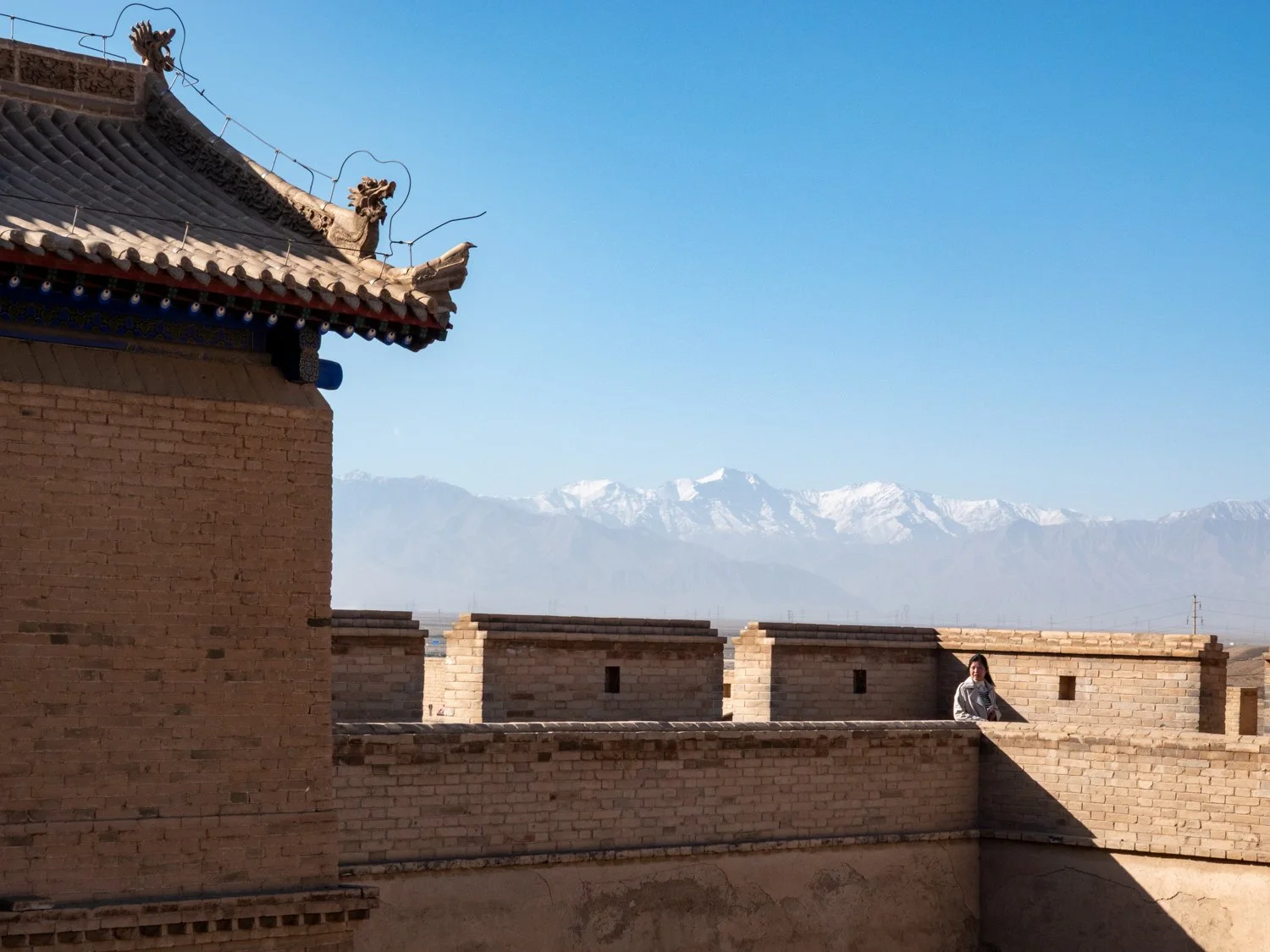
The Qilian Mountains are the backdrop to the fort
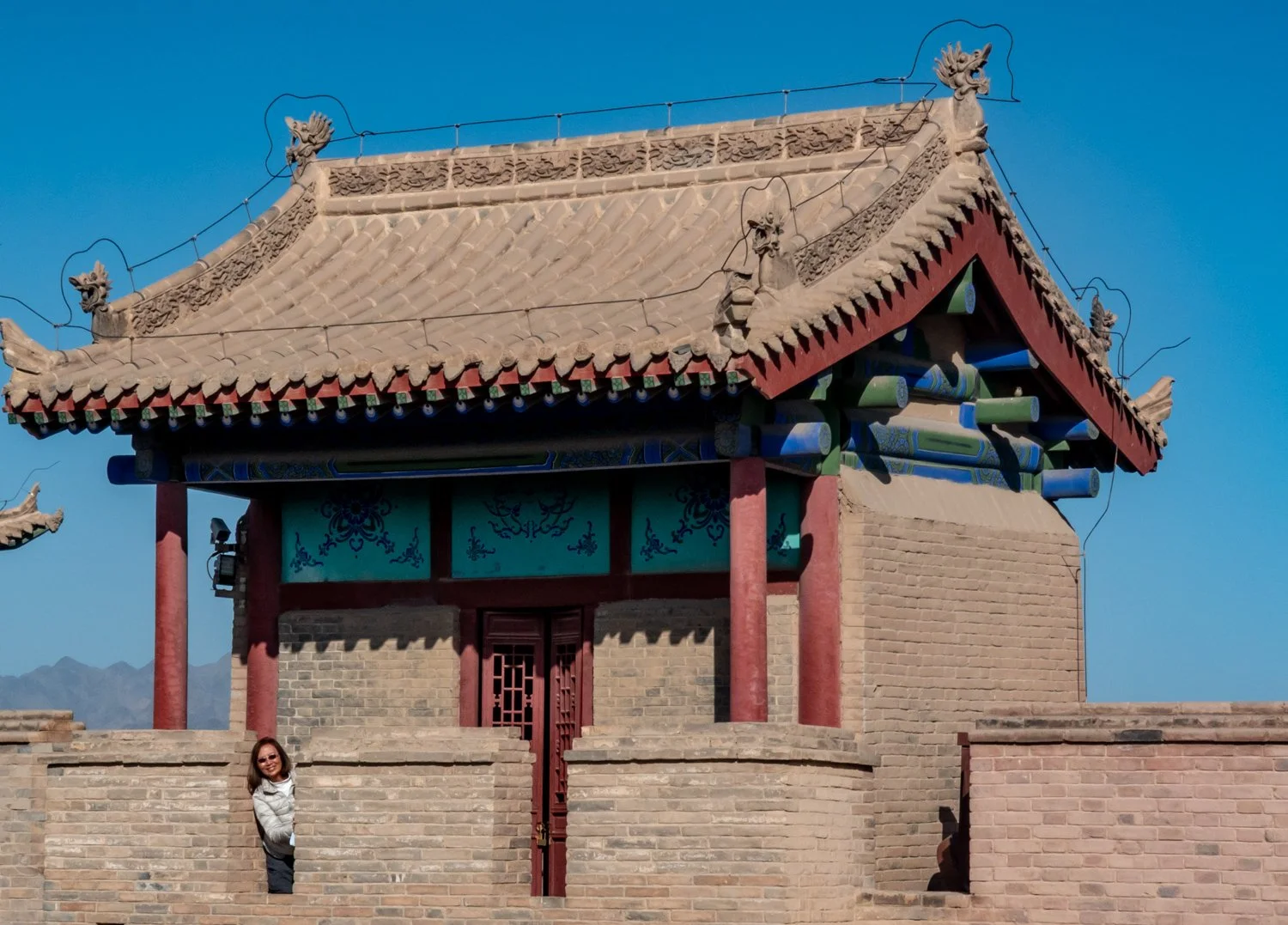
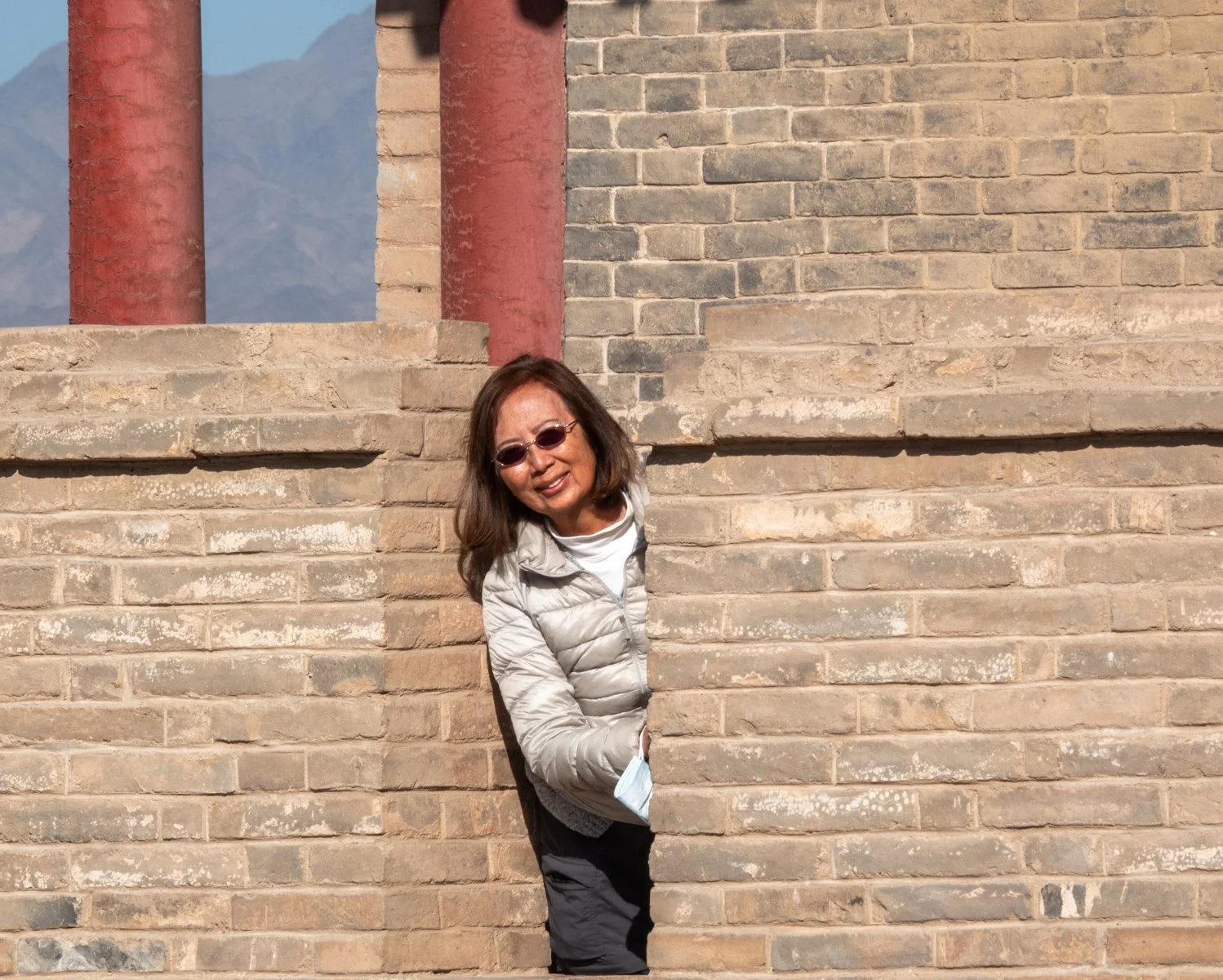
Gobi Desert
Most of the Silk Road in Xinjiang and Gansu travels through miles and miles of forbidding desert. Now there are wind and solar farms stretching to the horizon and the roads are filled with industrial trucks hauling goods that keep the Chinese power industries humming. On several occasions we passed trucks hauling the blades of wind turbines which were over 100 m long, longer than a football field.
The government is also building tourist attractions, hoping to lure more visitors to the area. Some of these sites are rather bizarre amidst the desert environment.
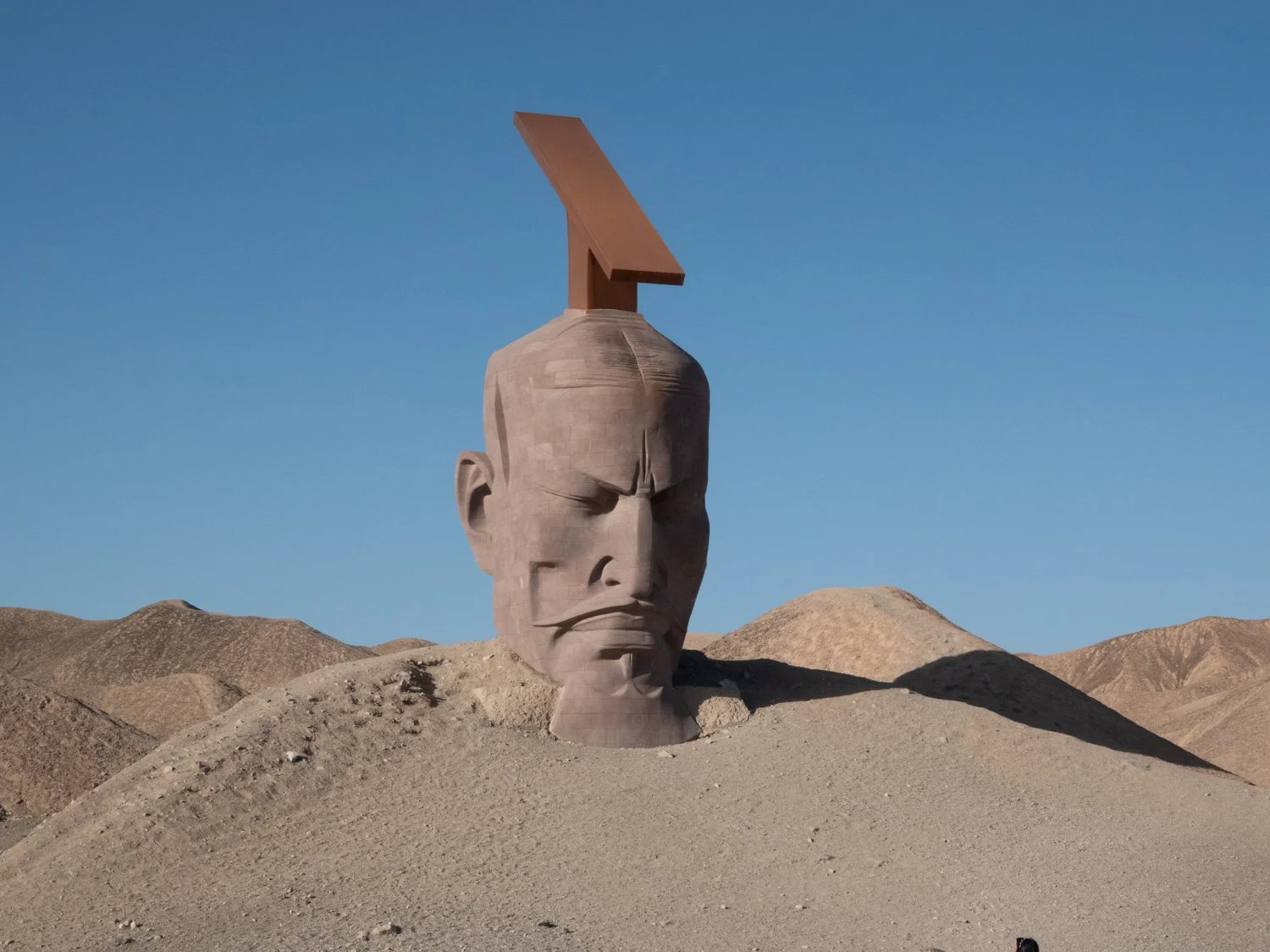
The “Emporer in the Han Dynasty” sculpture in the middle of the Gobi Desert in Gansu
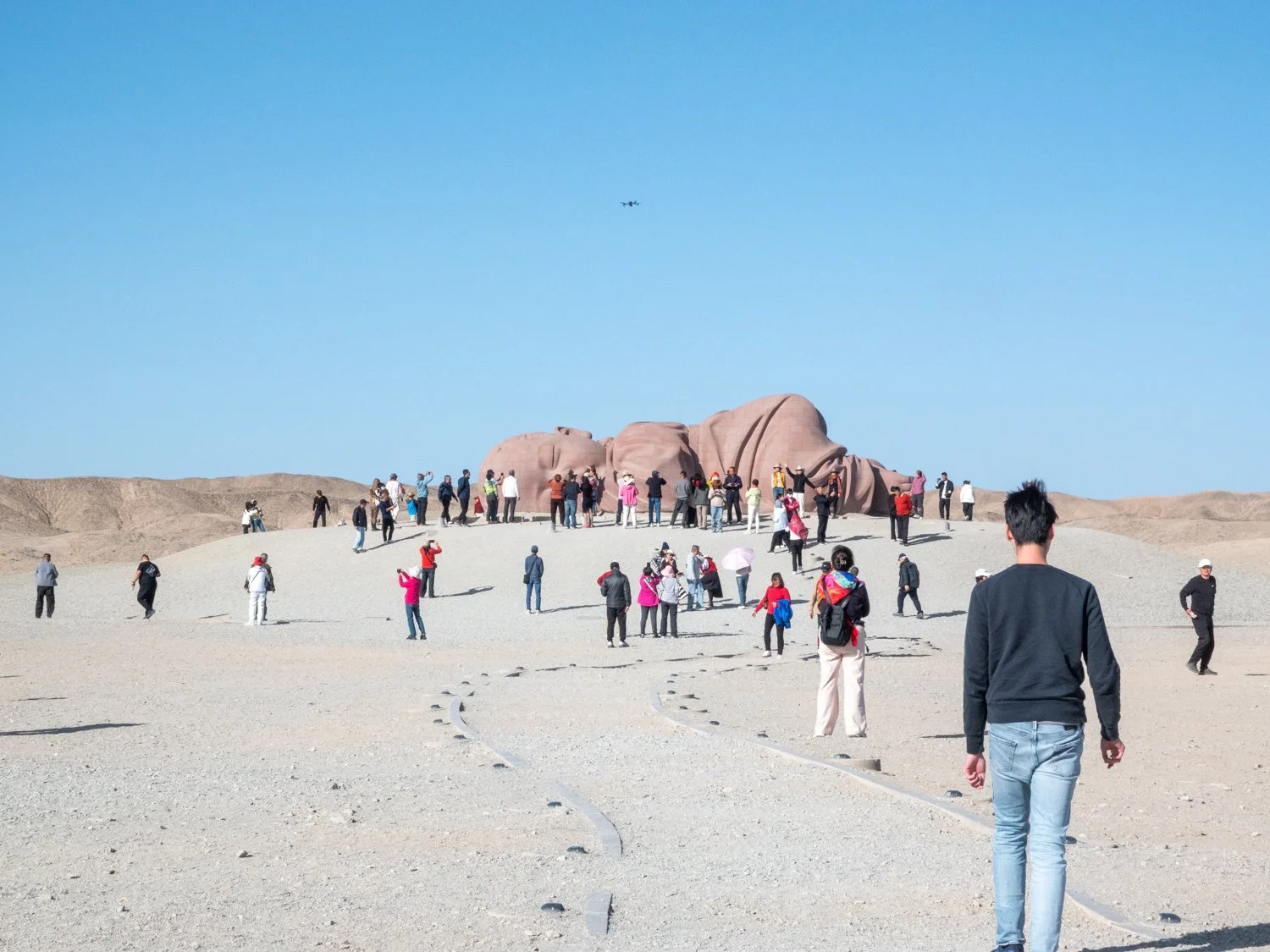
“Child of the Earth”, another of the large and bizarre sculptures in the middle of nowhere in the Gobi Desert
Turpan
Jiao He Ruins
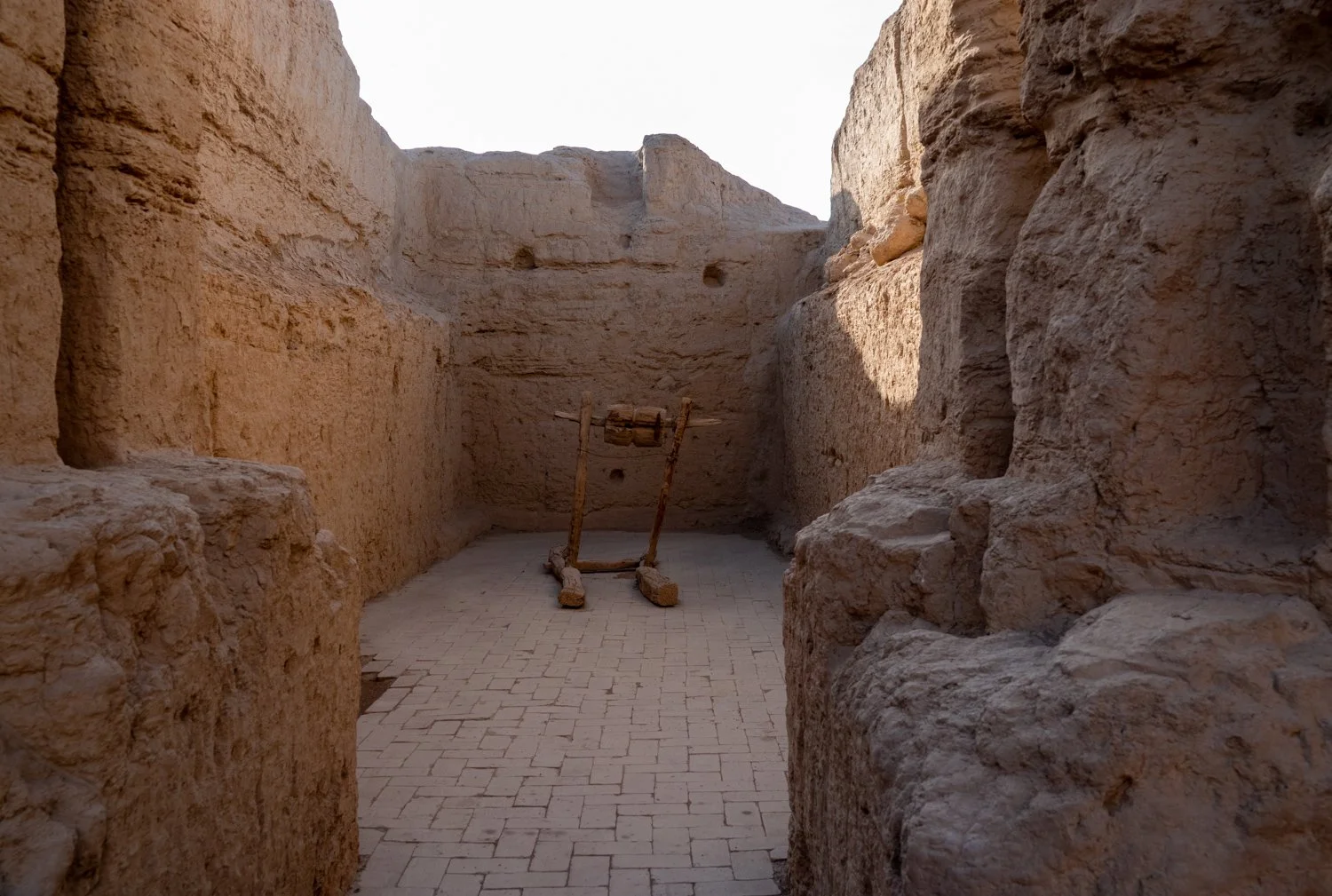
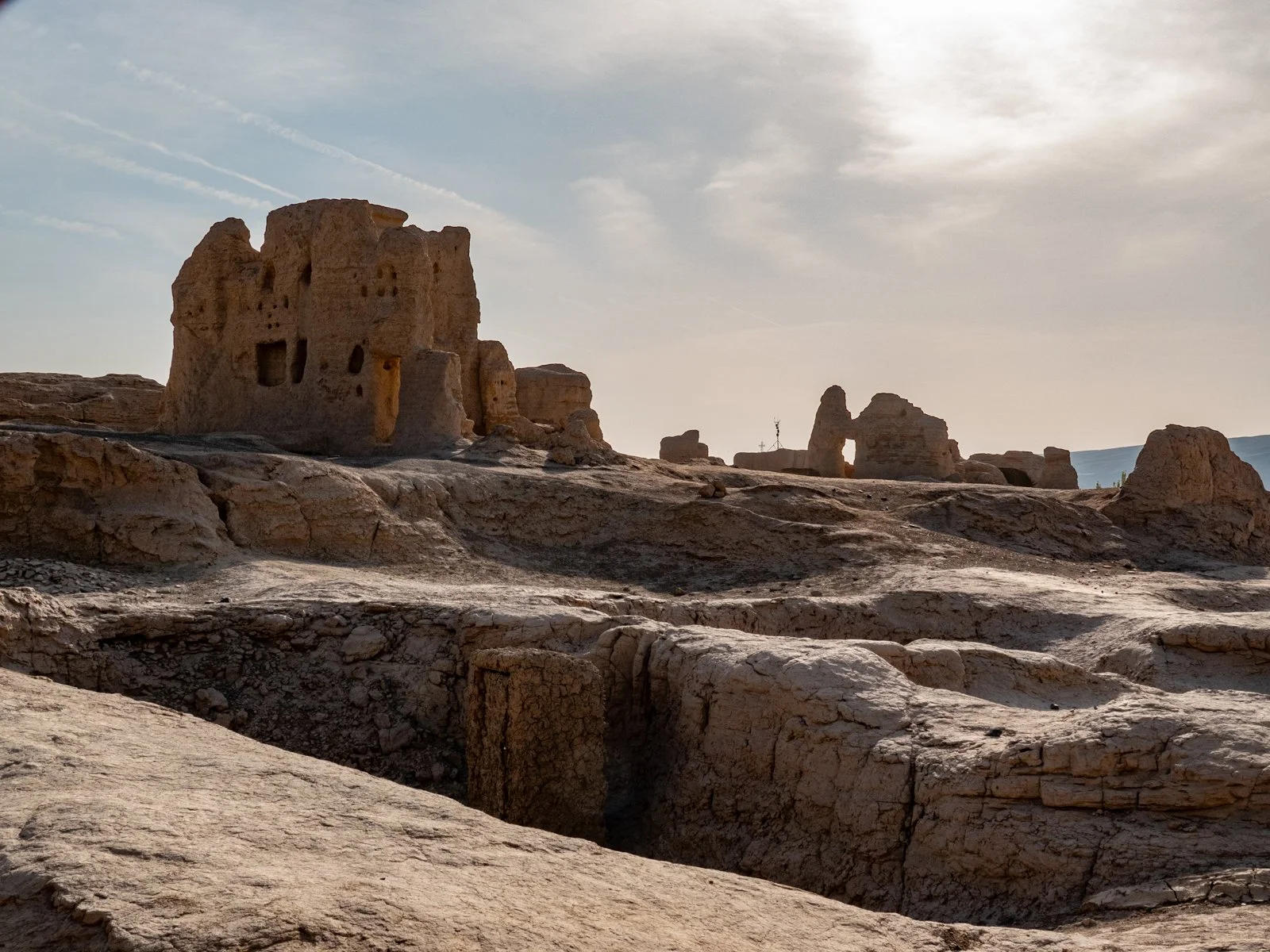
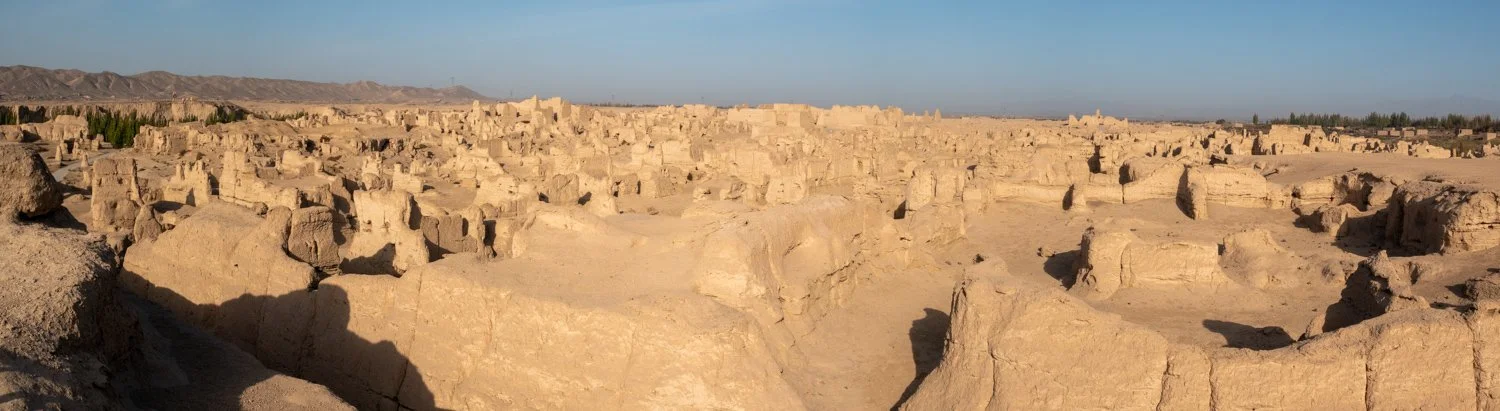
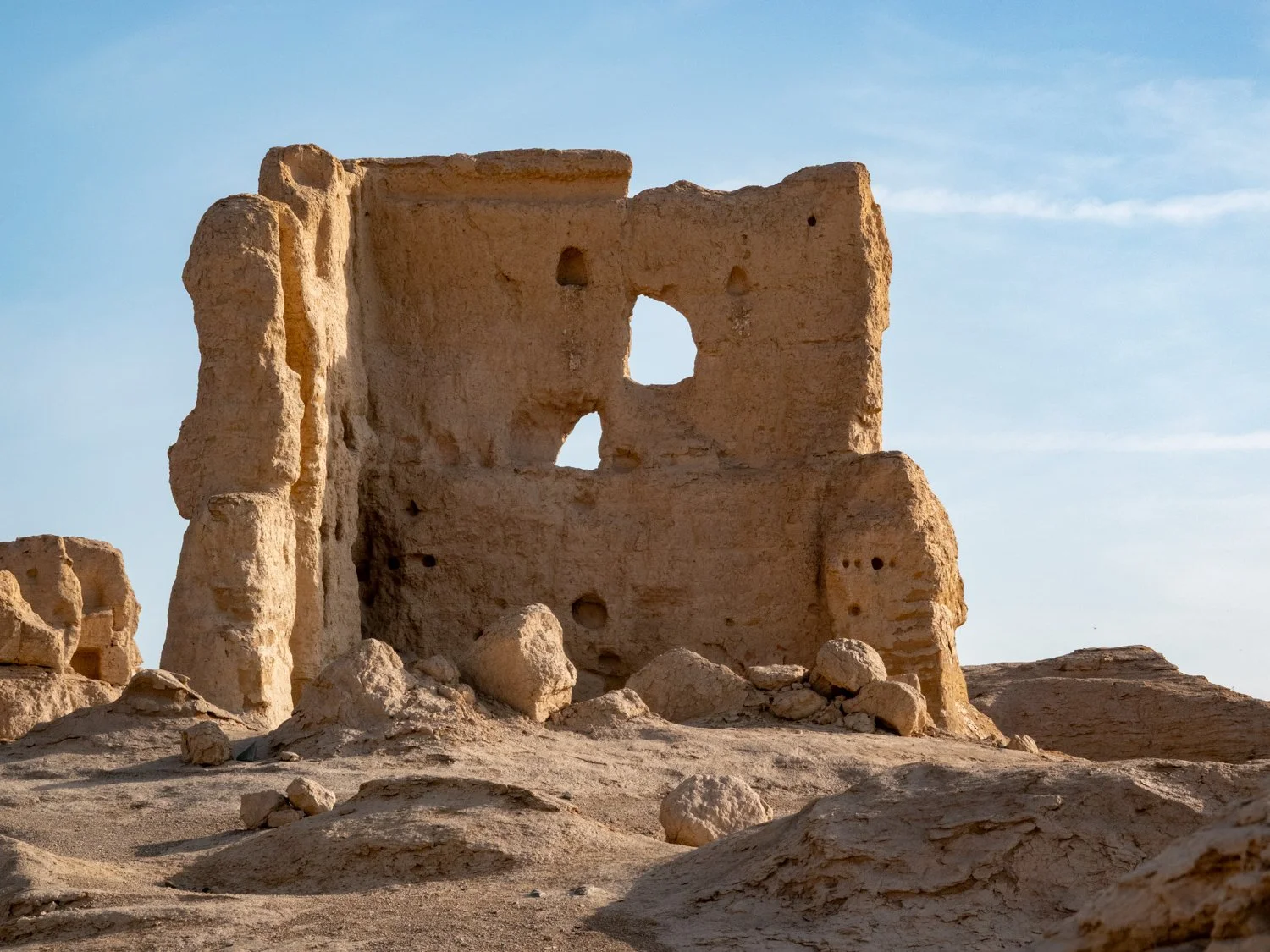
About 10 km west of Turpan in Xinjiang is an ancient city ruins known as Jiao He (交河). Its name derives from its location at the junction of two rivers. The ruins are on the top of a plateau along a steep cliff that lies between two deep river valleys, which provided a constant water supply during its prosperous times, before the 9th century. A unique aspect of the ruins is that many of the dwellings are below ground which provided natural cooling in the intense desert environment. The city was an important layover for travelers along the Silk Road.
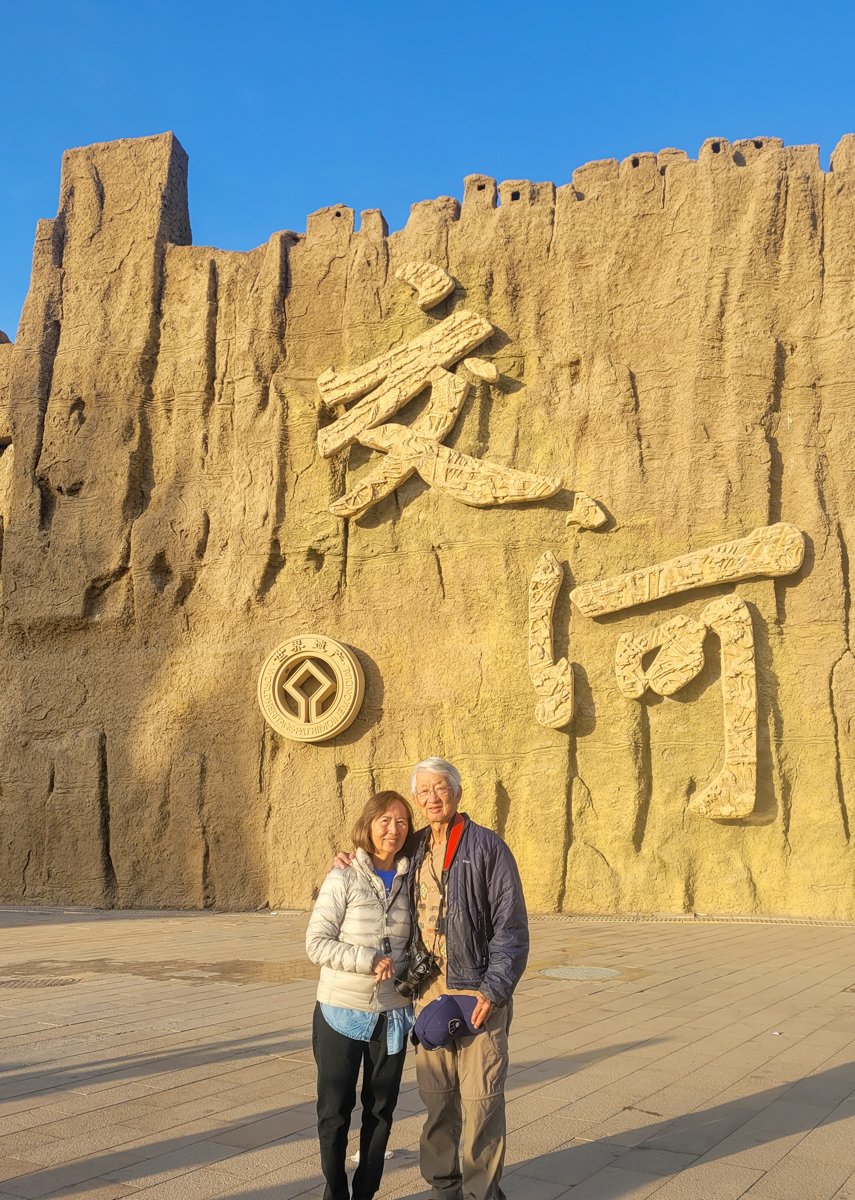
At the entrance to Jiao He
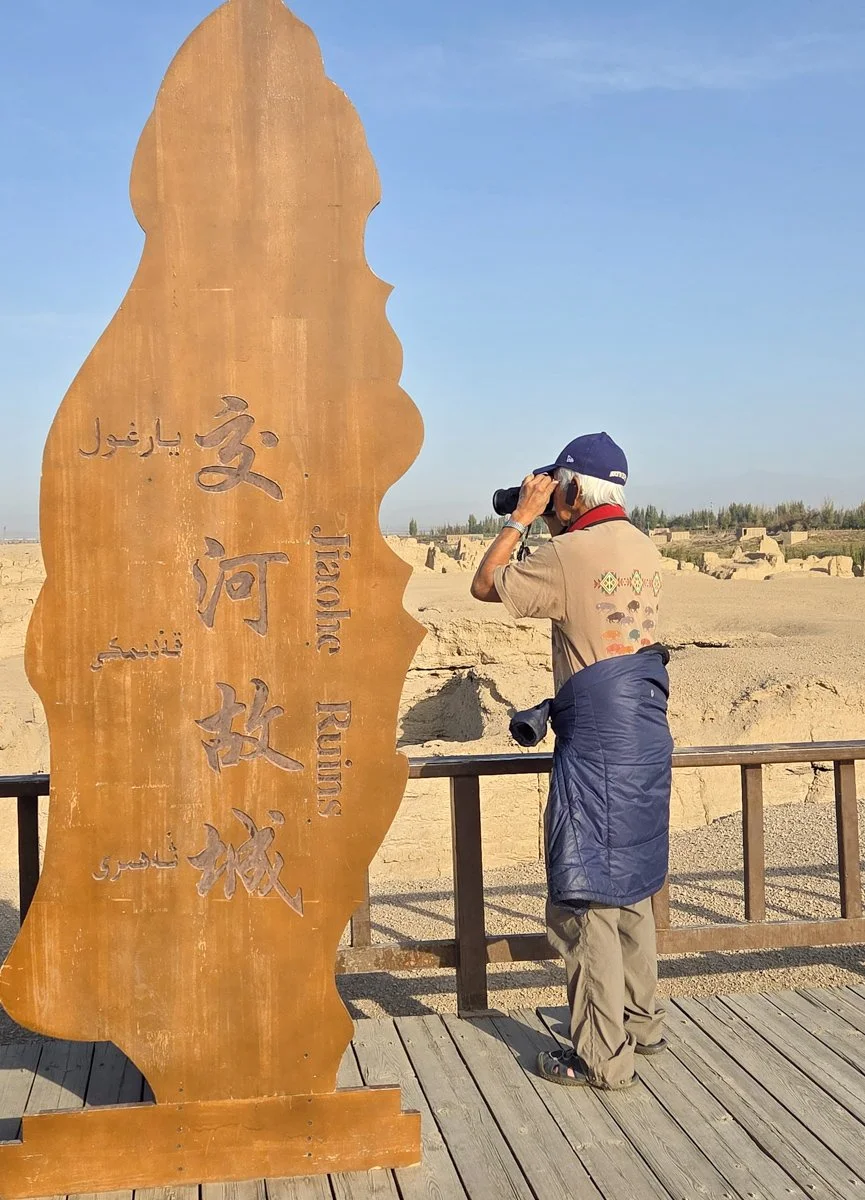
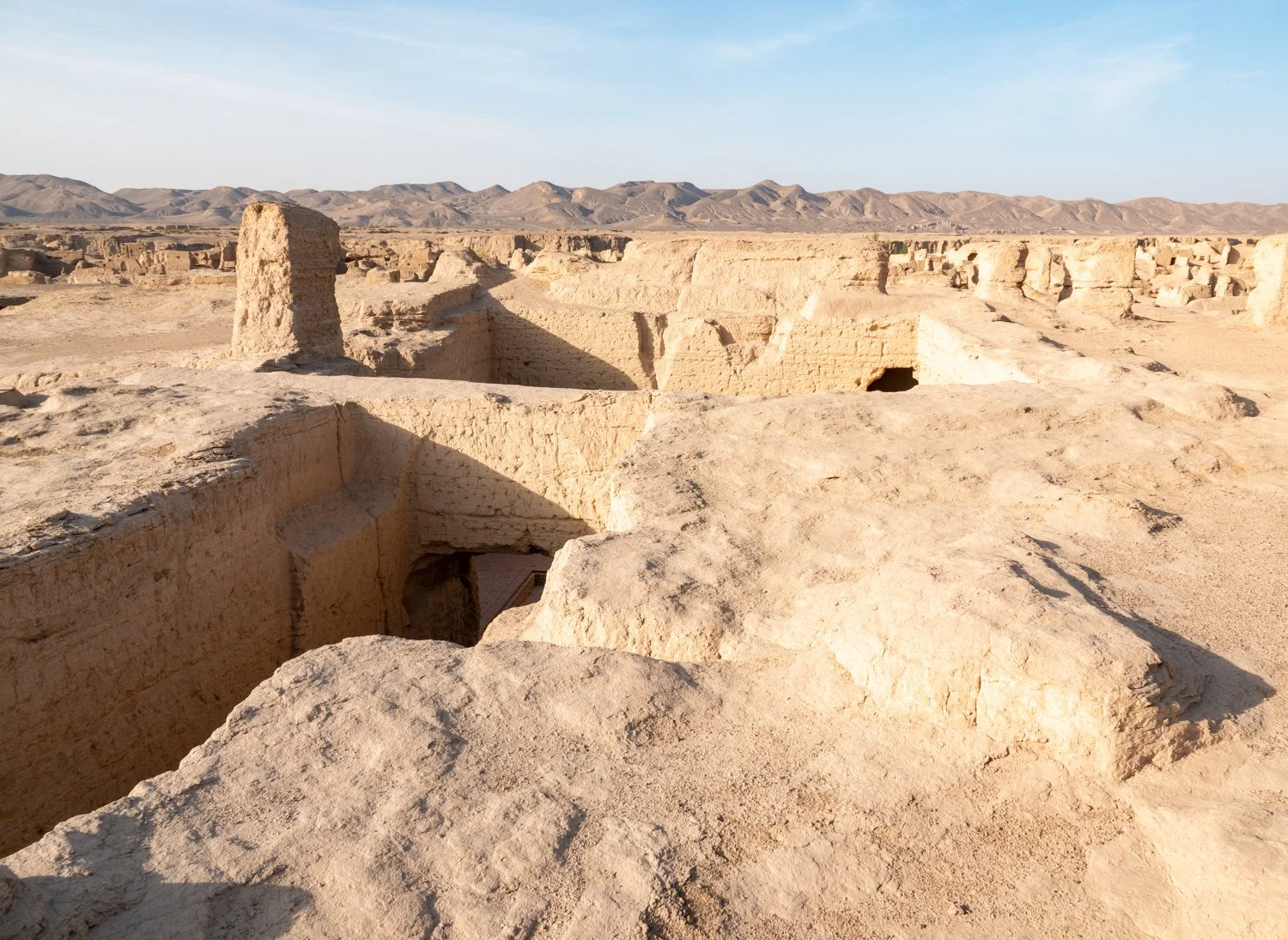
Many of the dwellings are underground
Flaming Mountain (火焰山)
In a famous incident in the Journey to the West, the Monkey King battles Princess Iron Fan is a brick-red mountain range made of red sandstone, the Flaming Muntains. In the summertime the desert gets so hot that one can cook eggs by burying them in the sand. Apparently that is demonstrated to the tourists in the summer
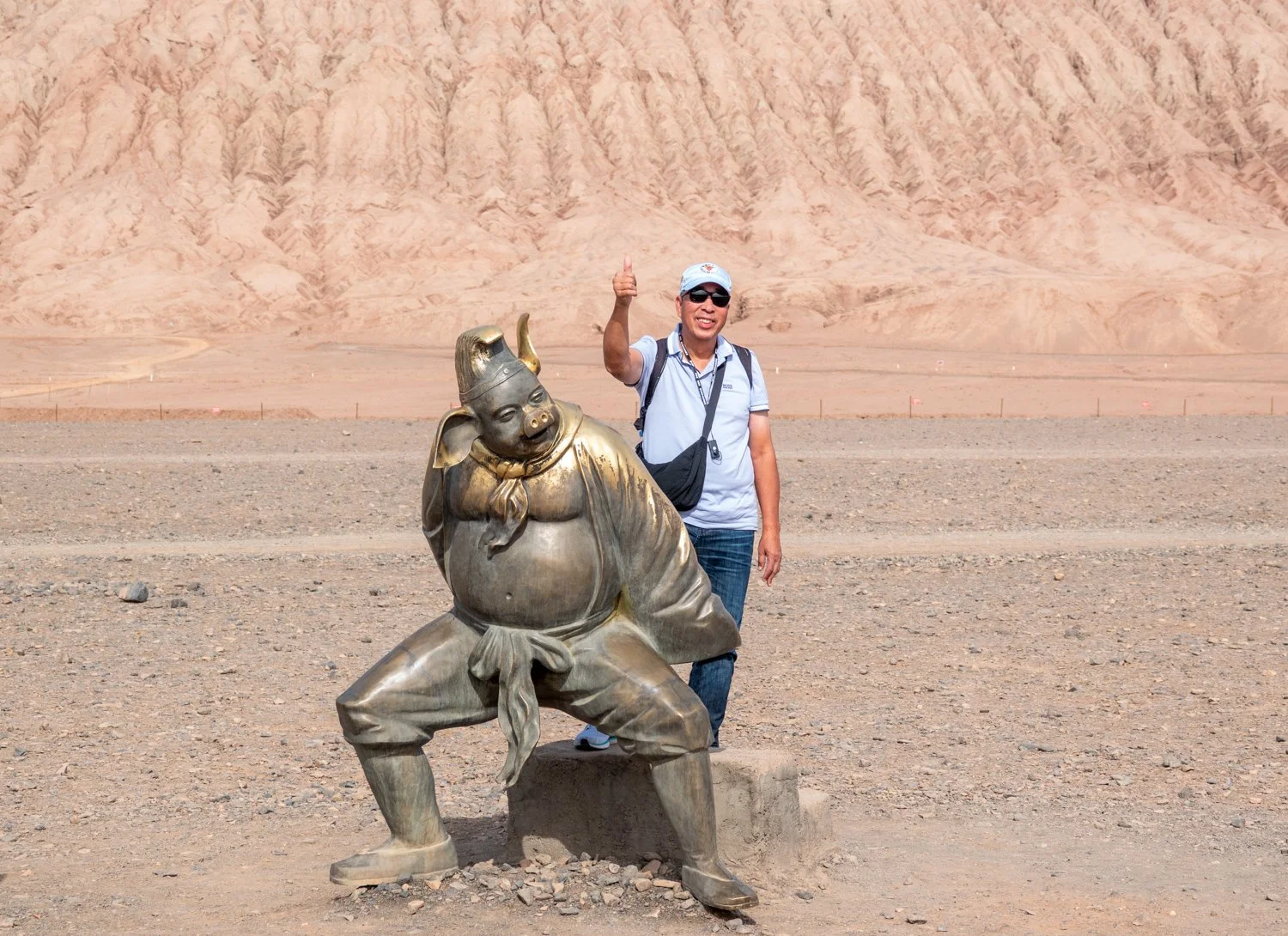
Zhu Bajie
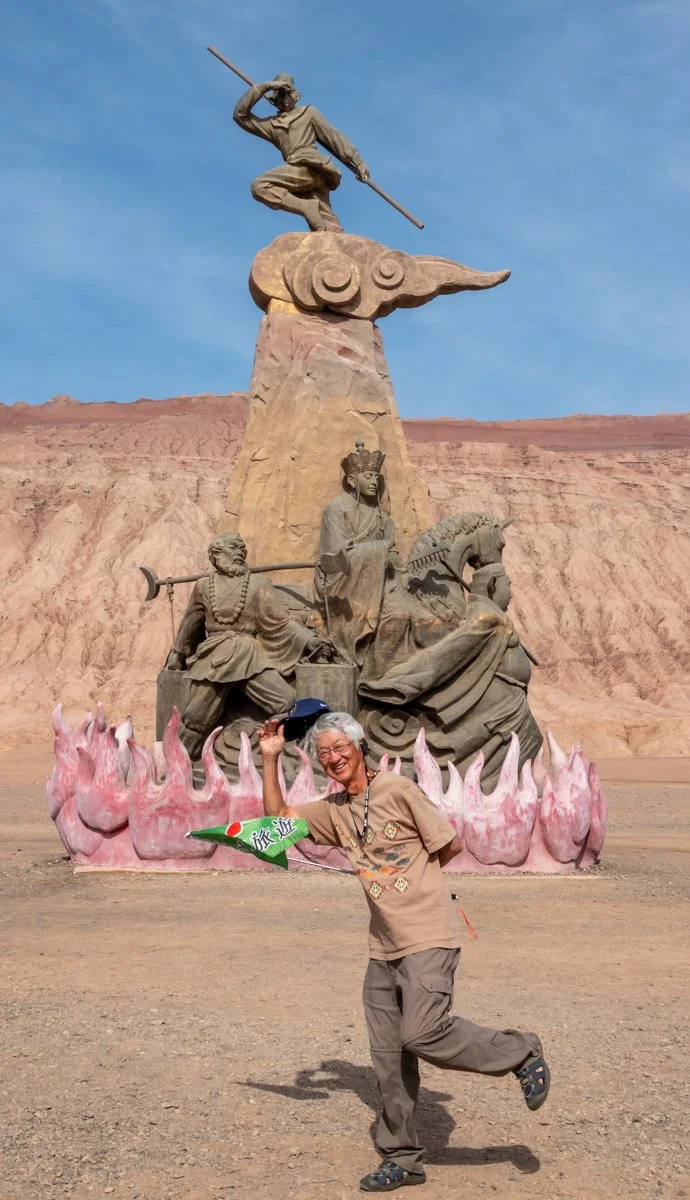
The mountains in the background turn reddish in the summertime heat and appear to be on fire.
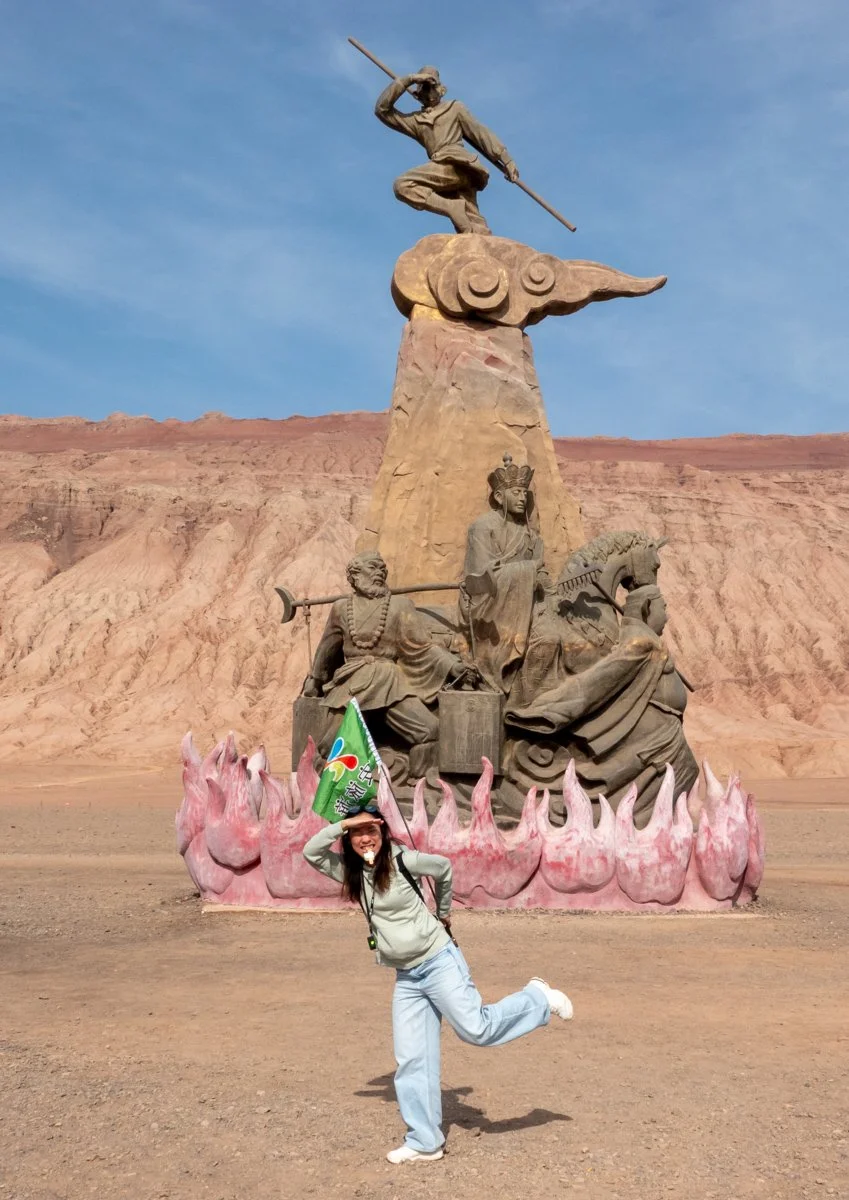
Sun Wukong and his faithful companions, with imitator
Zhangye Dafo Temple
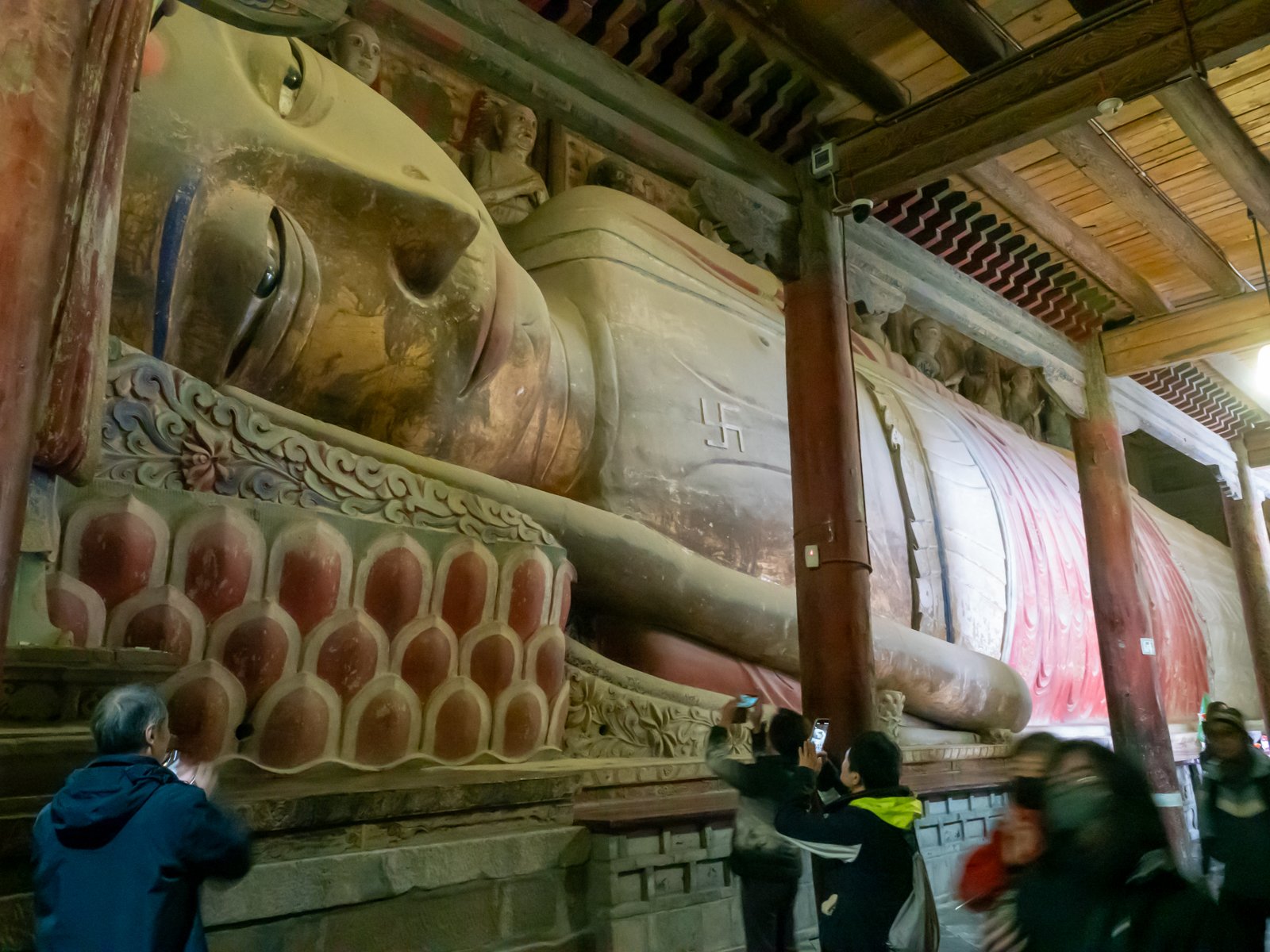
The Dafo temple in Zhangye has a gigantic reclining Buddha statue made around 1100 AD. It is 35 meters long or over 1/3 of the length of a football field
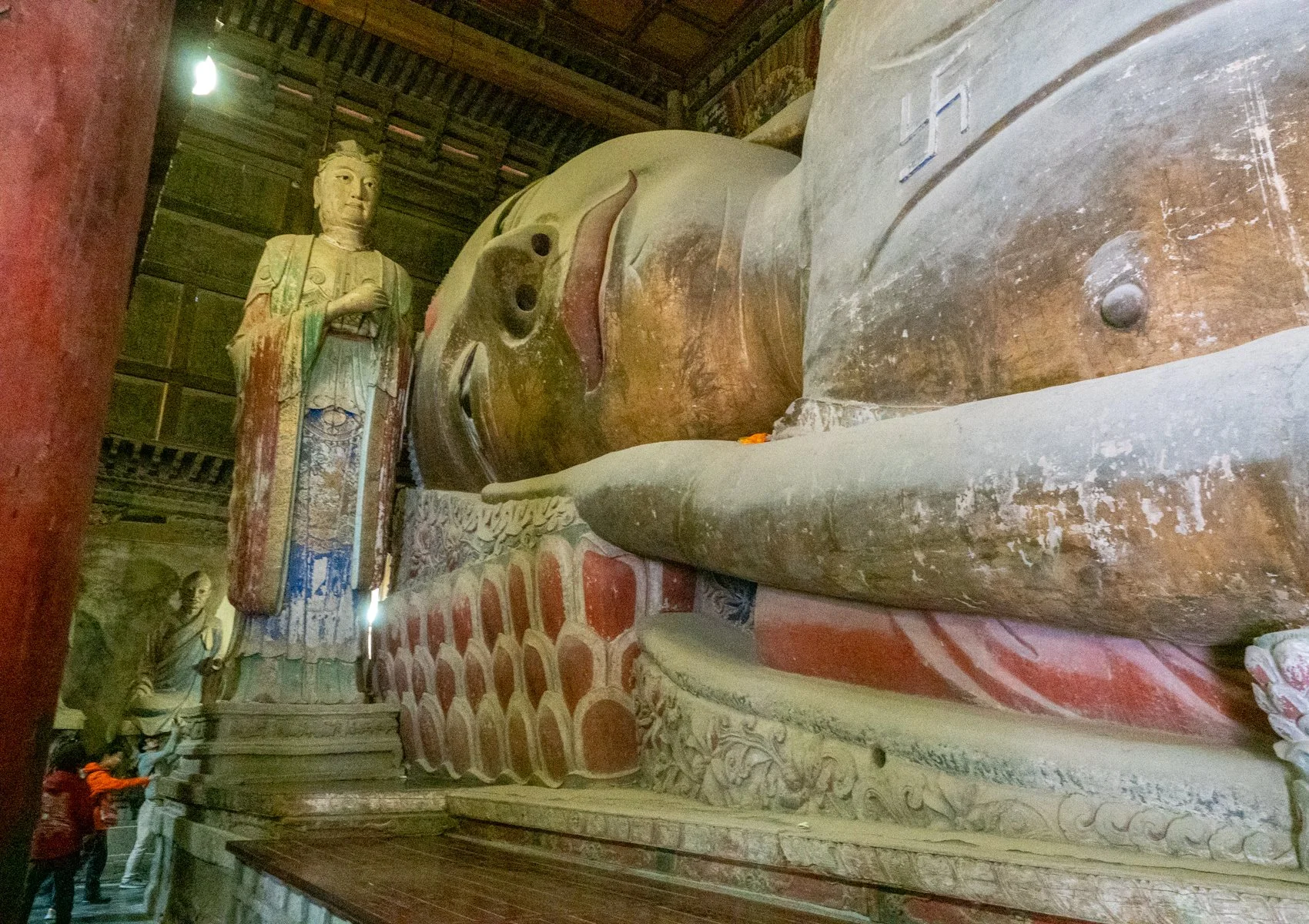
Giant reclining Buddha of Zhangye
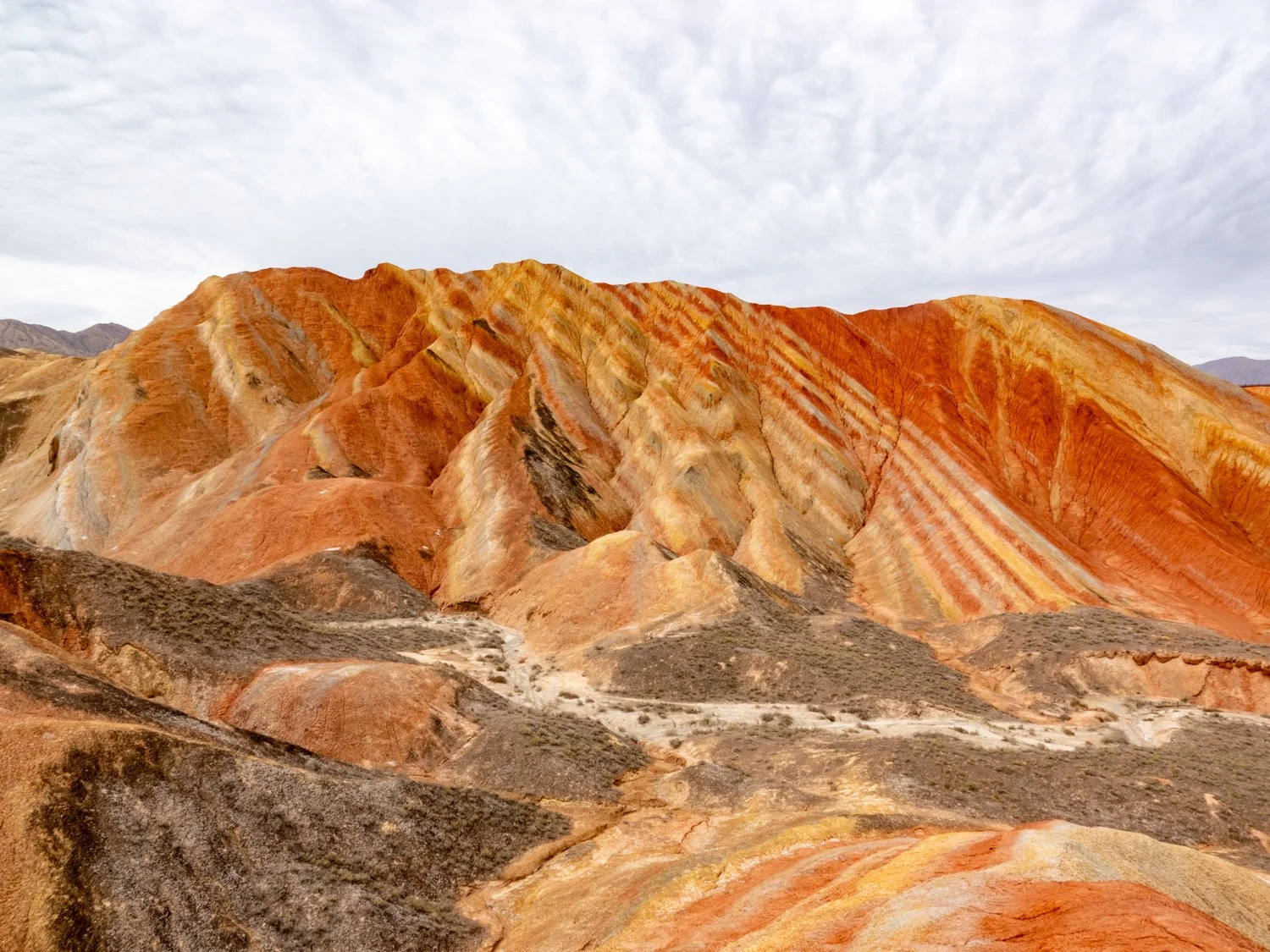
Zhangye Danxia Rainbow Mountains
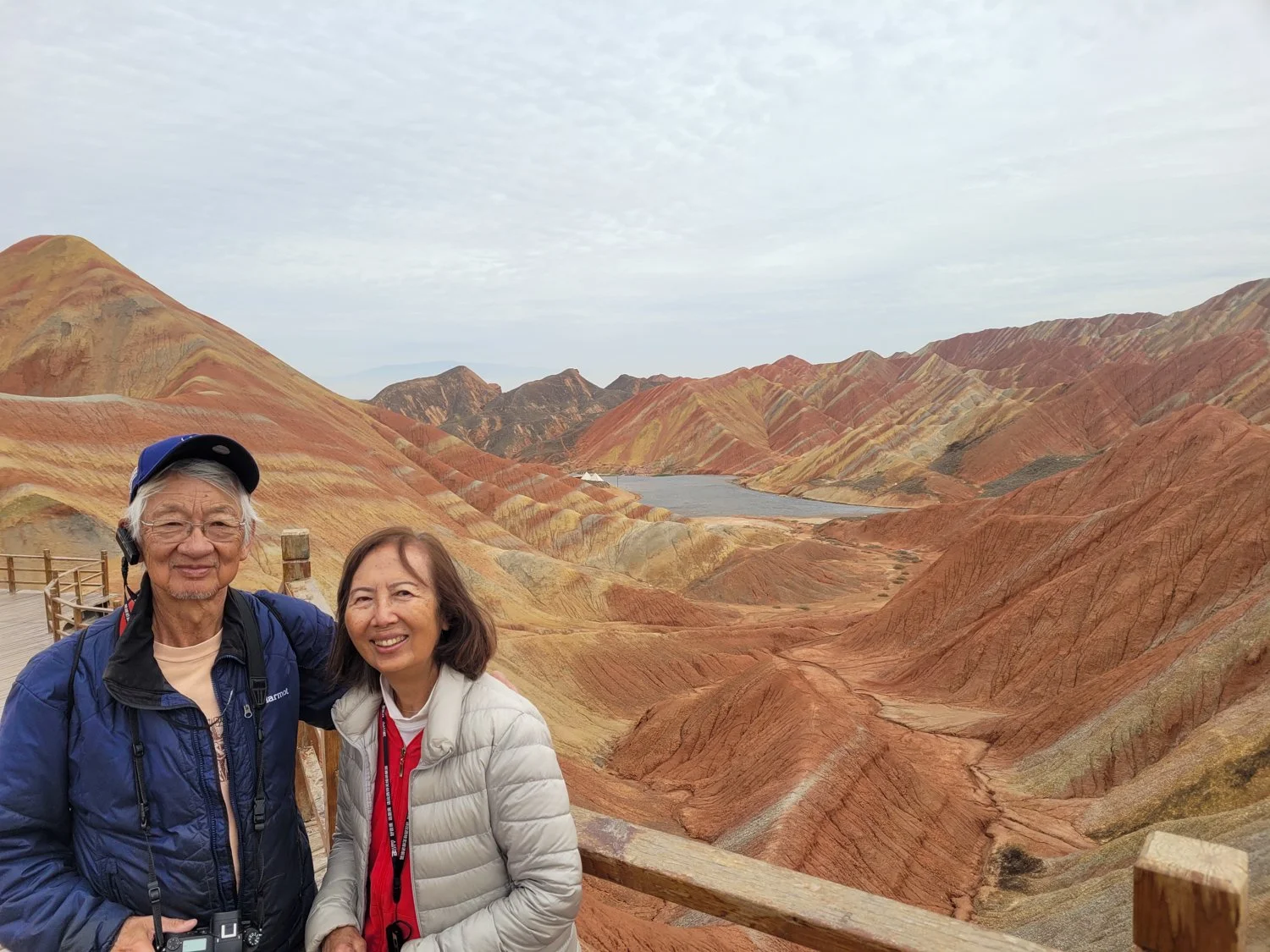
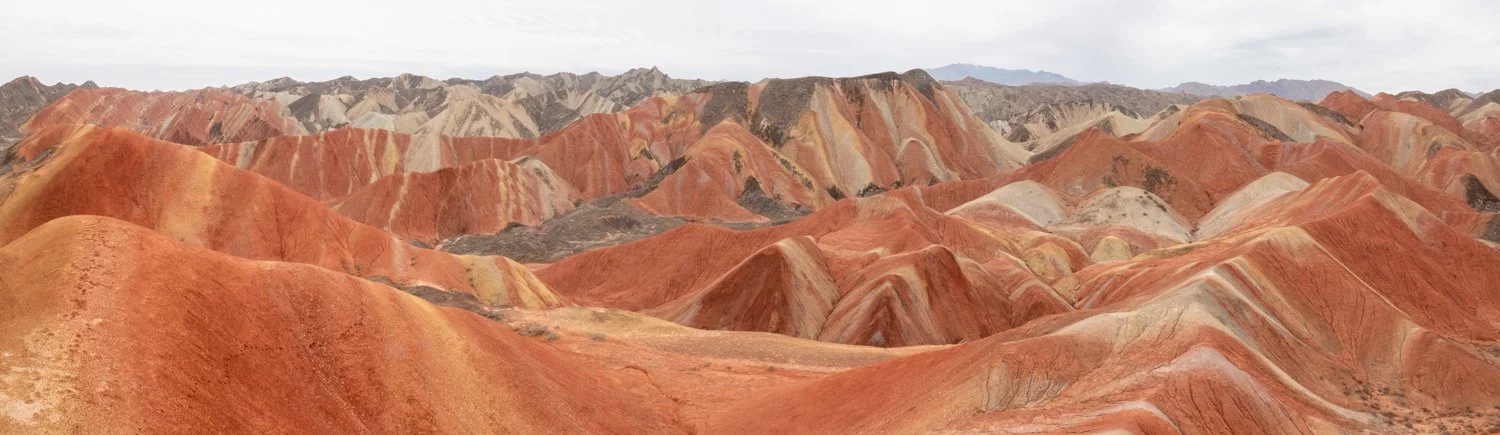
The Danxia Geopark near Zhangye features the remarkable Rainbow Mountains, noted for the colorful rocks and geological formations built up over millions of years.
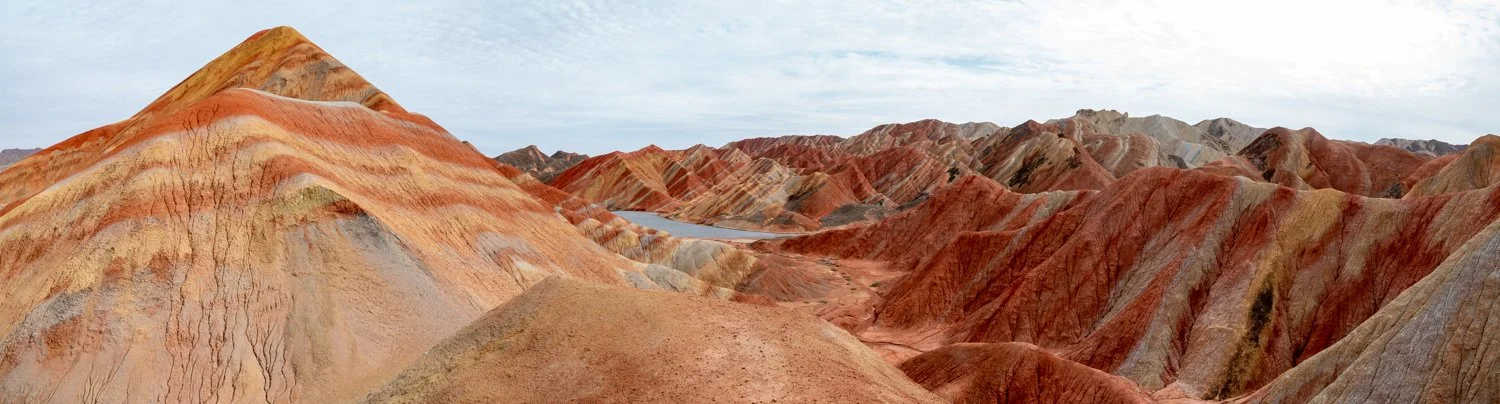
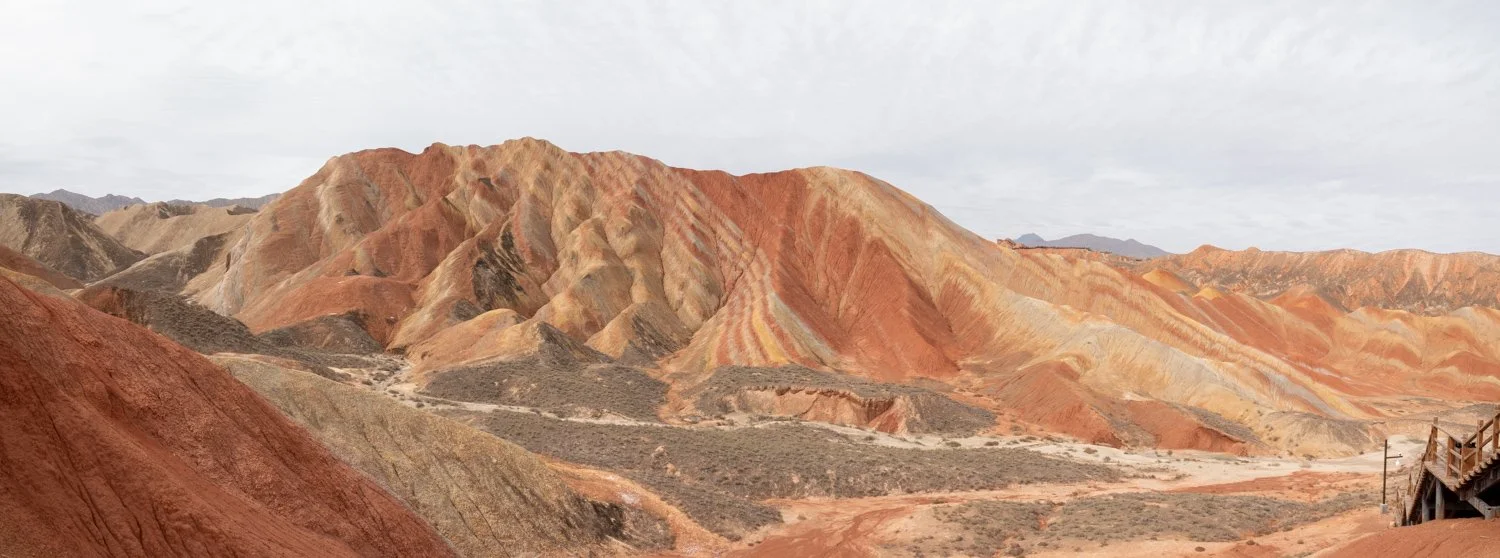
This hill looks like a tiger lying on its side with its stripes and tail to the right
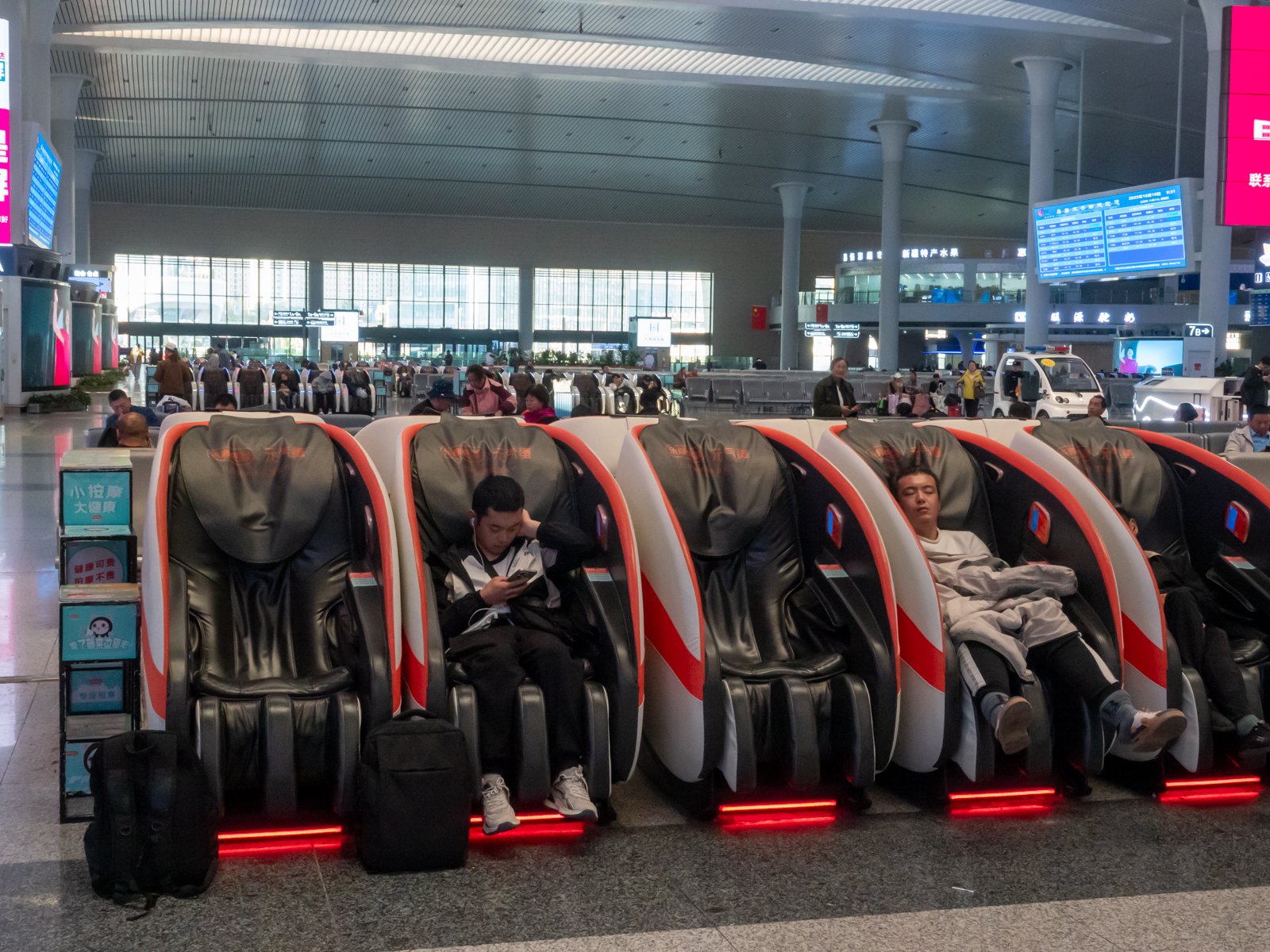
Passengers waiting for their trains at the main train station in Urumuqi.
Urumuqi
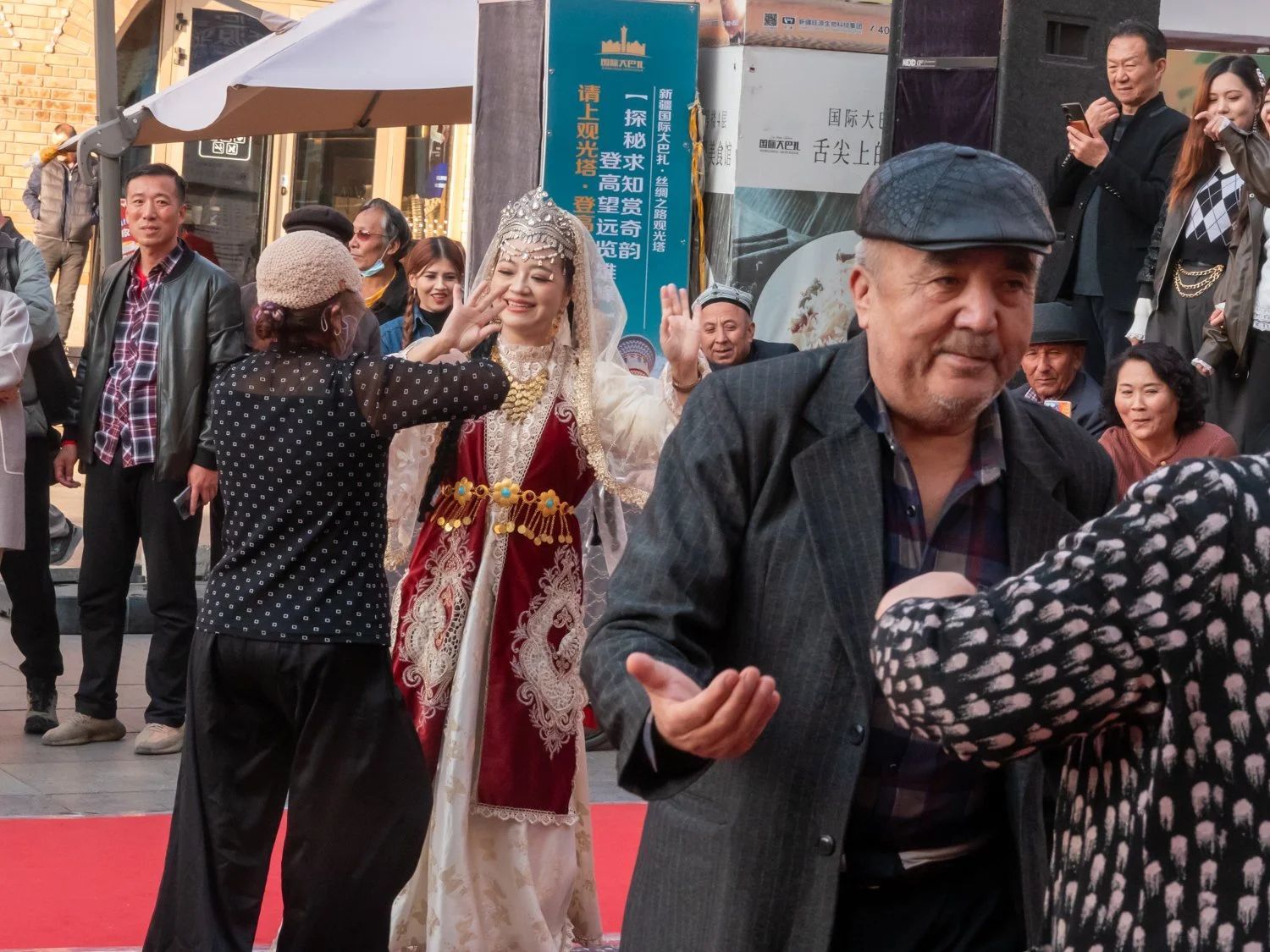
The largest town on the Silk Road, Urumuqi shows a strong influence of the dominant Uygher population. We spent all of our time in the city at the International Grand Bazaar and enjoyed watching the Uygher dancing there.
While the government persecution of Uyghers is well-known and persistent, we did not experience any of it personally. All of our guides were Uygher and were not overtly critical of the government, which may be why they retain their jobs.
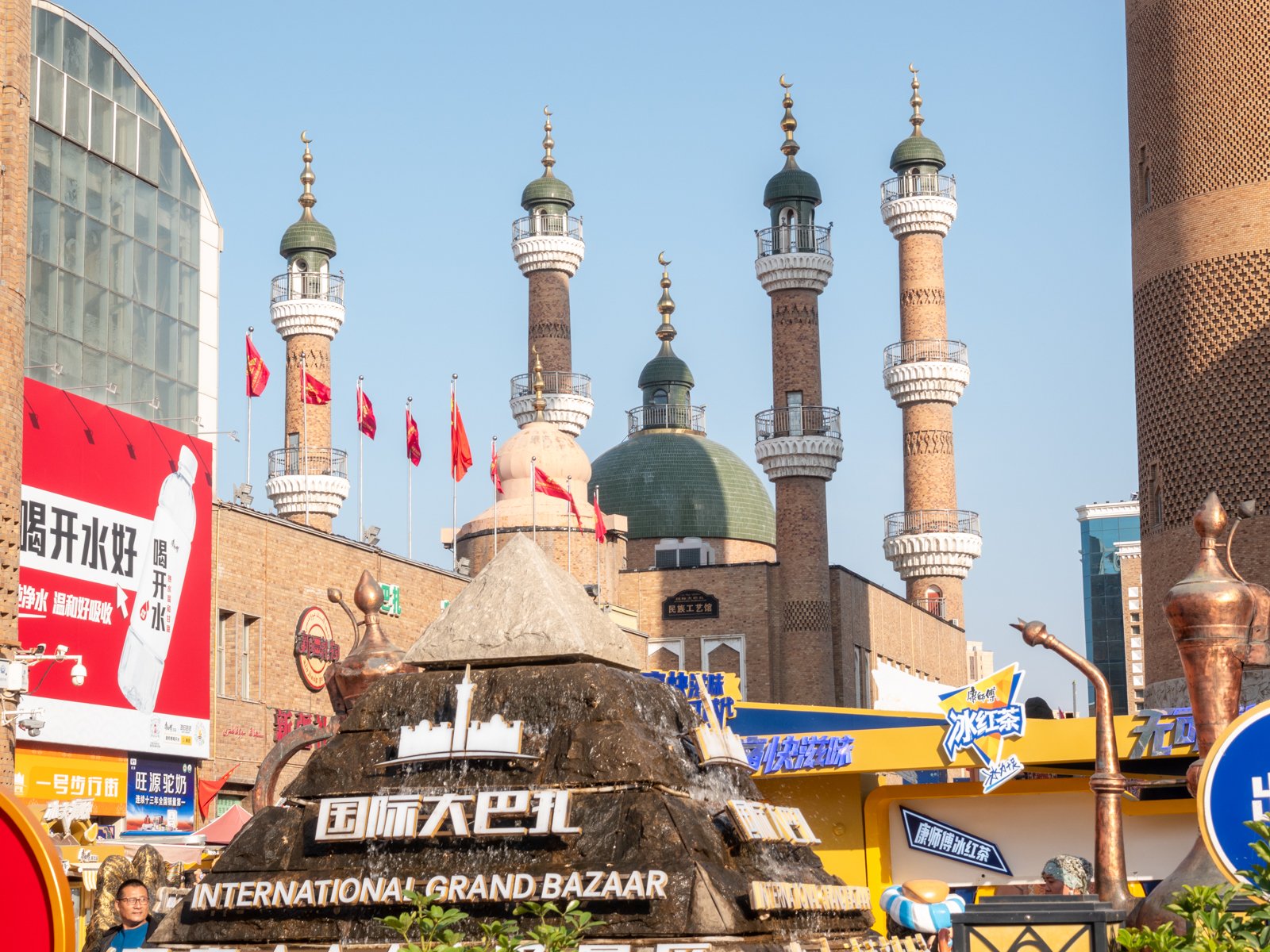
The Muslim influence in Urumuqi is strong
One of our dinners was at a large restaurant where there was a large wedding reception under way.
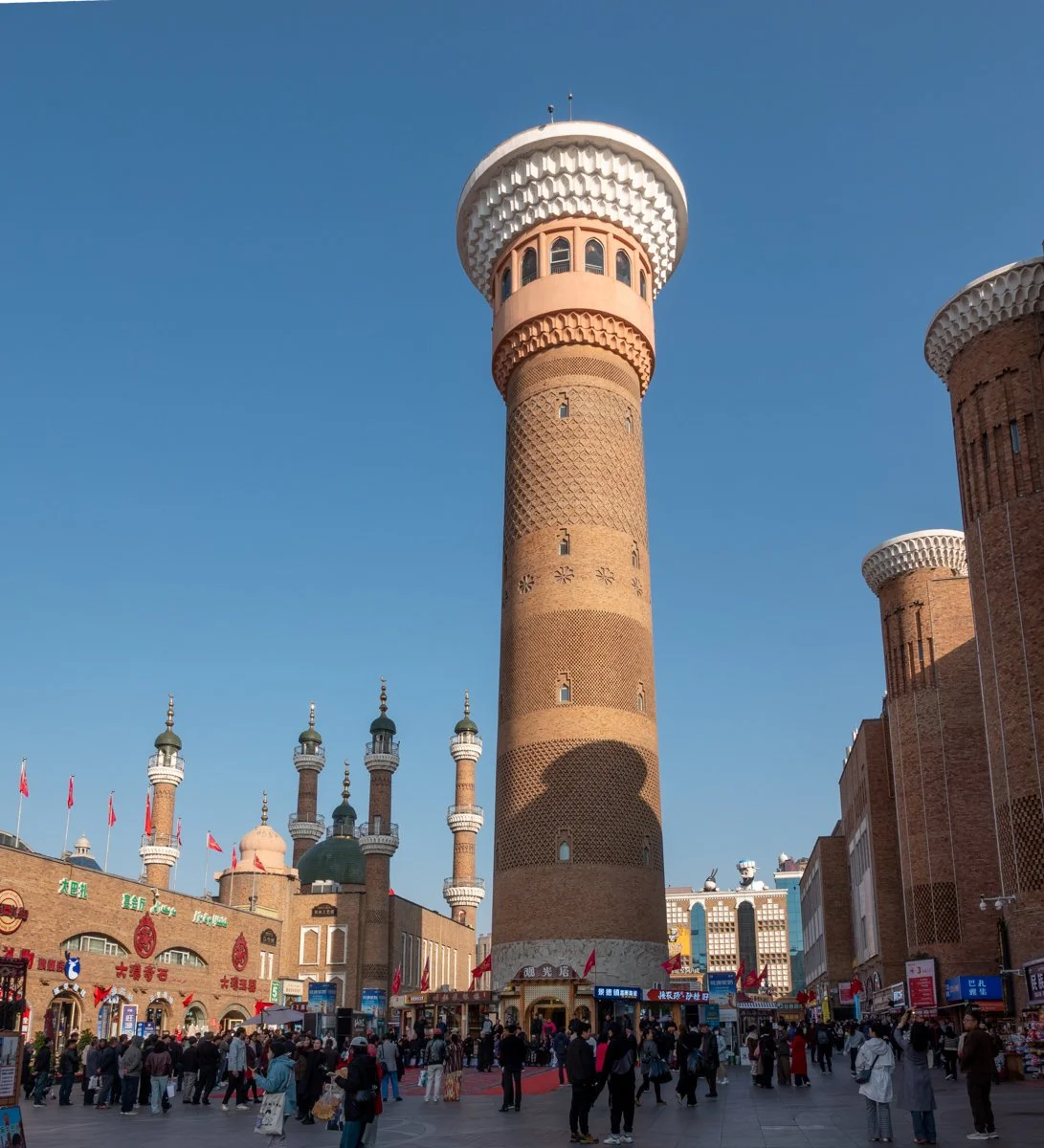
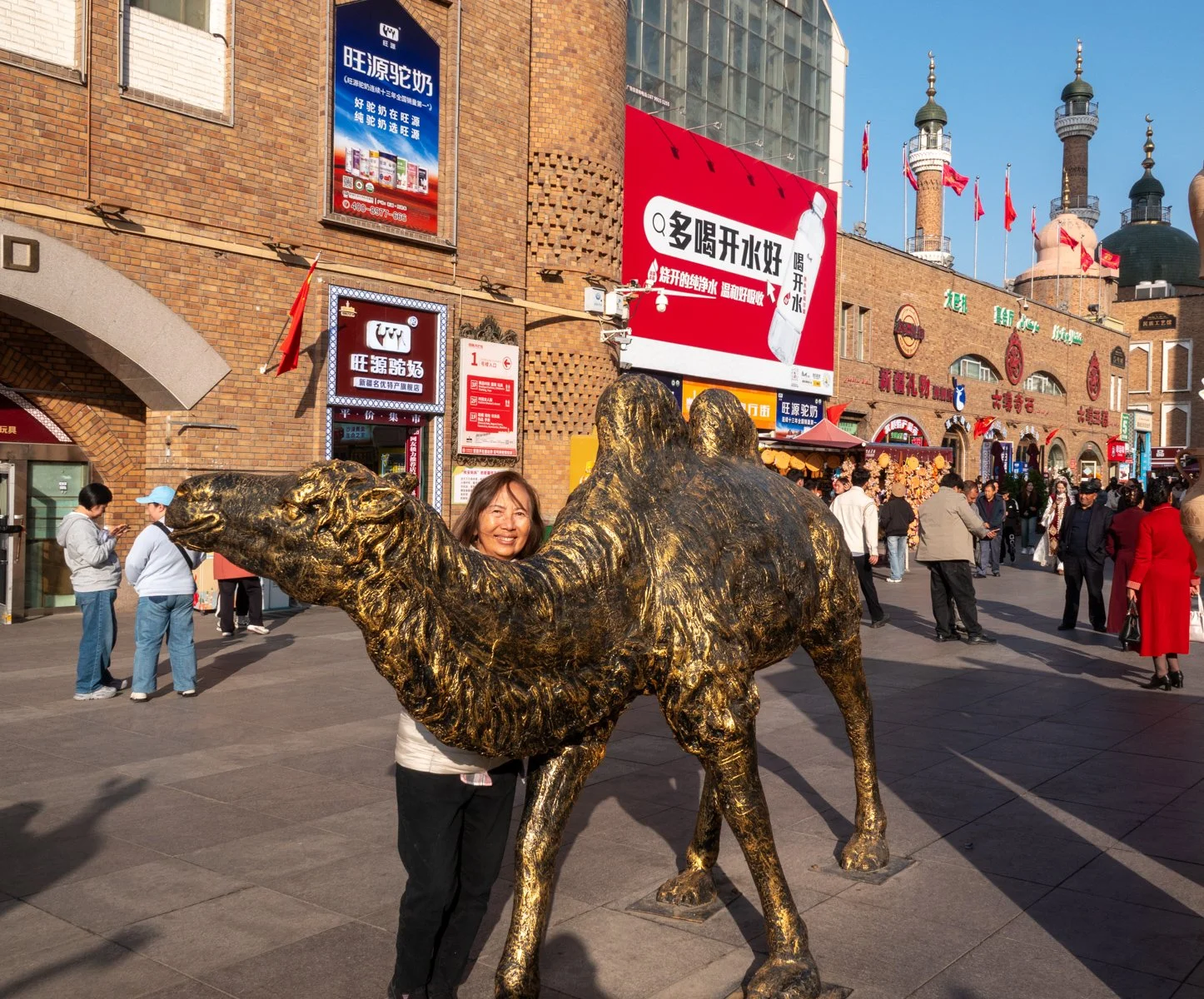
We spent most of our time in the International Grand Bazaar which had a lively group of Uygher dancers.
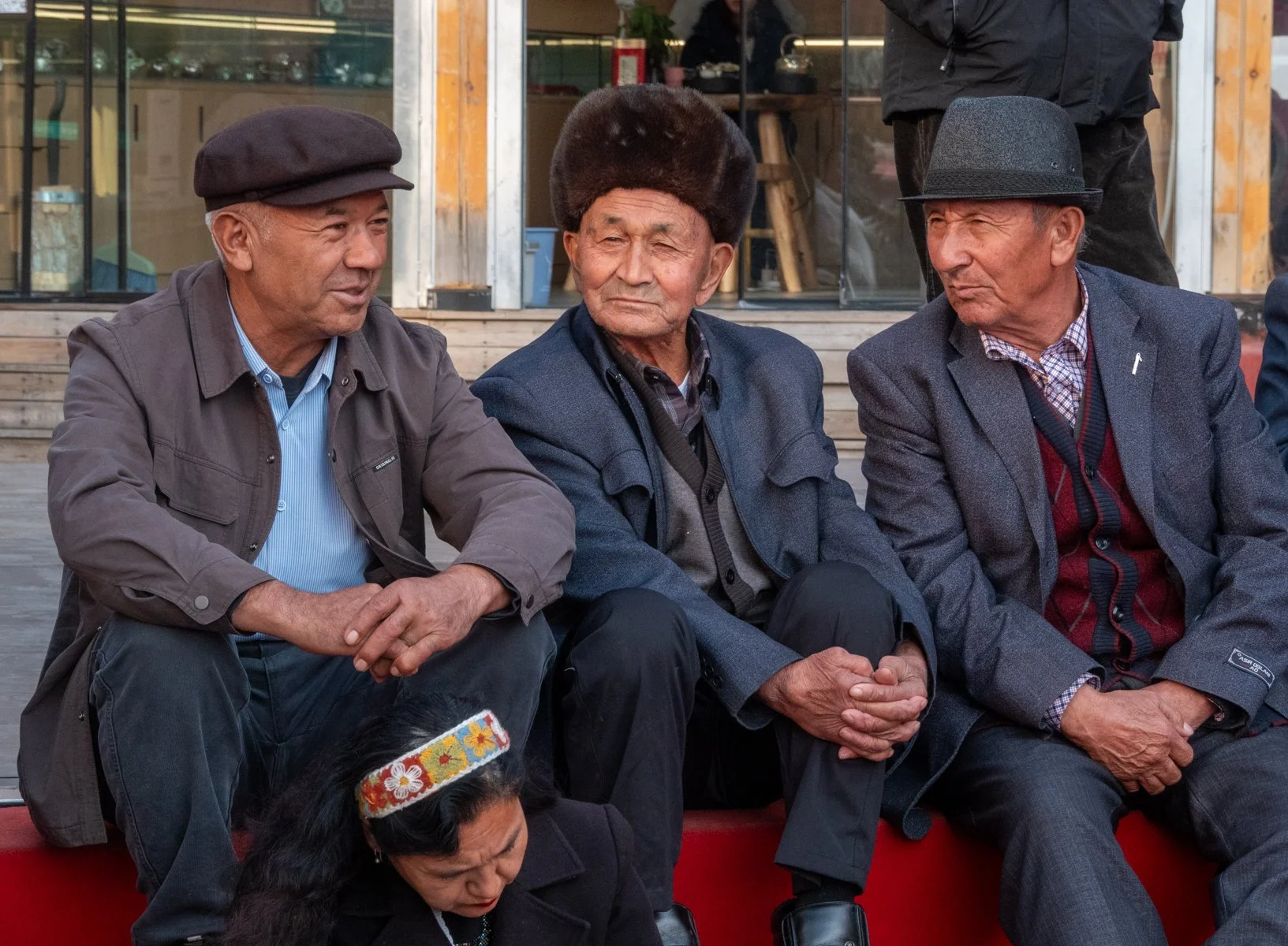
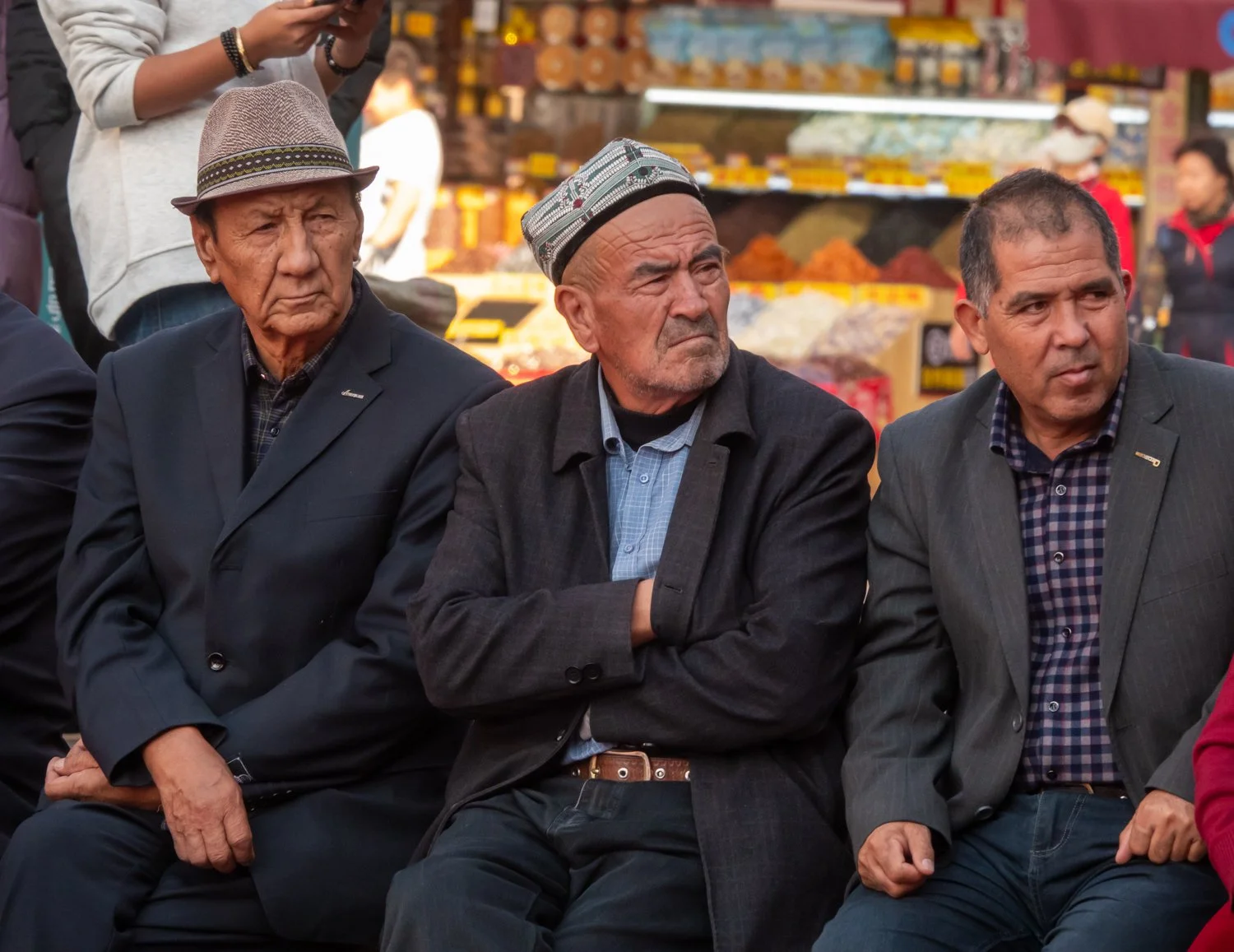
A large number of people watched the dancers.
Shenzhen
Between the two tours, we had 3 days in Shenzhen to rest and prepare. Since the weather was cold on the Silk Road but hot in Guangdong we left our warm weather gear in a hotel in Shenzhen for pick-up when we returned. We also explored two of the touristy options in Shenzhen: Splendid China and Windows of the World. The former was interesting, especially the shows, while the latter was terrible, all of the displays seemed so artificial.
Splendid China
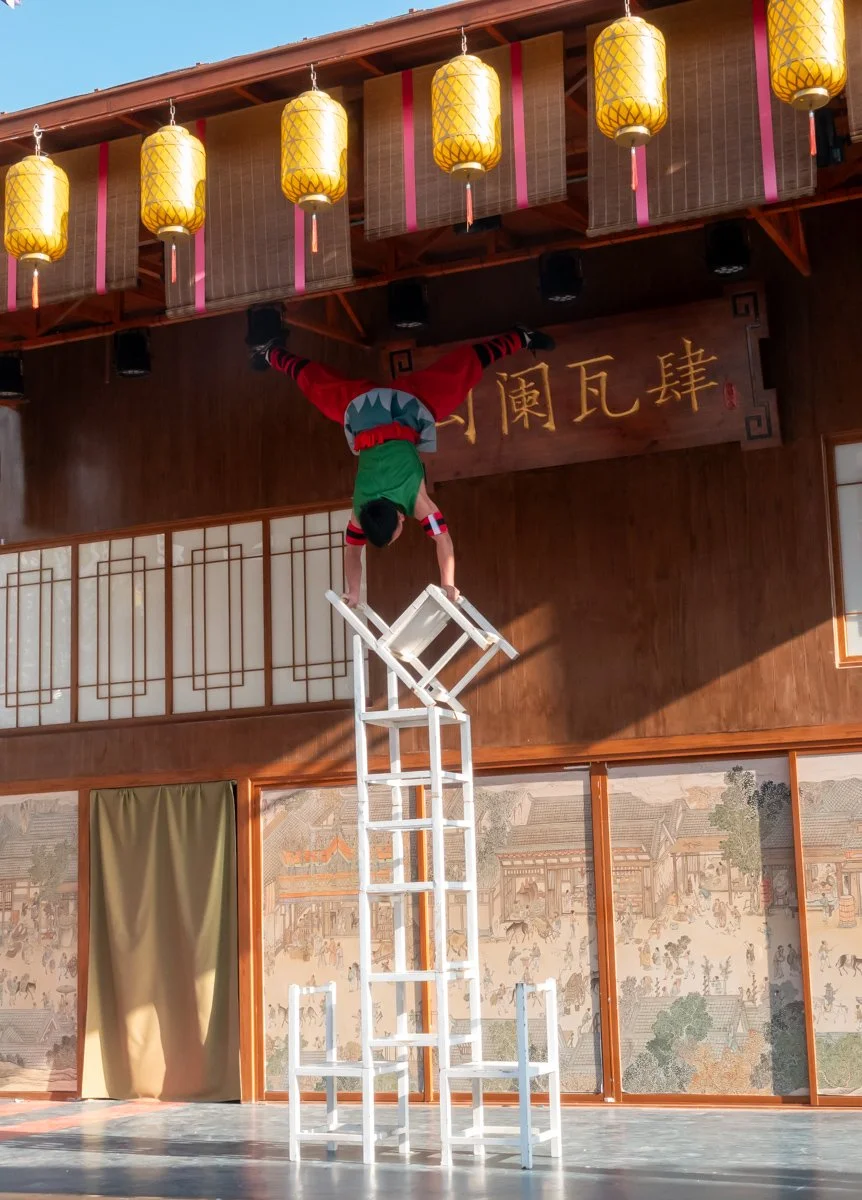
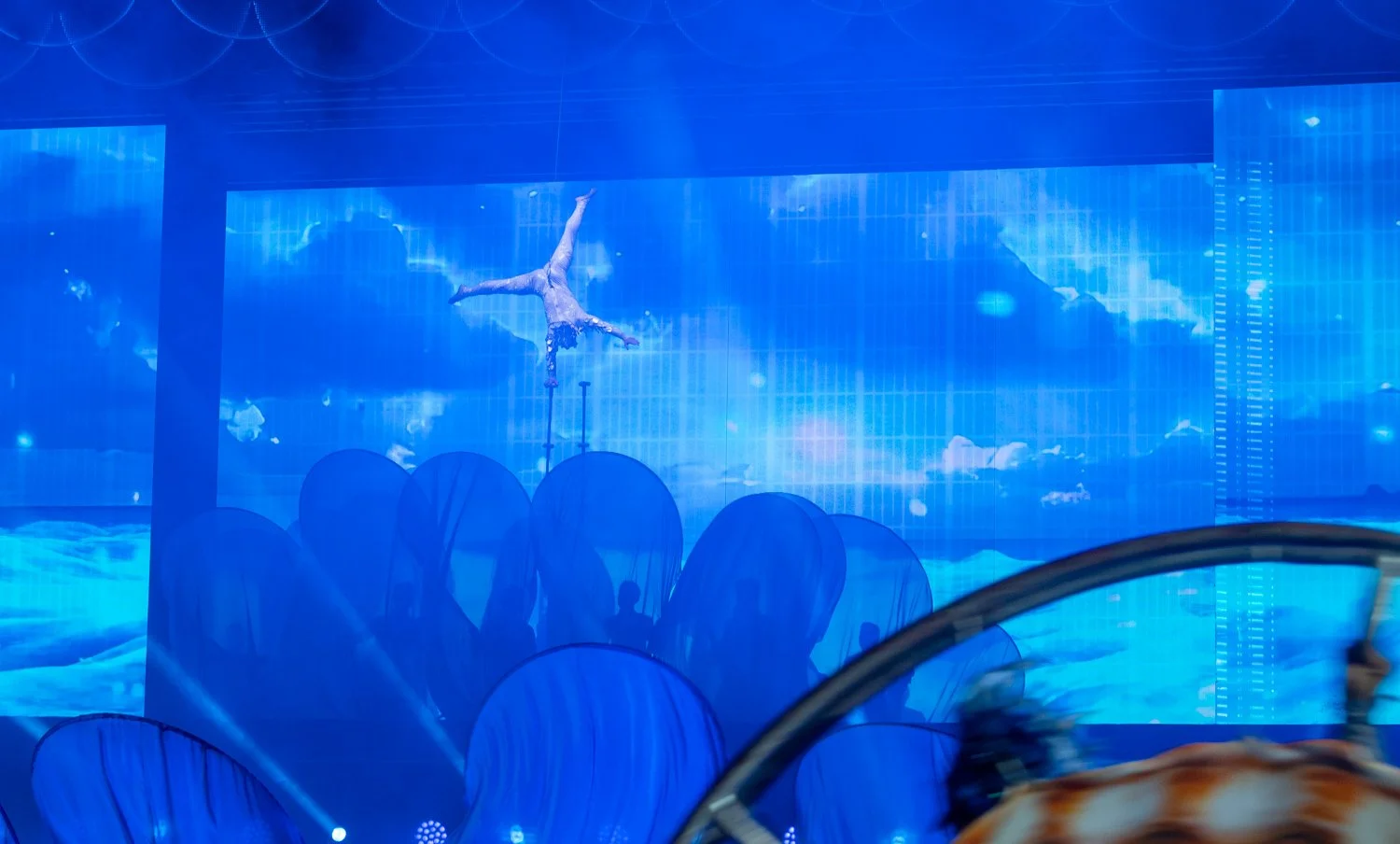
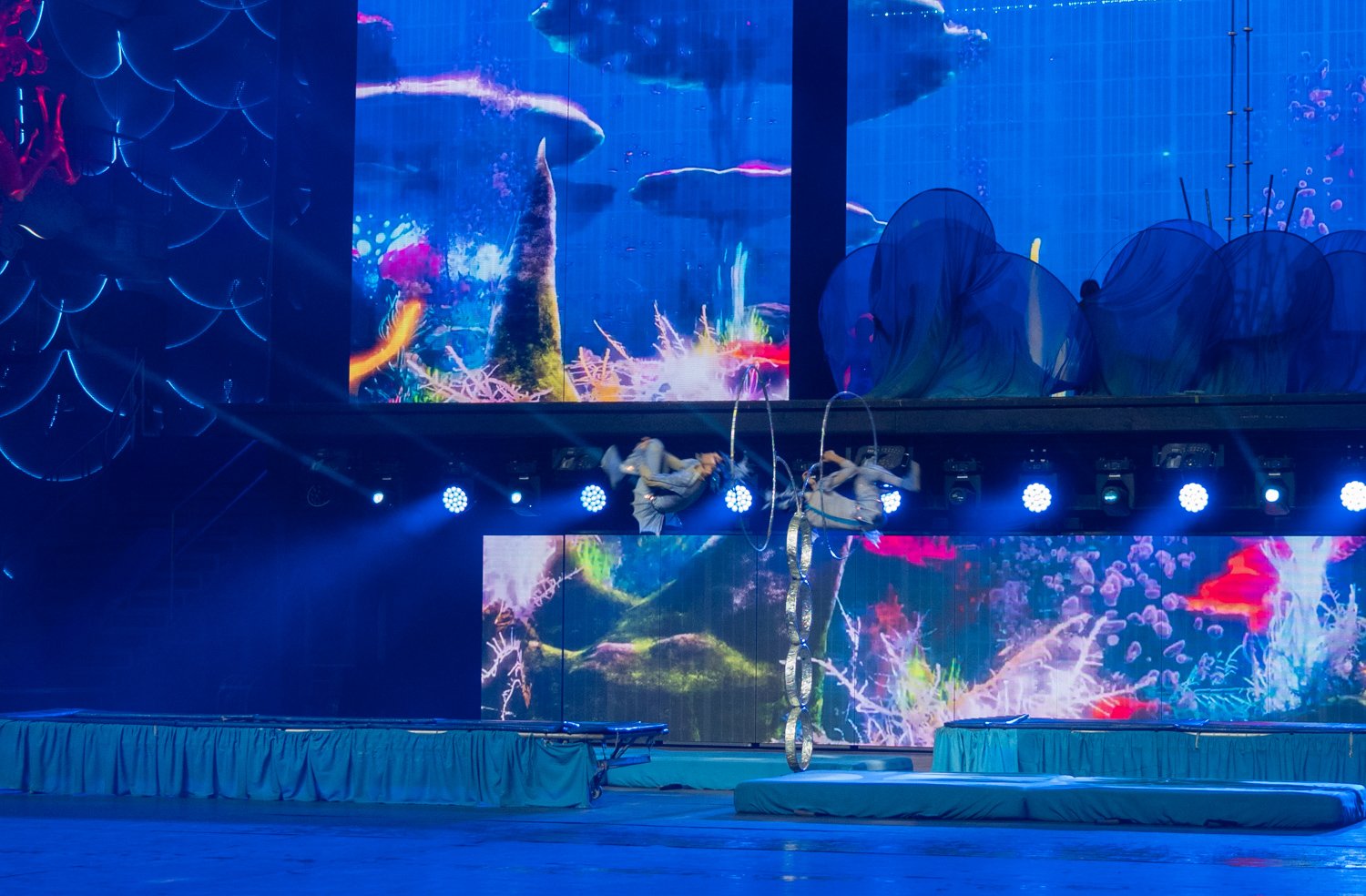
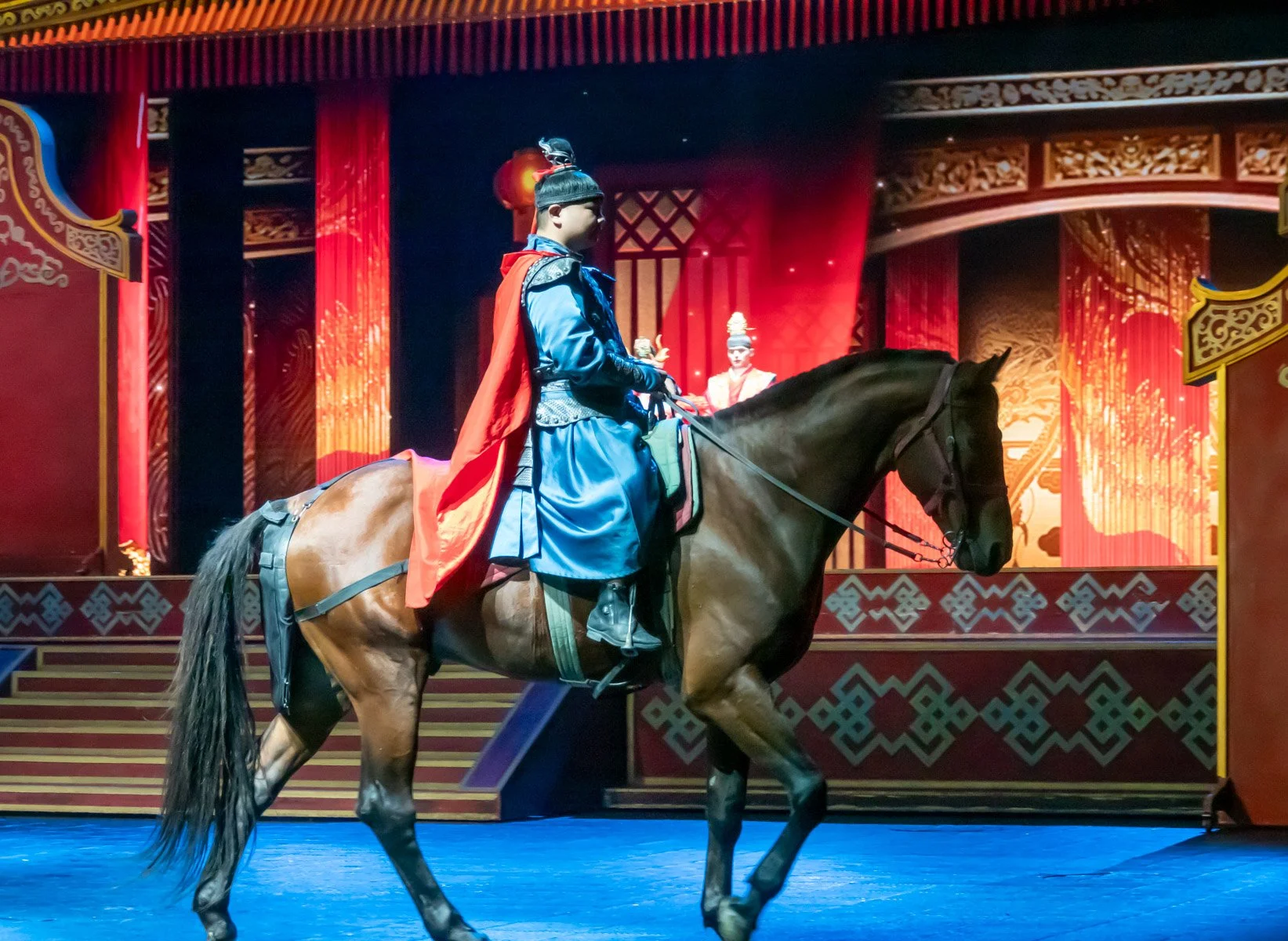
We went to 3 very different hour-long variety shows that were all excellent. It was like going to Broadway shows but there were many special effects that at least I have not seen.
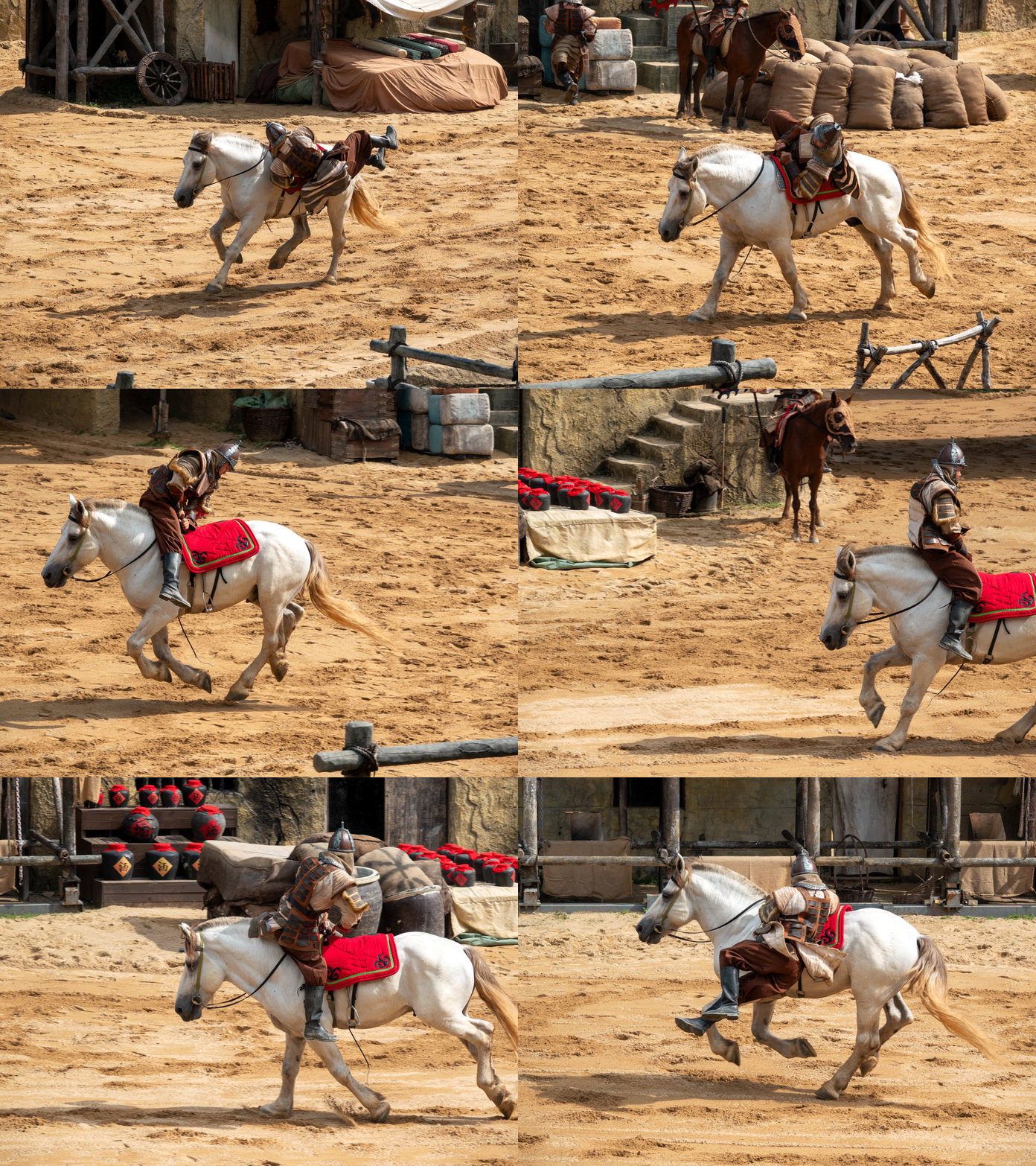
Horse show
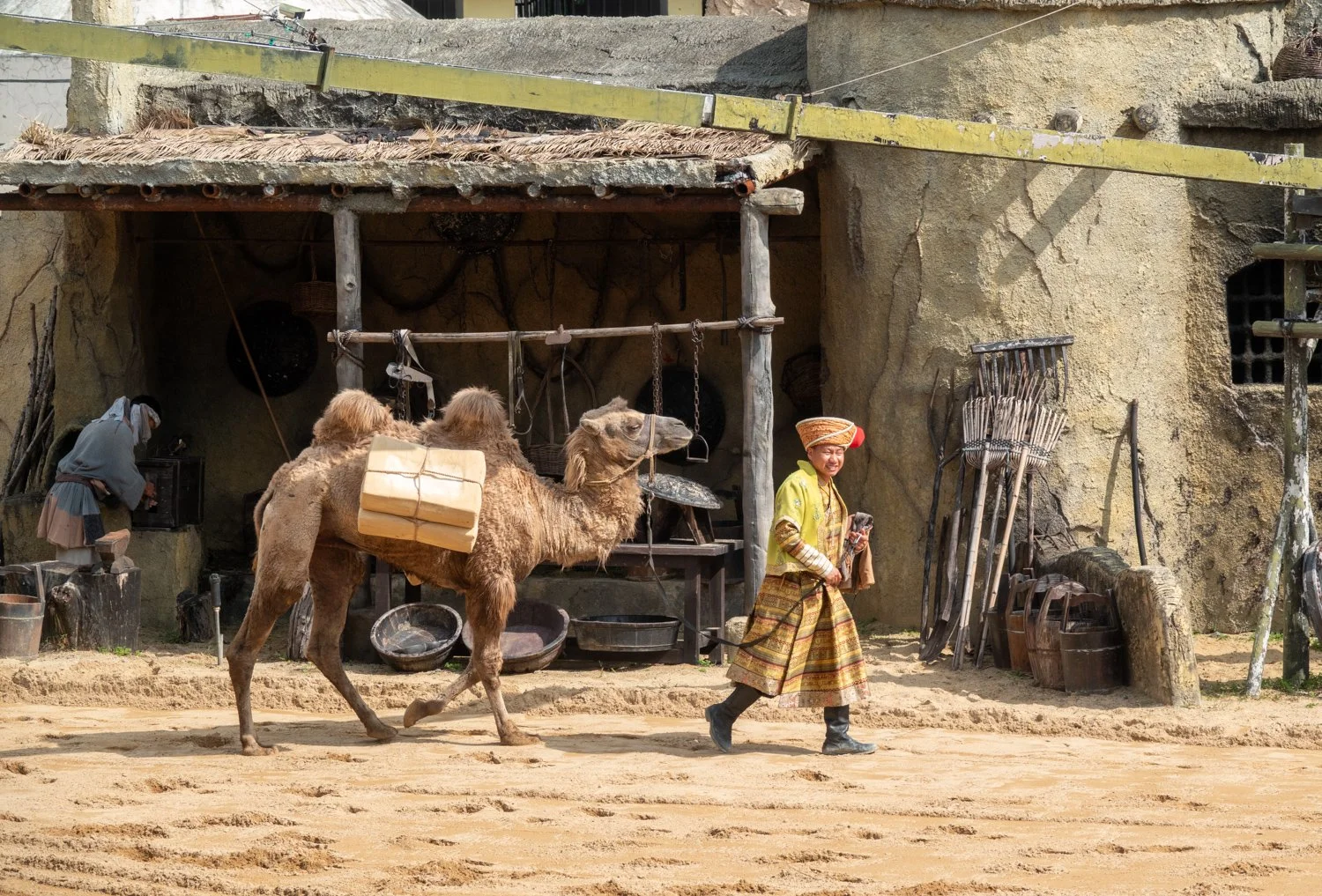
One of the events was a horseshow with wonderful horsemanship and show business with tricks that would not be possible in the US. It was like watching a movie set of a cowboy western set in medieval China.
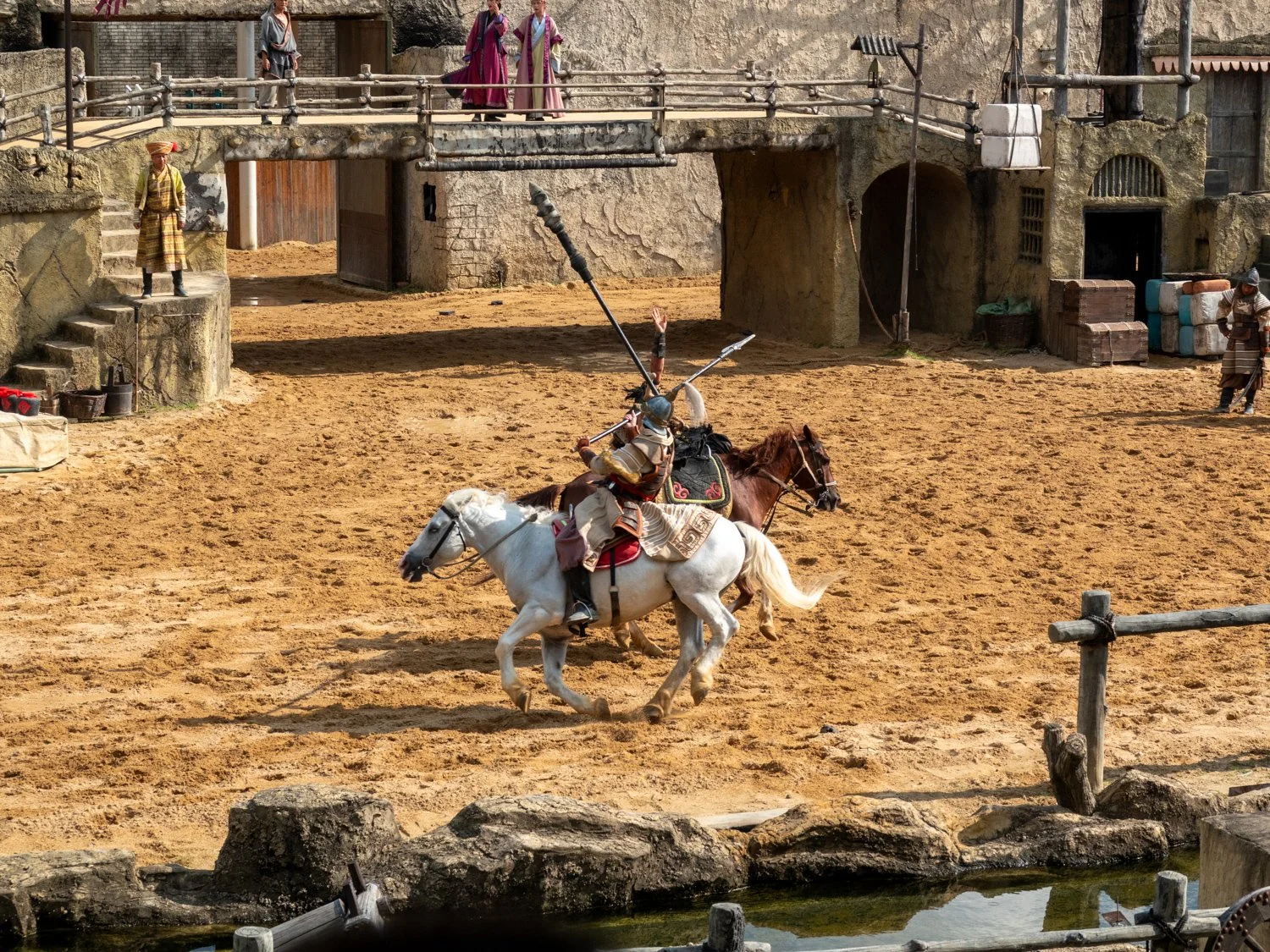
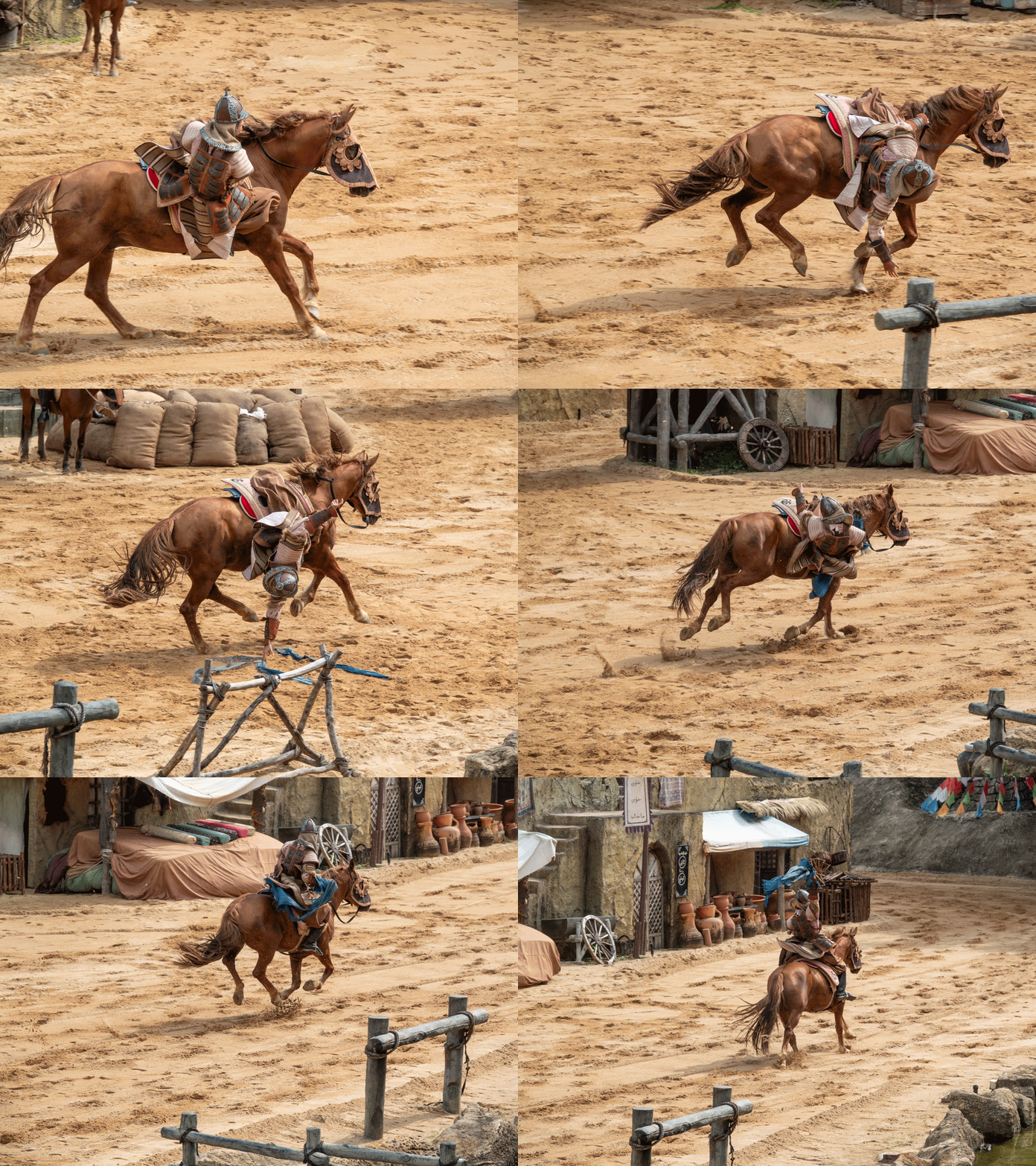
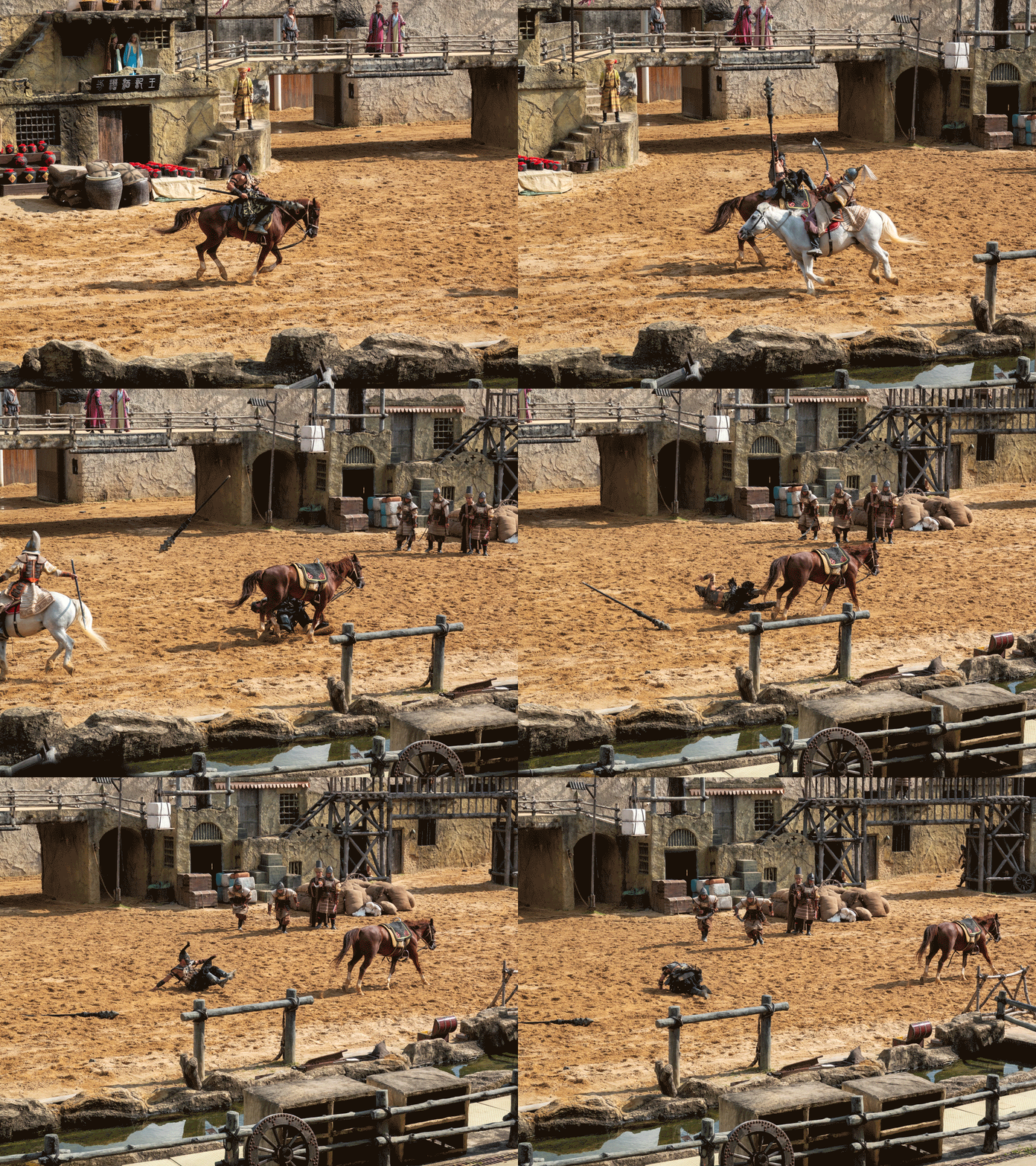
Variety shows
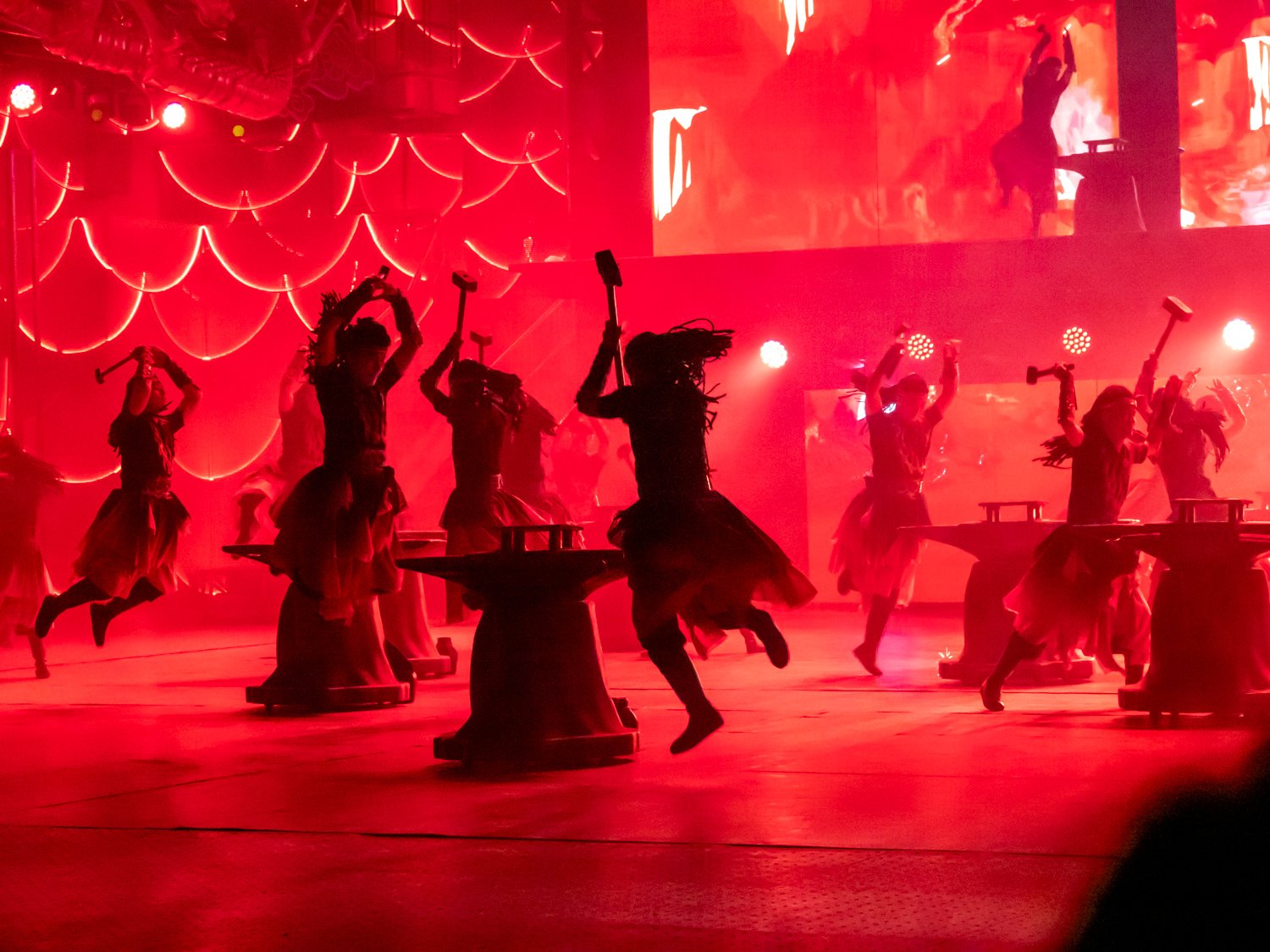
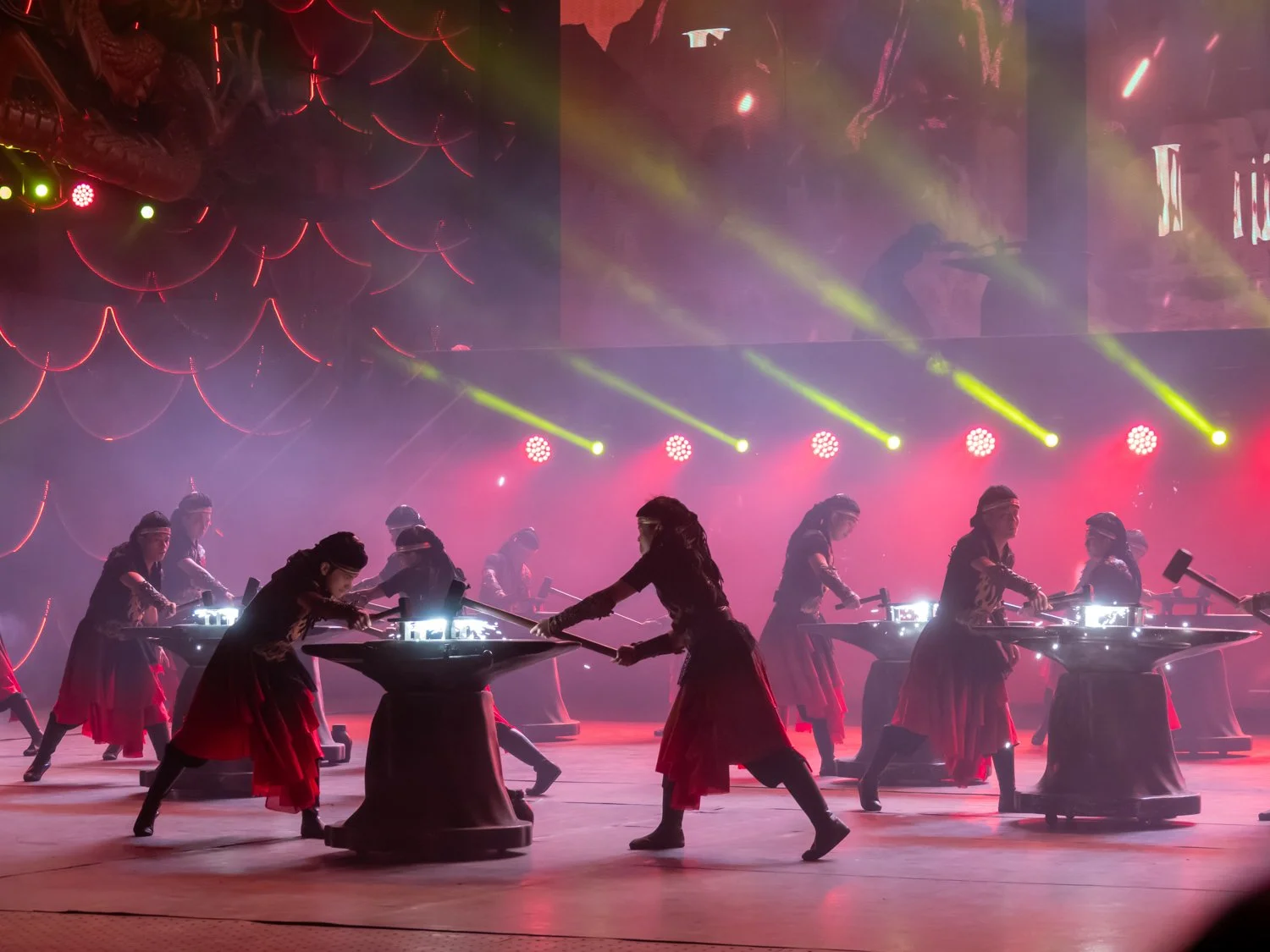
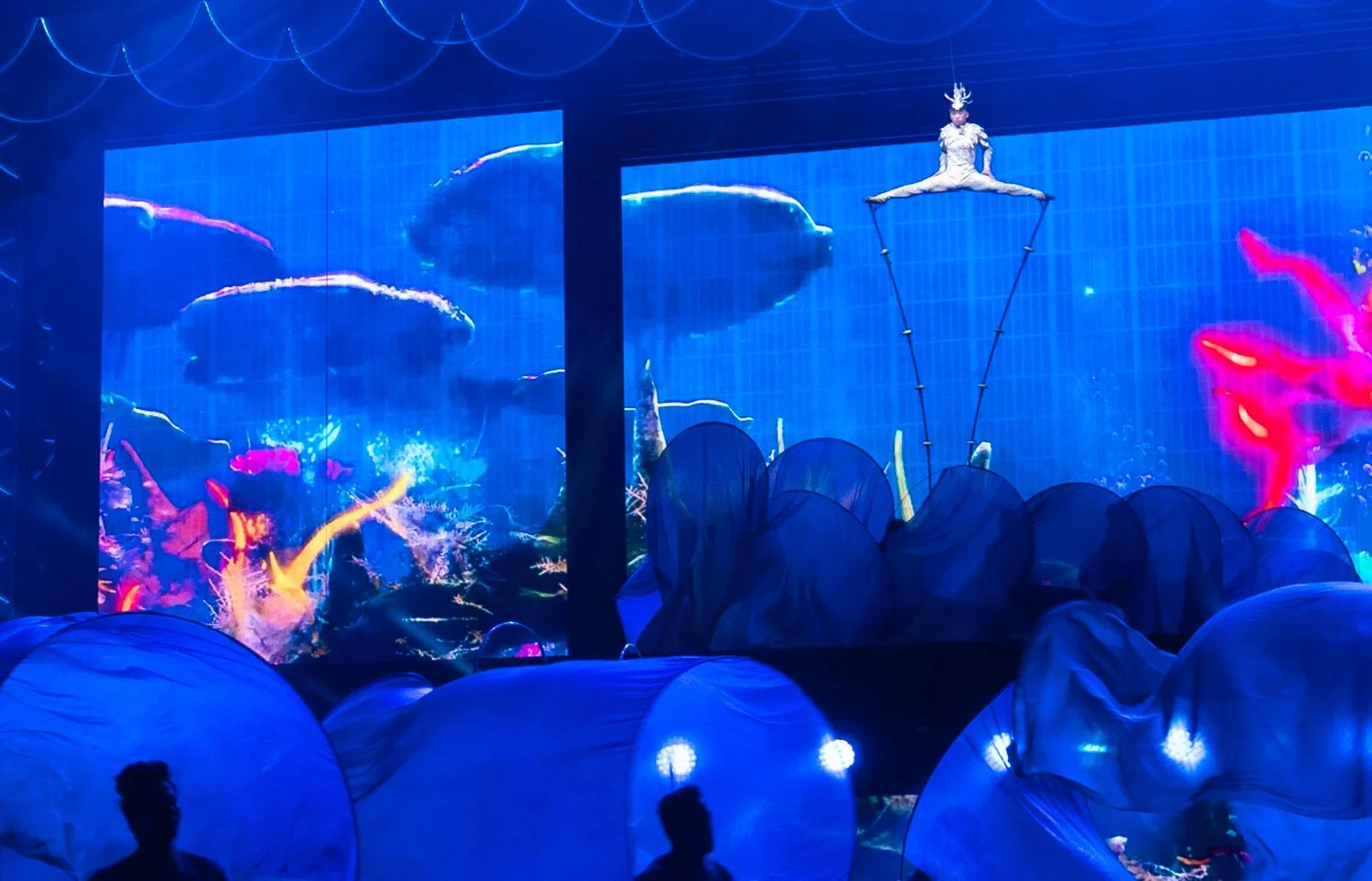
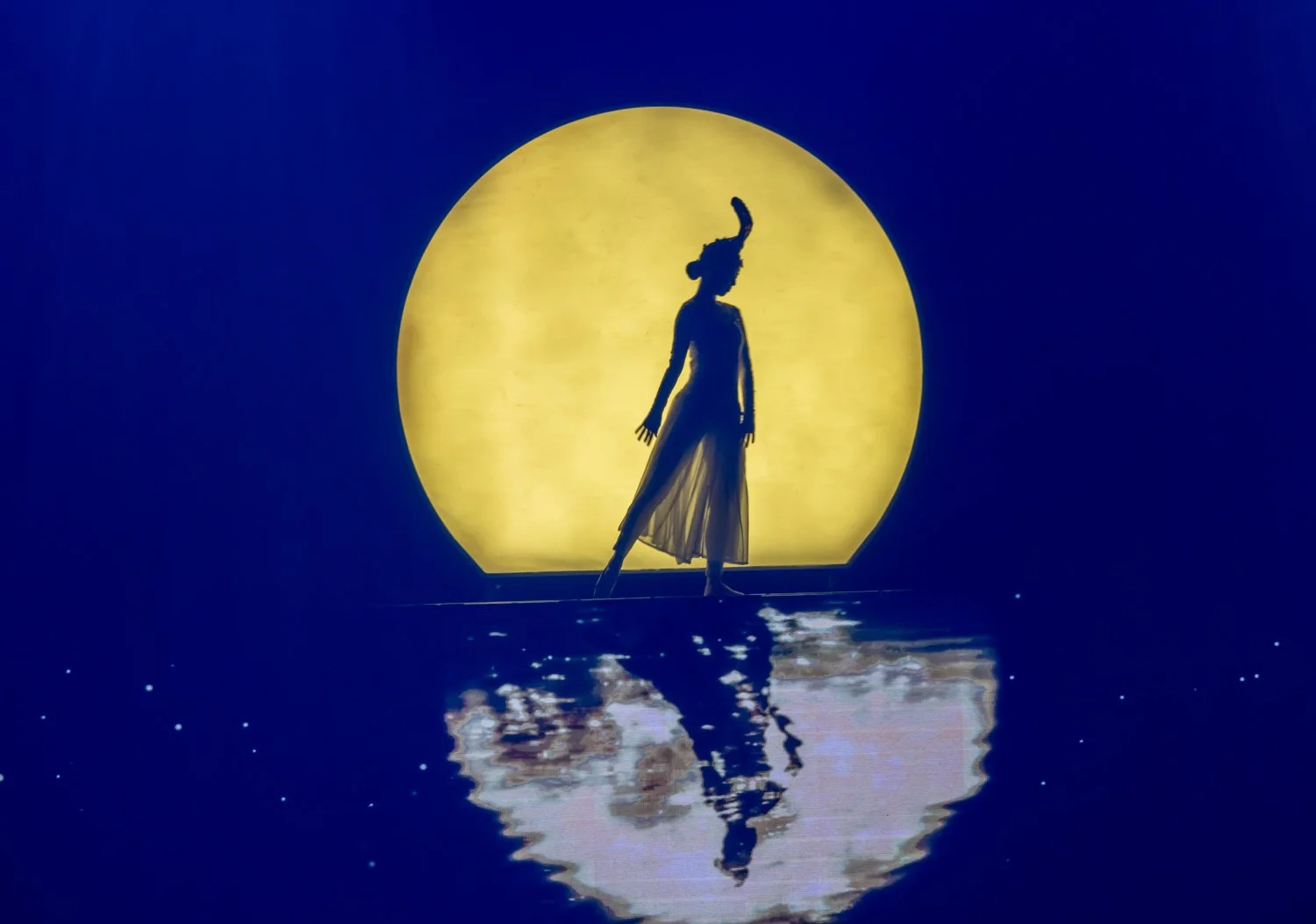
One of the other shows at Splendid China was a long variety show whose theme was the history of the country, from the Iron Age to modern times. It had many special effects that were very effective. The third show did not permit photography.
Iron Age
Chinese acrobats never disappoint
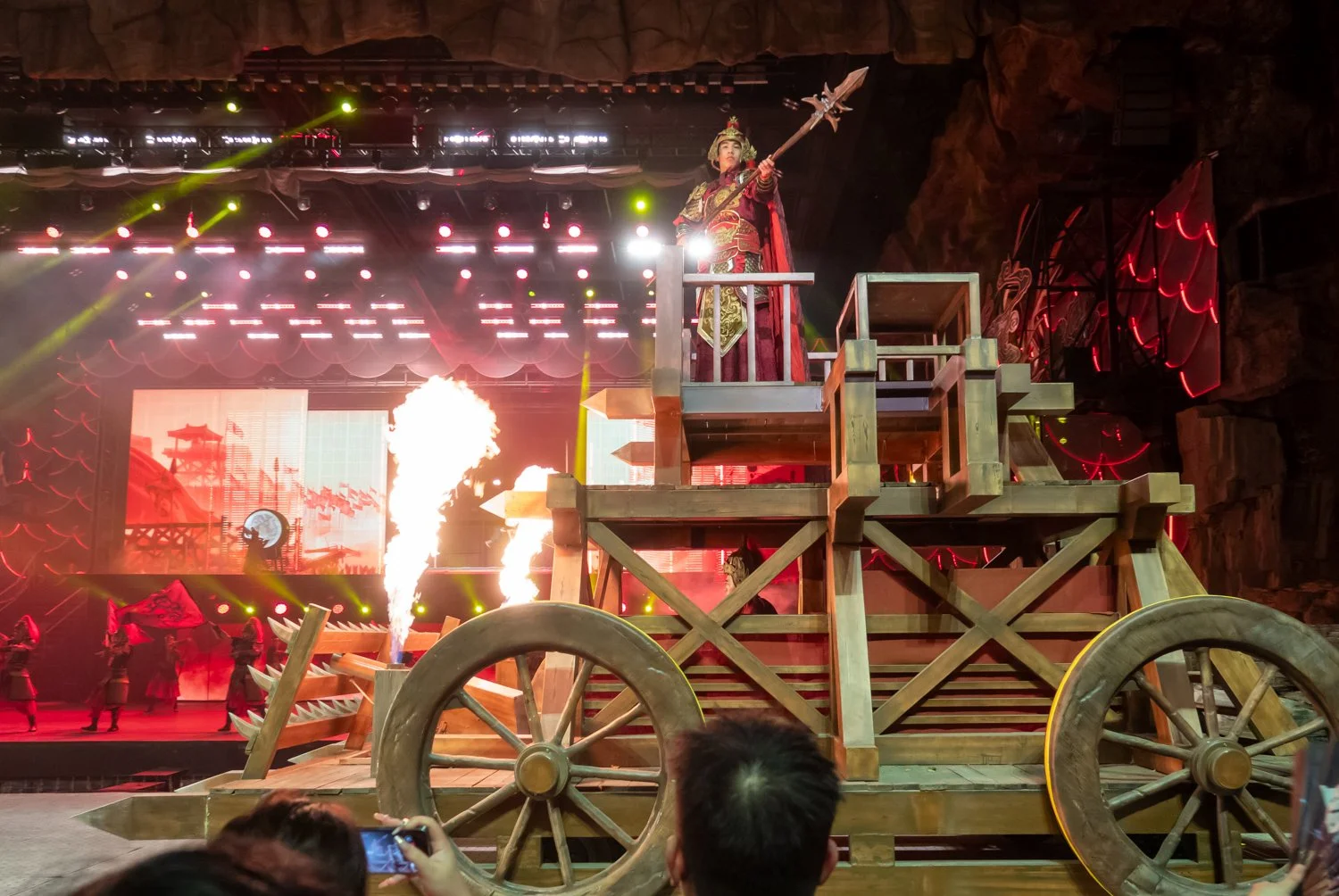
Several acts featured fiery special effects.
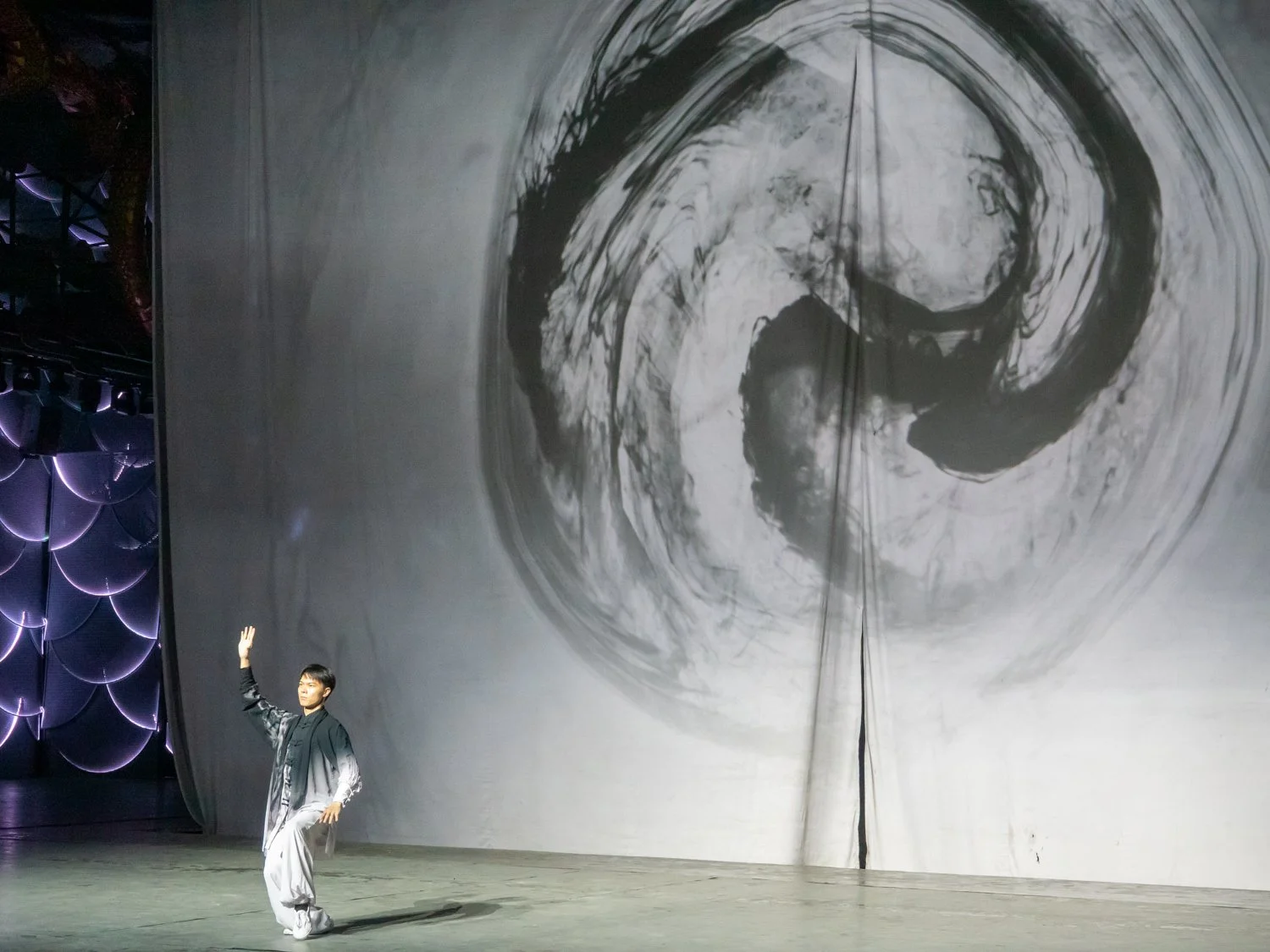
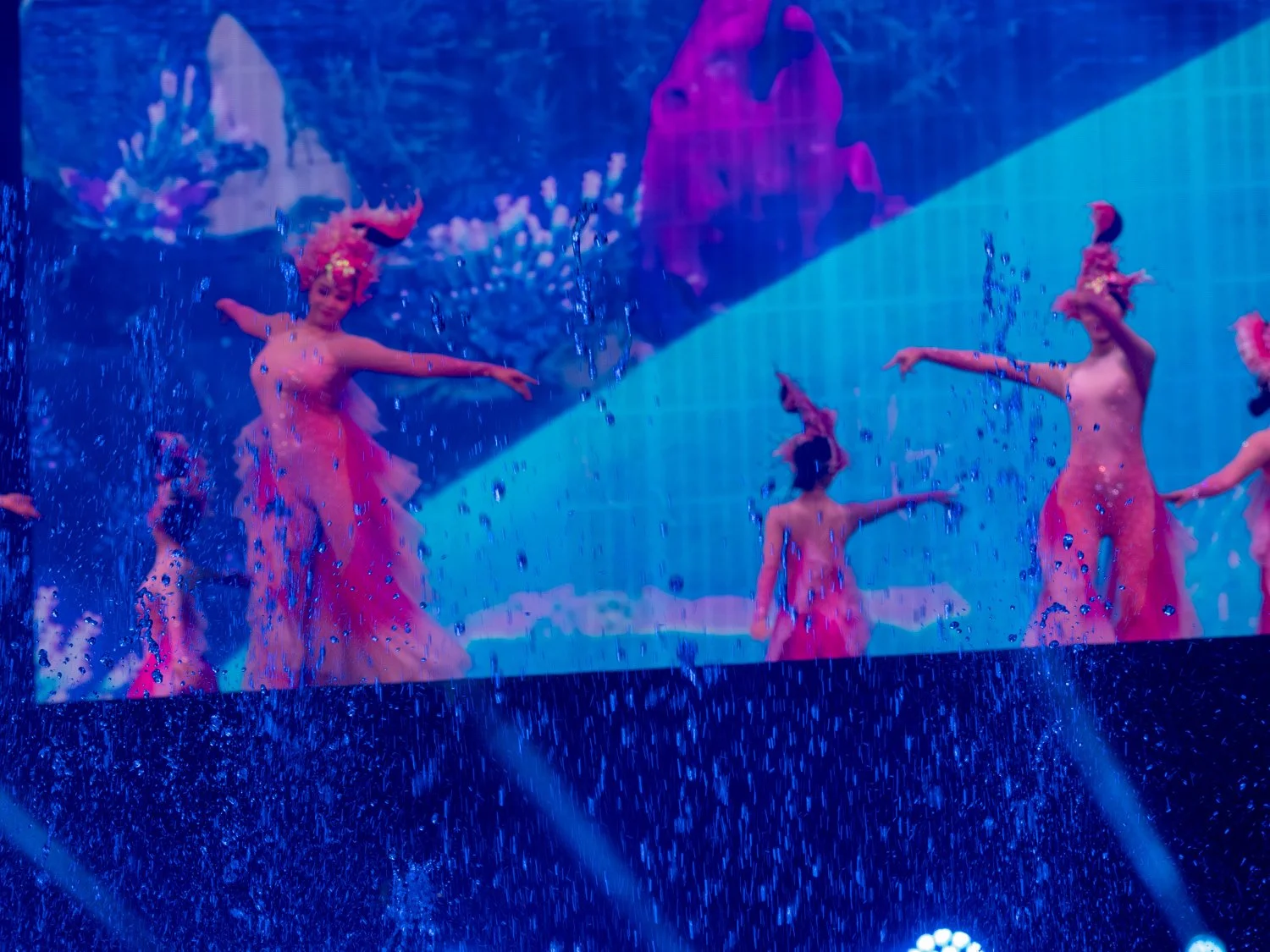
Several of the acts had liberal use of water to enhance the environment.
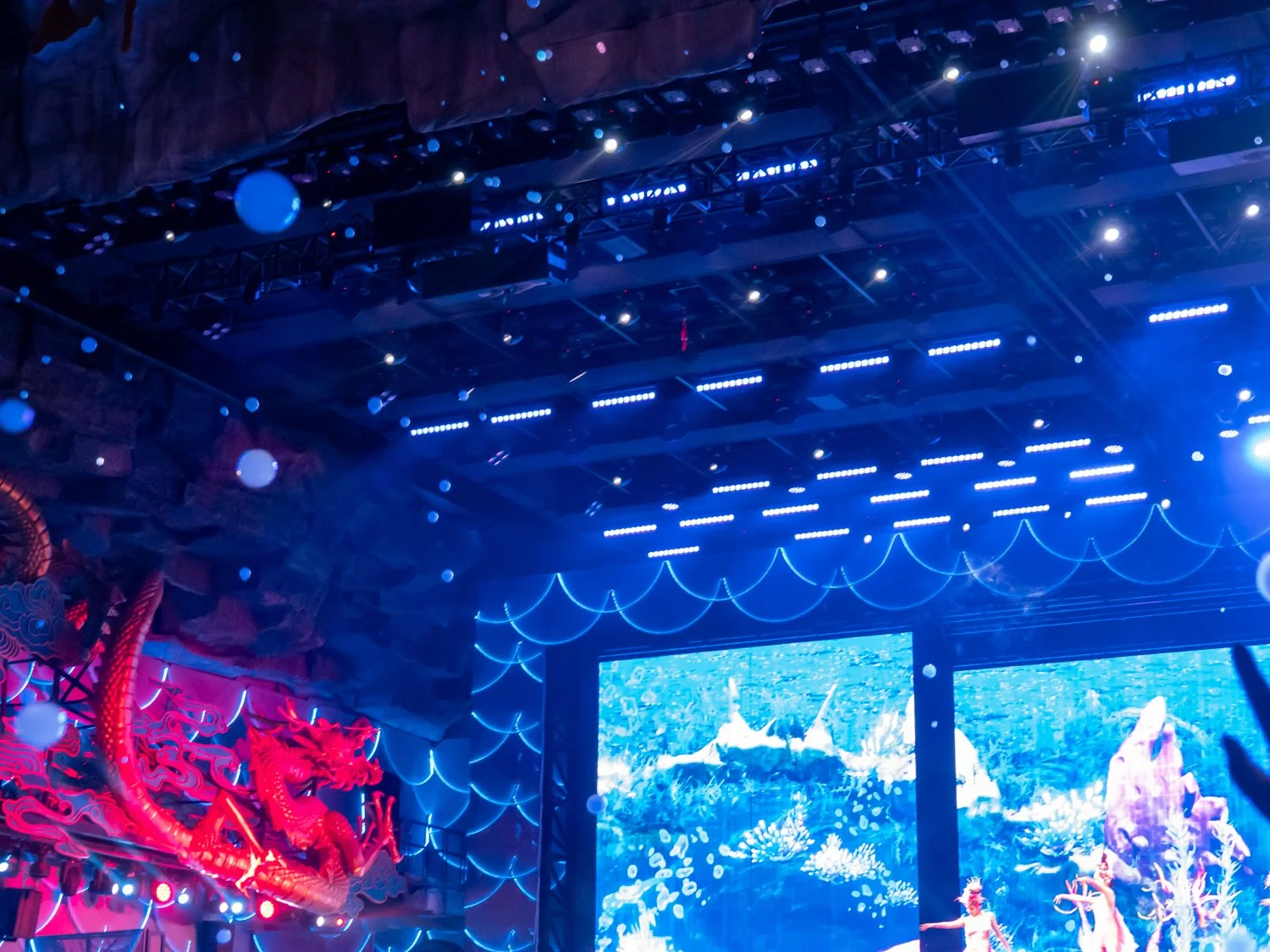
This performance featured a blizzard of water-less bubbles dropping from the ceiling over the audience
Guangdong tour
We then joined a 11 day bus tour of Guangdong that was organized by Ed, a friend from the Villages. All of the 30 odd people on the tour were in some way connected to Ed, as old work colleagues, student and mah-jong buddies or friends from the Villages. The tour had a strong emphasis on the lunch and dinner banquets.
Shantou
Our first stop was to the Xiangongyuan Historical and Cultural District which featured the Sun Yatsen Memorial Pavilion.
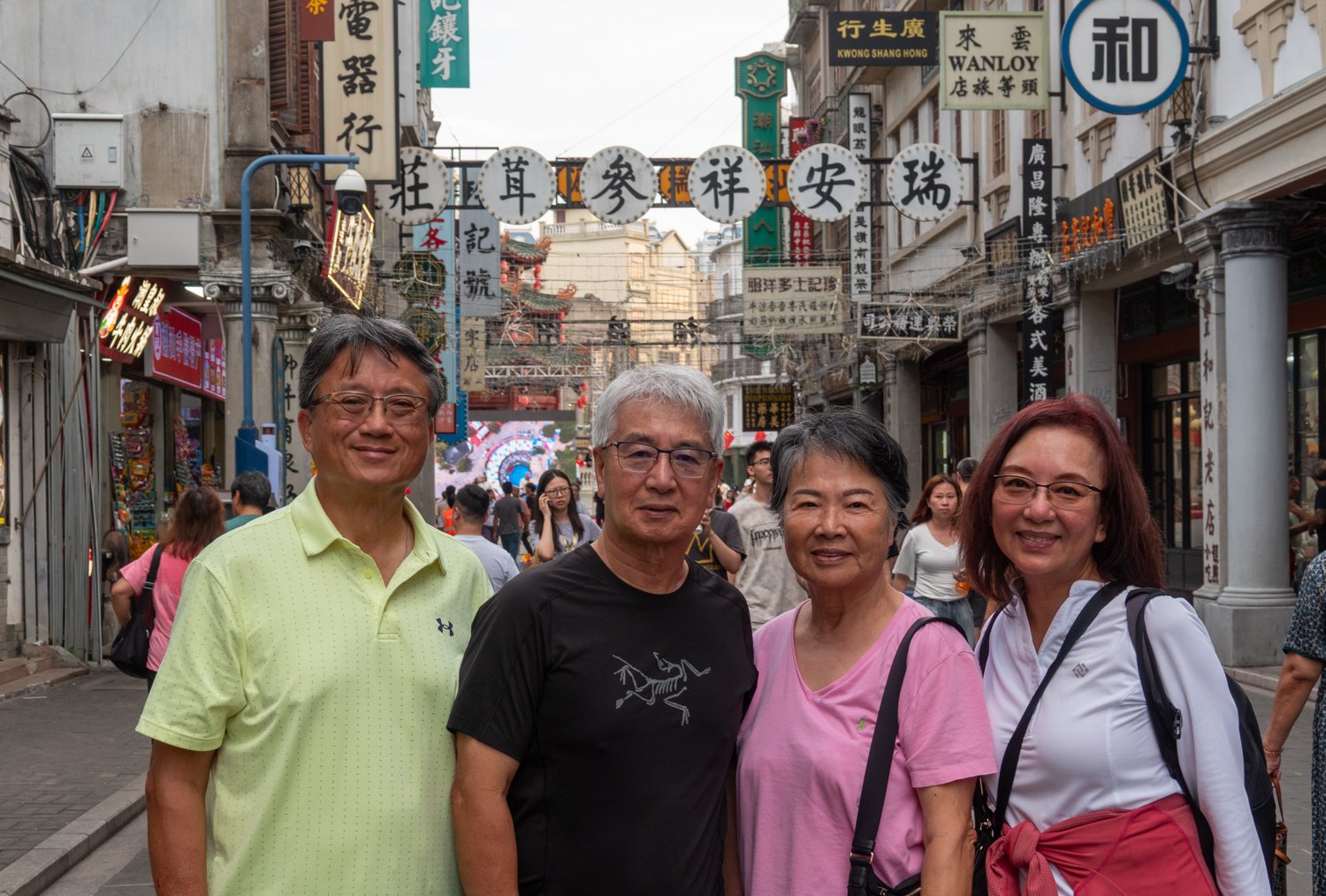
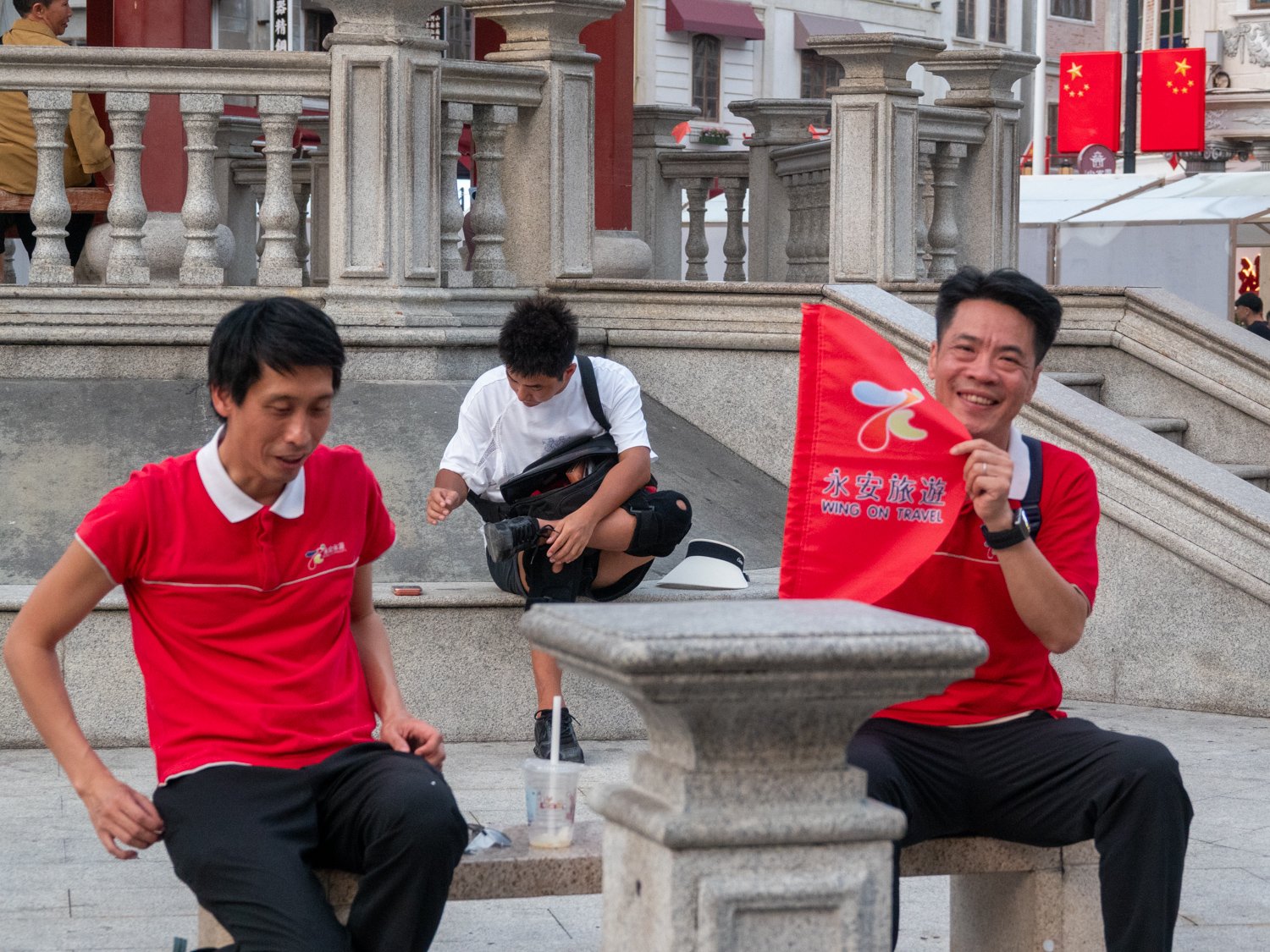
Our tour guides
Police encounter
We had an interesting encounter with the police that involved our guide Mr. Su, who is on the right in the photo above. The tour involved bus rides between cities in Guangdong. He liked to tell interesting stories during the long bus rides and preferred to do it while standing at the front in the aisle leaning back on the support so he could see his audience. The trouble with this approach is that he could not have his seatbelt on and it is illegal in China to ride in the bus without a seatbelt. So the driver was constantly on the lookout for police who might wave the bus down to check that everyone had his/her belt on. When he saw a potential police stop he would signal Mr. Su to quickly sit down and belt up.
However, the driver missed a police stop until it was too late. By the time he told Mr. Su, the police could already see that he was hurrying to belt up. And he was not the only one who didn’t have their seatbelt on. We were seated in the first seat behind the driver and my seatmate was scrambling to get her seat belt on, belatedly. The police waved the bus to stop and immediately boarded both doors. The next thing I knew, a policeman stuck his cell phone six inches in front of my nose and was taking my photo while demanding to see my passport. A similar encounter was simultaneously taking place at the rear door.
After a few minutes of tense discussion, the police apparently decided we were not a threat to national security and let us go on our way. One thing I found interesting about the encounter is how obsequiously our tour group treated the police. They couldn’t thank the police enough. I have a much more irreverent view to authority when I think they are overstepping their bounds and tend to favor civil disobedience in such a situation. I was tempted to stick my tongue out when the police were taking my photo. Probably best that I didn’t!
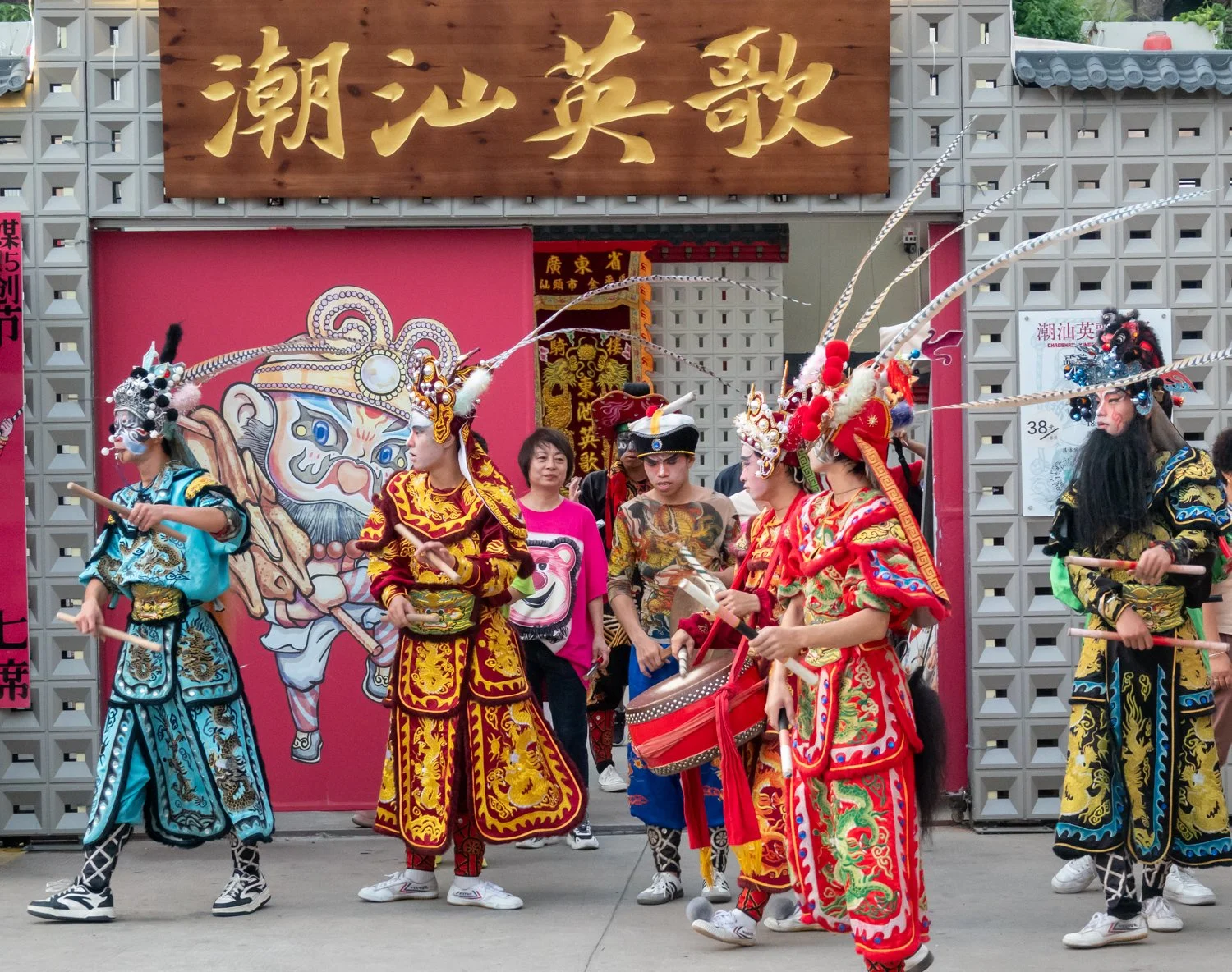
Street performers
Chaozhou
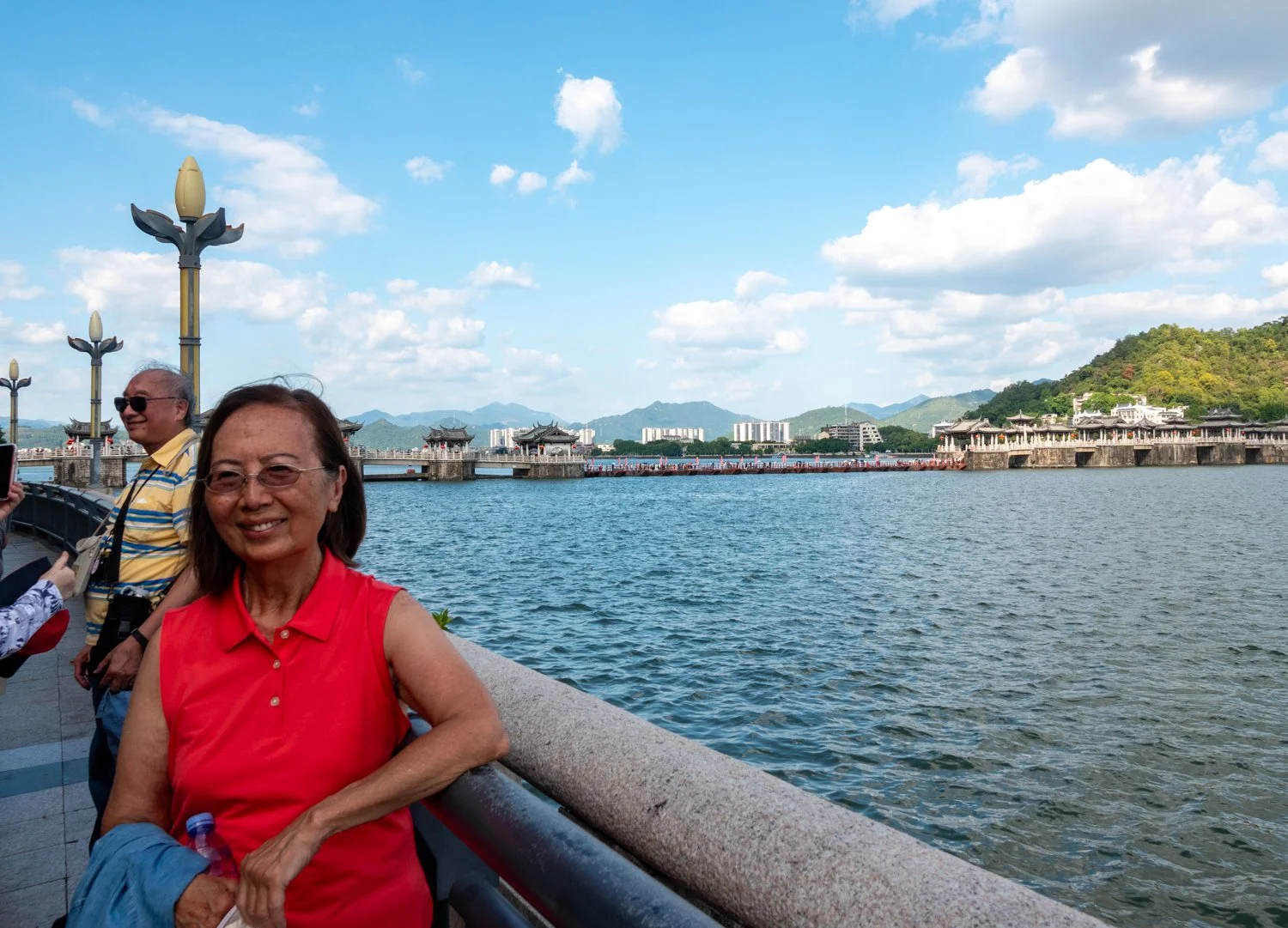
The Guangli Bridge is an historic and ancient structure over the Han River notable because it contains three construction styles: a beam bridge, an arch bridge, and most unique a pontoon bridge, The latter consists of 18 floating boats that can be moved aside to allow large ships to pass. It is reputedly the first movable bridge in the world.
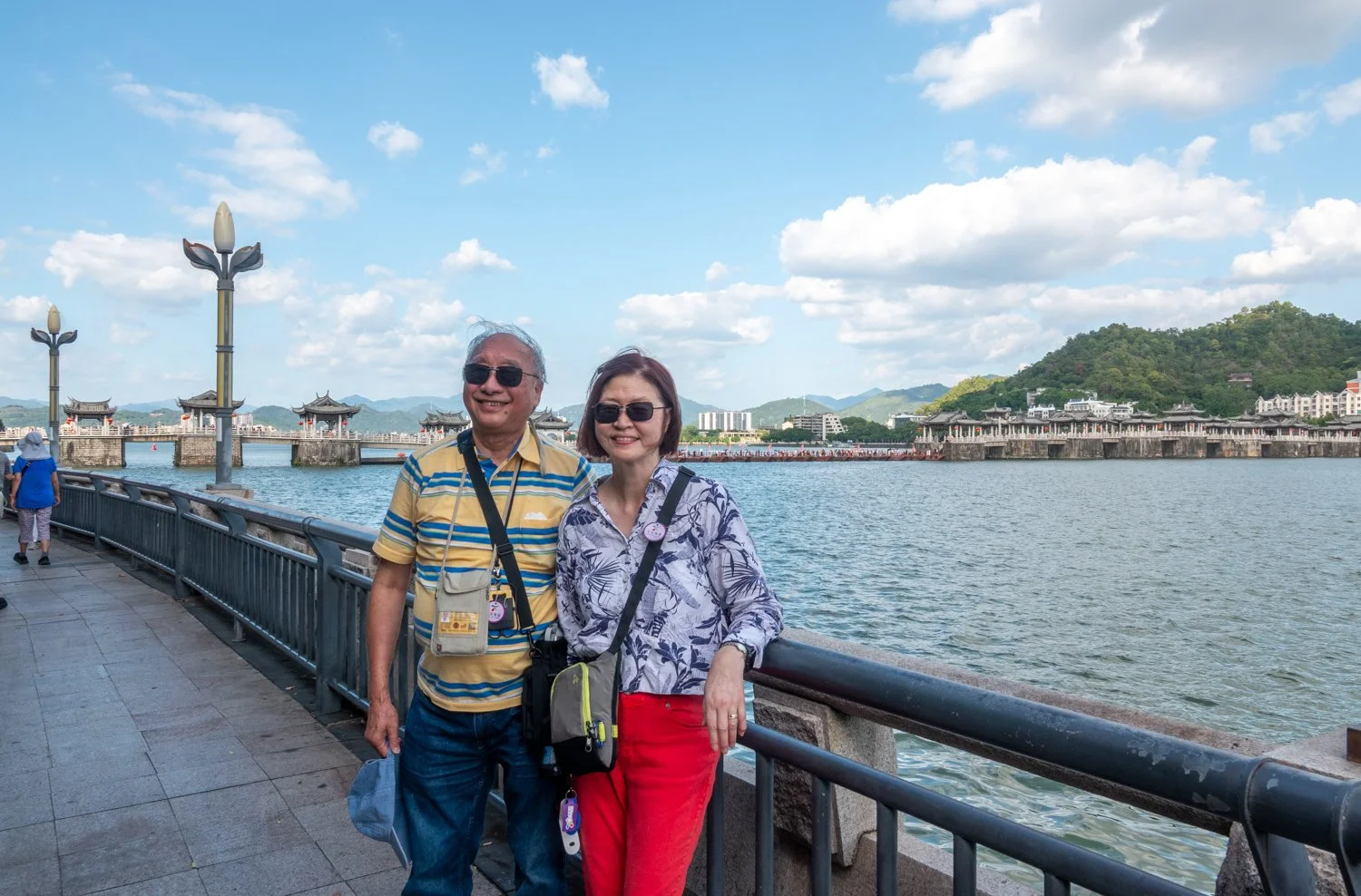
Joe and Margaret posing before the Guangli Bridge
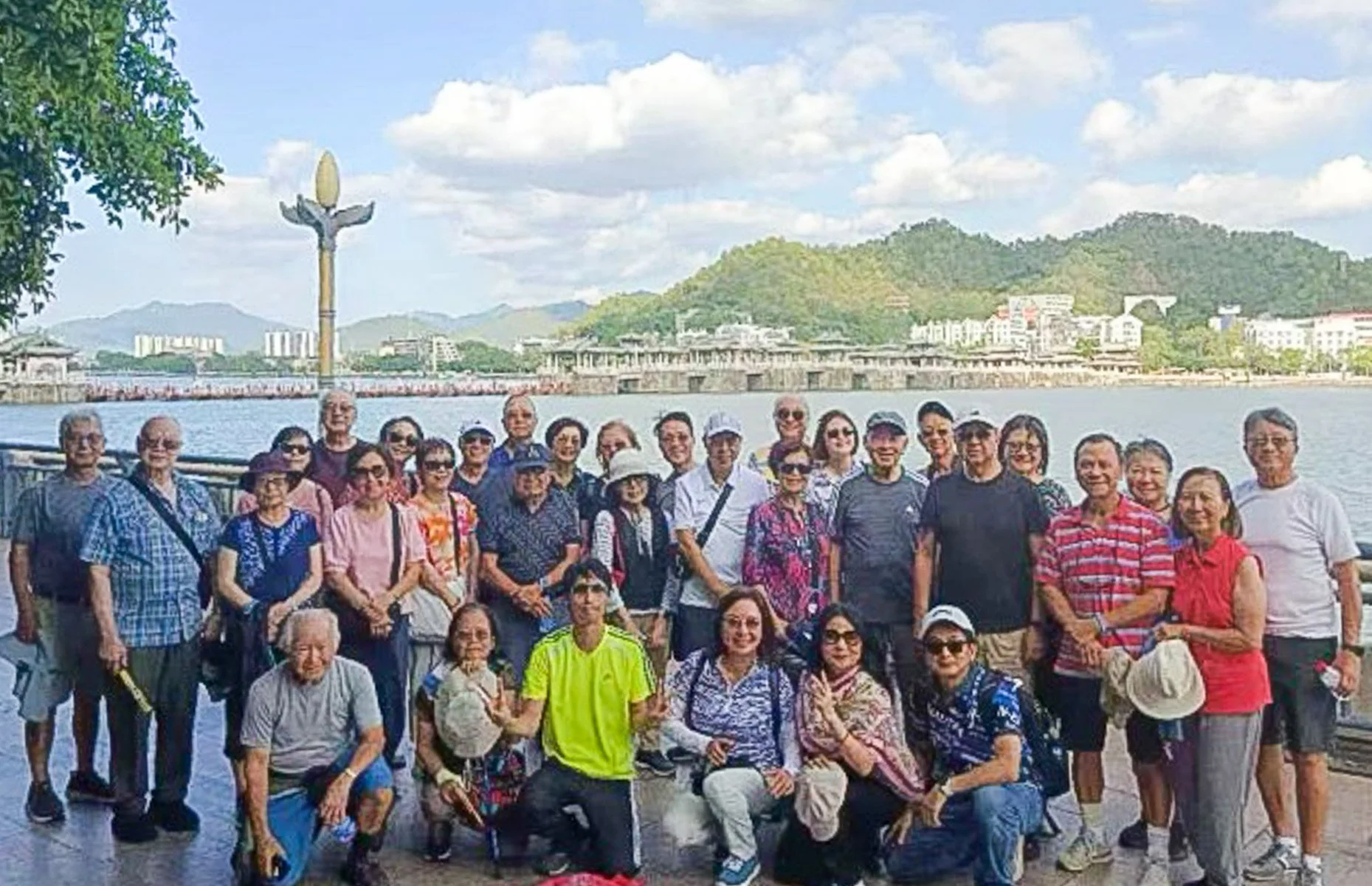
Our tour group
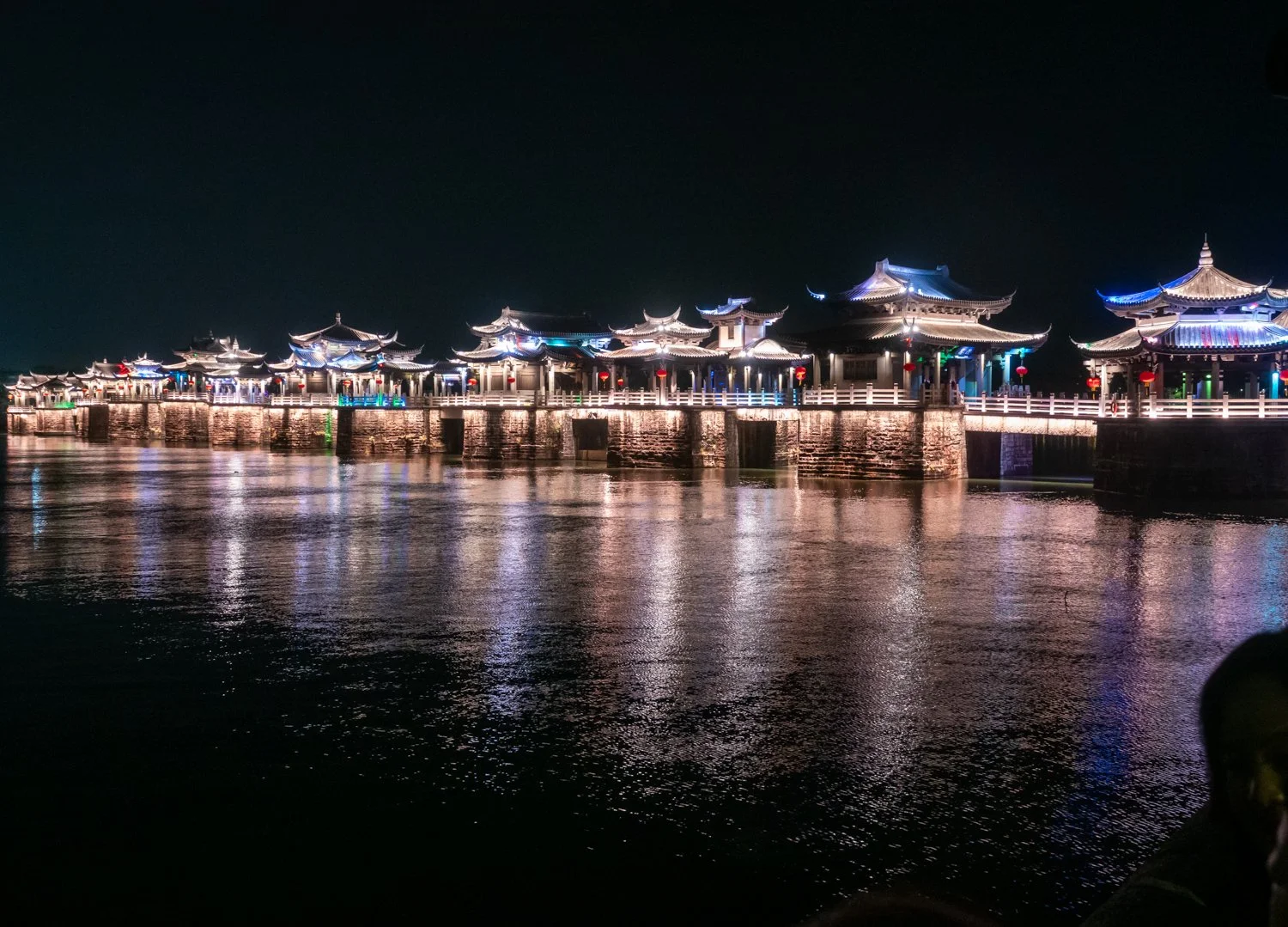
Guangli Bridge at night
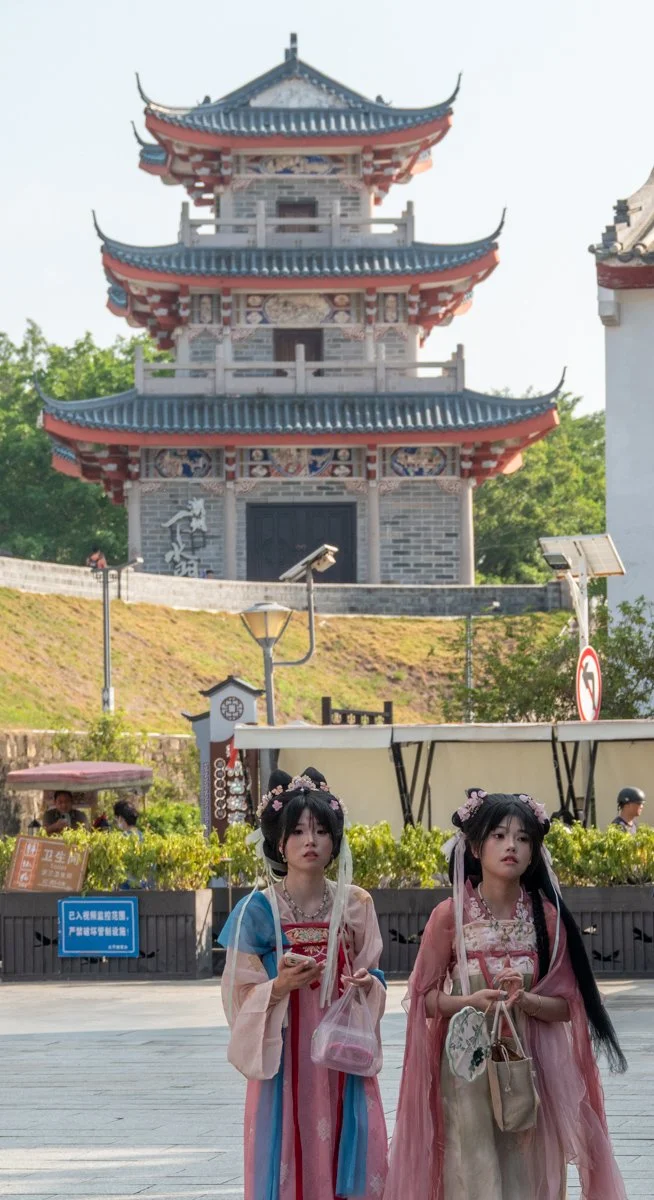
Guangji Gate Tower in Chaozhou
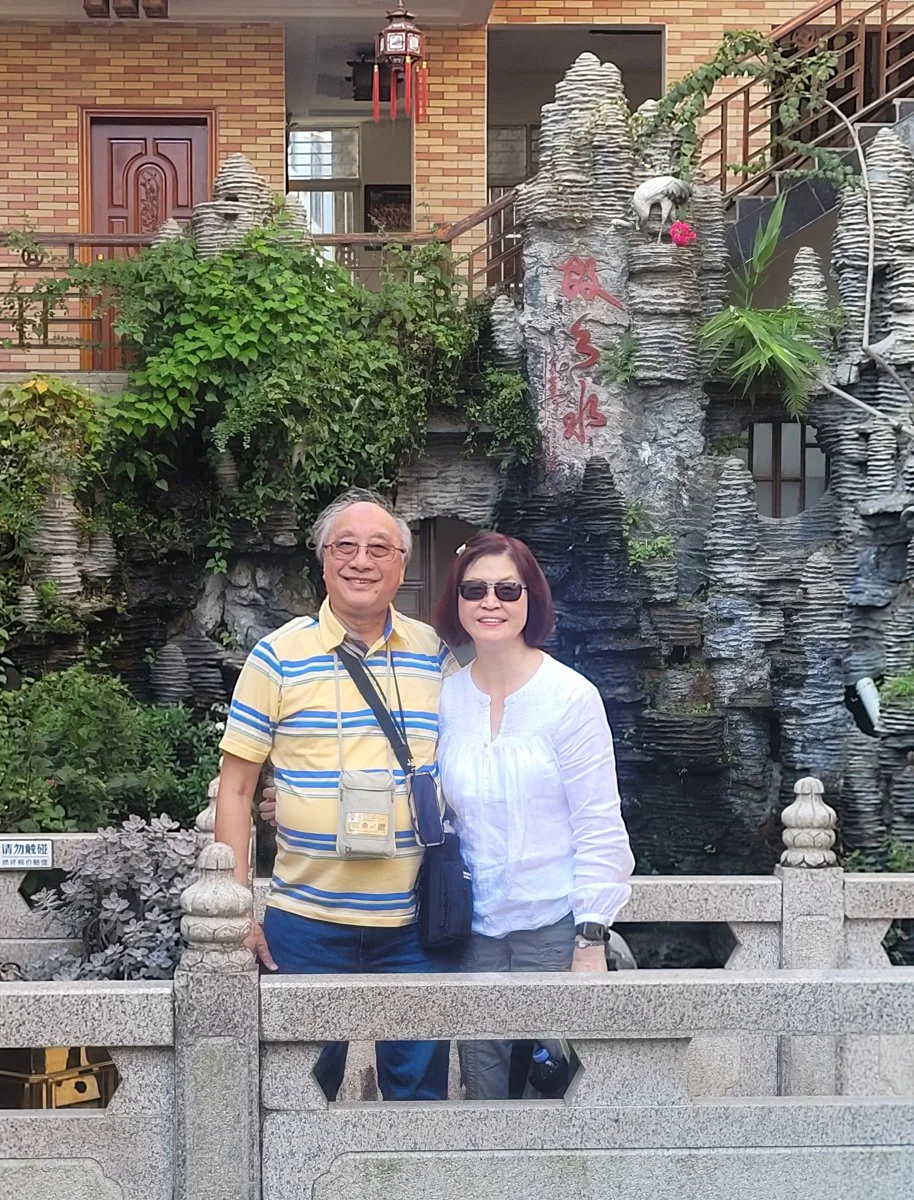
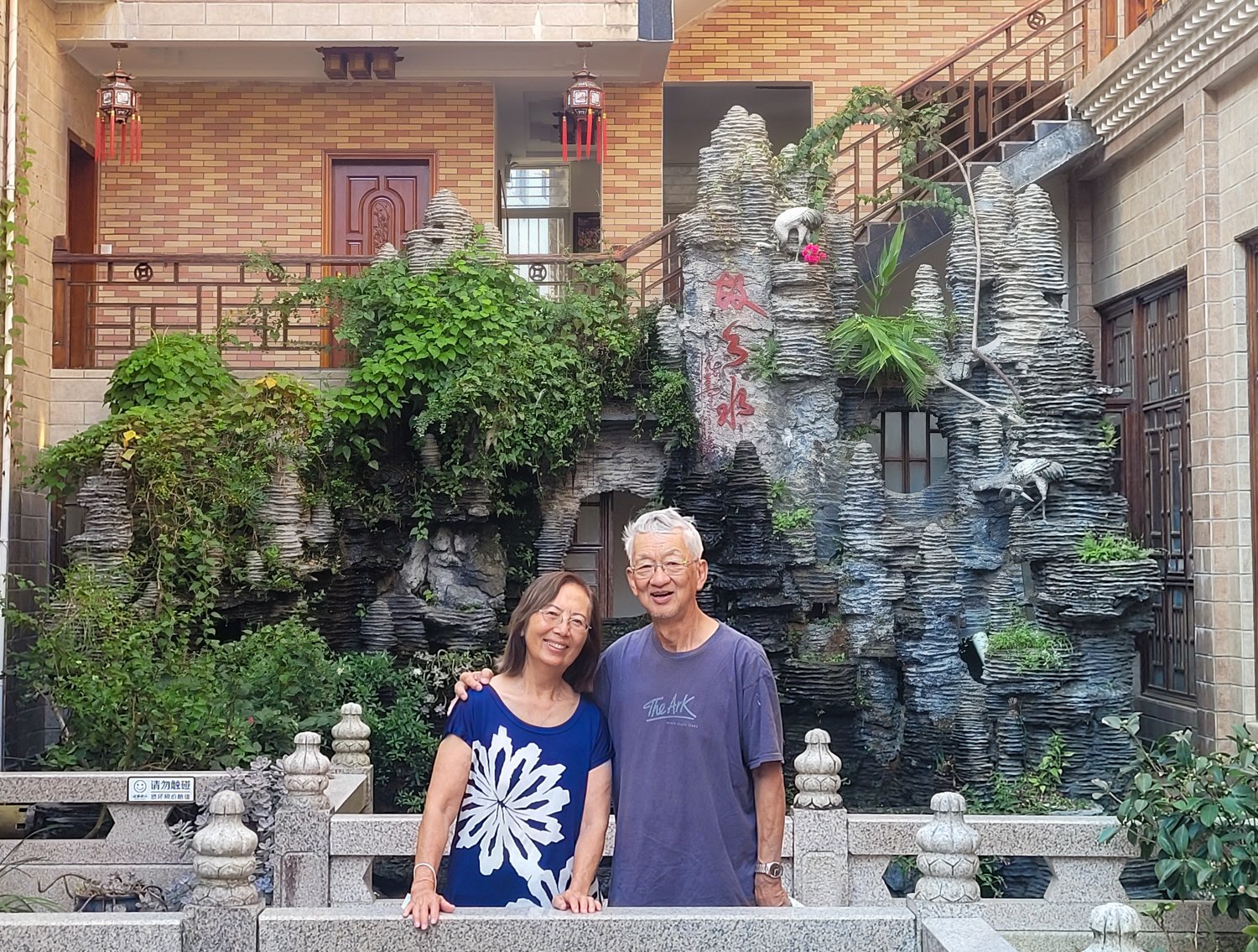
Chen Cihong Mansion
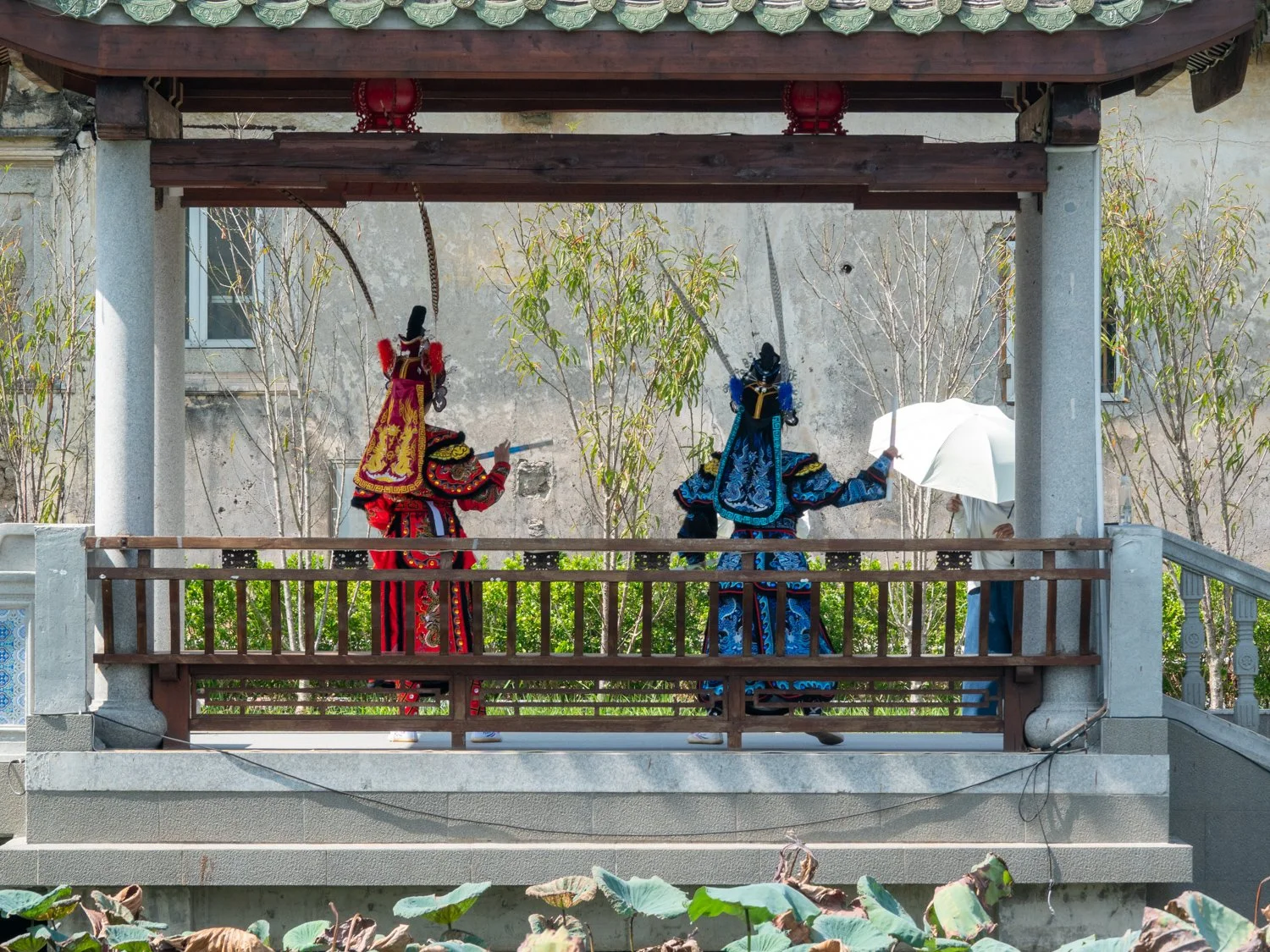
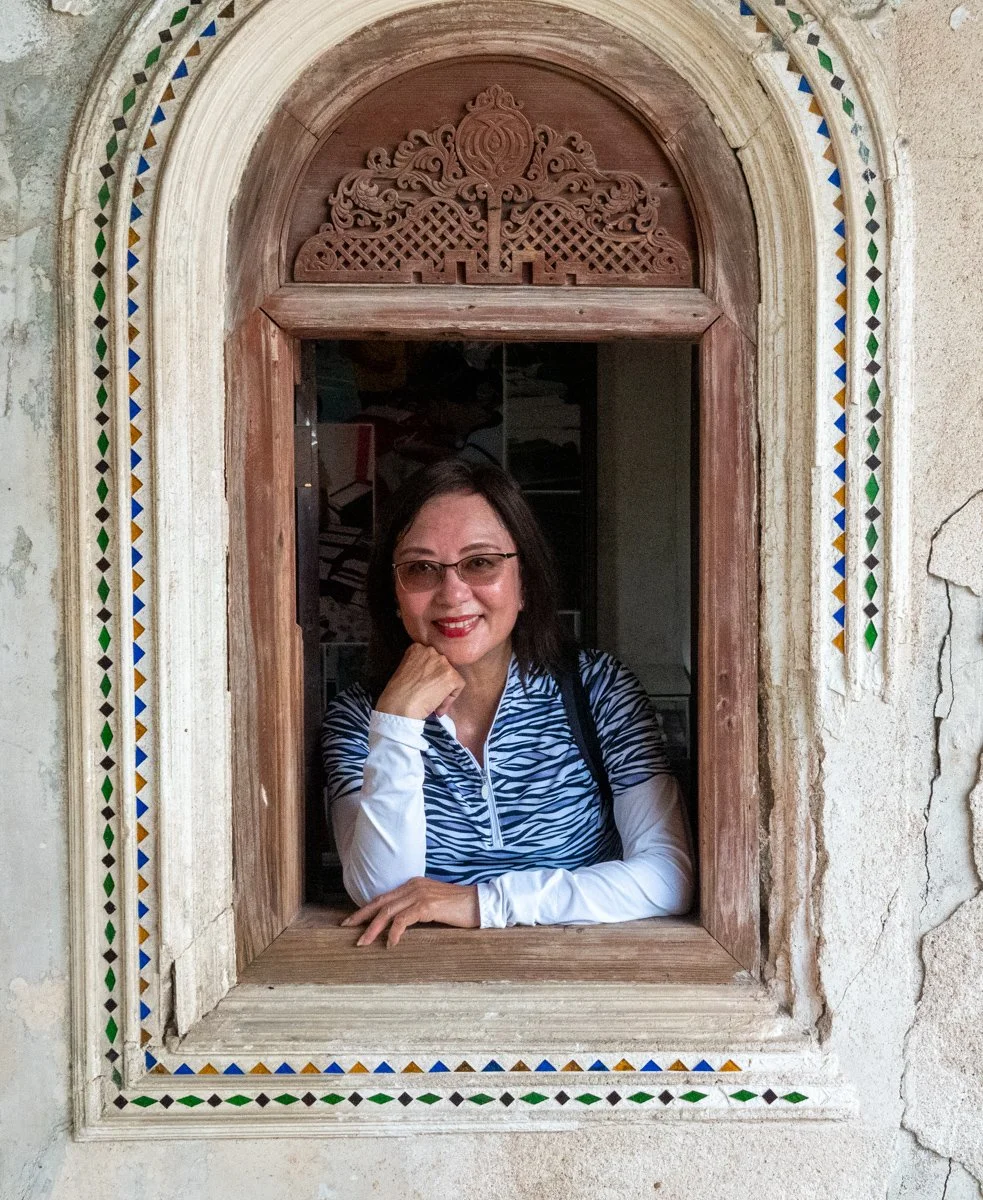
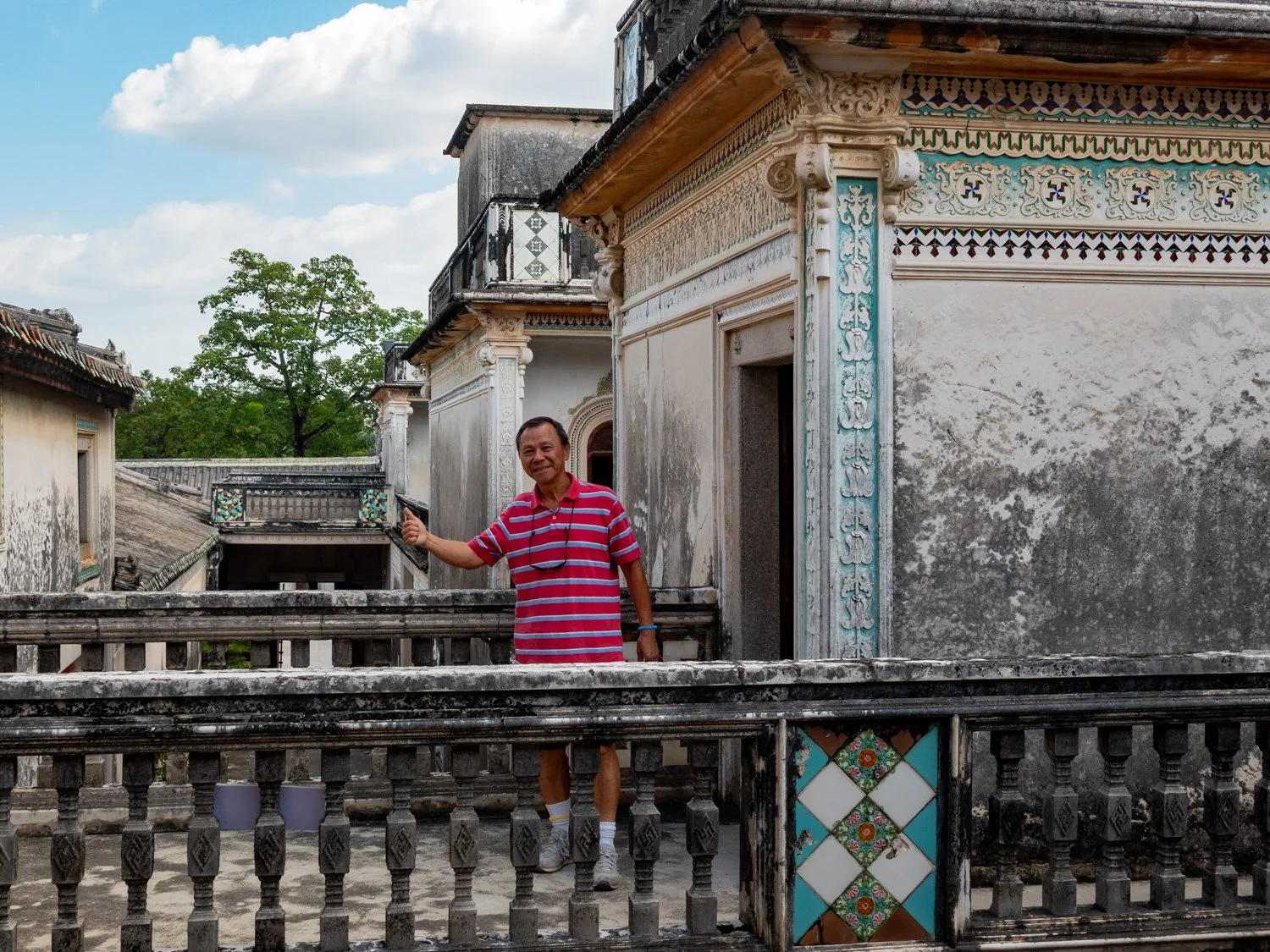
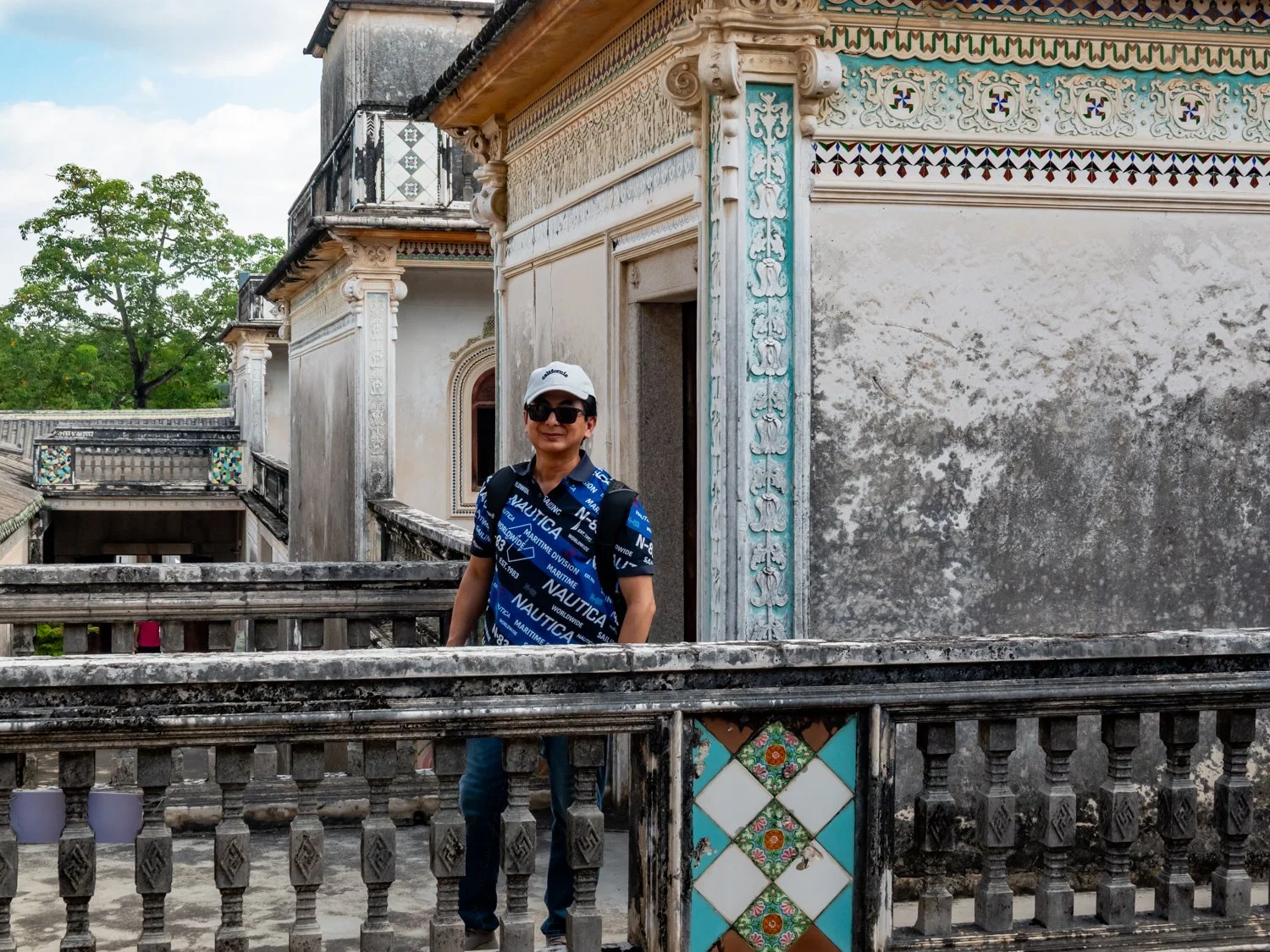
This gigantic mansion was built as a private residence by a famous overseas Chinese industrialist and financier in Thailand and consists of a huge complex of over 500 rooms. Parts of it are now open to the public. The architecture melds both traditional Chinese and Western style. The mansion also includes traditional folk culture of Chaozhou. Its construction began in 1876 and took almost 50 years.
Chaozhou
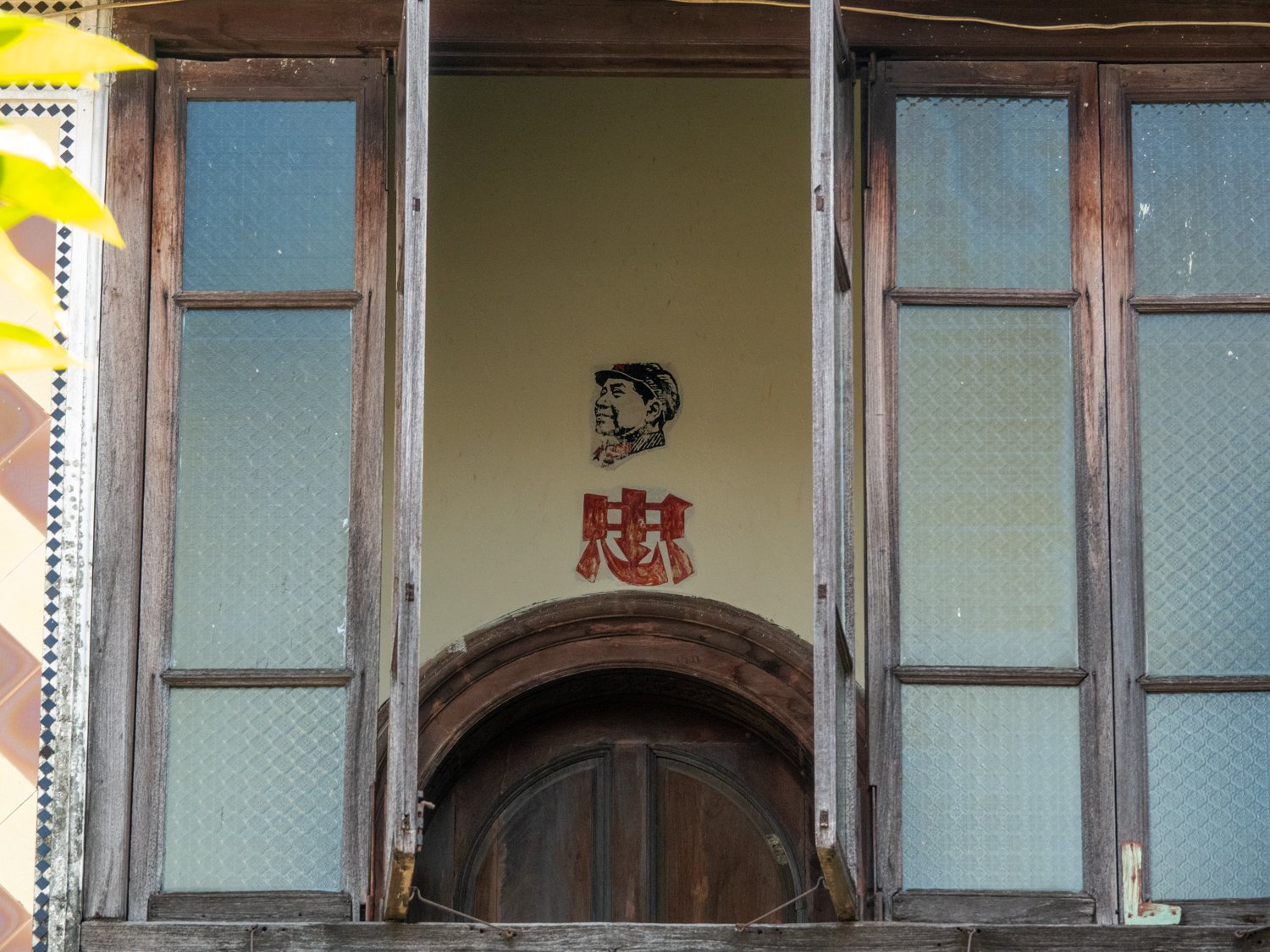
It is actually unusual to see the Great Helmsman’s image in China today, especially compared to his ubiquitous appearance 40 years ago. Here the Chinese character is “loyalty”.
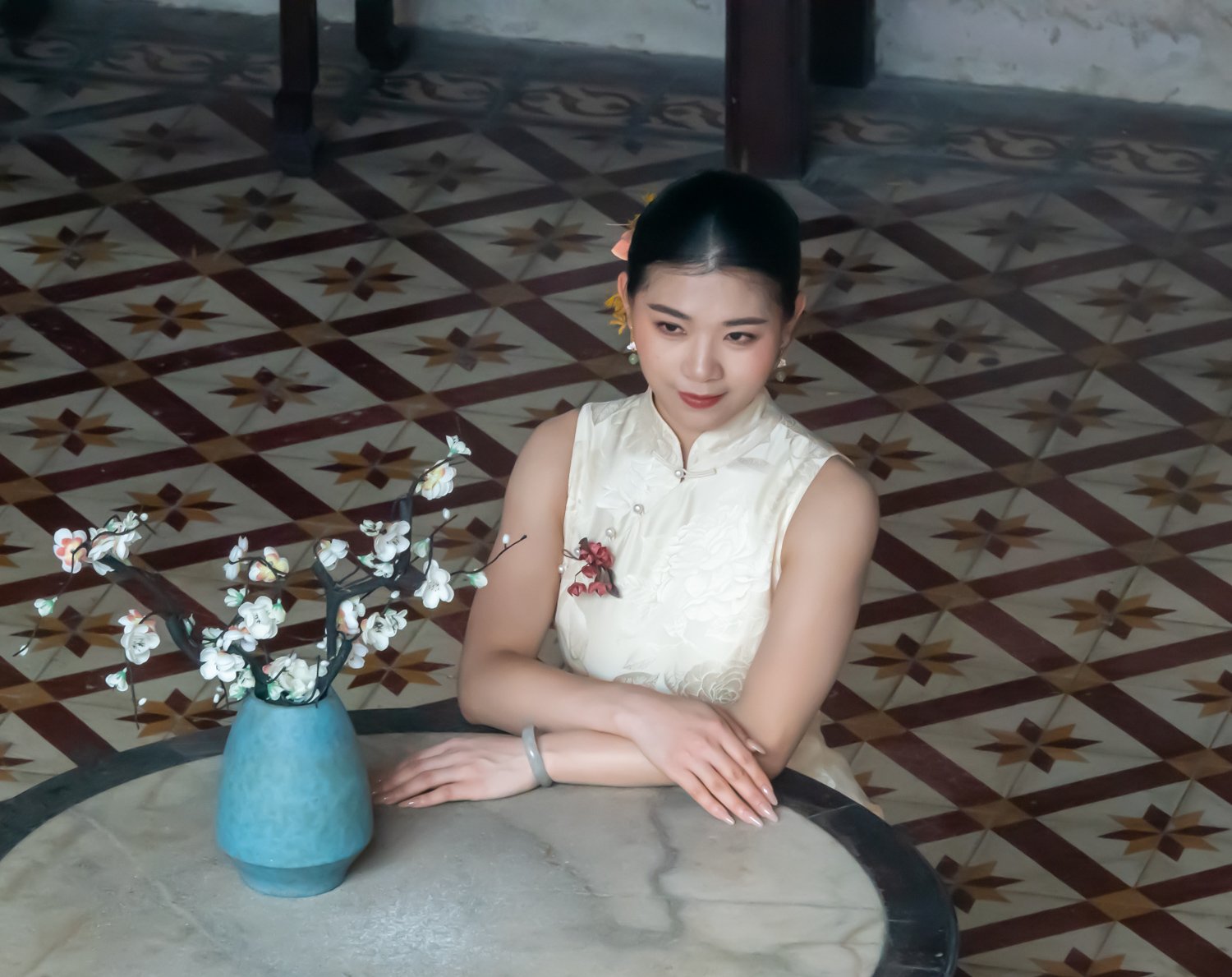
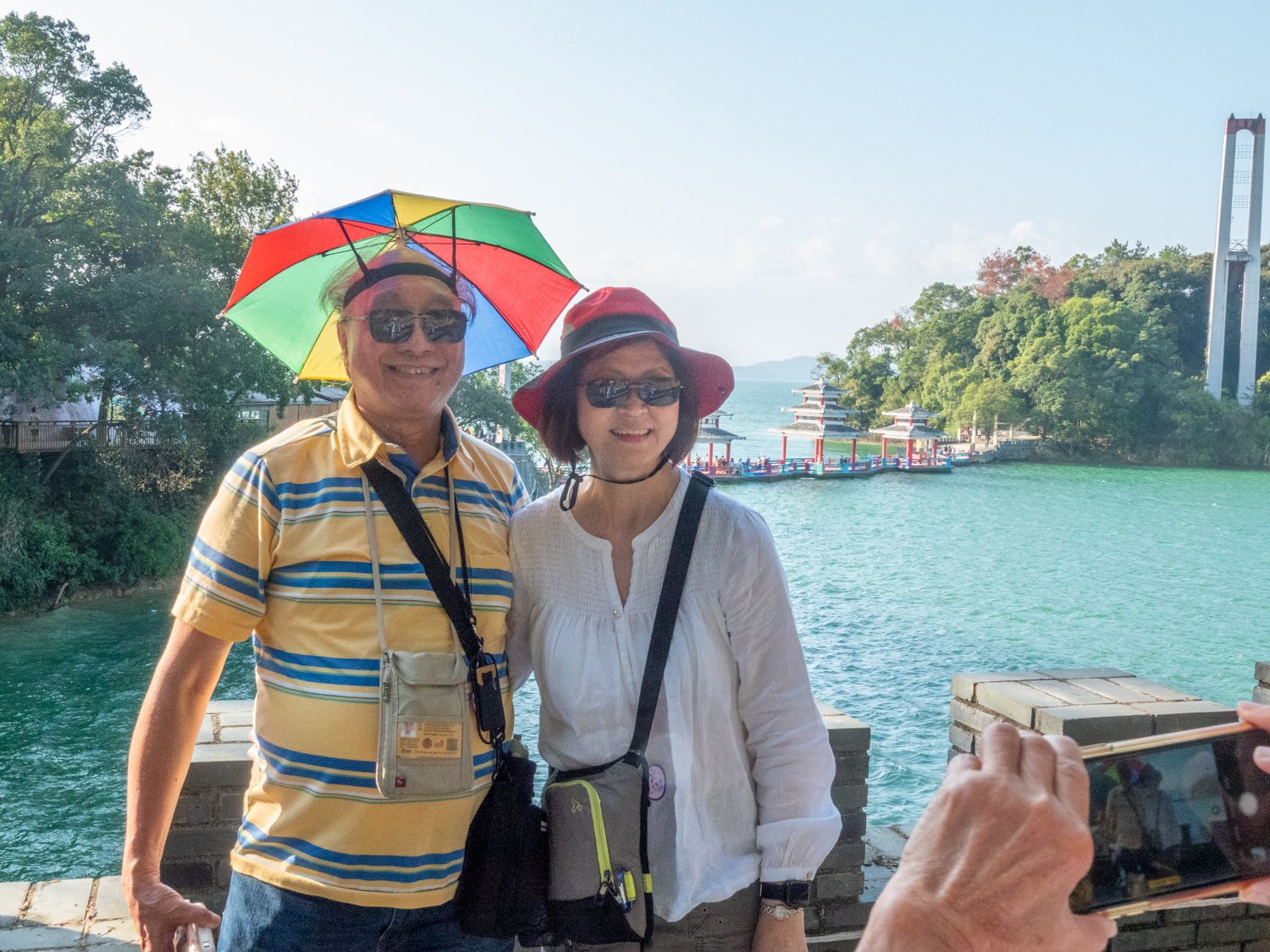
Wanlyu Lake and Jinghuayuan Scenic Area
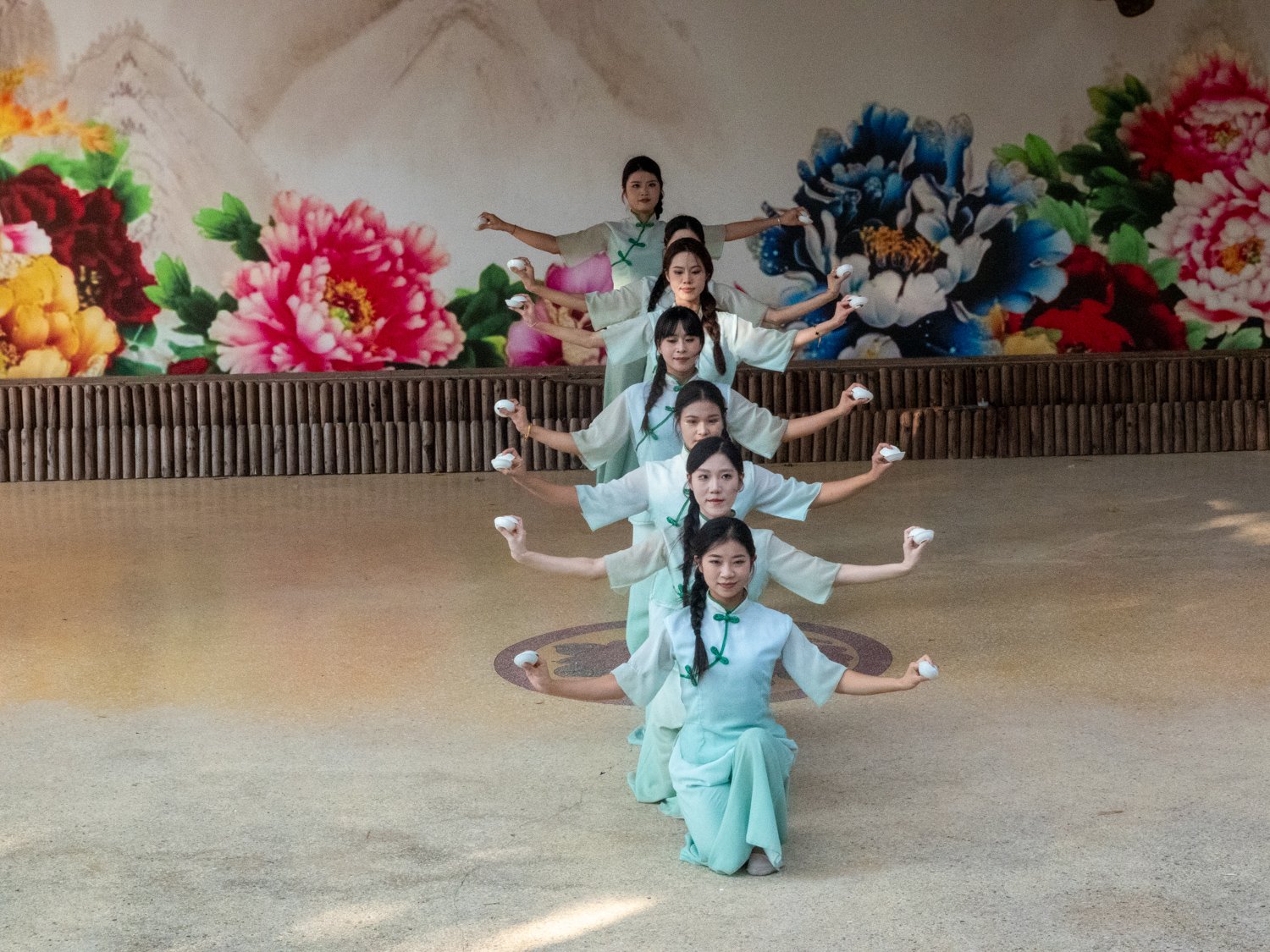
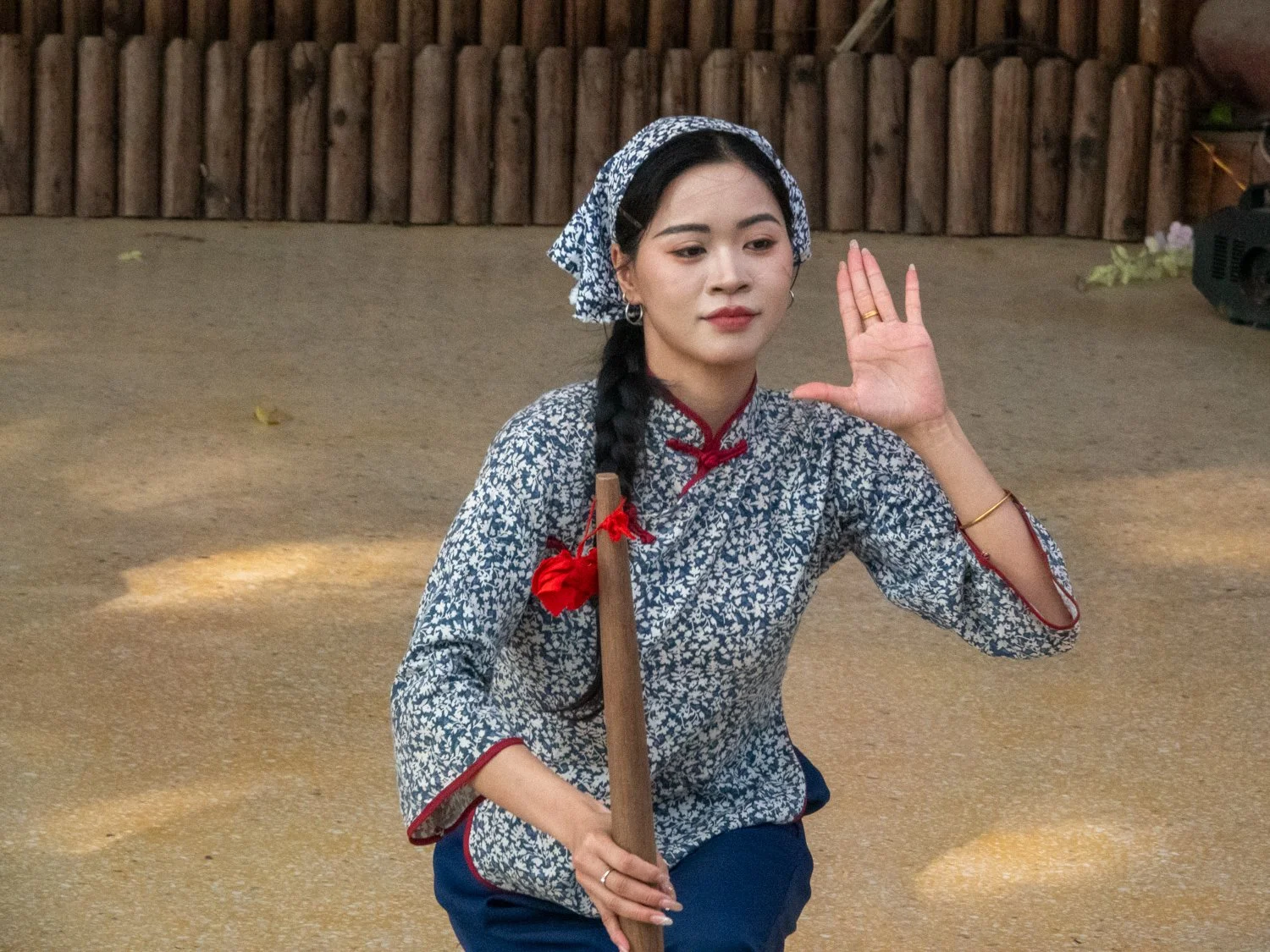
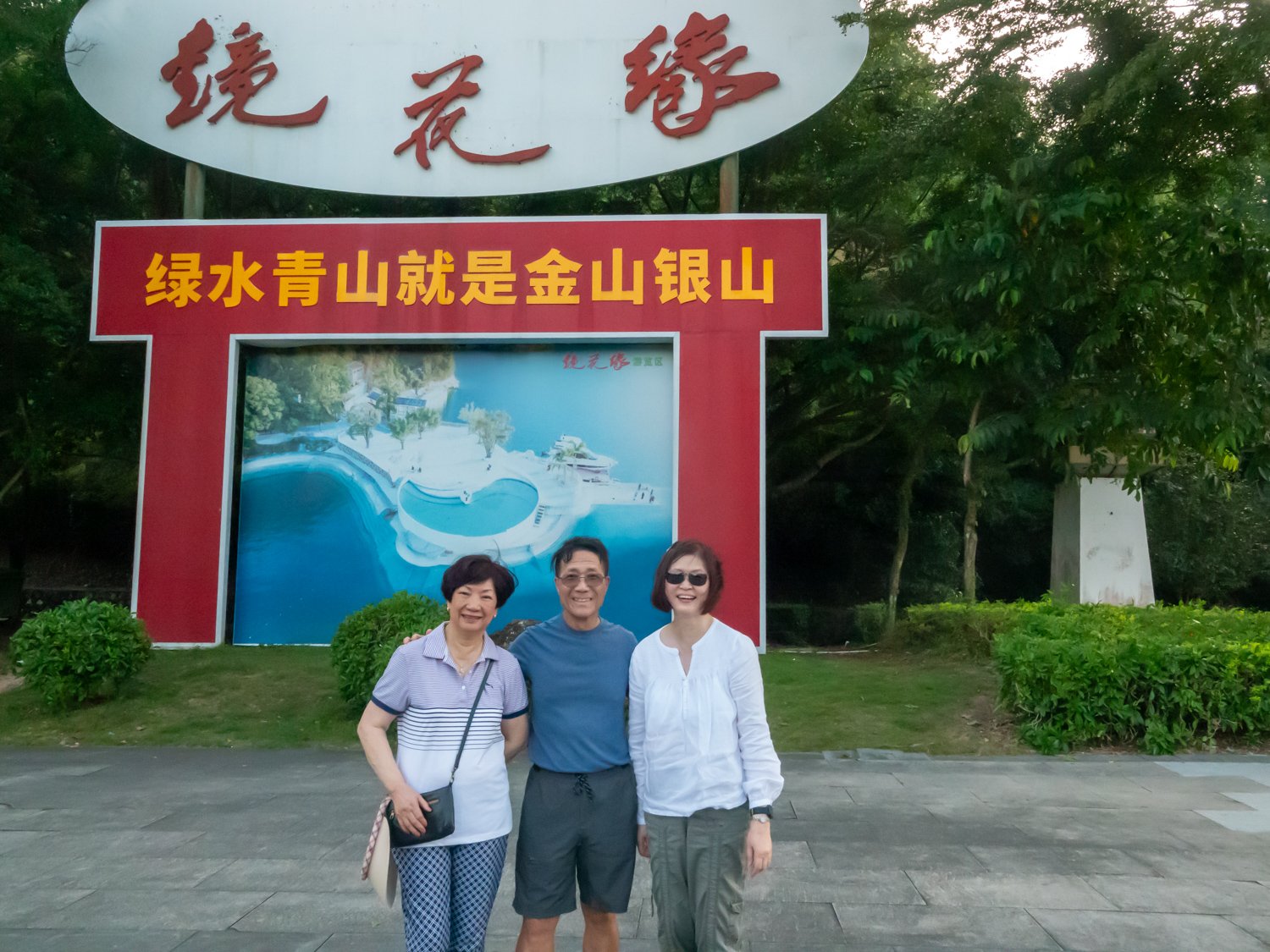
Mimi, John and Margaret share the same birthday!
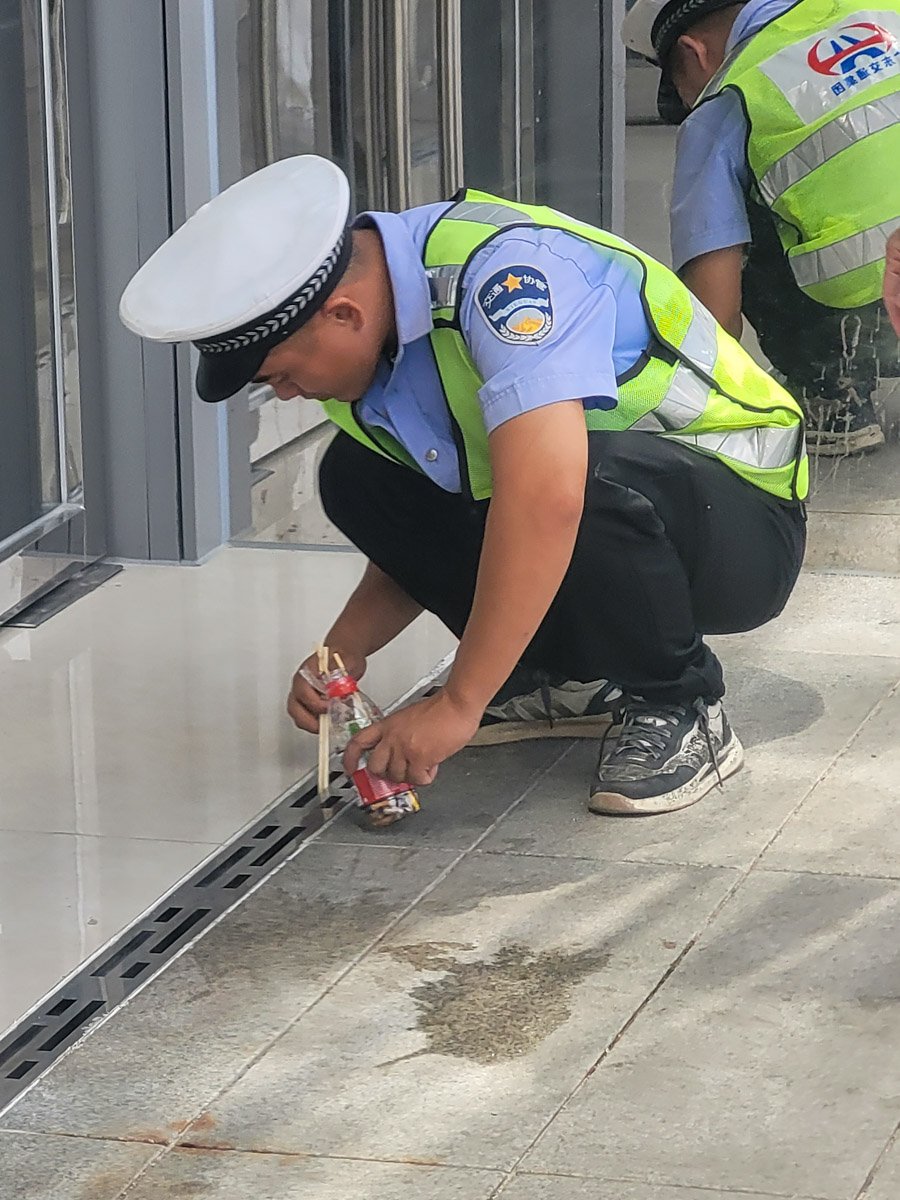
Diligent worker: the security guard is picking garbage that has fallen into the grid with chopsticks
Dongguan
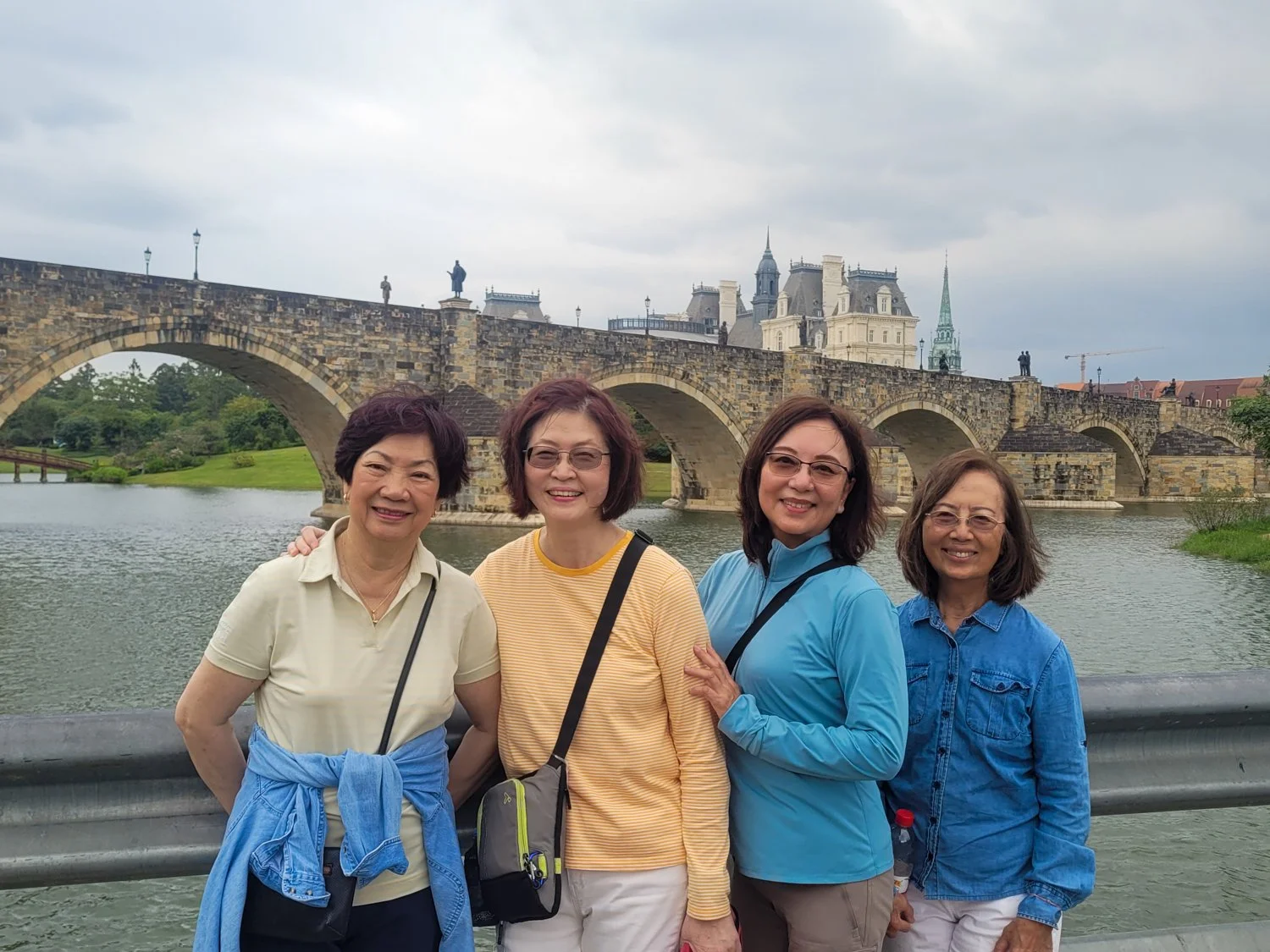
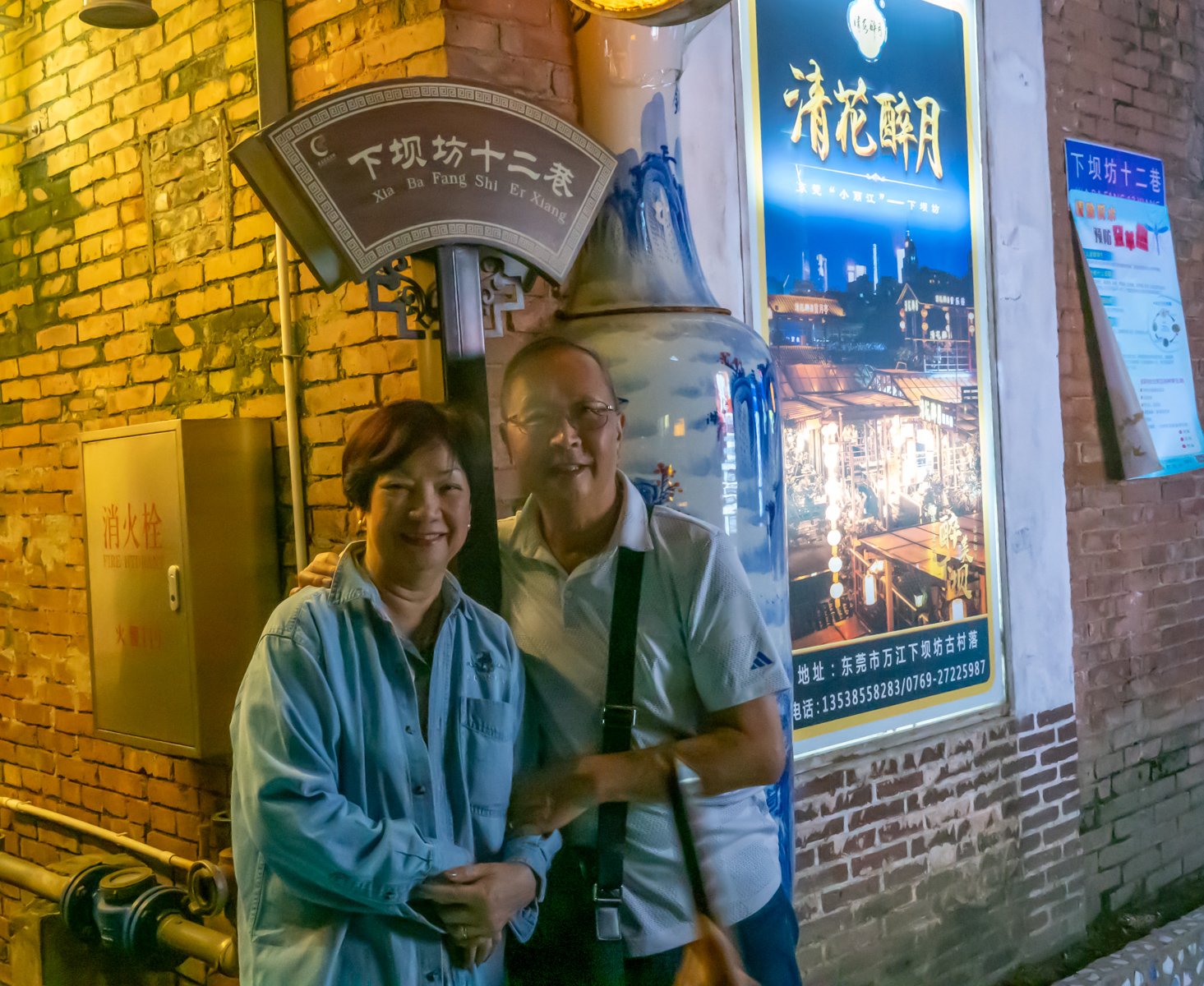
We spent a day visiting the technological center in Dongguan, highlighted by the Huawei campus with its unusual European architechture.
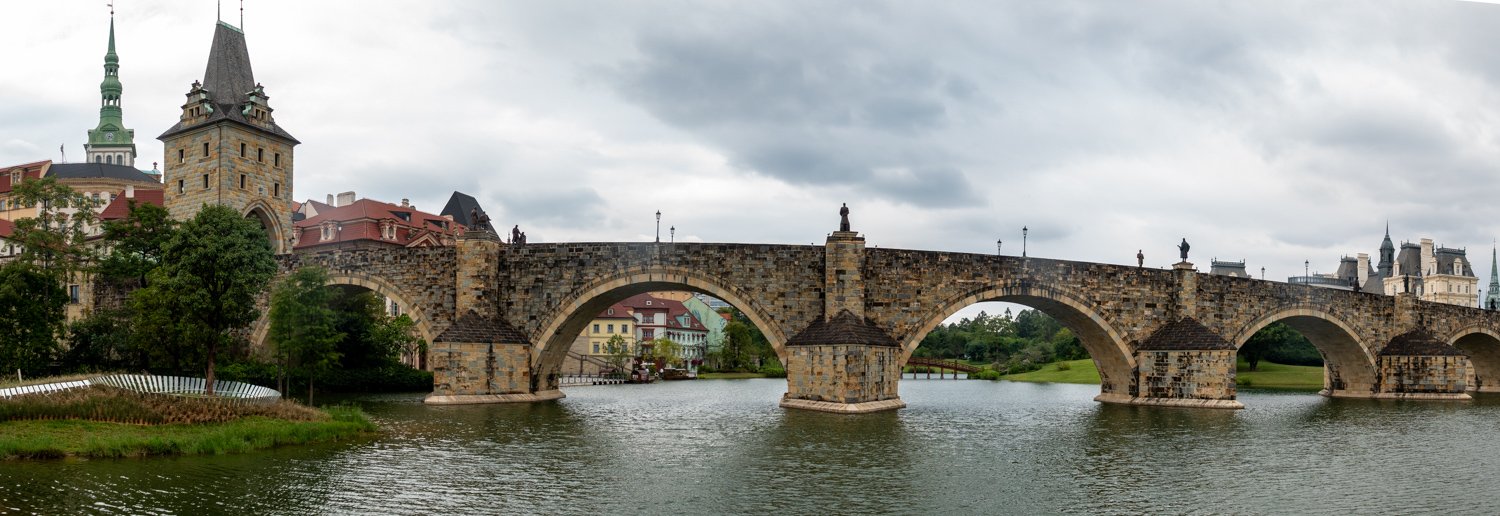
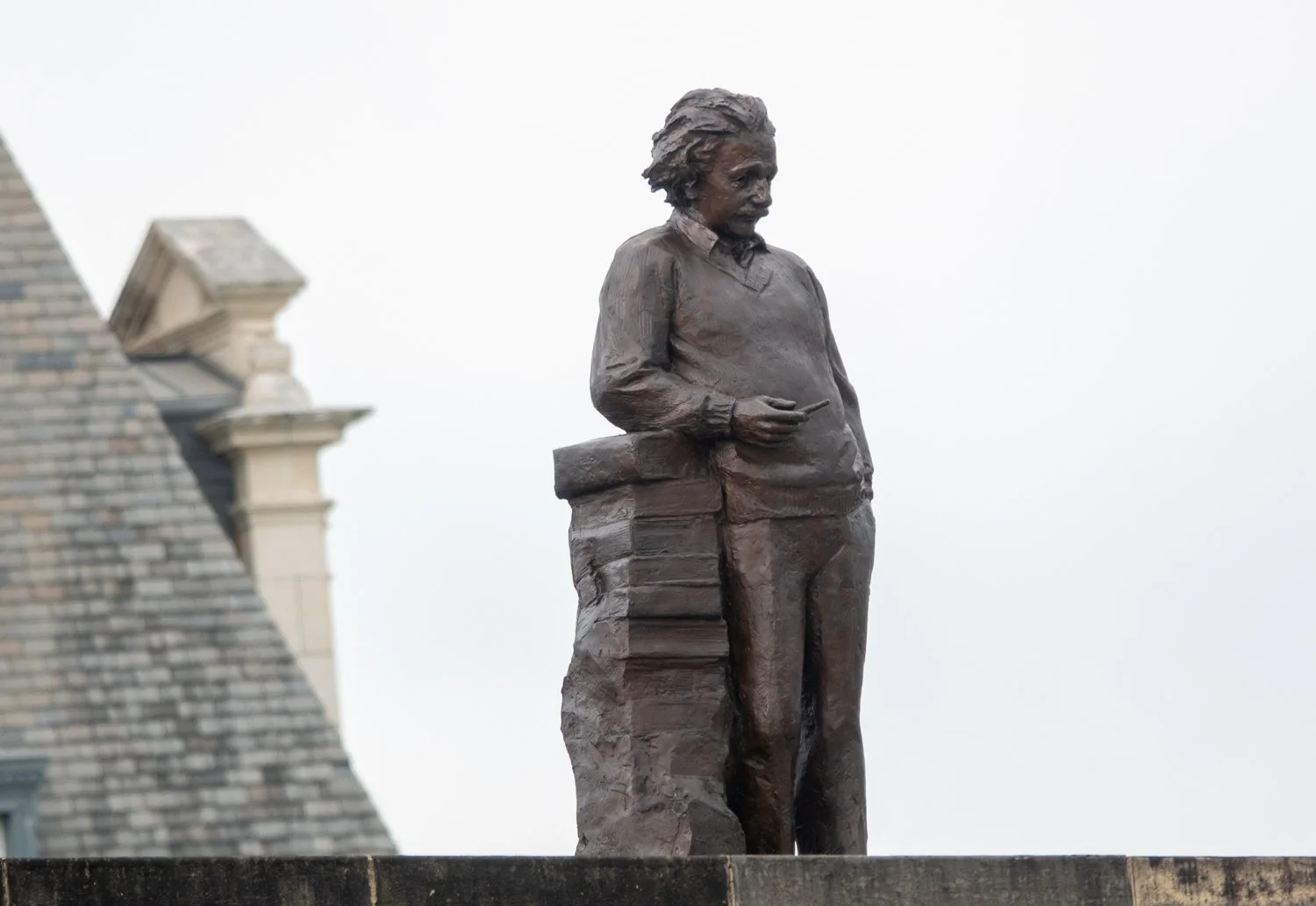
Albert is also celebrated in China.
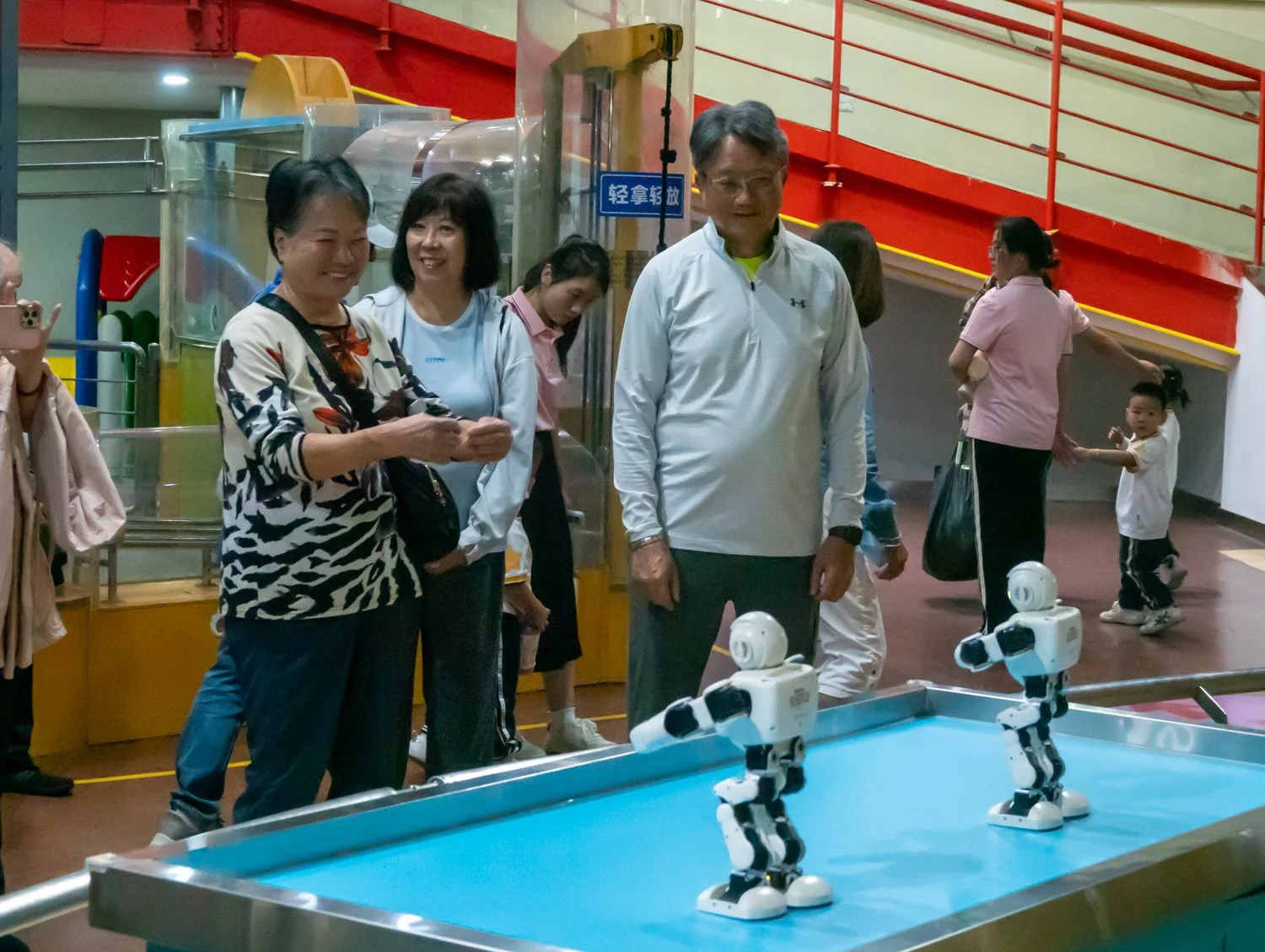
Dongguan Science Museum
Baomo Garden
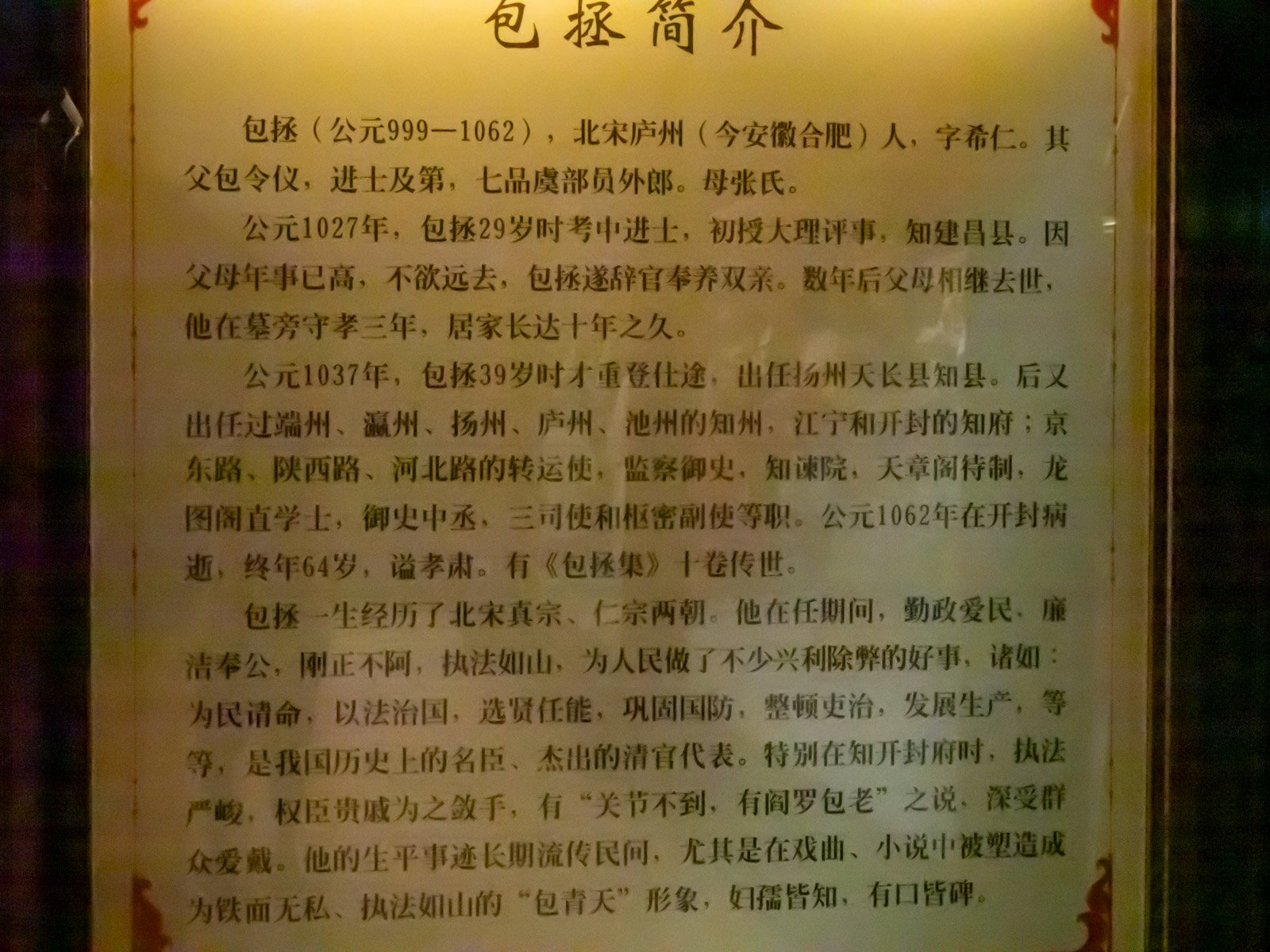
This large complex of gardens, and cultural artifacts honors the memory of Justice Bao Zheng (also known as Bao Gong), a famous judge in the Song Dynasty who is widely celebrated for his incorruptibility. He has become a popular symbol of justice in Chinese society and featured in many literary and artistic media.
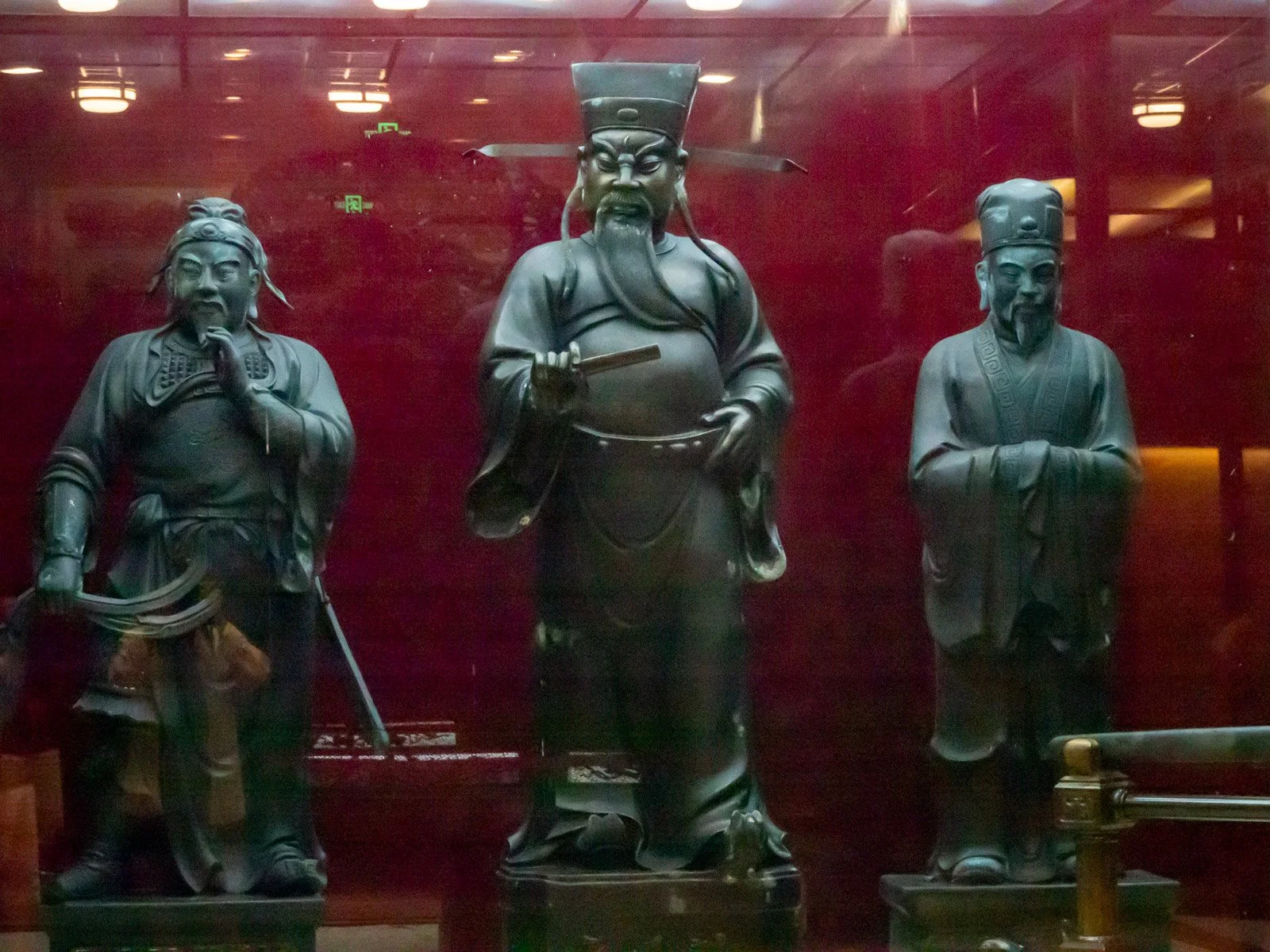
The central figure is Justice Bao Zheng, recognizable by the crescent shaped scar on his forehead.
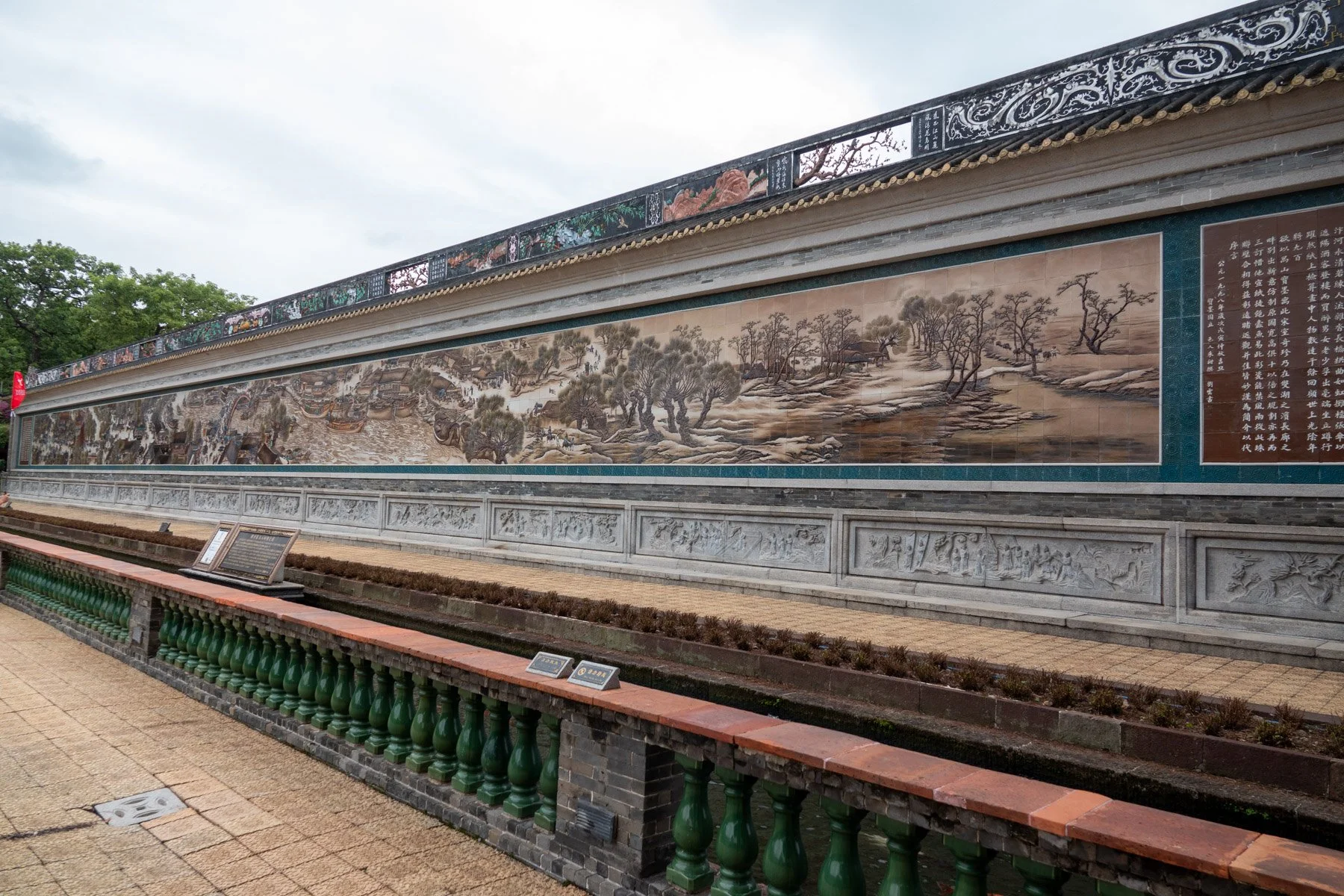
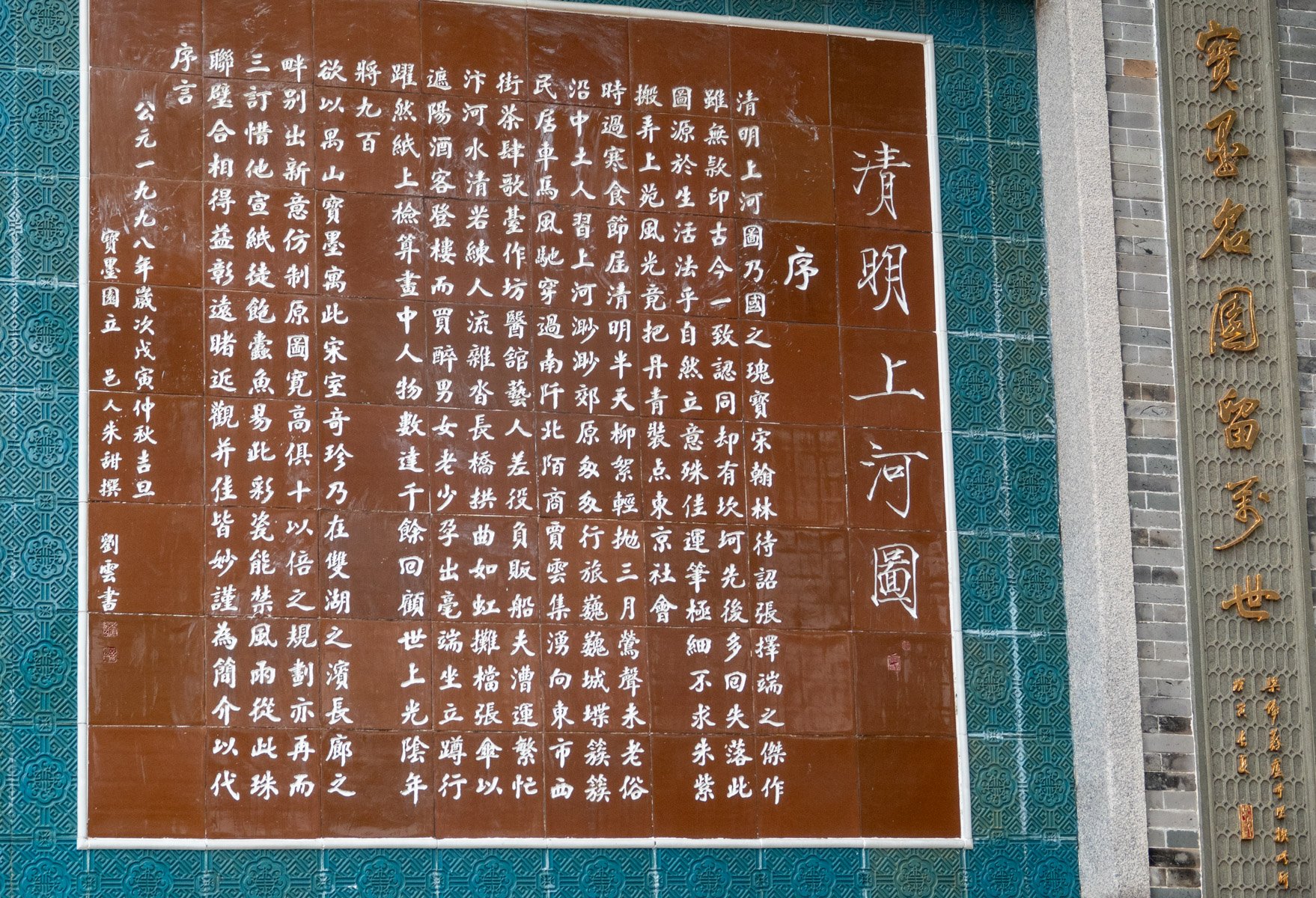
The large ceramic depiction of the famous painting “Along the River during the Qingming Festival”, which is one of the most famous Chinese paintings.
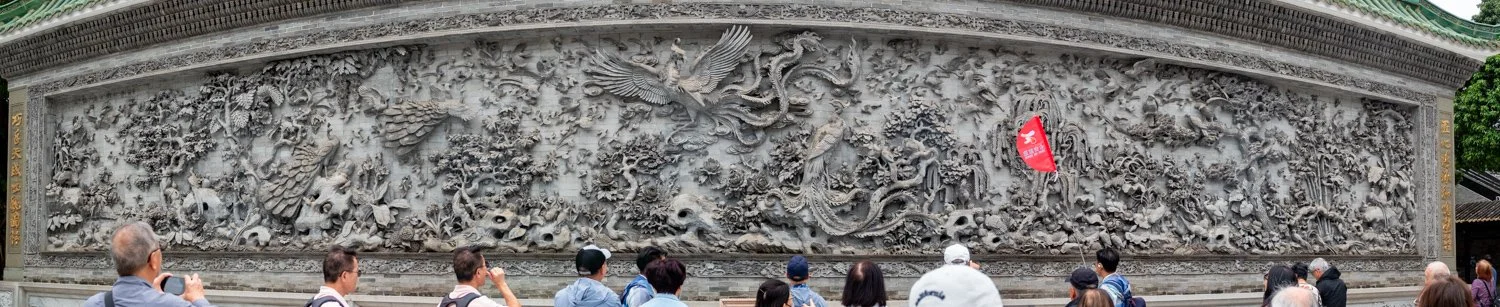
Wall of Flowers and Birds
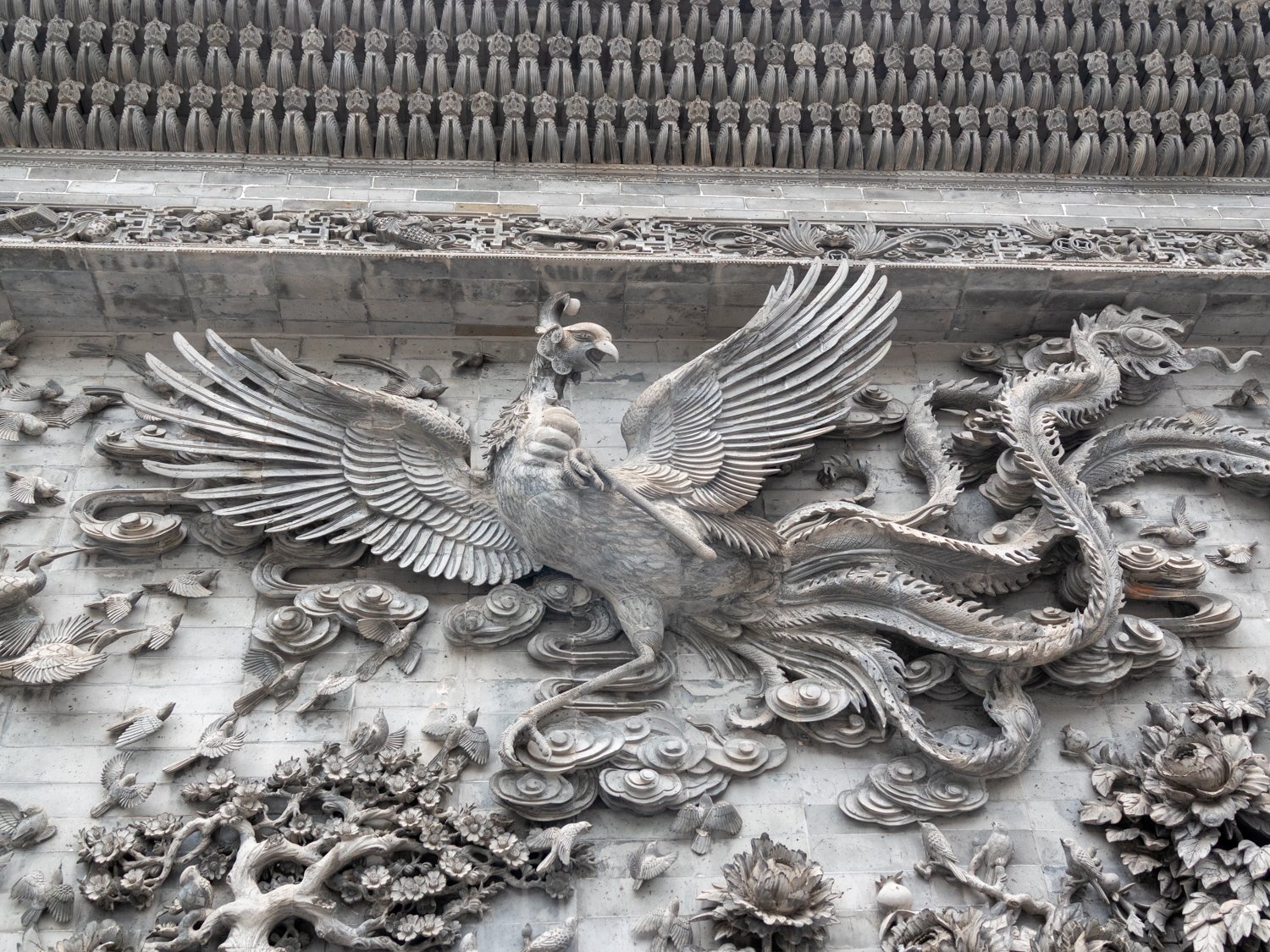
Closeup of one of the hundred birds on the wall
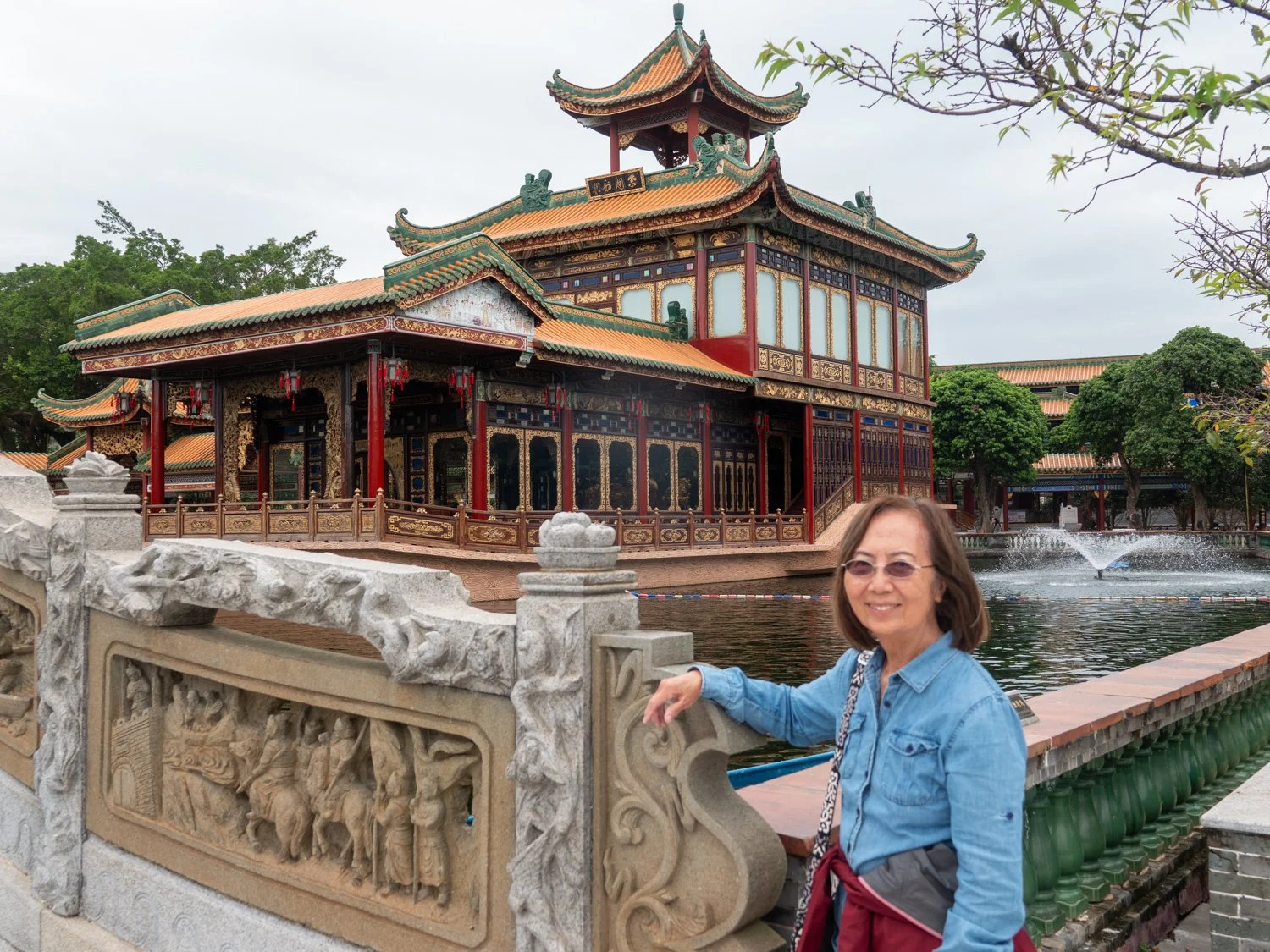
Baomo Garden
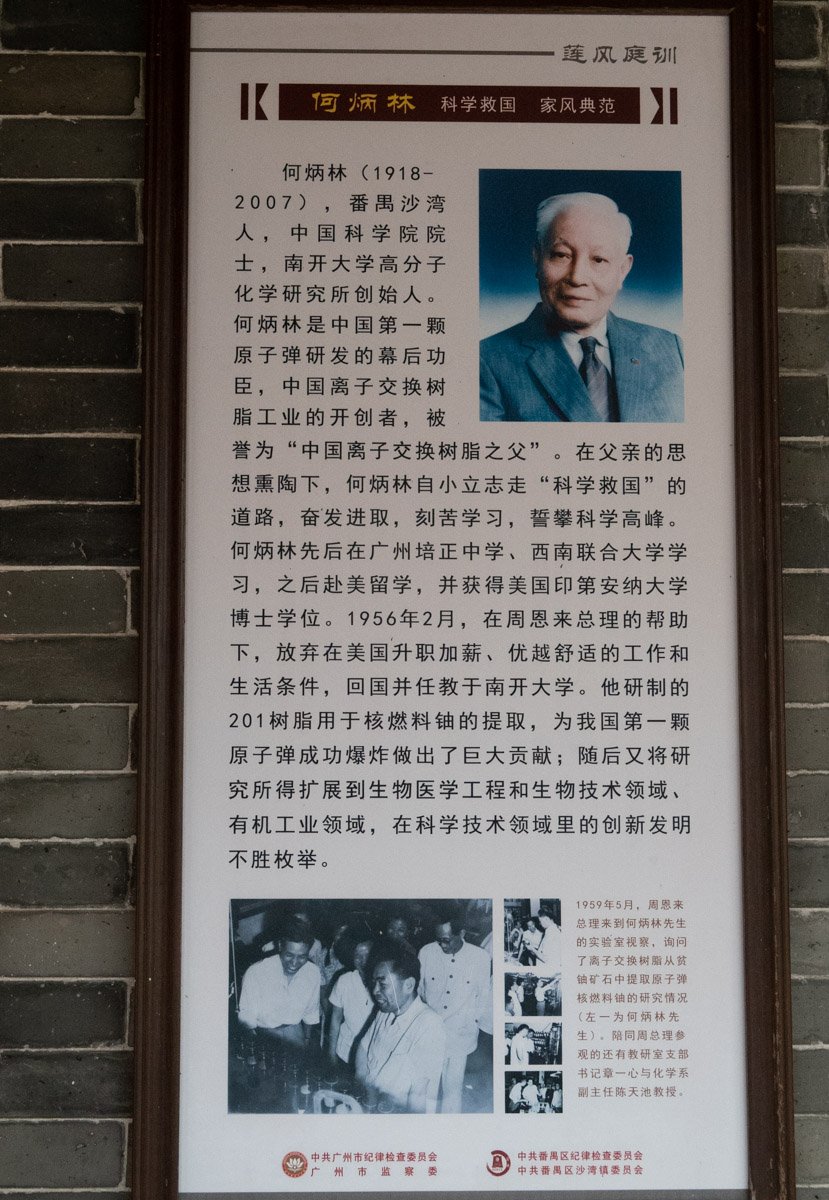
There were a number of memorials for notable Lingnan residents who achieved fame in academic, business, or literary circles. This fellow undoubtedly knew my mother as they were the same age, both attended Nankai University and majored in chemistry.
Guangzhou
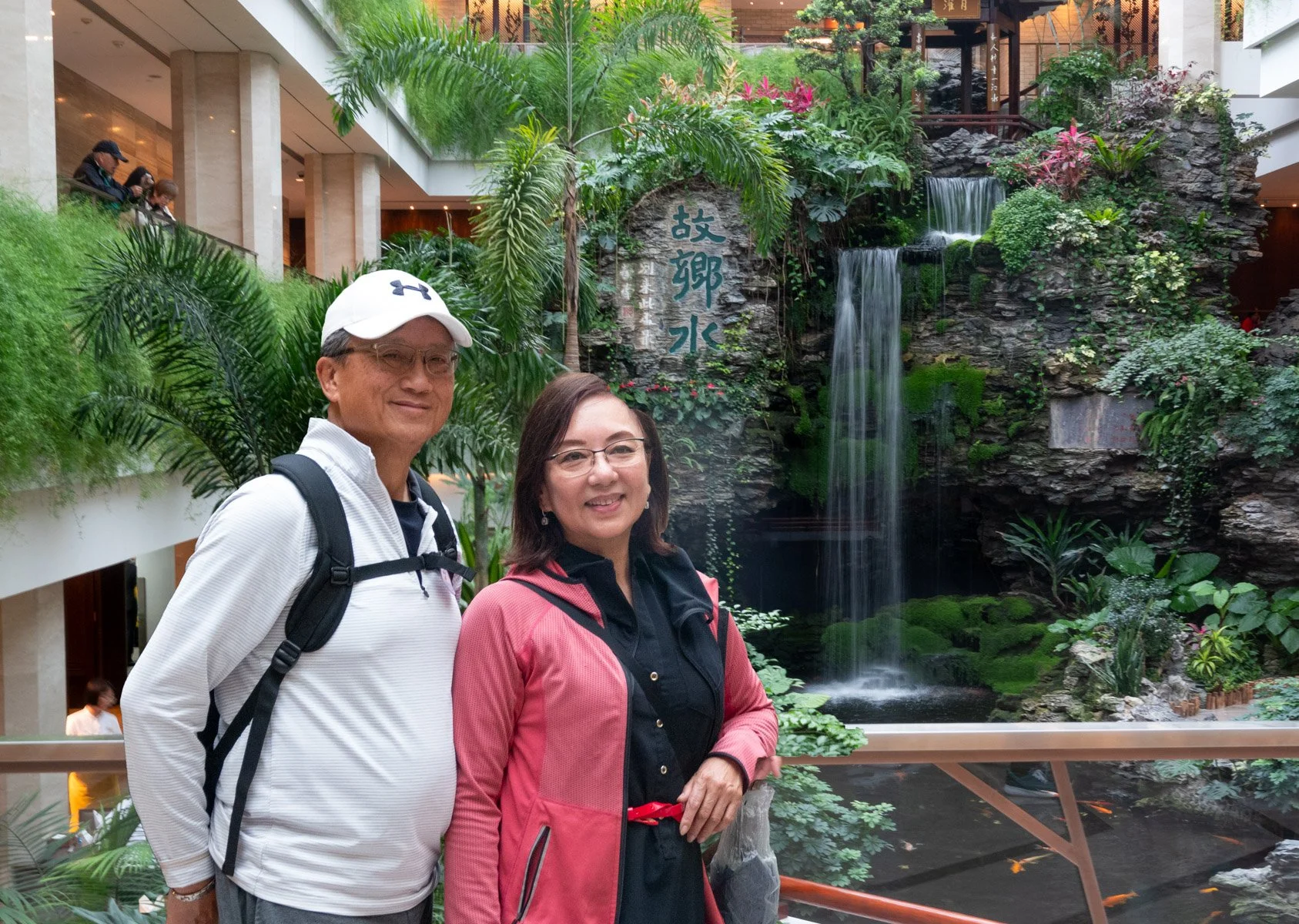
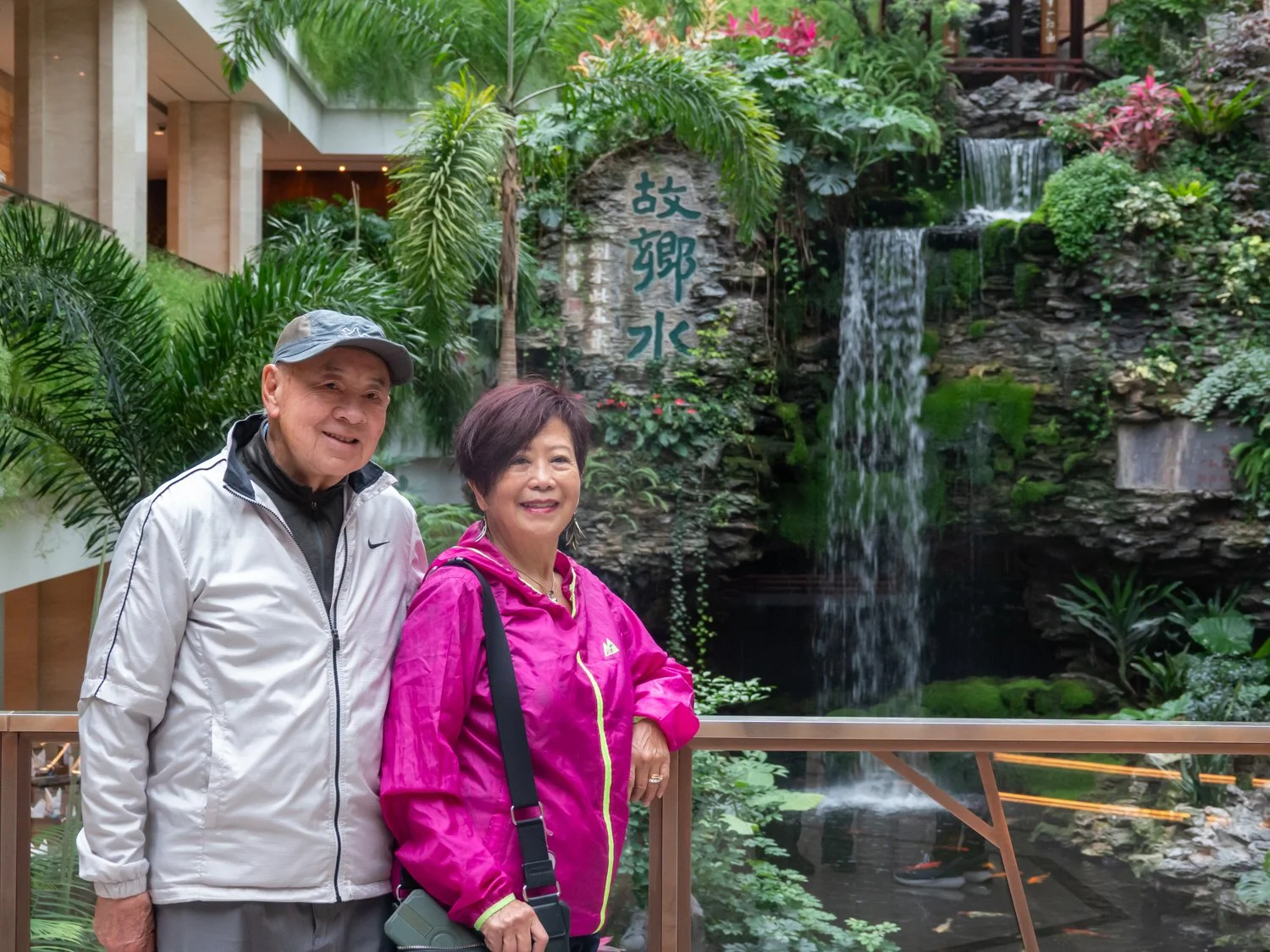
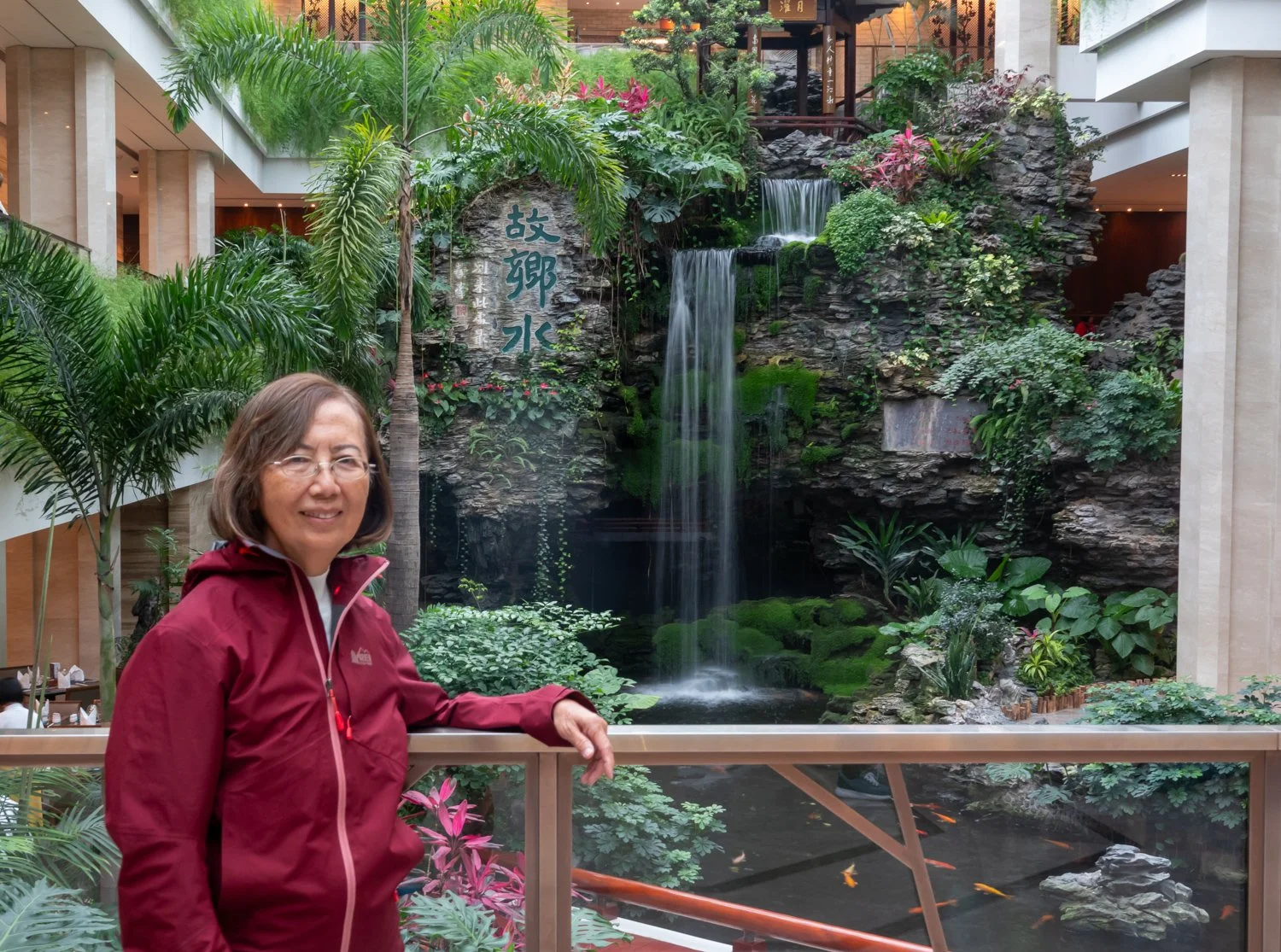
White Swan Hotel (白天鹅宾馆)
Banquets
One of the highlights on this tour was the food. Our leader Ed is a sophisticated foodie and organized the tour largely around the Guangdong food scene. Almost every one of the luncheons and dinners were 9-12 course banquets. Included in the dinner menus were such delicacies as abalone, shark fin fish maw, sea urchin, black truffle, braised eel, eight treasure duck, and Buddha jumps over the wall soup.
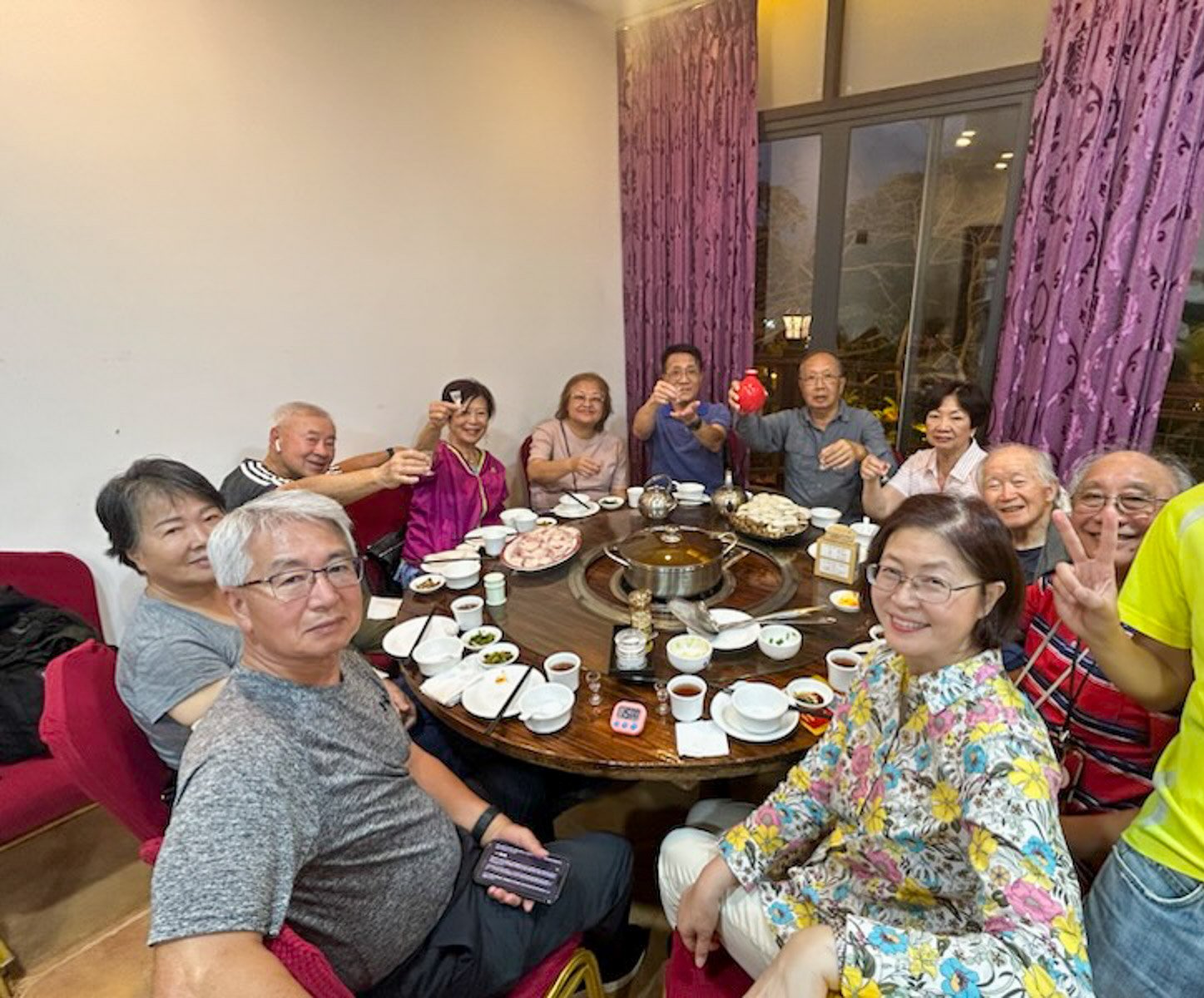
Thanks to Bert for photos of the banquets
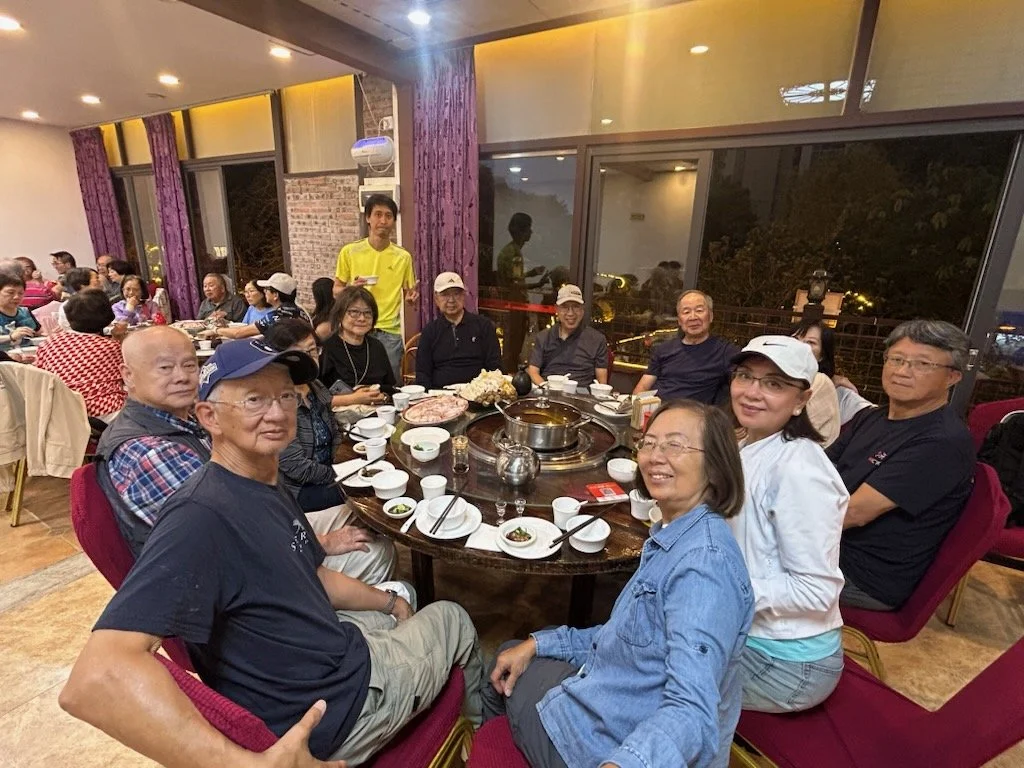
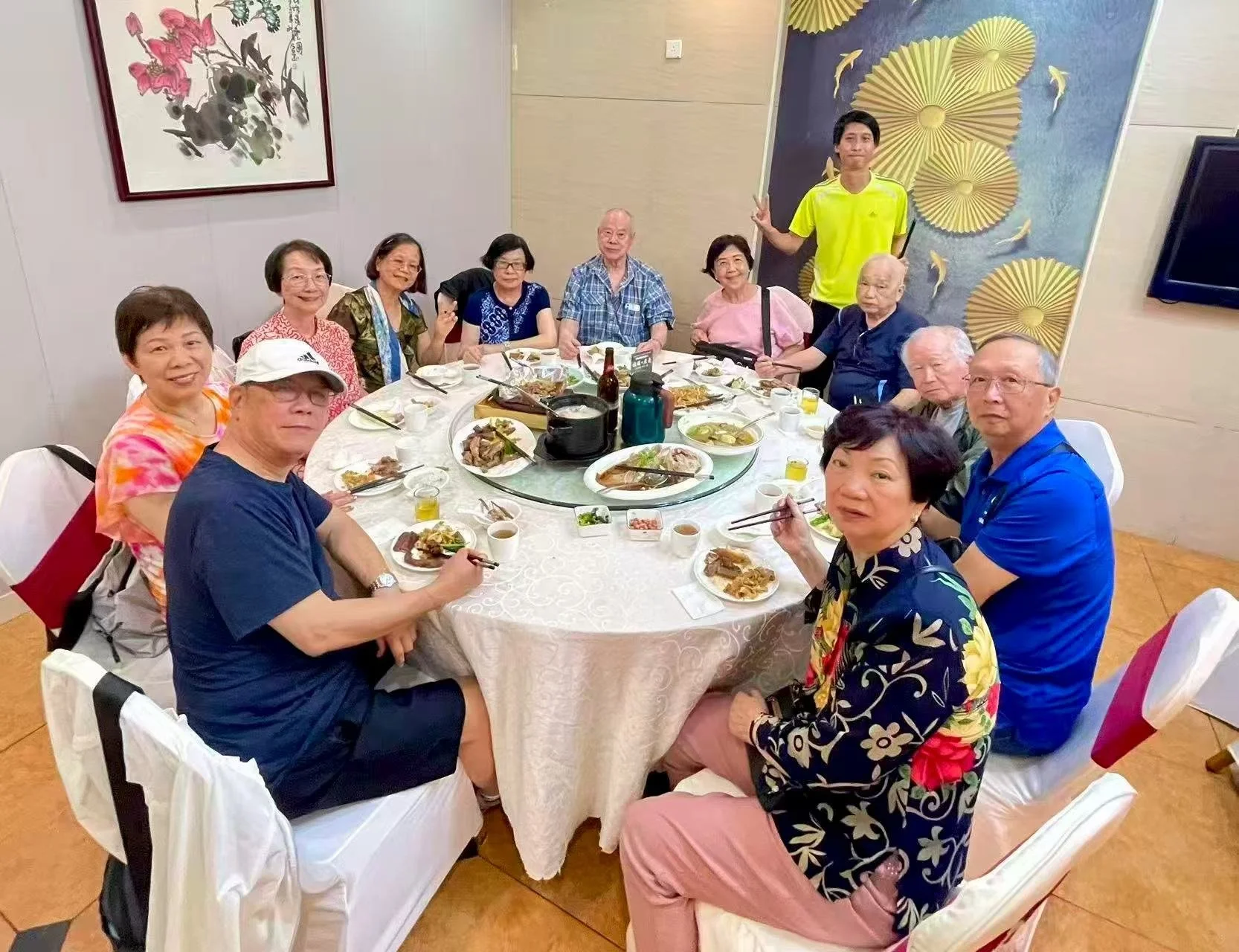
Thanks to Paul for this photo
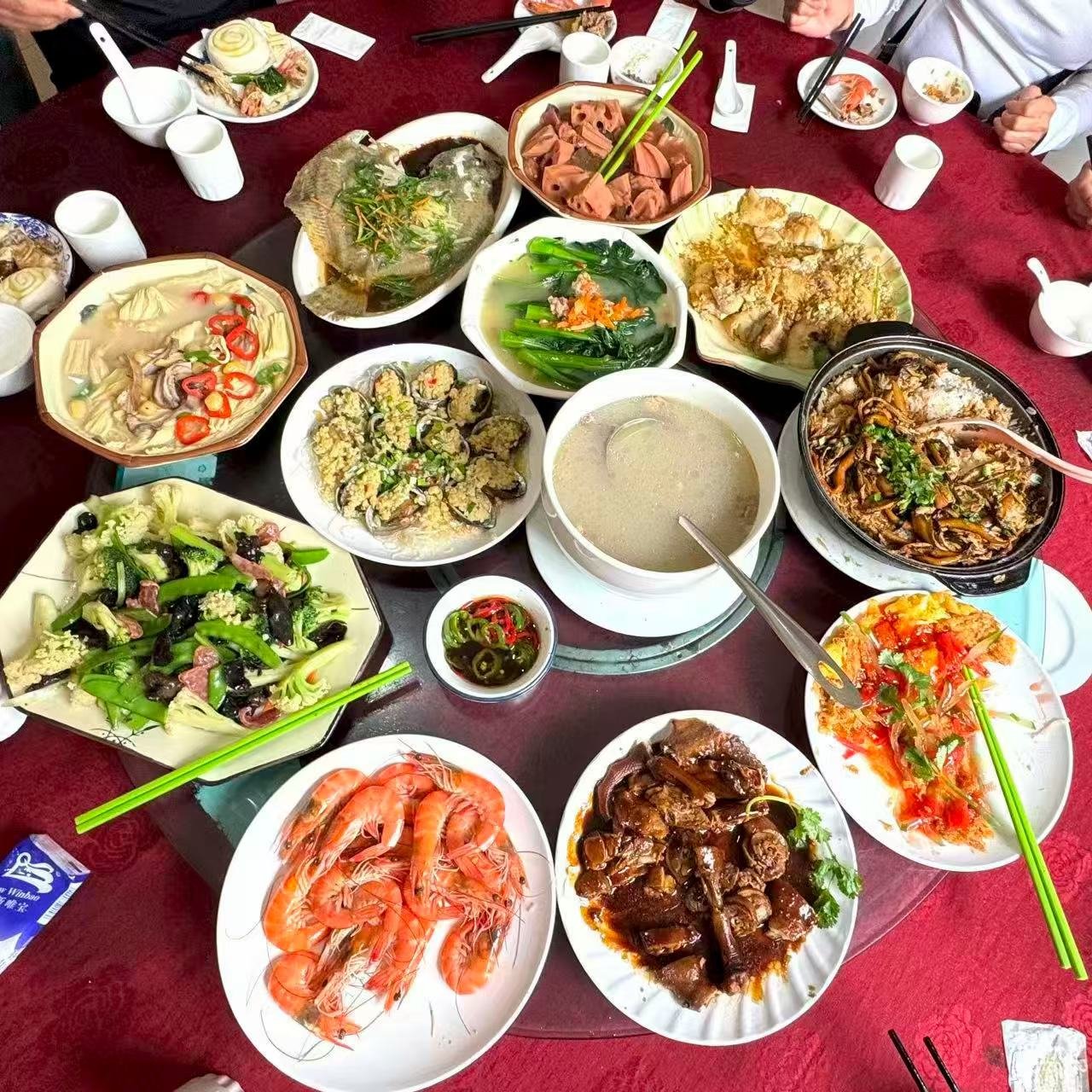
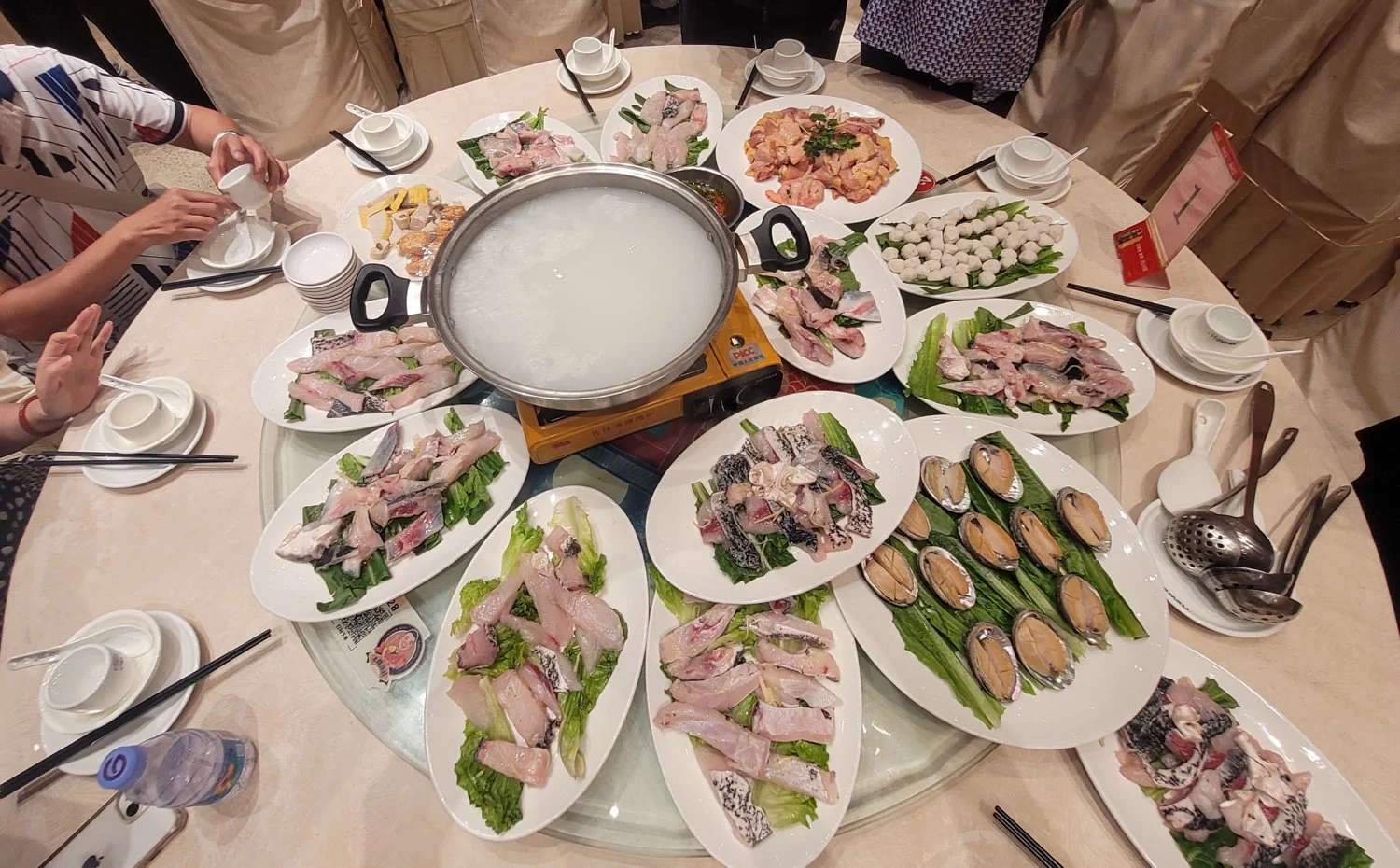
One of our typical banquets for lunch and dinner. This one was a seafood hotpot.
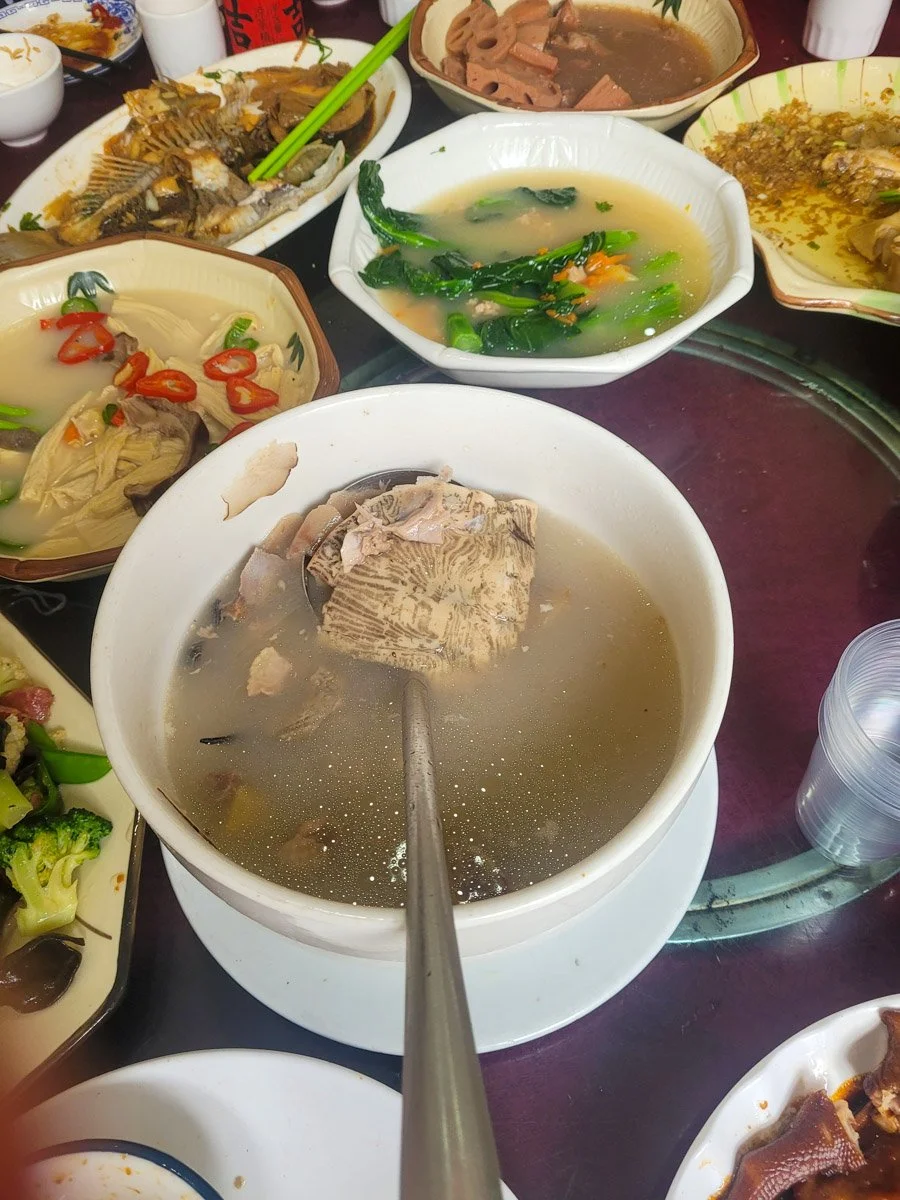
Turtle soup
Not only were the luncheons and dinners elaborate, but also the breakfasts in the 5 star hotels were great. At several of them, amongst the myriad of other choices, you could get a bowl of noodles pulled just for you.
Guangzhou Pearl River light show
There is an elaborate light show on the Pearl River nightly. All of the skyscrapers and bridges are lit up with colorful and elaborate lighting to entertain the locals and tourists. The bridges have dense arrays of colored LEDs that are programmed to produce intricate visual effects. We took a dinner cruise on the river to enjoy the light show.
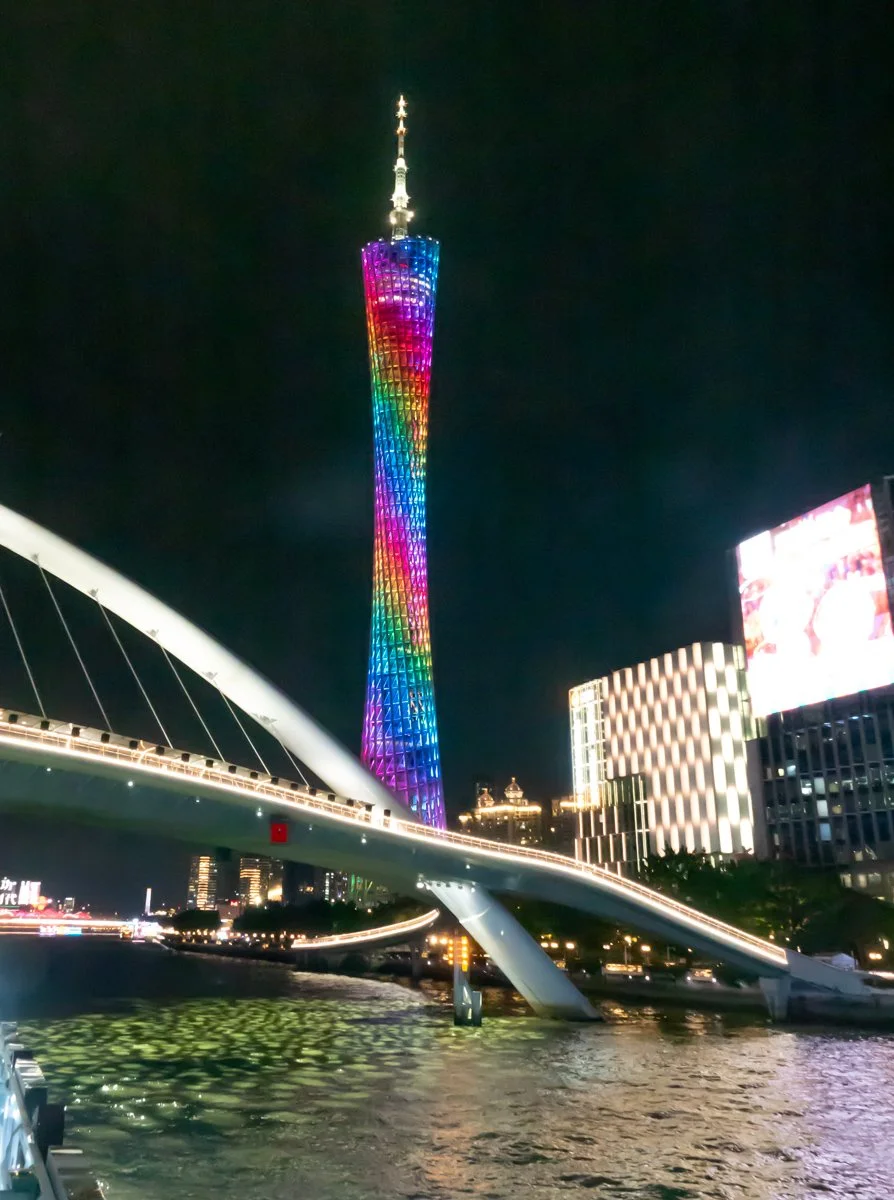
The Canton Tower
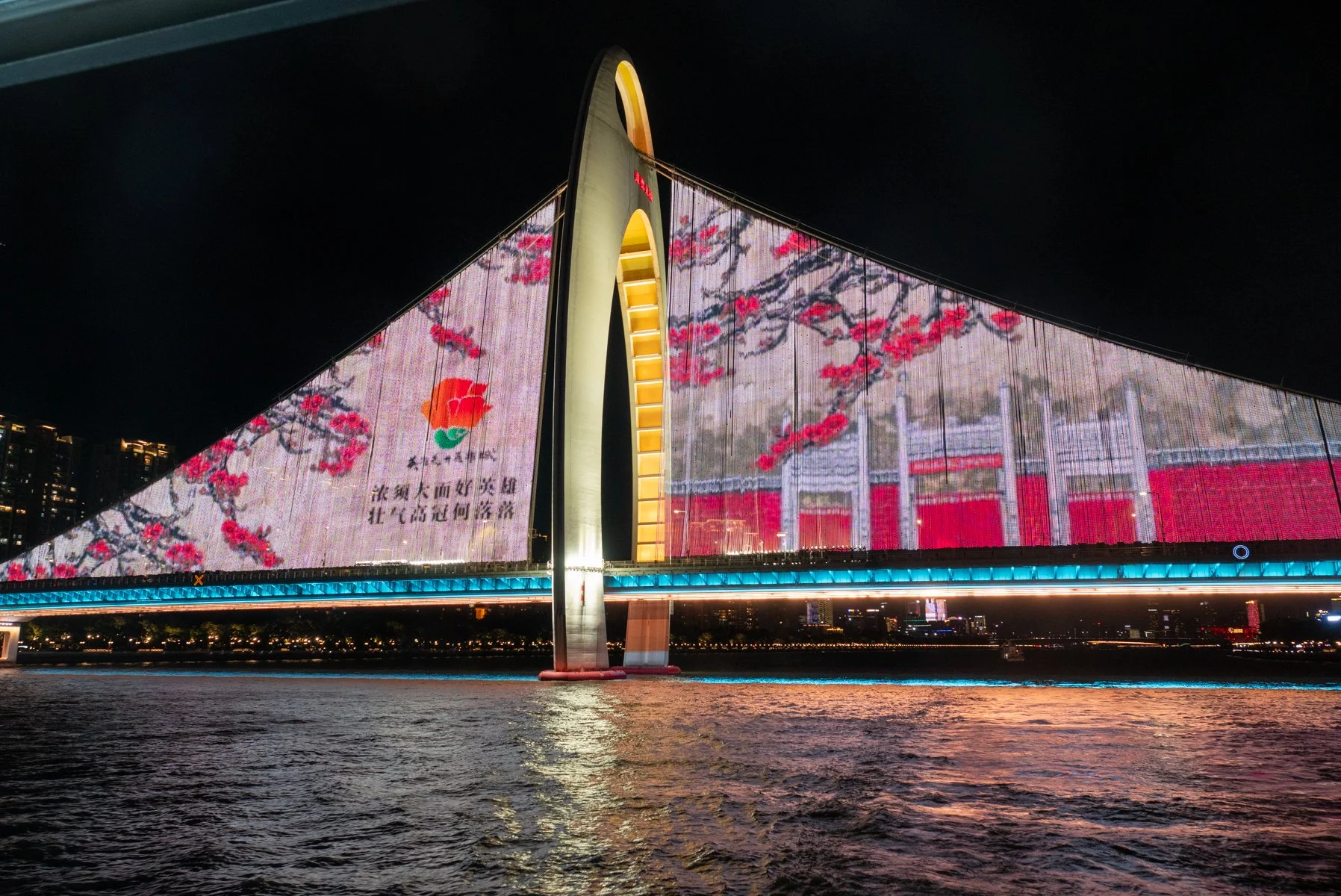
The Liede Bridge with one of it's many designs that change every few seconds
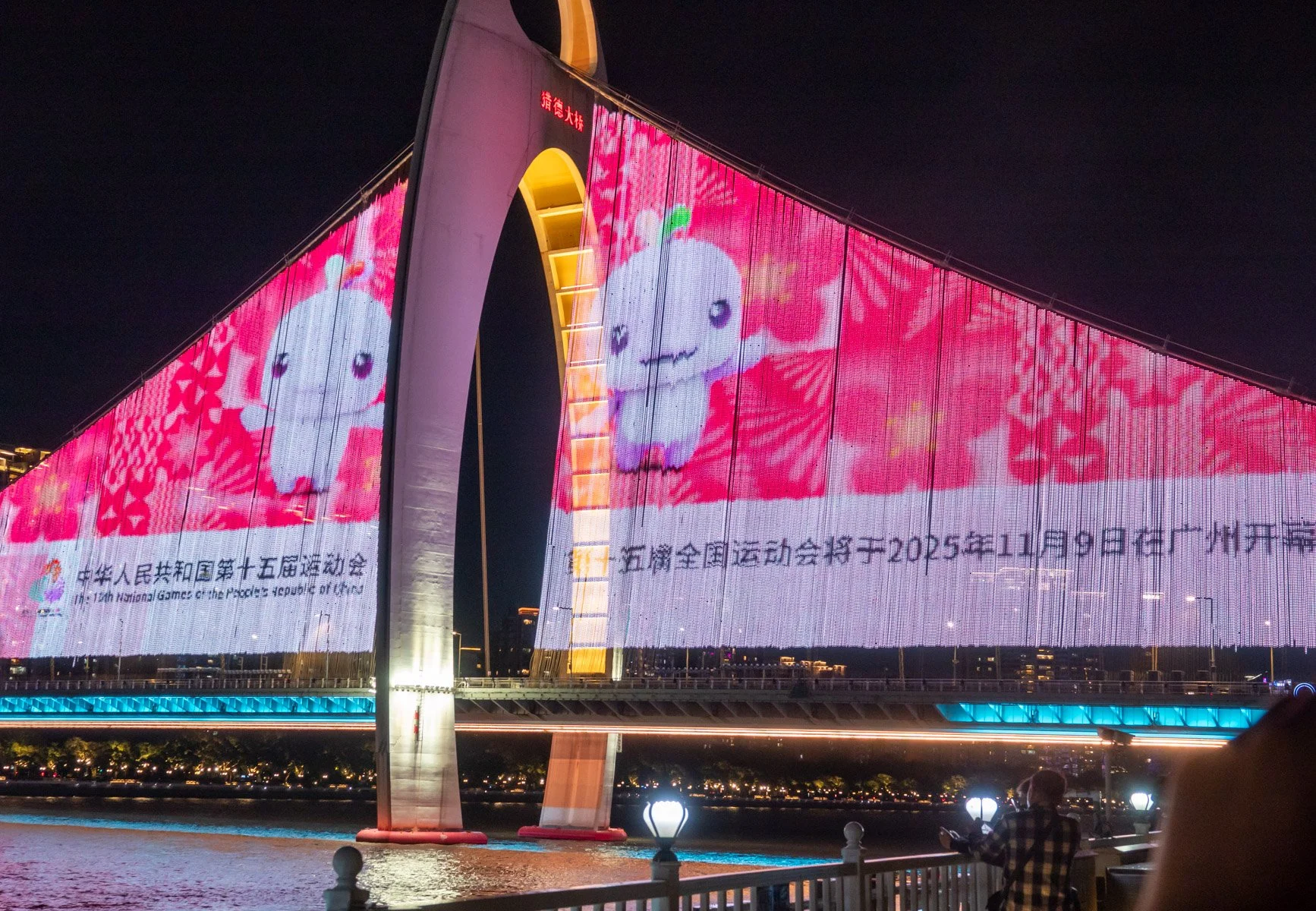
Liede Bridge
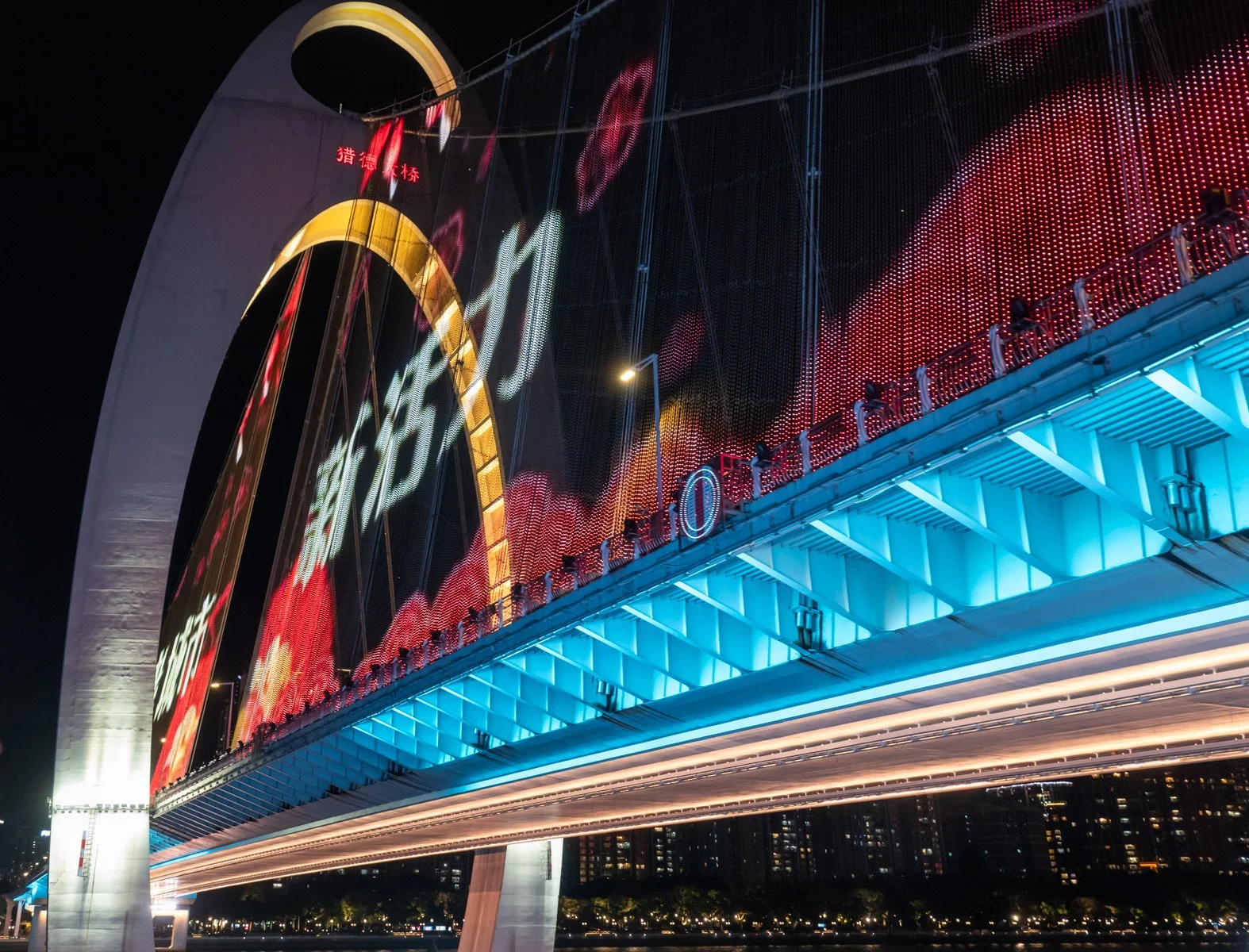
One of the striking effects that is only easily seen on the boat is that the lights on the Liede Bridge are uni-directional: they are only seen from one direction.
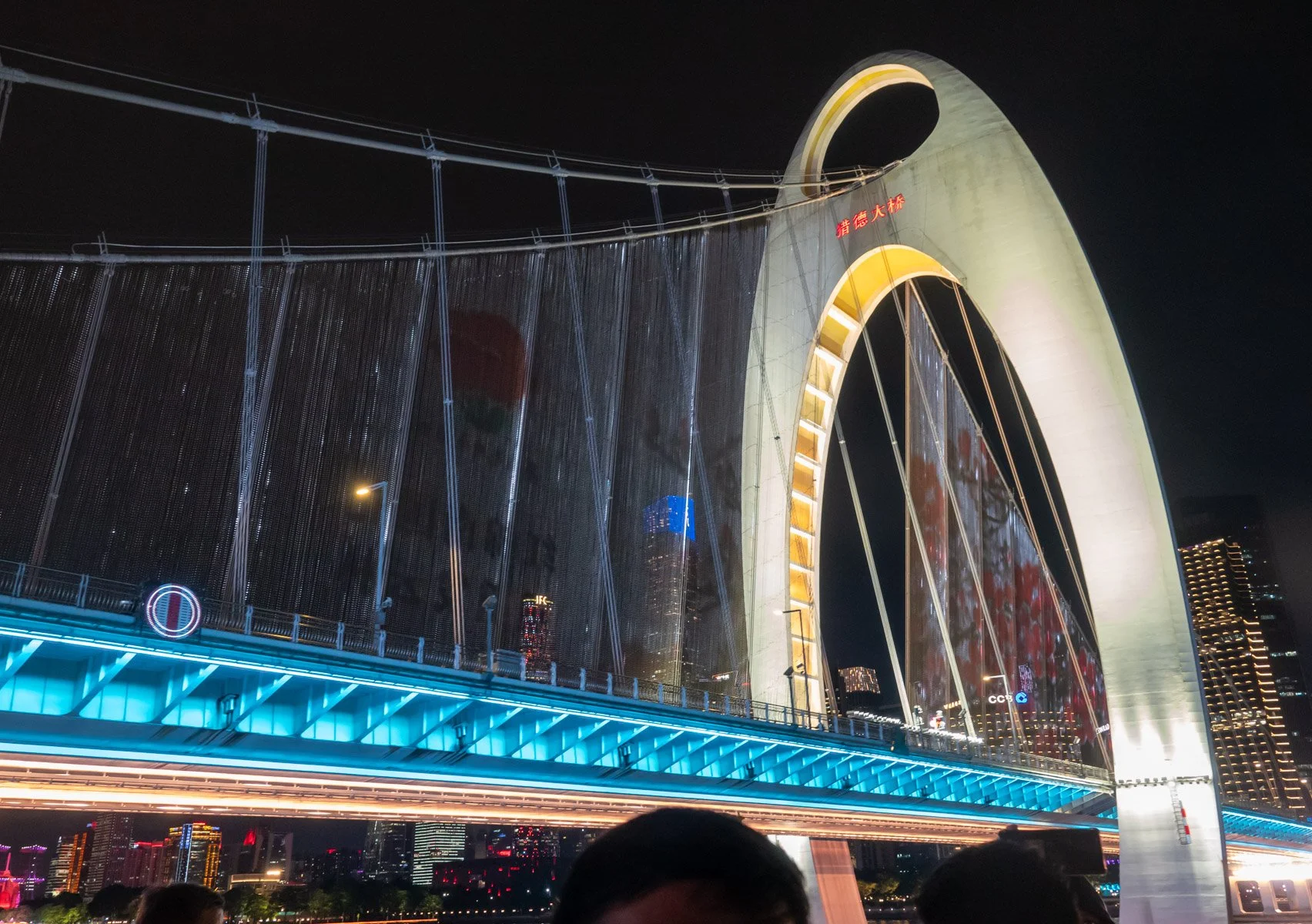
This is the bridge a moment later from the ‘wrong’ side
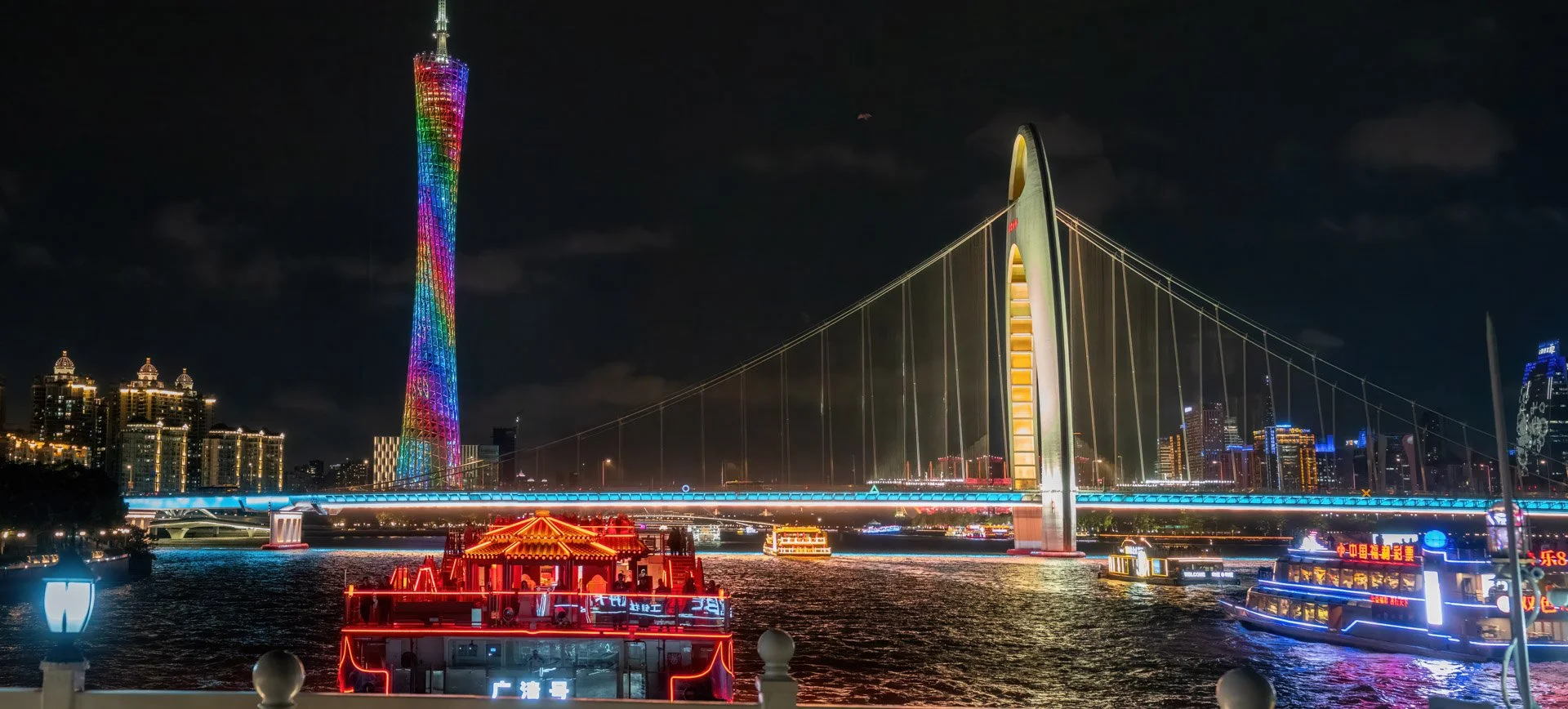
Panoramic view of the Pearl River with Canton Tower and Liede Bridge from the ‘wrong’ direction with cruise boats in the foreground
Foshan
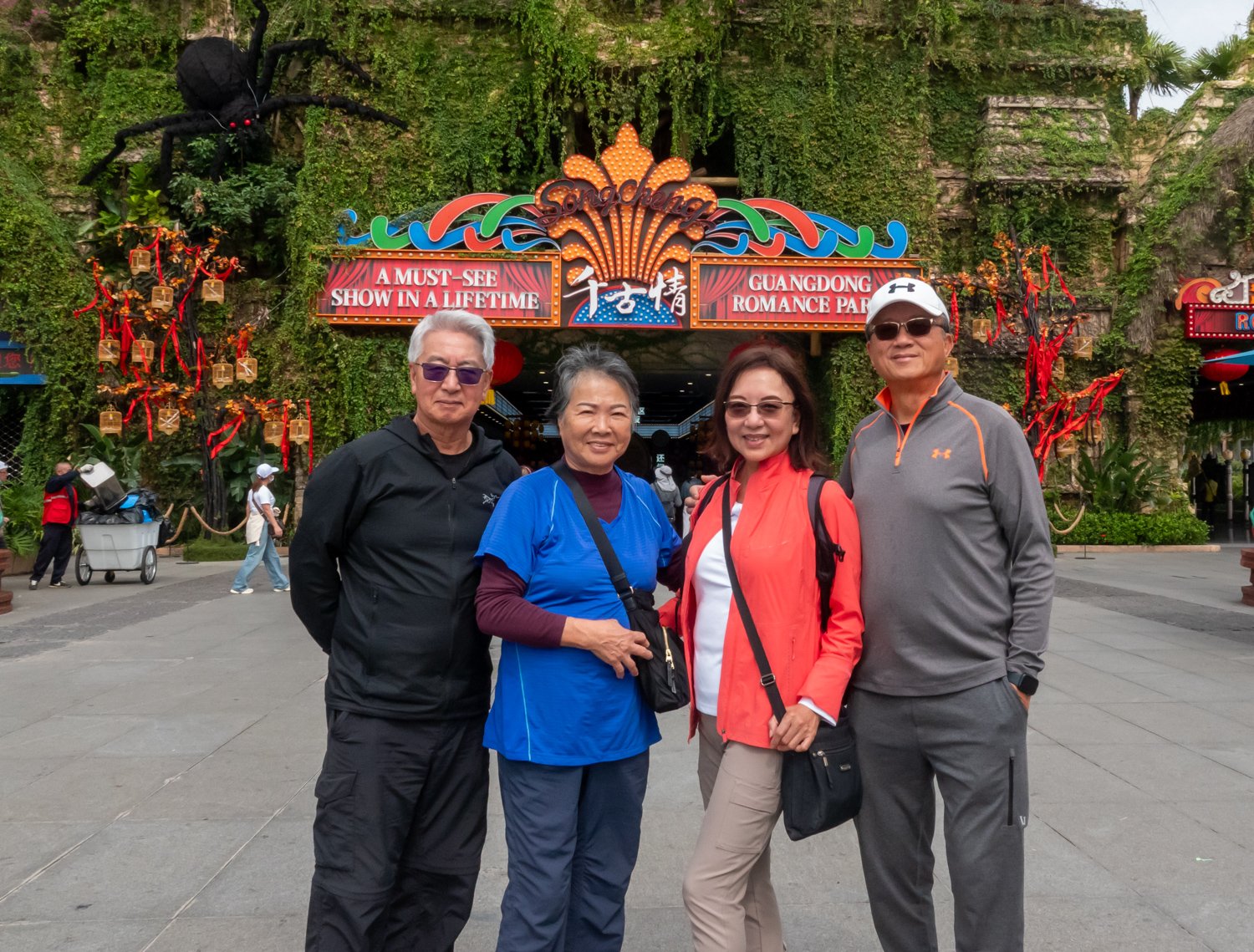
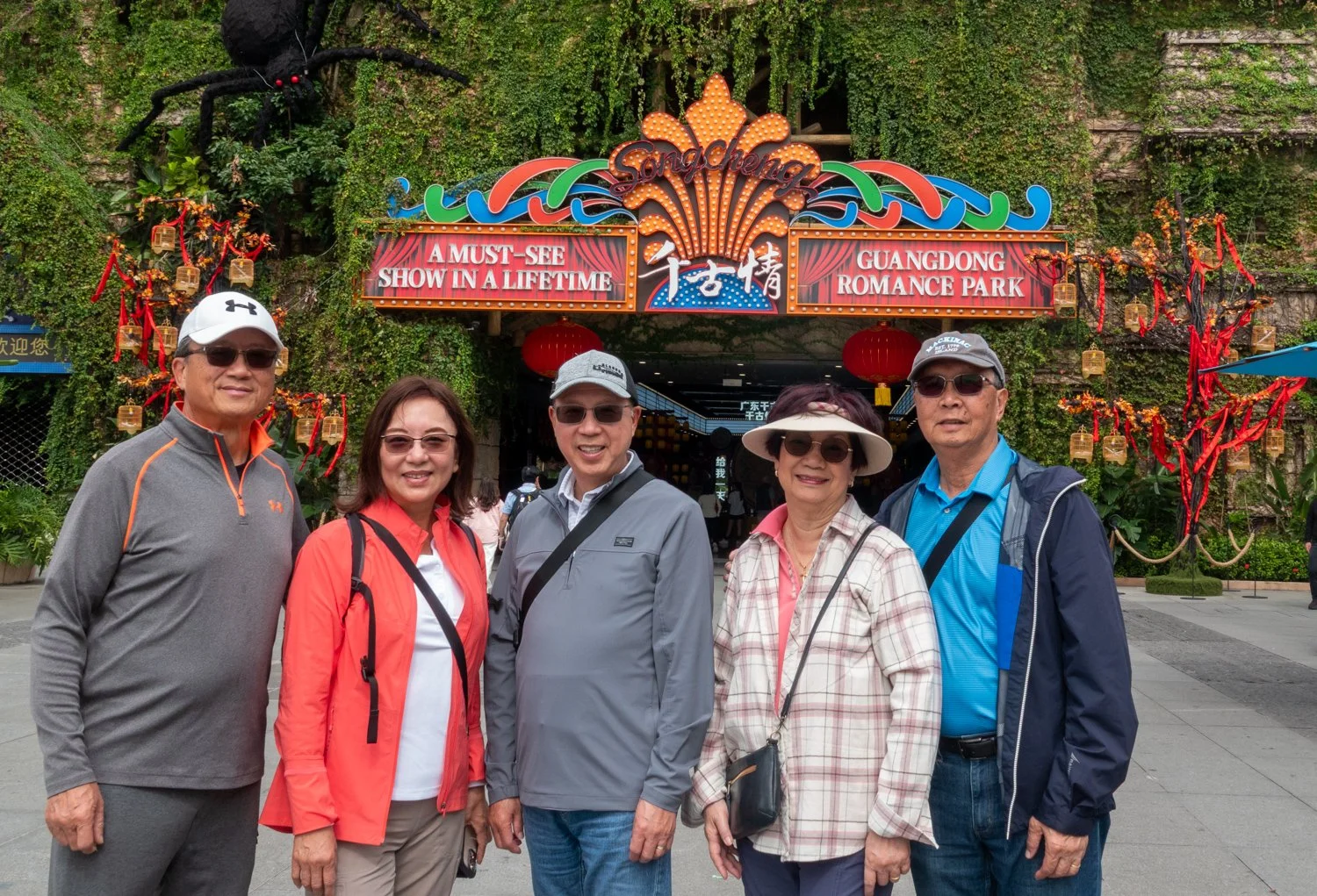
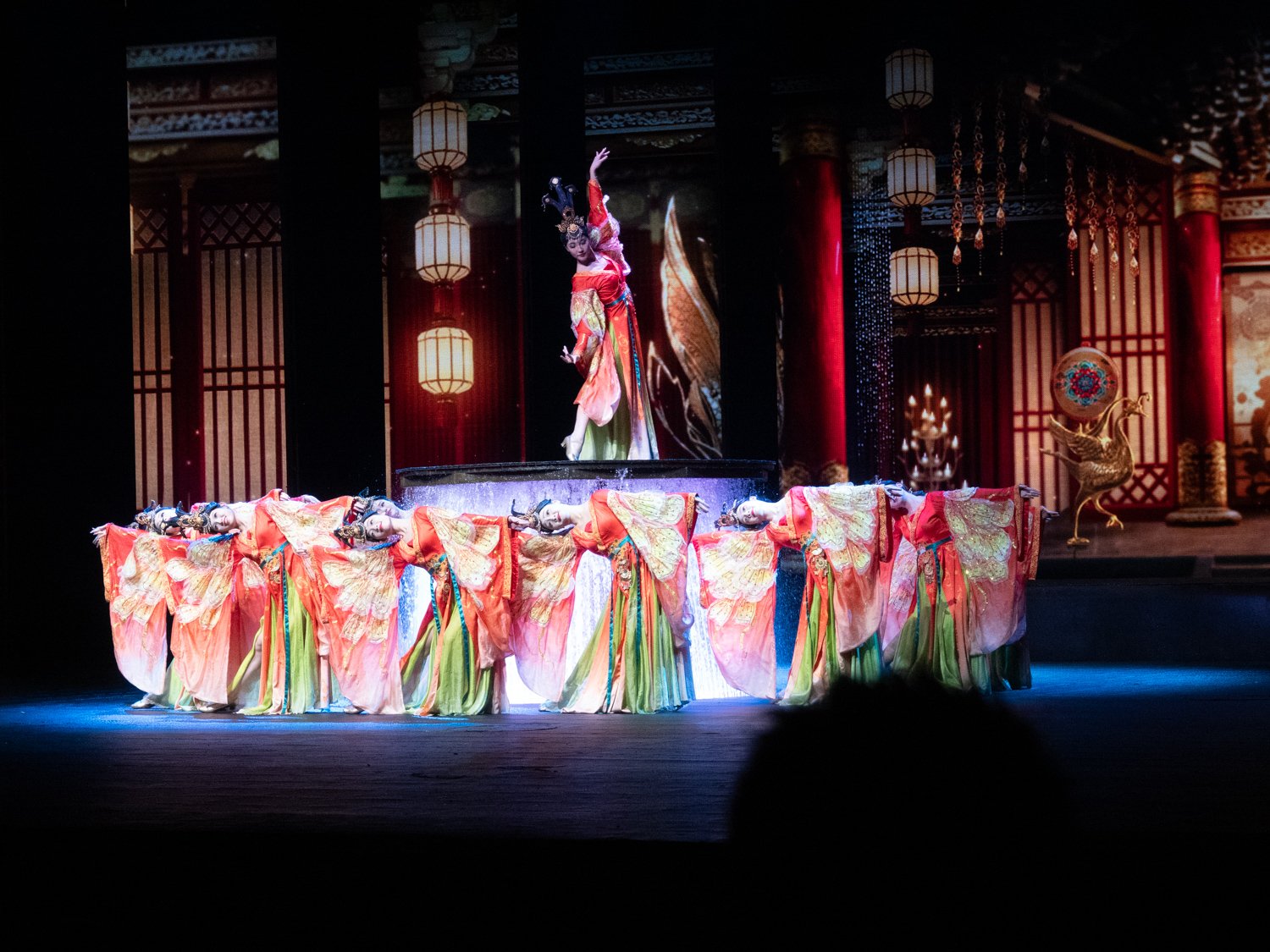
Foshan Thousand Year Show
This is an entertaining variety show that purports to be “must see” at least once in a lifetime.
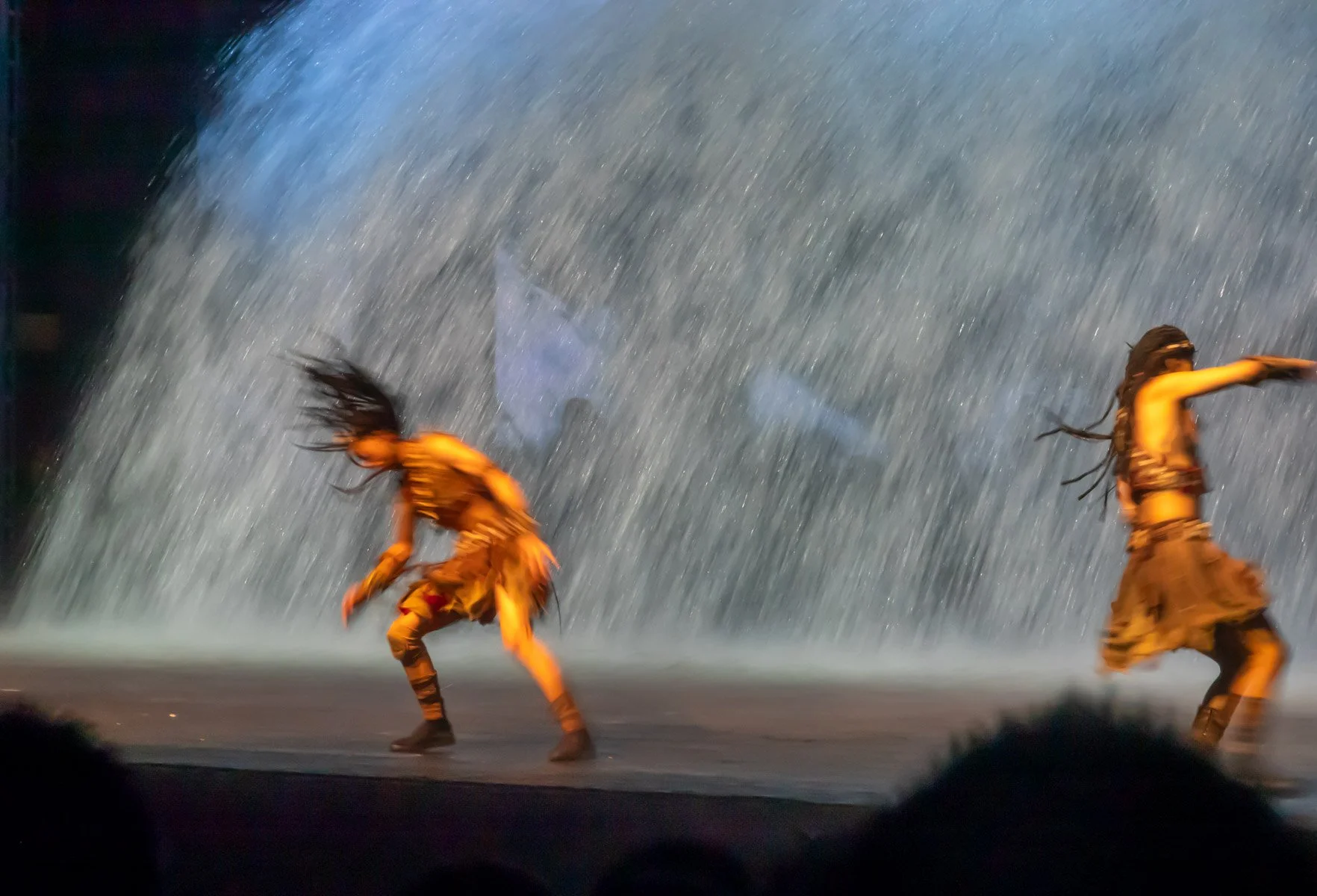
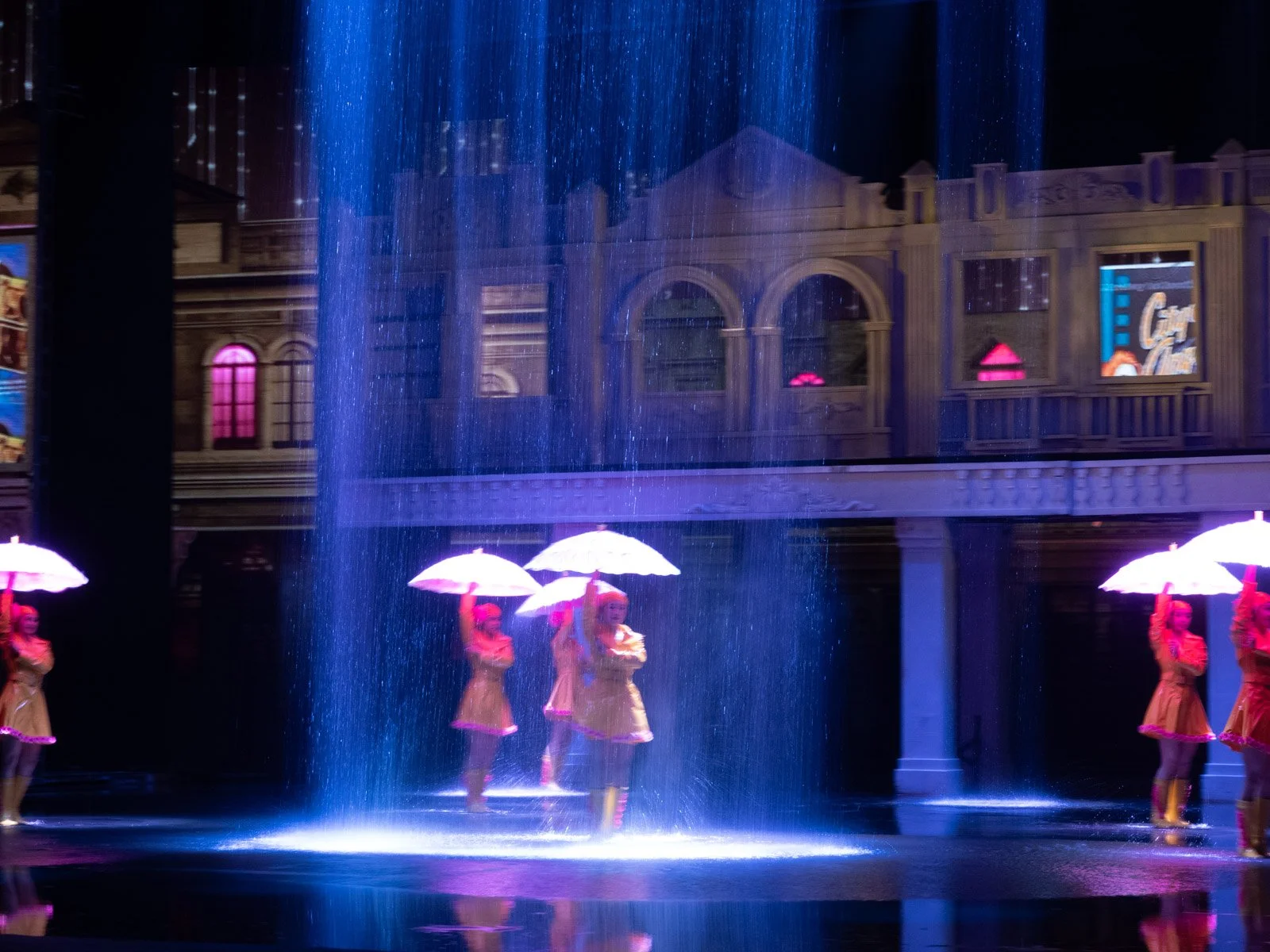
Several acts featured plenty of water effects
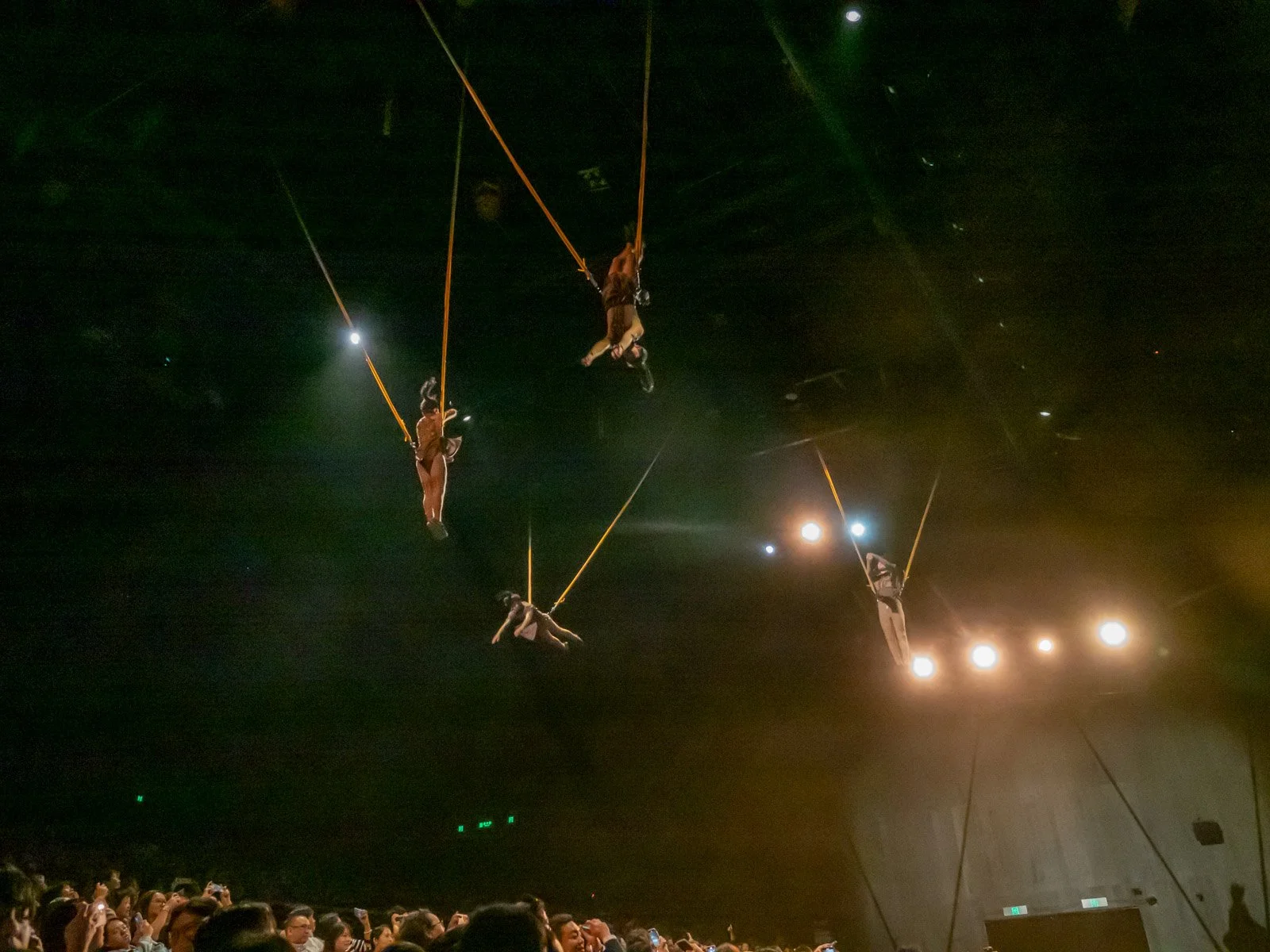
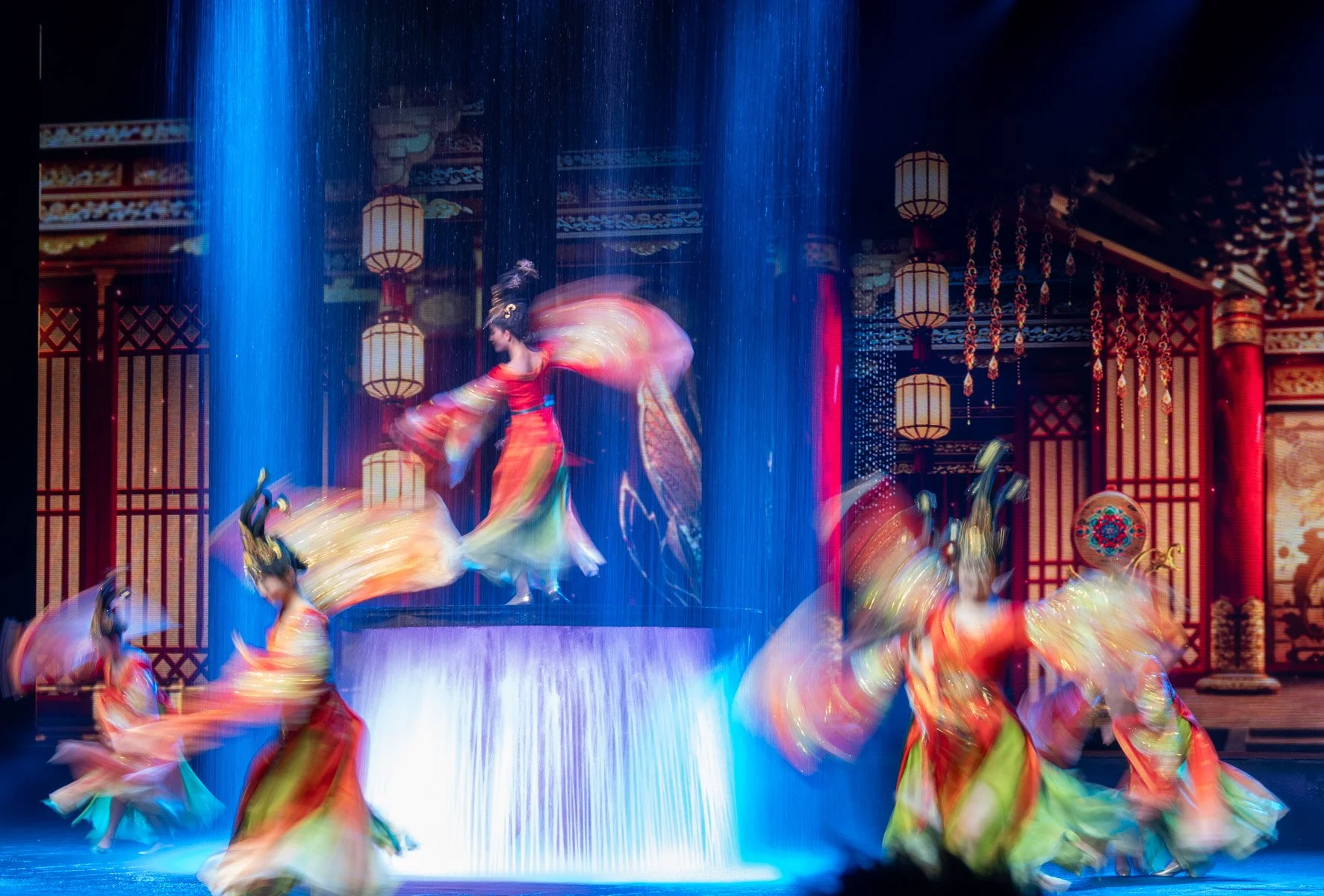
I tried to capture the whirling colors of the dresses by using a long shutter speed.
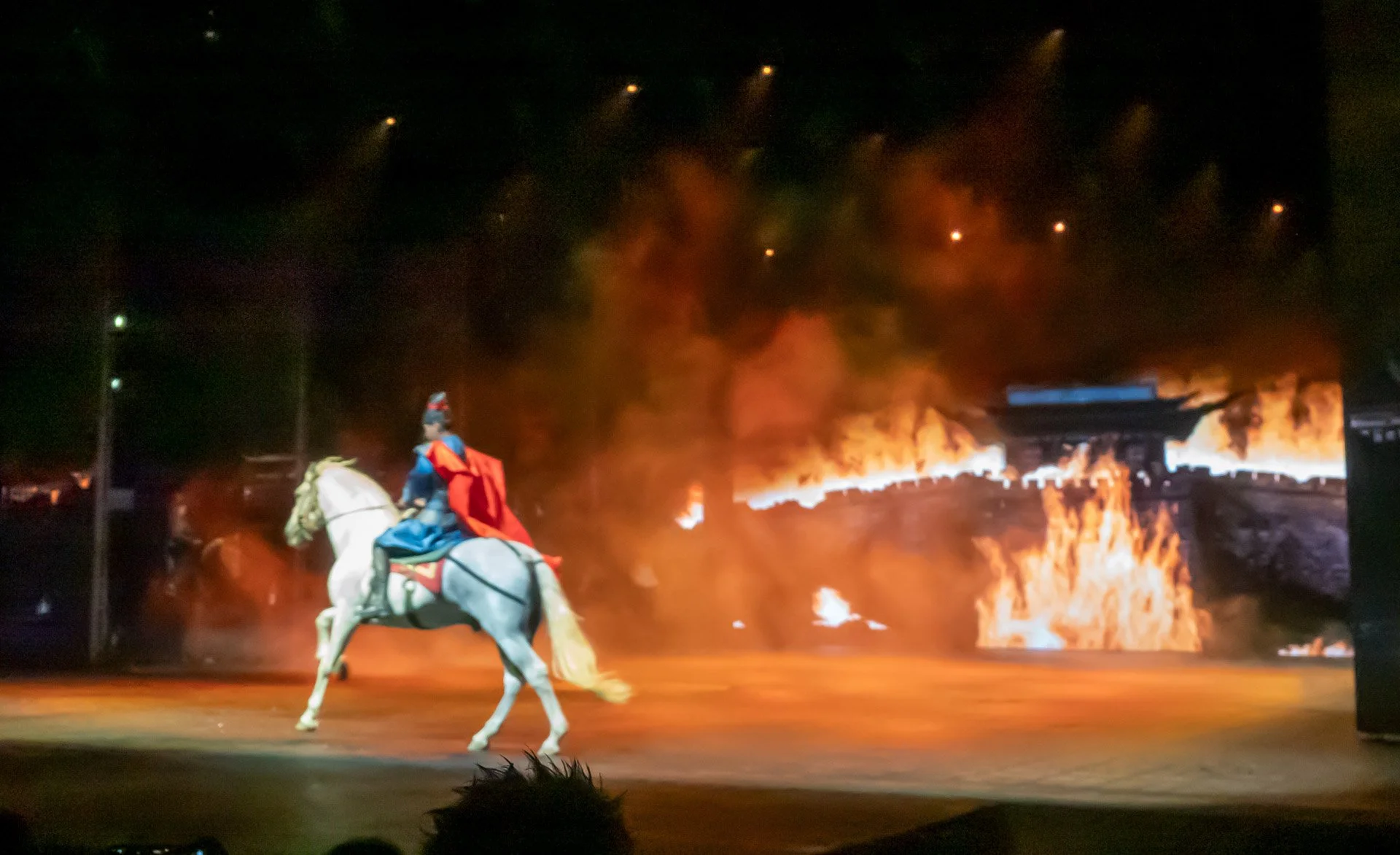
2026 is the year of the Fire Horse!!
Shunfengshan Park
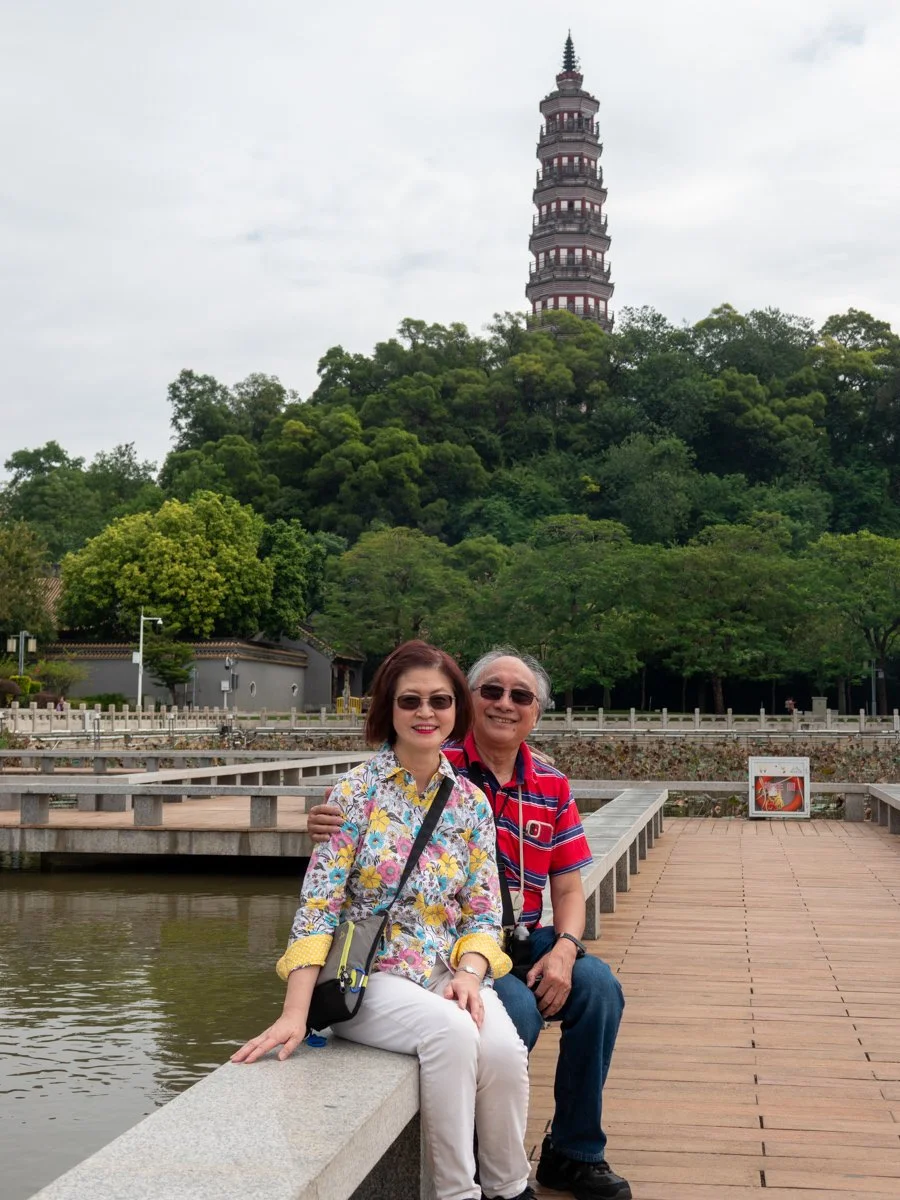
Margaret and Joseph with the Qingyun Tower in the background.
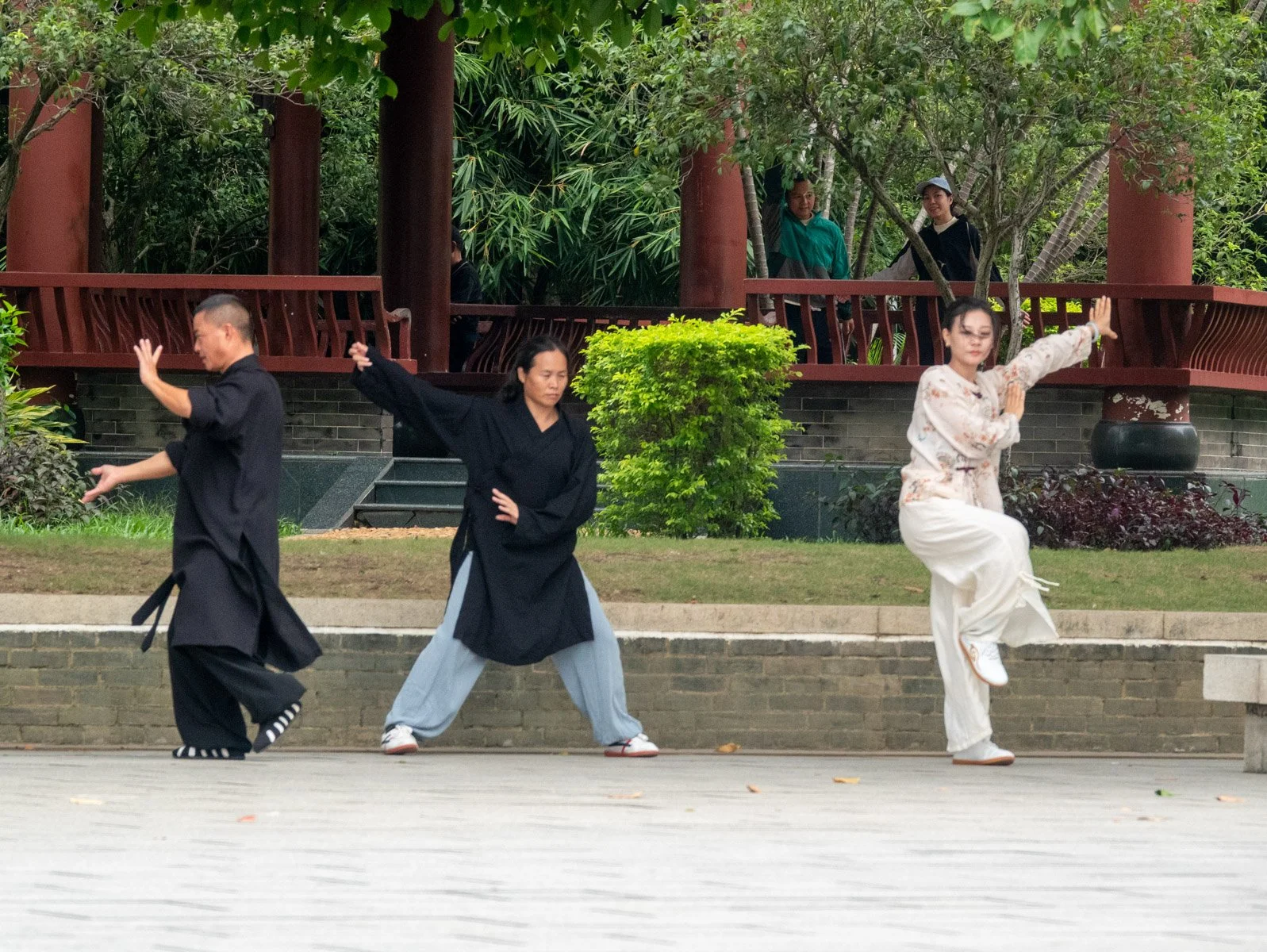
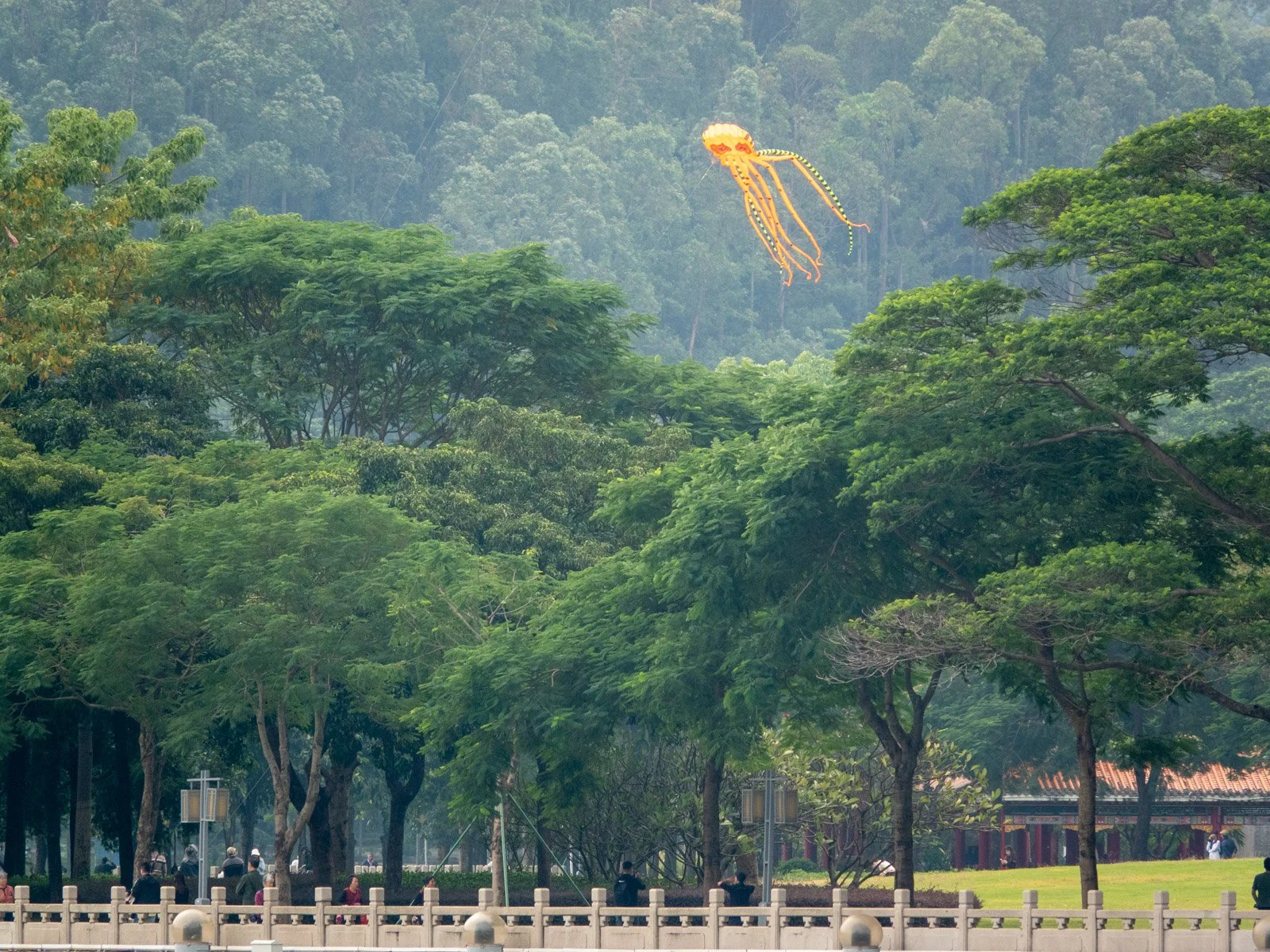
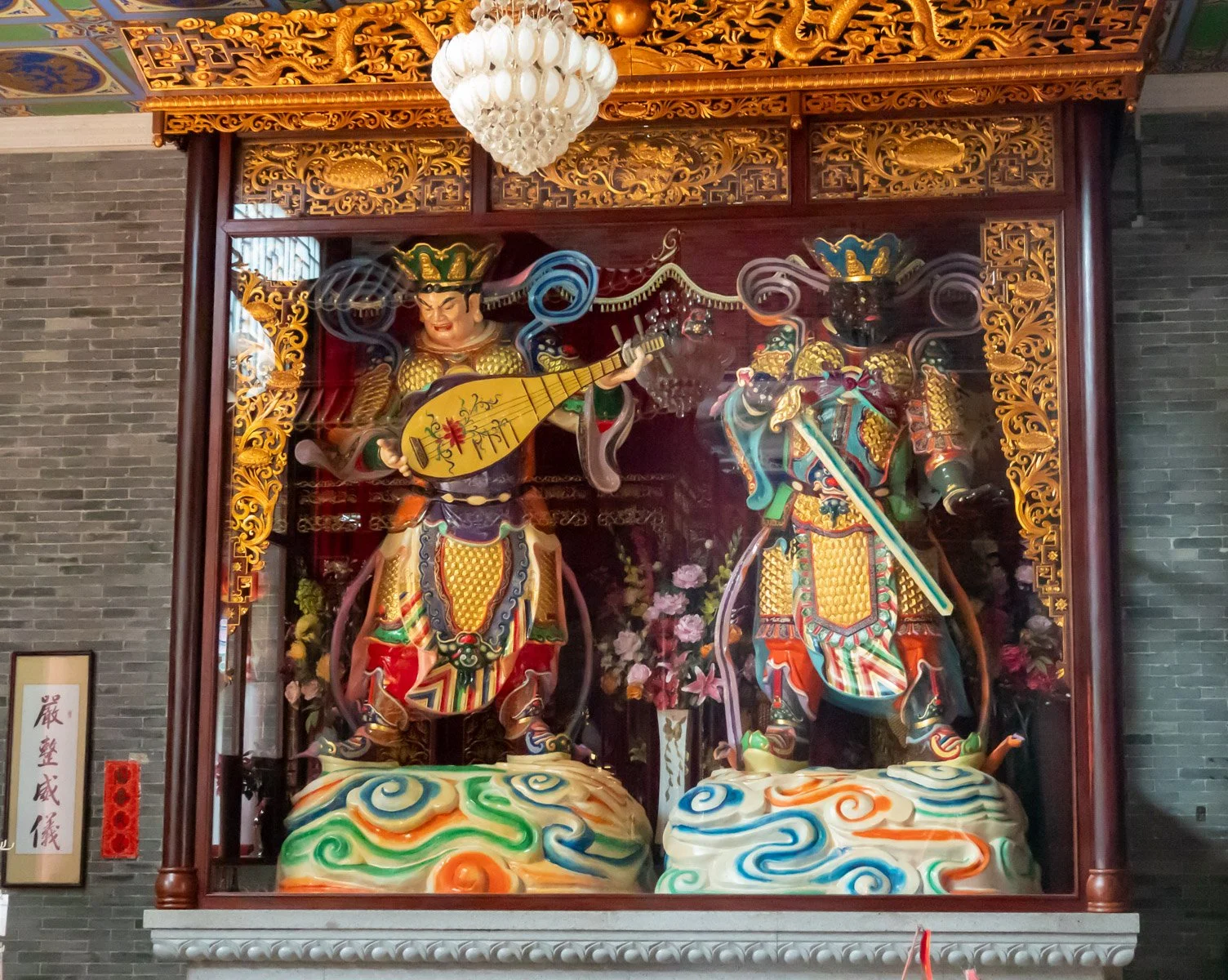
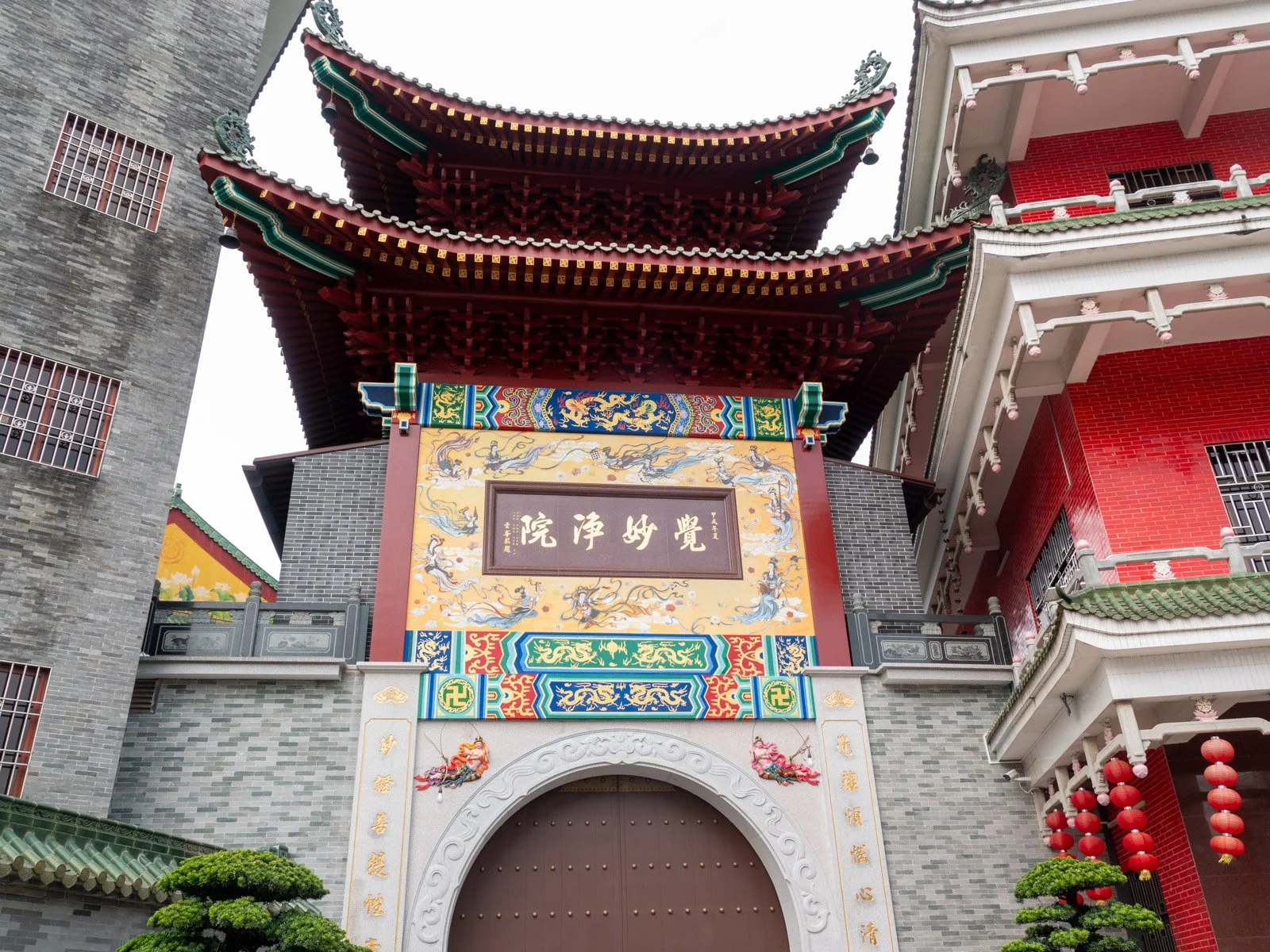
Juemiao Buddhist Monastery
Kaiping
Jiangmen City
This town was the setting for a popular TV serial, The Knockout, or Kuangbiao (狂飆), which has made it a tourist destination. The filming makes use of the traditional architecture and historical settings.
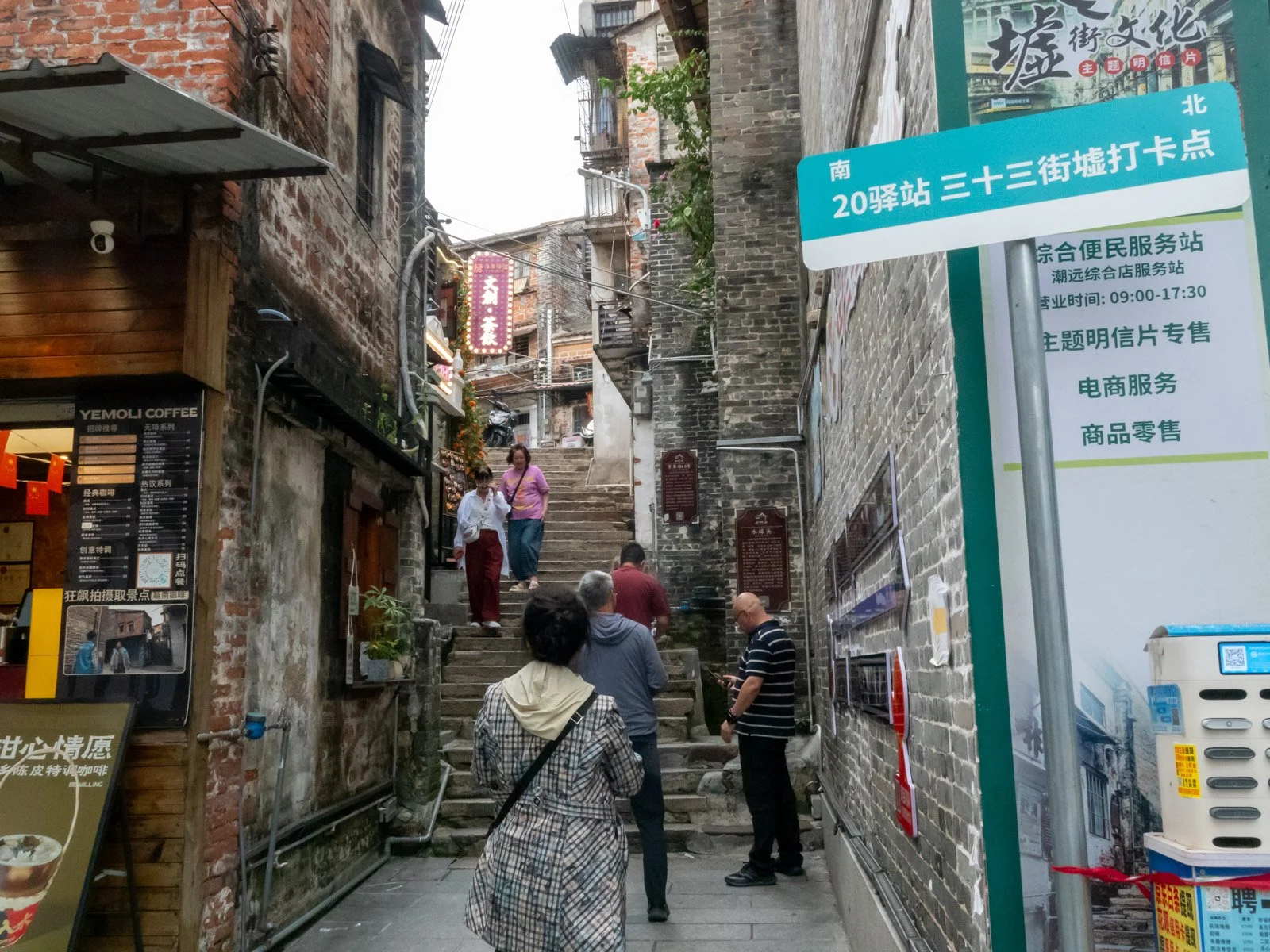
One of the famous scenes in the TV drama is this alleyway with 33 steps
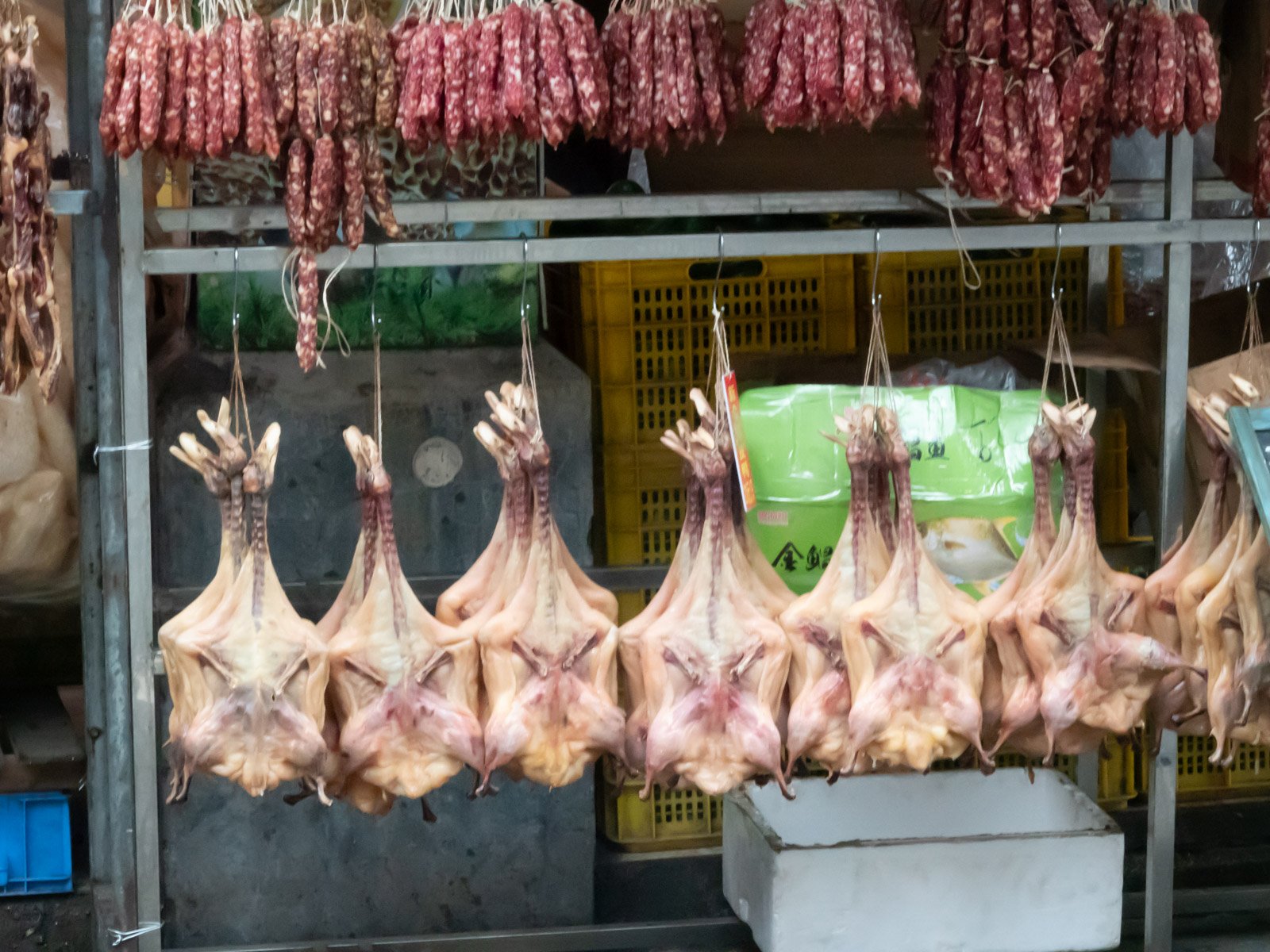
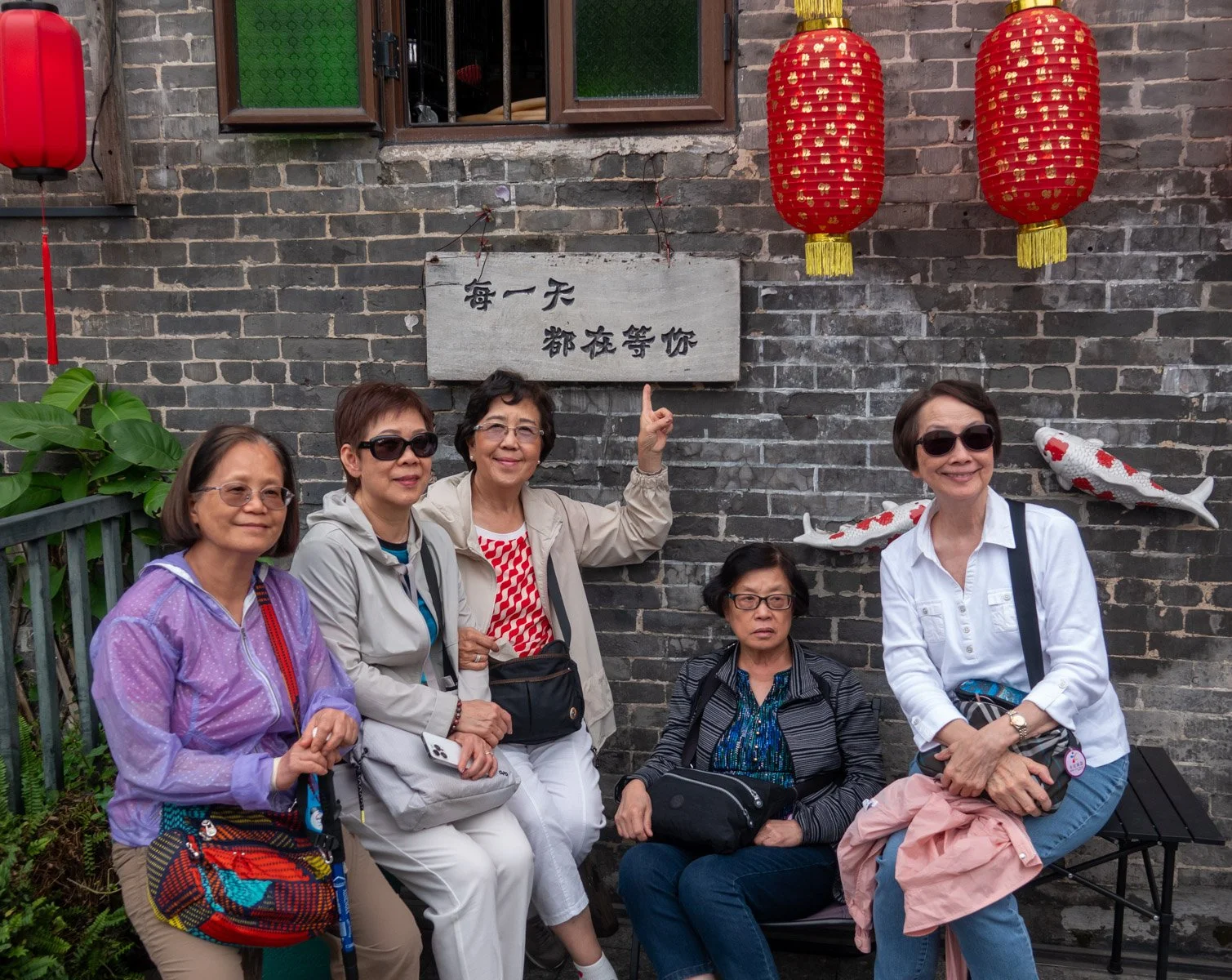
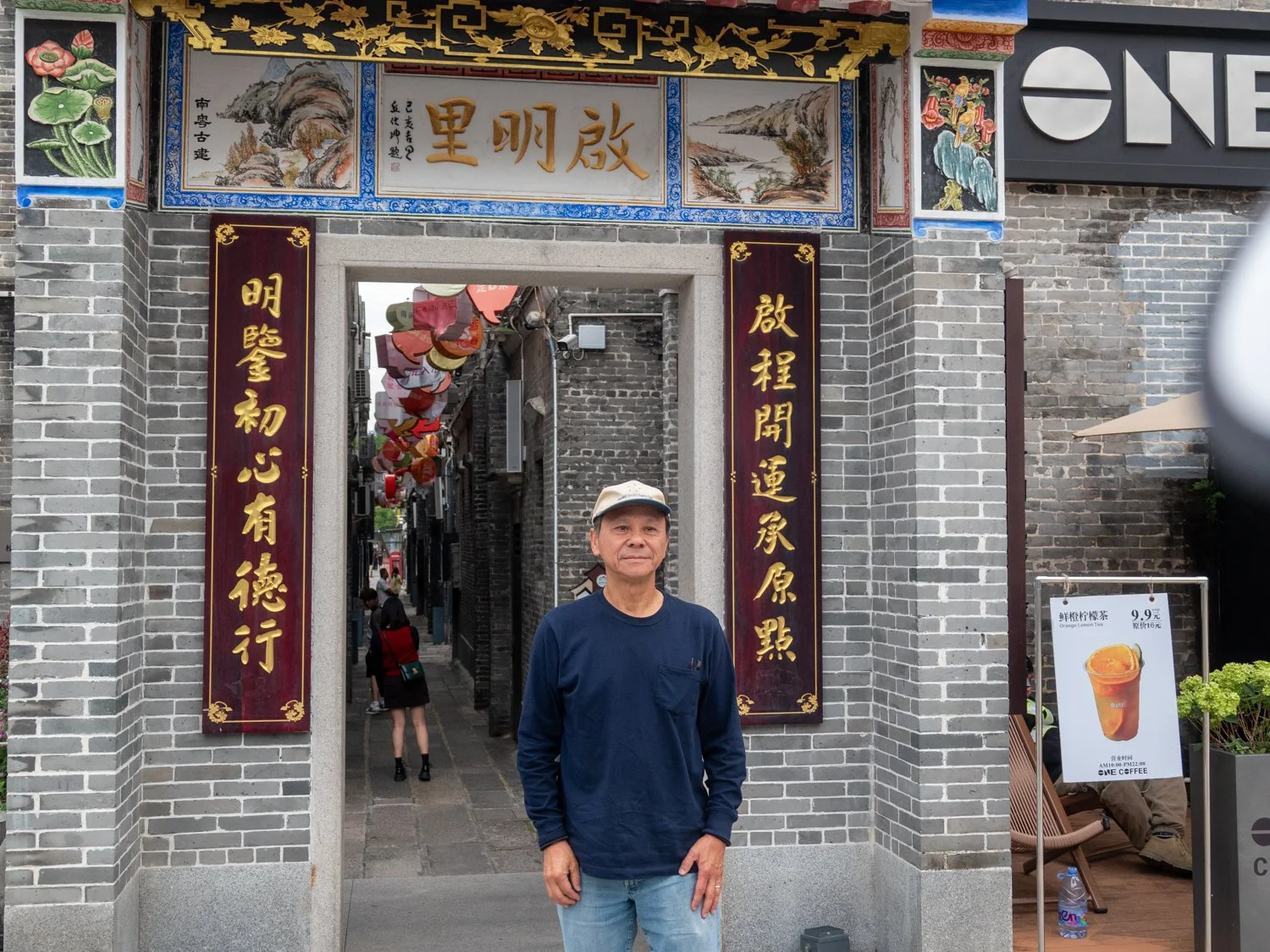
In the Qimingli Scenic Area
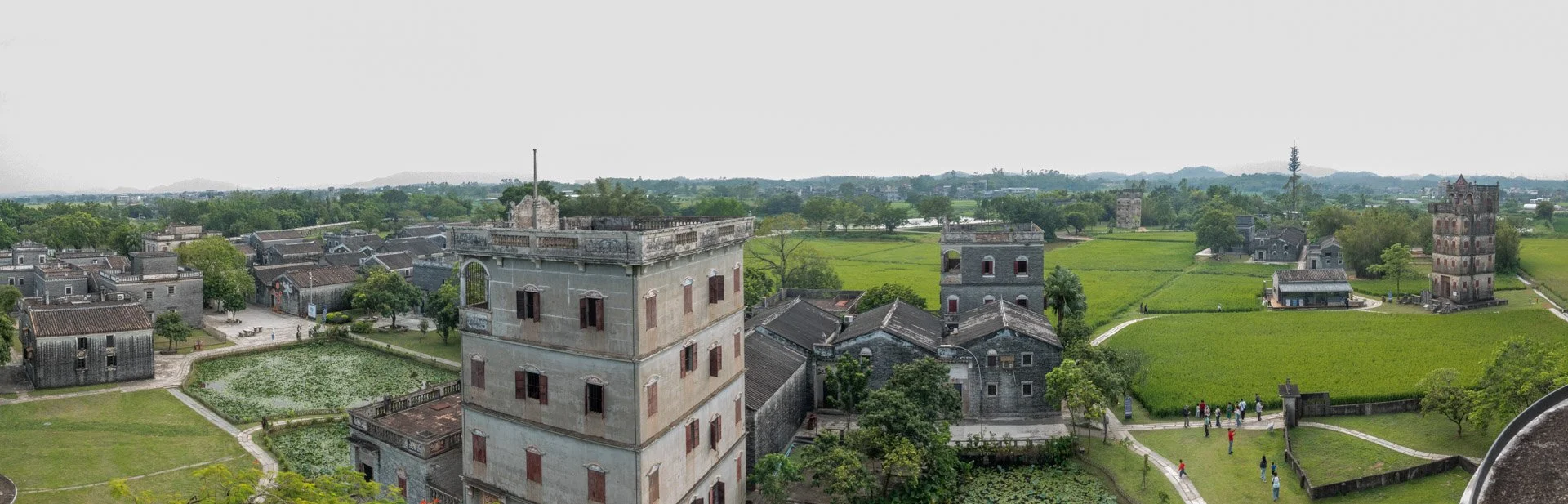
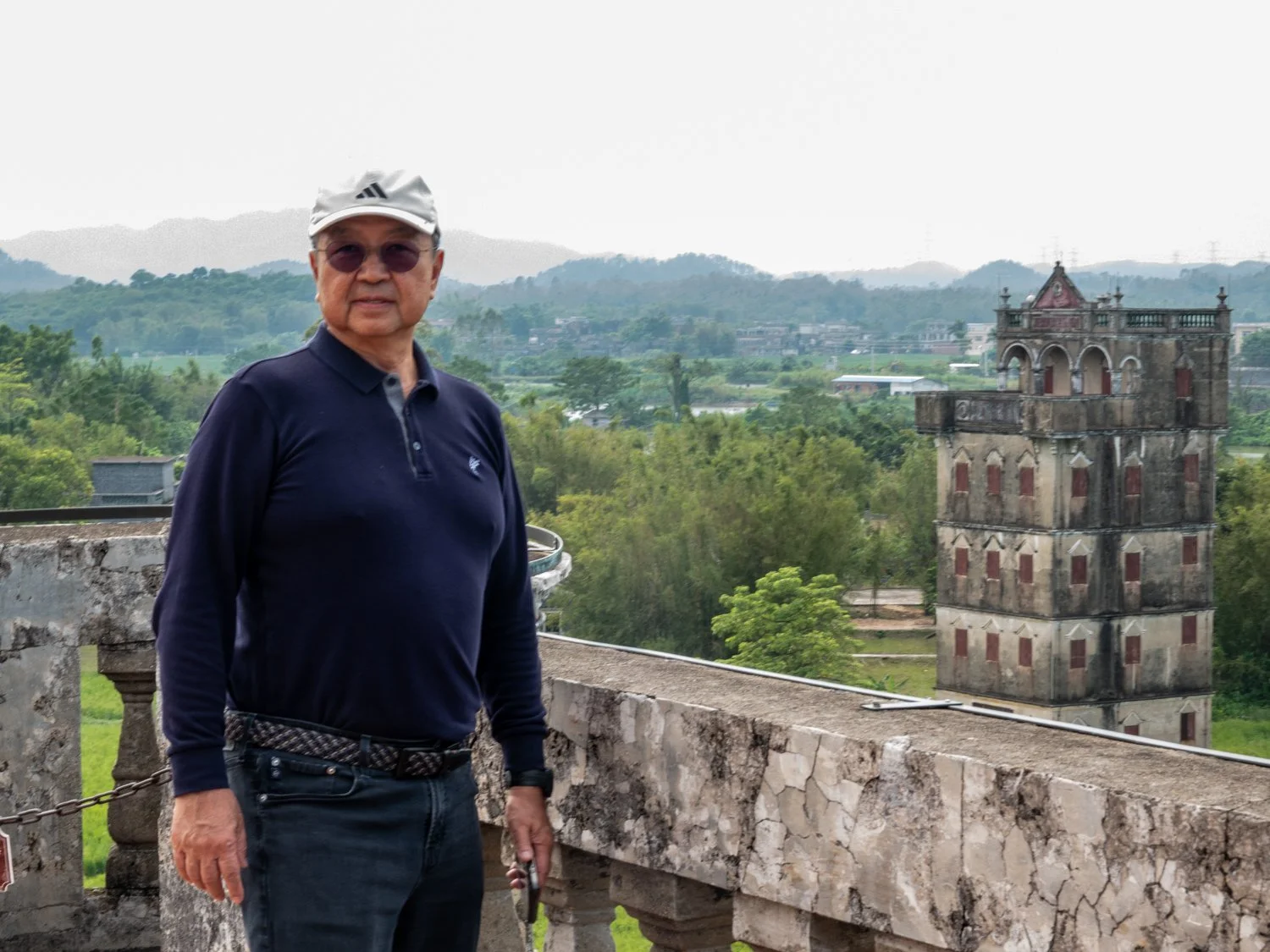
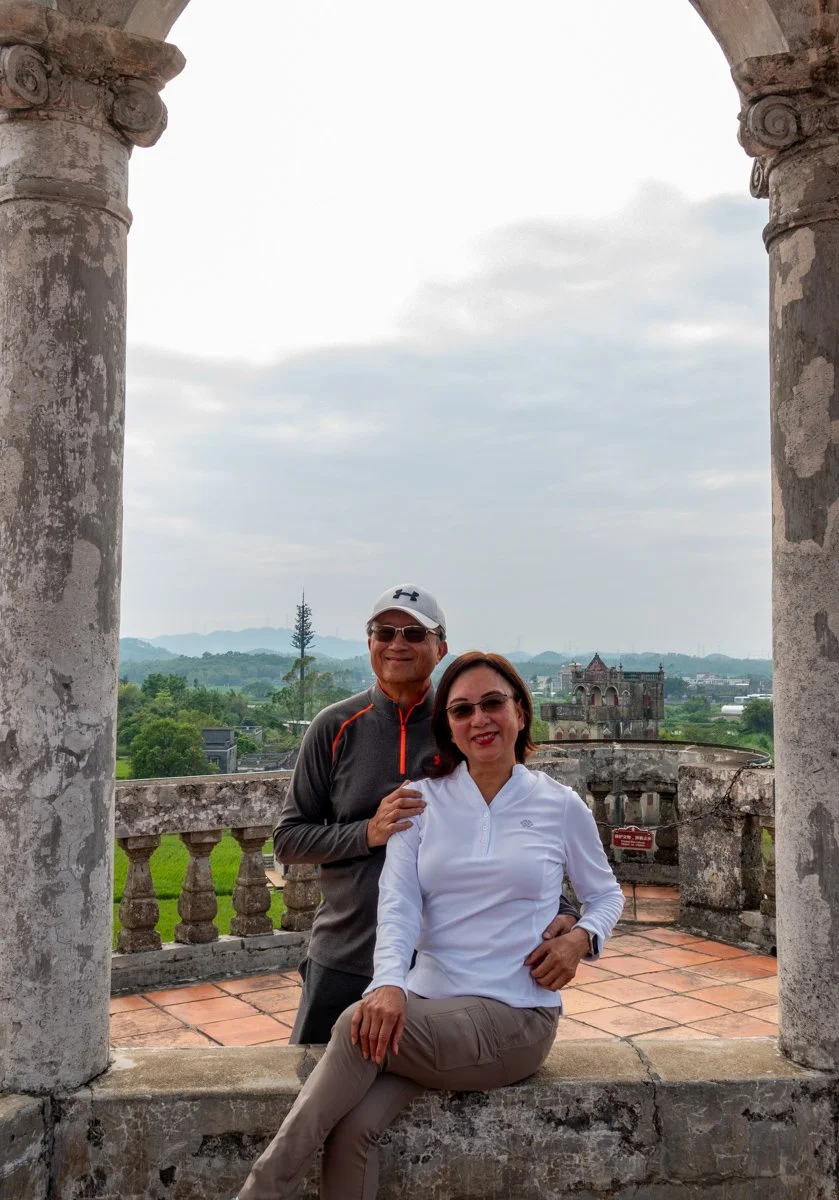
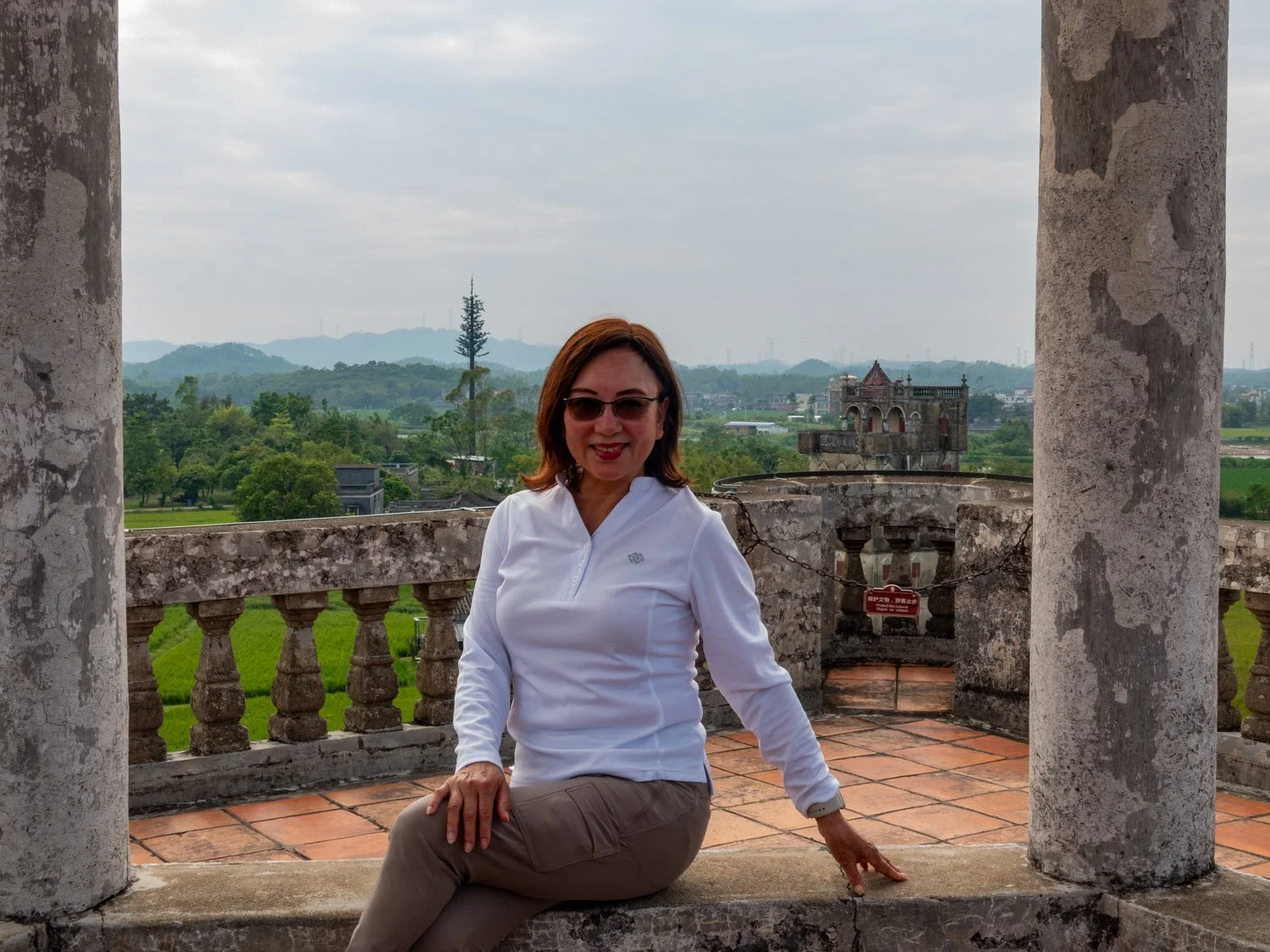
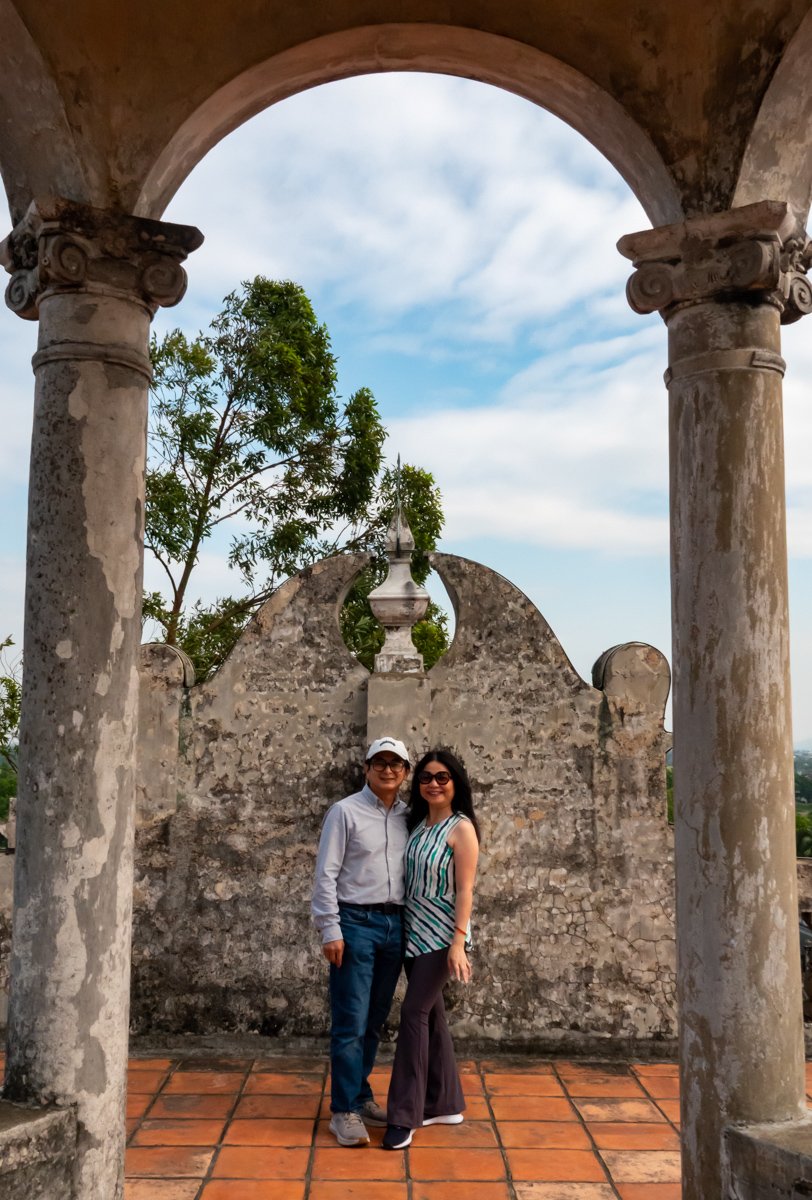
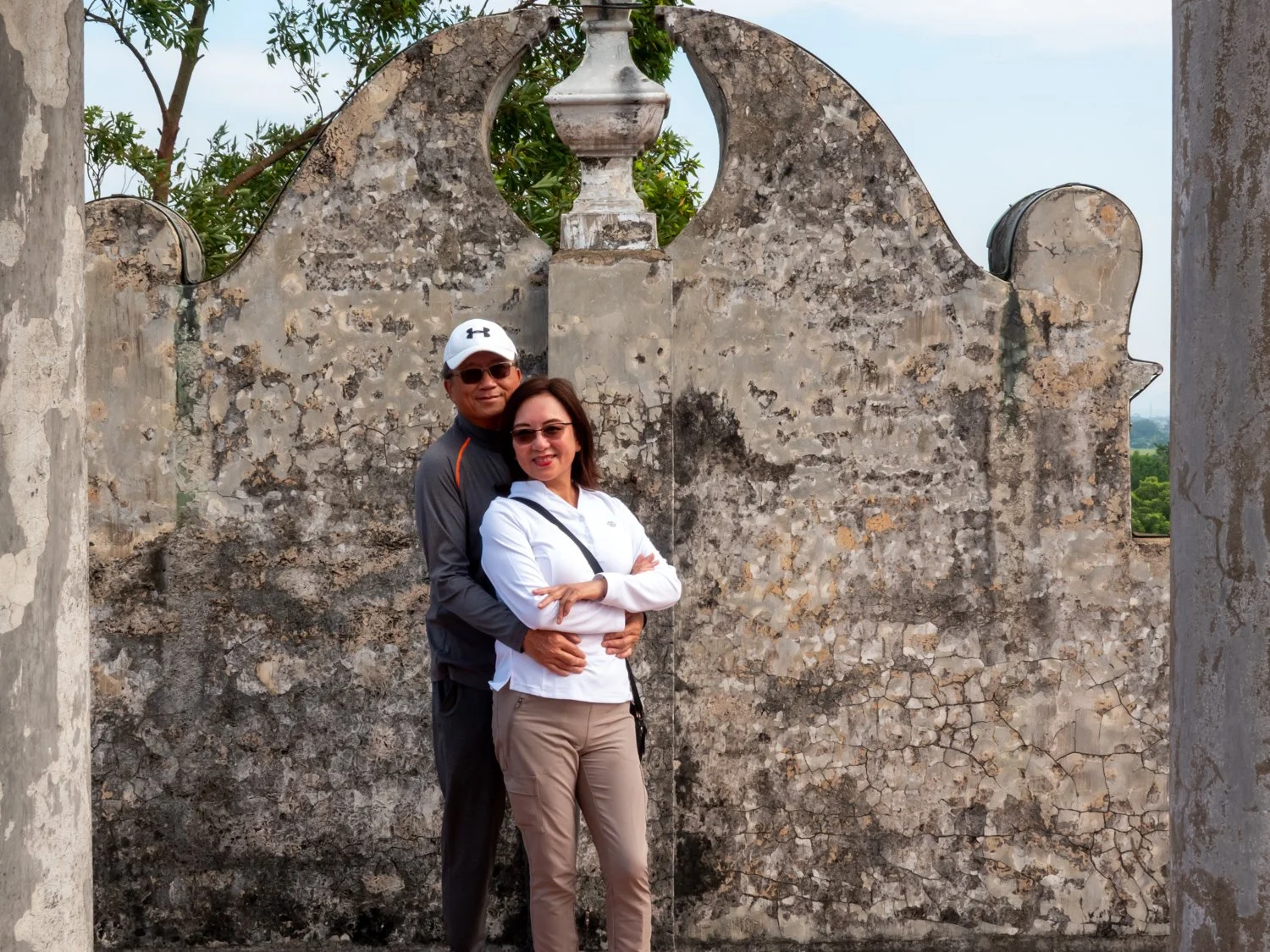
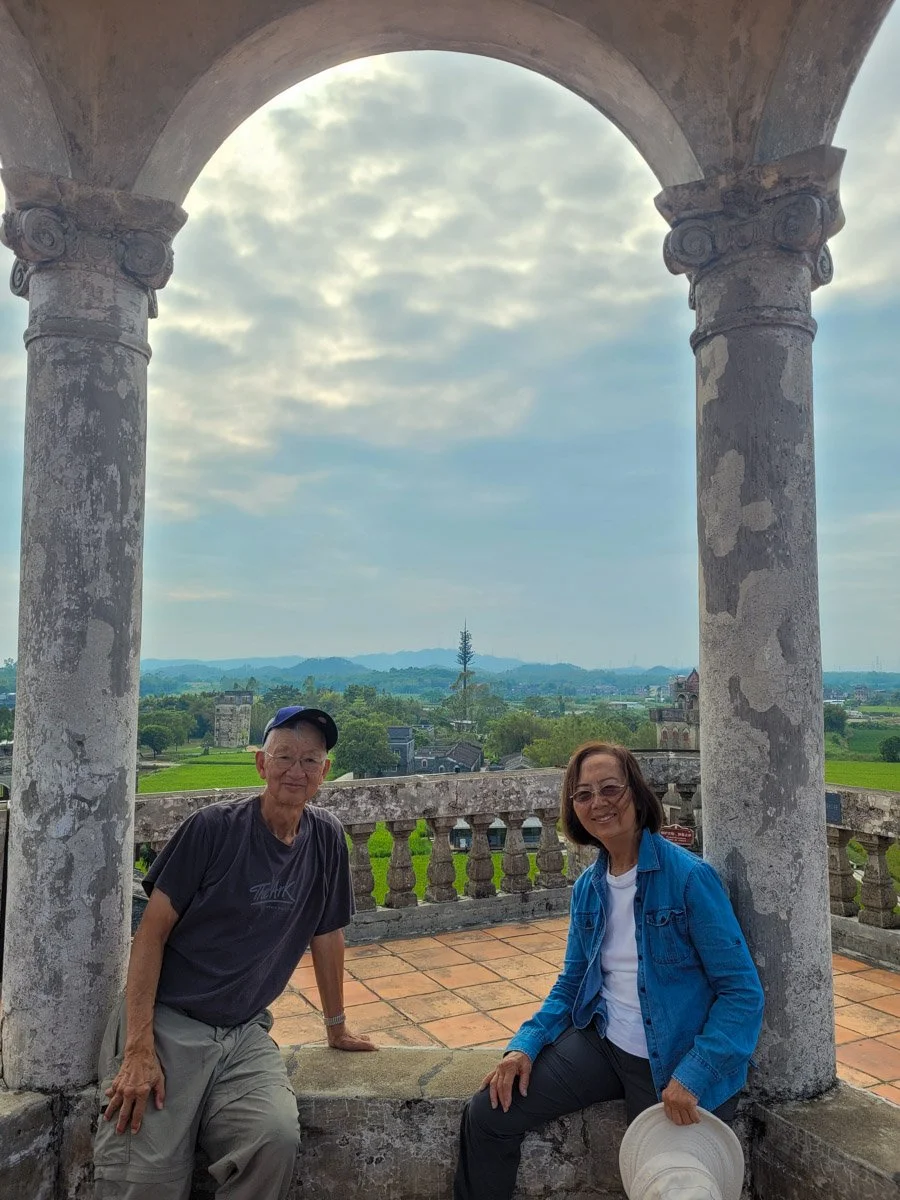
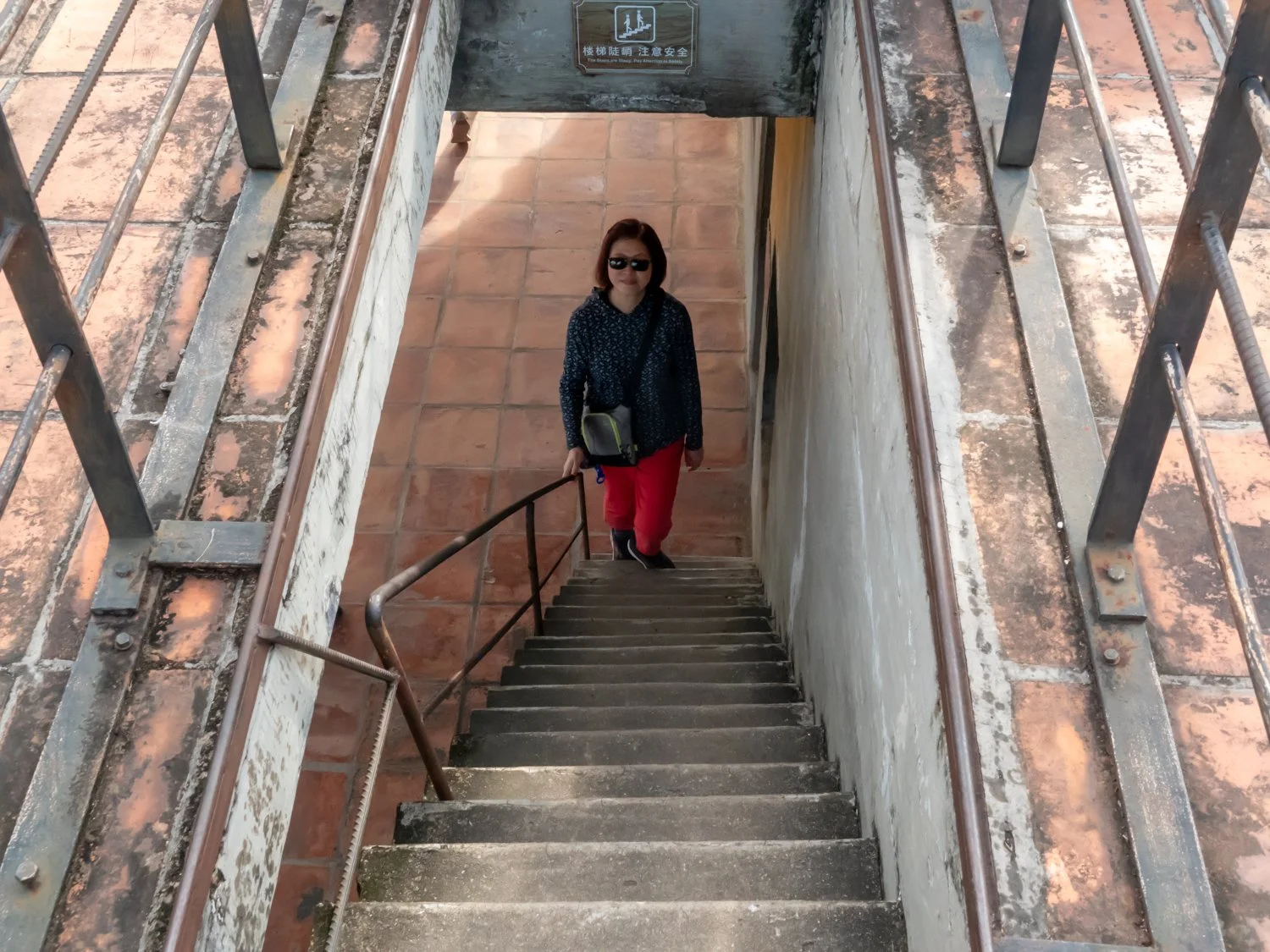
Kaiping Diaolou (碉樓) in Zili Village.
The Diaolou watchtowers were built in the 1920s and 30s by overseas Chinese who returned (melded traditional Chinese architecture with western elements. They served as defensive fortifications against bandits as well as luxurious residences.
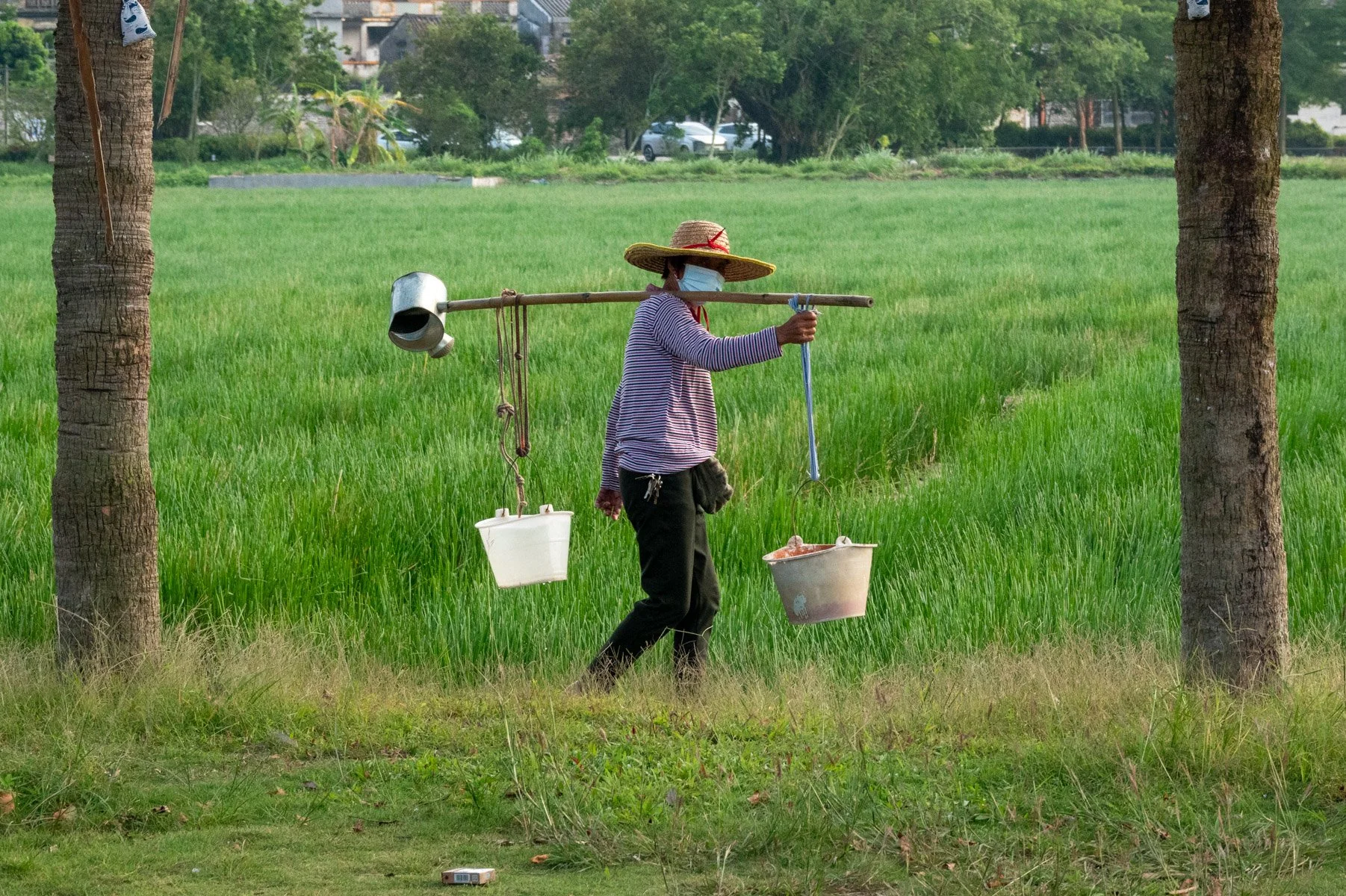
Zhaoqing
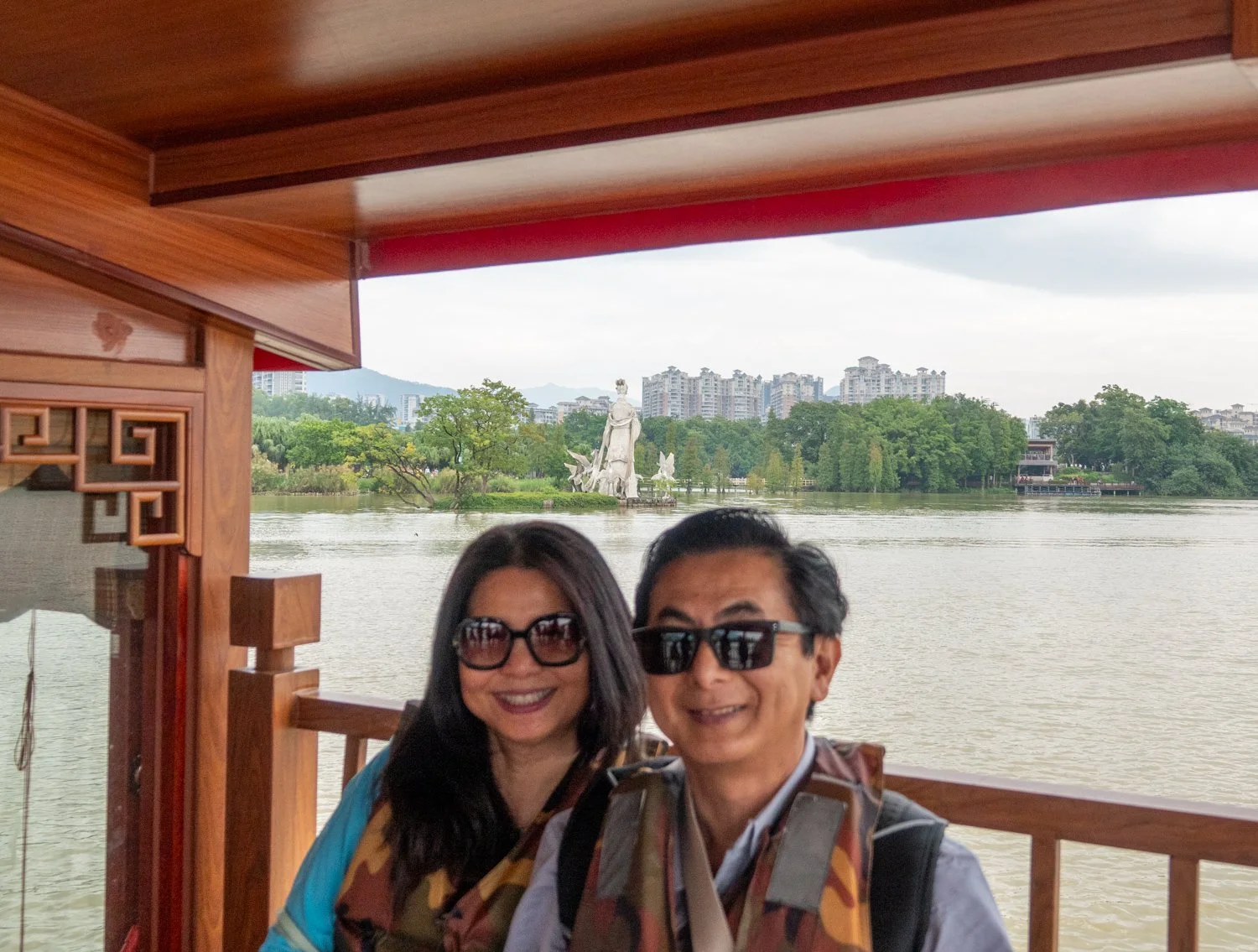
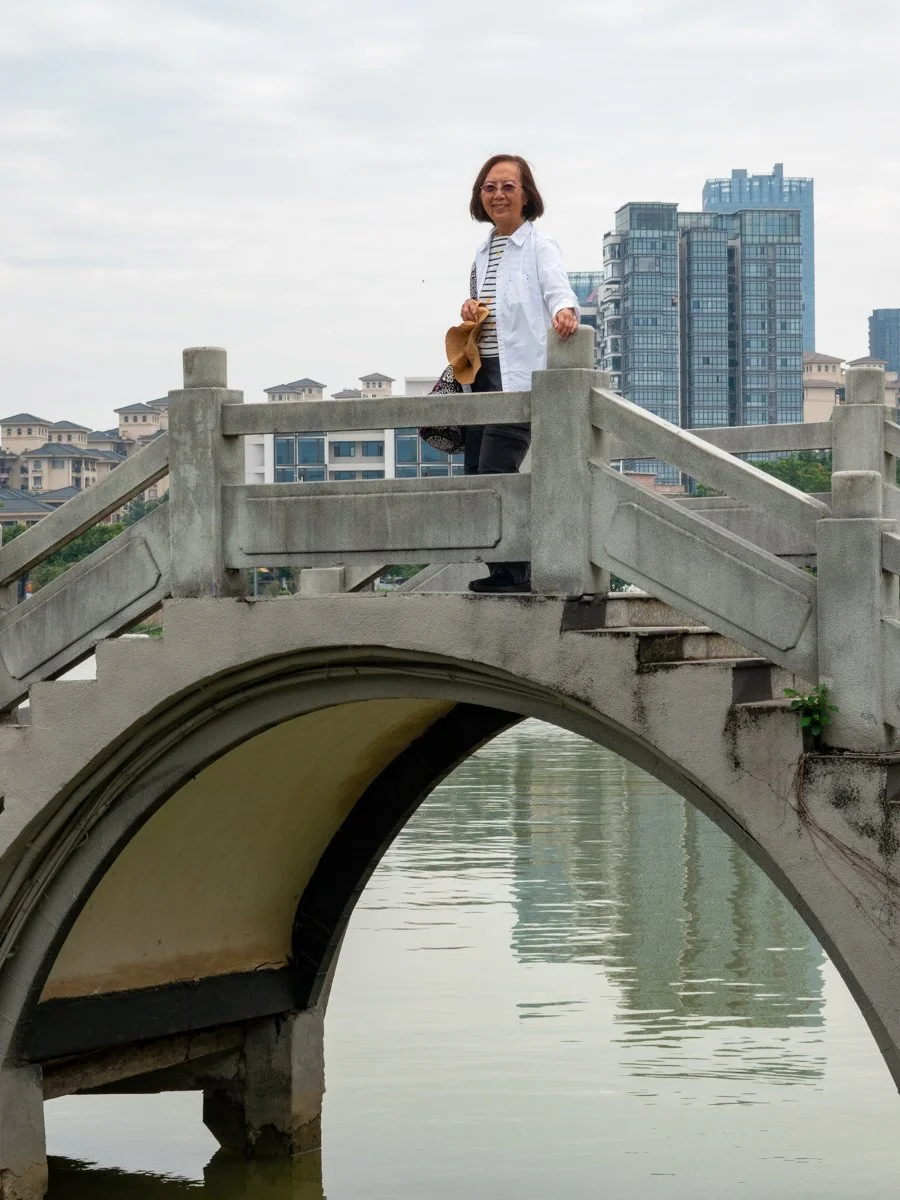
Xinghu Wetland National Park
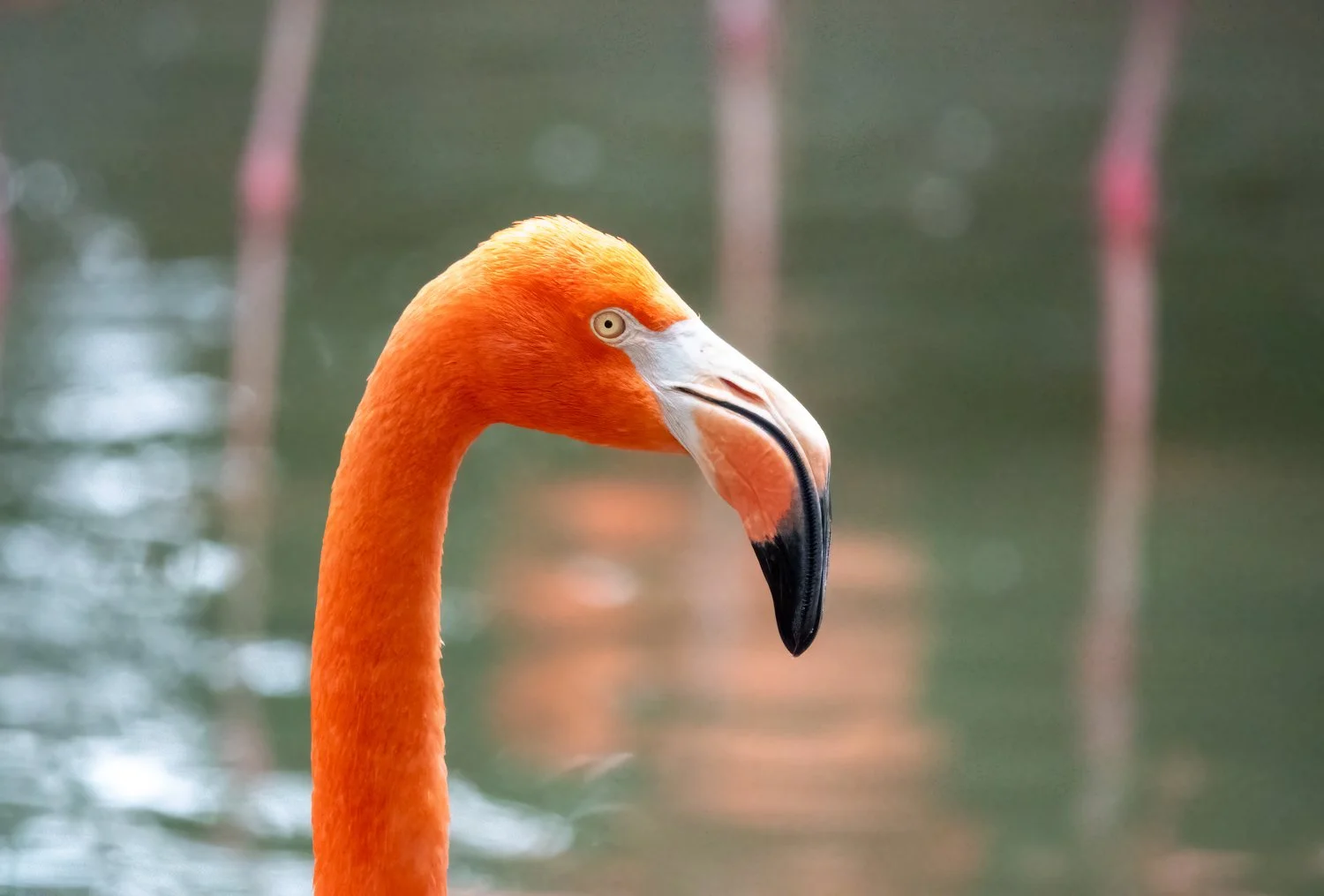
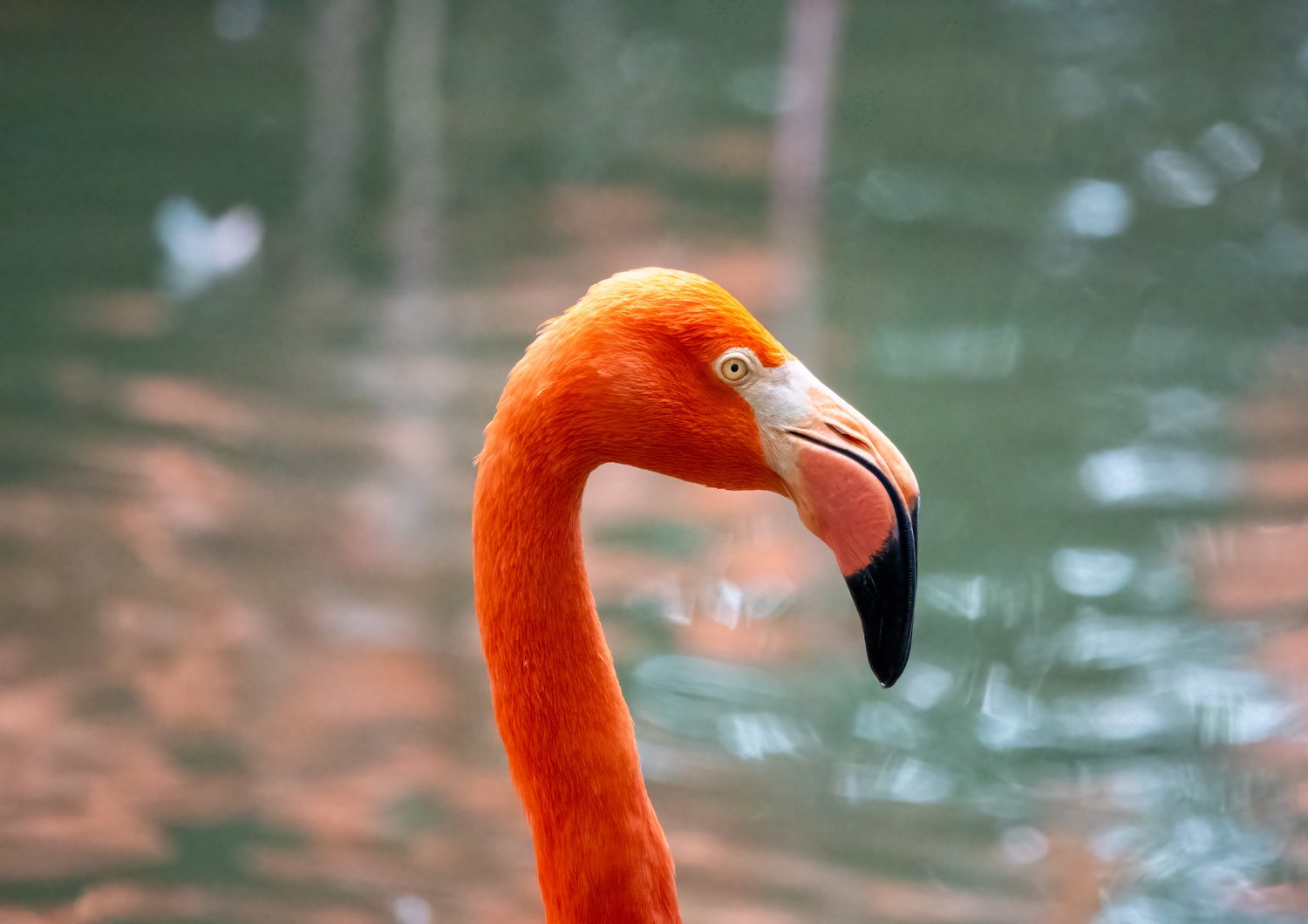
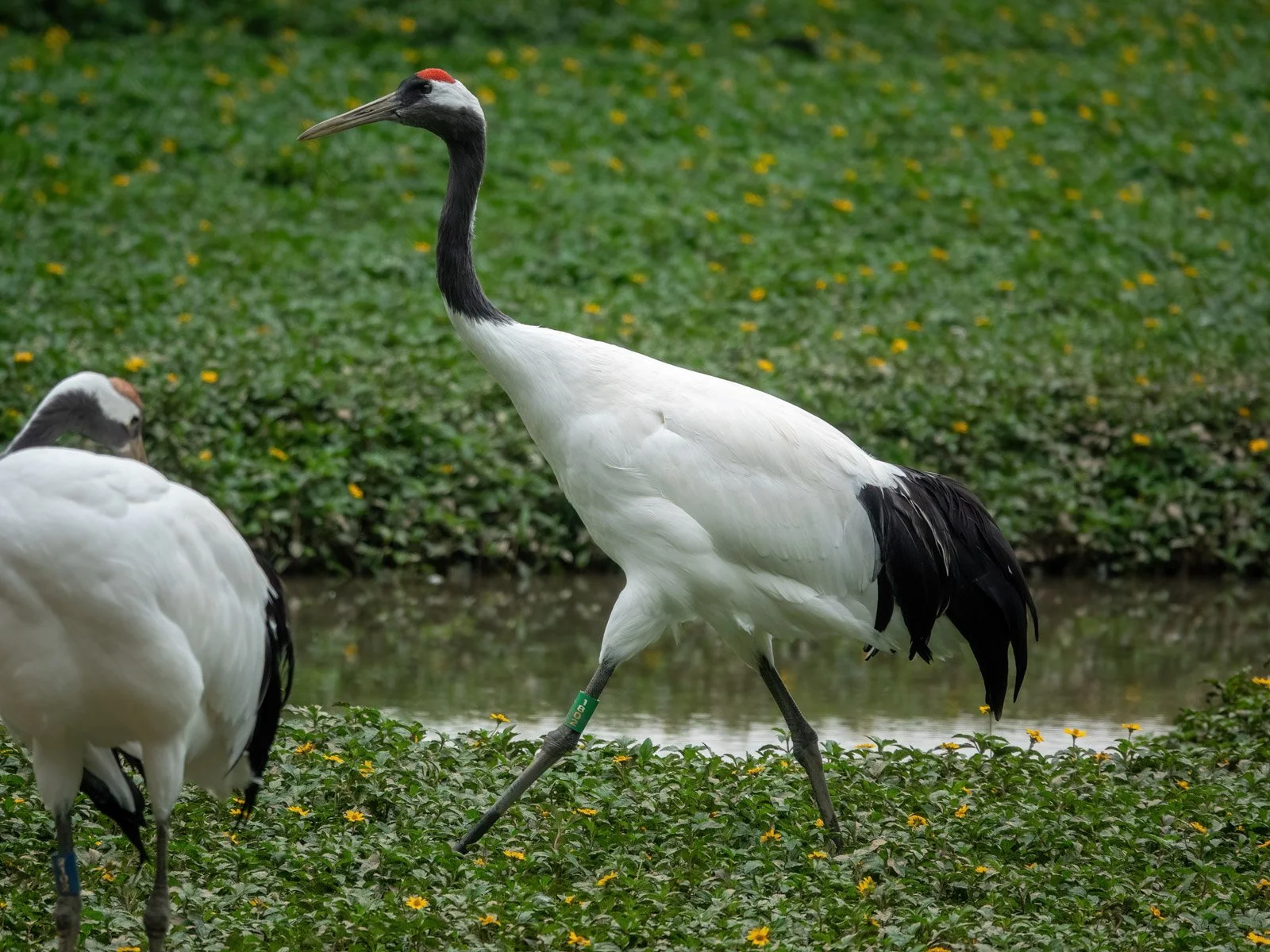
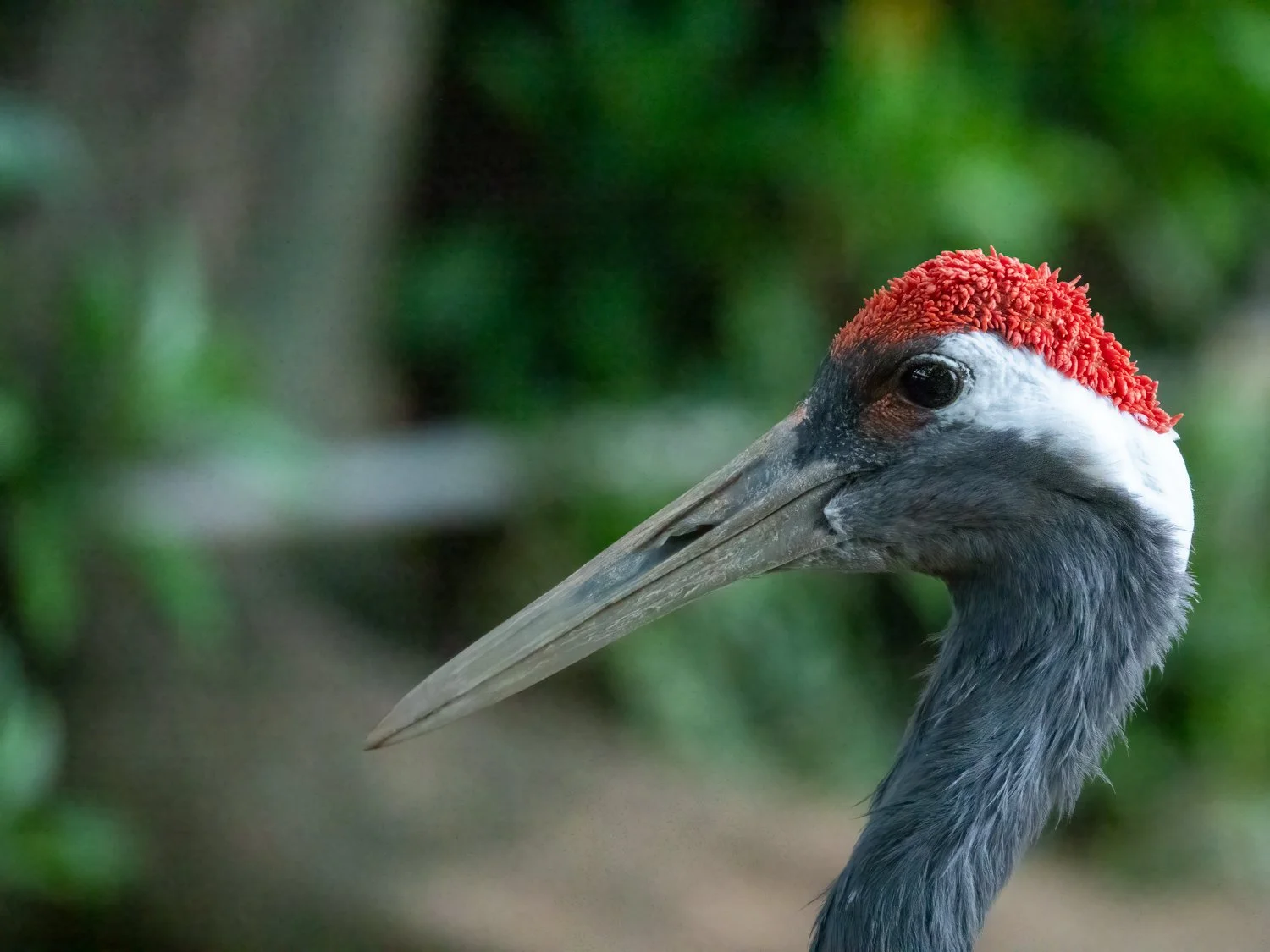
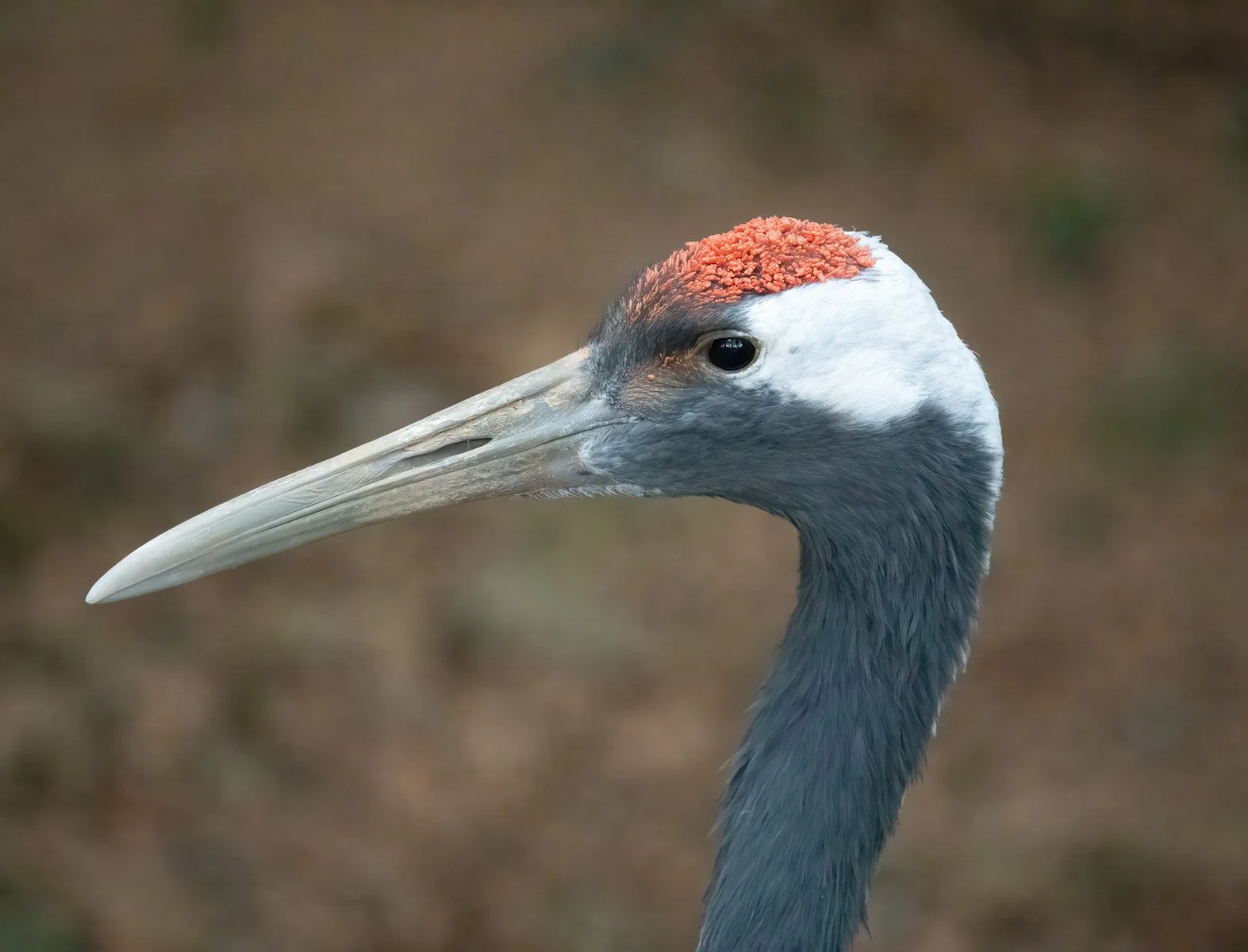
Red-crowned crane in the Xinghu Wetland Park
Ziyun Valley
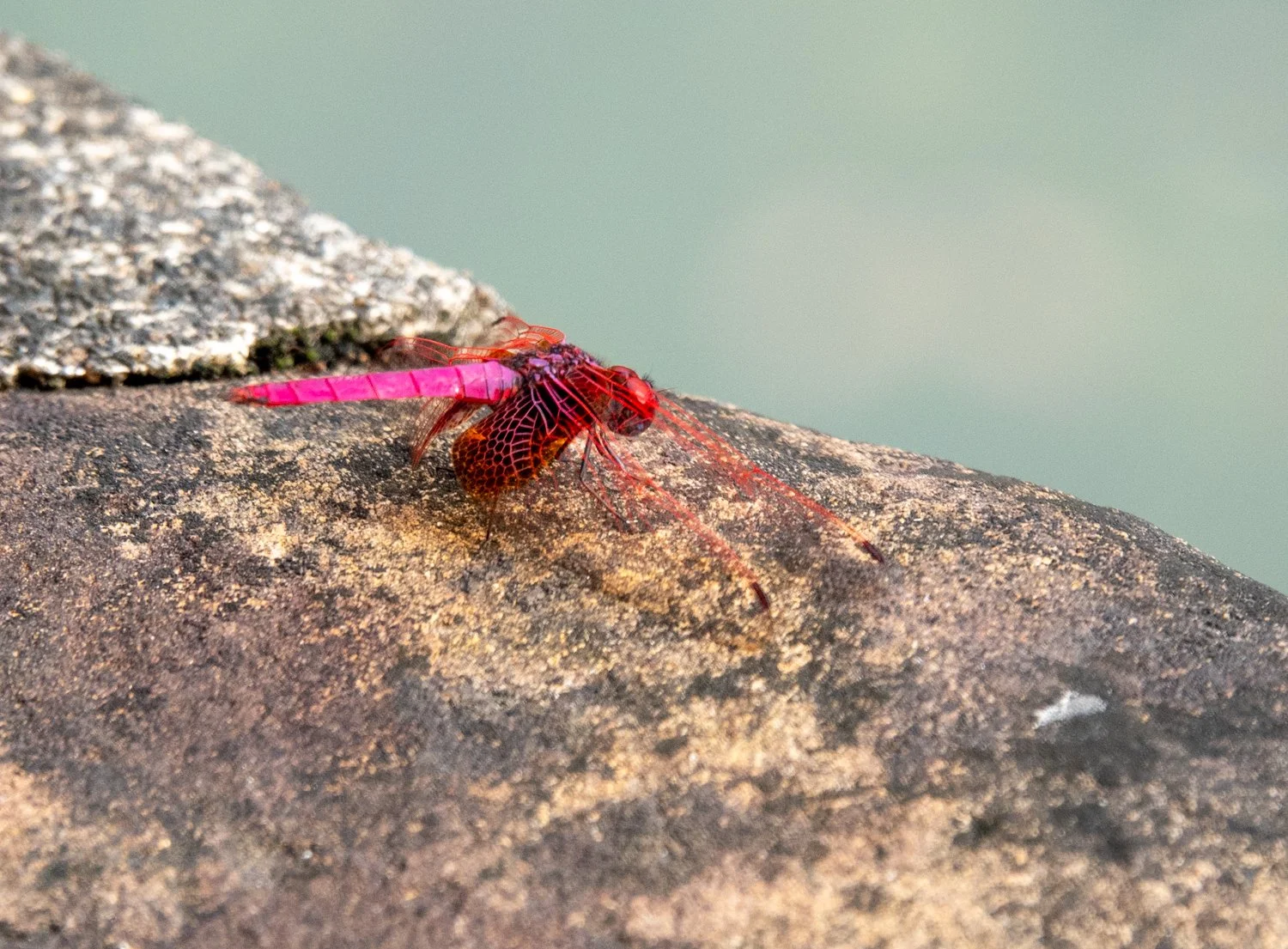
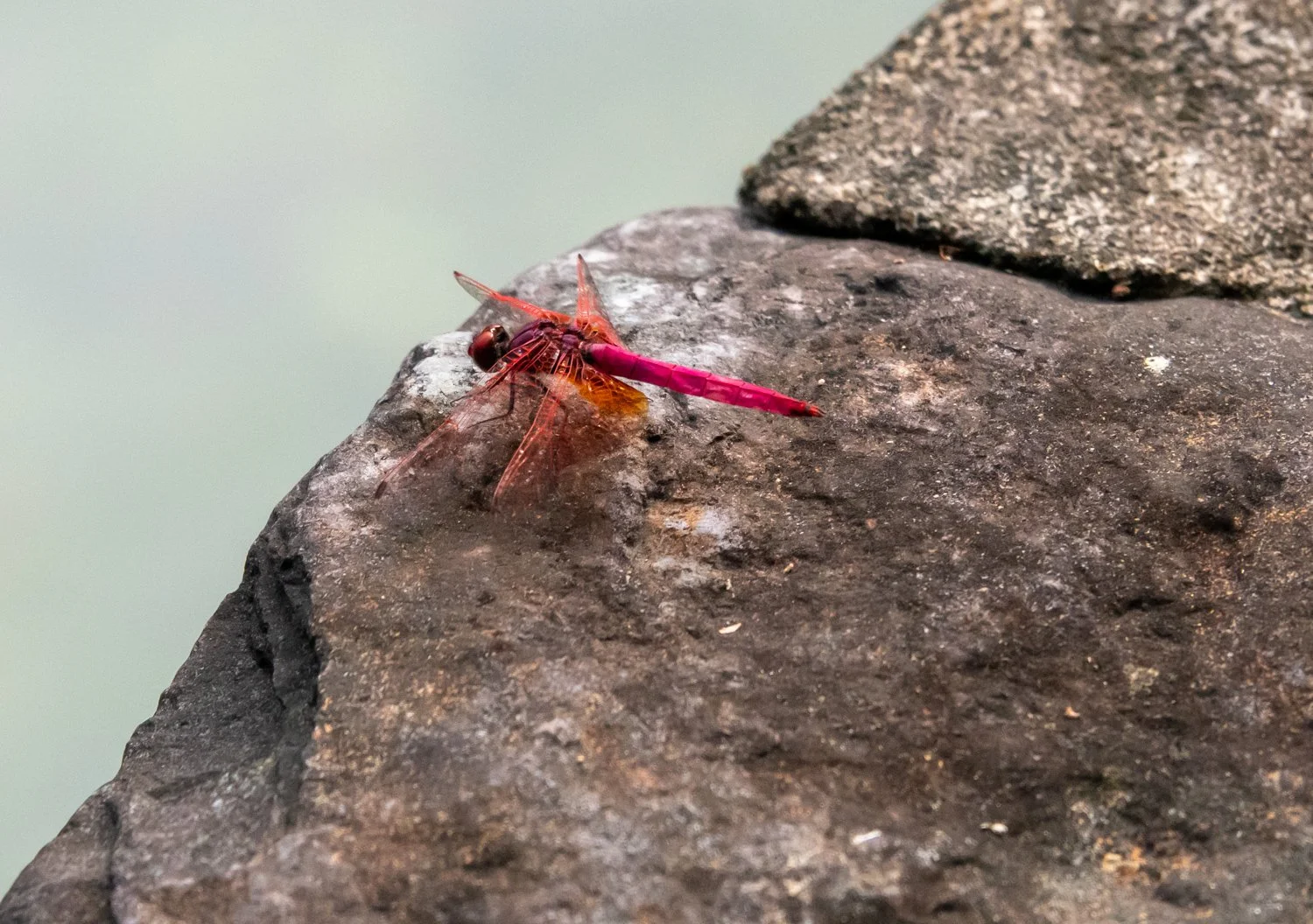
Red dragonflies are an auspicious sighting
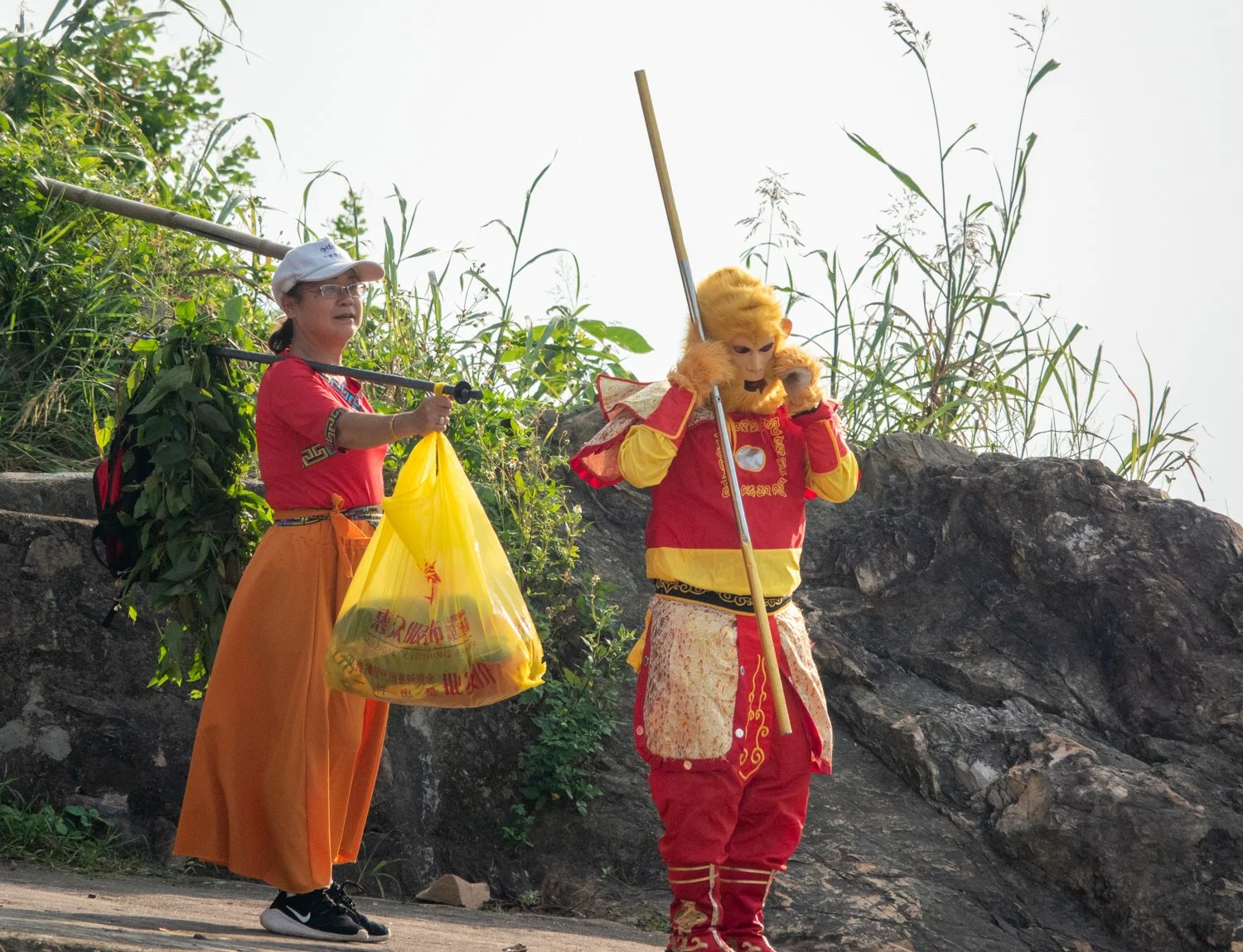
The Monkey King (Sun Wukong) is visiting
Zhaoqing
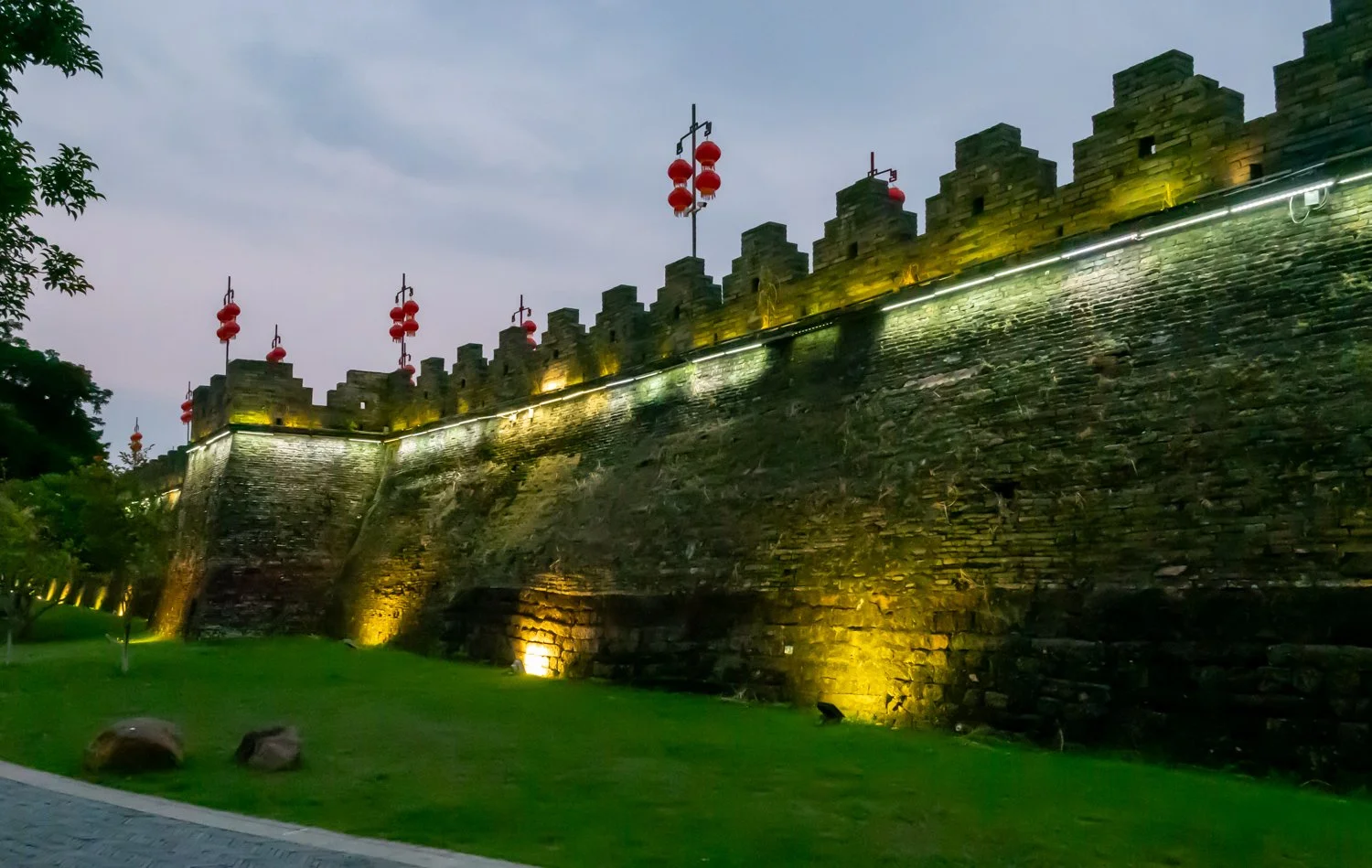
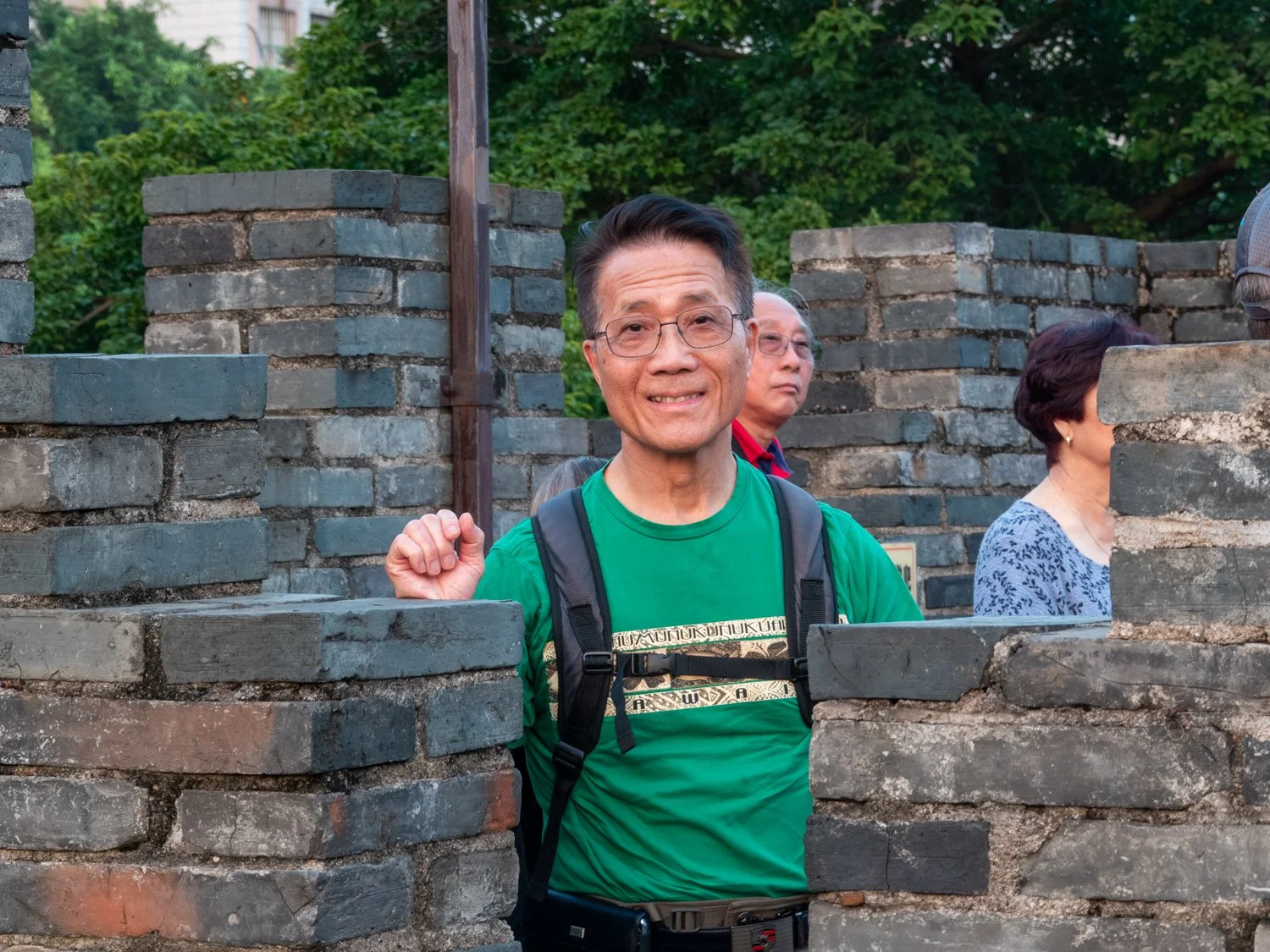
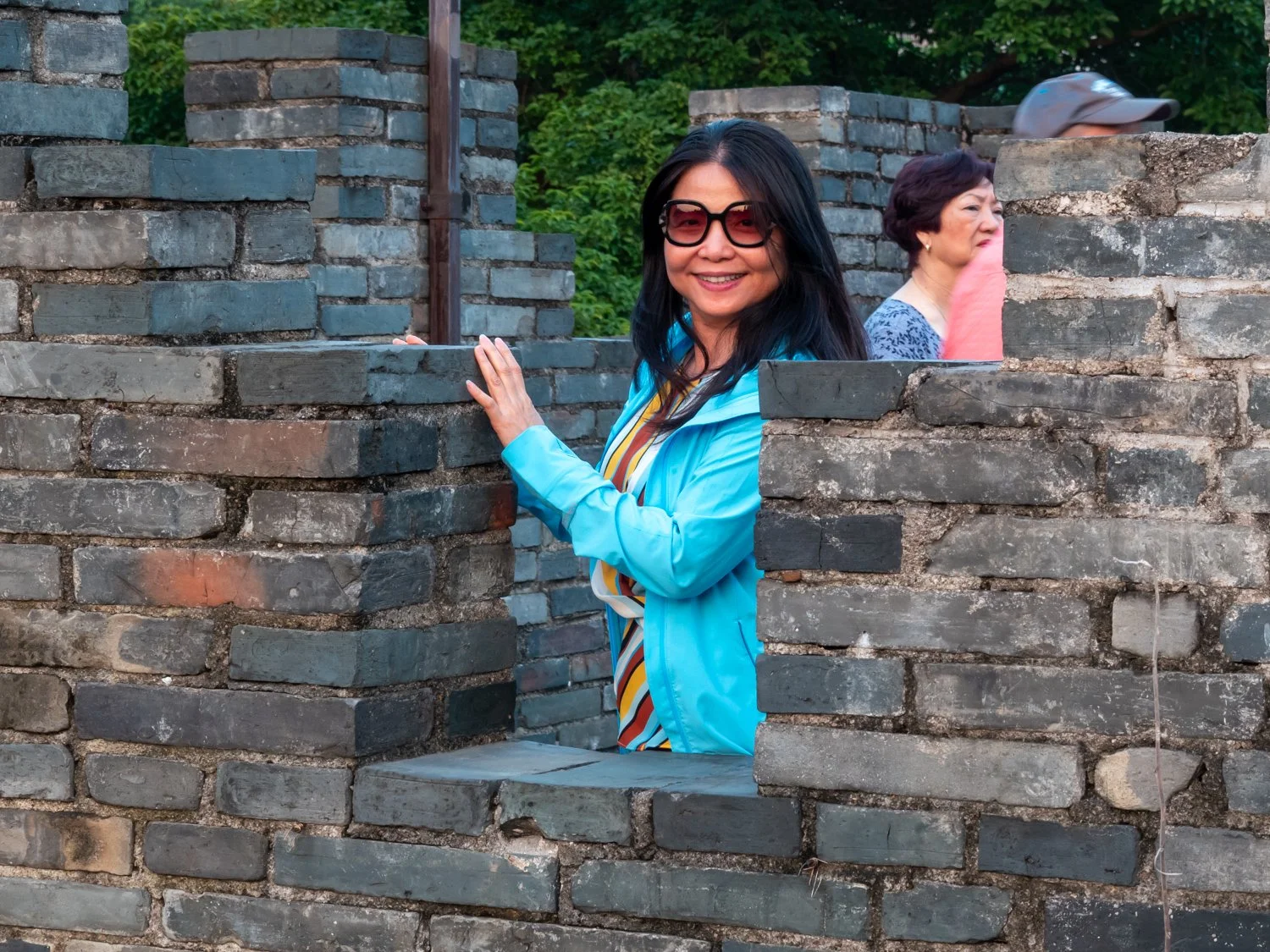
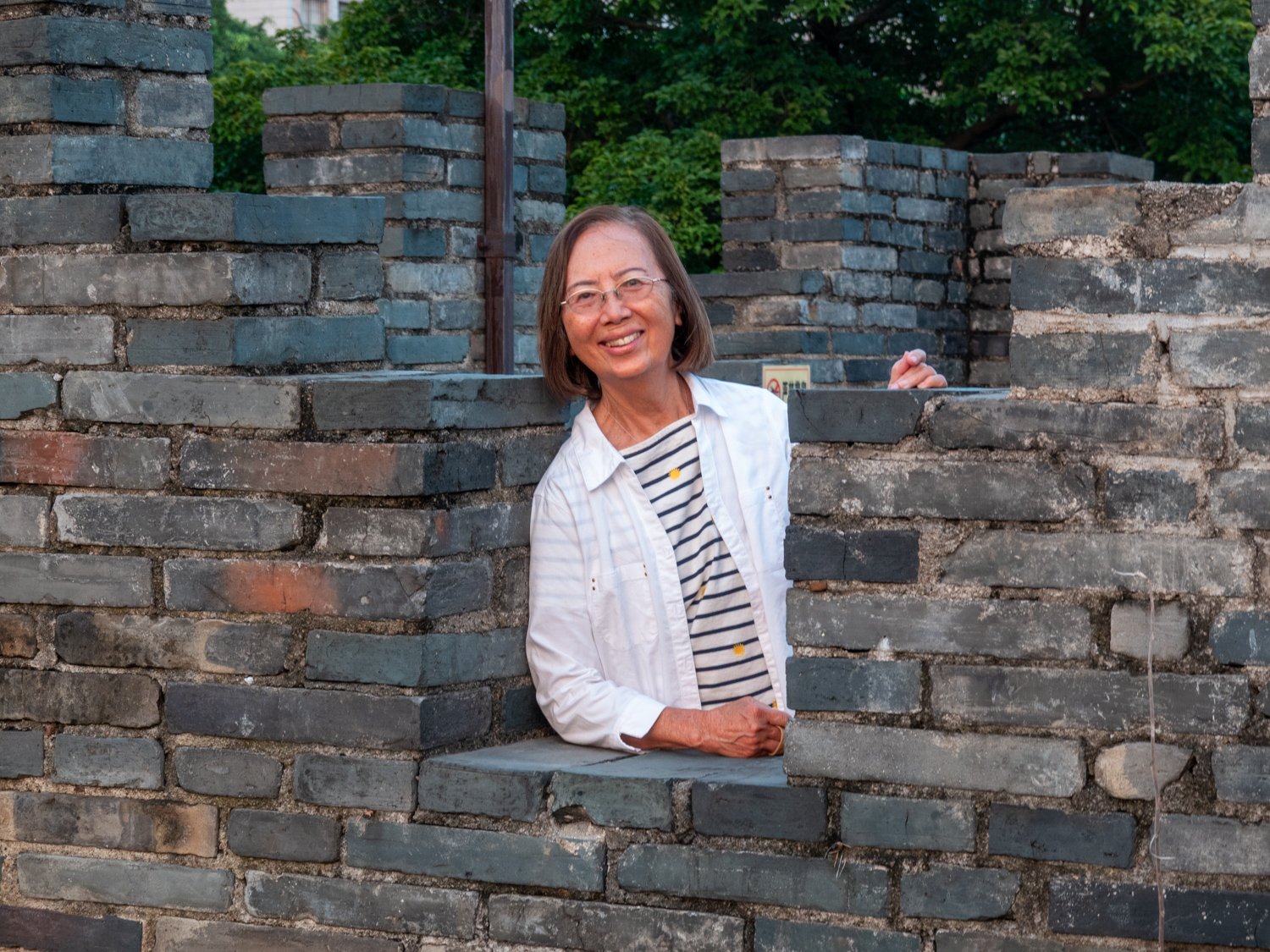
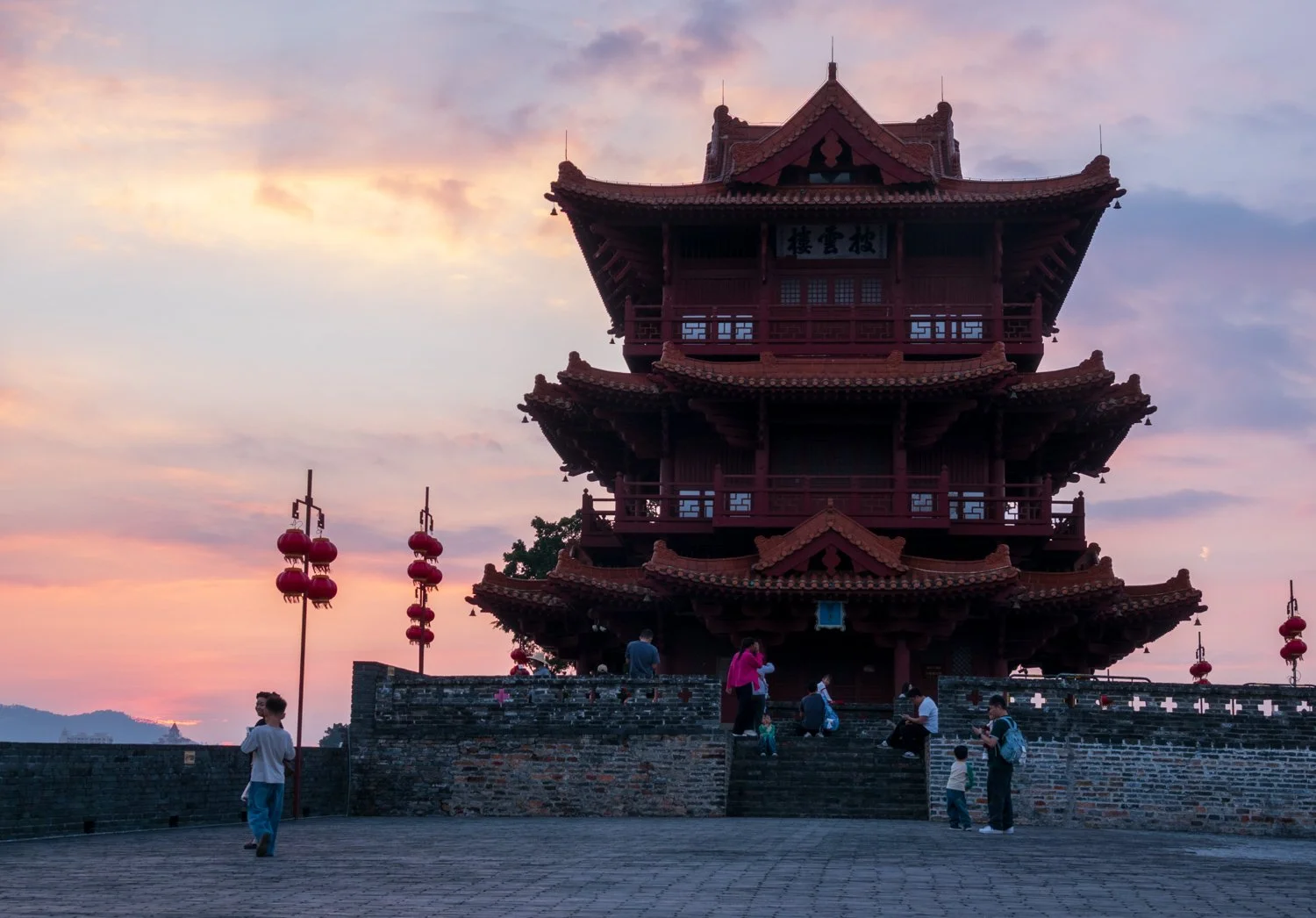
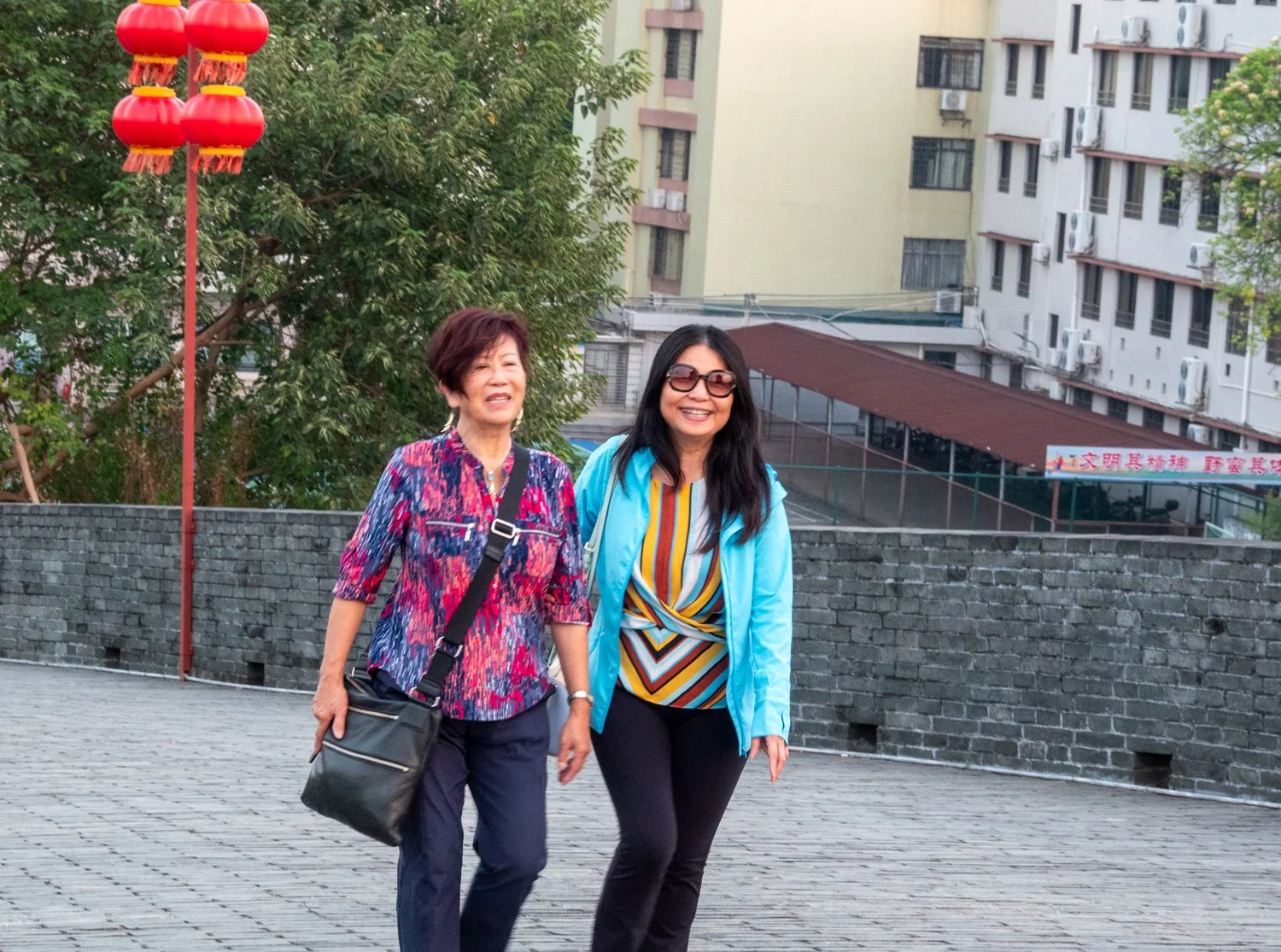
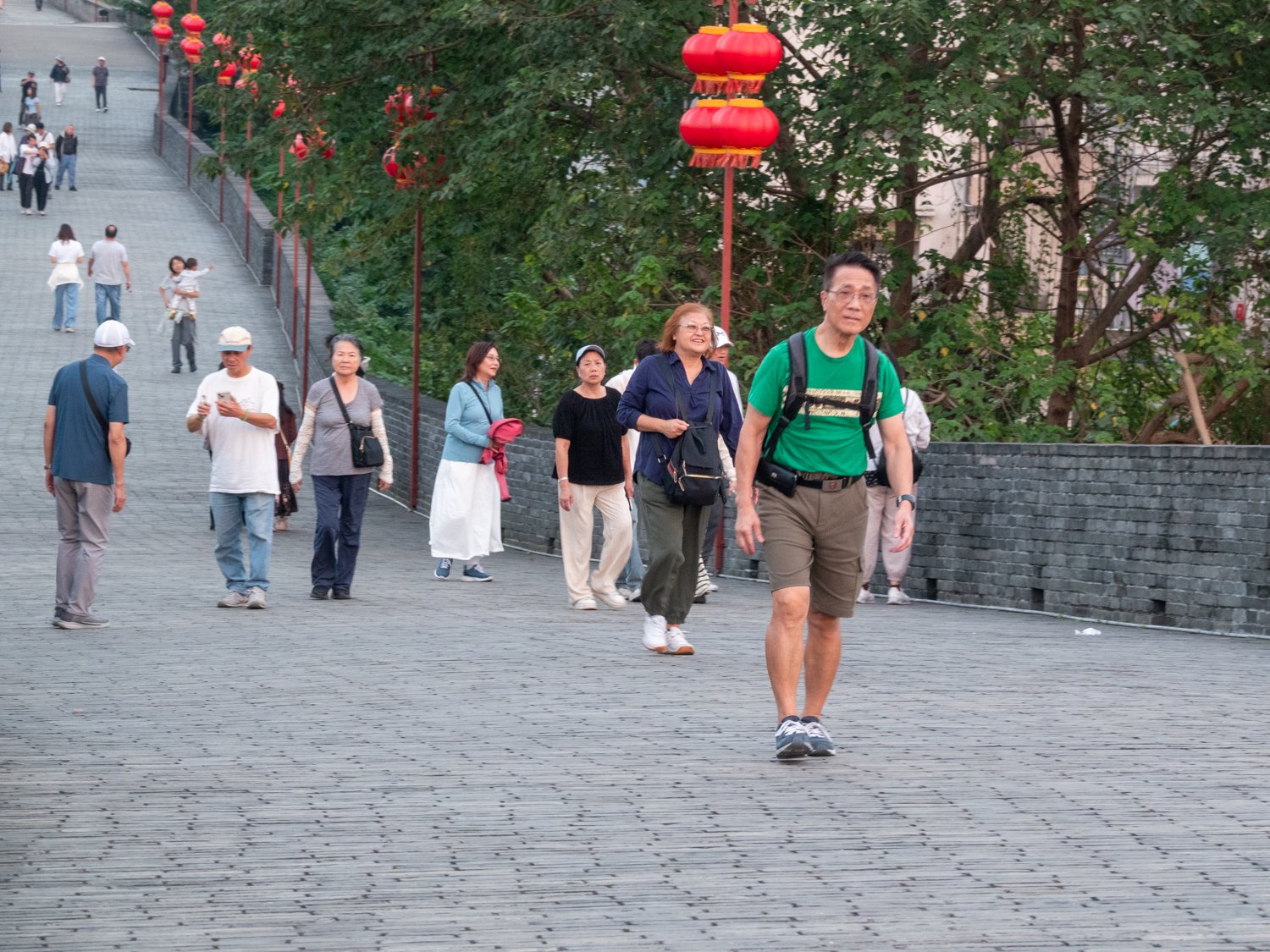
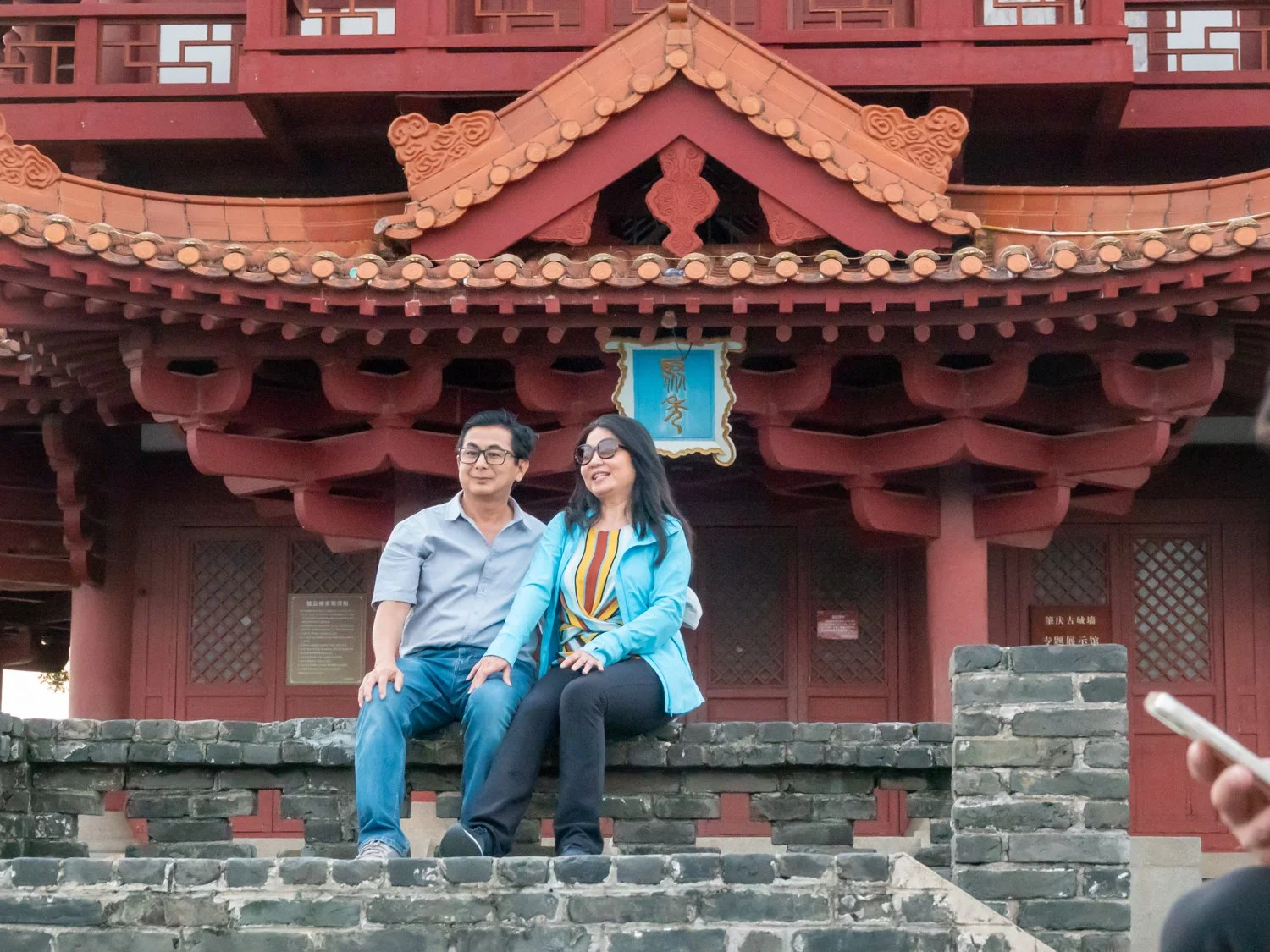
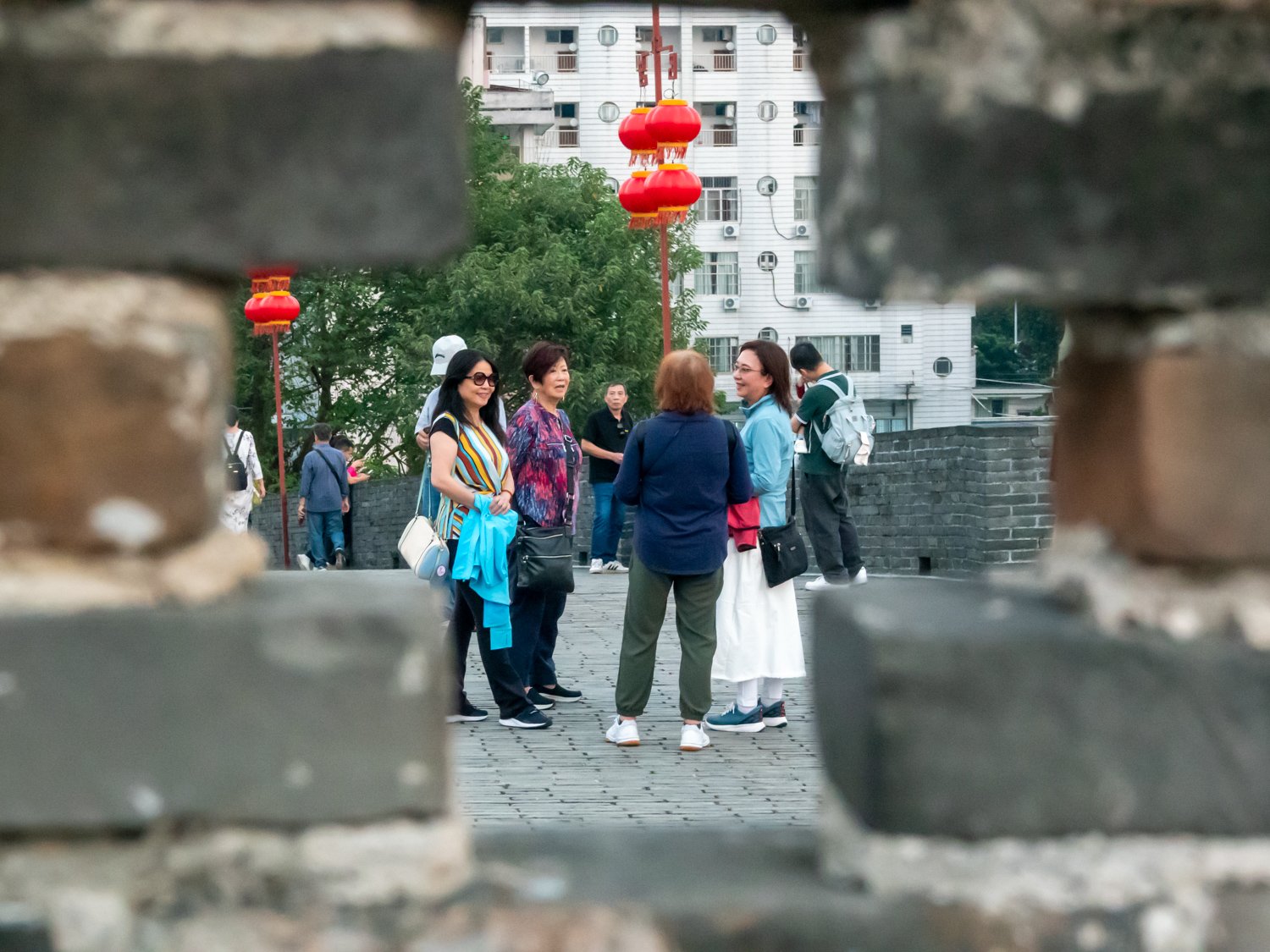
On our last day we visited the Ancient City Wall of Zhaoqing
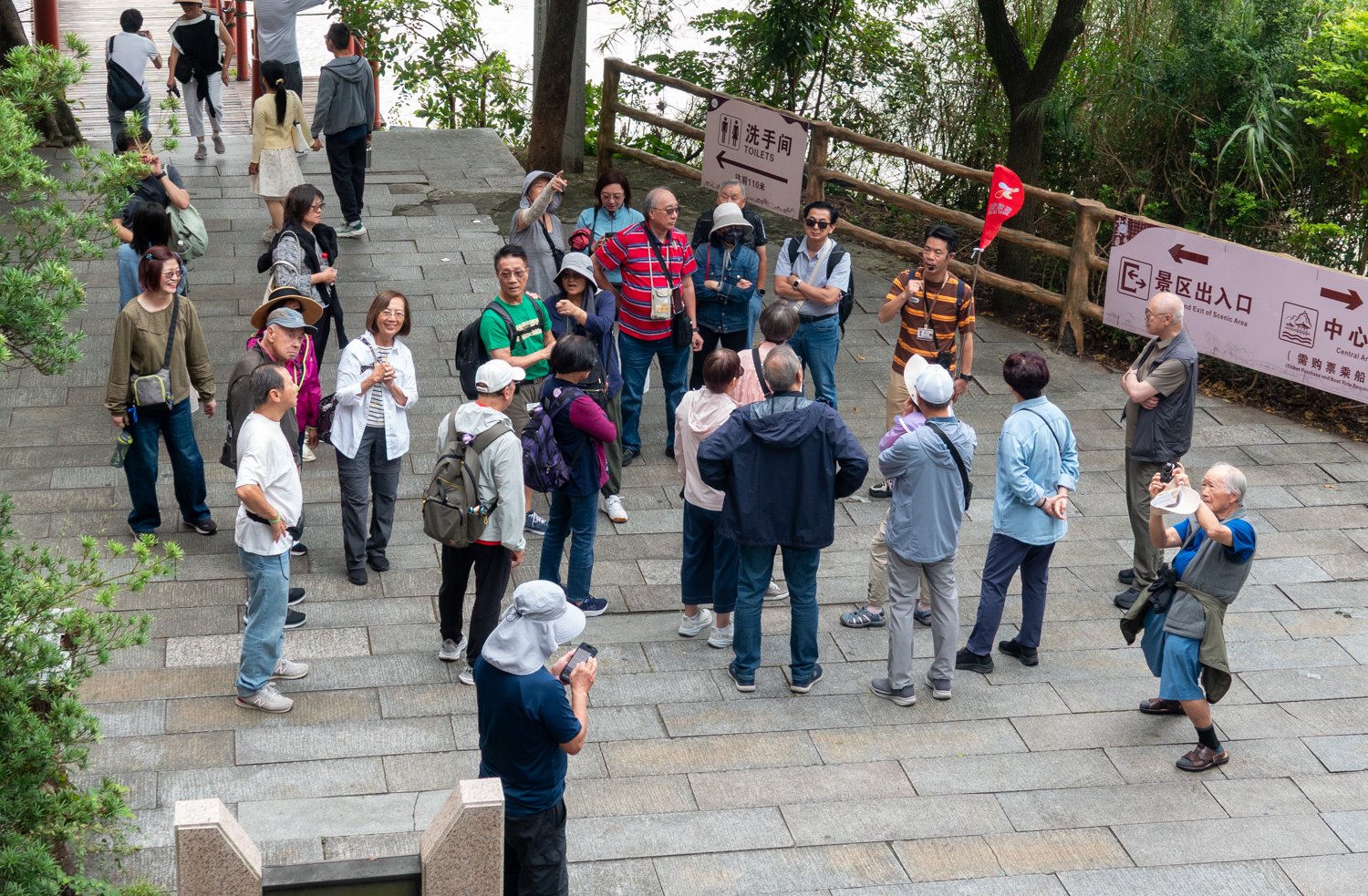
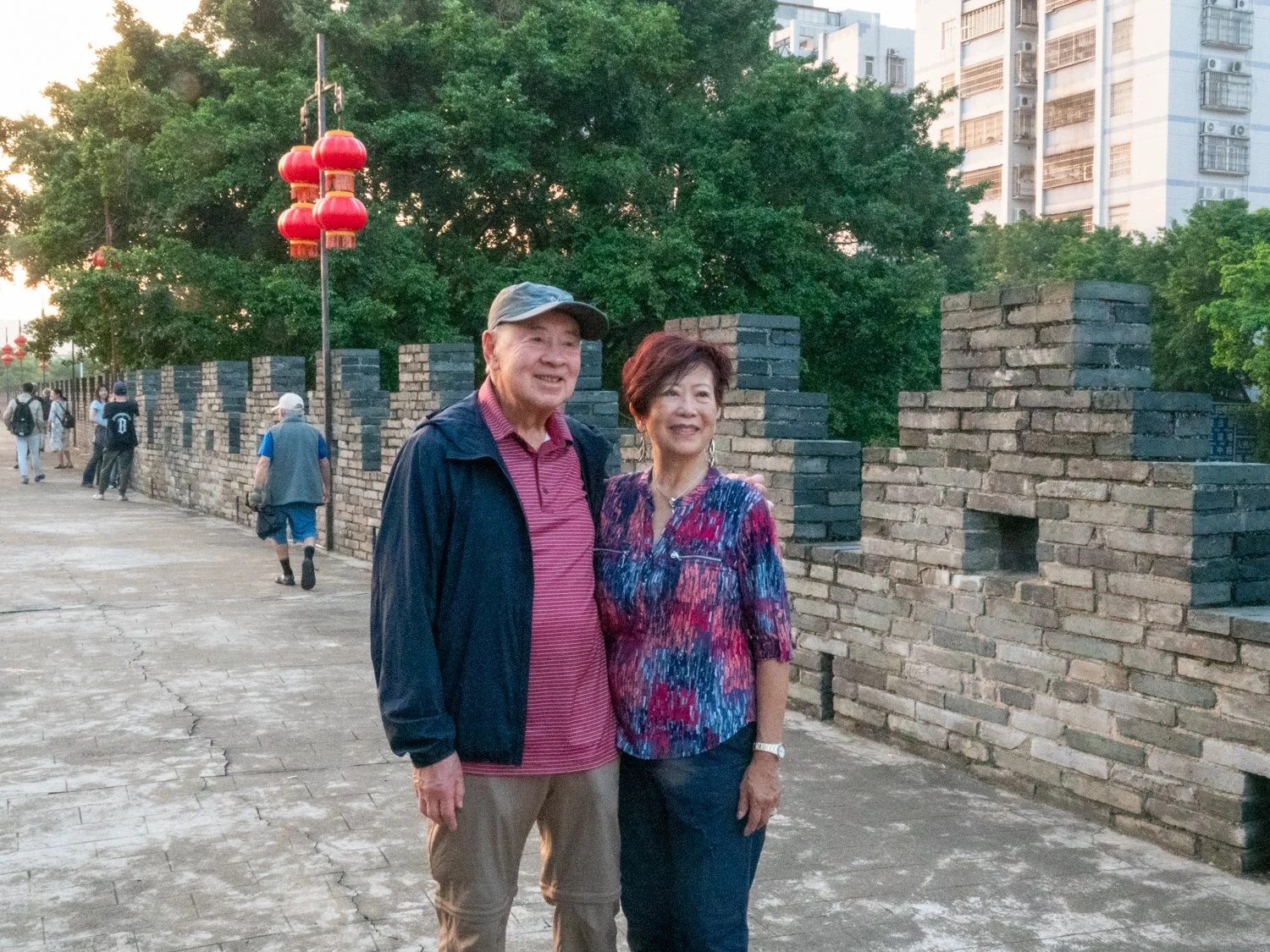
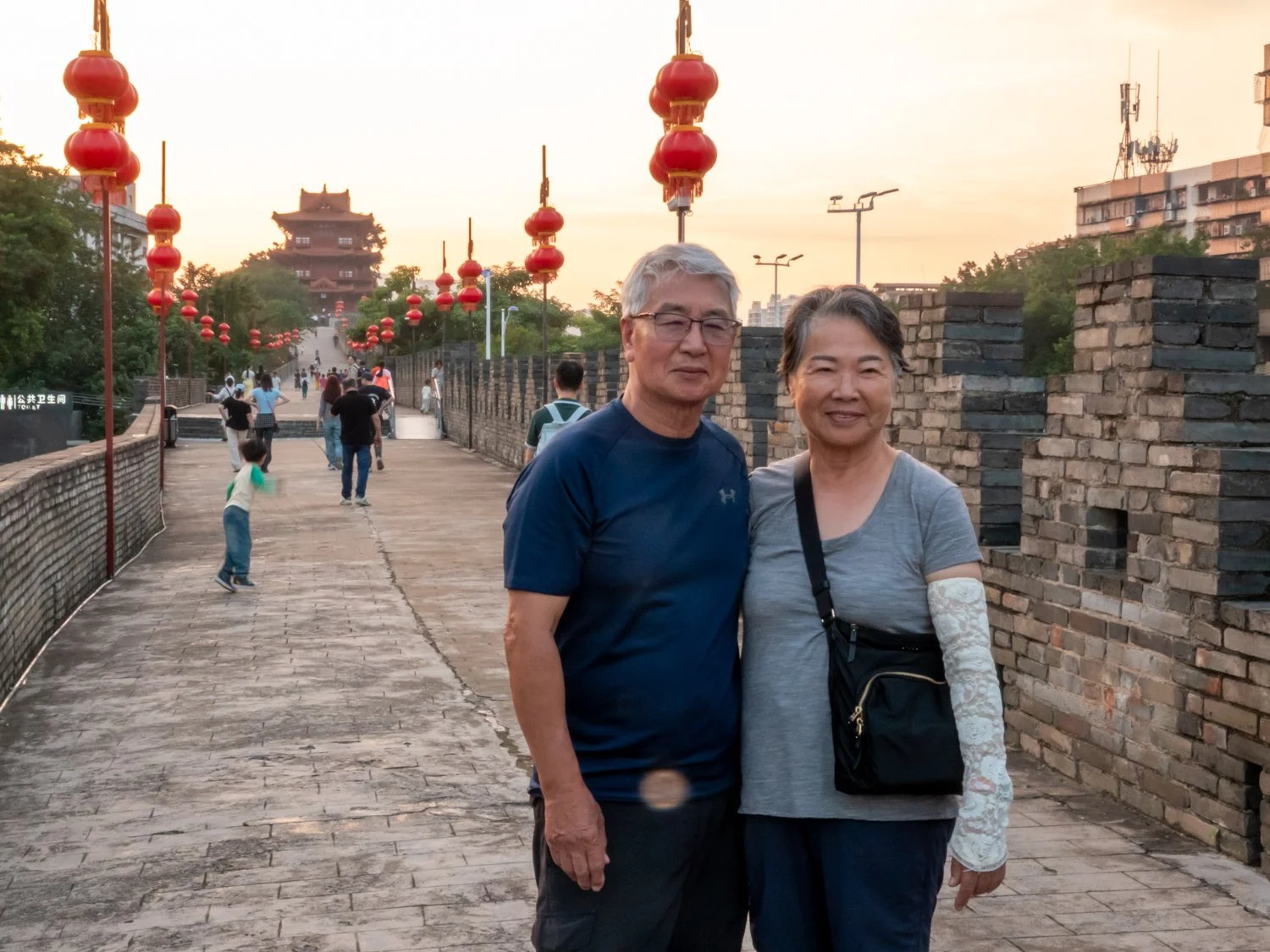
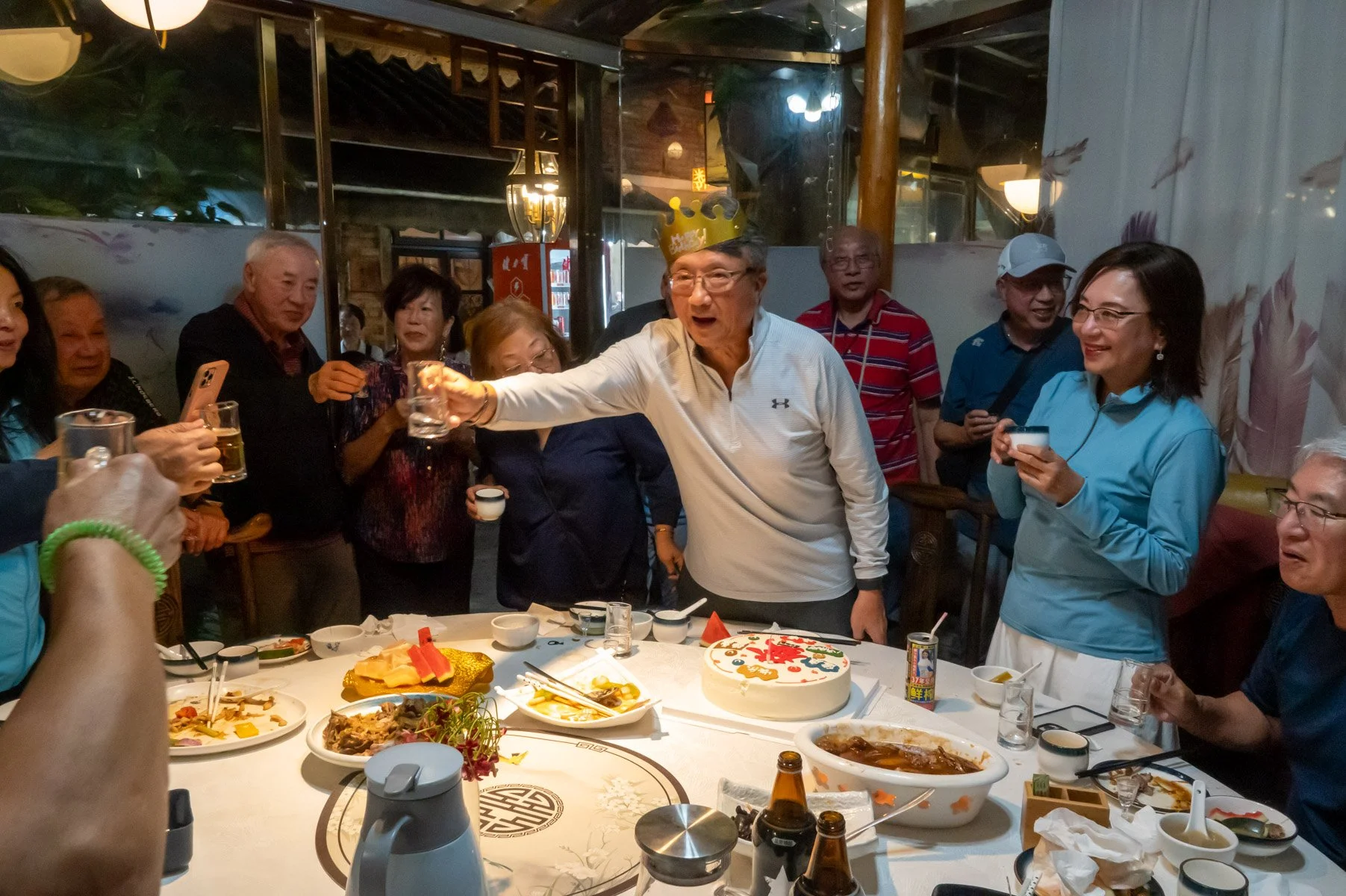
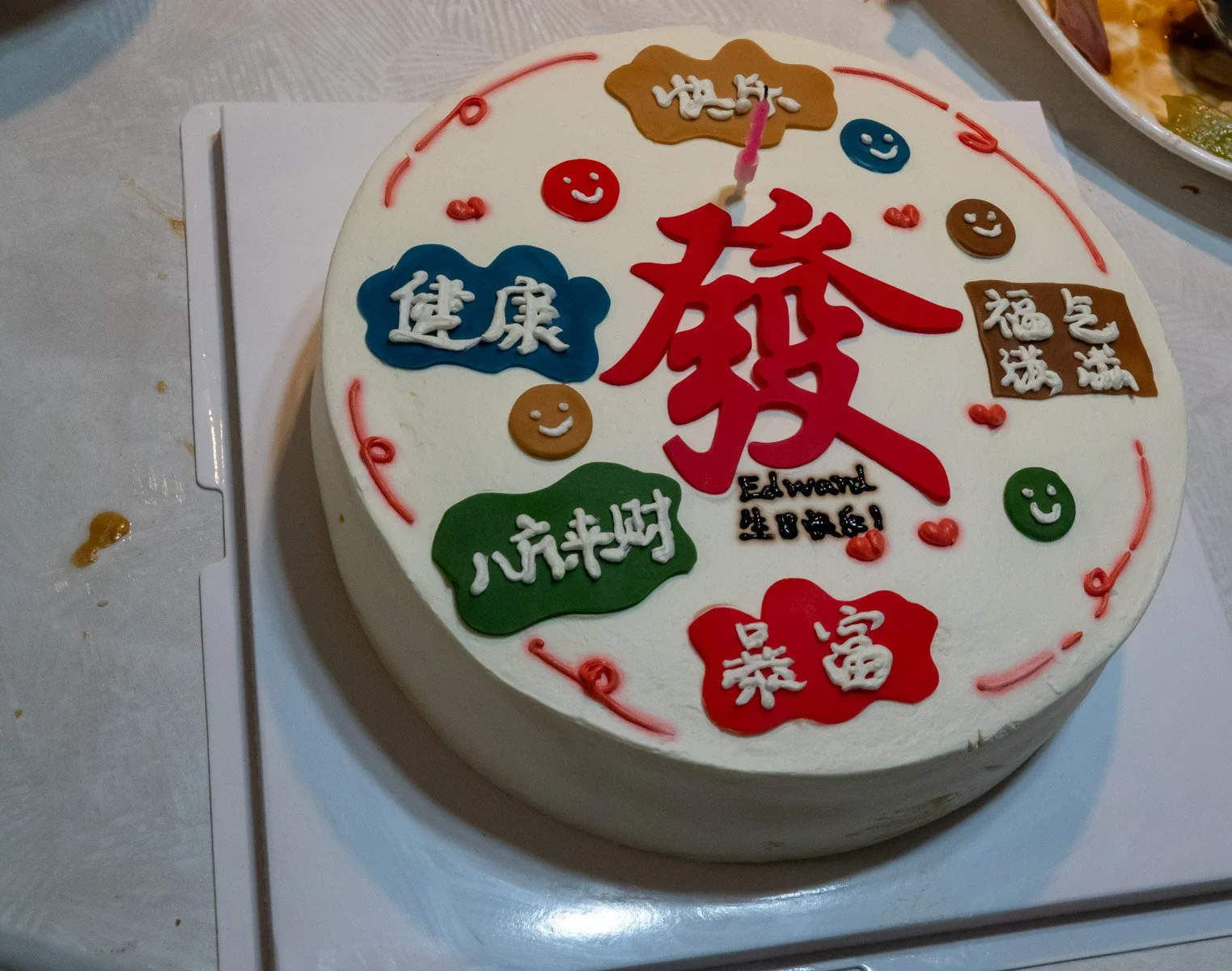
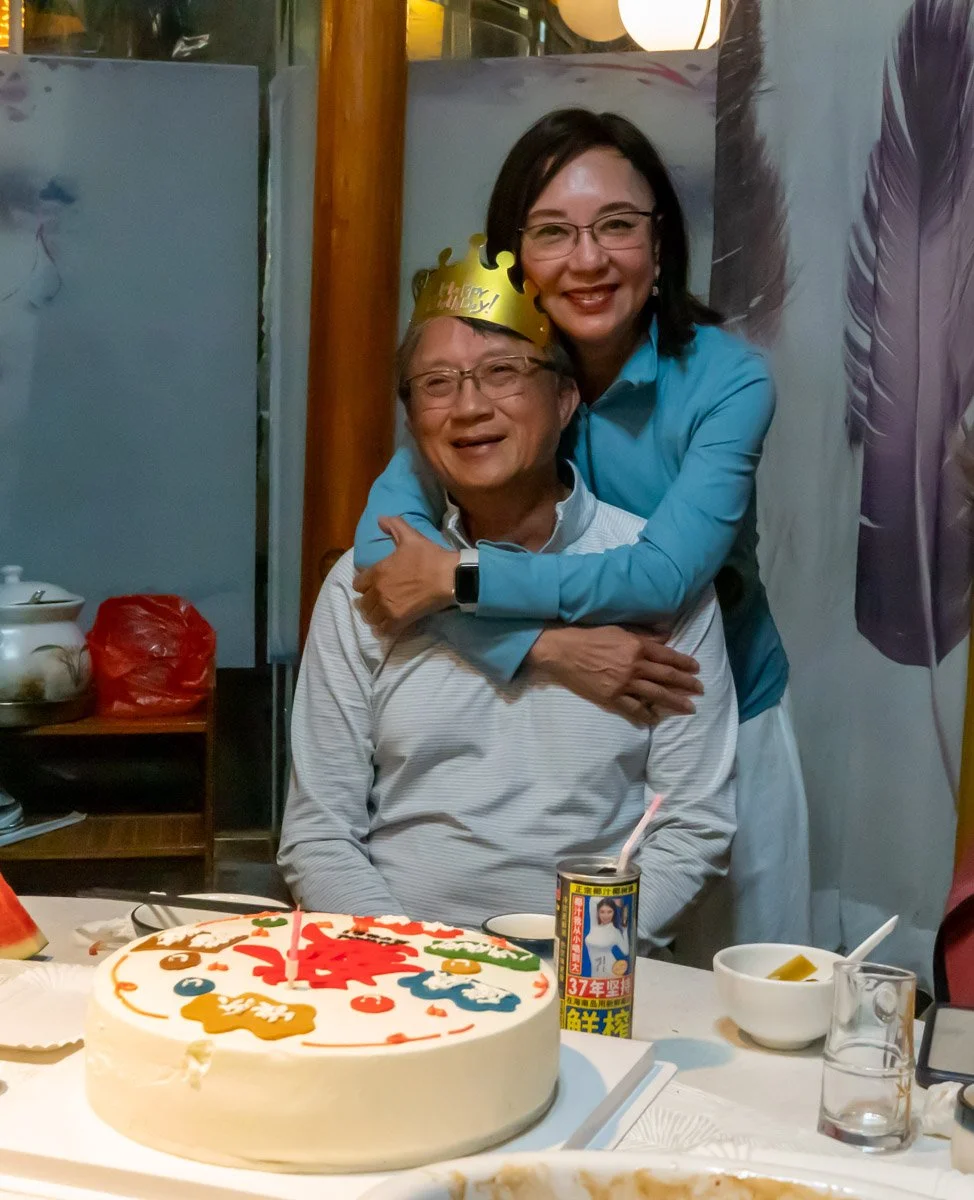
We celebrated Ed’s birthday one night.
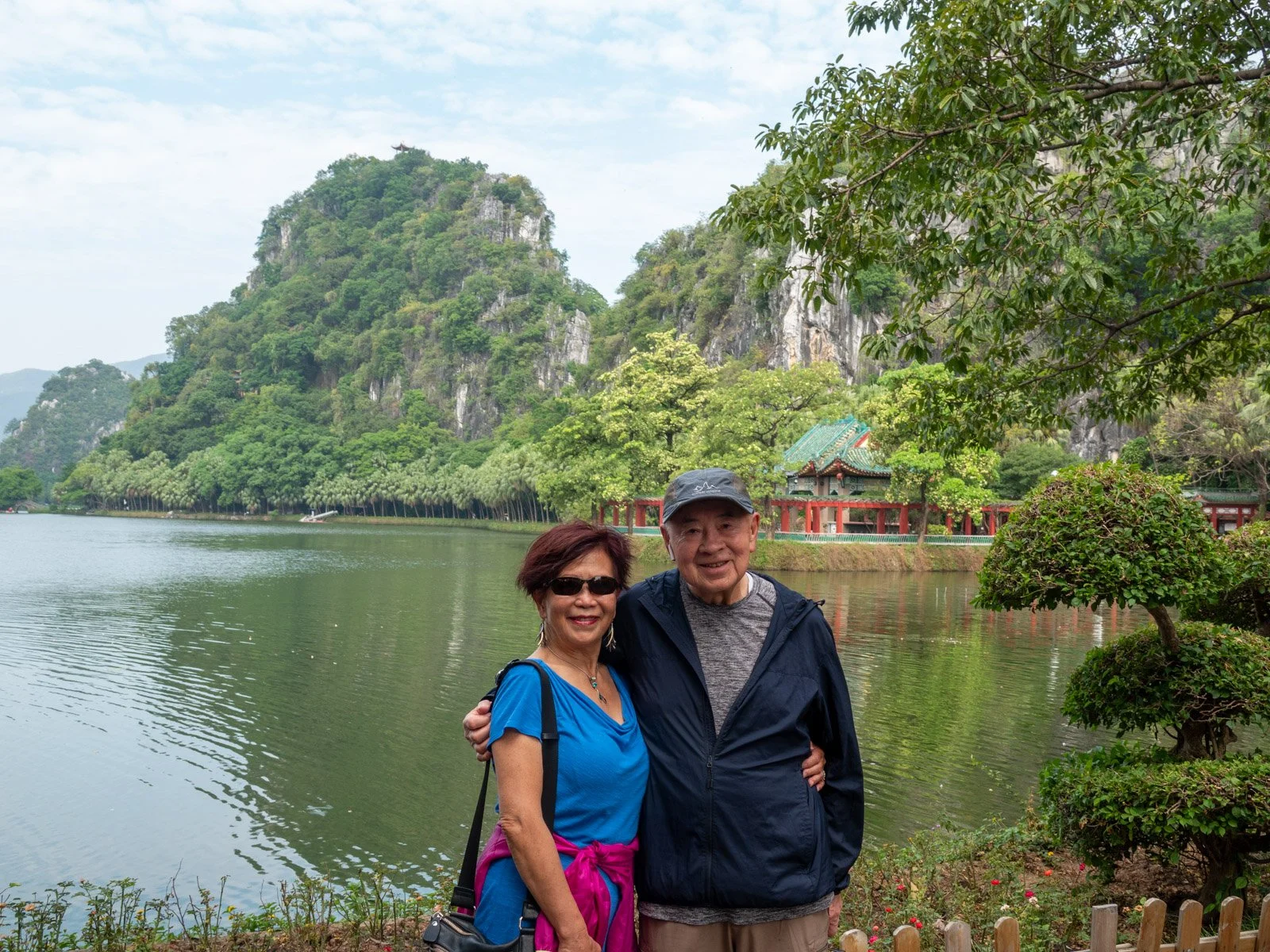
Seven Star Crags Scenic Area
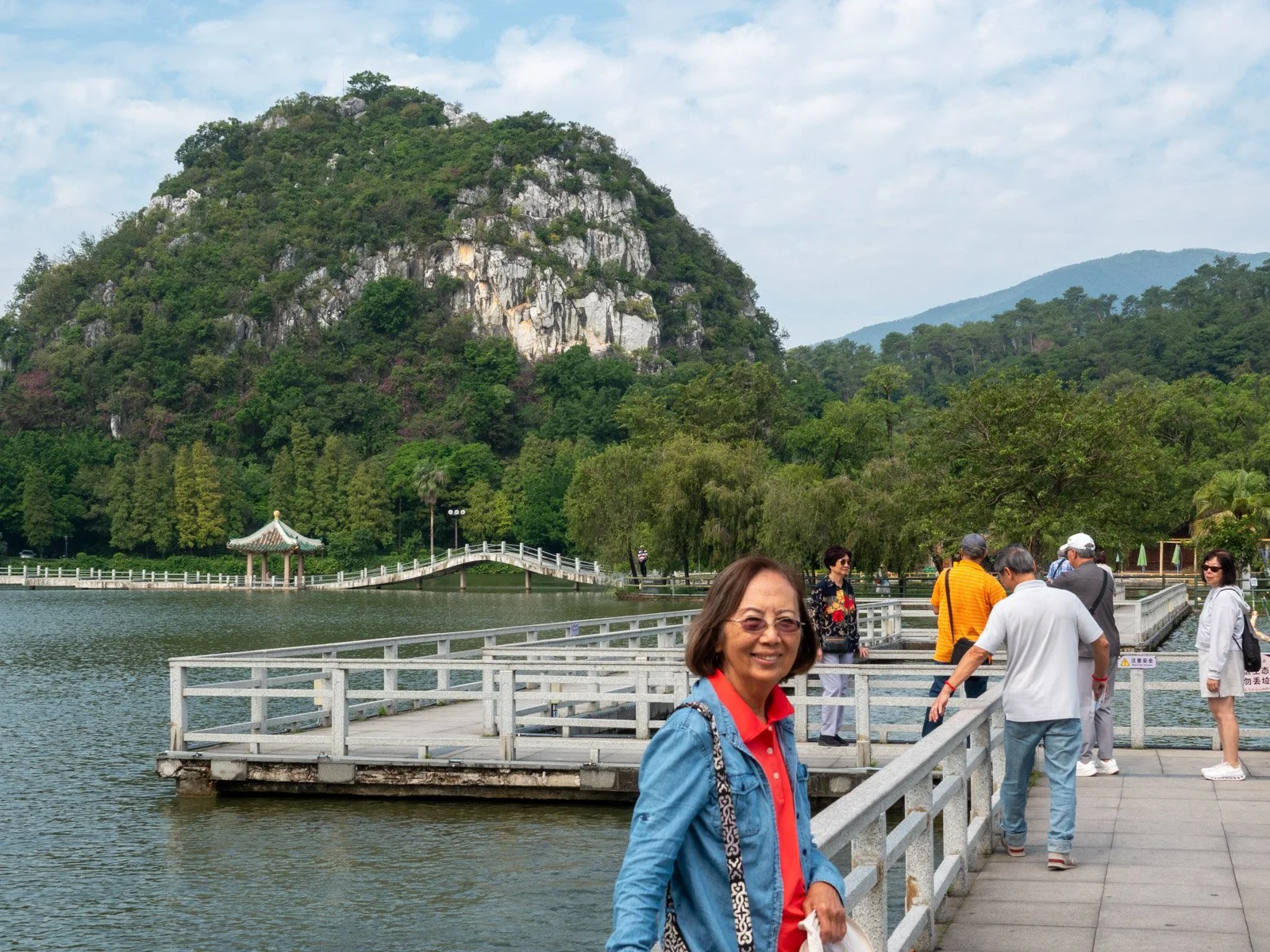
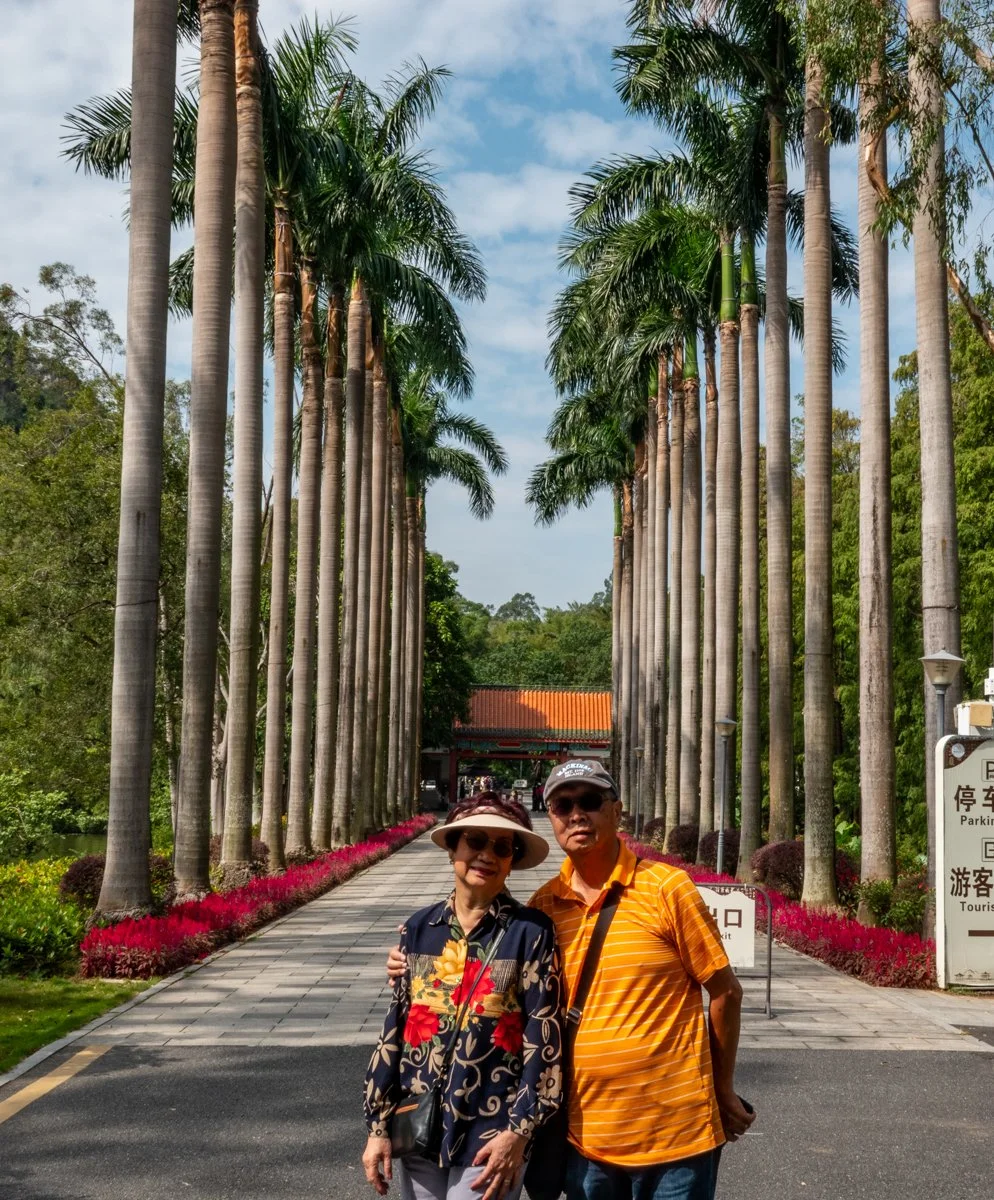
Return to Hong Kong
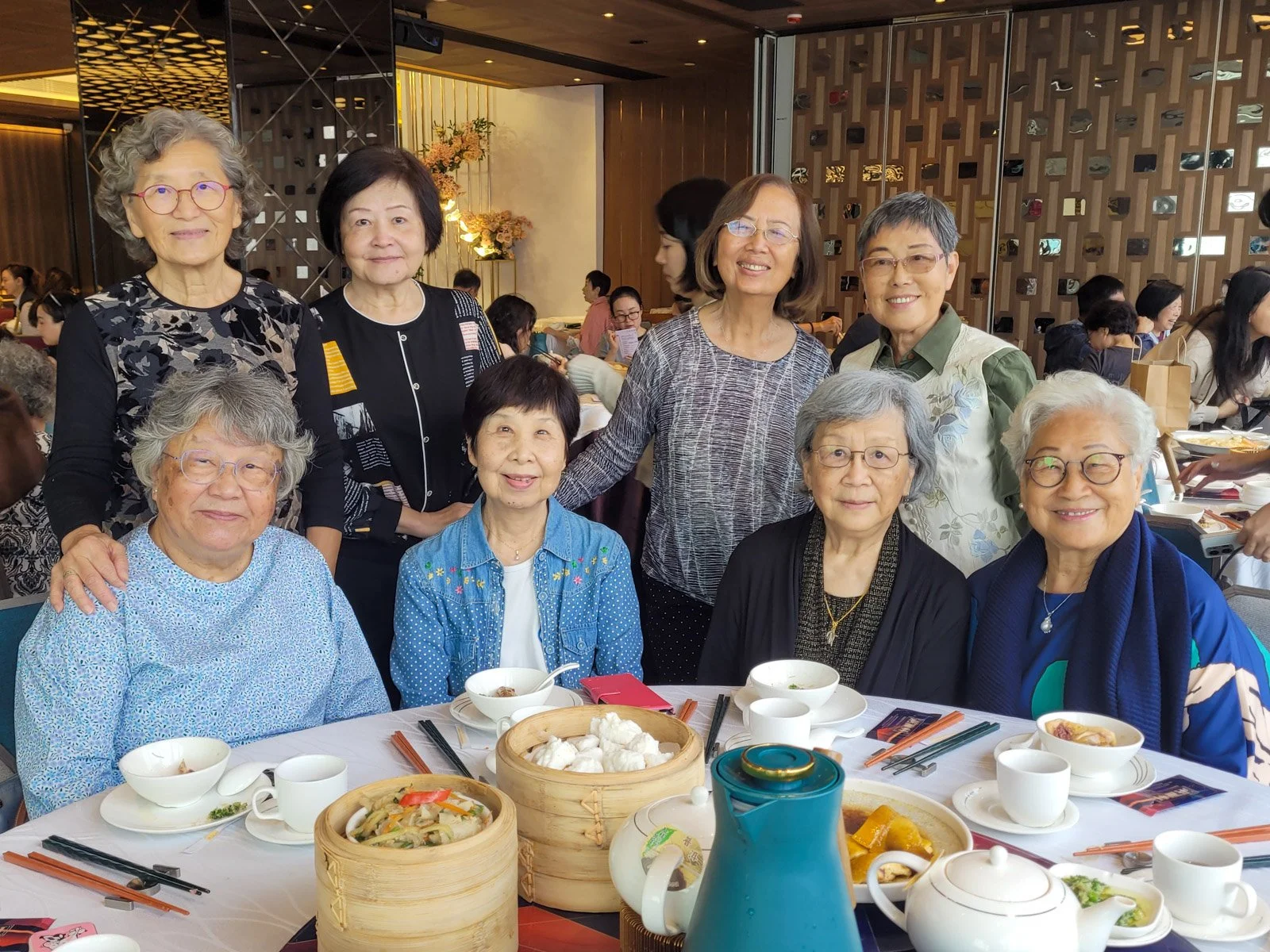
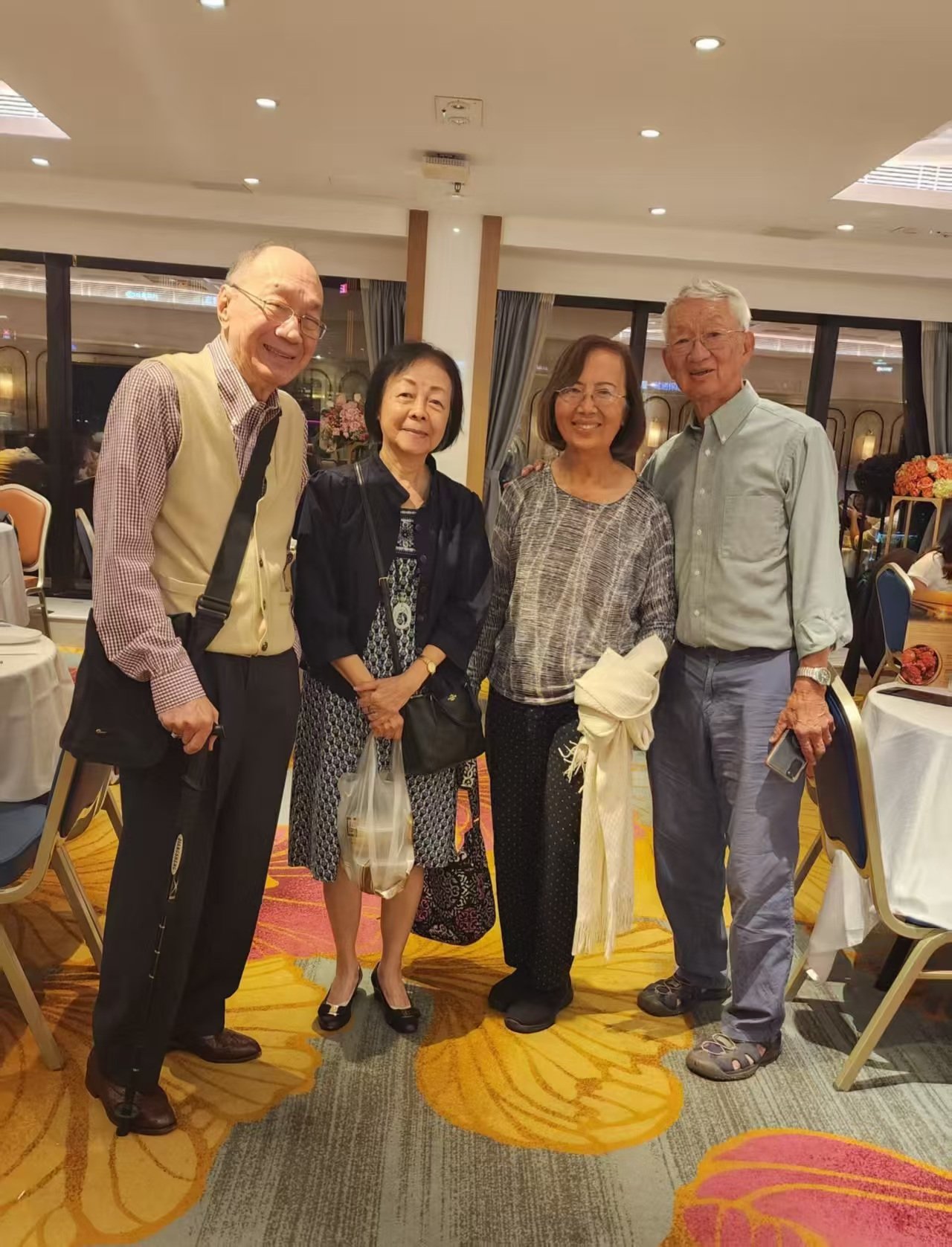
Lunch with some of Grace’s high school friends from over 60 years ago
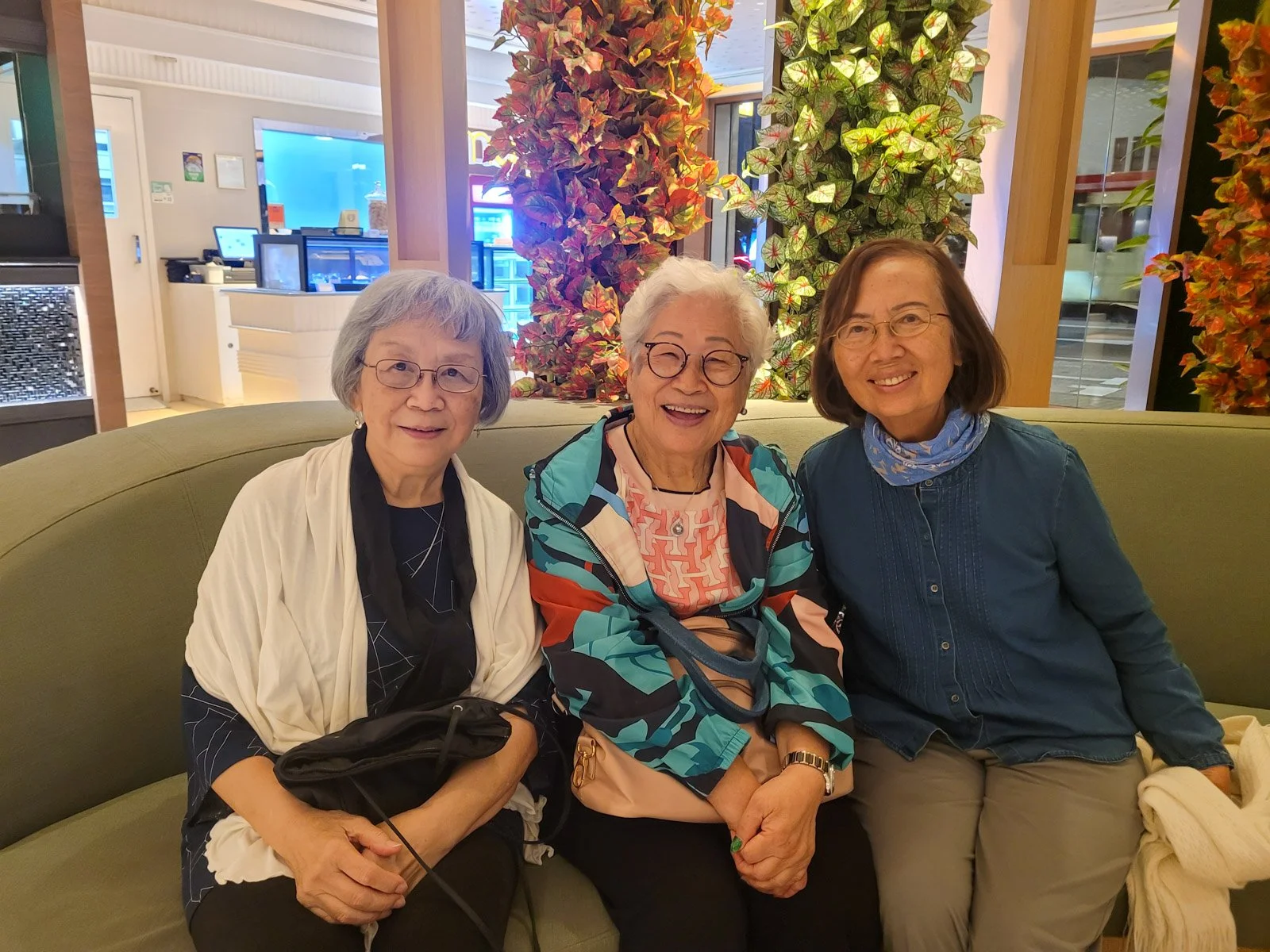
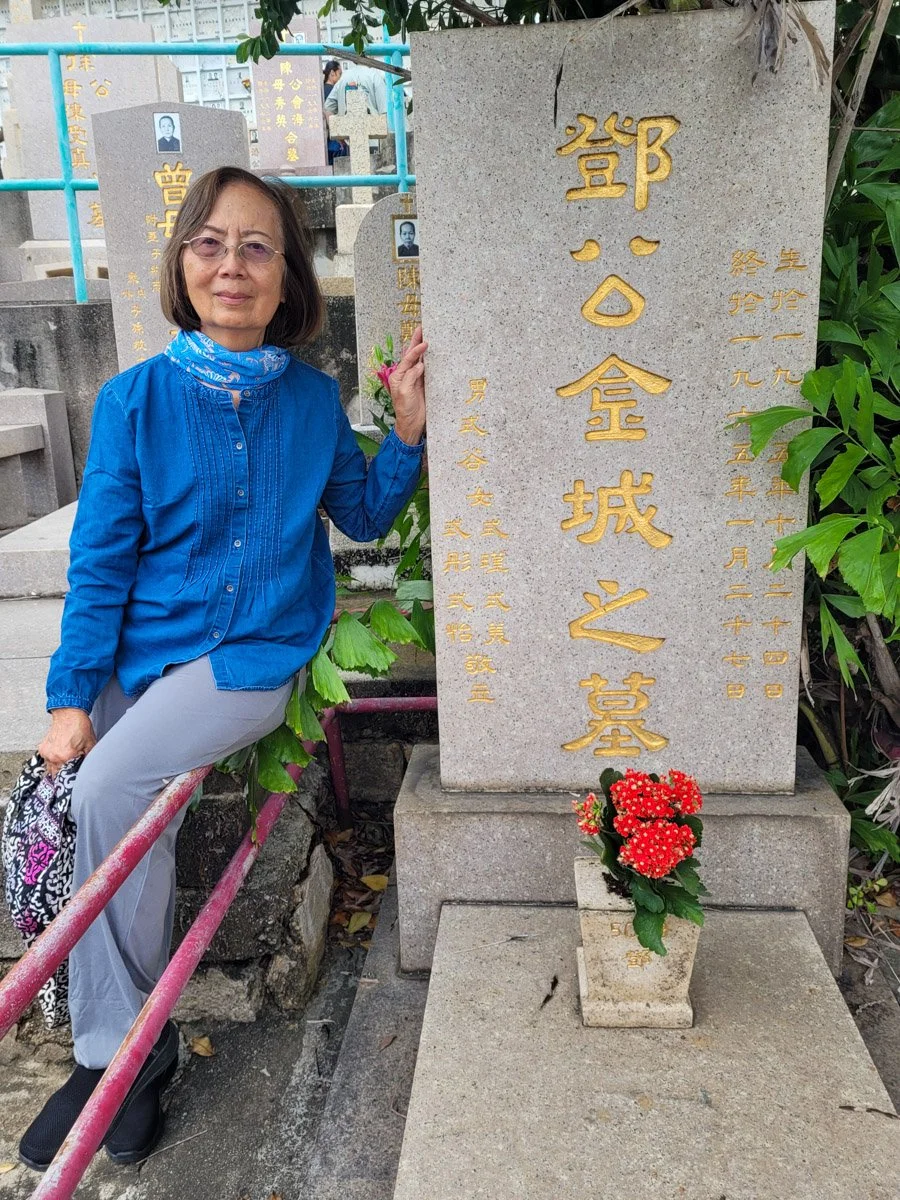
Paying respects to Grace’s father who passed away in 1963 when she was in college in the US
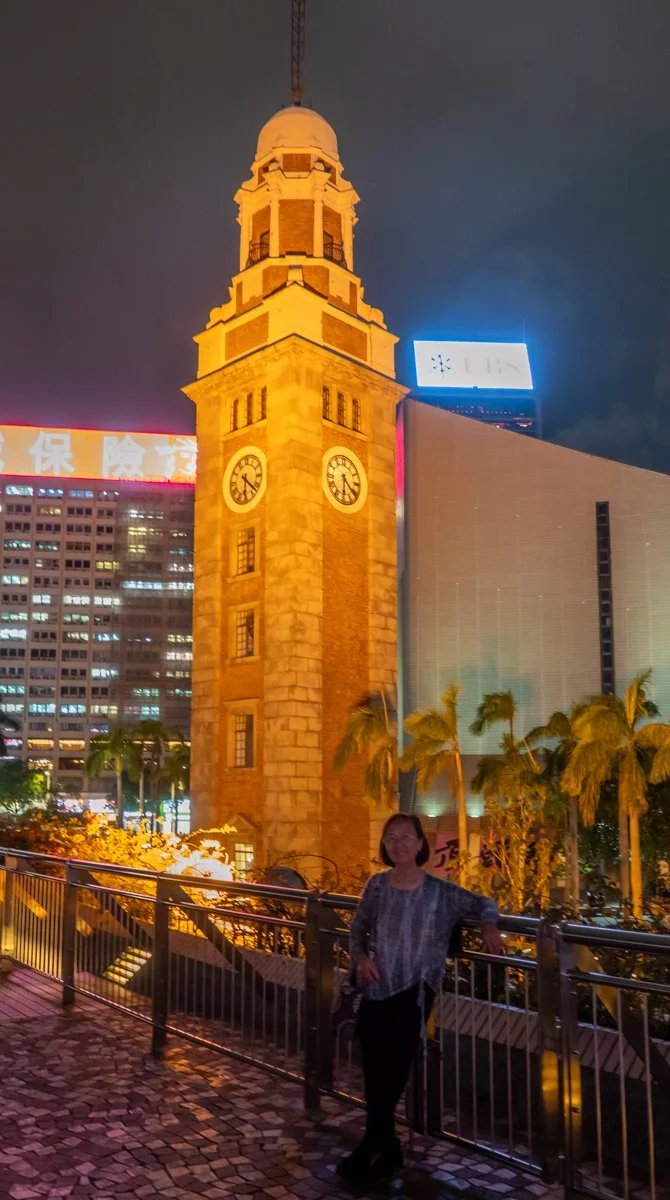
Clock Tower in Tsim Sha Tsui, a landmark that was formerly part of the Kowloon-Canton Railway
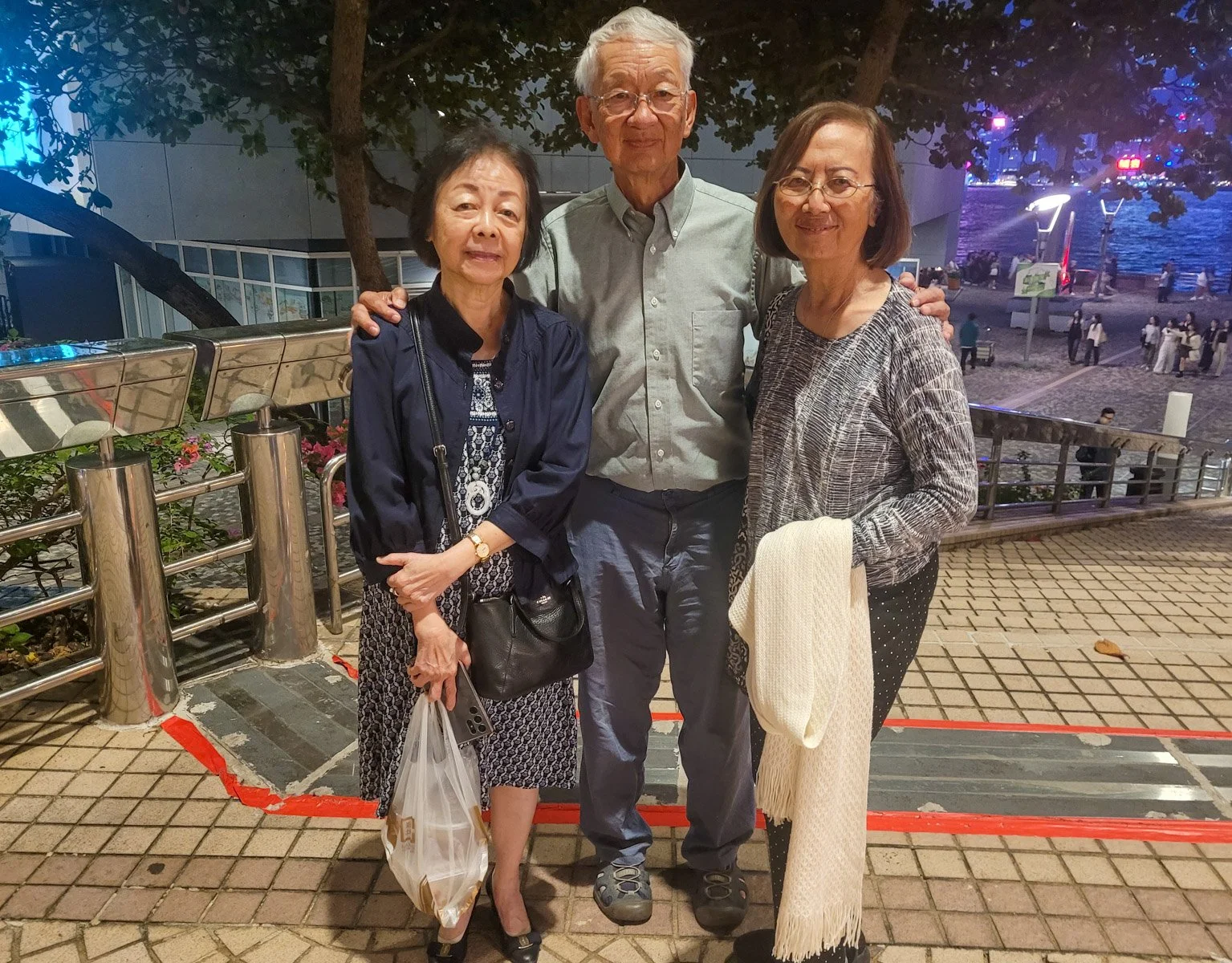
Dinner with an old graduate school classmate of Tom’s from the University of Michigan over 50 years ago