On safari with the grandkids
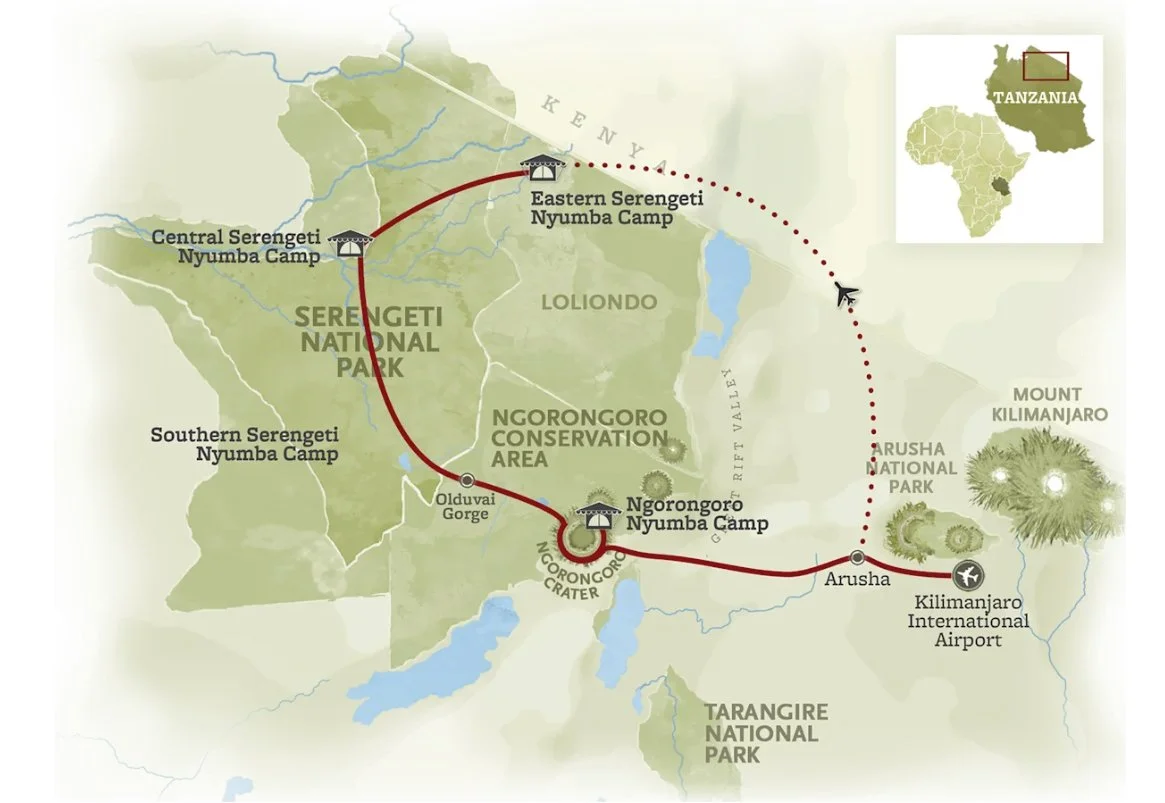
In August, 2026 I went with Eric, Jodi and their three boys (Josh, William and Michael) to an African safari in the Serengeti. We went with the Thomson Safari’s tour group on their Highlights of Tanzania Safari because it could accommodate the narrow time window in which all parties were free. As you can imagine, with three college and high school aged active boys, it was difficult to find a time for all to travel. We flew from St. Louis and NYC to Kilamanjaro where we were then bussed to Arusha to start the trip. The next morning we flew to the Eastern Serengeti Nyumba camp.
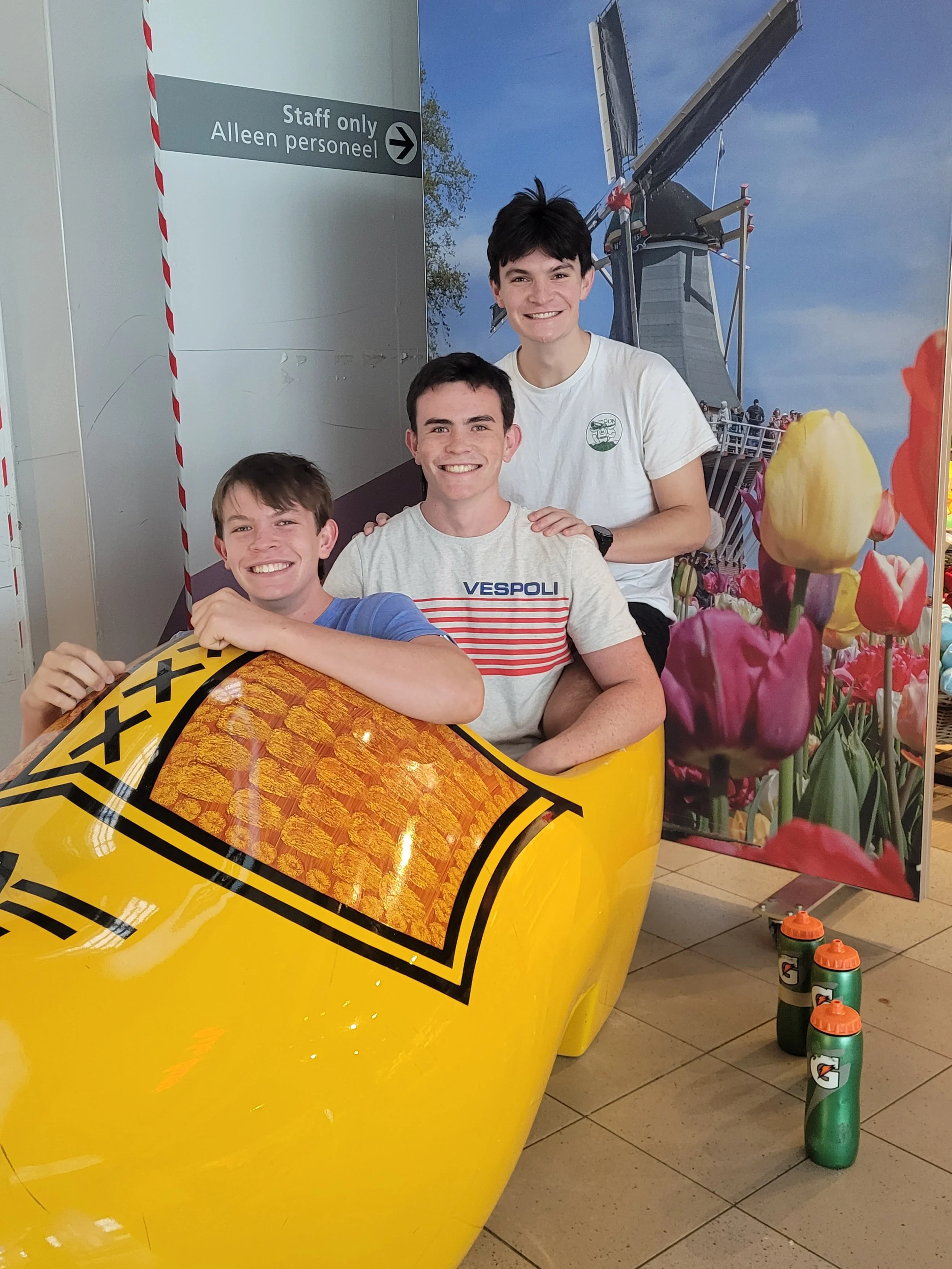
At Schiphol Airport
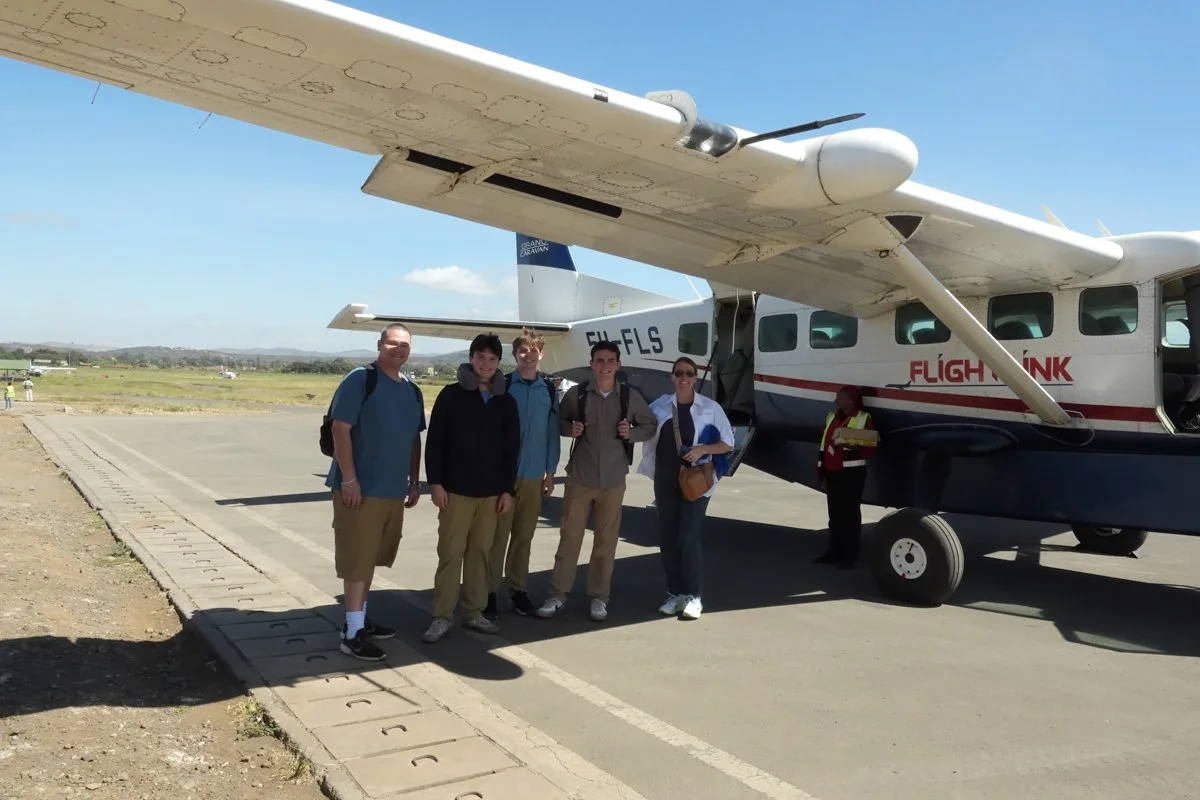
Getting ready to fly to the Eastern Serengeti camp
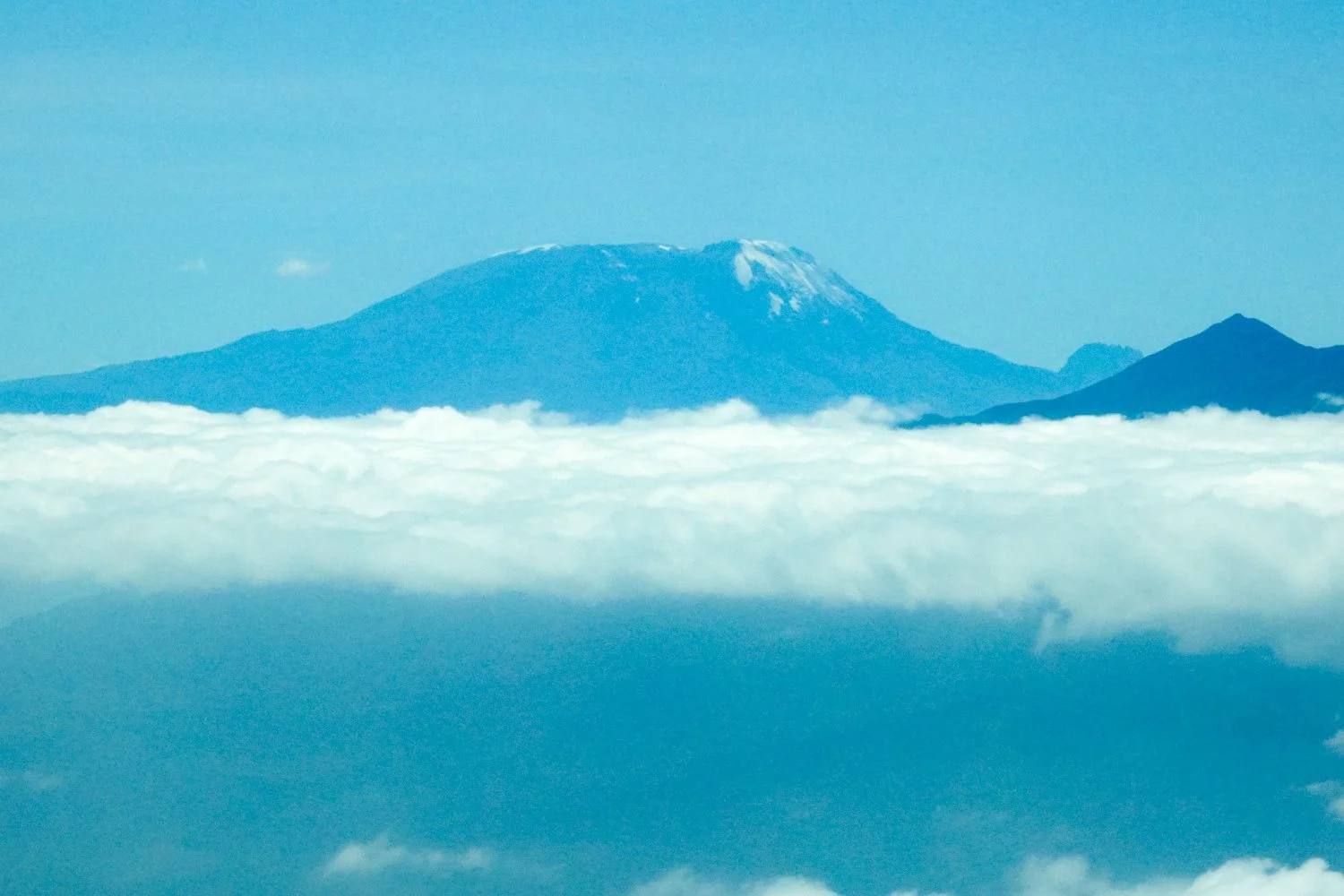
Our only sighting of Mt. Kilamanjaro was from the airplane
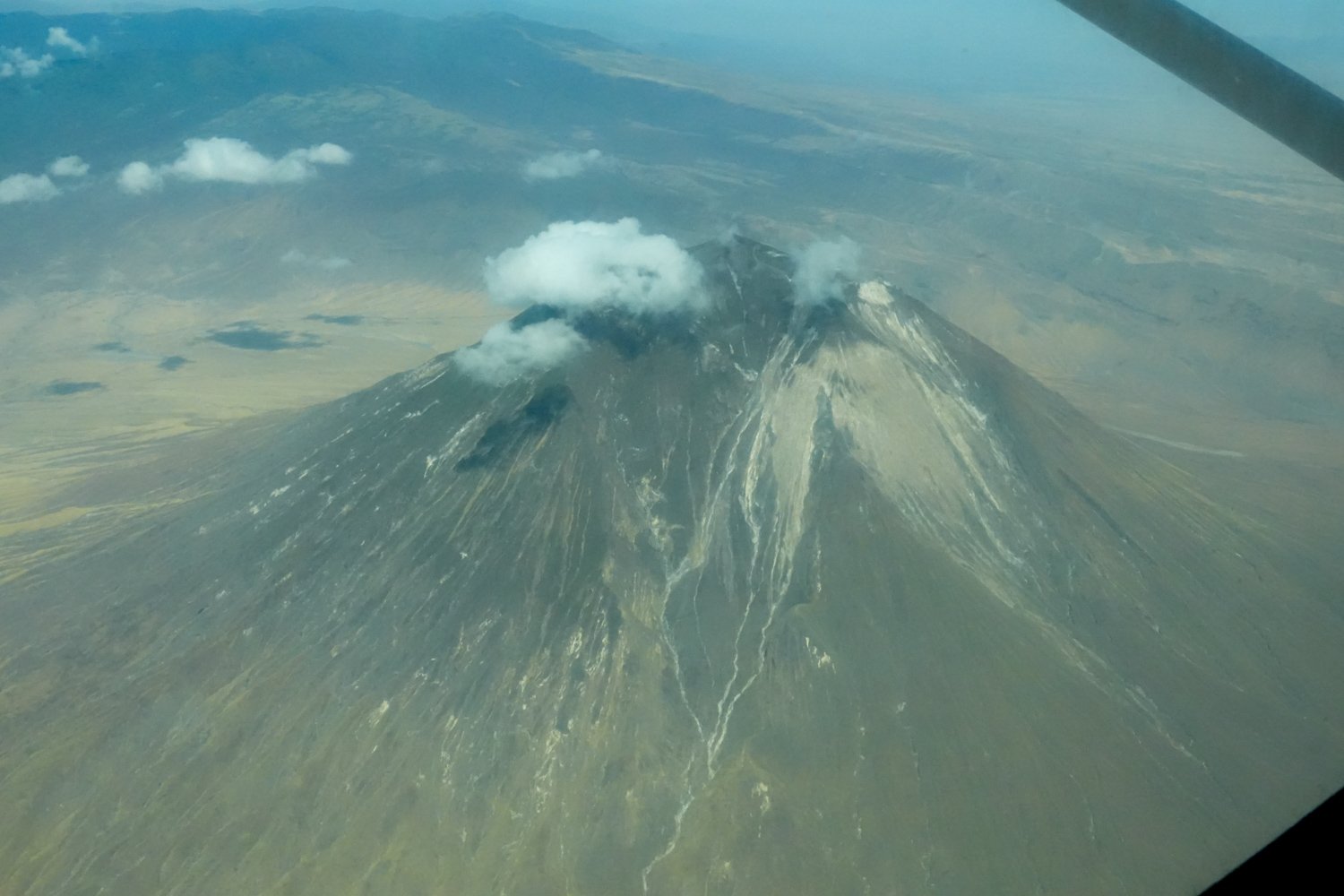
From the airplane, a view of the Mountain of God, an active volcano
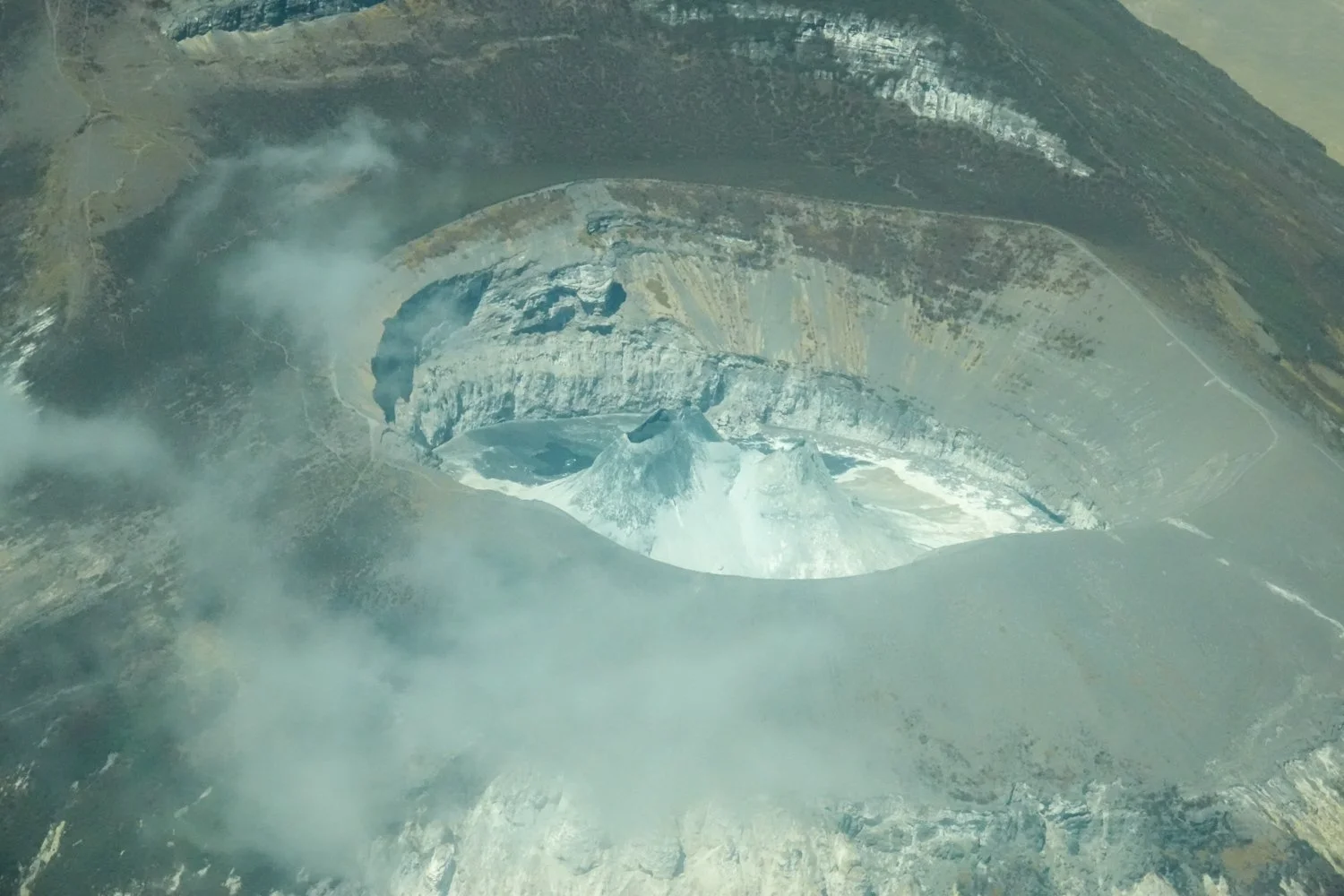
The crater of the Mountain of God
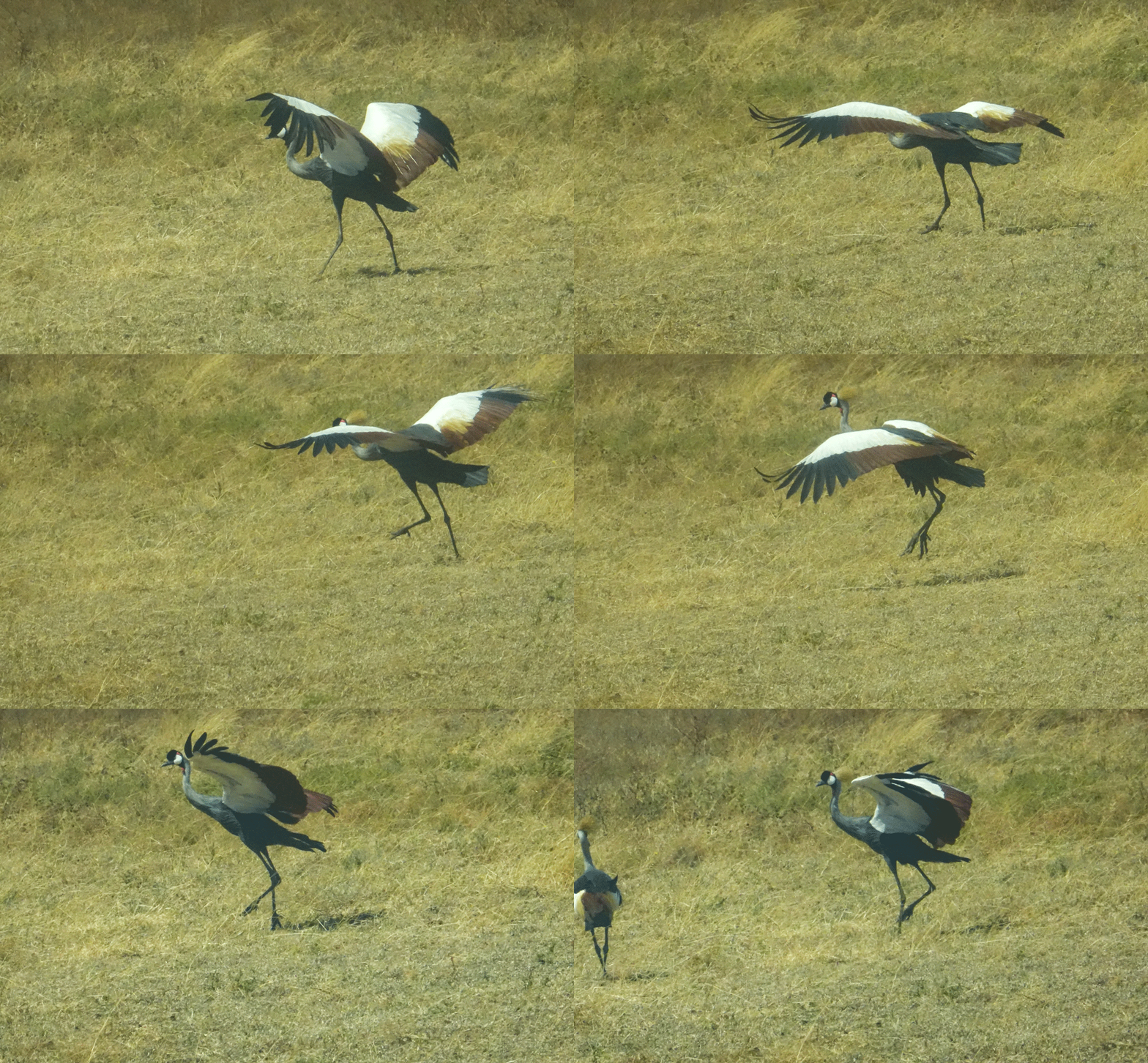
We were greeted at the airport by a dancing crowned crane.
Eastern Serengeti Nyumba Camp
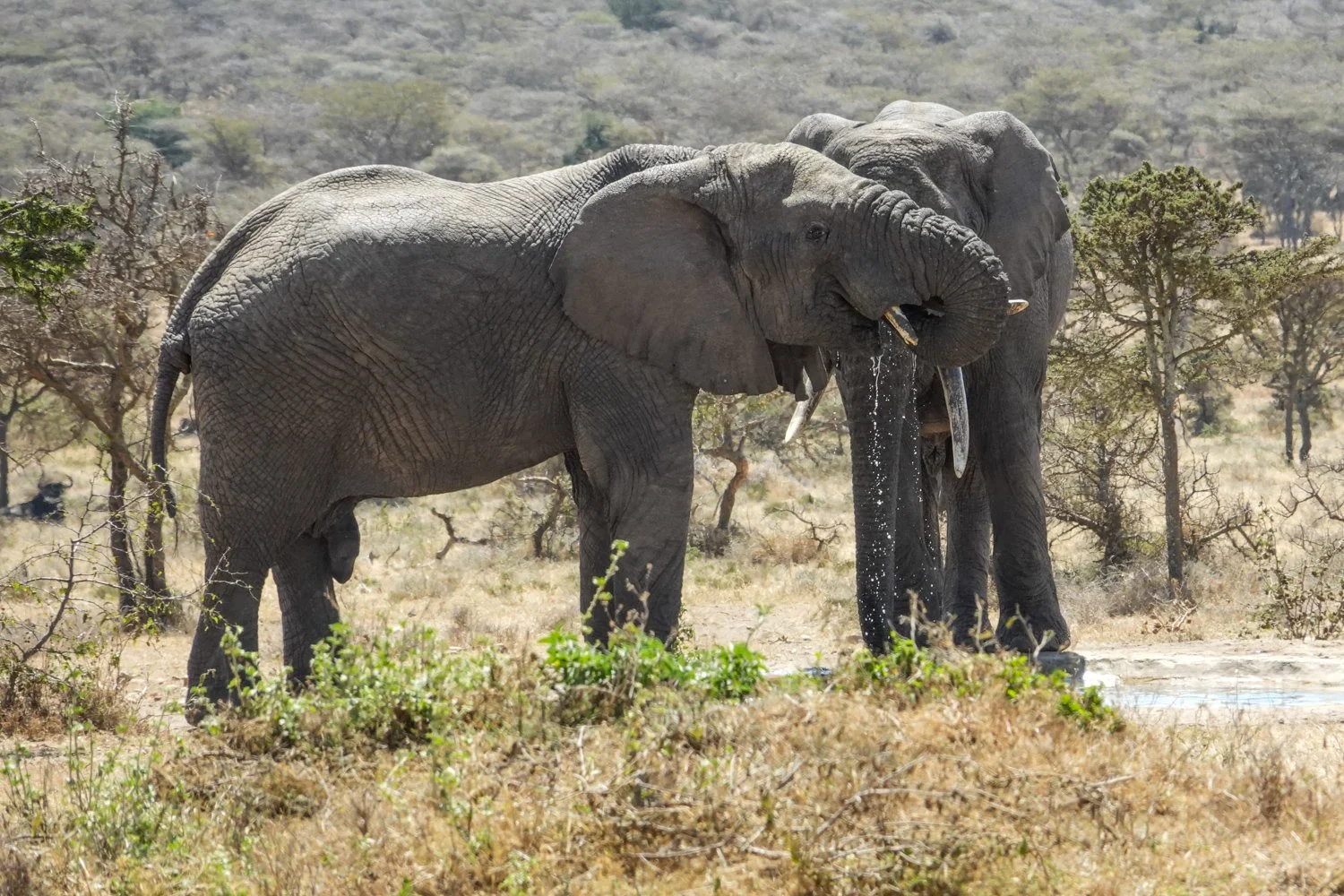
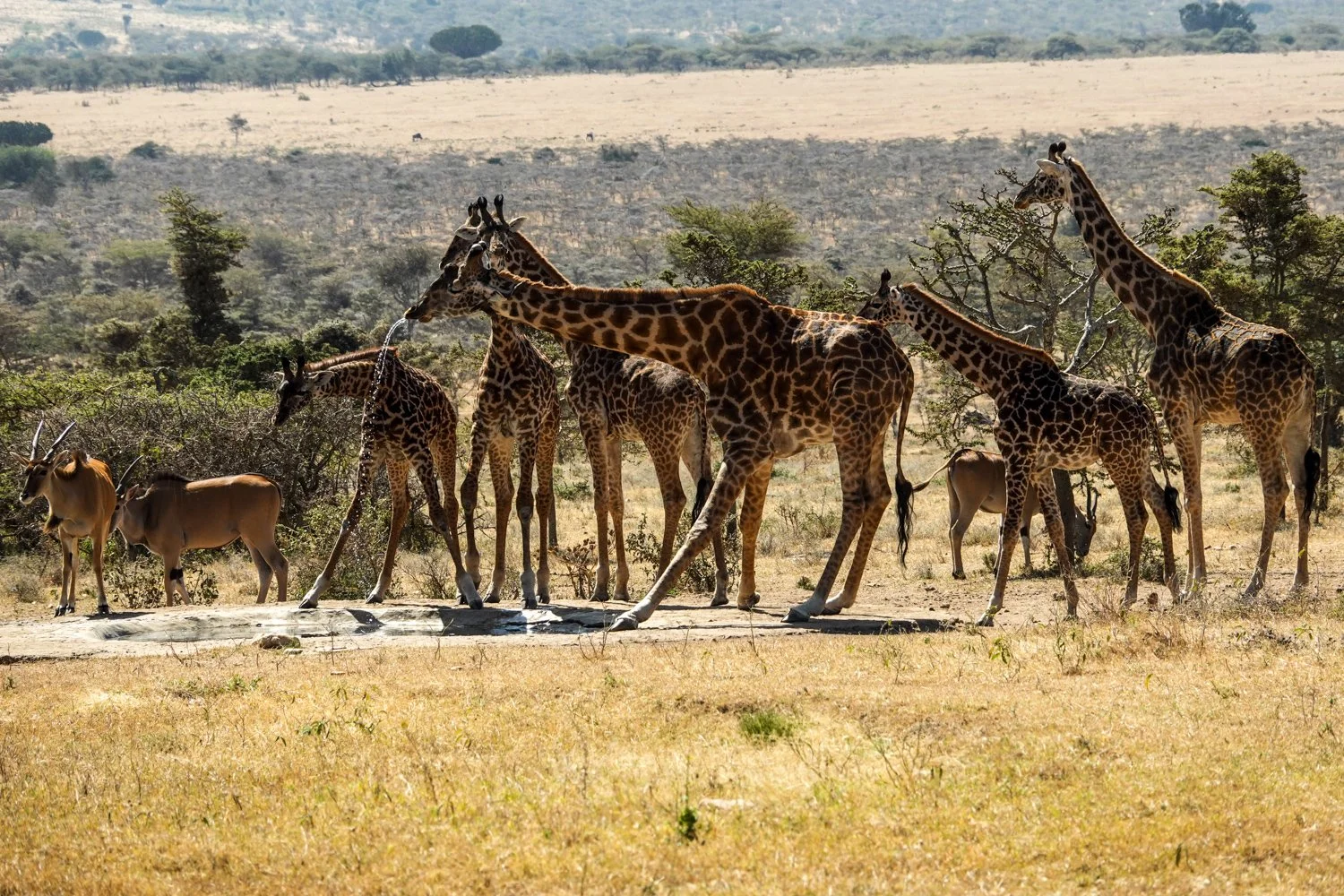
This camp is not in the Serengeti National Park, but in a private 10,000 acre Thomson reserve. Since it isn’t in the national park, there were several unusual aspects to this stay. First, there was a man-made waterhole just outside the main entrance in easy view of the camp which was frequented by many animals. Second, some of the rules of the national park were circumvented. For example, we had guided walking tours and also walked across the plains for a picnic and sight seeing, something that does not happen in the national park where the first rule is that you have to stay in the jeep. We also were taken on a night tour, which is also unusual. In retrospect, it seems like there must not be any big cats in the private reserve, as we did not see any until we entered the national park.. This may explain why the waterhole was so popular.
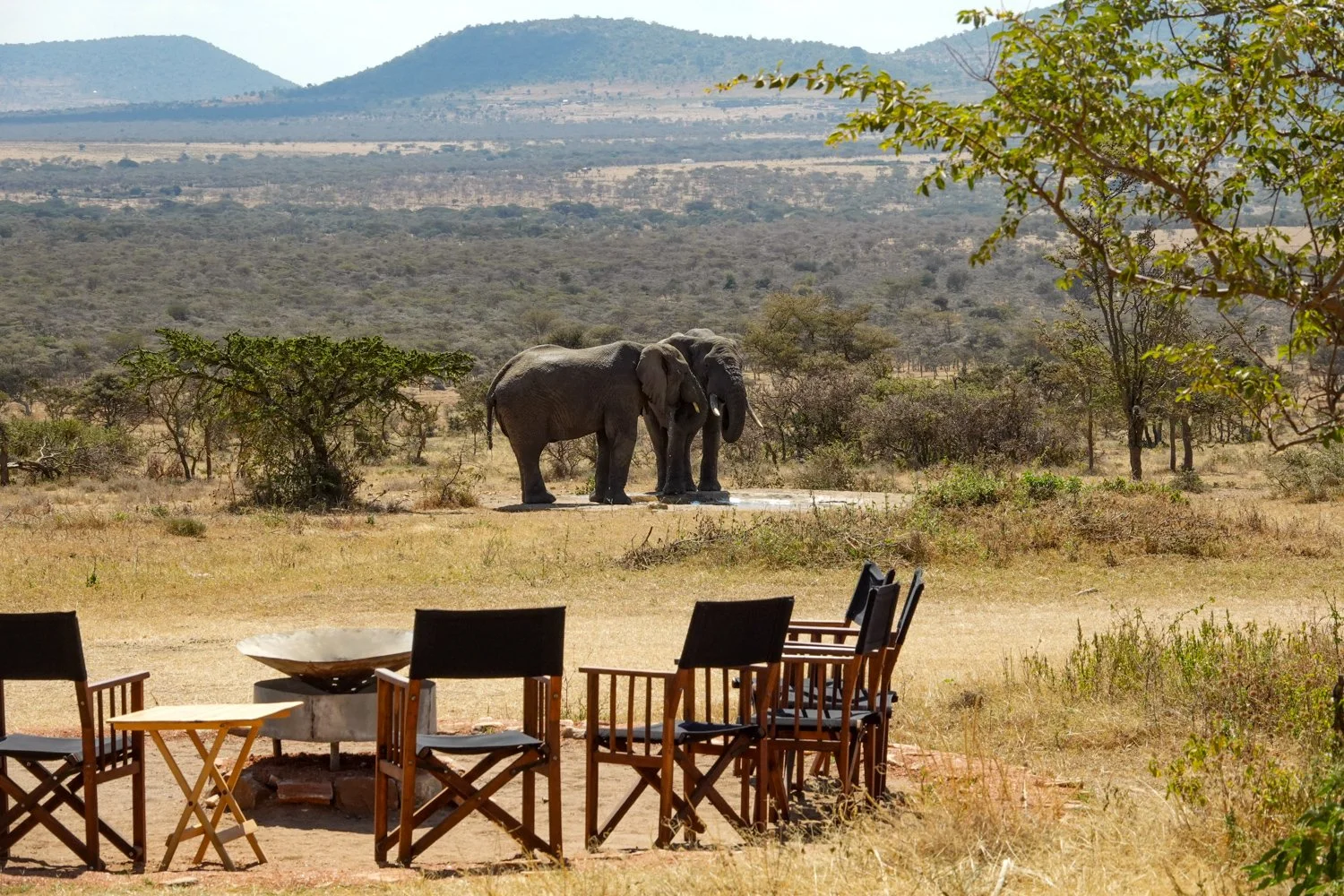
The safari camp had a watering hole just outside the entrance.
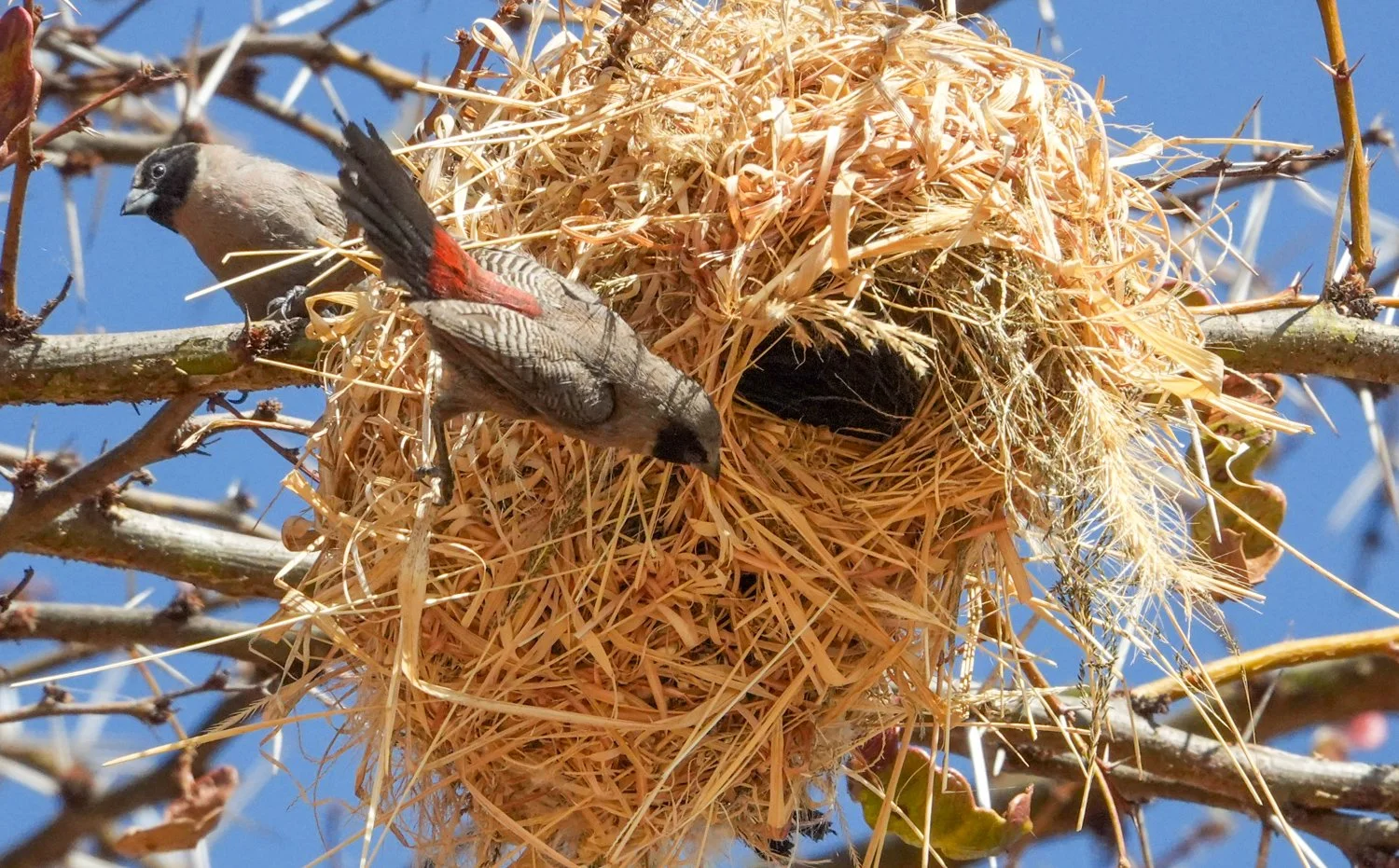
Black-faced waxbill with its elaborate nest.
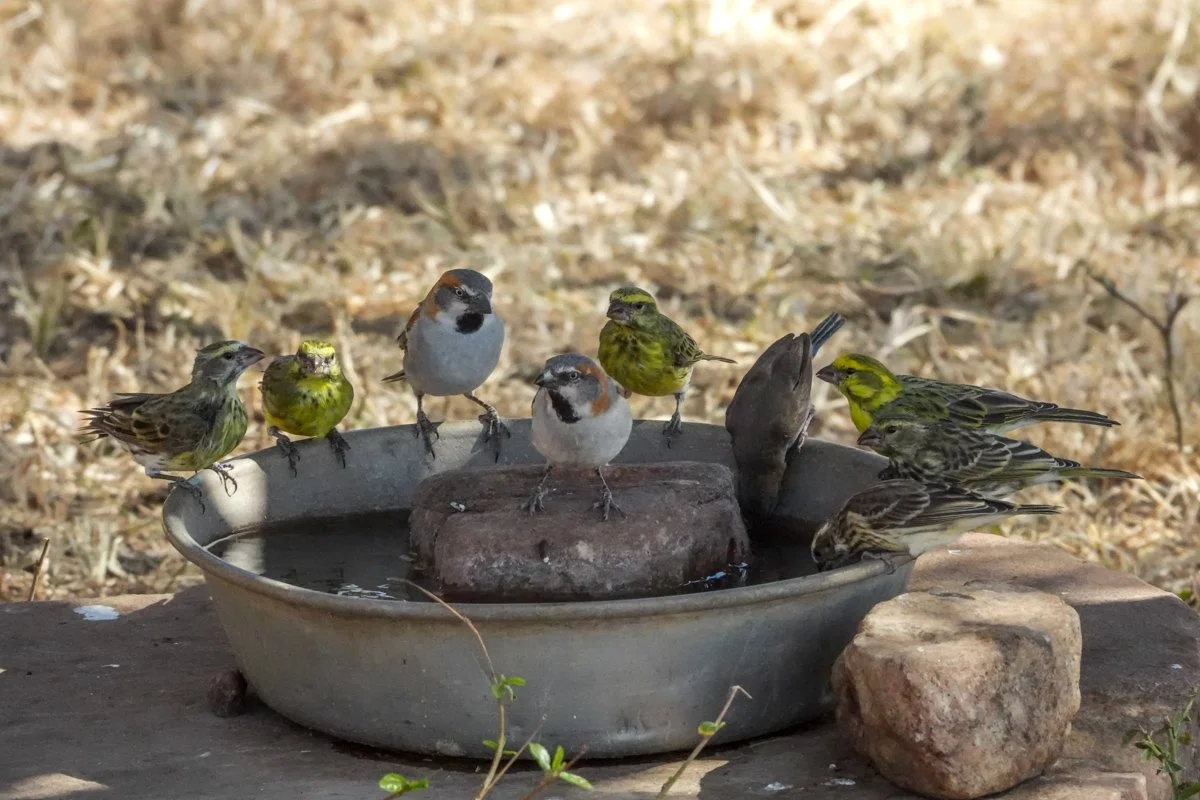
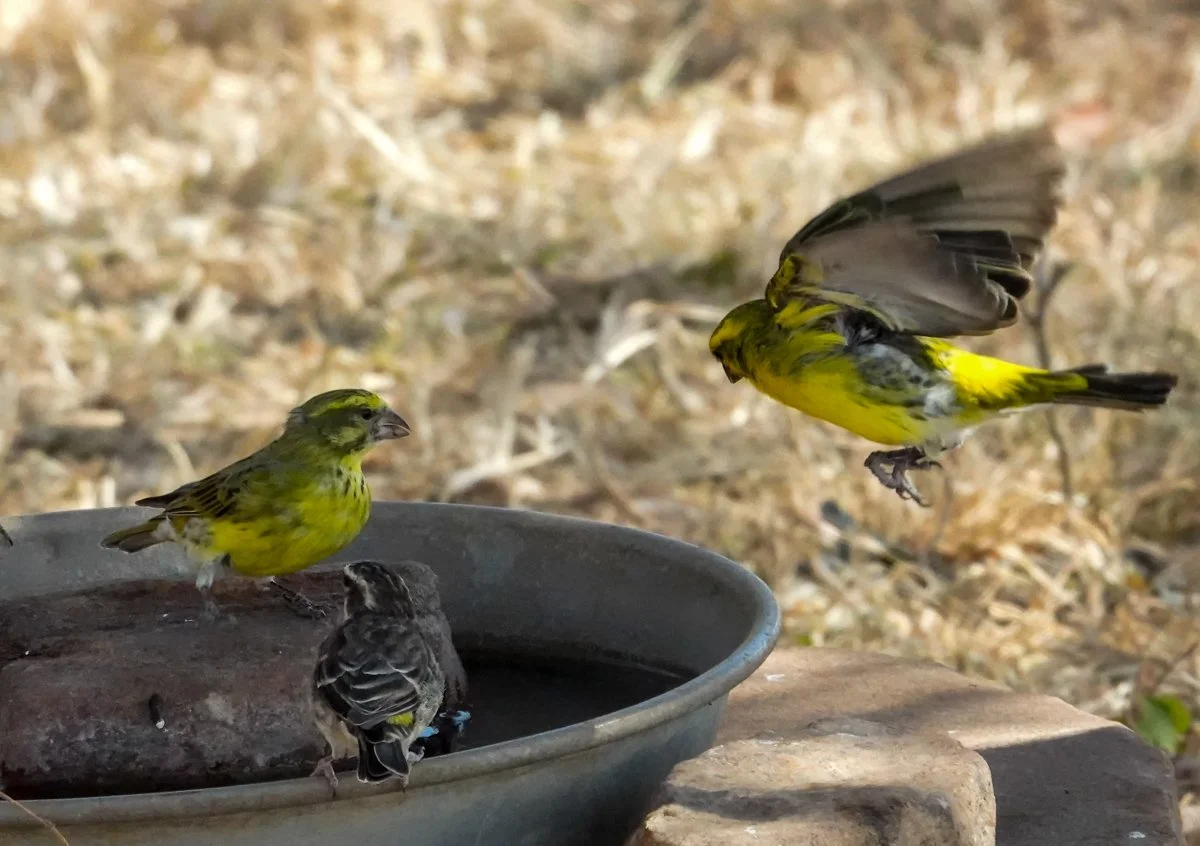
Yellow-fronted canaries at the bird bath
Masai Mara
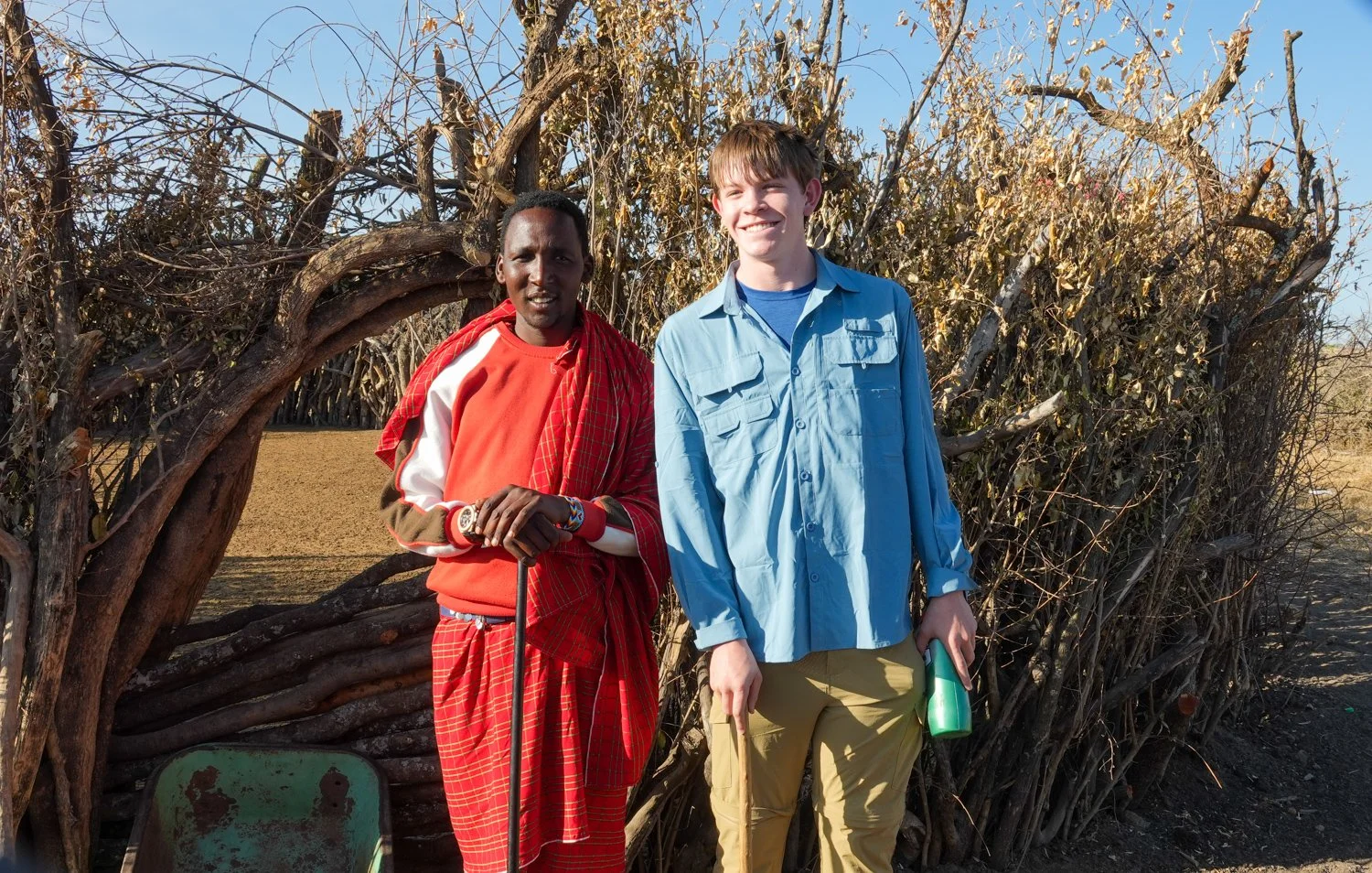
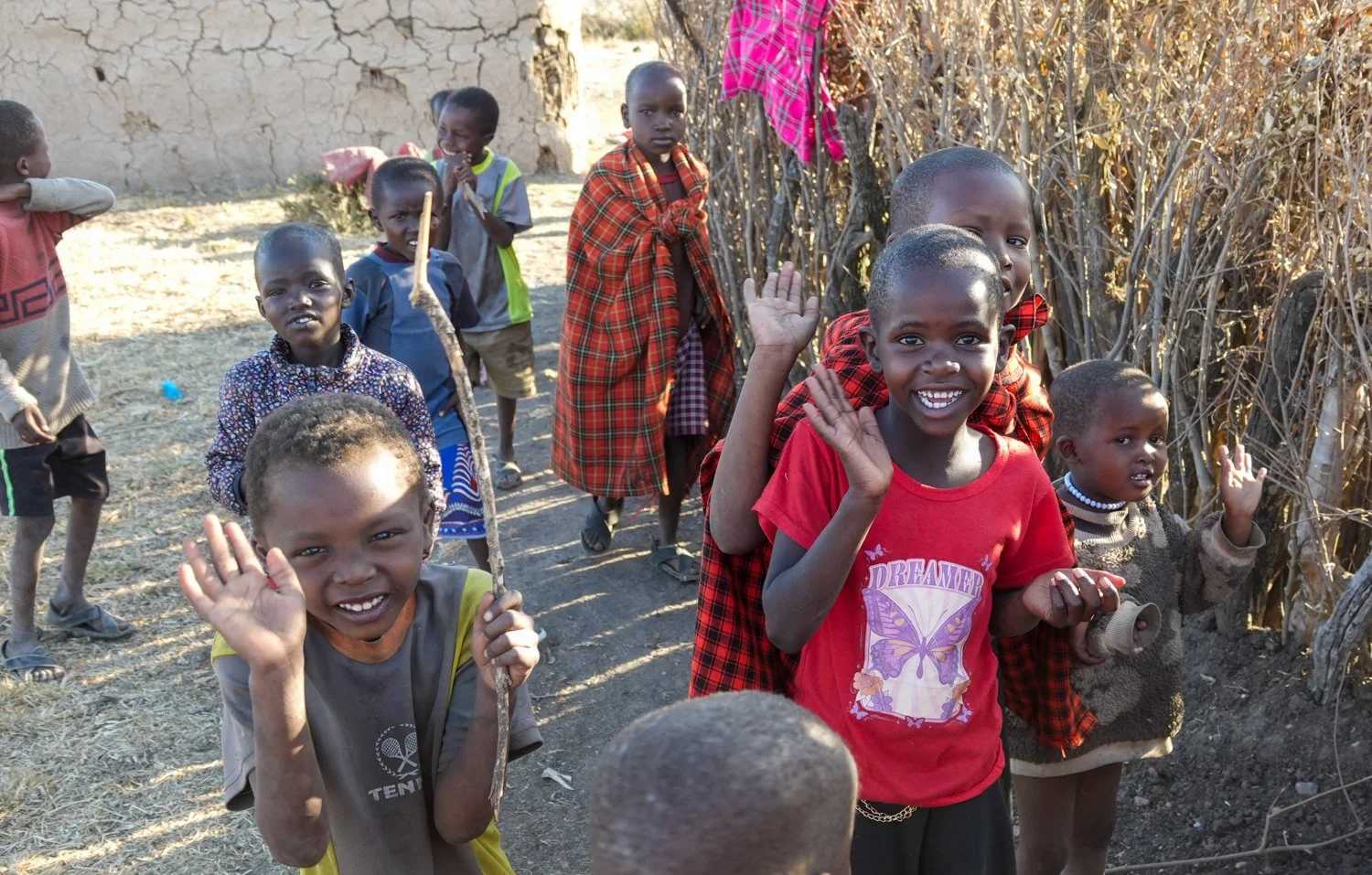
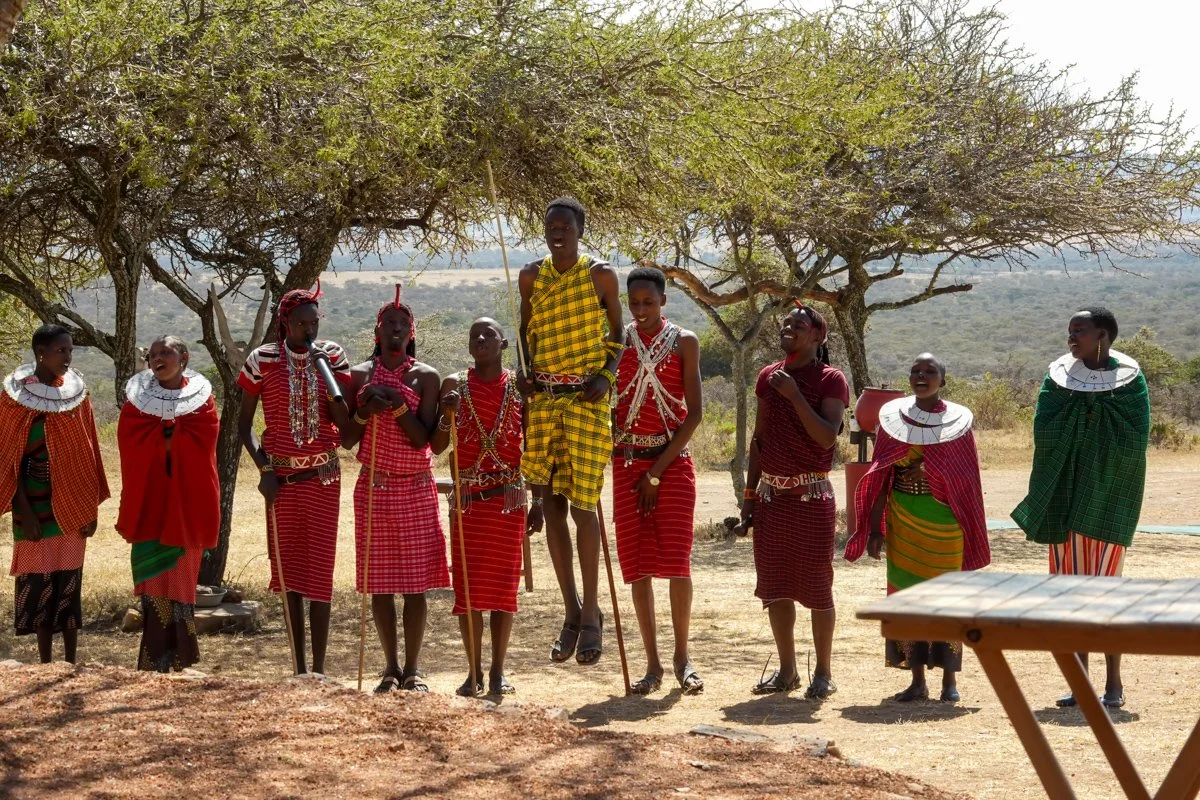
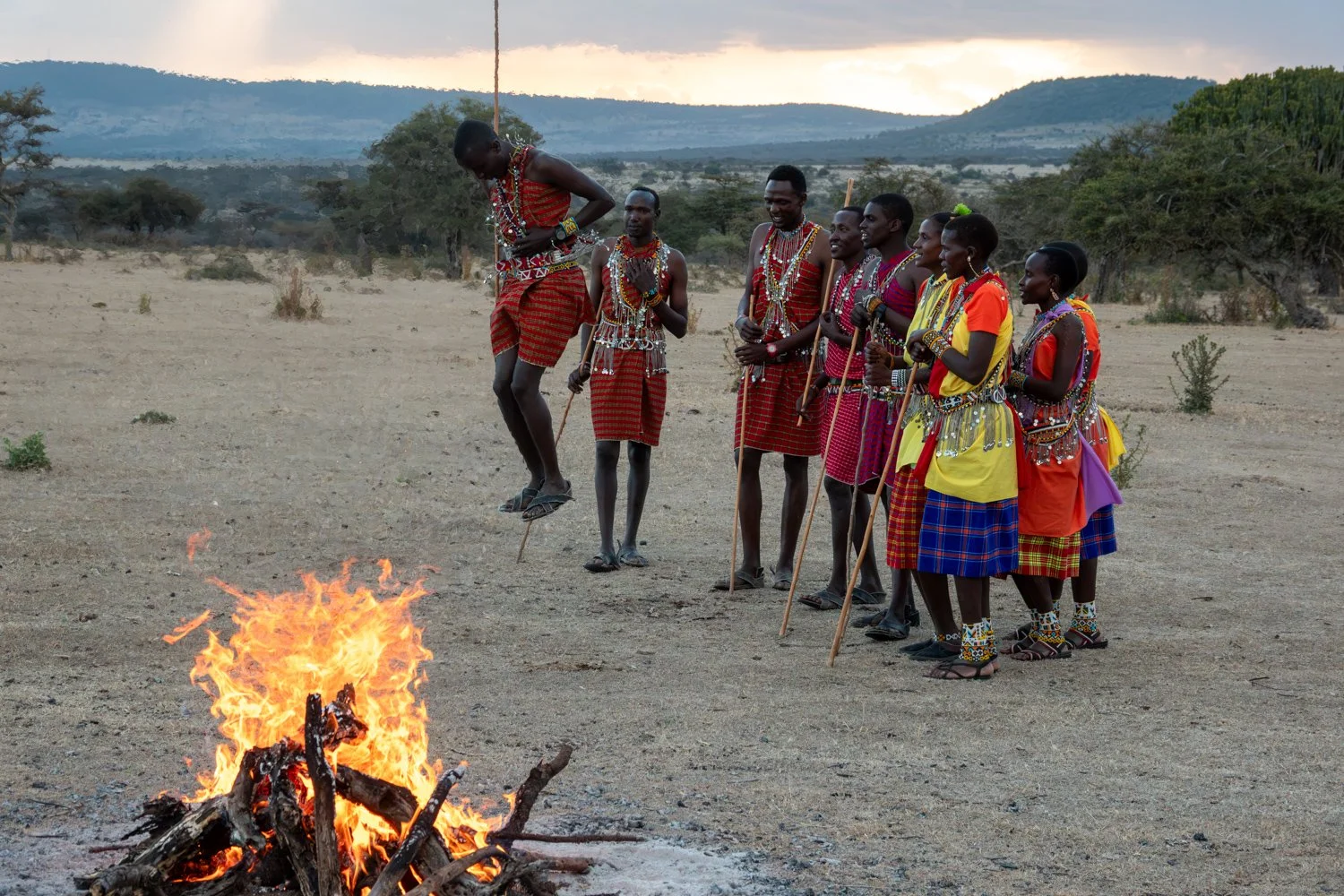
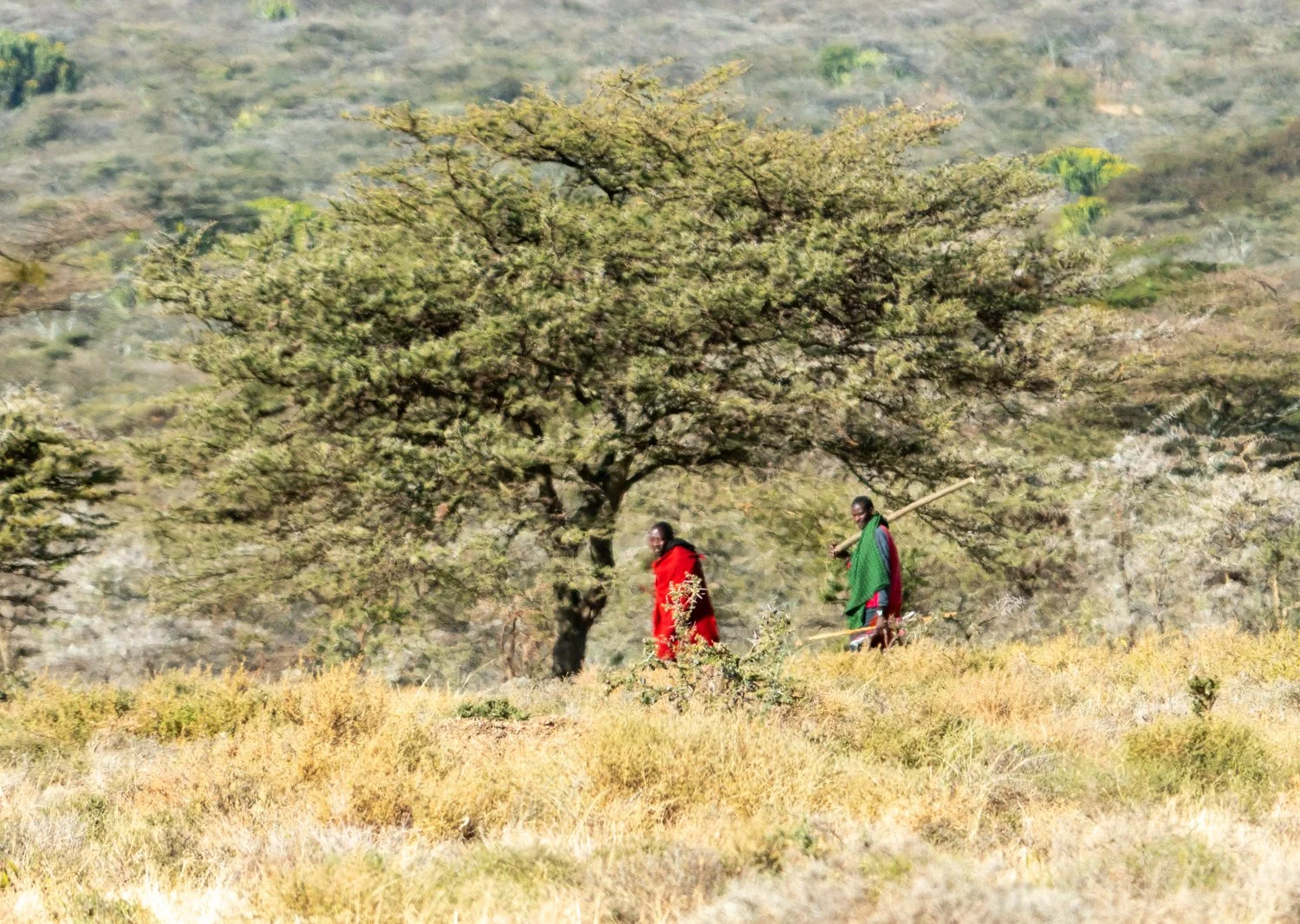
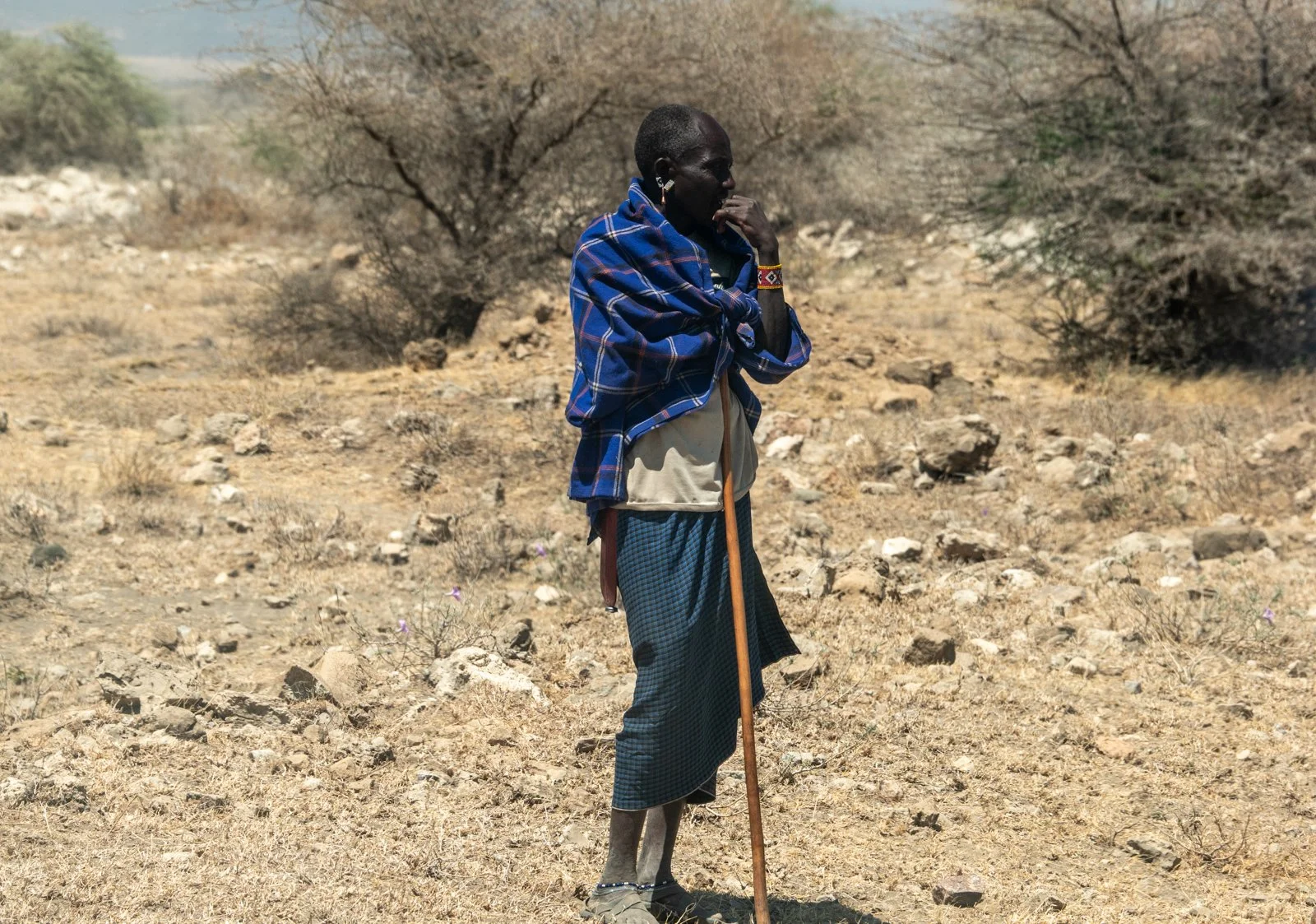
We had several interactions with the local Massi Mara indiginous people. We visited one man’s home which had about 15 people with several wives and many kids. We also had several demonstrations of Masai dancing and leaping and singing. And there was a rather awkward crafts sale in which about 20 women came and put out their various hand crafted gifts for us to buy.
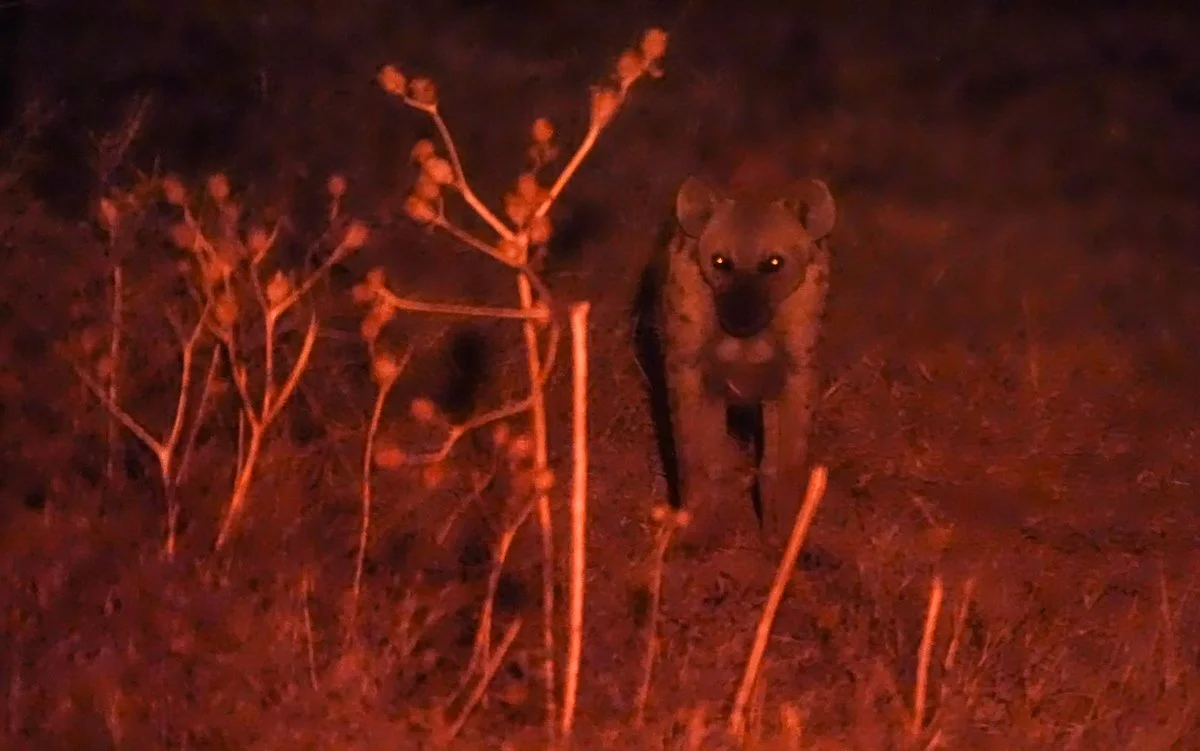
A hyena encountered on the night drive
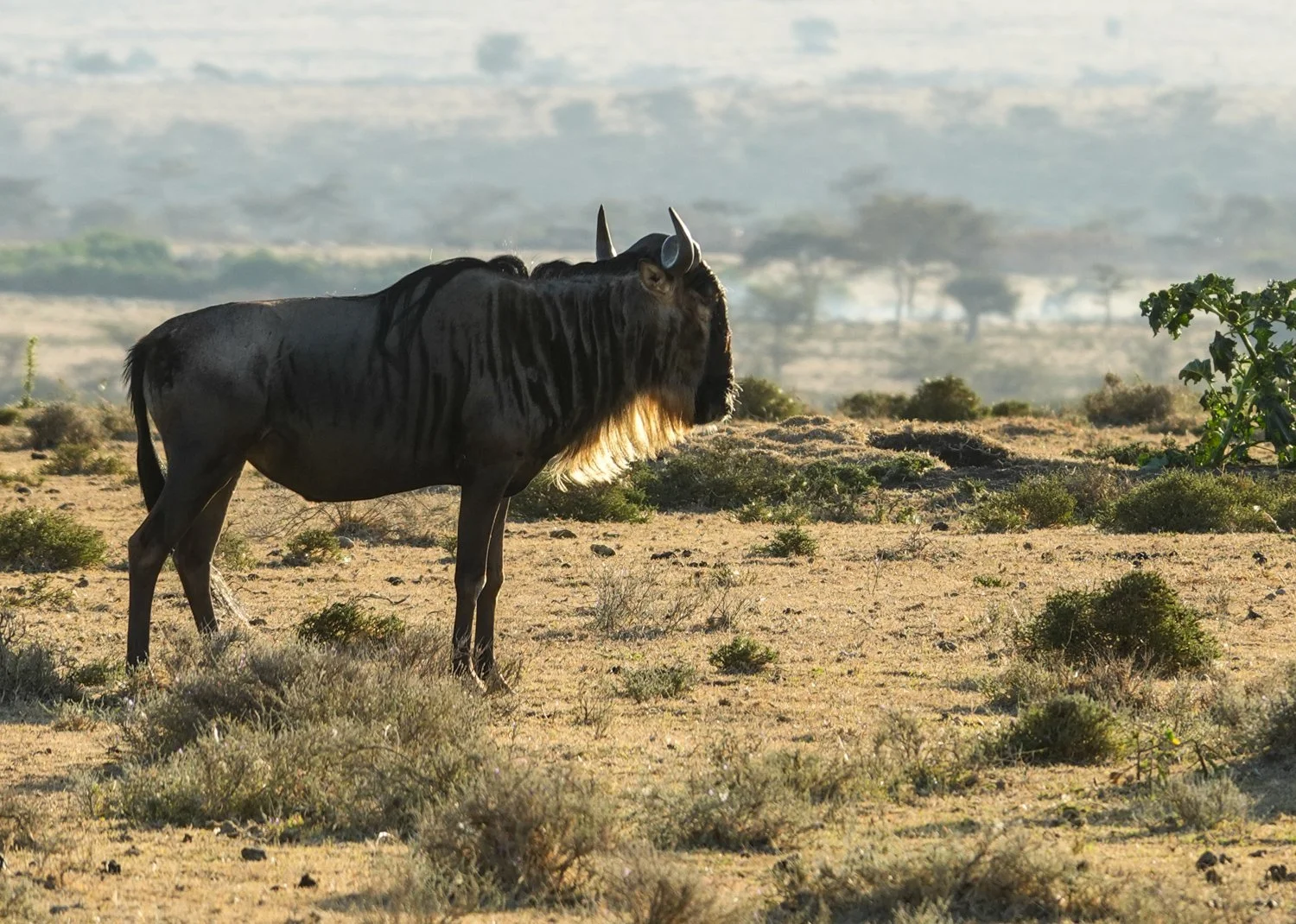
Wildebeest
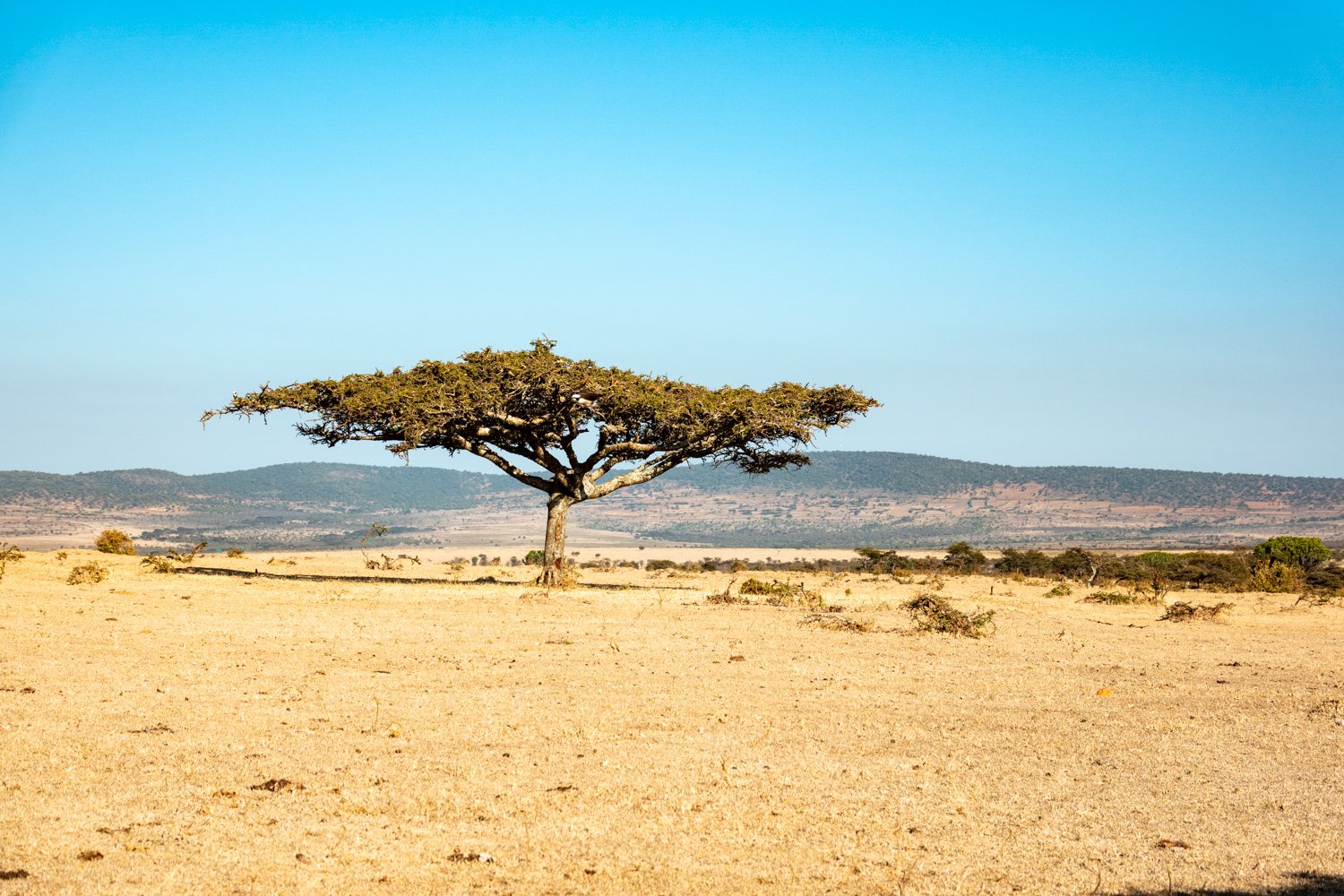
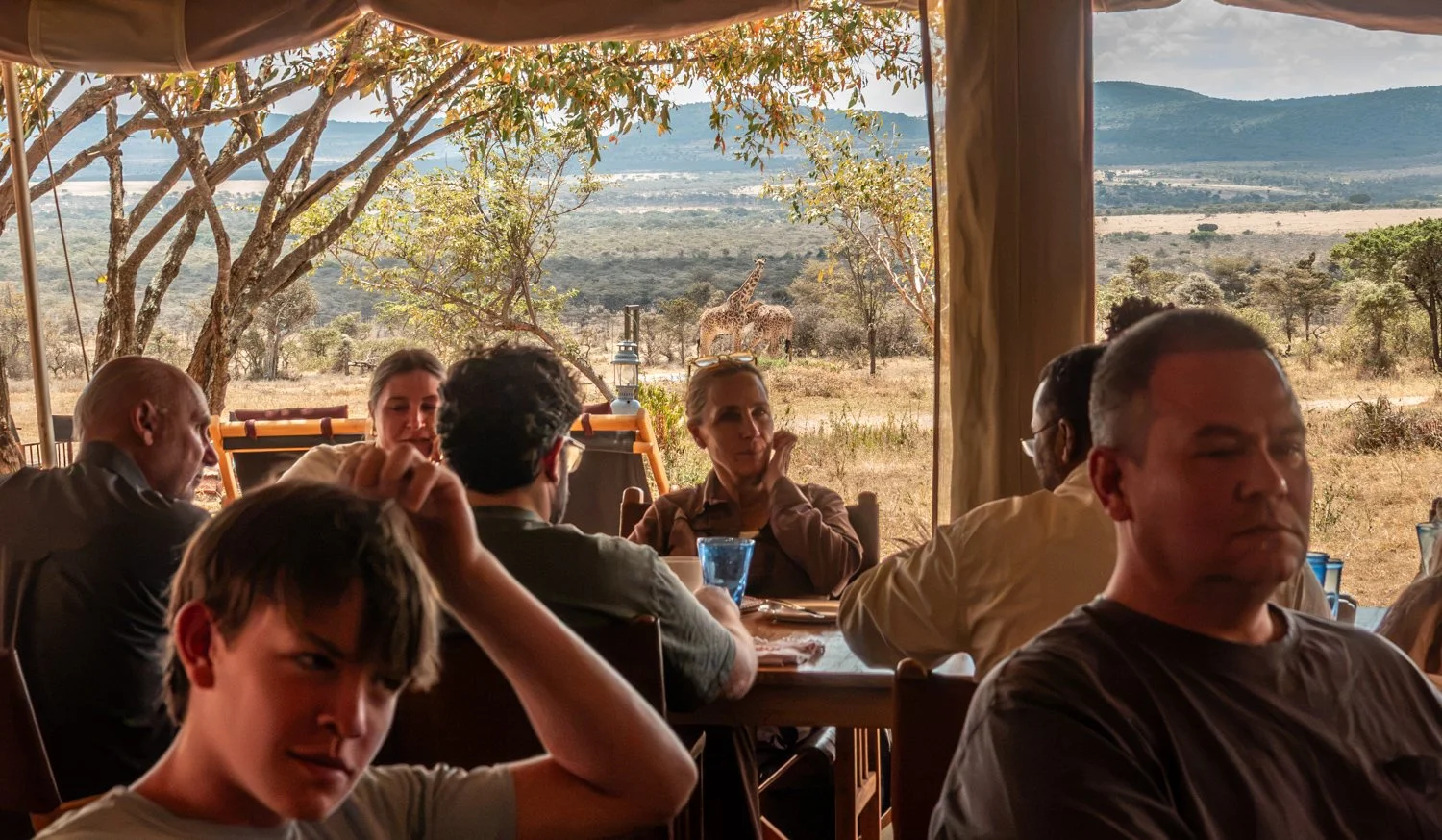
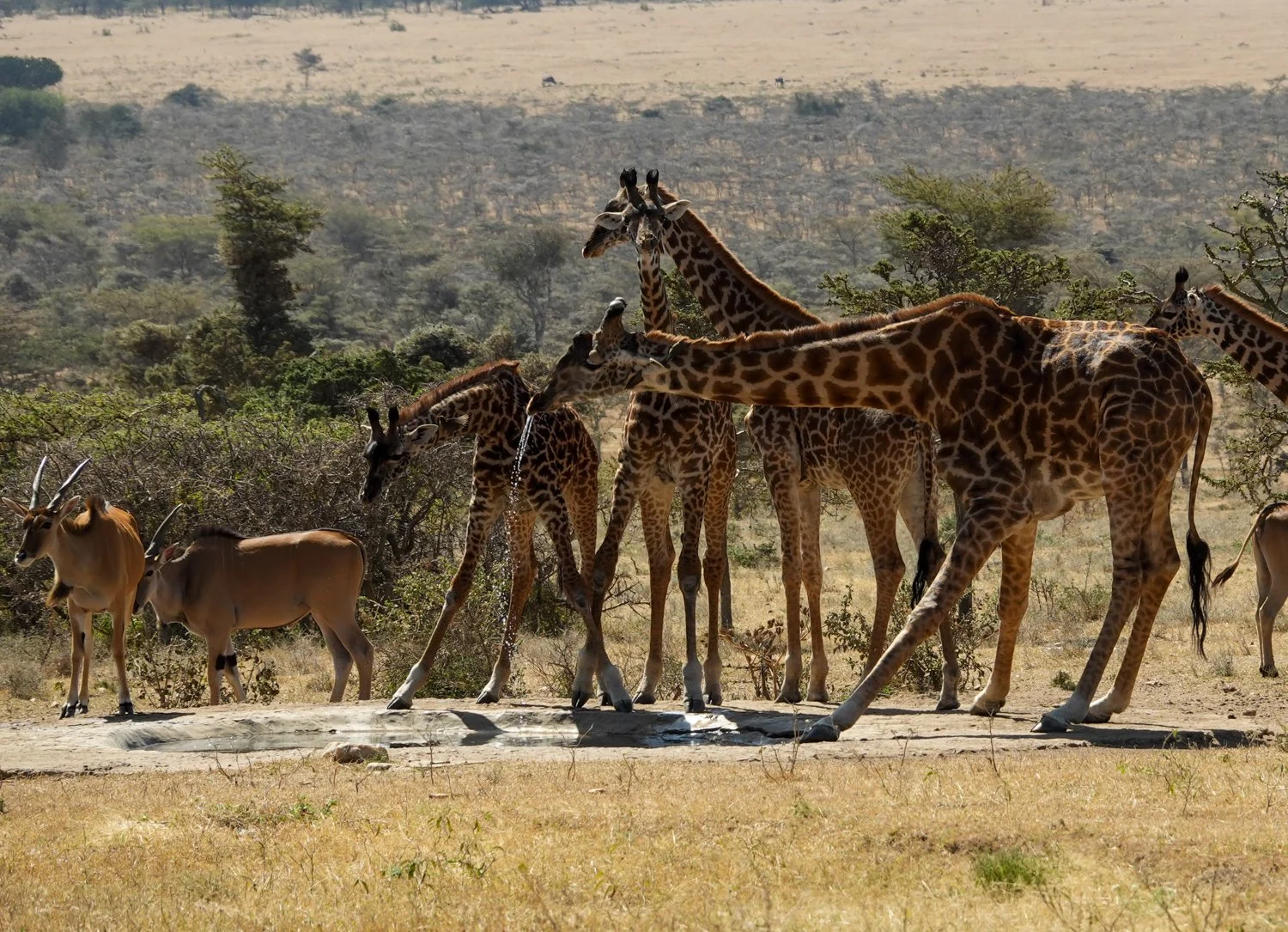
Rather incredible to watch giraffes and many other wildlife at the waterhole while eating lunch.
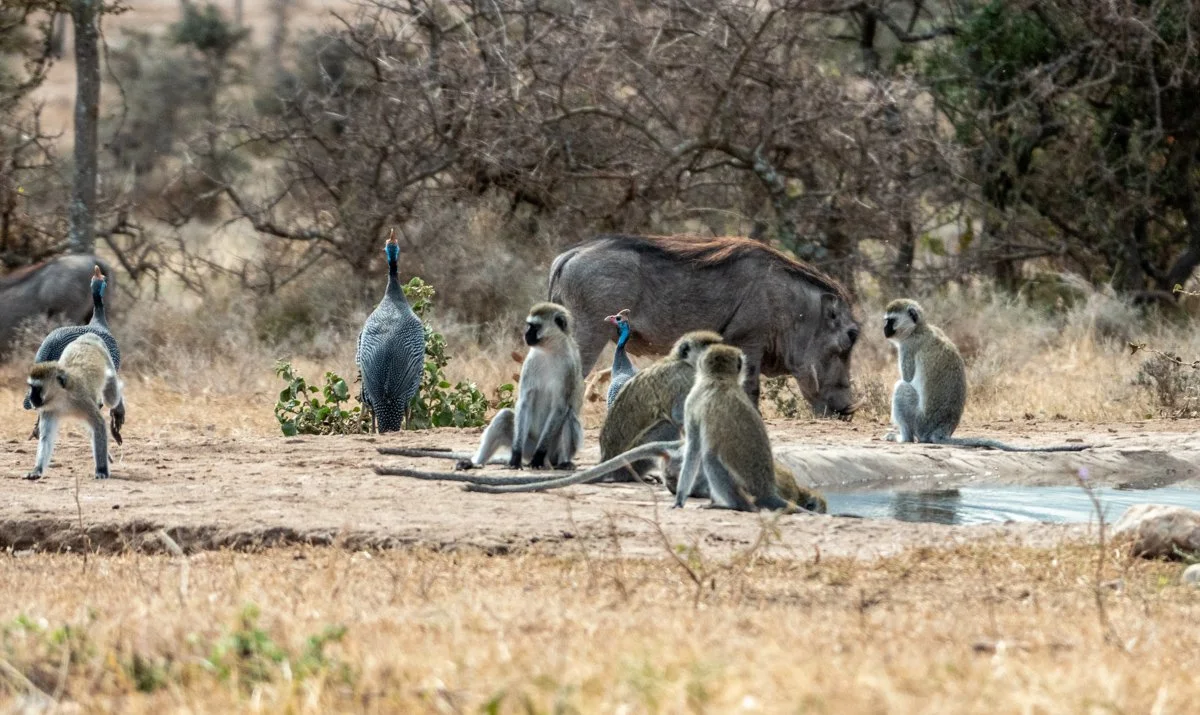
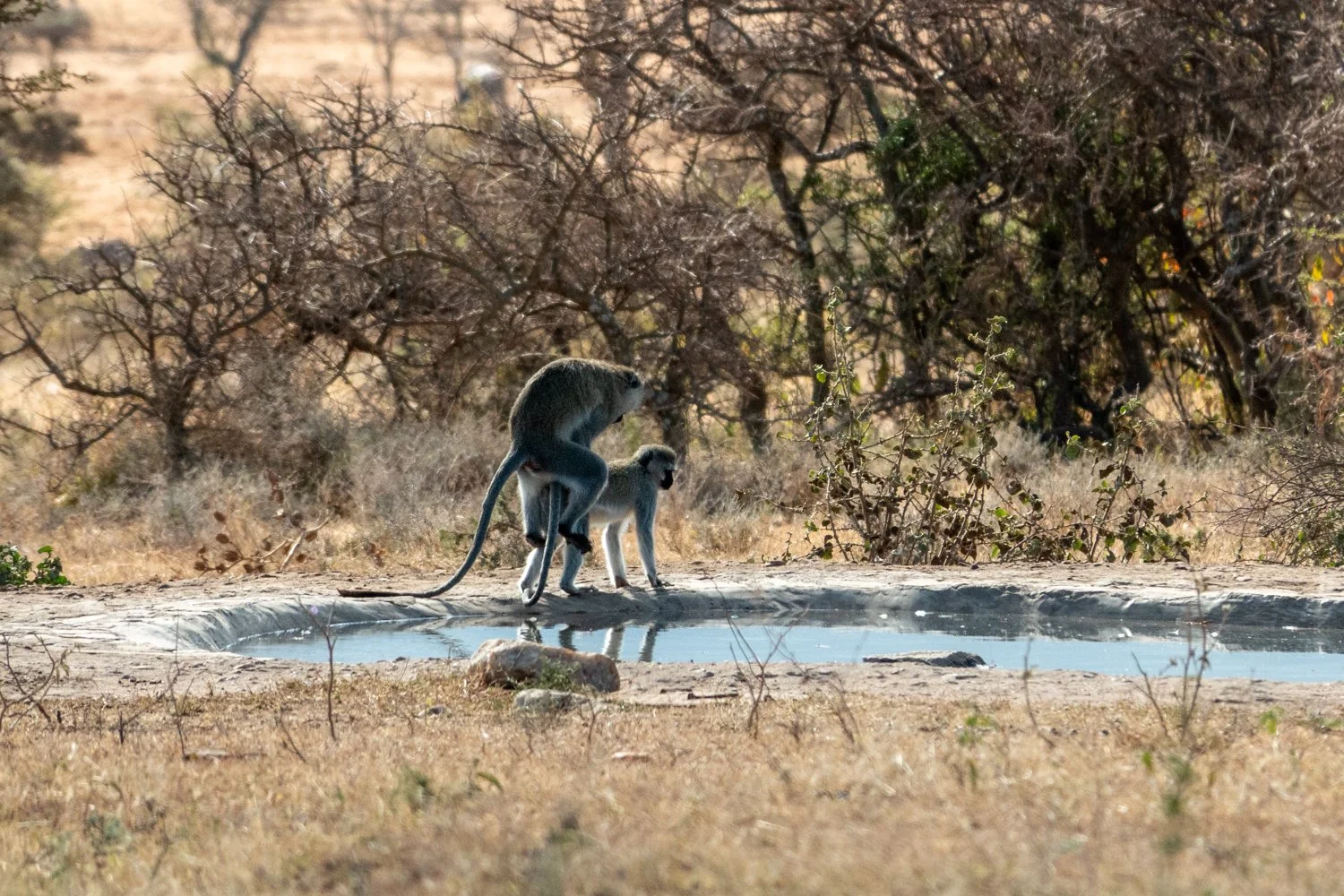
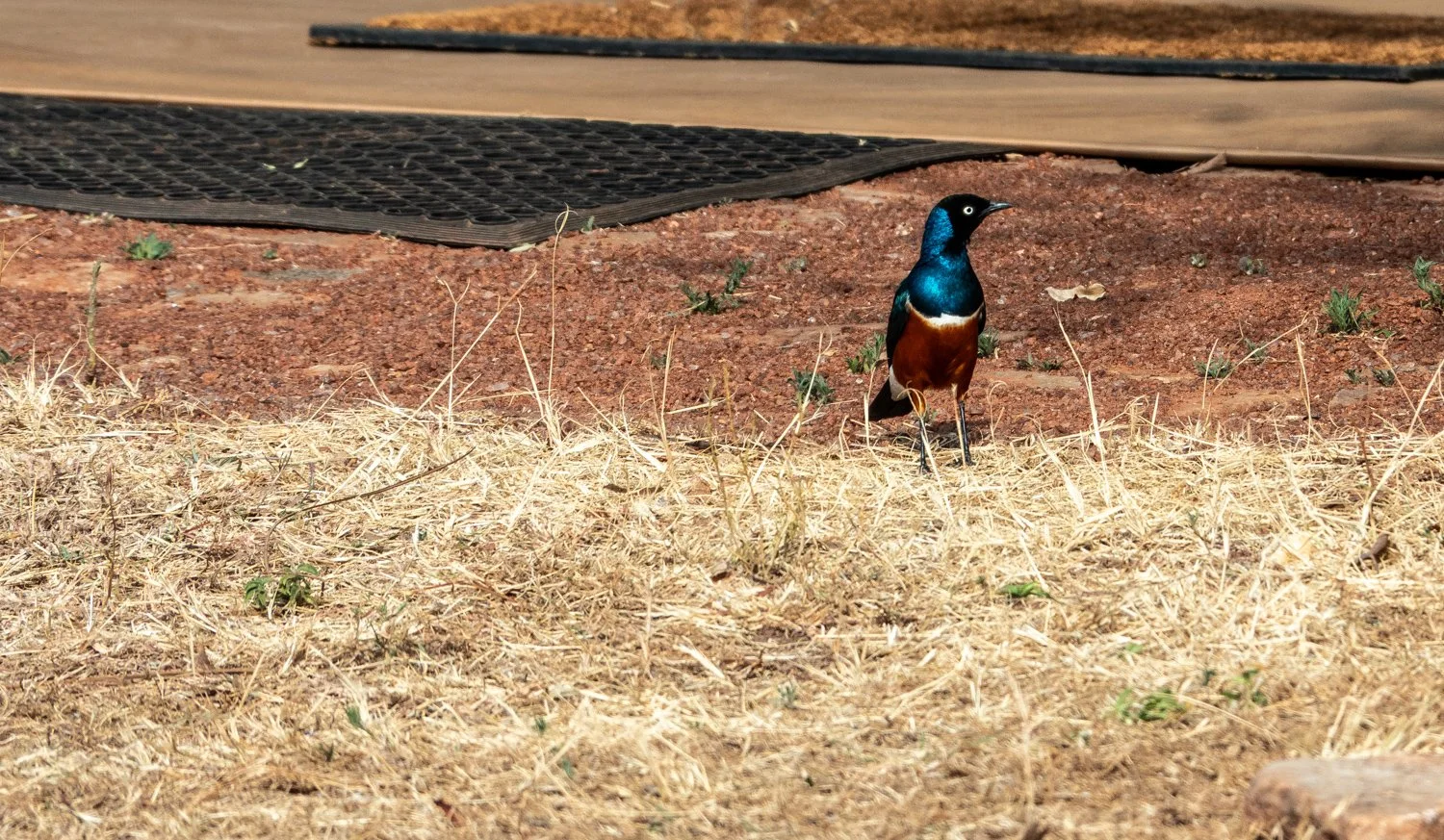
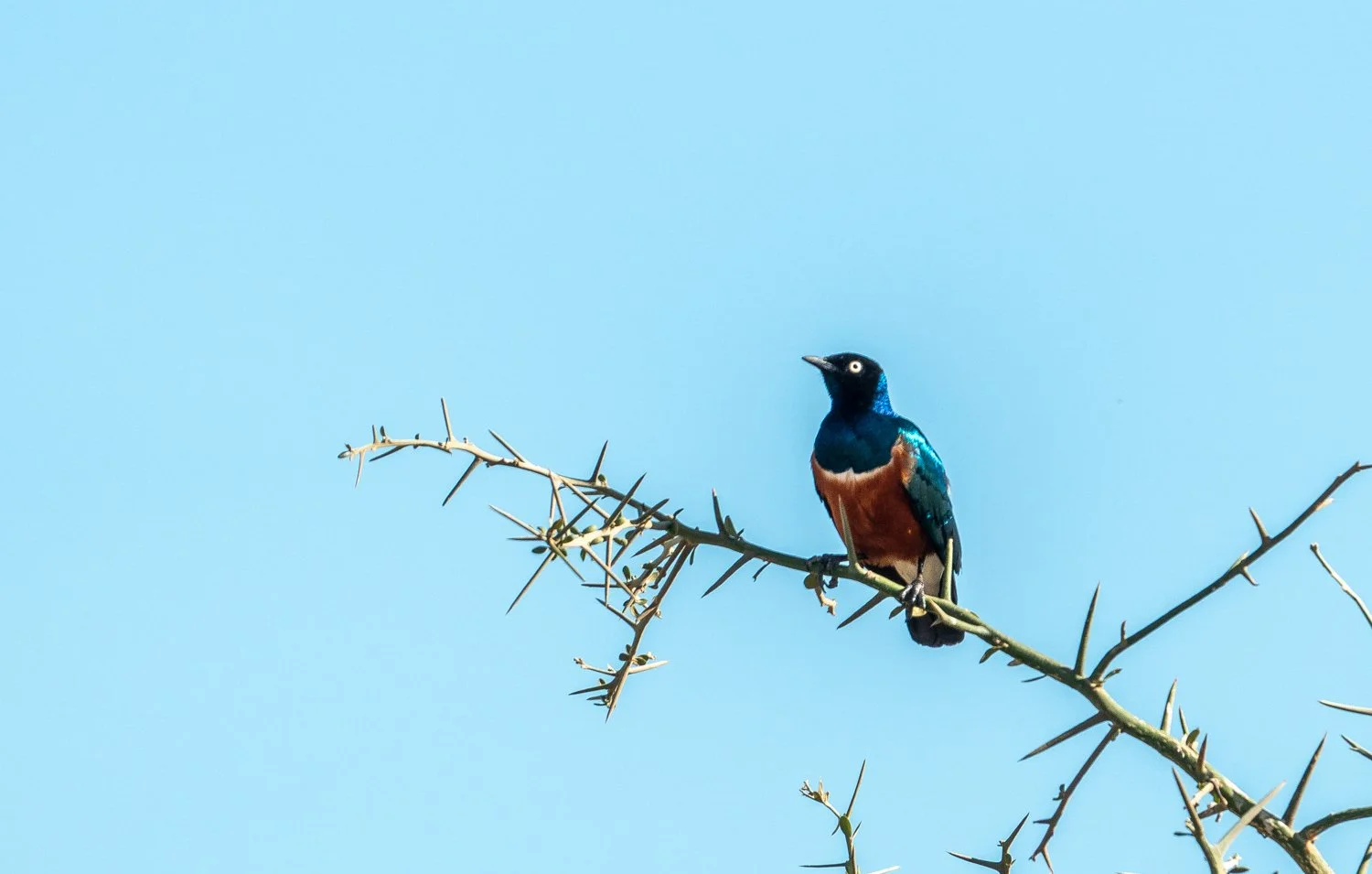
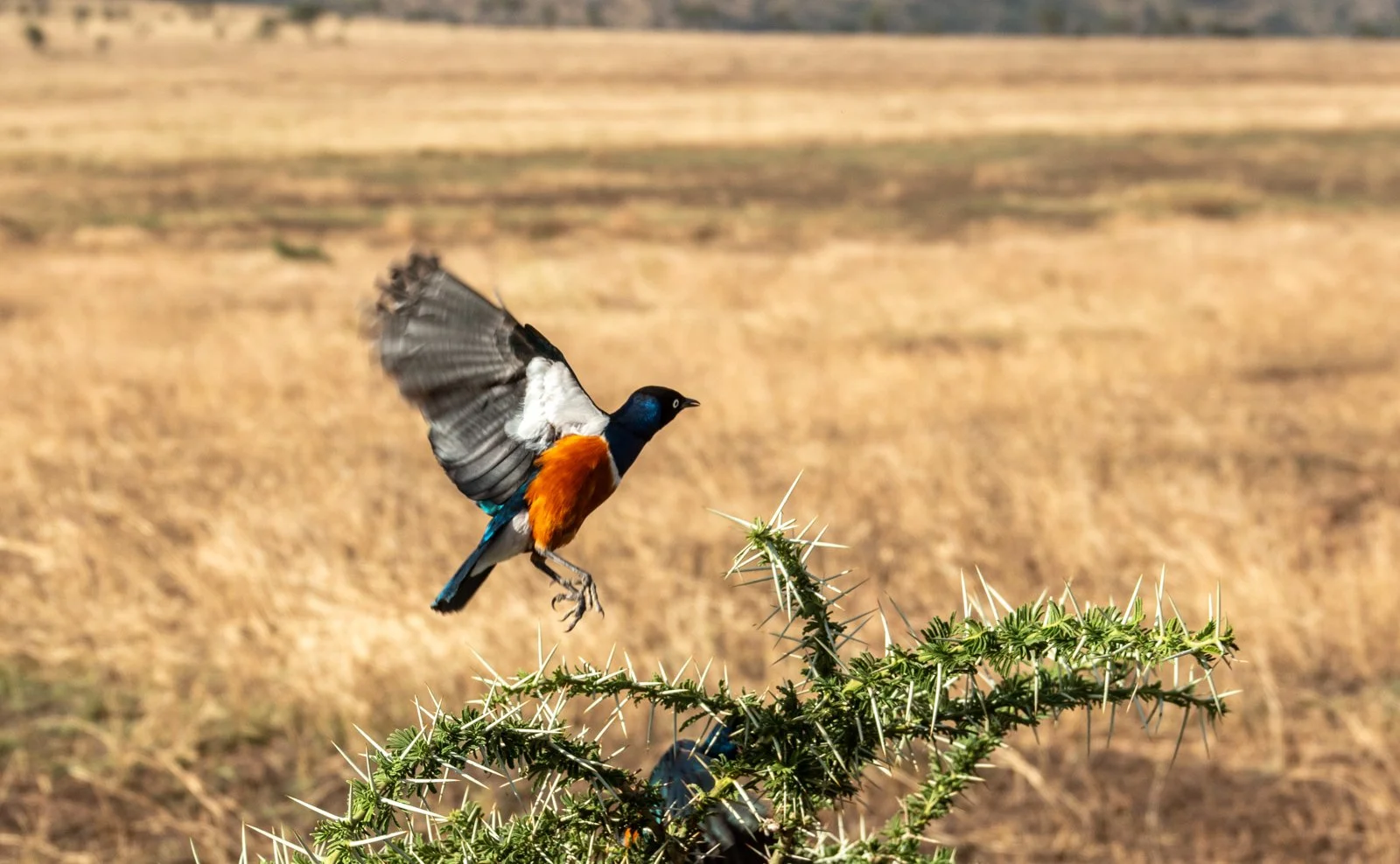
Superb starling
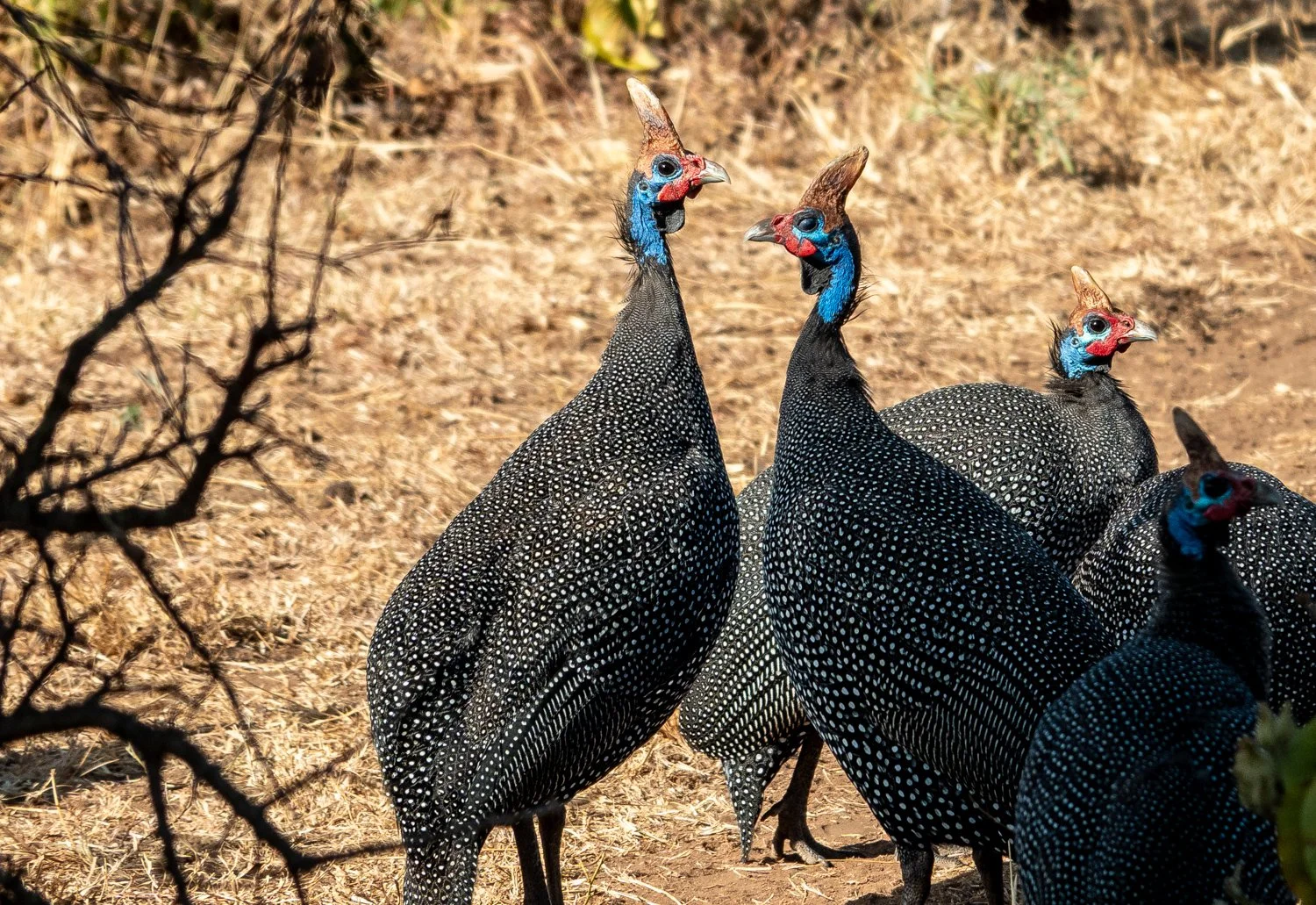
Helmeted guinea fowls
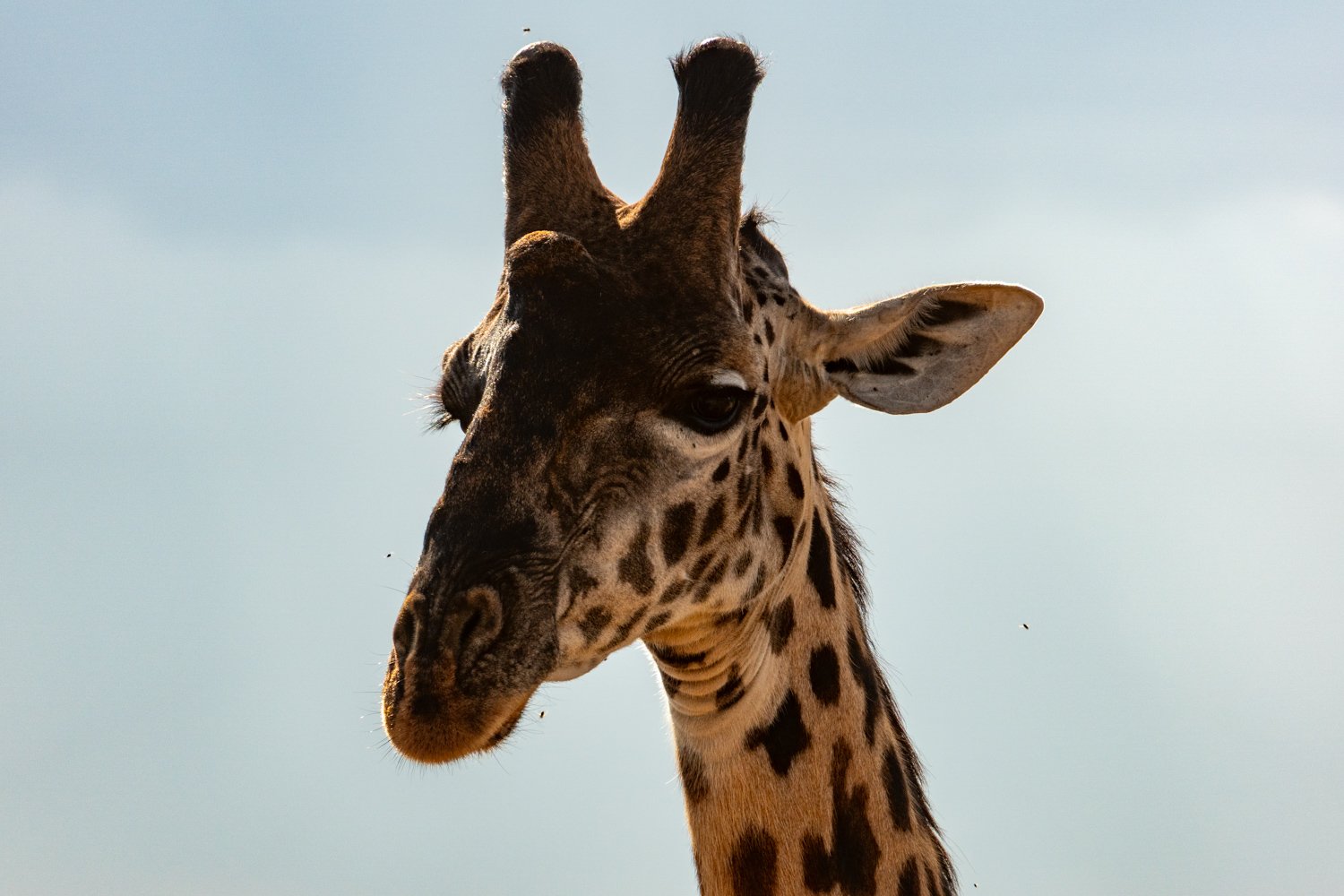
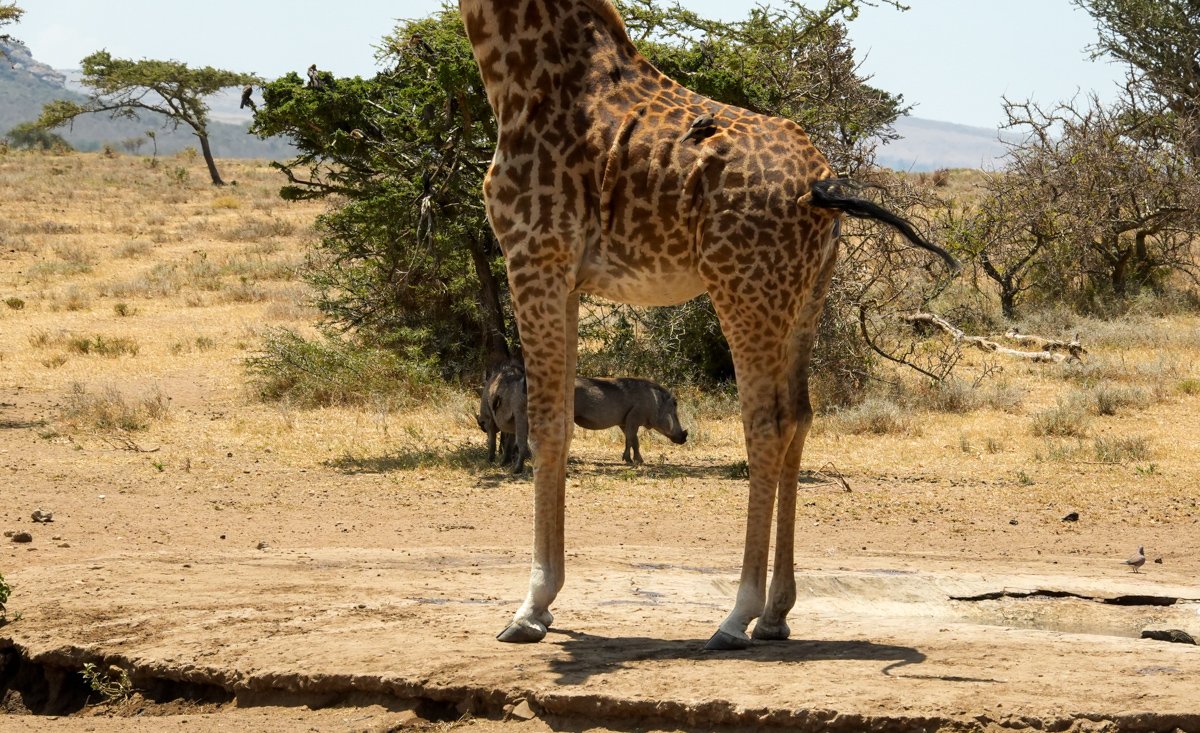
Close-up of giraffe
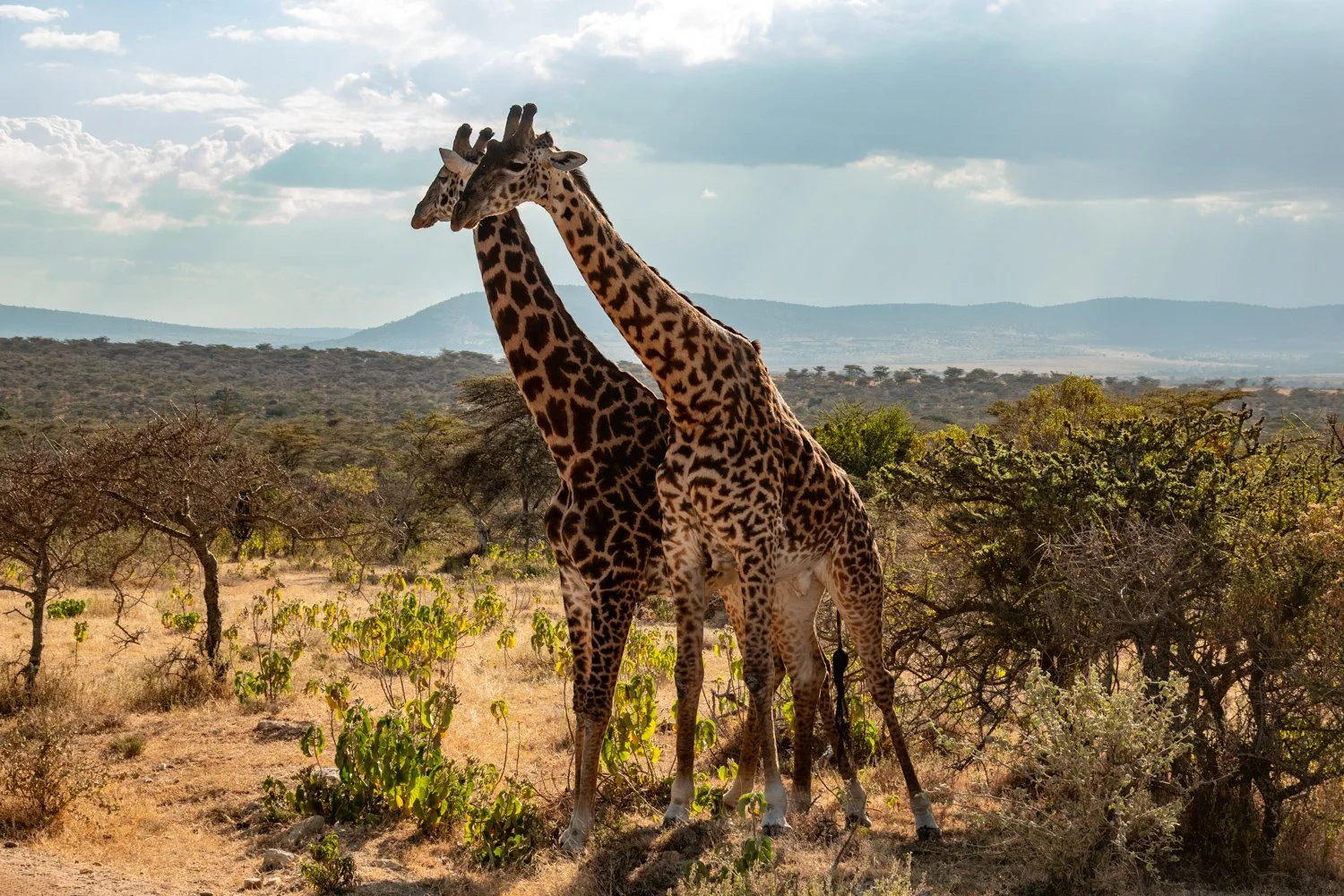
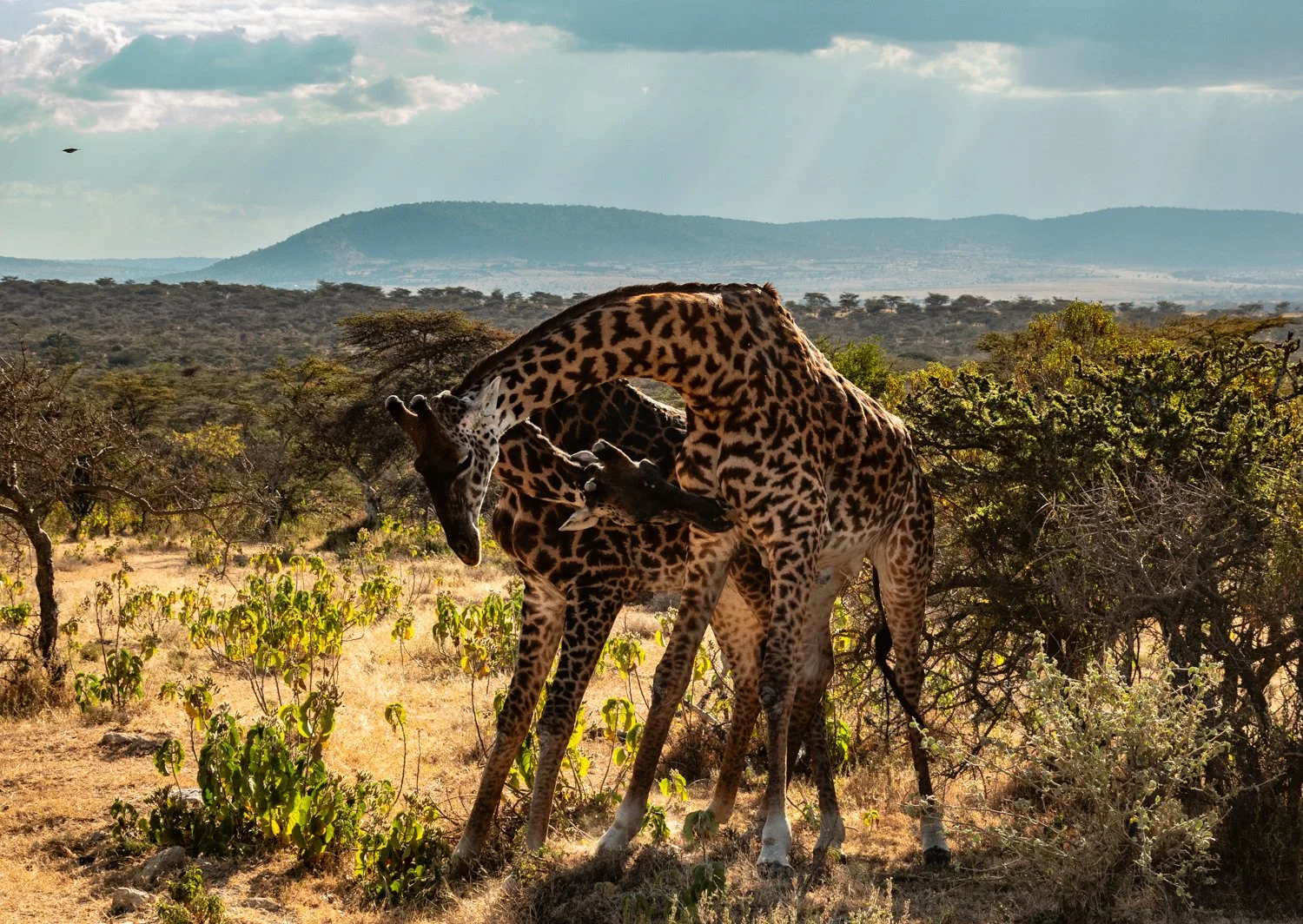
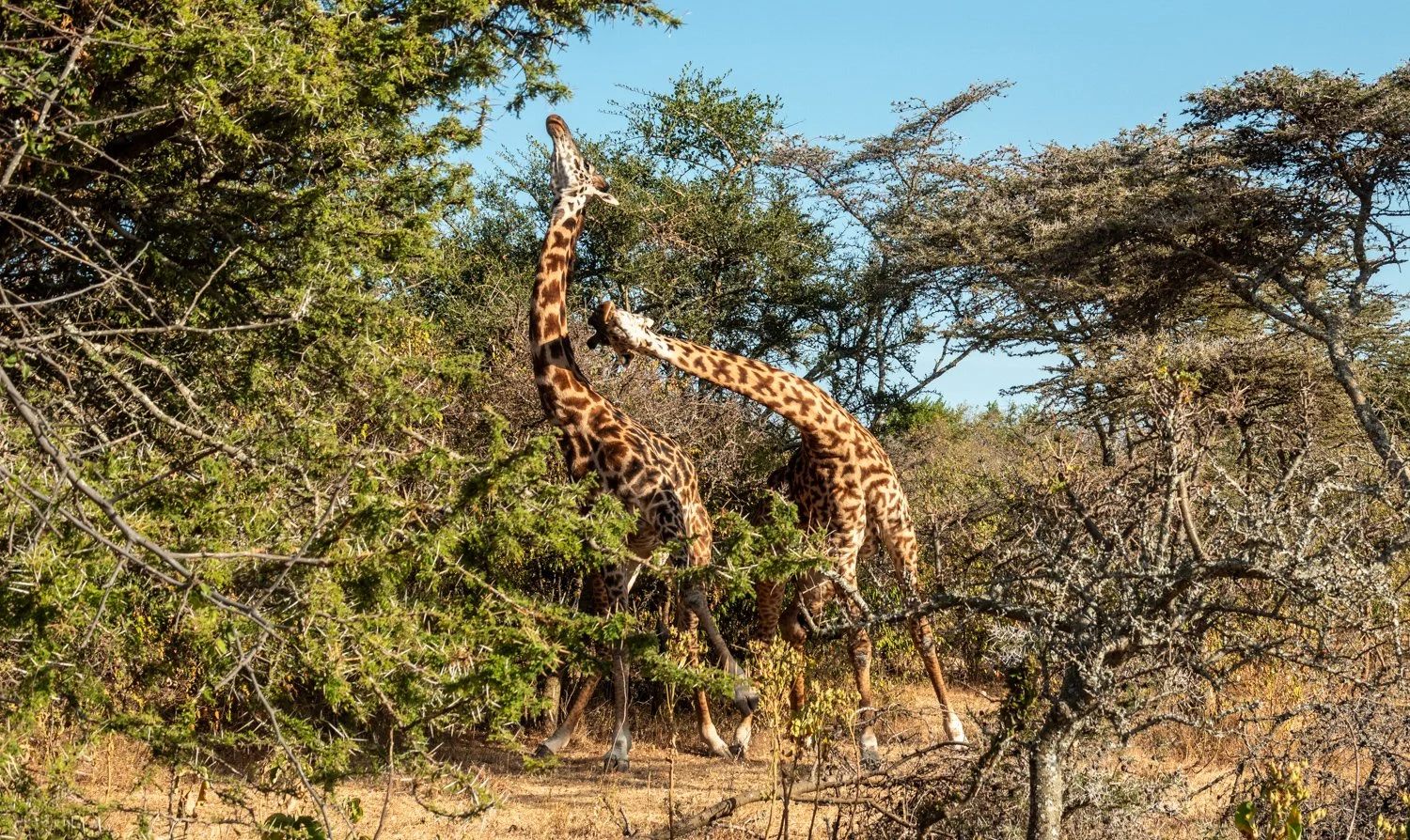
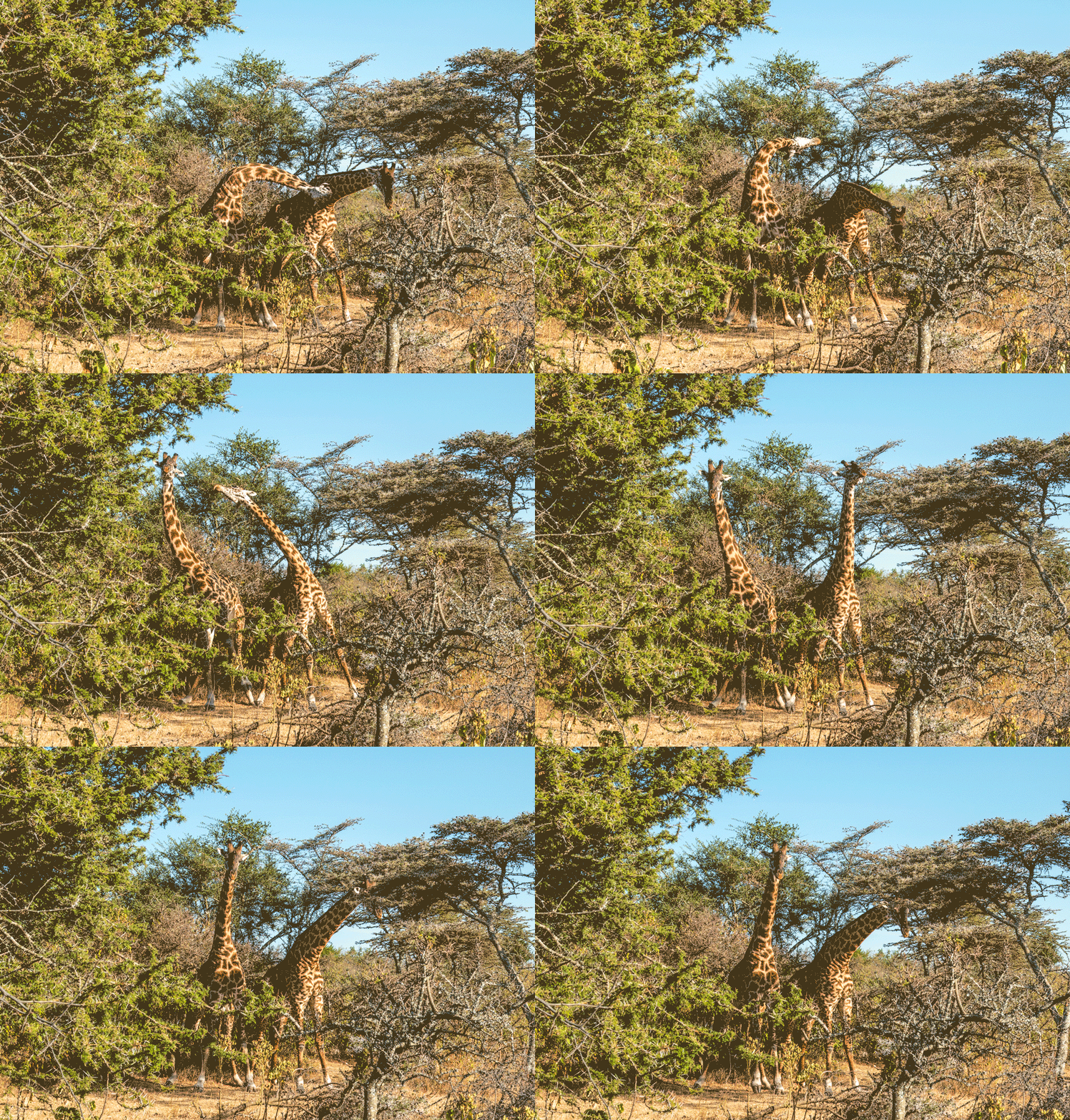
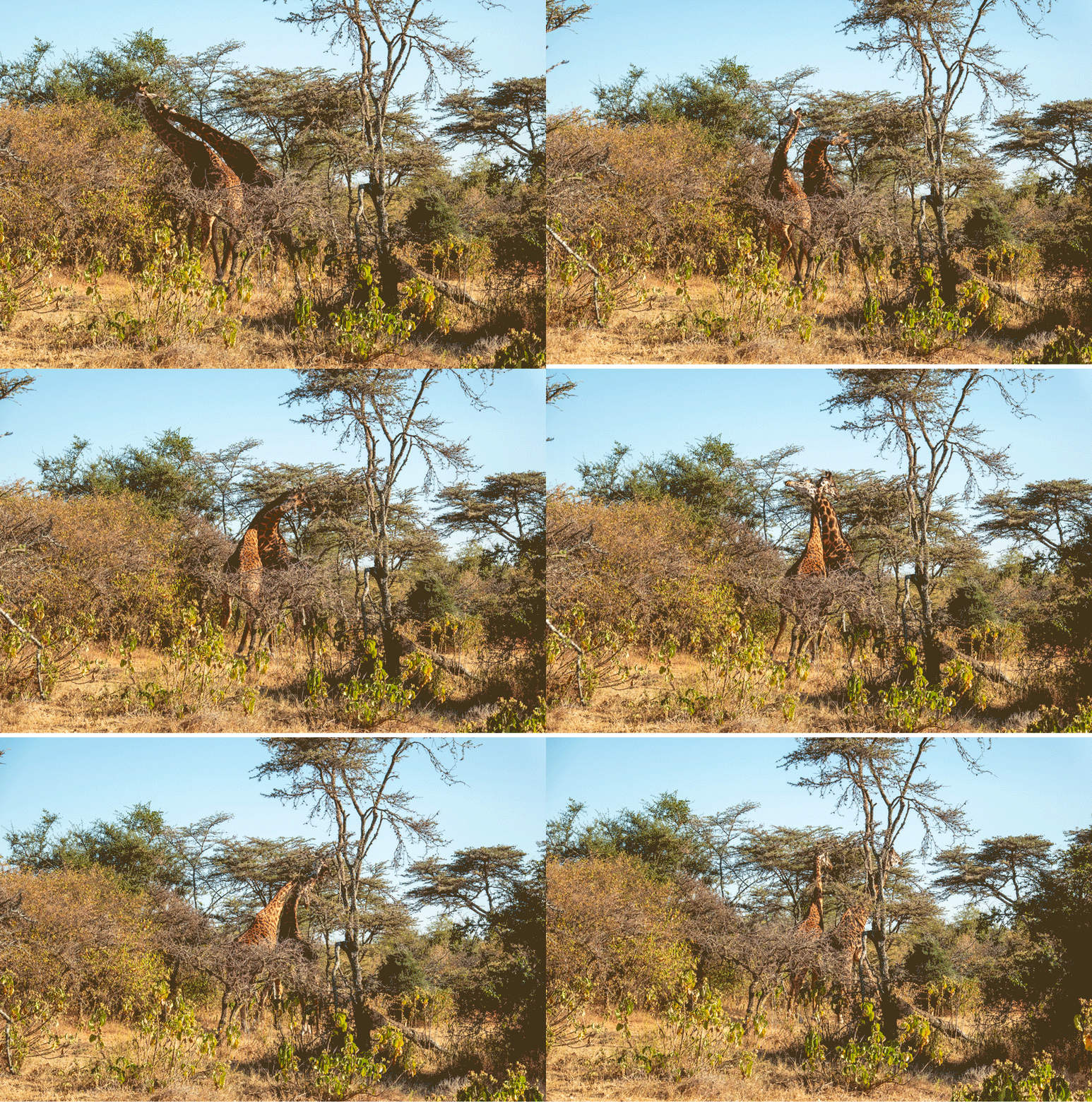
We came upon a pair of male giraffes who were fighting for dominance by “necking”, swinging their heads against the other’s neck. Sometimes these duels can go on for hours and can end with a fatality.
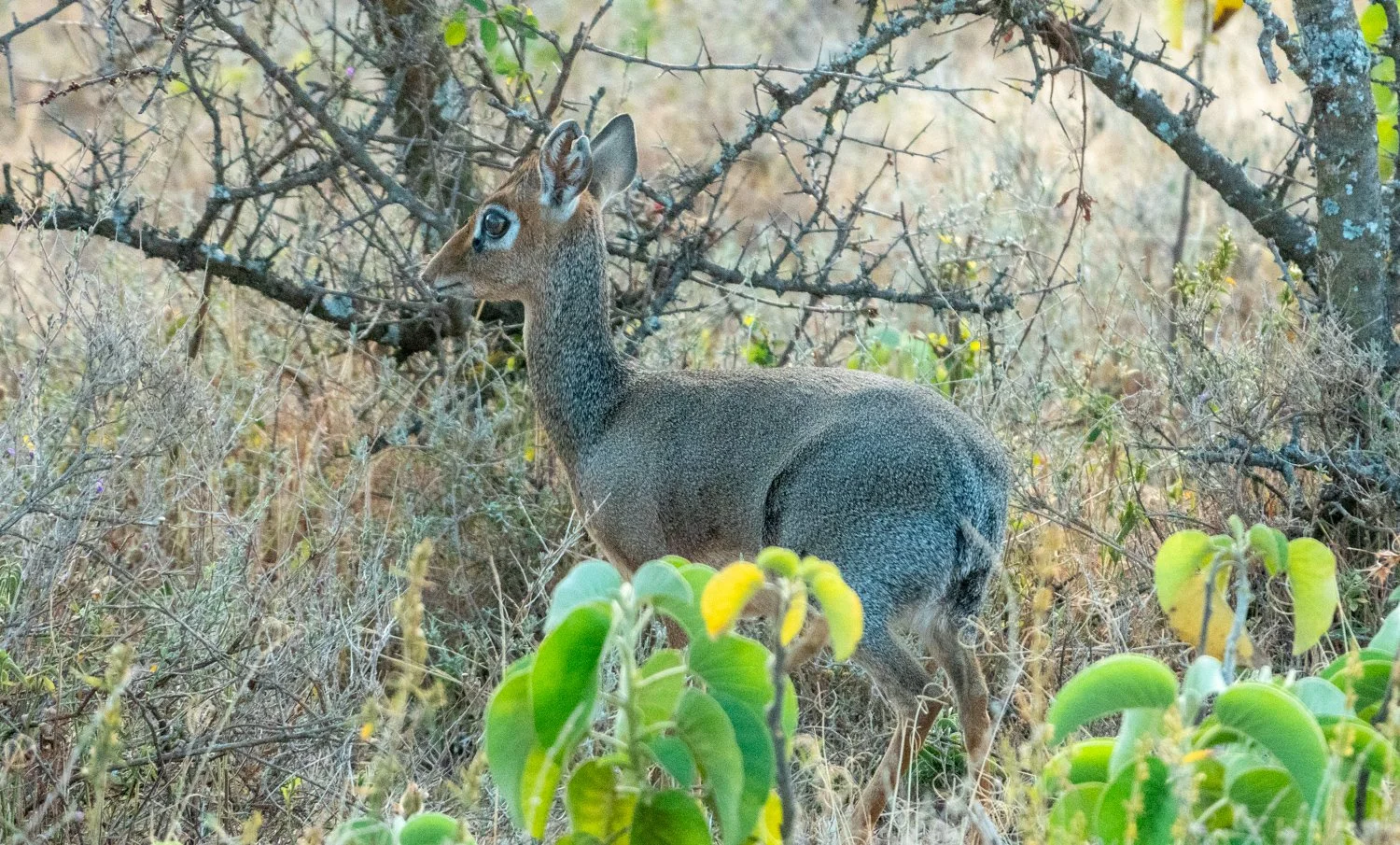
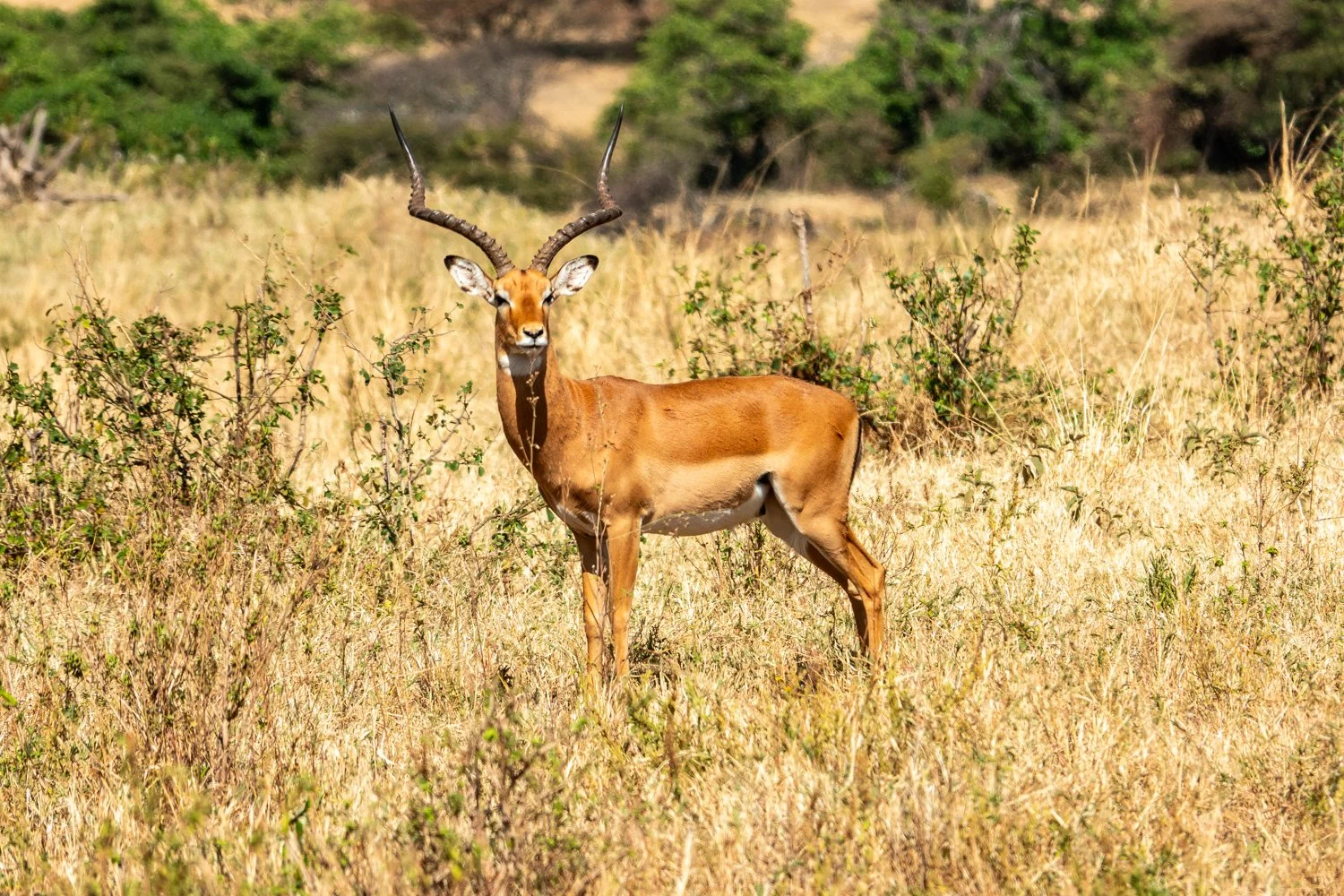
Dik-dik, one of many antelopes in the Serengeti
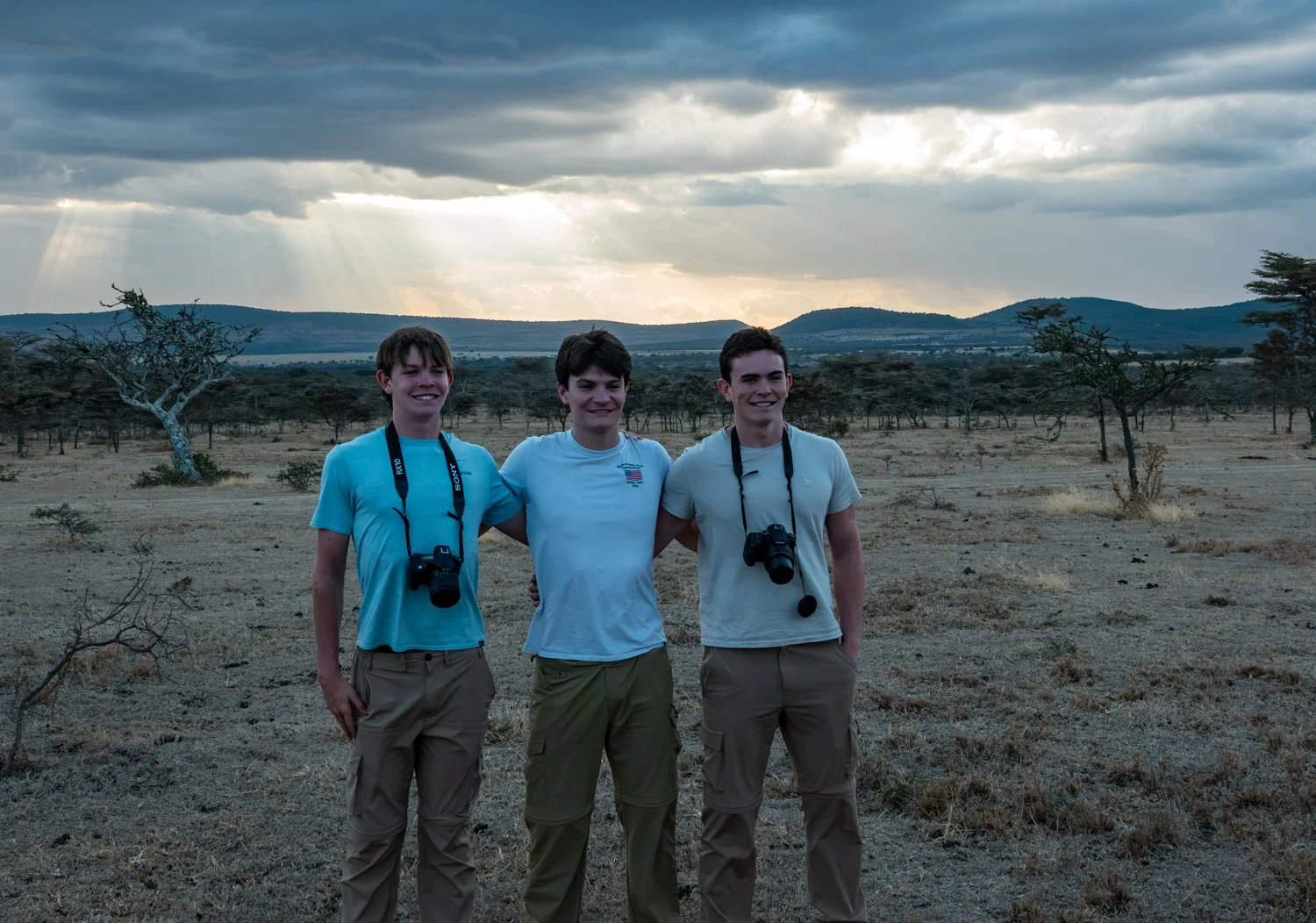
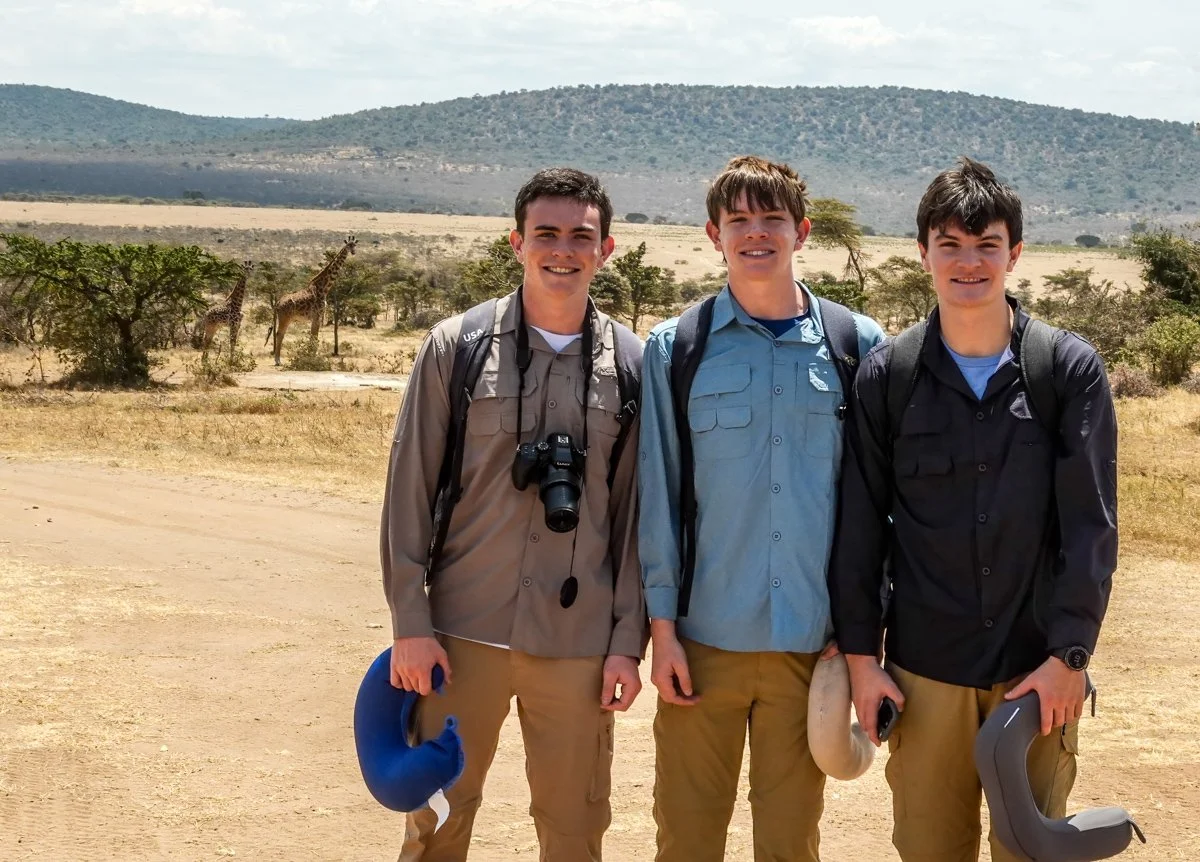
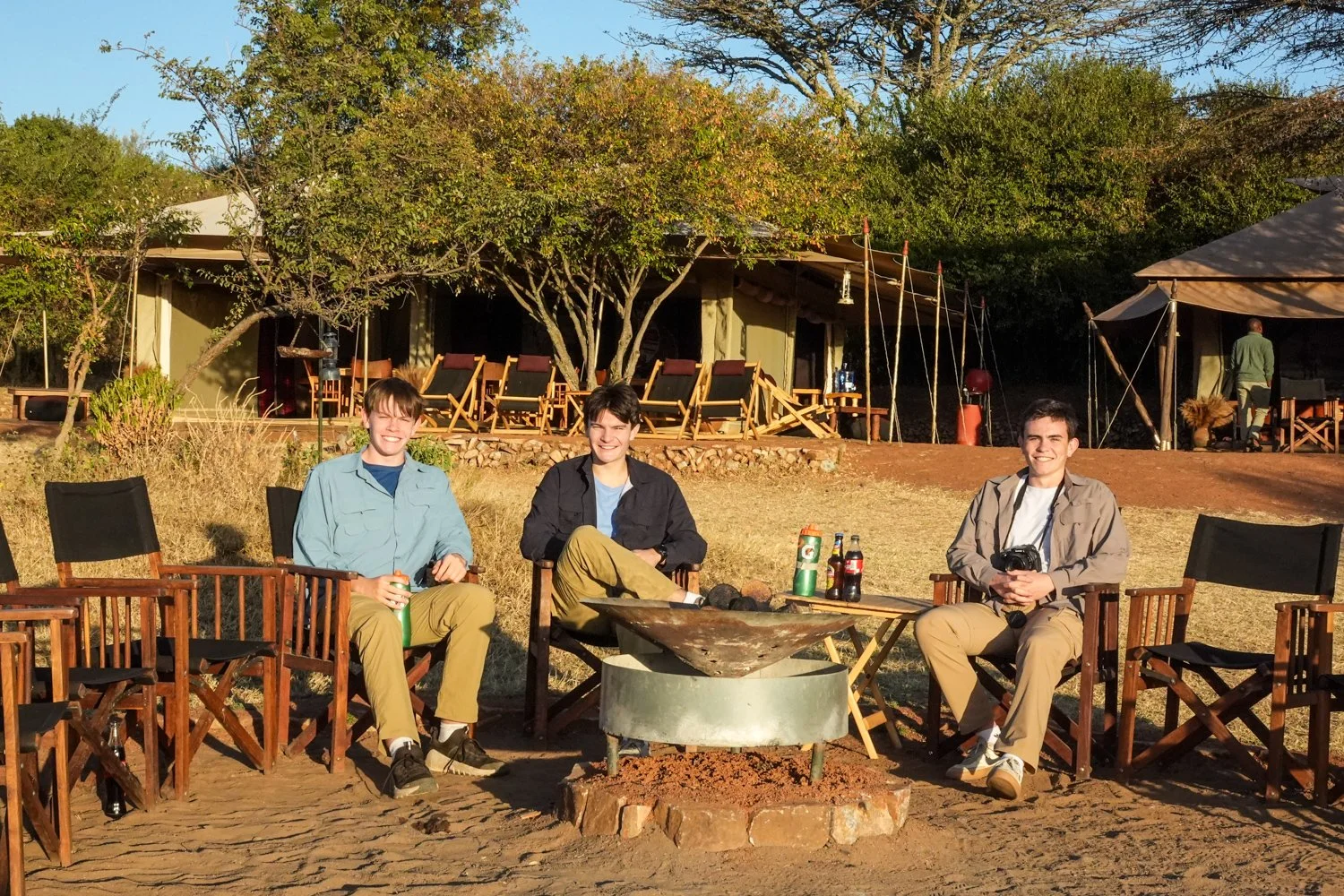
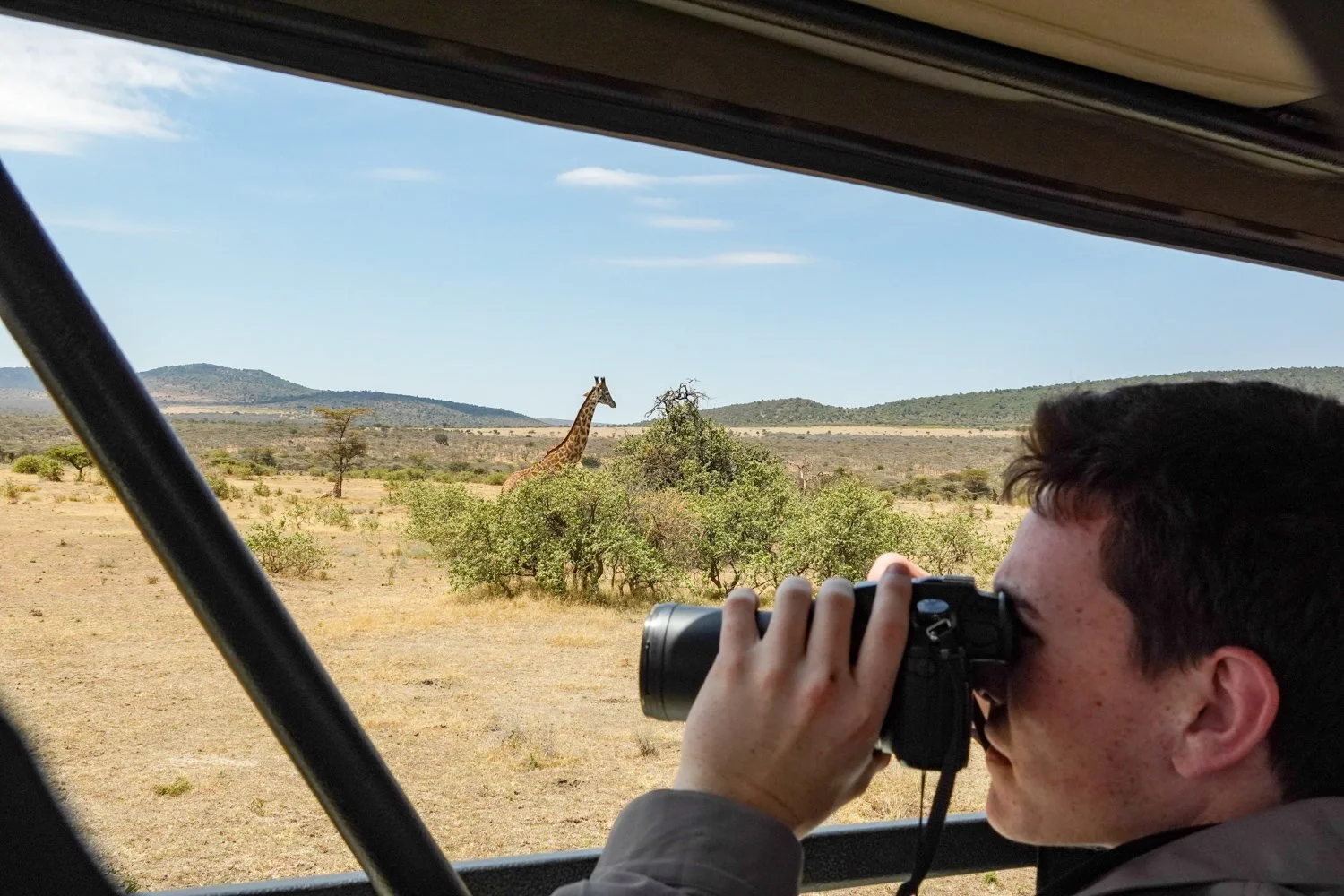
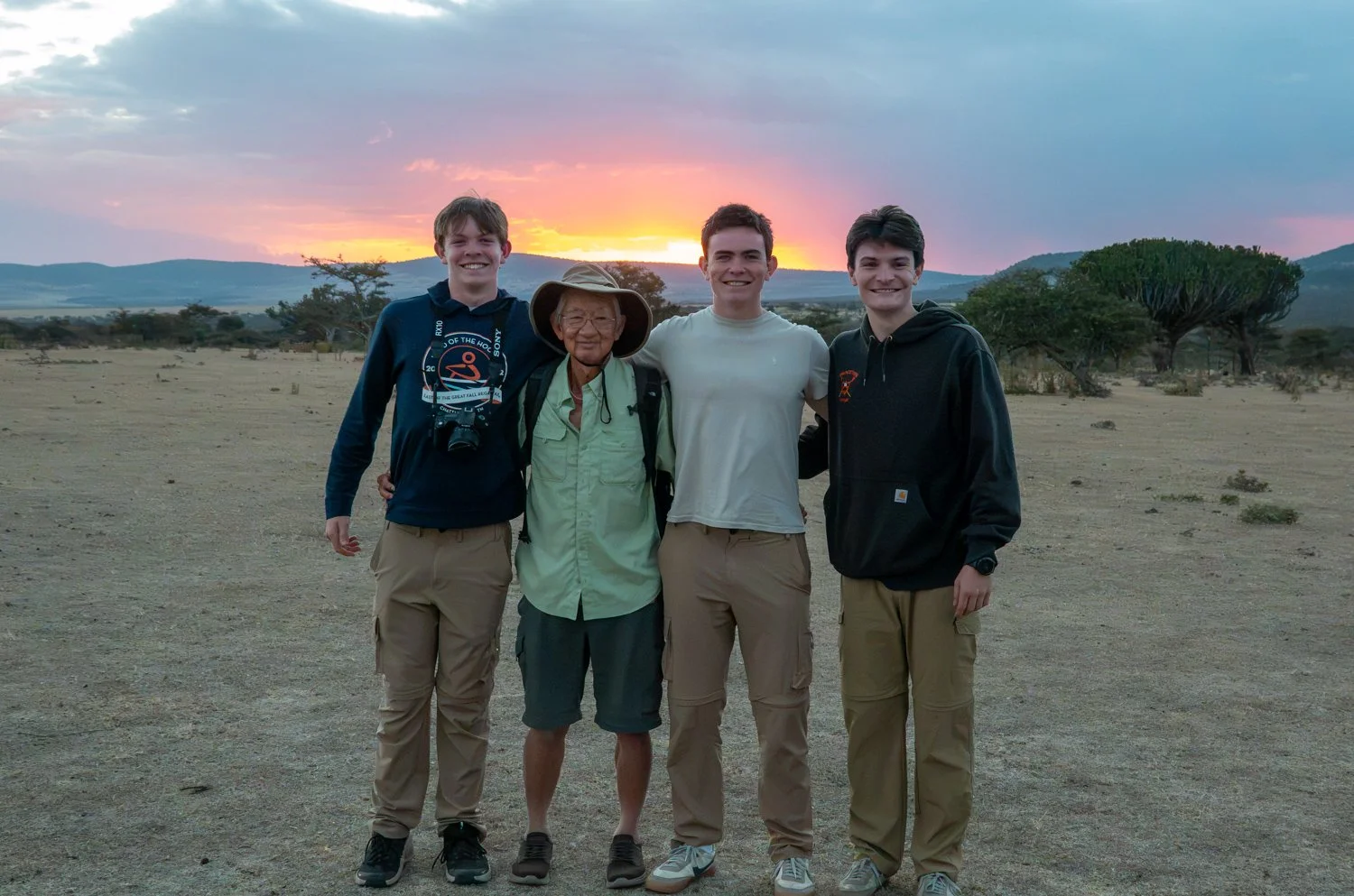
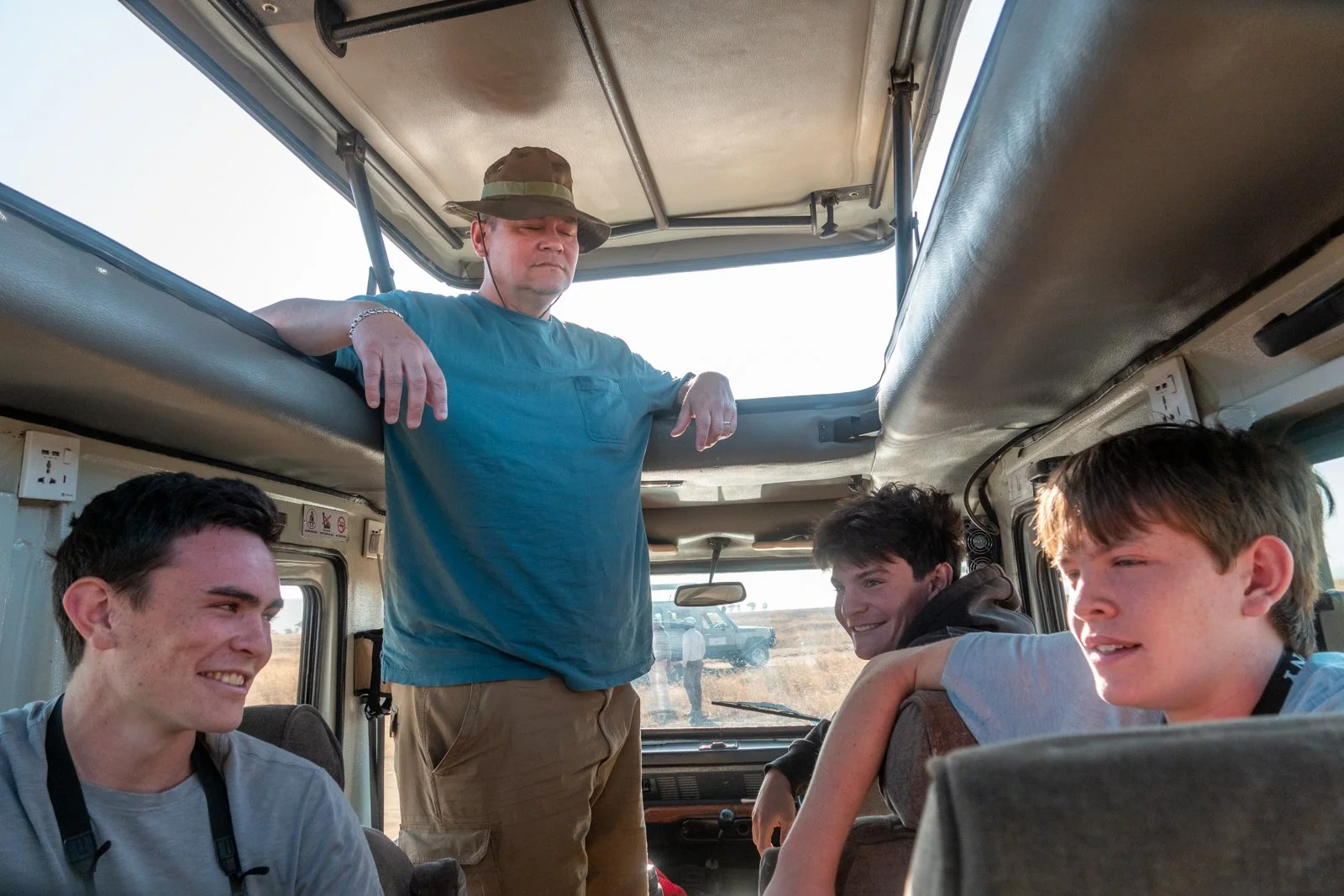
My grandkids with two of my older cameras which they put to excellent use on this safari.
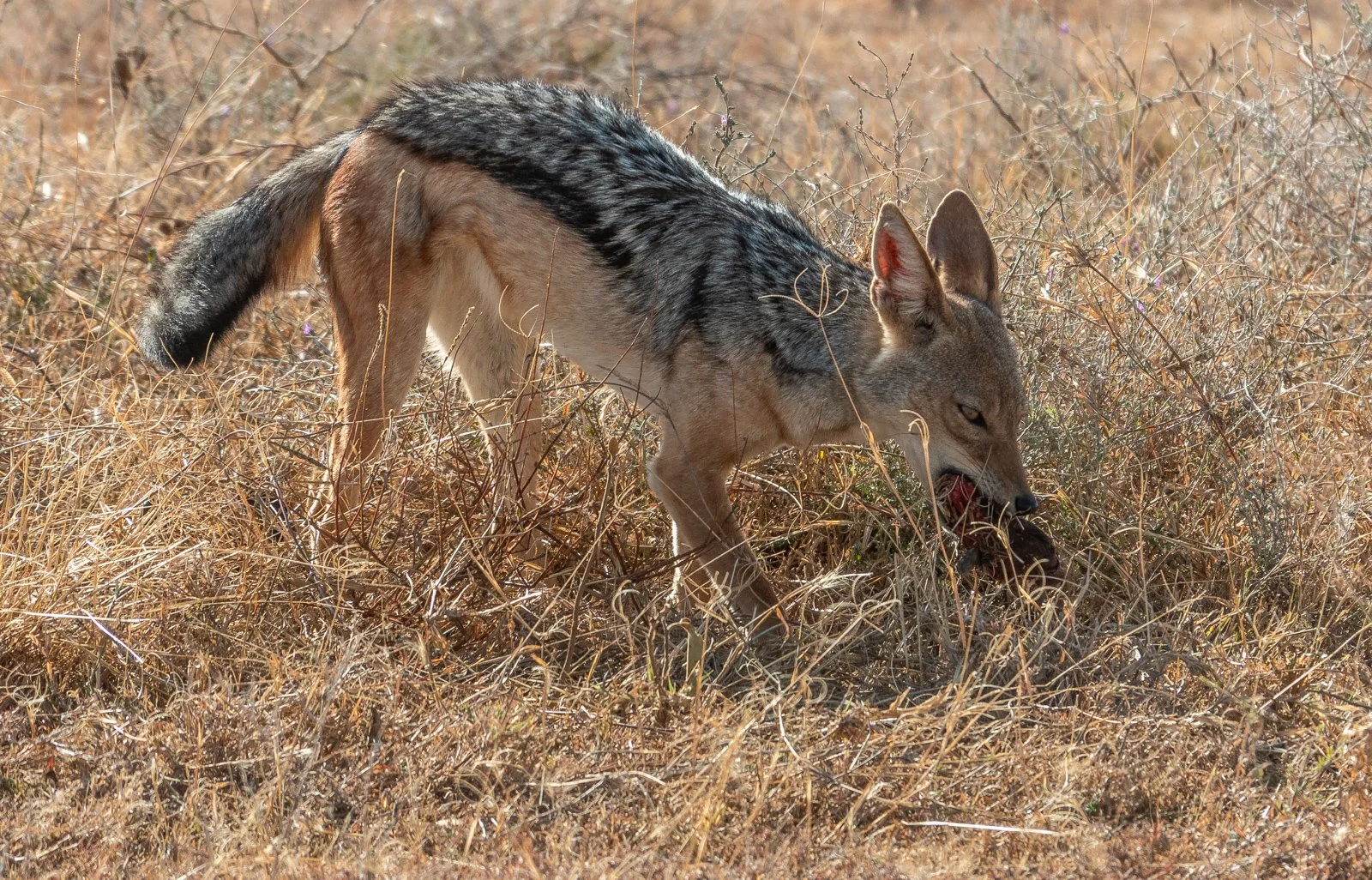
Black-backed jackel with lunch
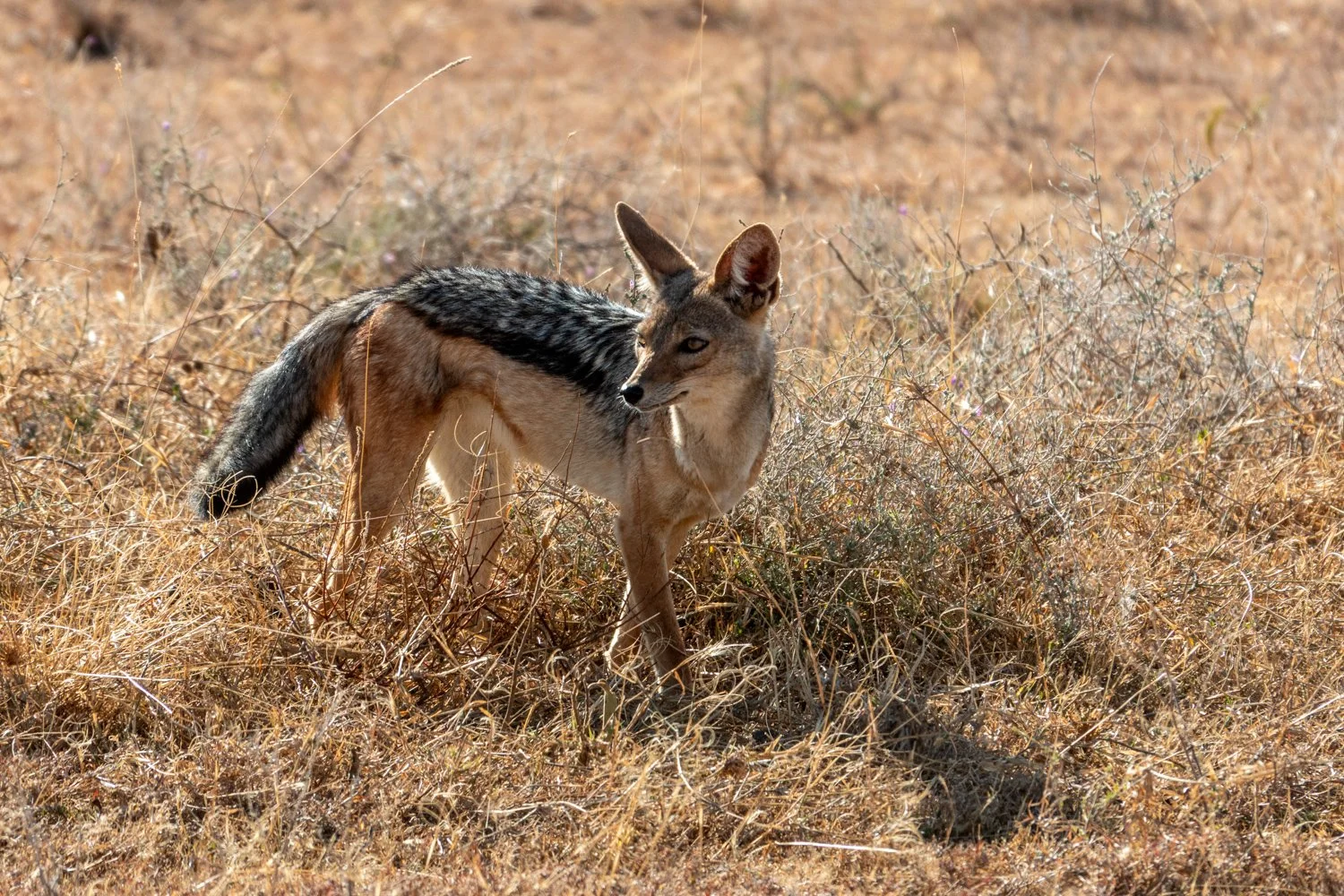
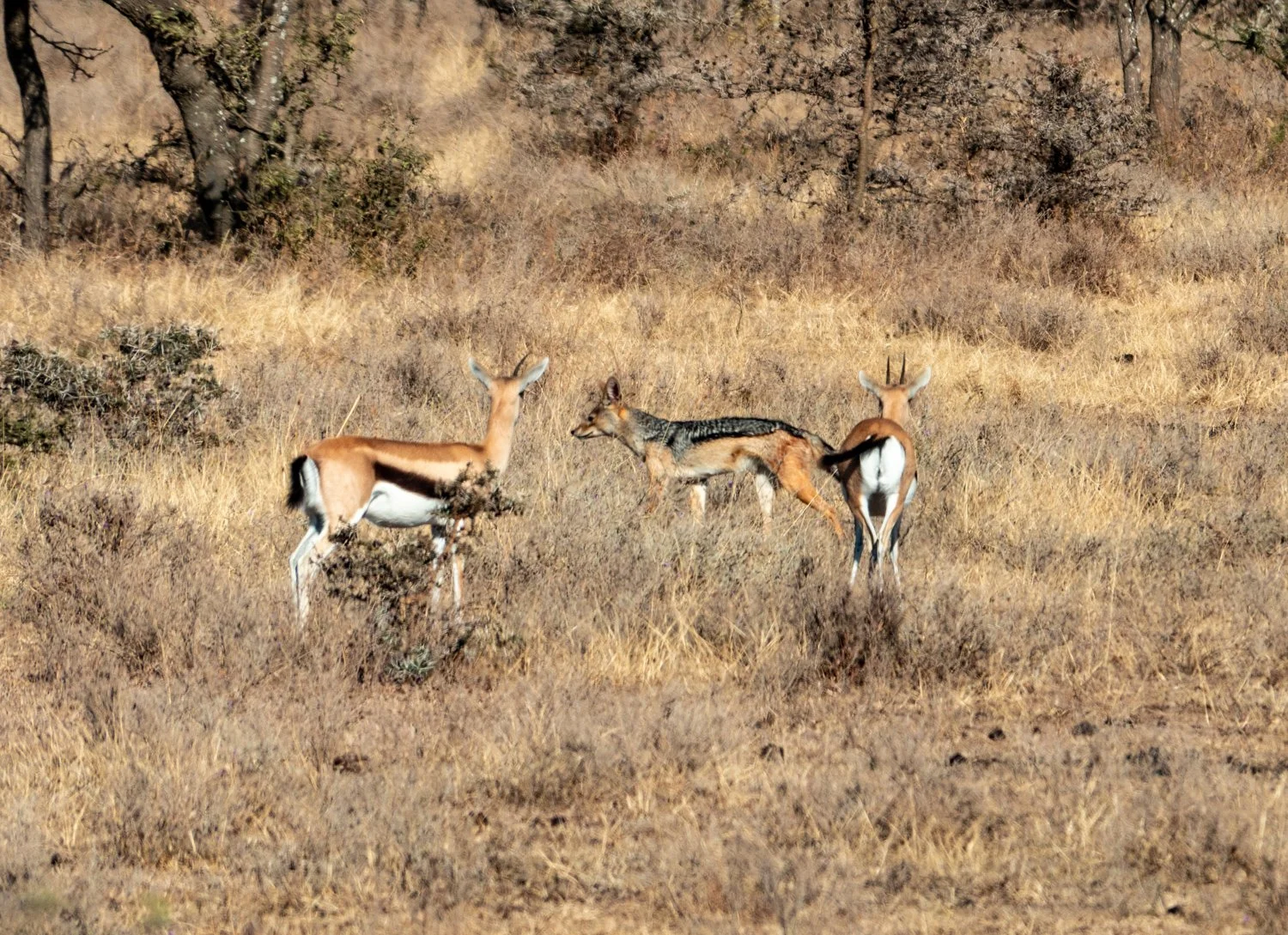
Thomson’s gazelle
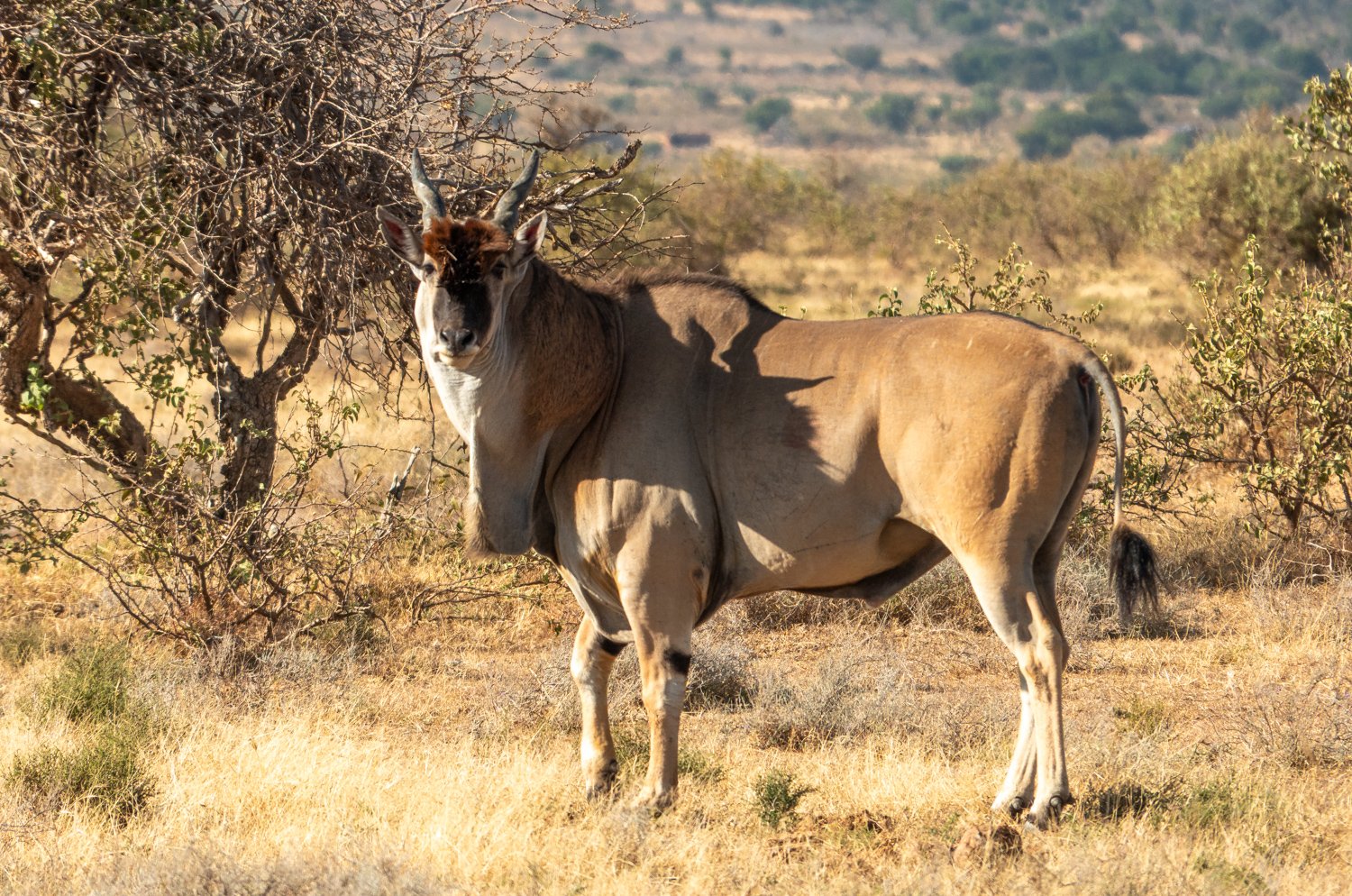
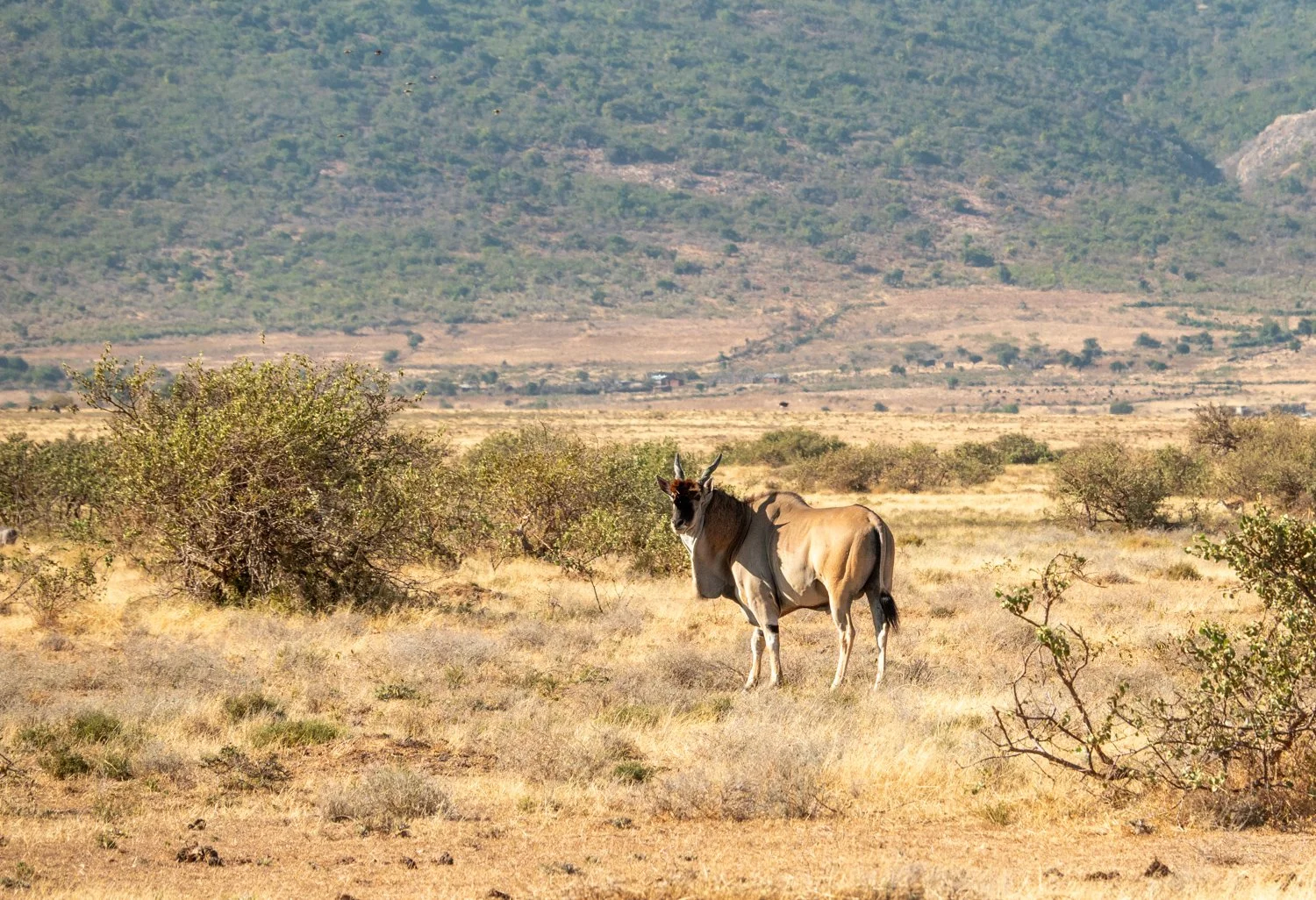
Common eland
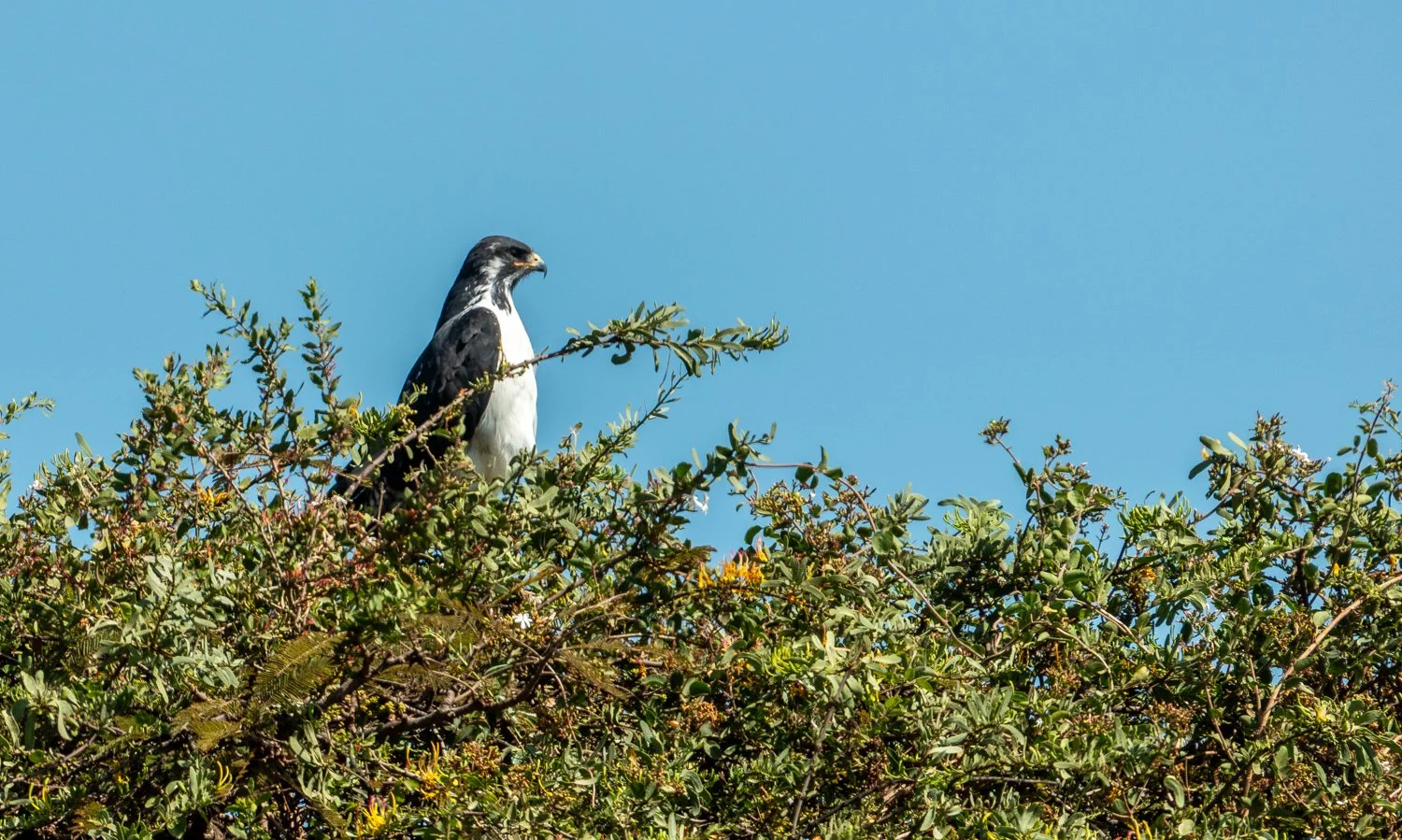
Augur buzzard
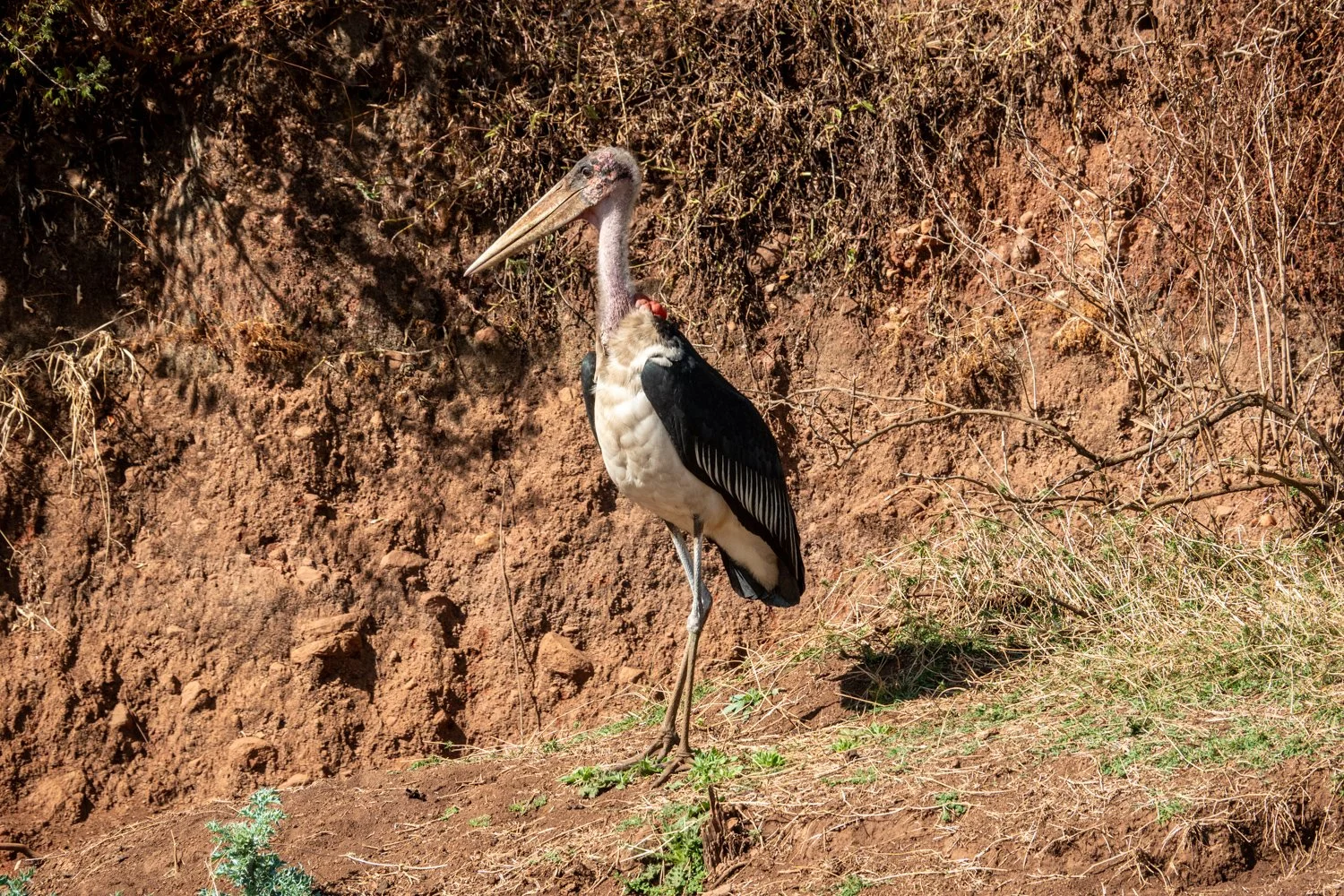
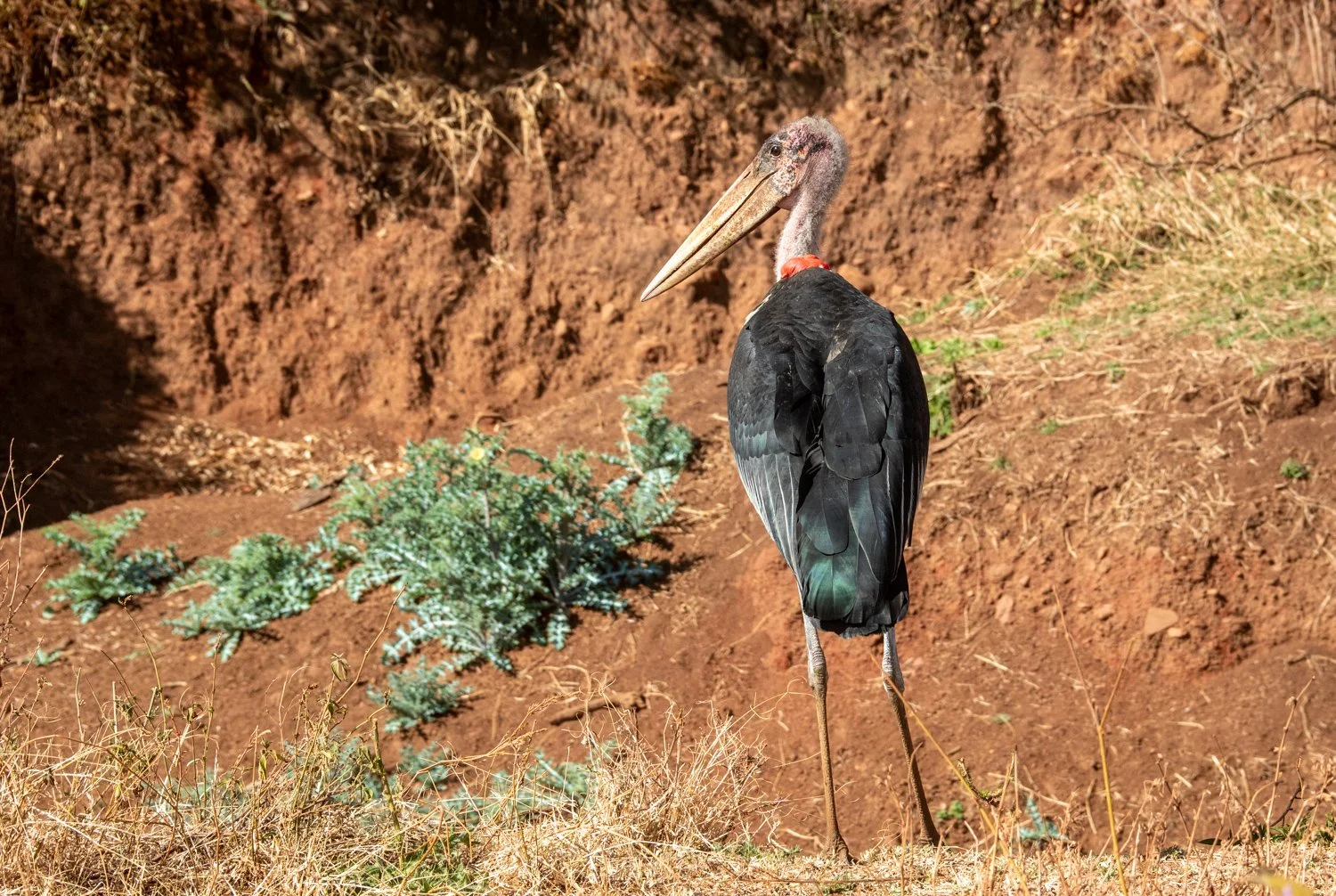
Marabou stork
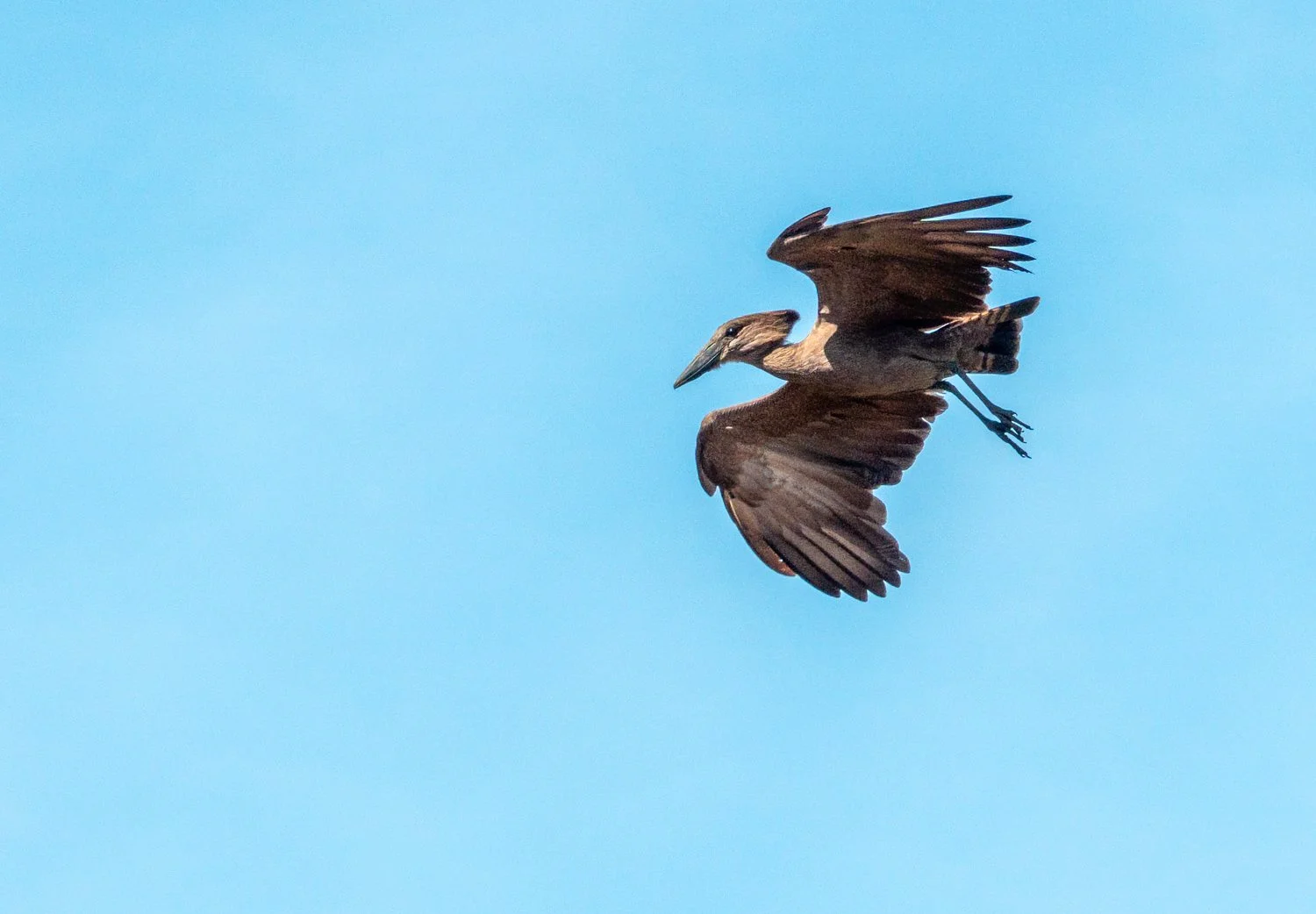
Hammerkop in flight
Central Serengeti Nyumba Camp
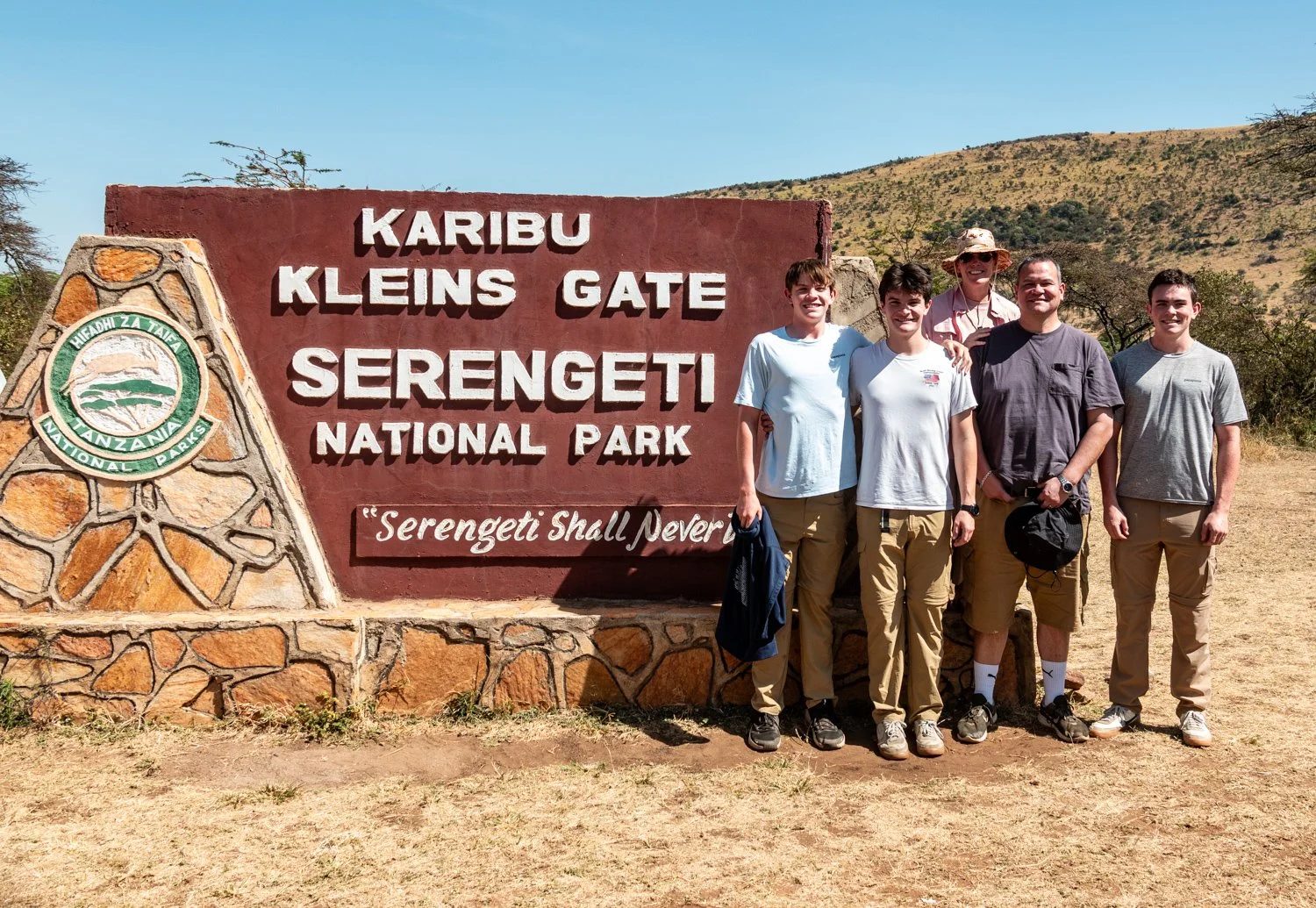
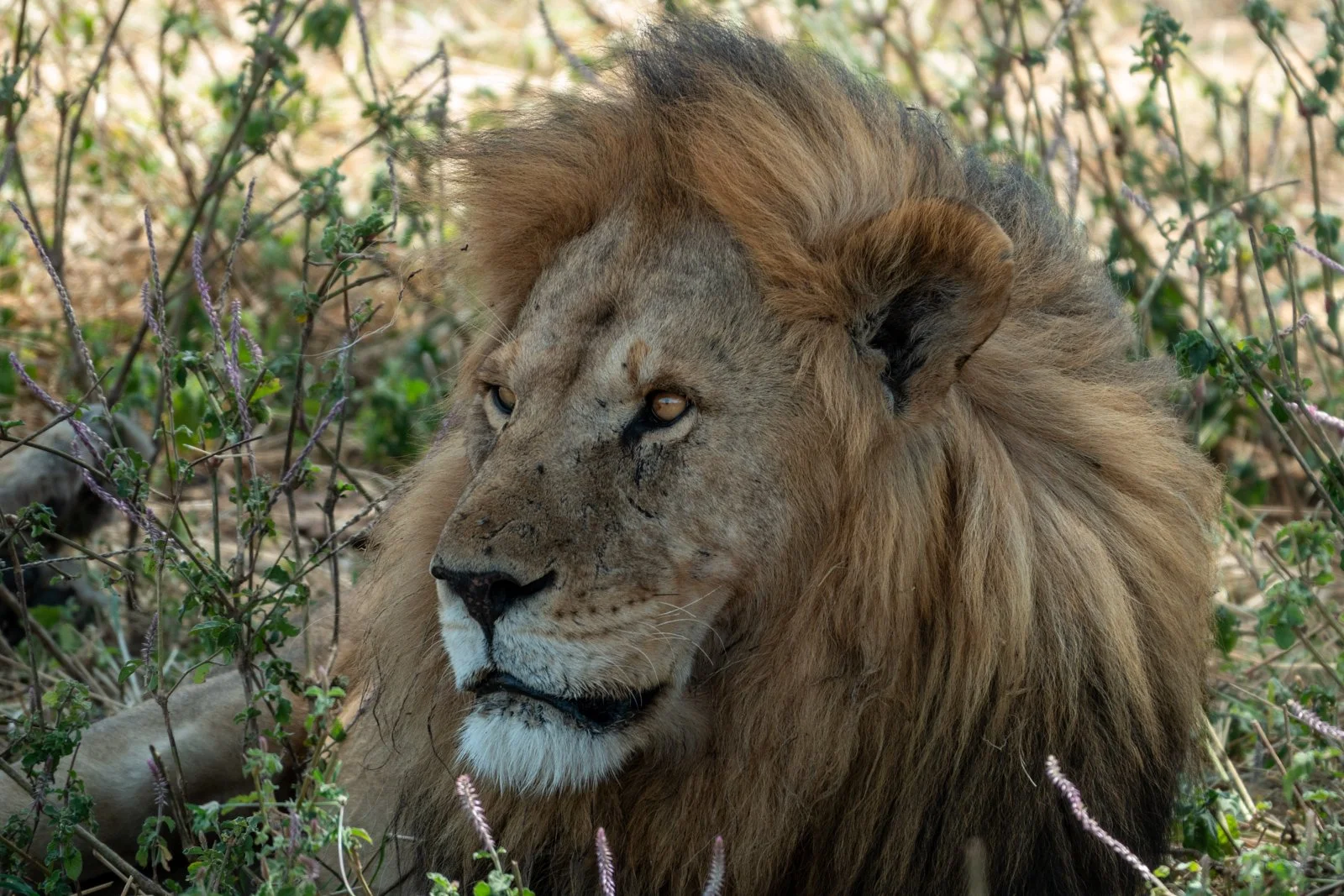
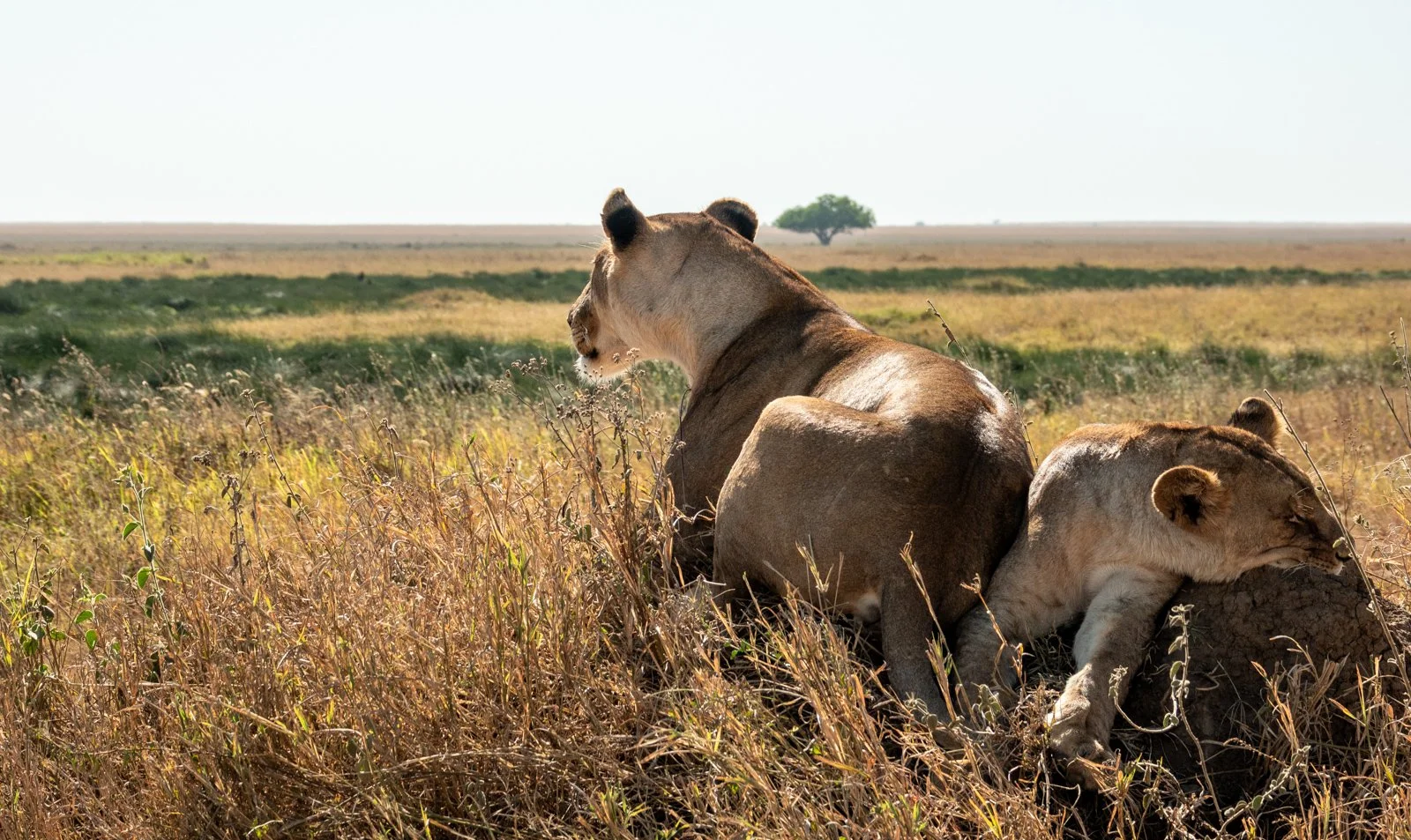
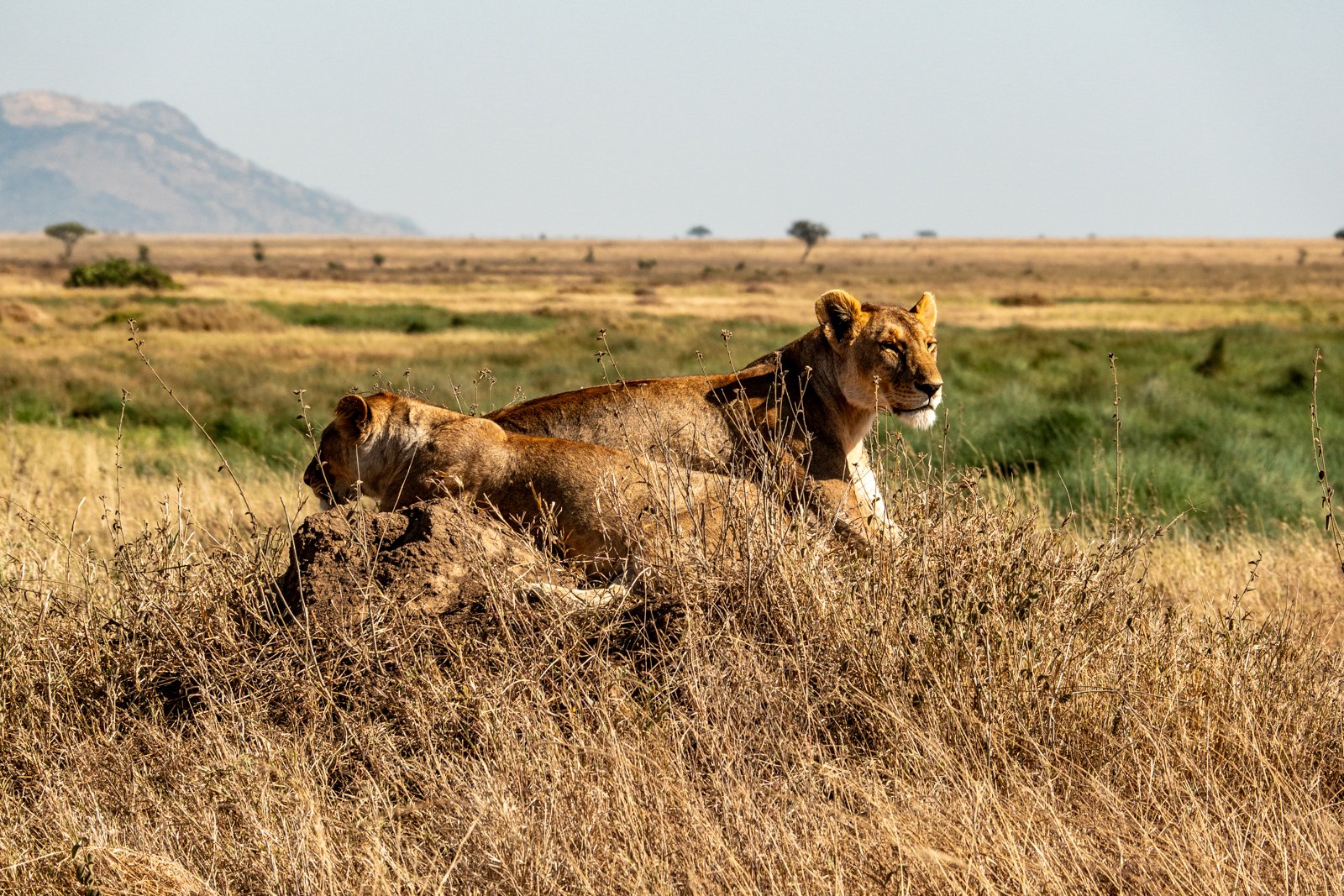
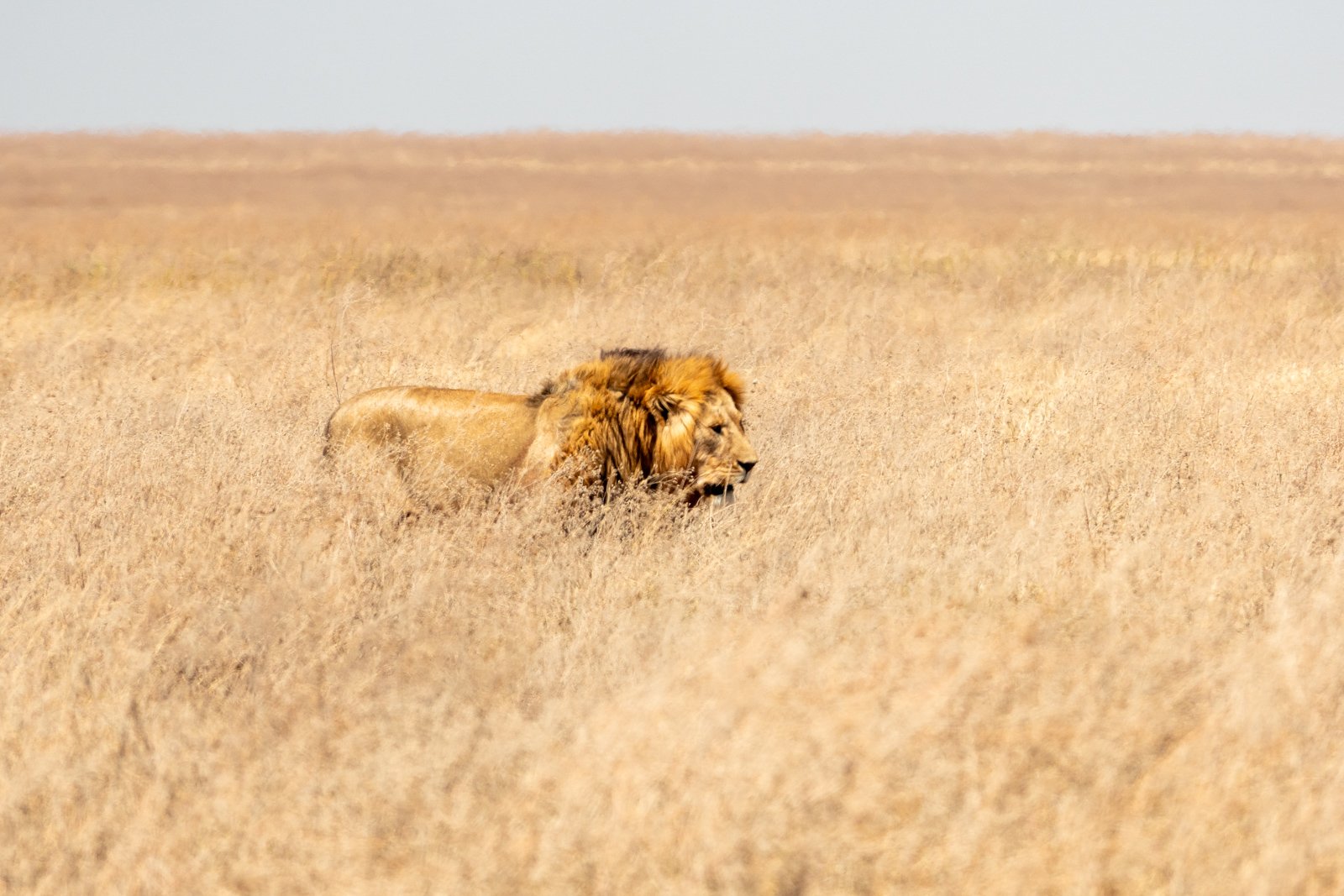
On day 4 we drove into the National Park through the Klein’s gate and then to the Central Serengeti camp. Now we saw many lions and other big cats.
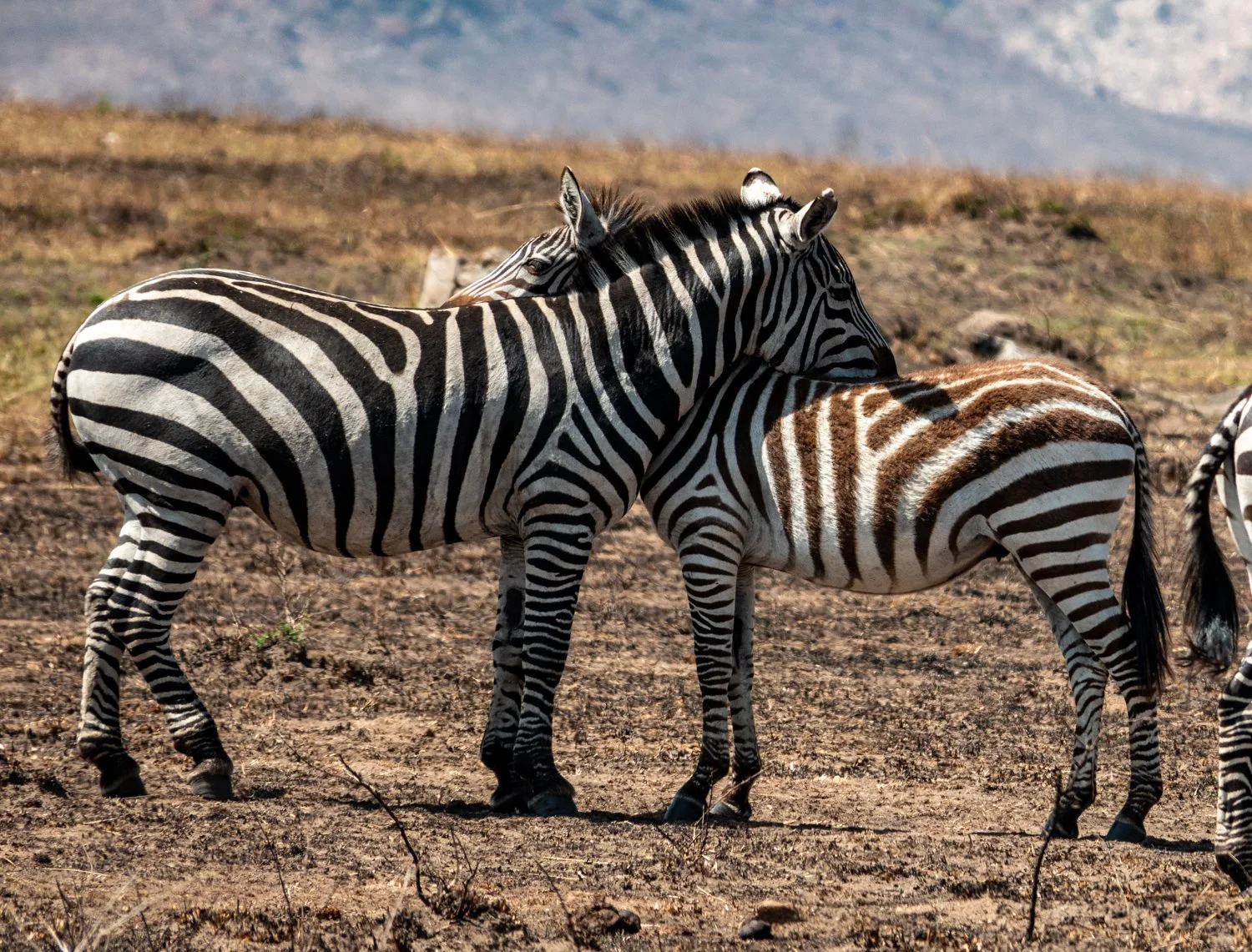
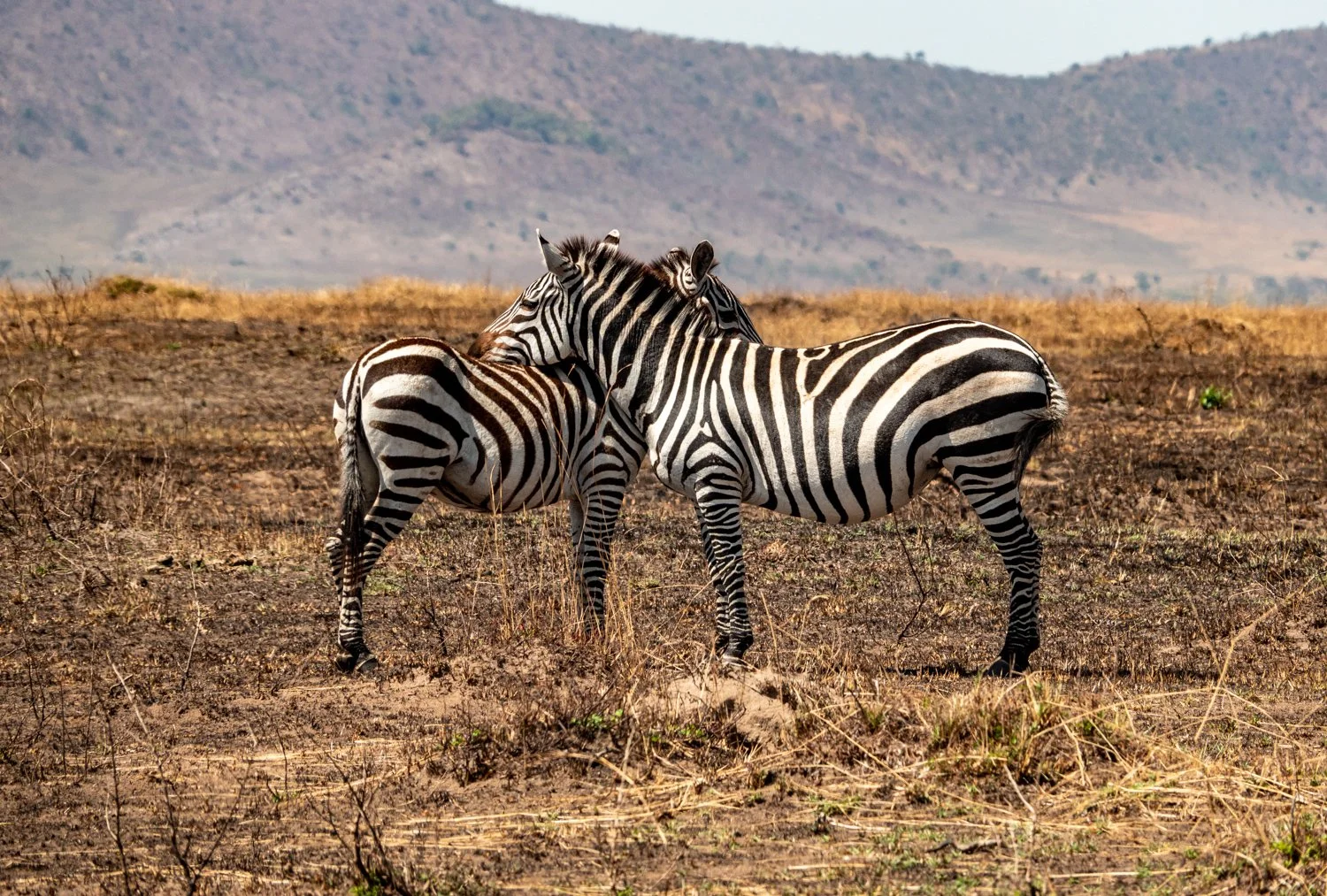
Zebras are surprisingly affectionate.
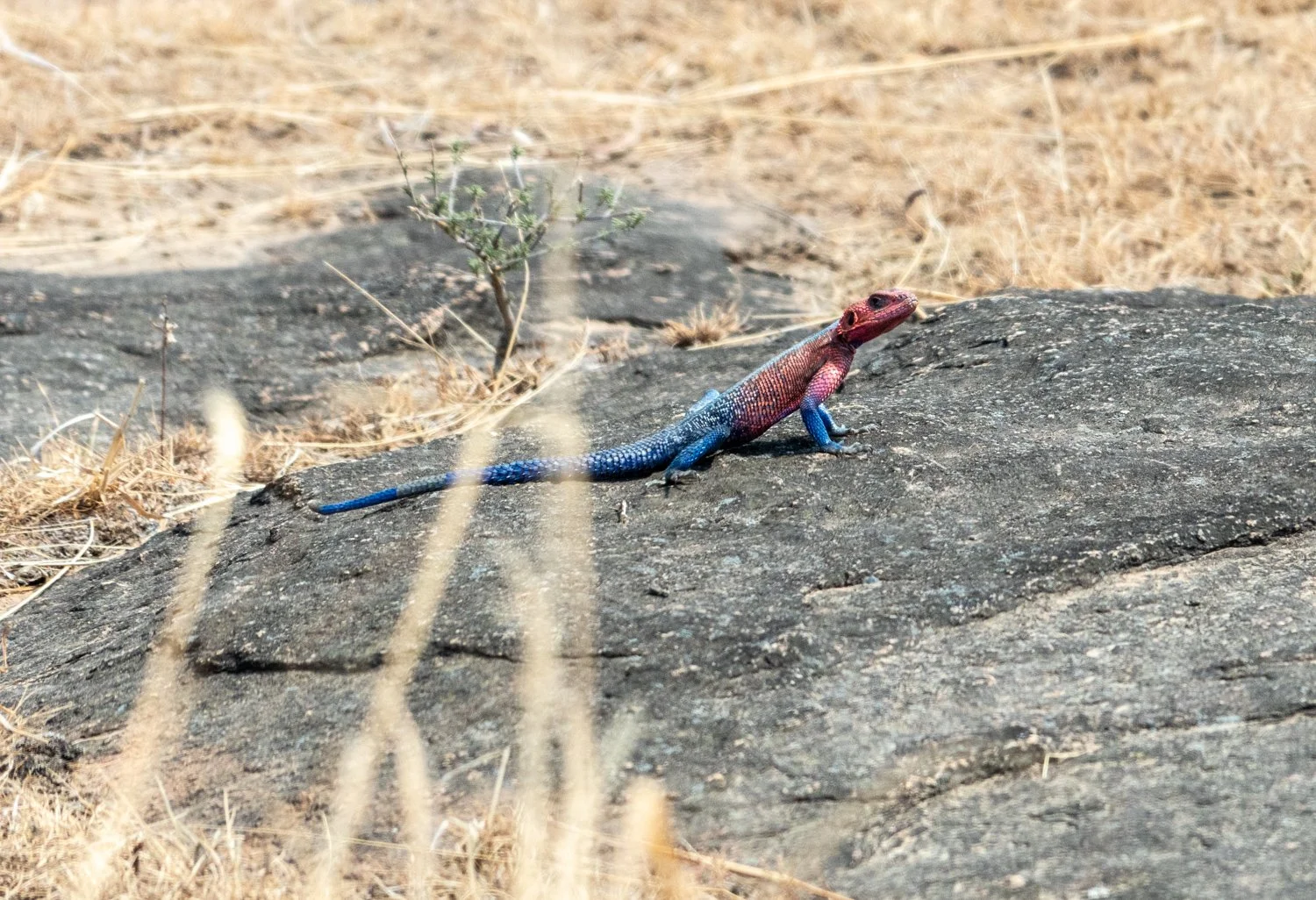
Agama lizard
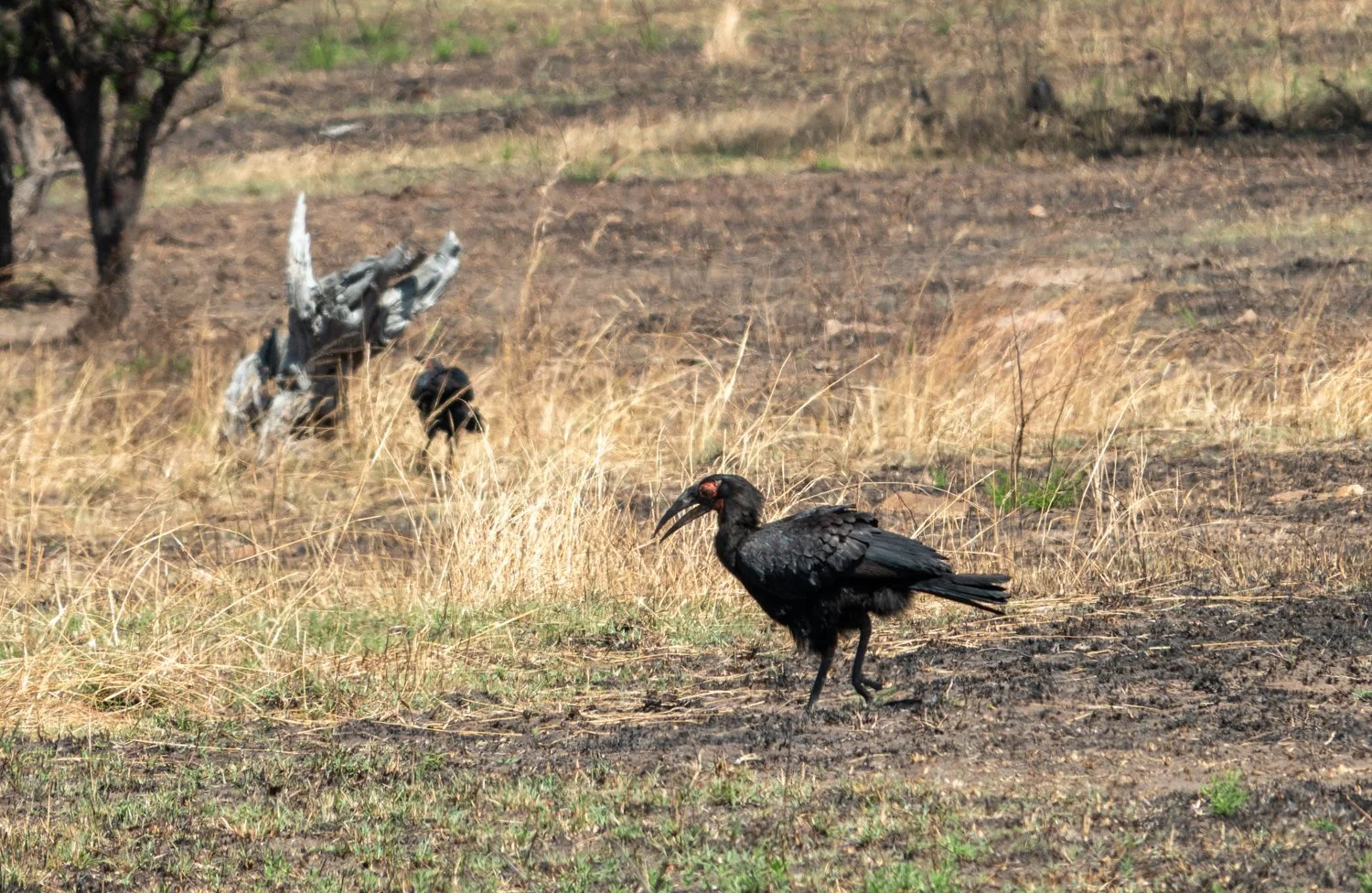
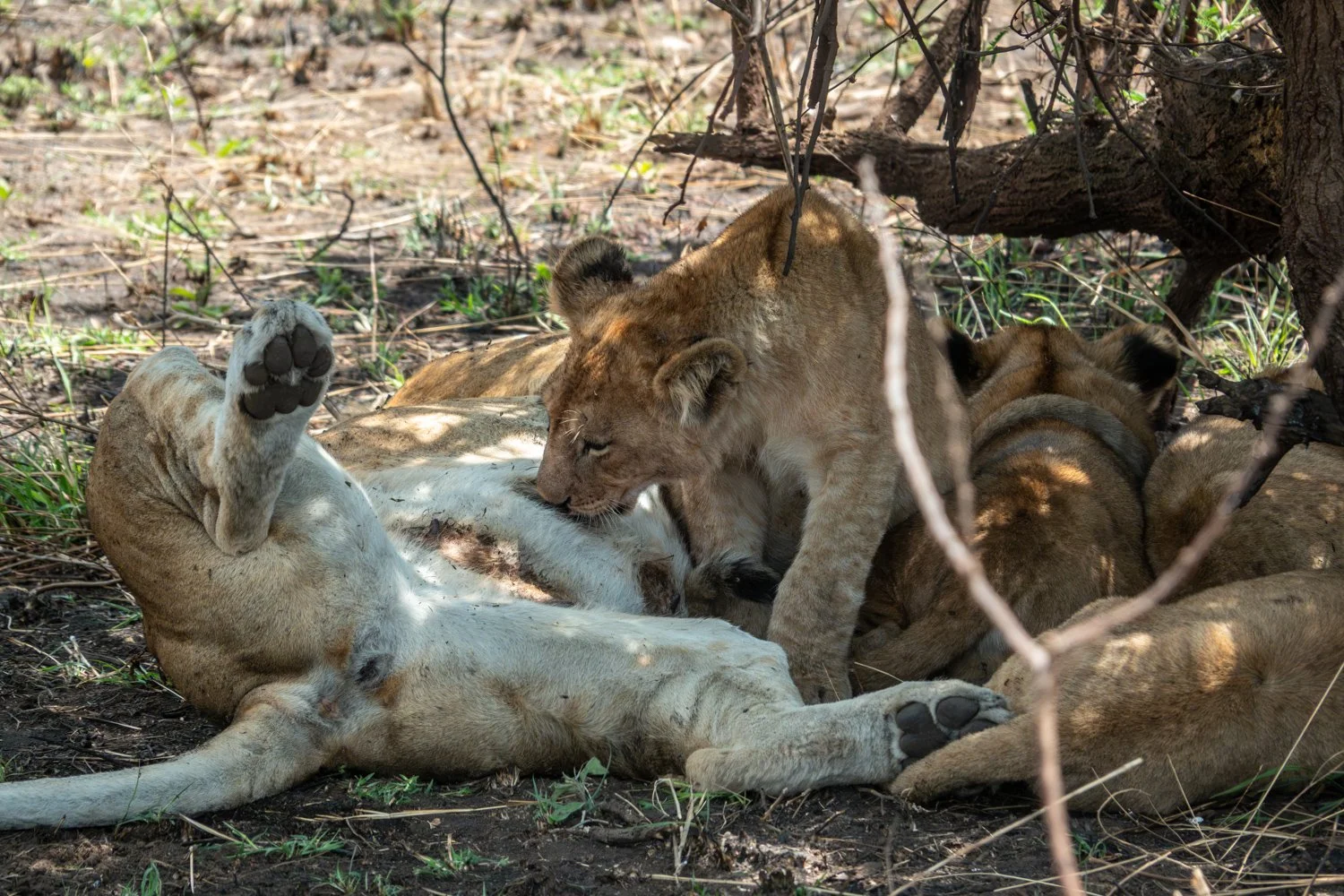
Nursing lion cub
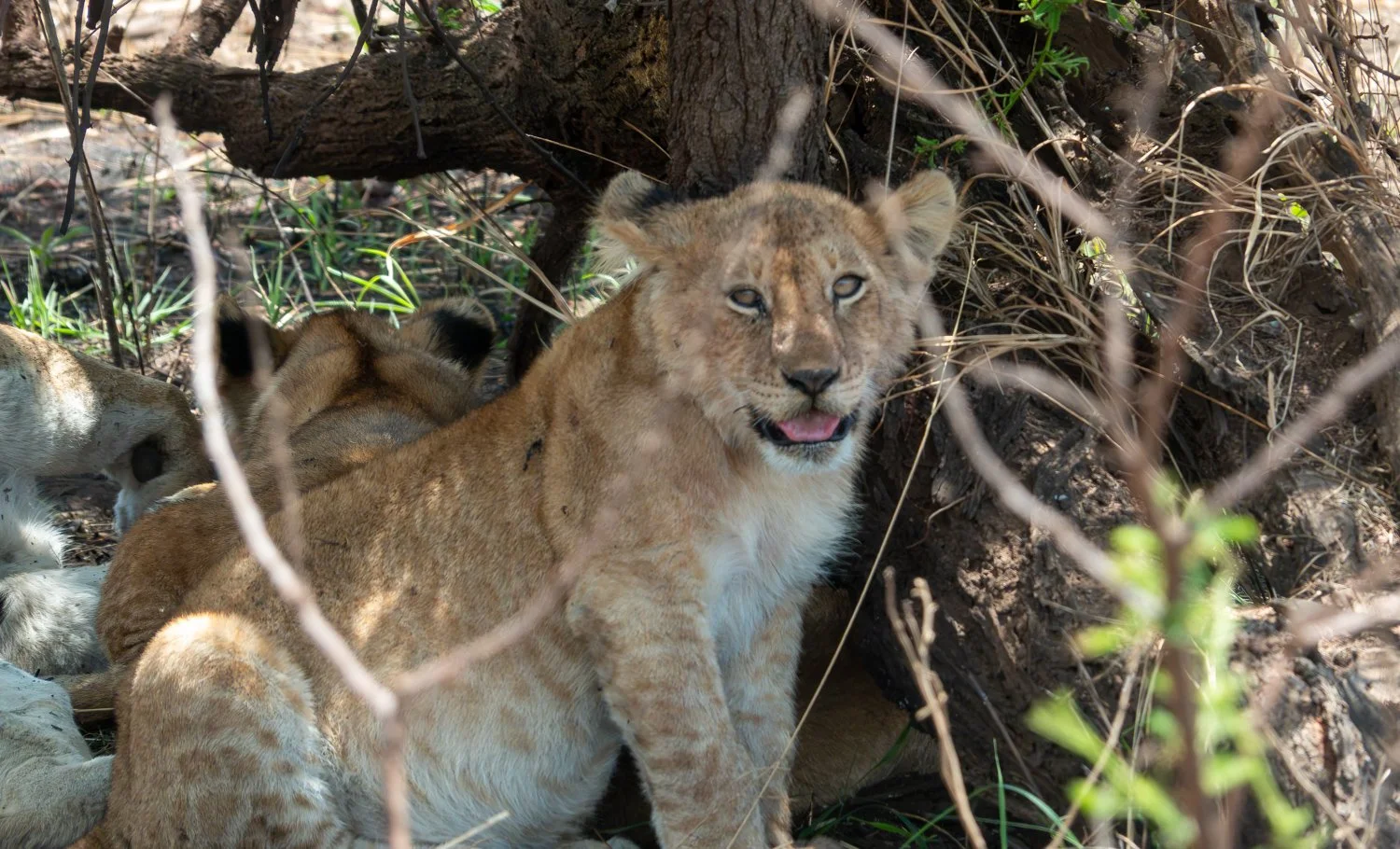
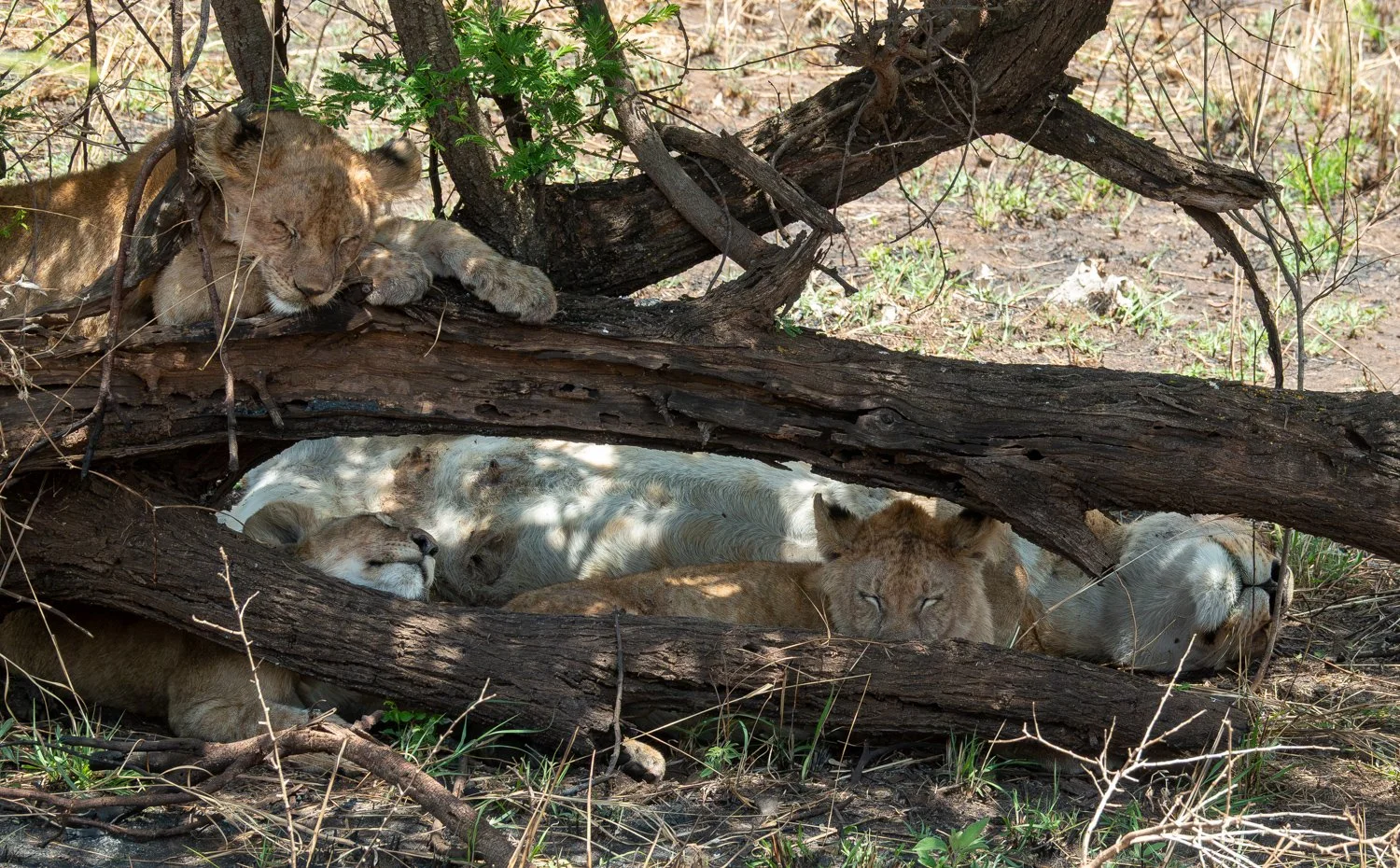
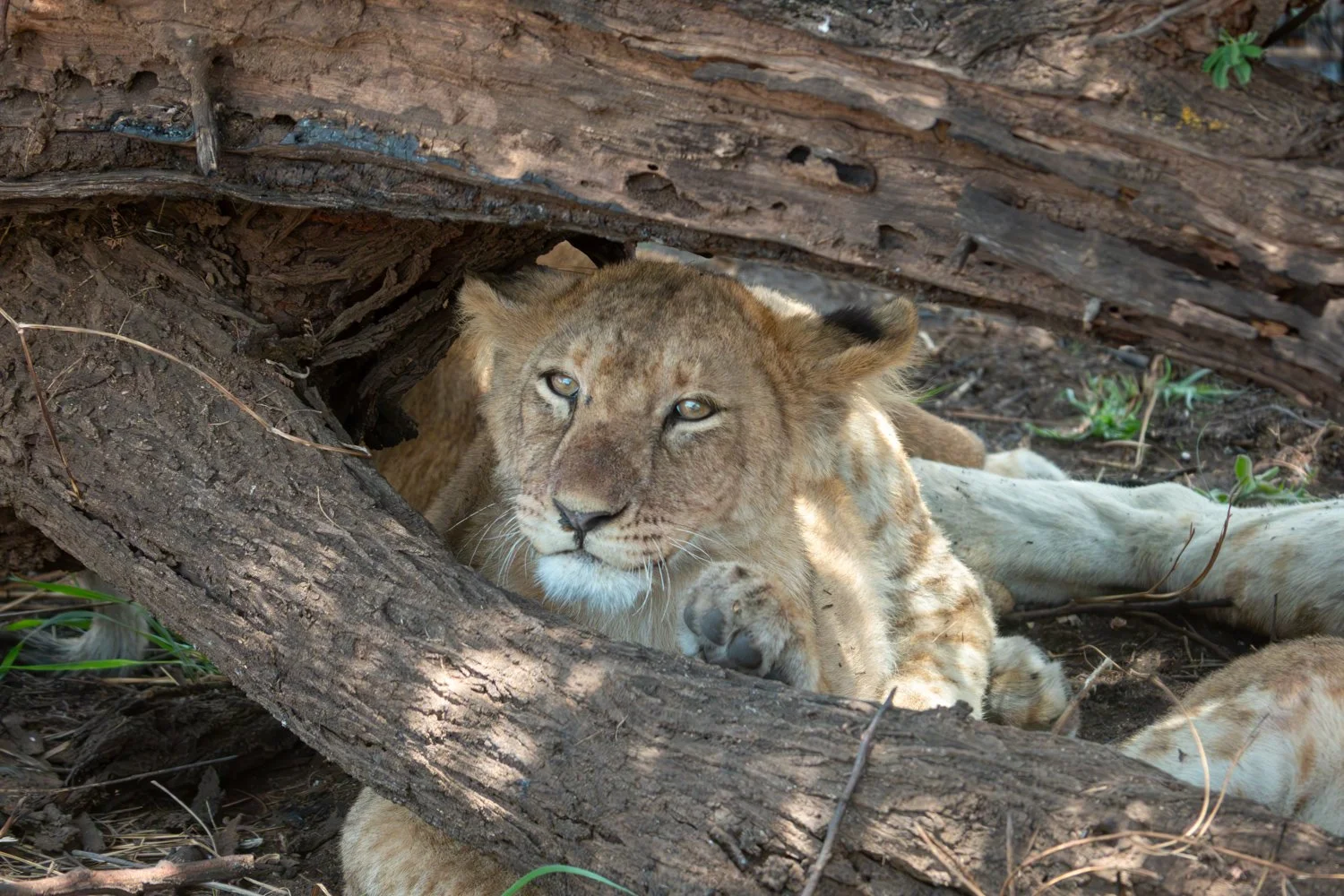
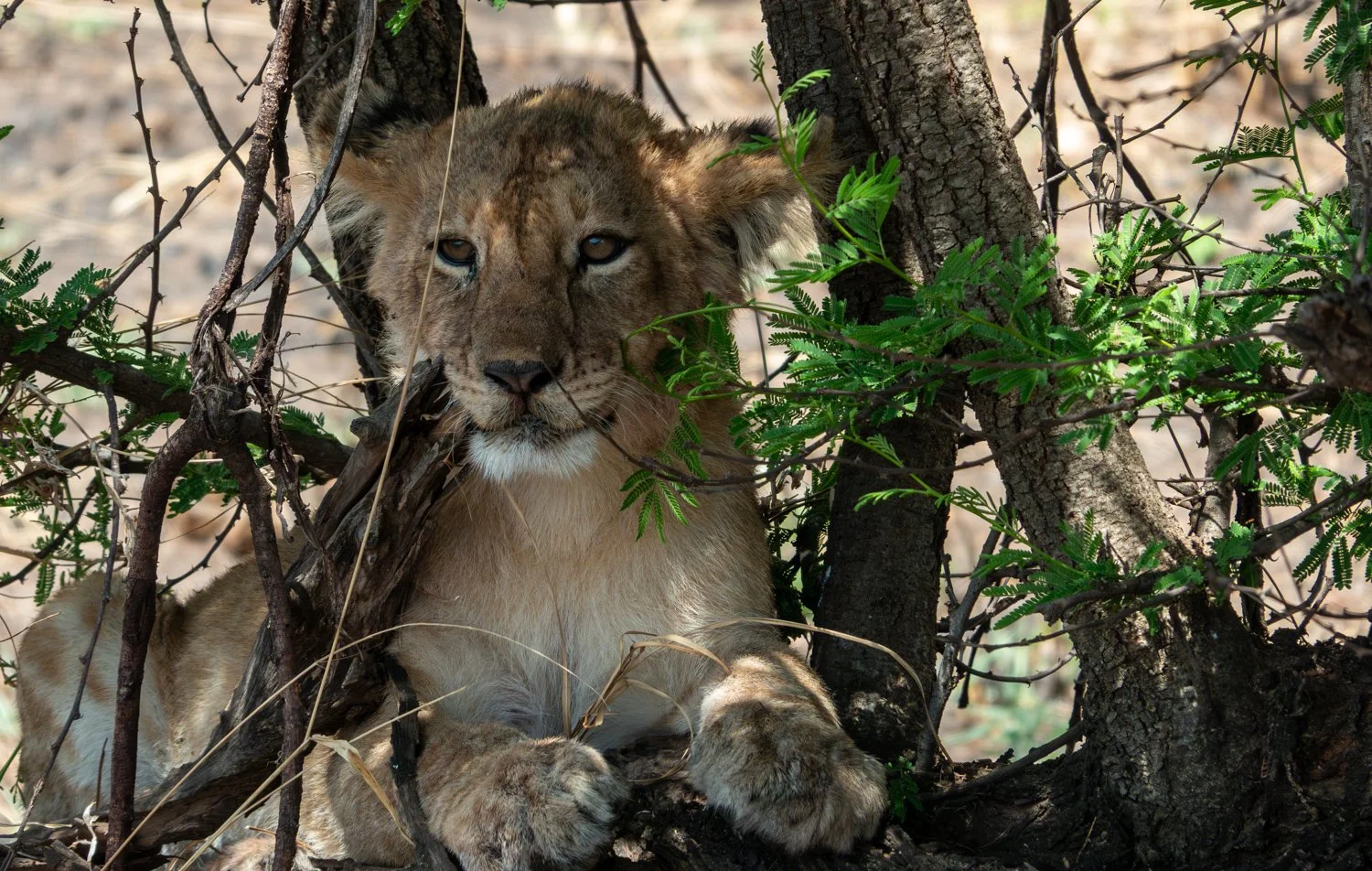
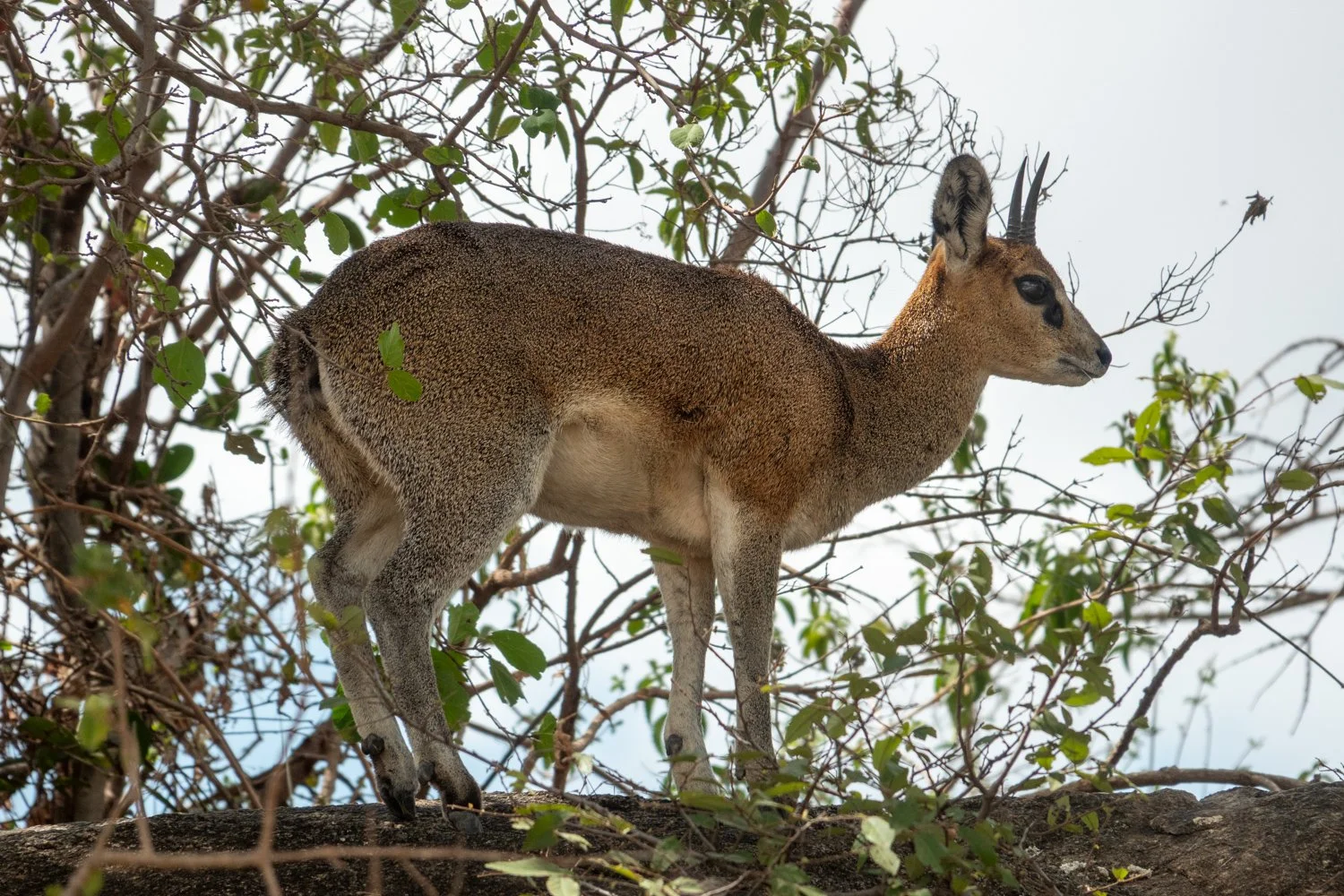
Klipspringer
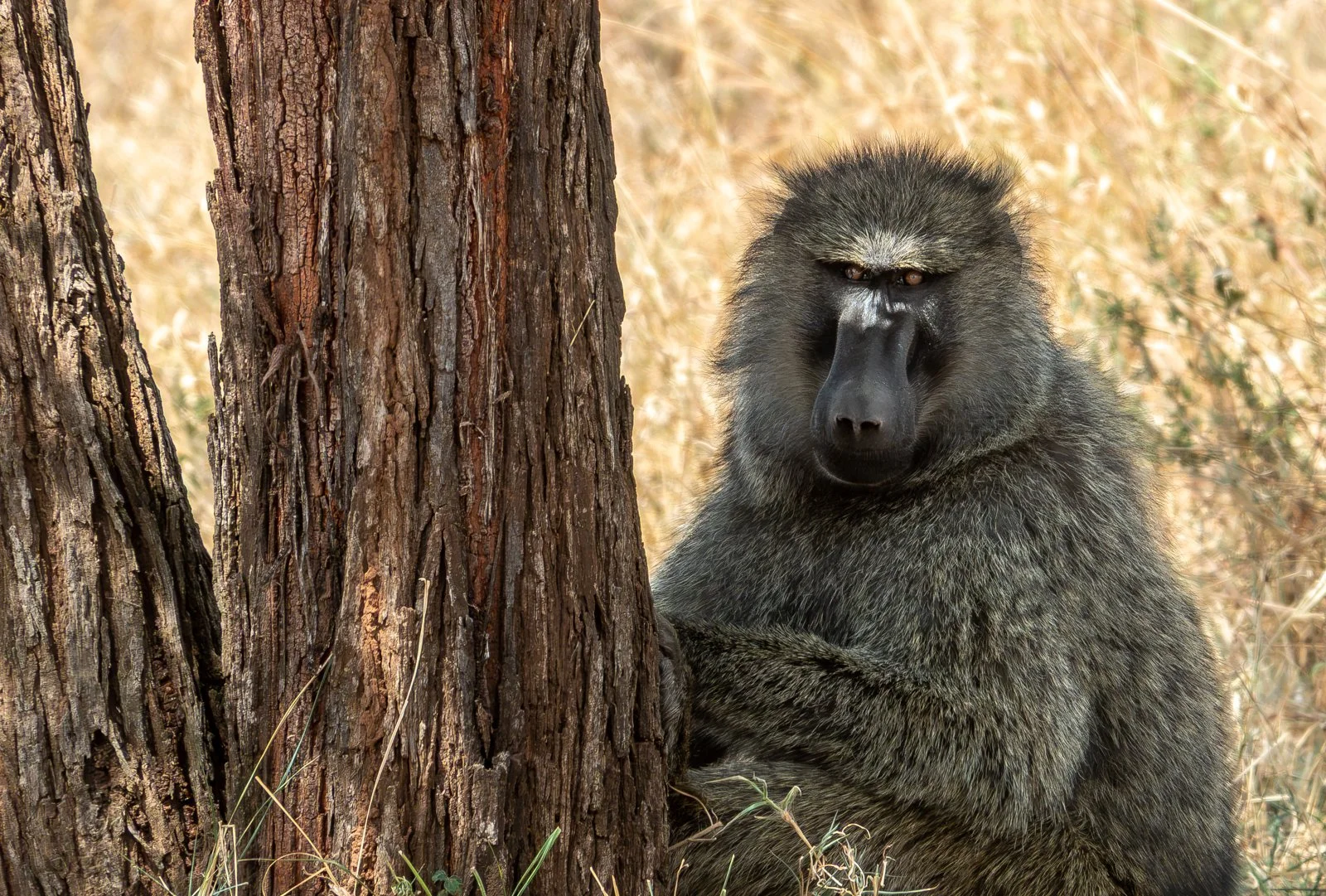
Baboon
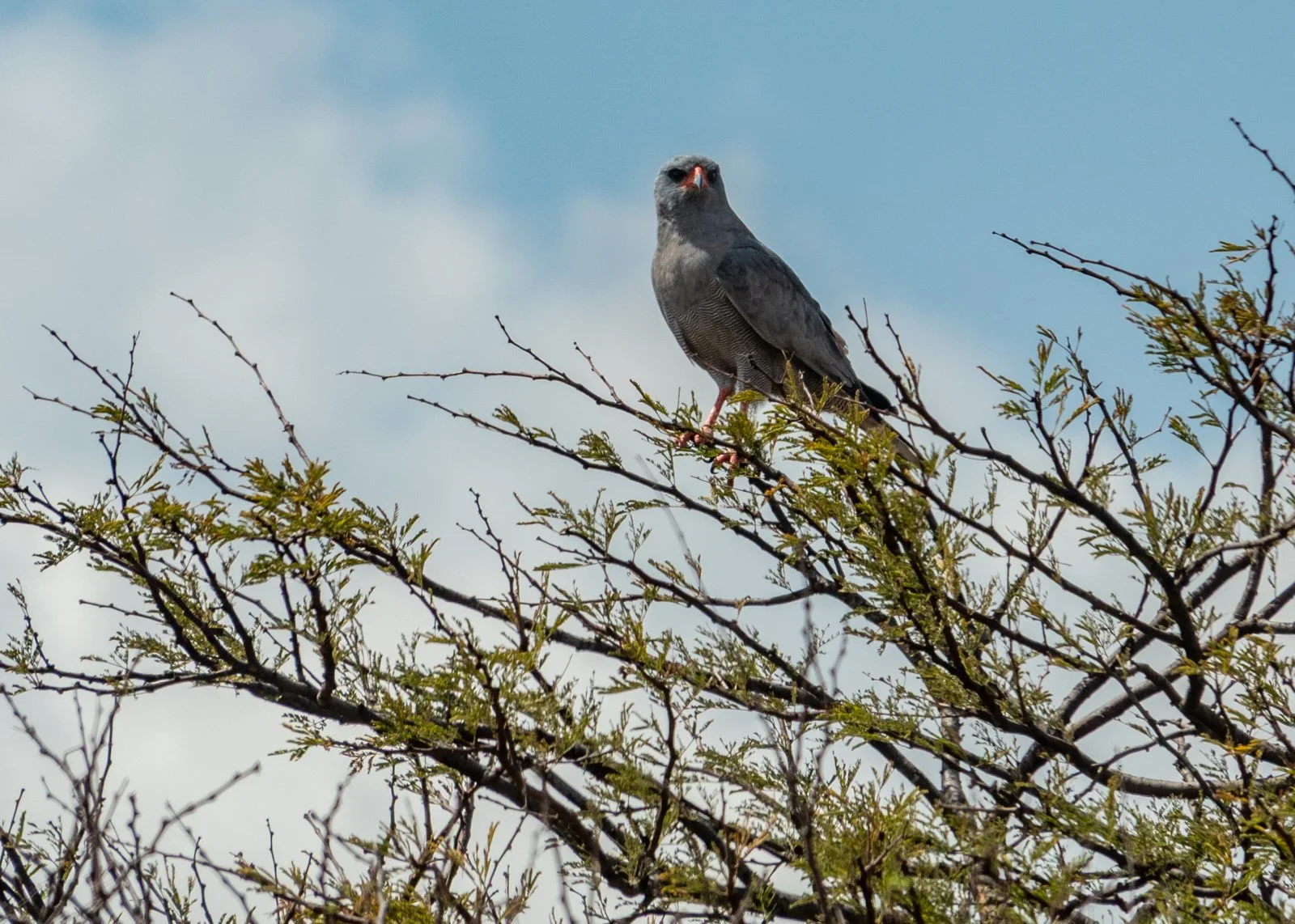
Chanting goshawk
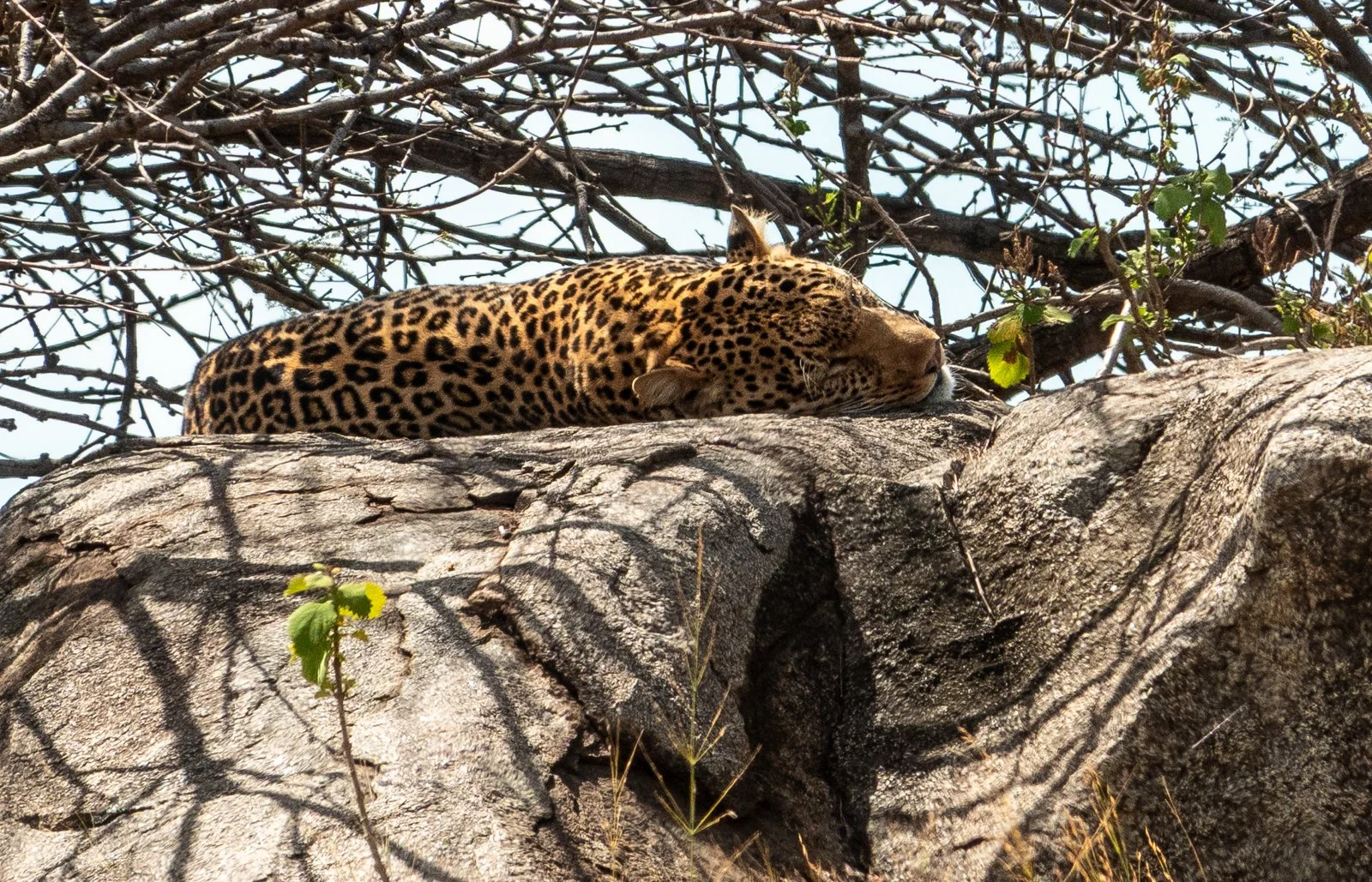
Sleeping leopard
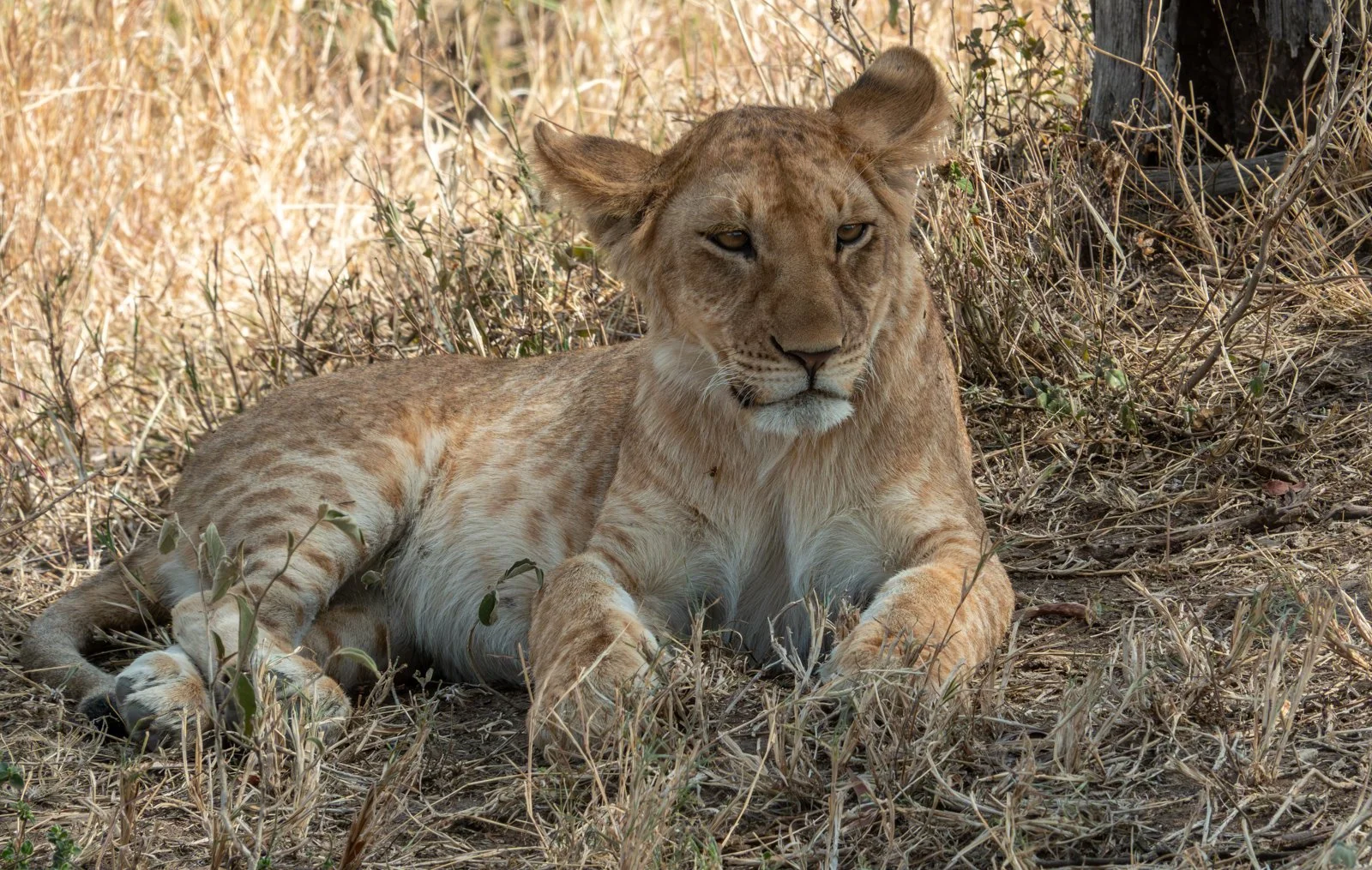
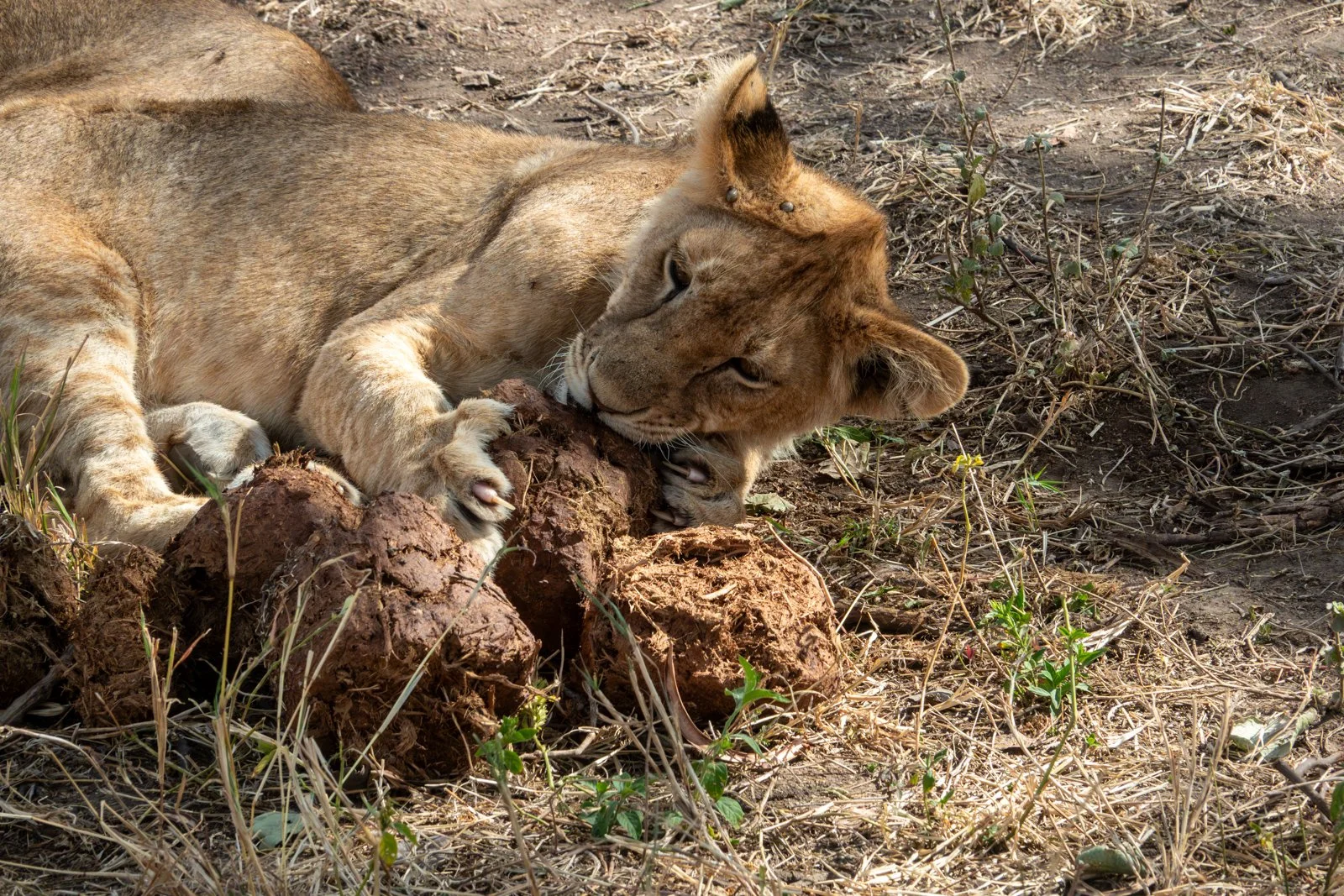
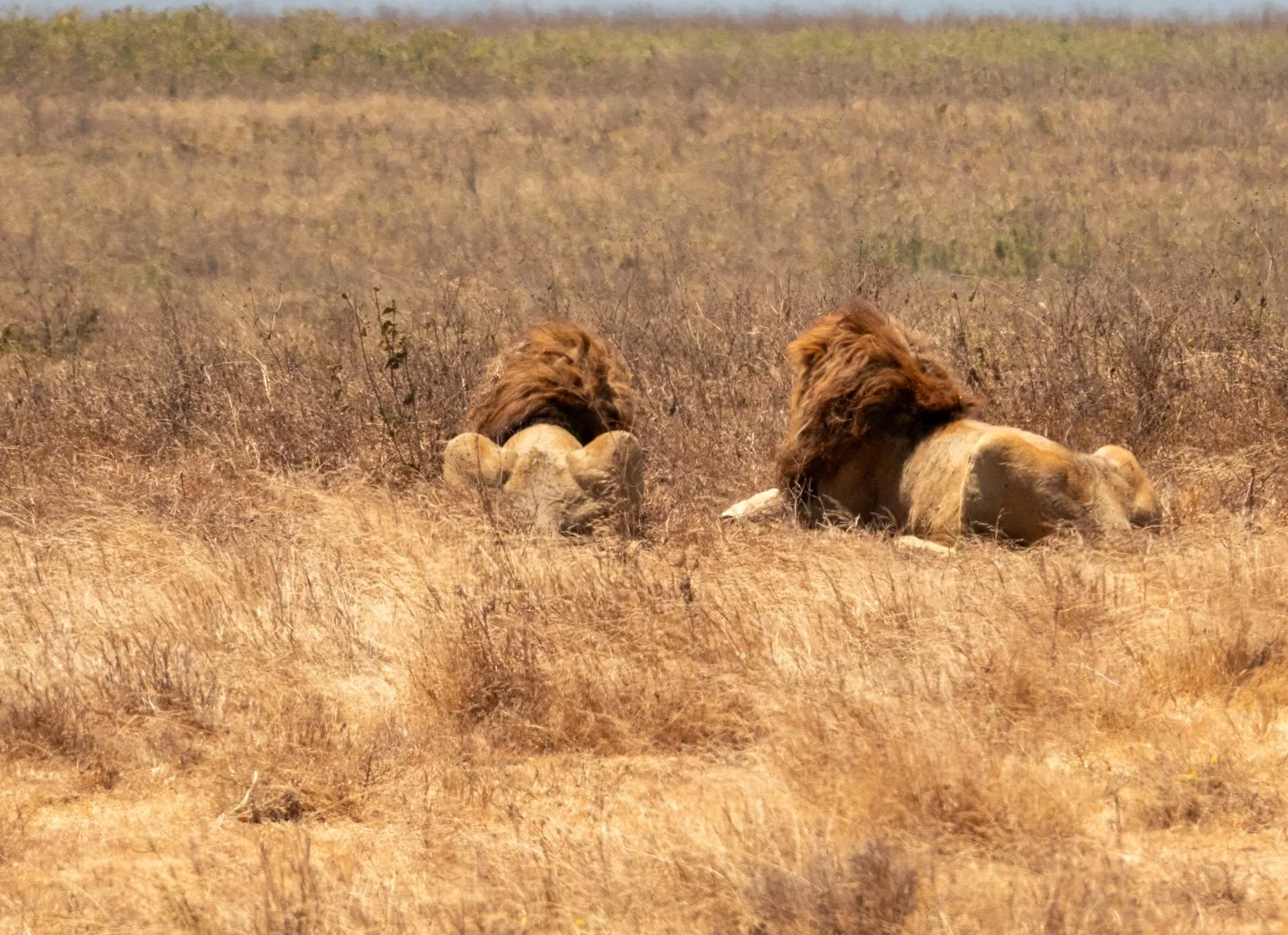
Lion with elephant dung
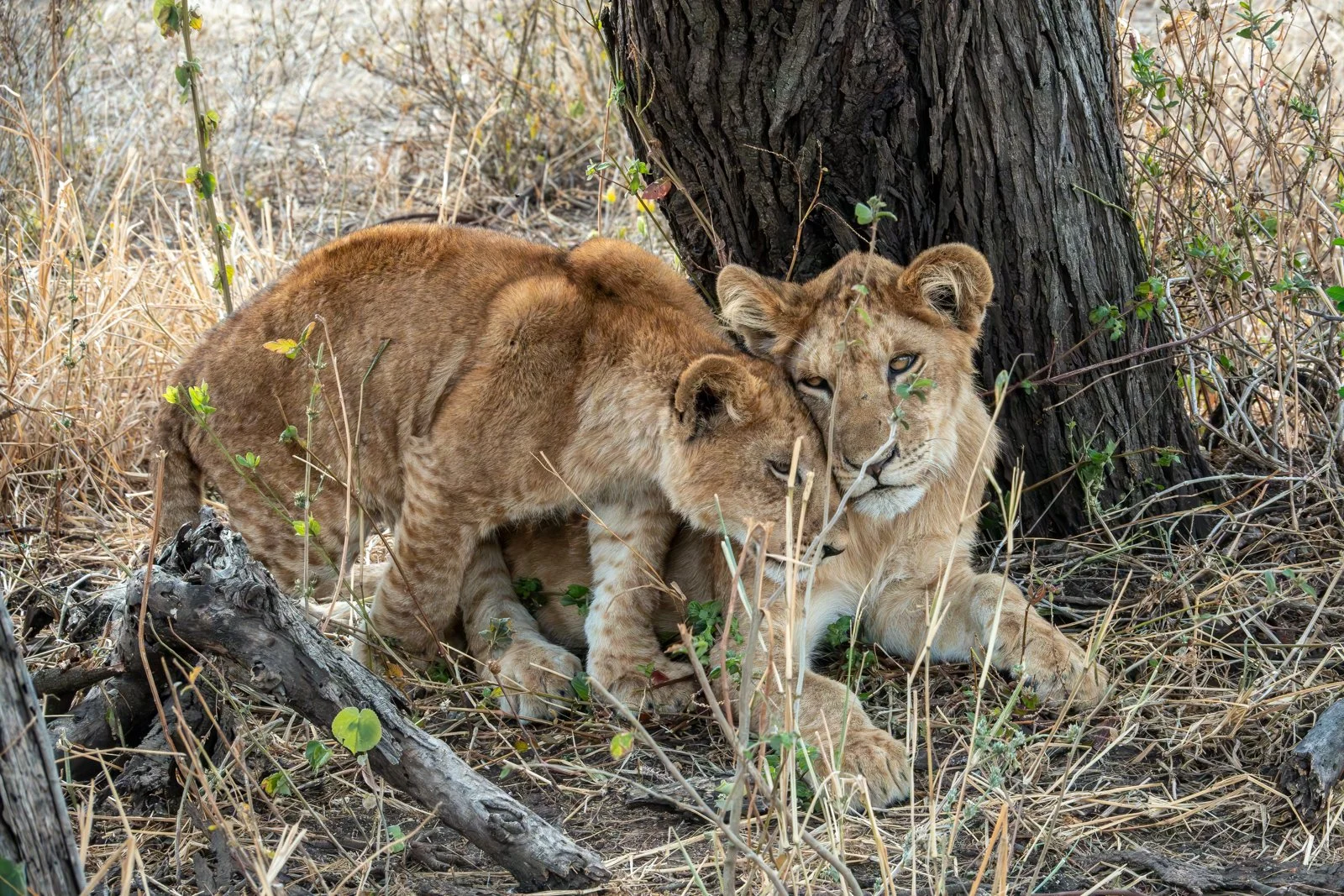
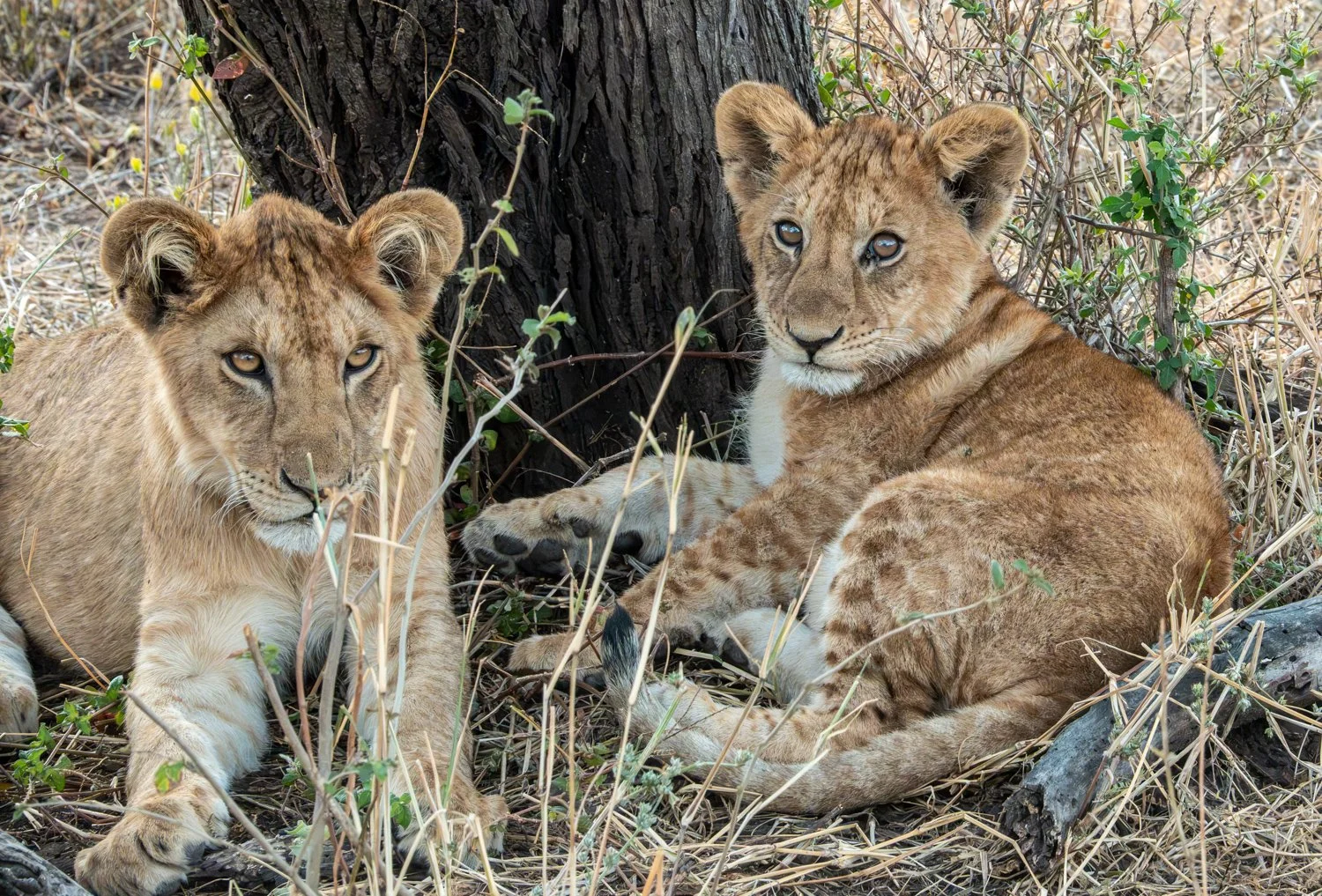
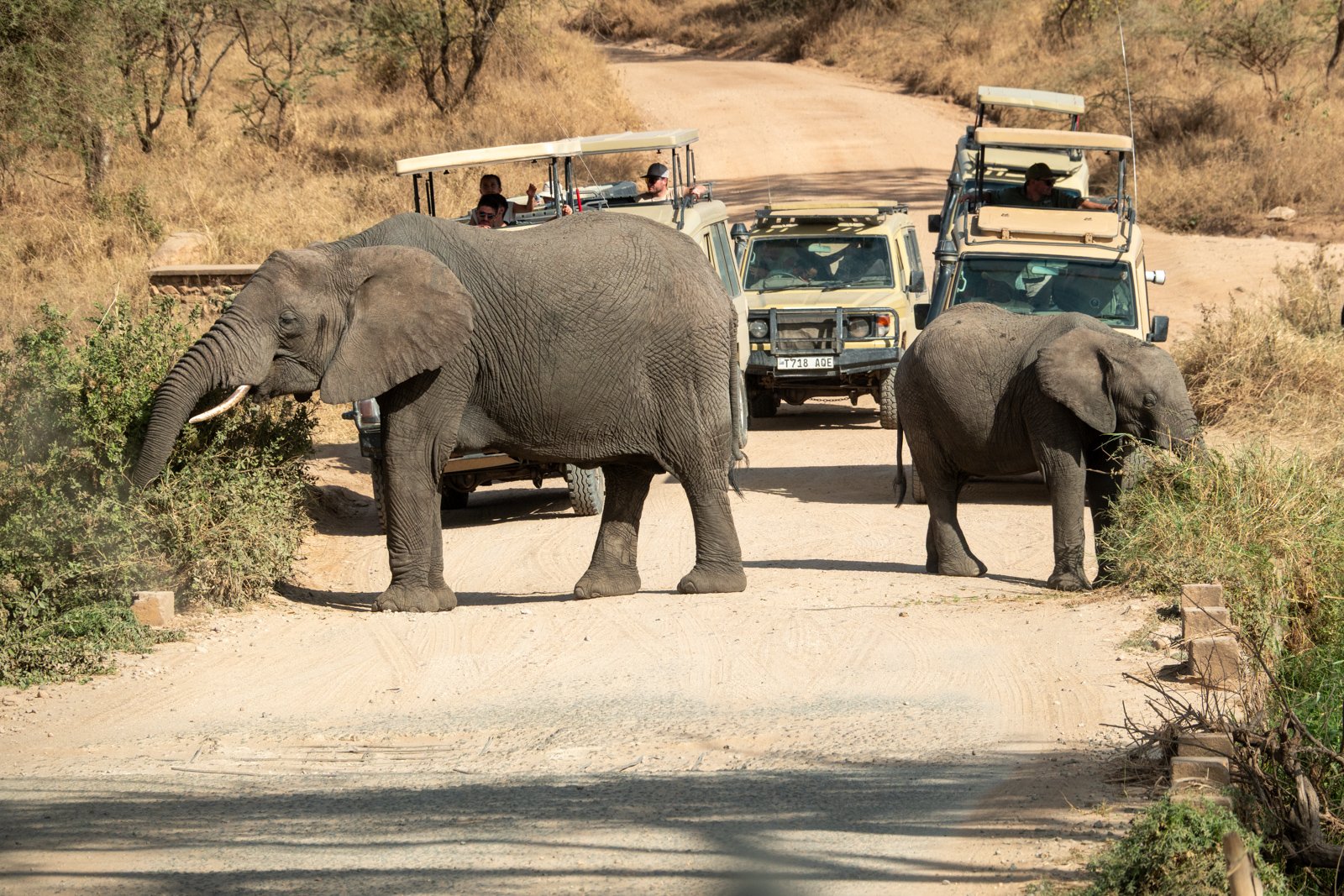
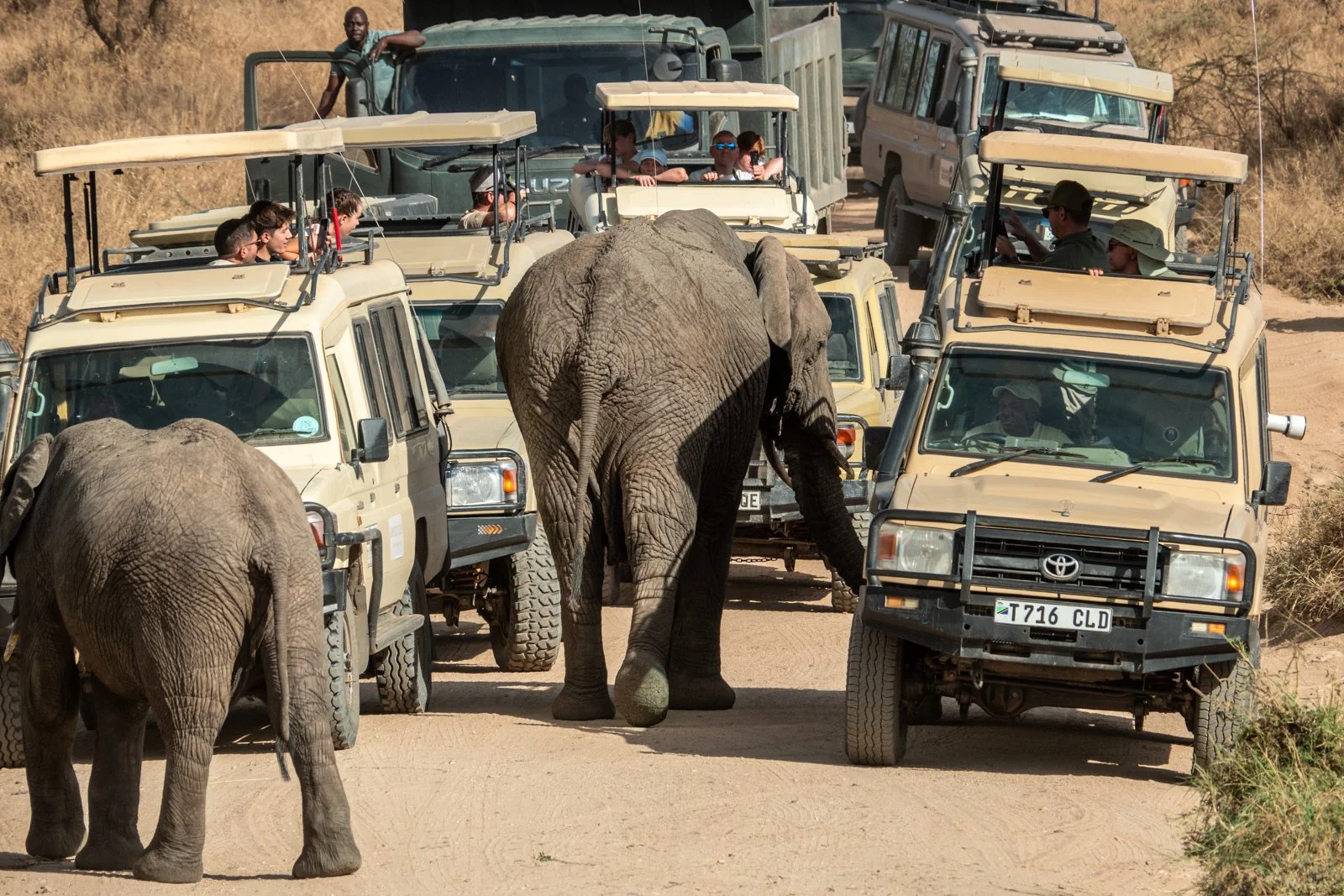
Serengeti traffic jam
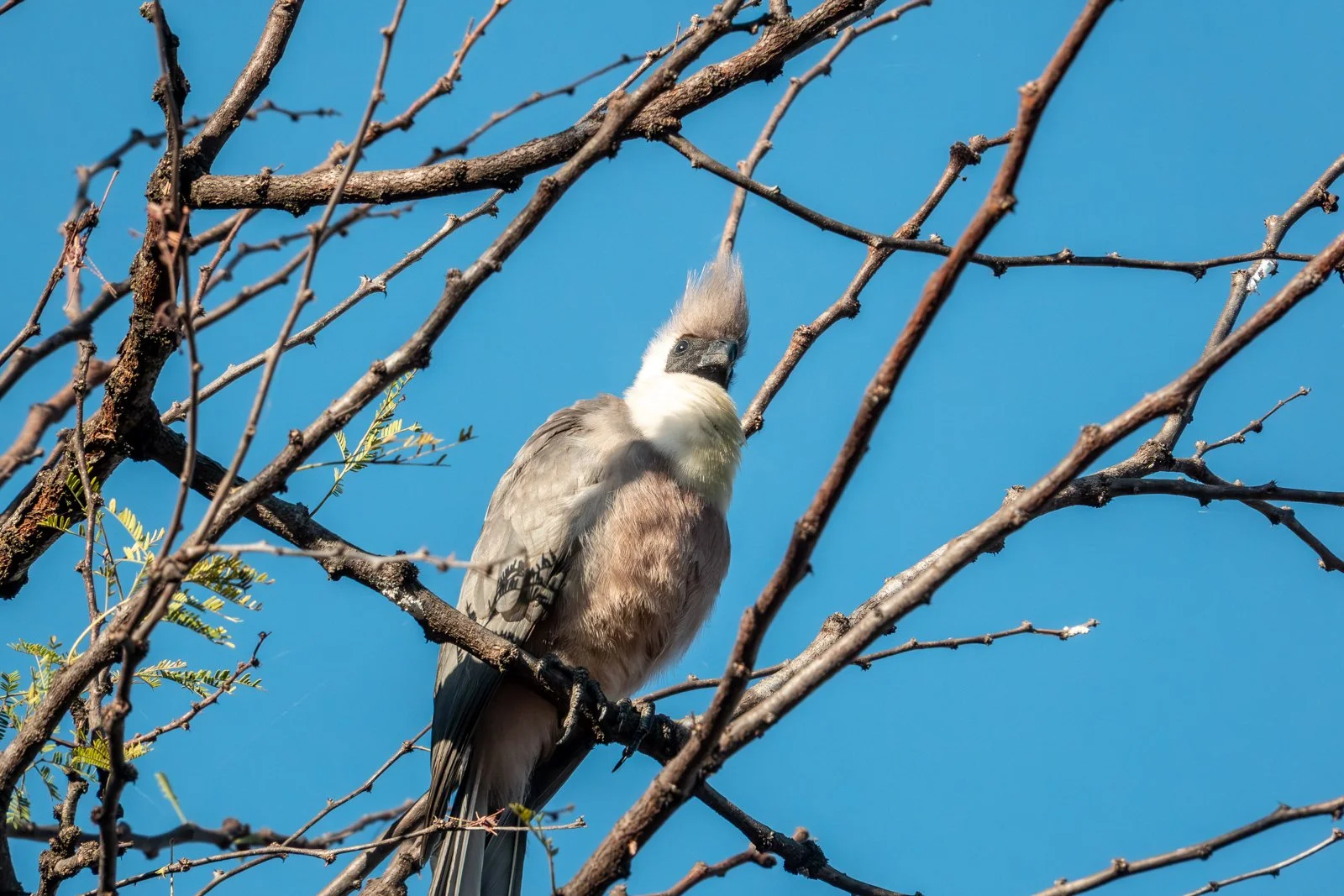
Go-away bird
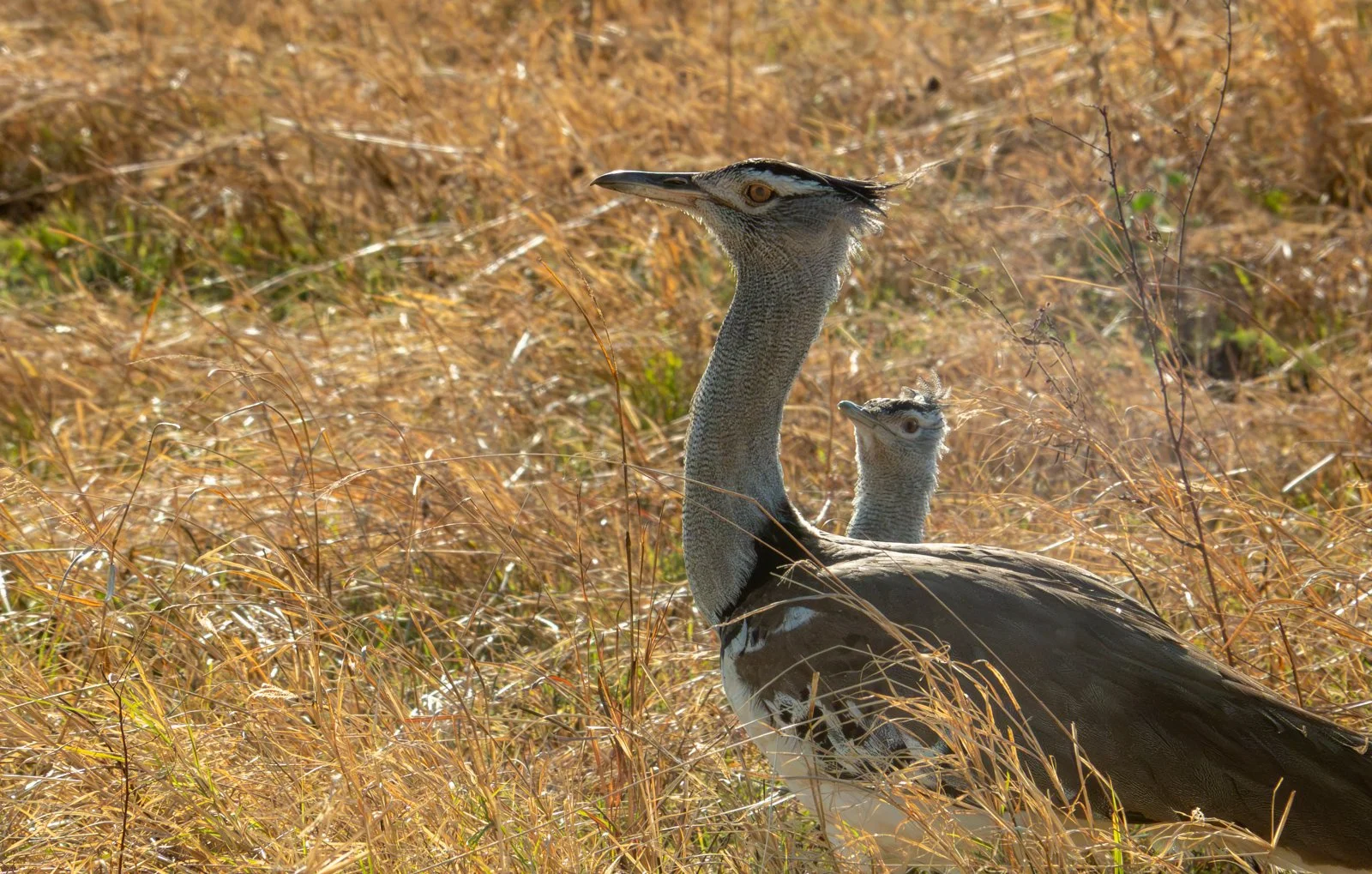
Kori bustard bird
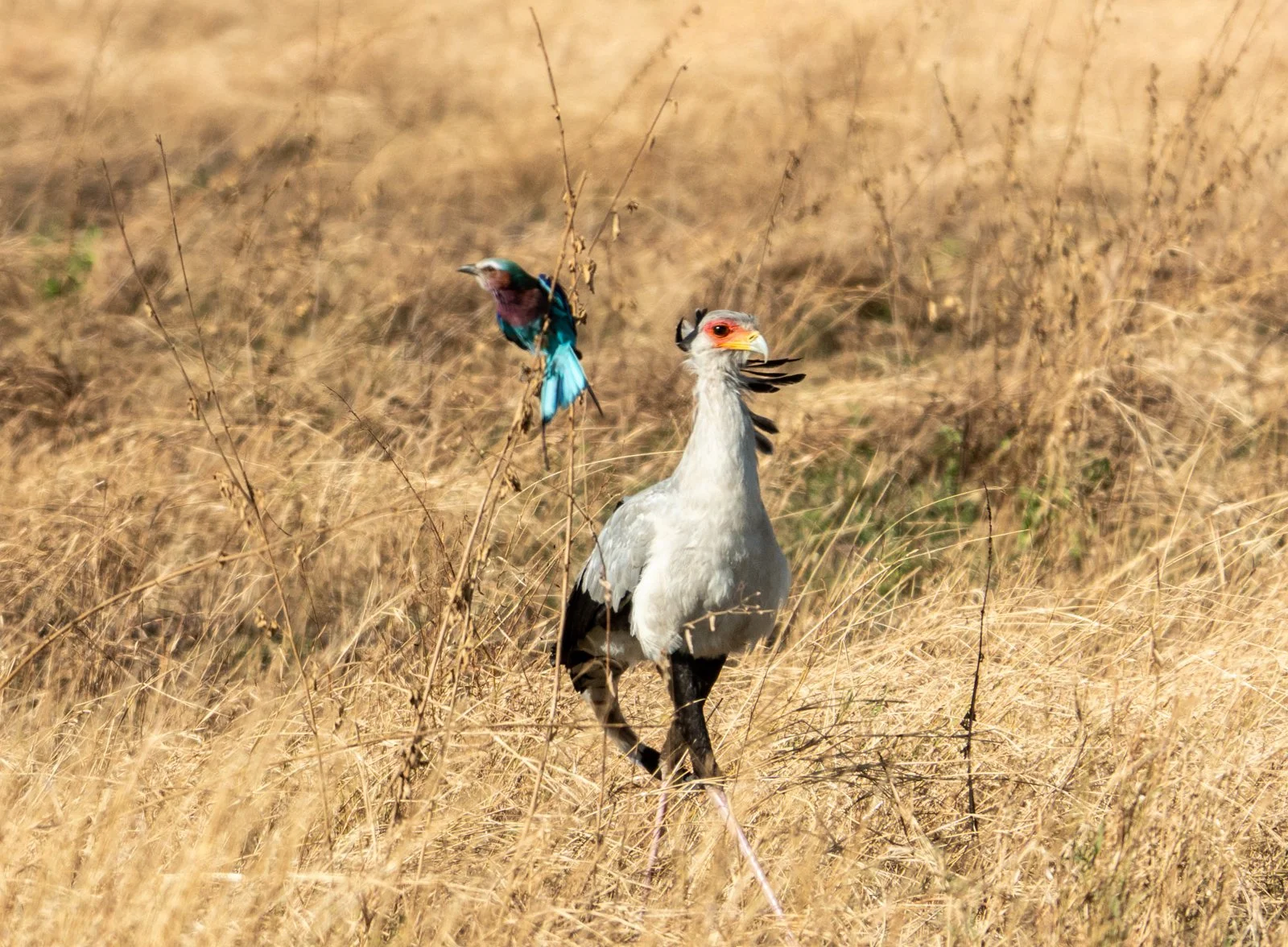
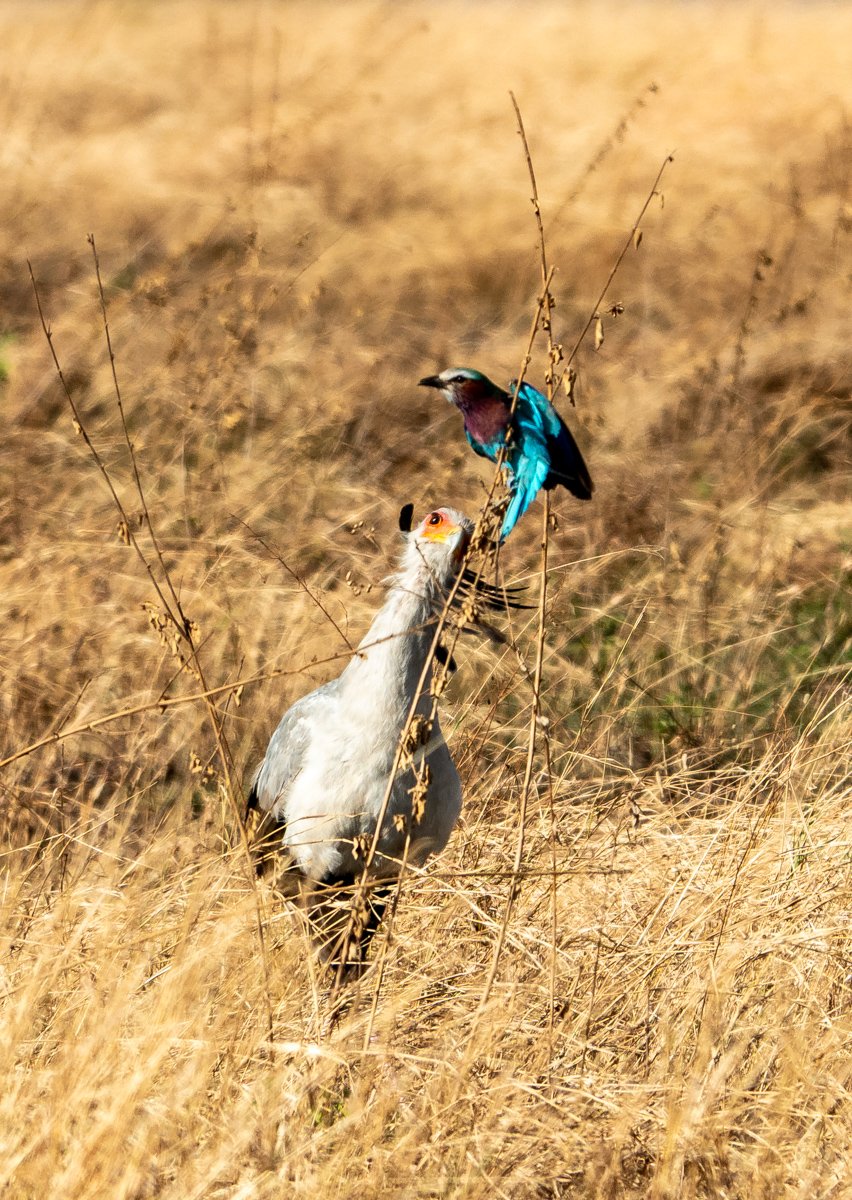
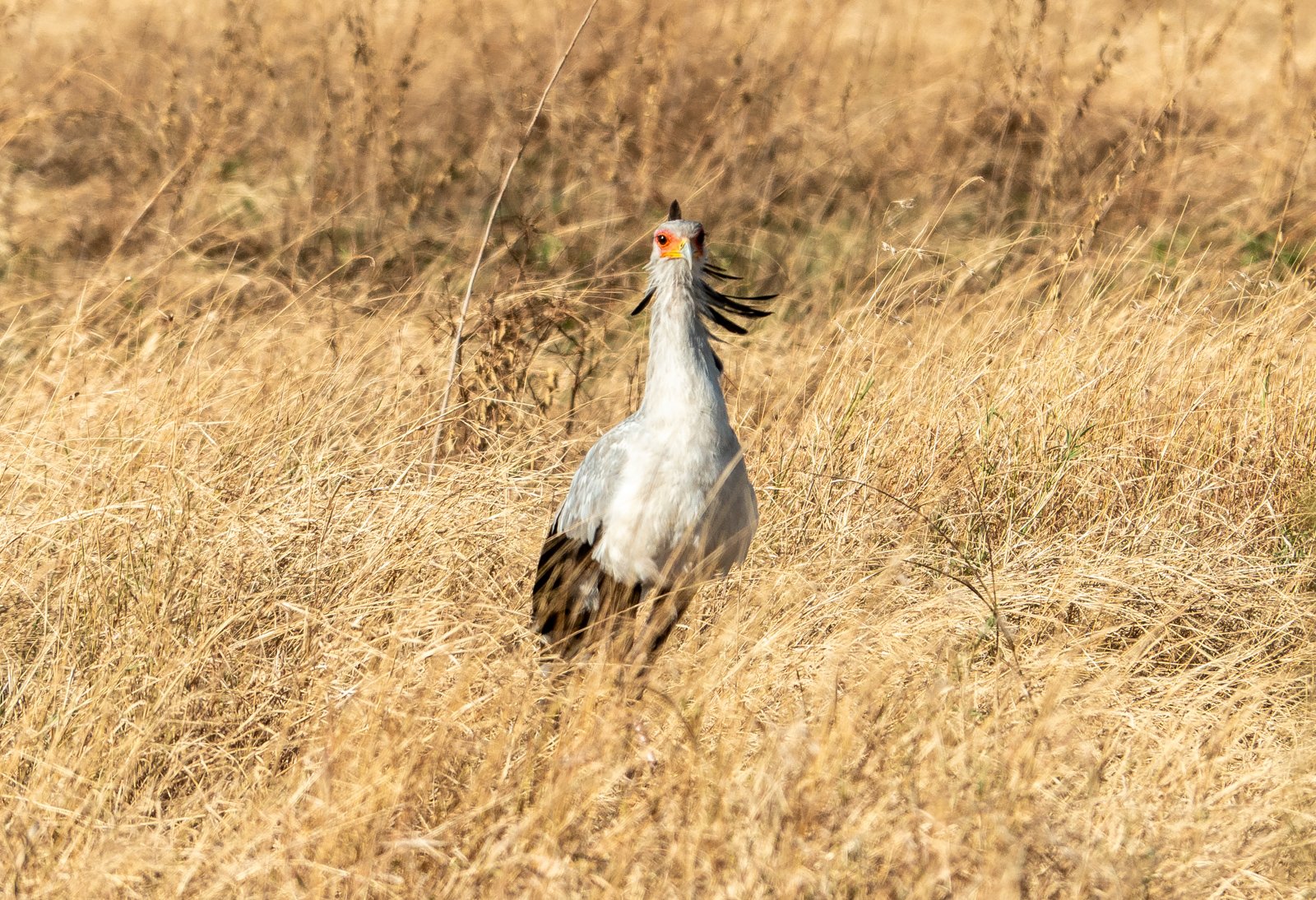
Secretary bird eyeing a roller bird
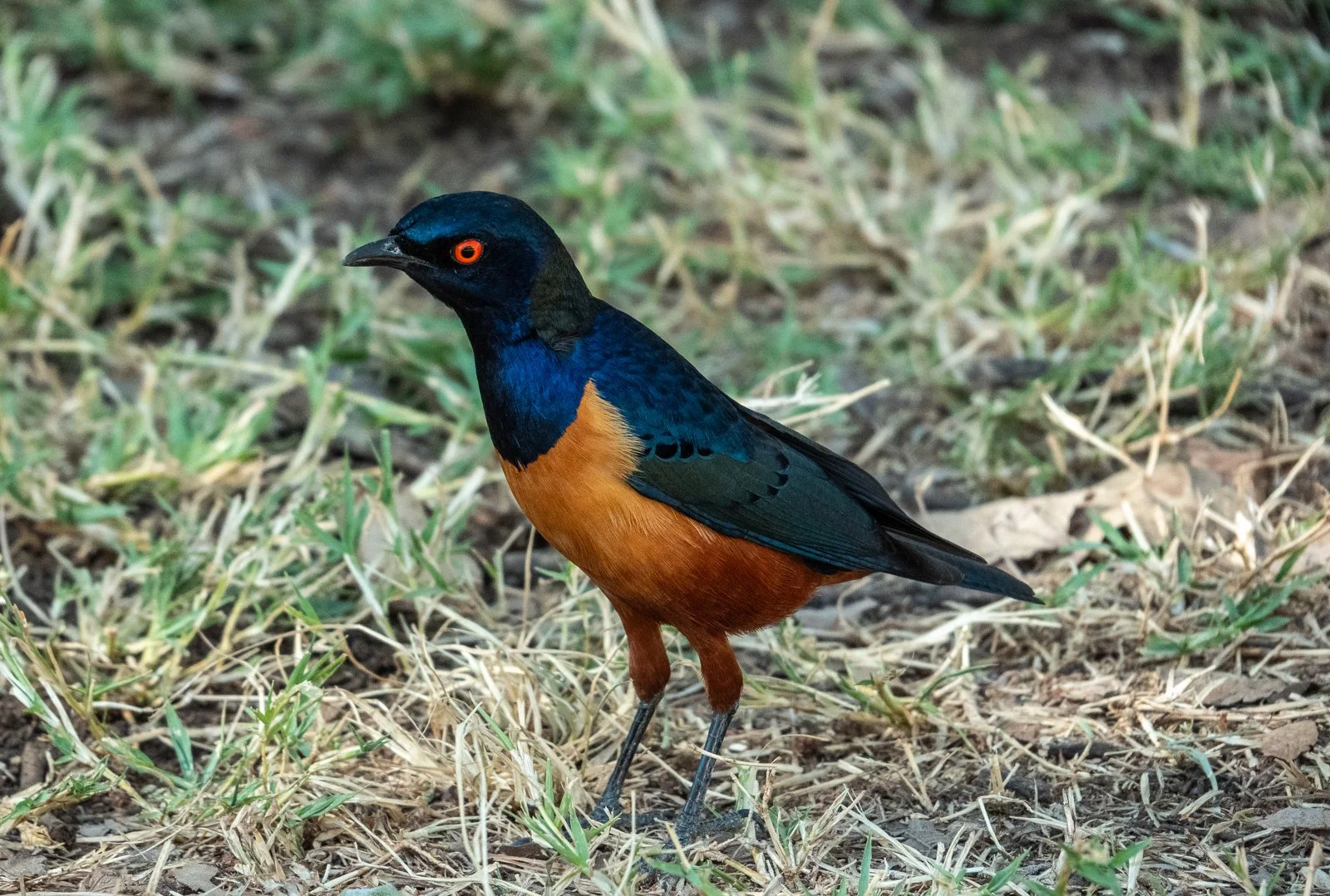
Hildebrandt’s starling
The only ‘chase’ that we witnessed was an unusual one in which a lion gave a half-hearted chase of a lioness who had the carcss of a small impala. The prize was too small to share.
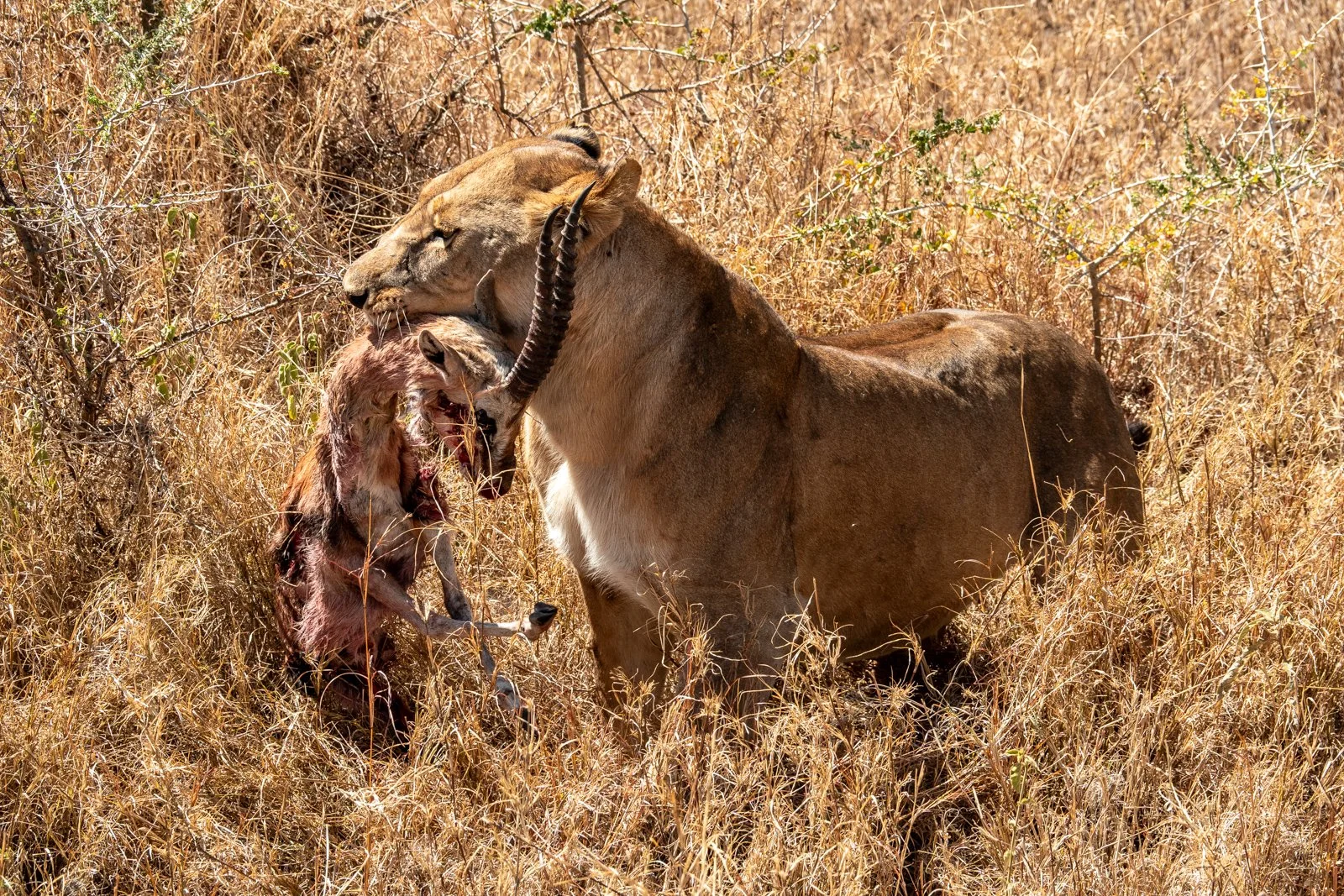
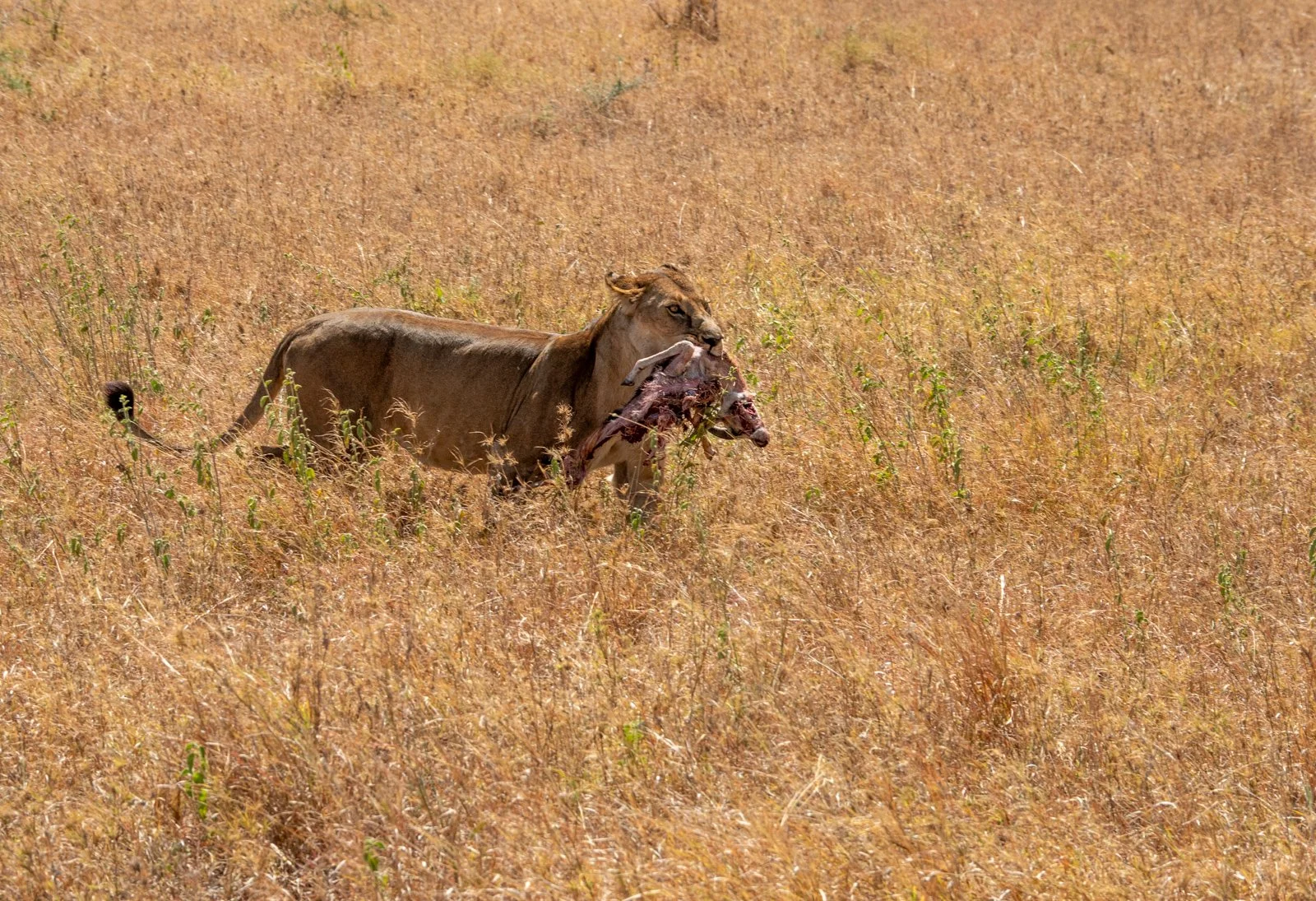
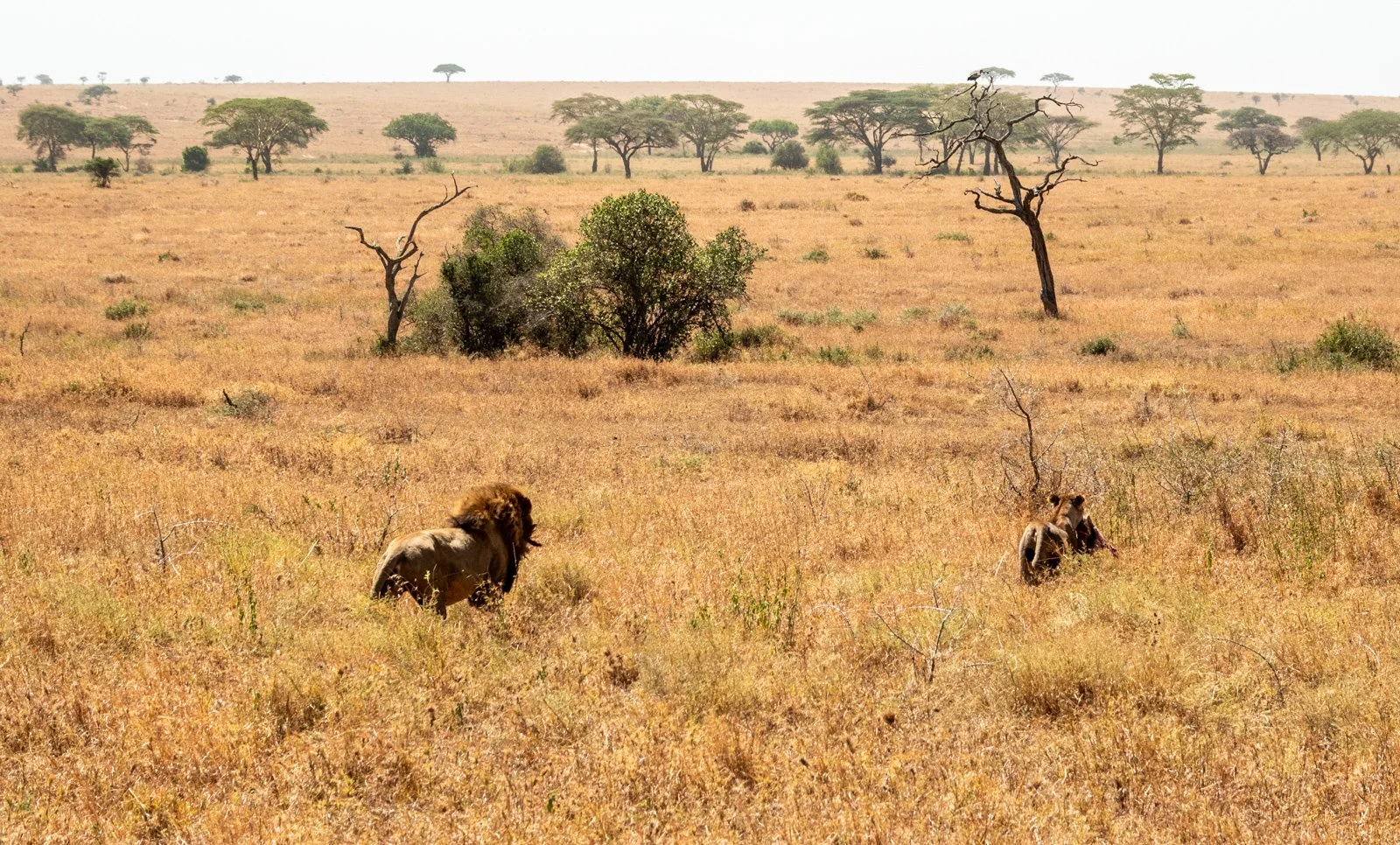
The ‘chase’
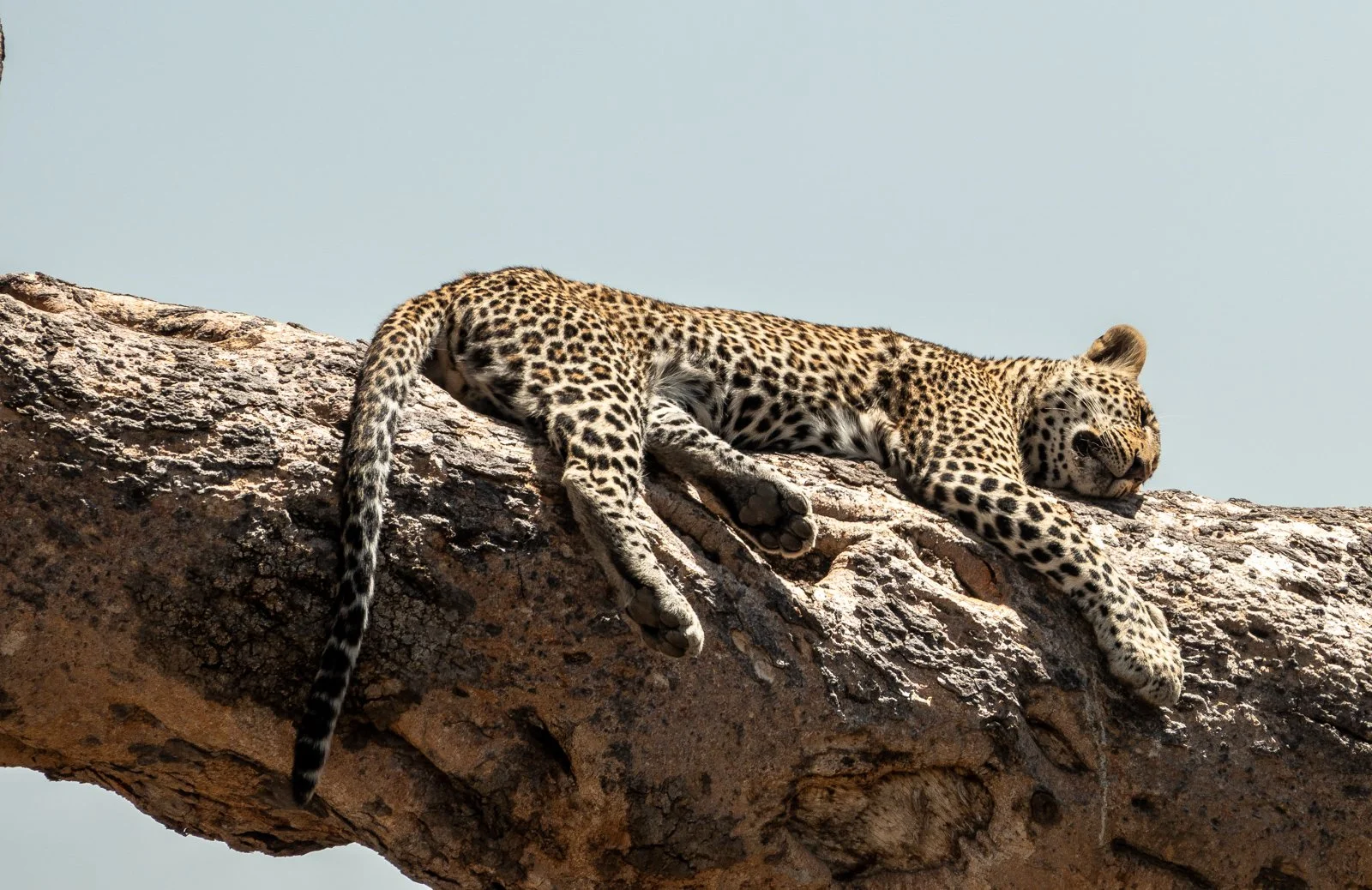
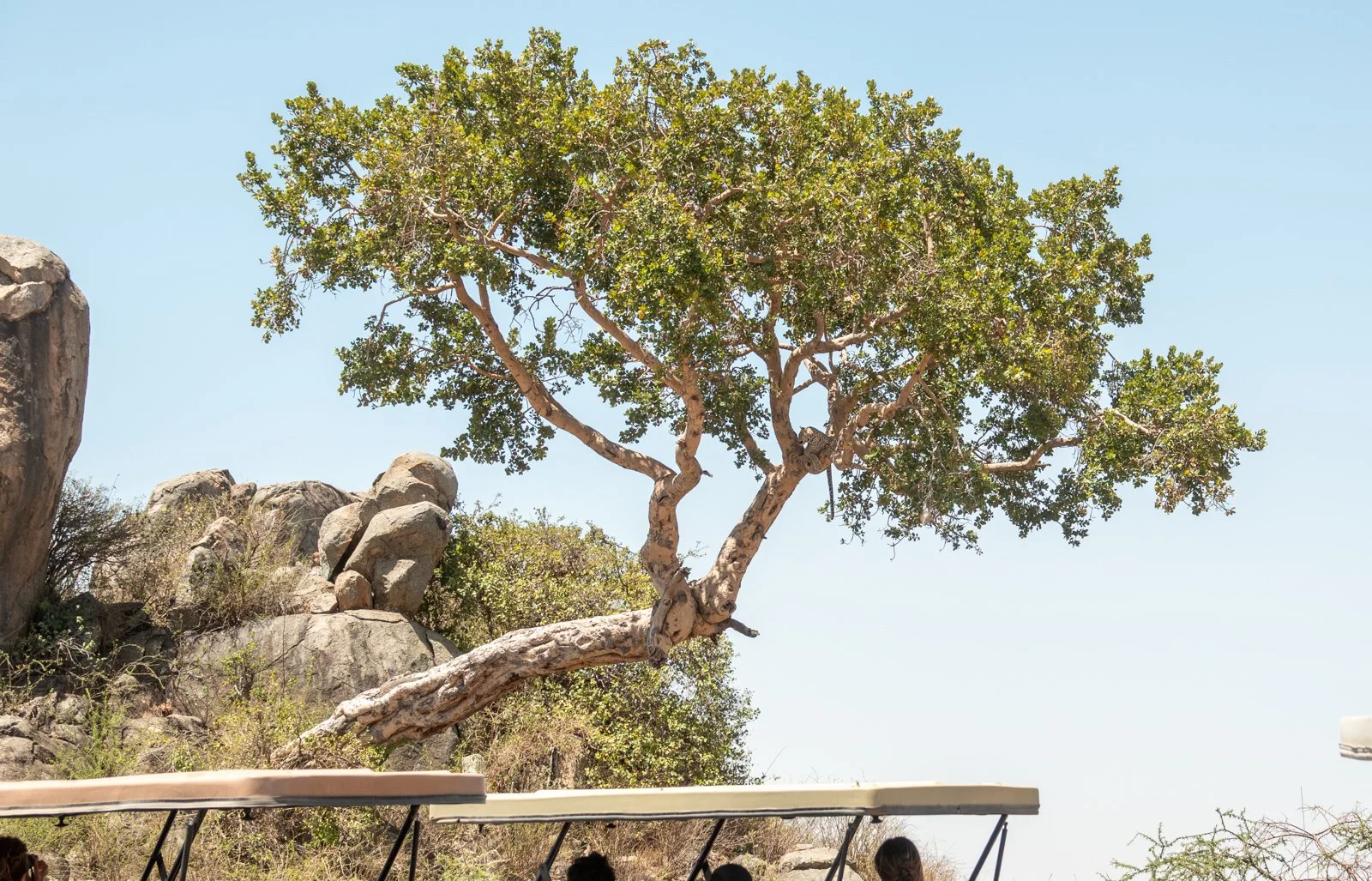
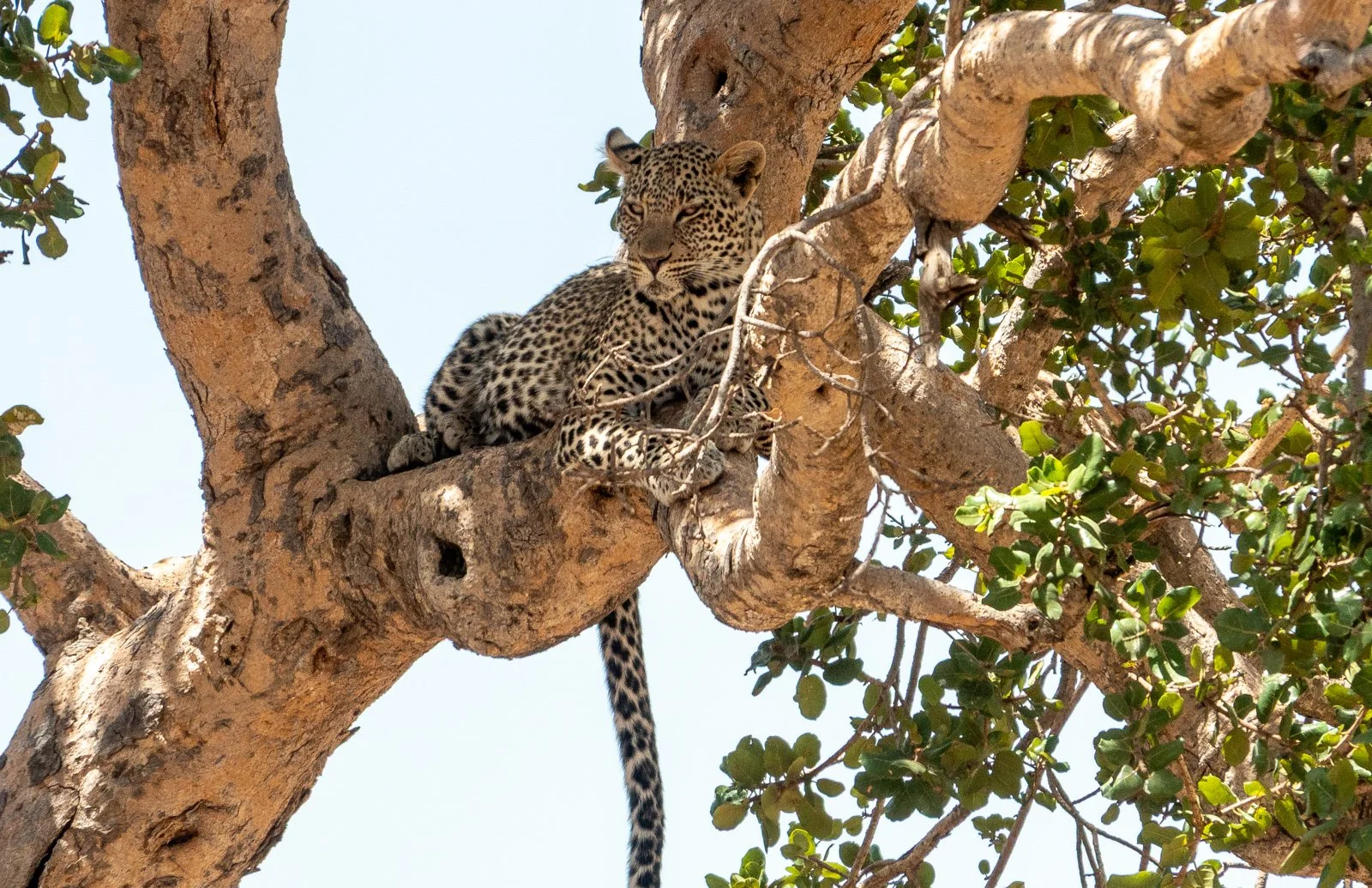
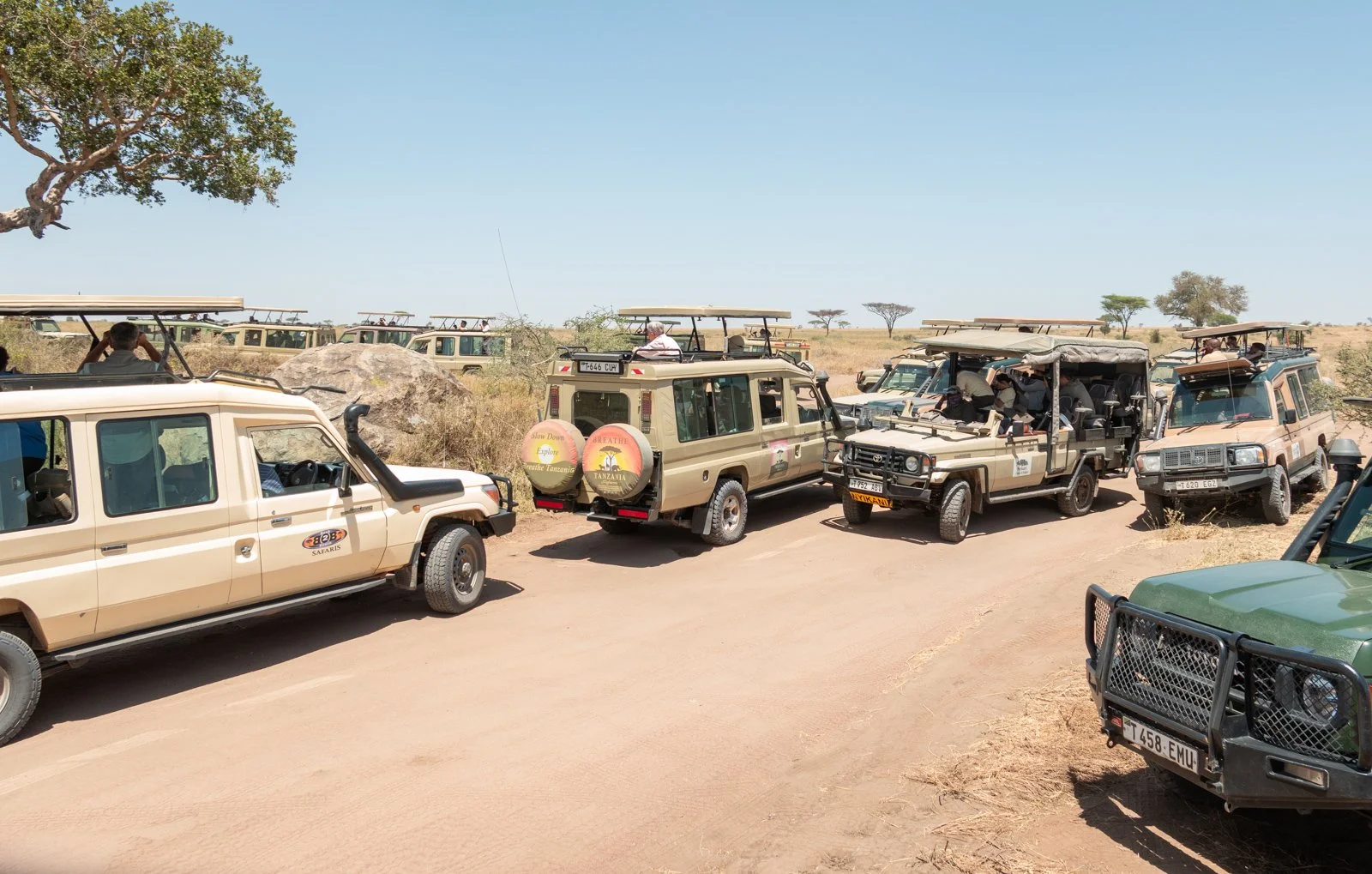
A leopard in a tree attracts a crowd
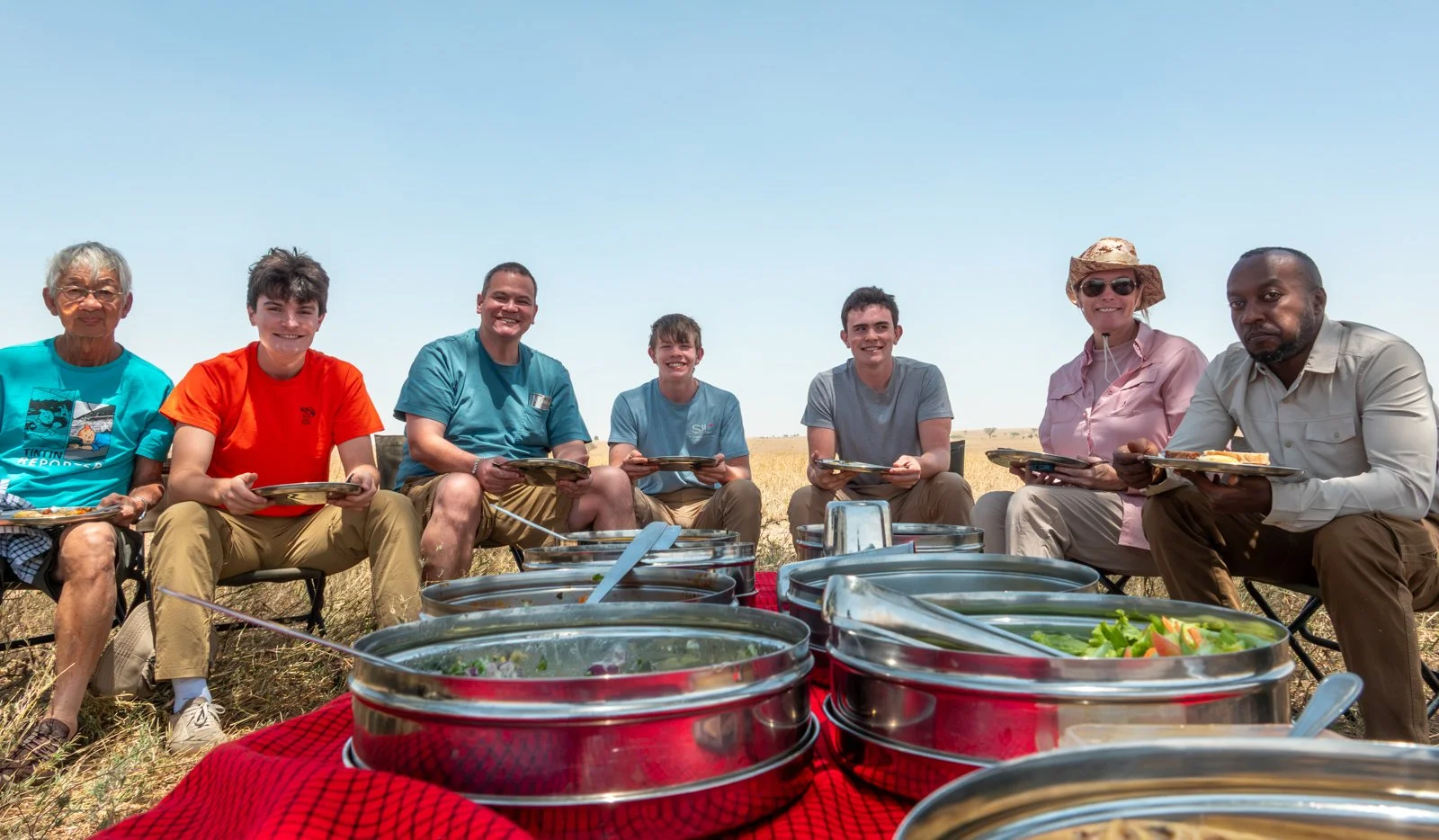
A tasty picnic on the Serengeti plains with our guide
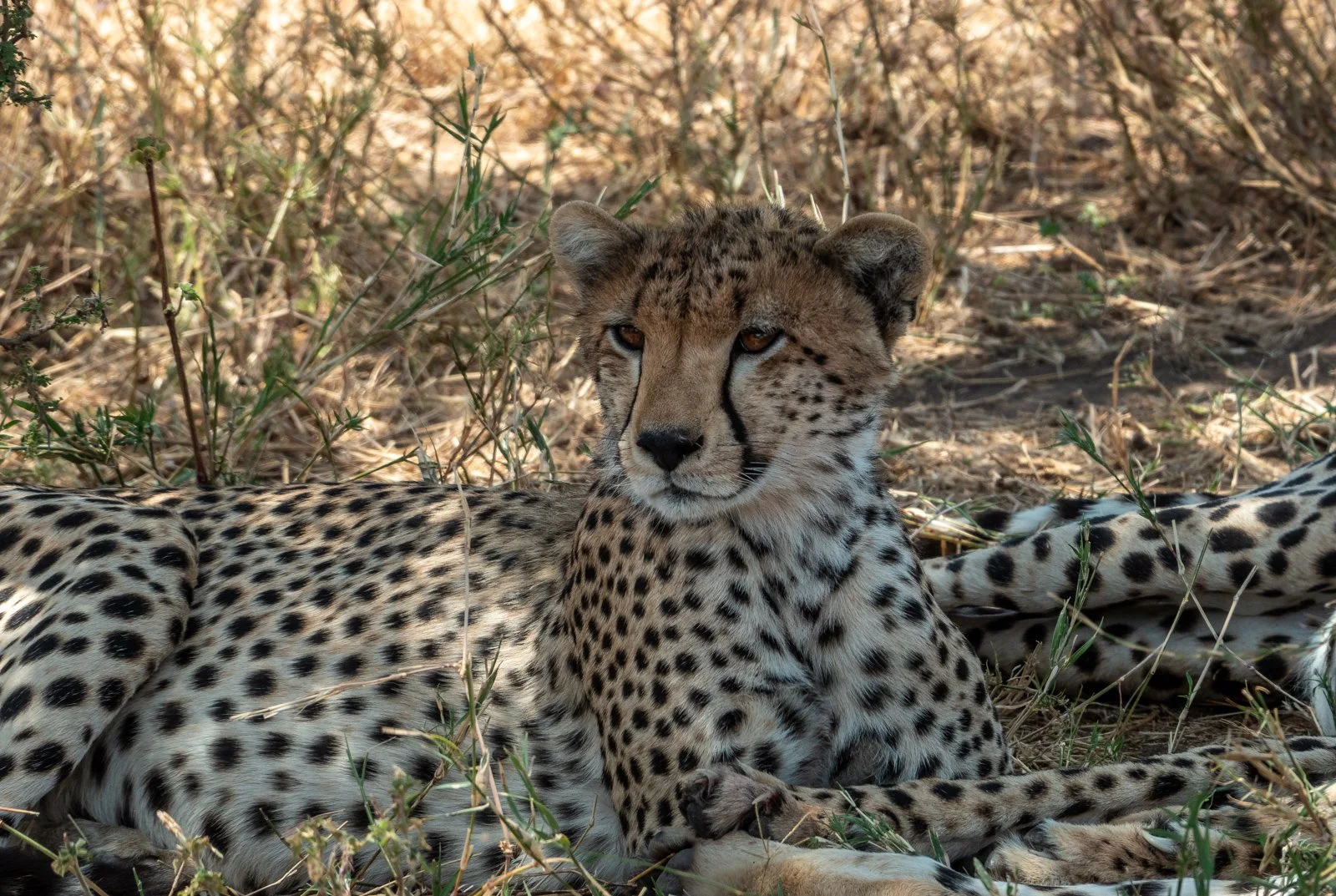
Cheetah family resting
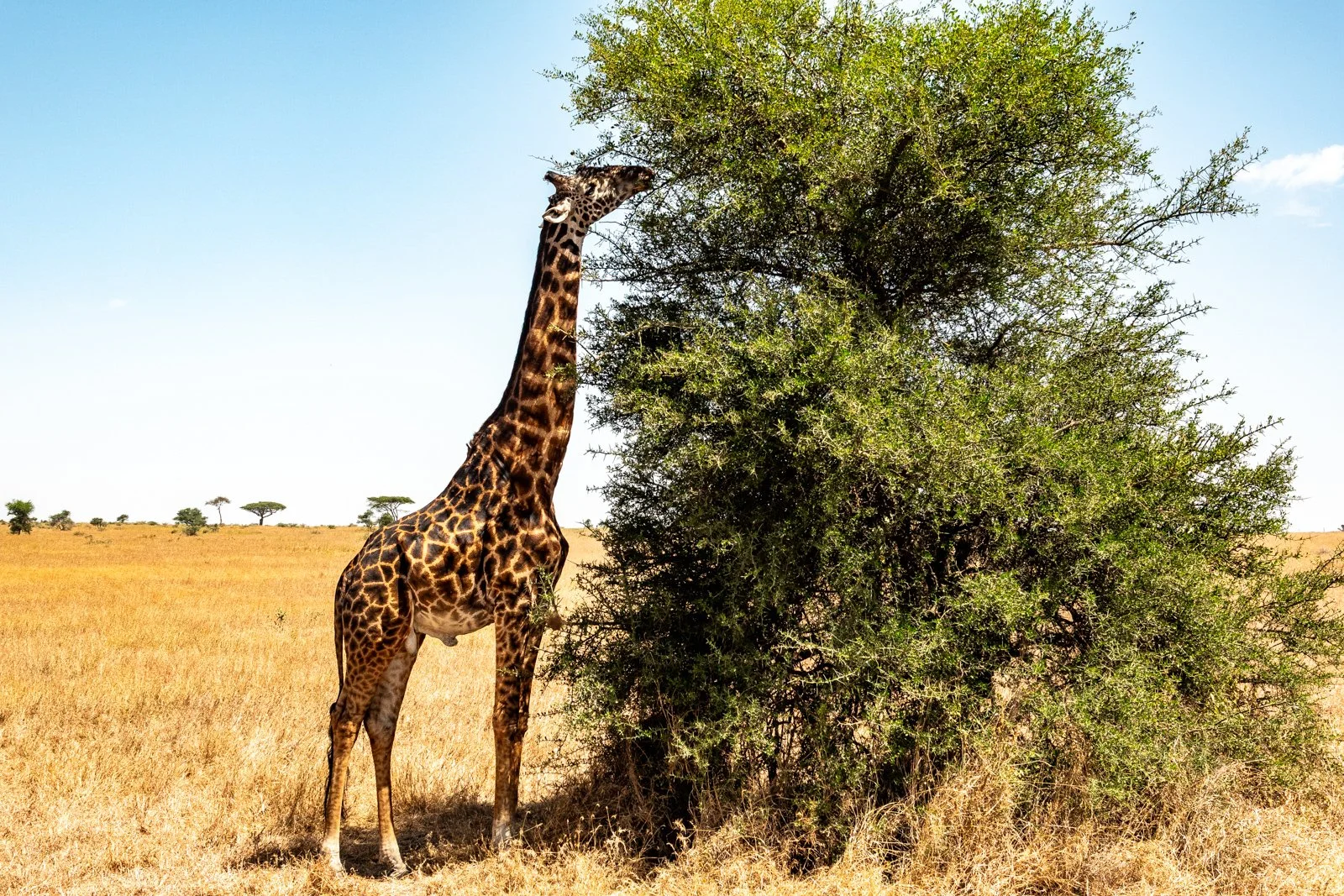
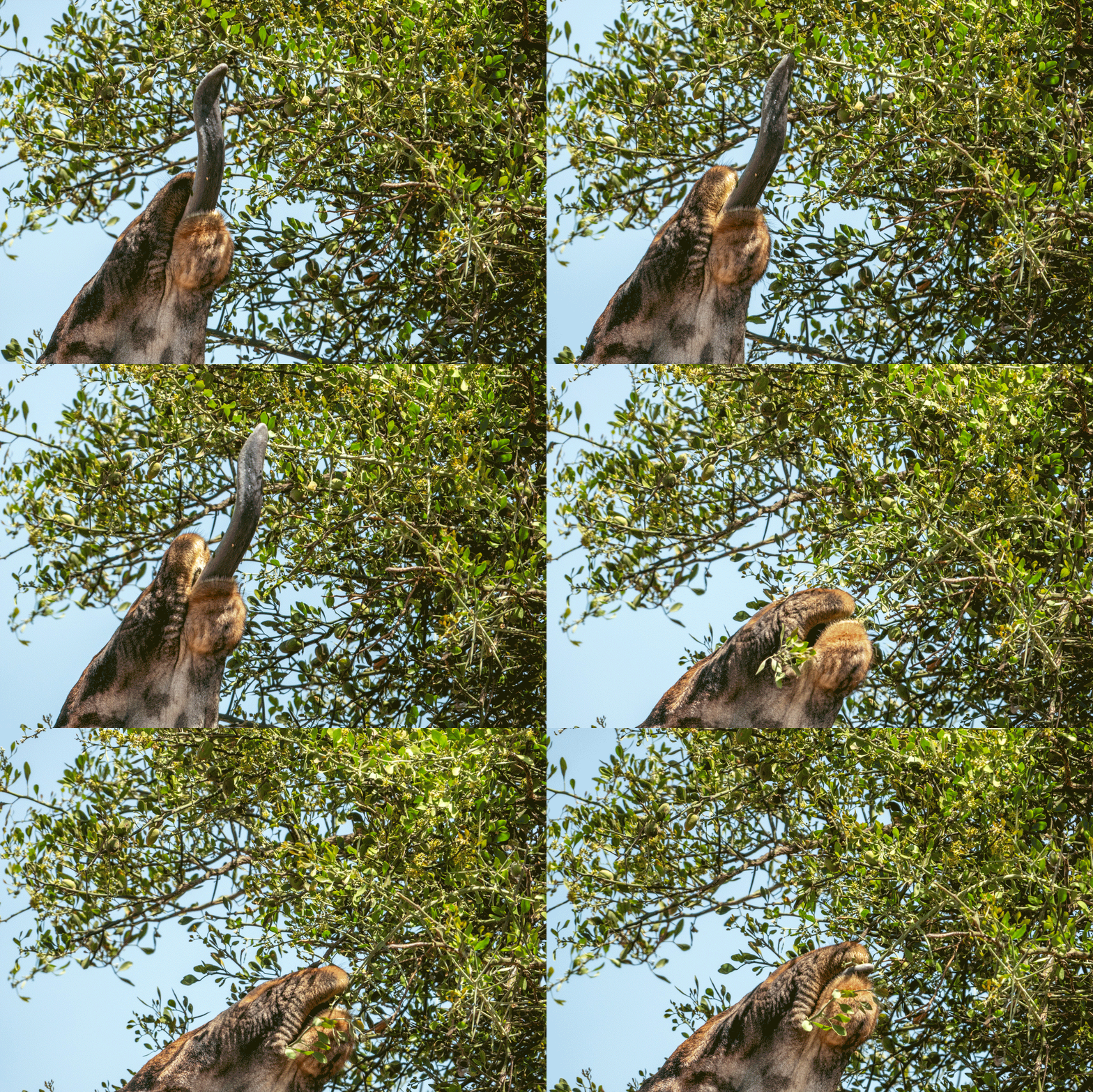
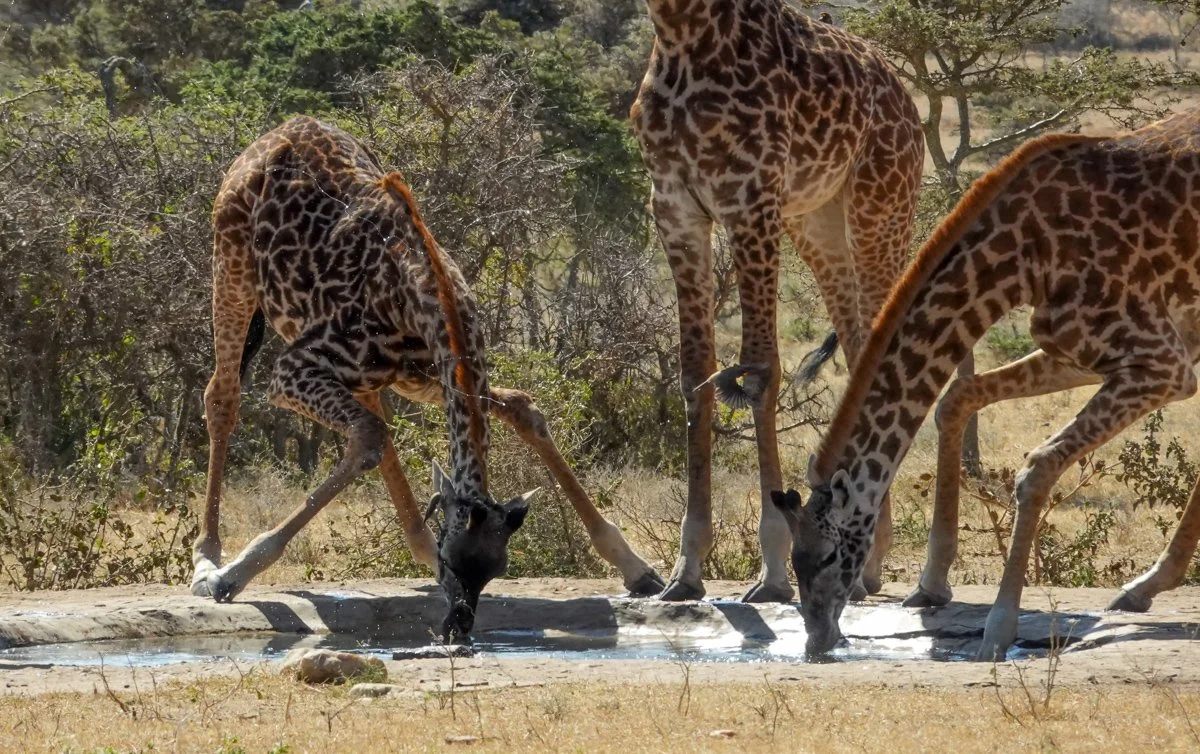
The giraffe’s tongue is prehensile!
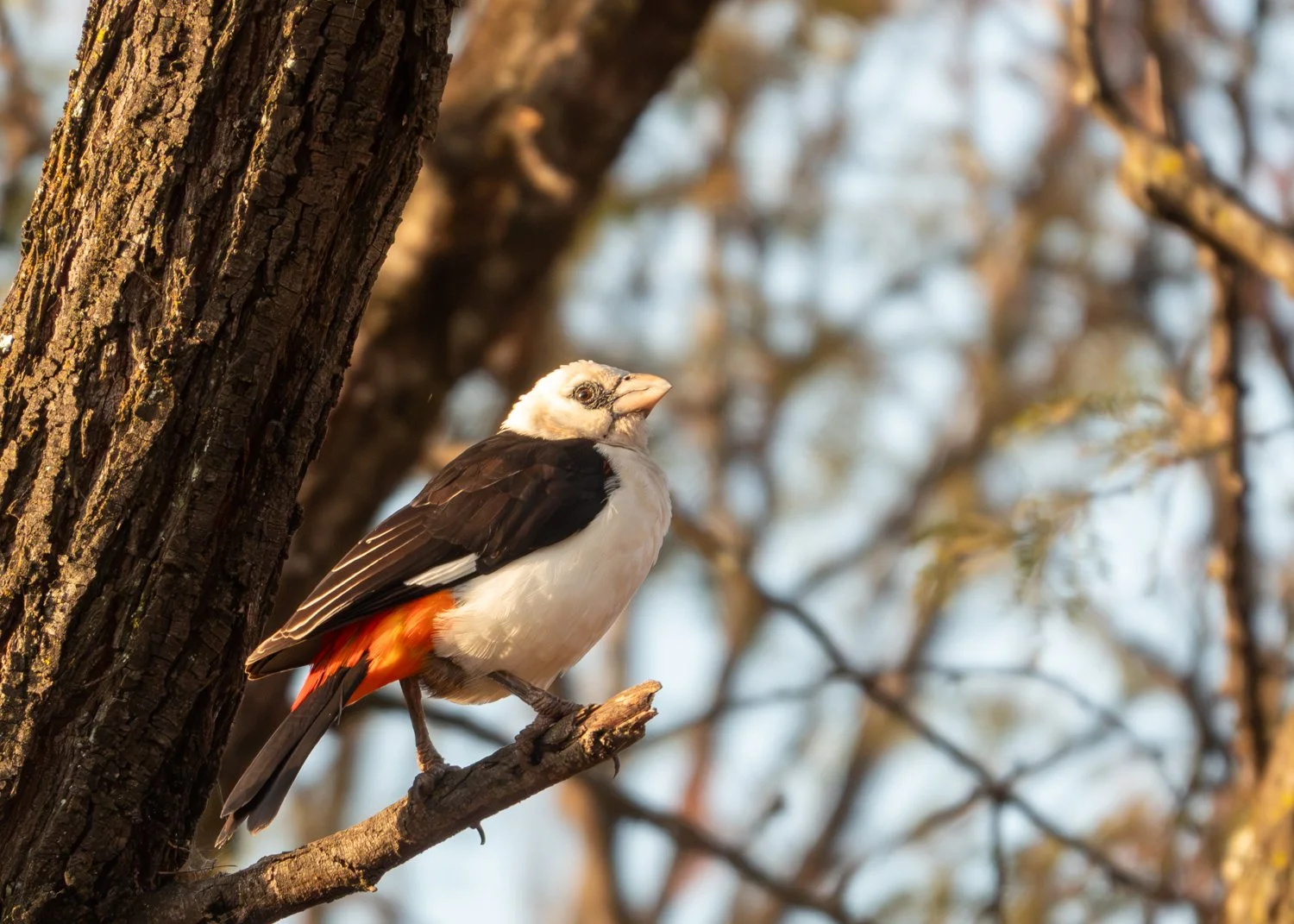
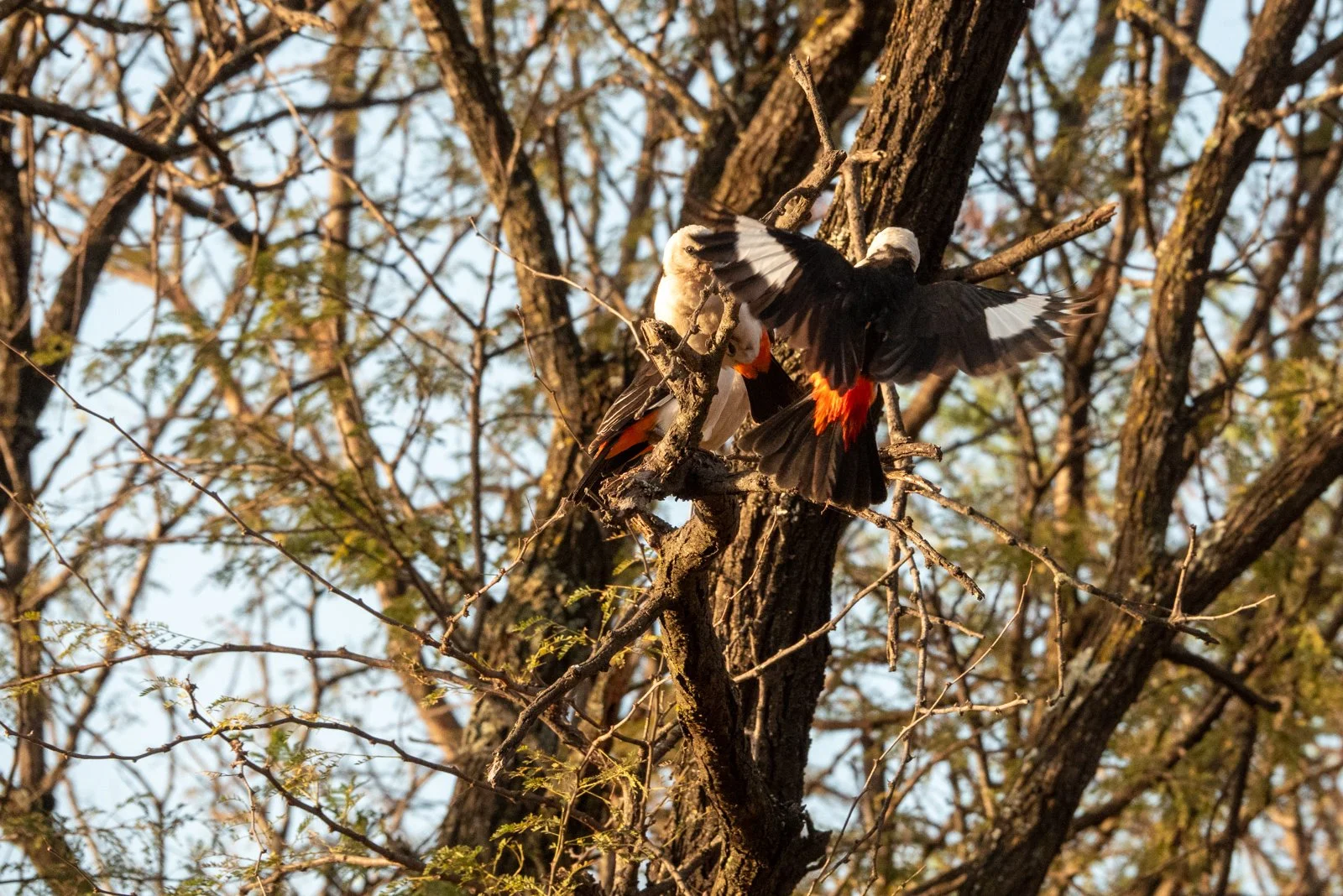
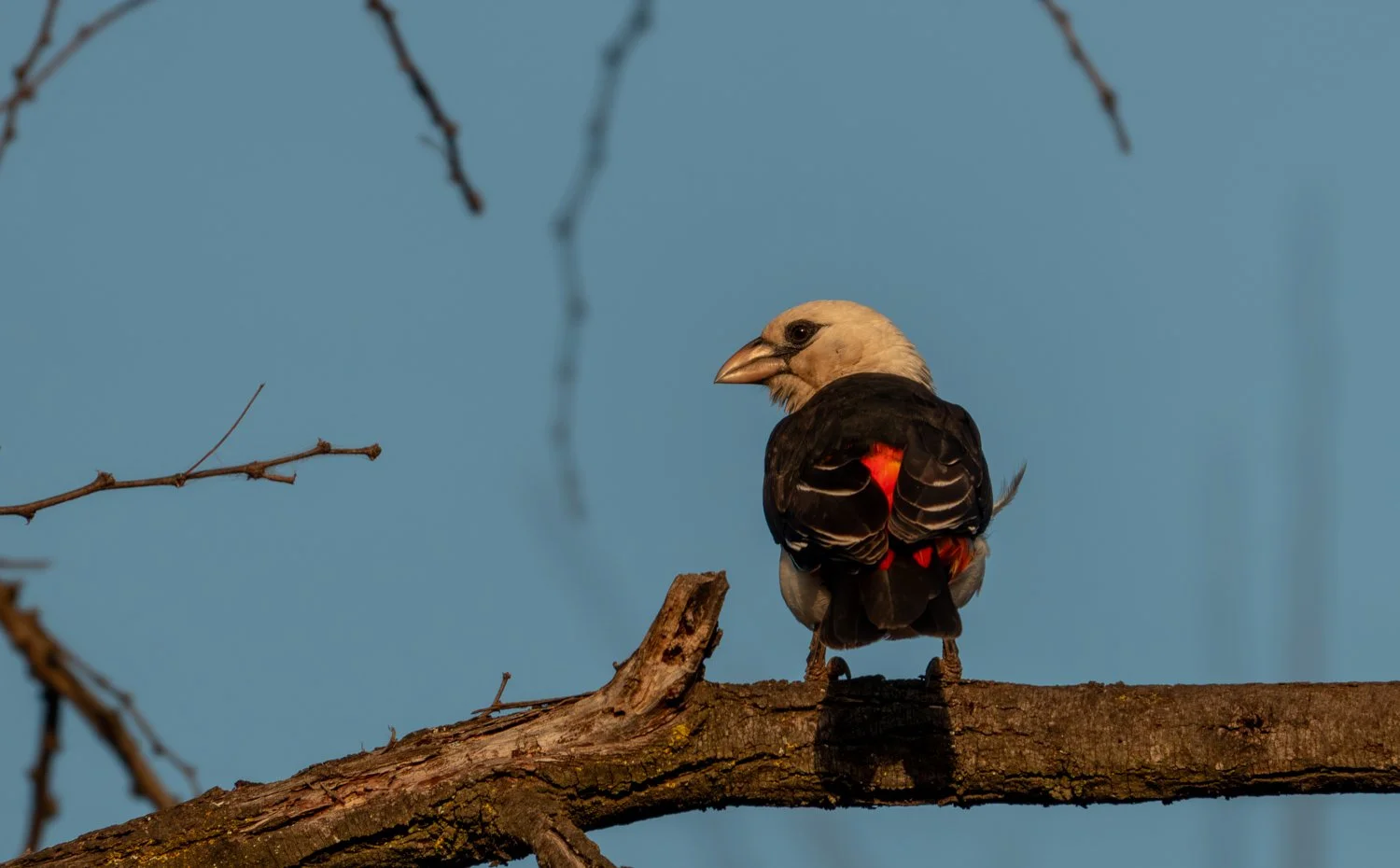
White-headed buffalo weaver bird
Olduvai Gorge
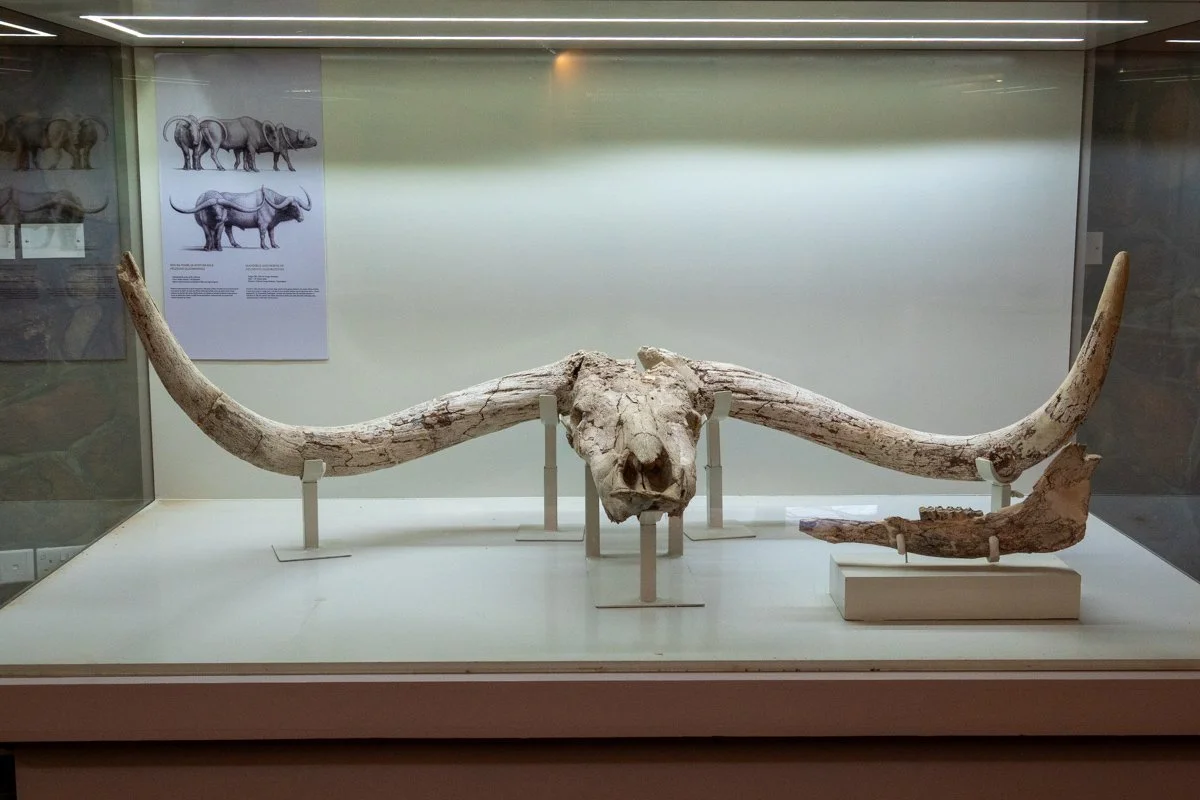
On the drive to our third camp in the Ngorongoro Crater we made a stop at Olduvai Gorge, the famous study site of Louis and Mary Leakey. It is one of the world’s most important archeological sites and is often called the cradle of humankind because of the number of discoveries made there that have played a crucial role in our understanding of human origins.
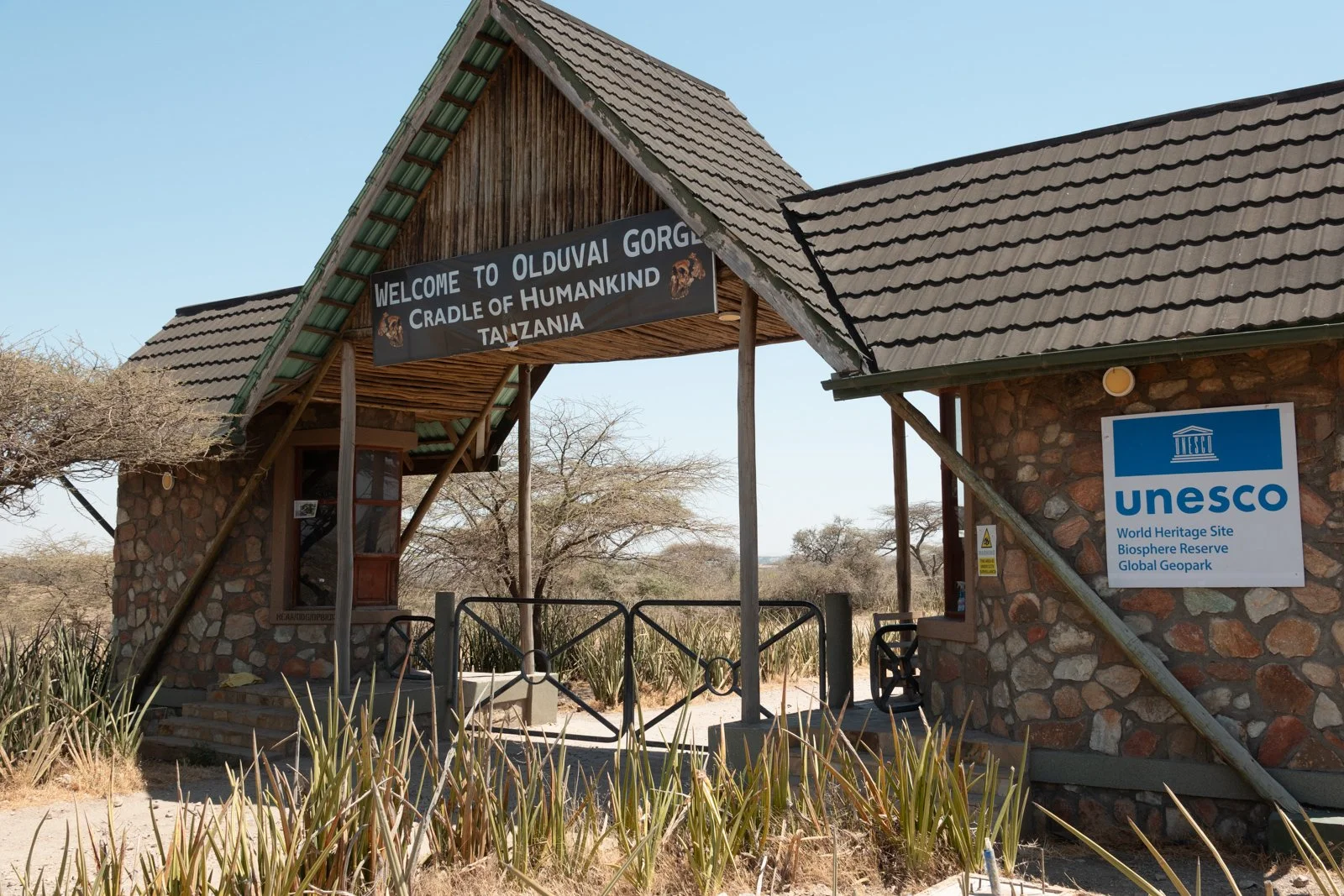
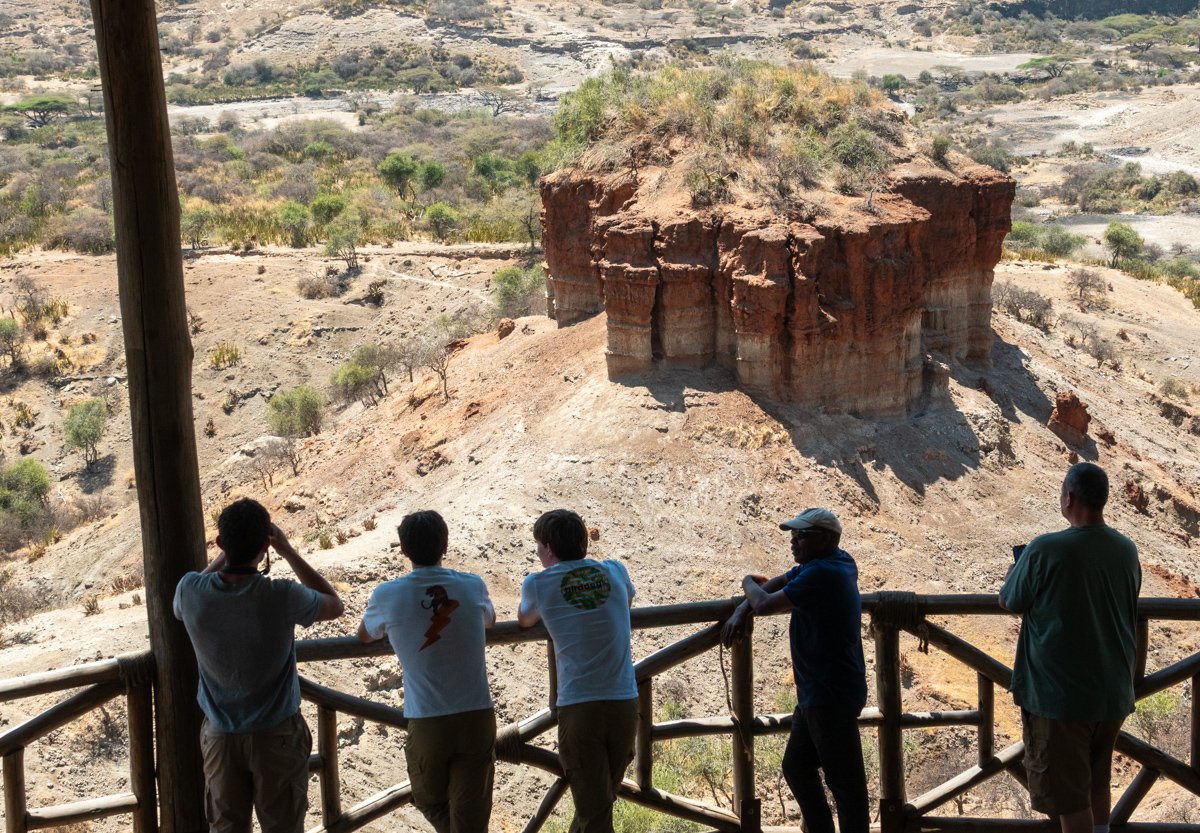
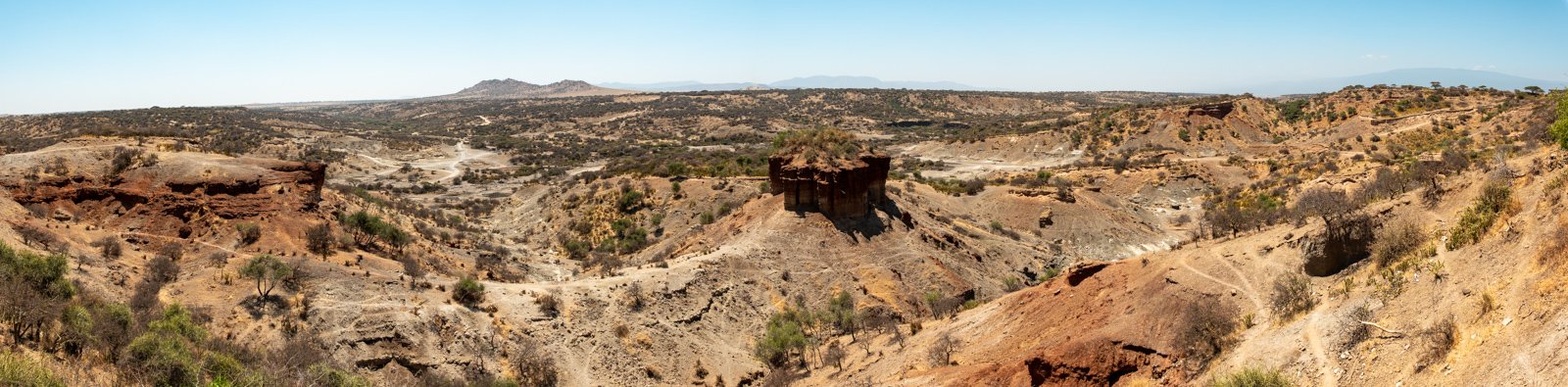
Panorama of Olduvai Gorge
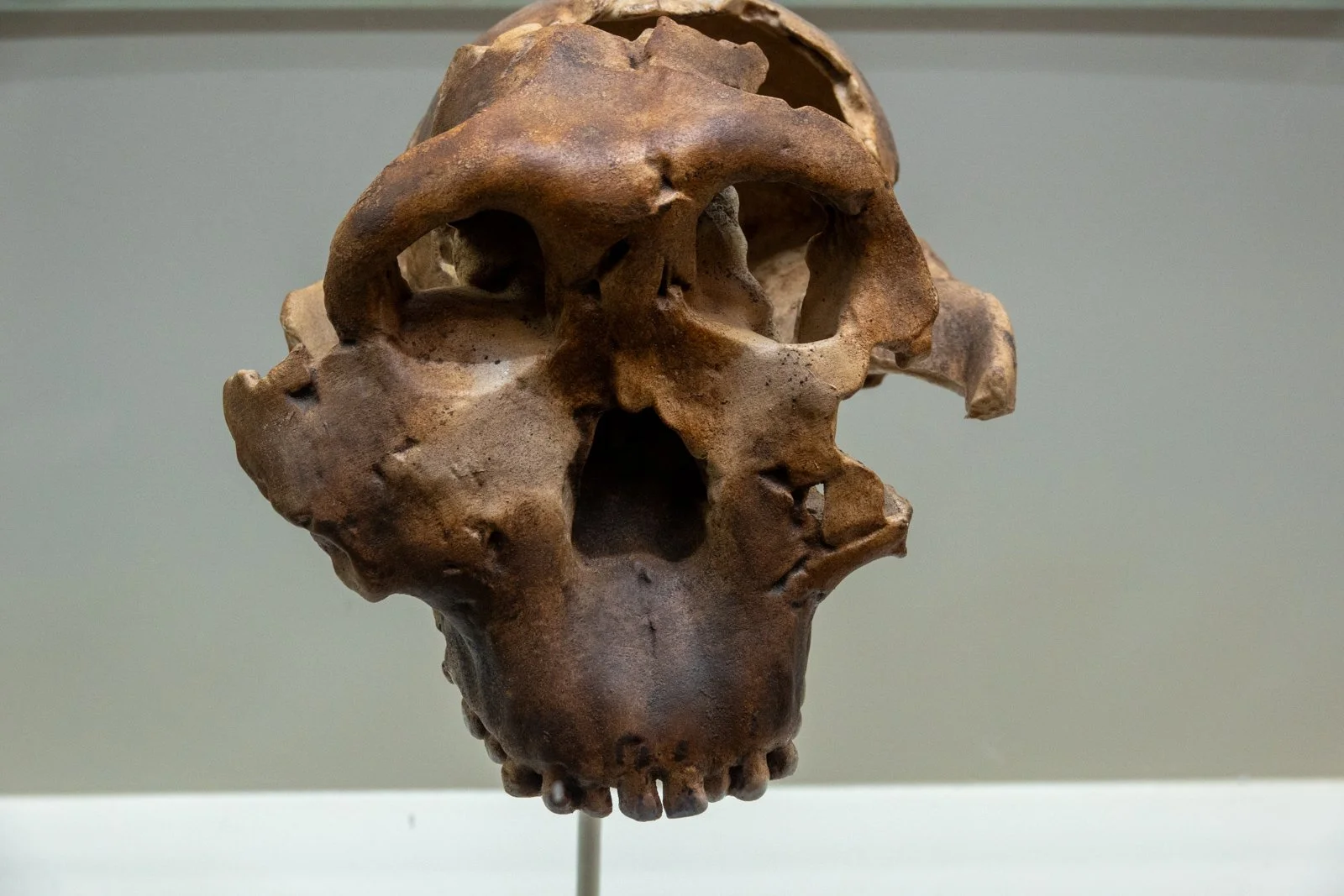
Skull of perhaps the most famous of the fossils found in Olduvai Gorge, it was discovered by Mary Leakey in 1959 and called Paranthropus boisei and is dated 1.75 million years ago
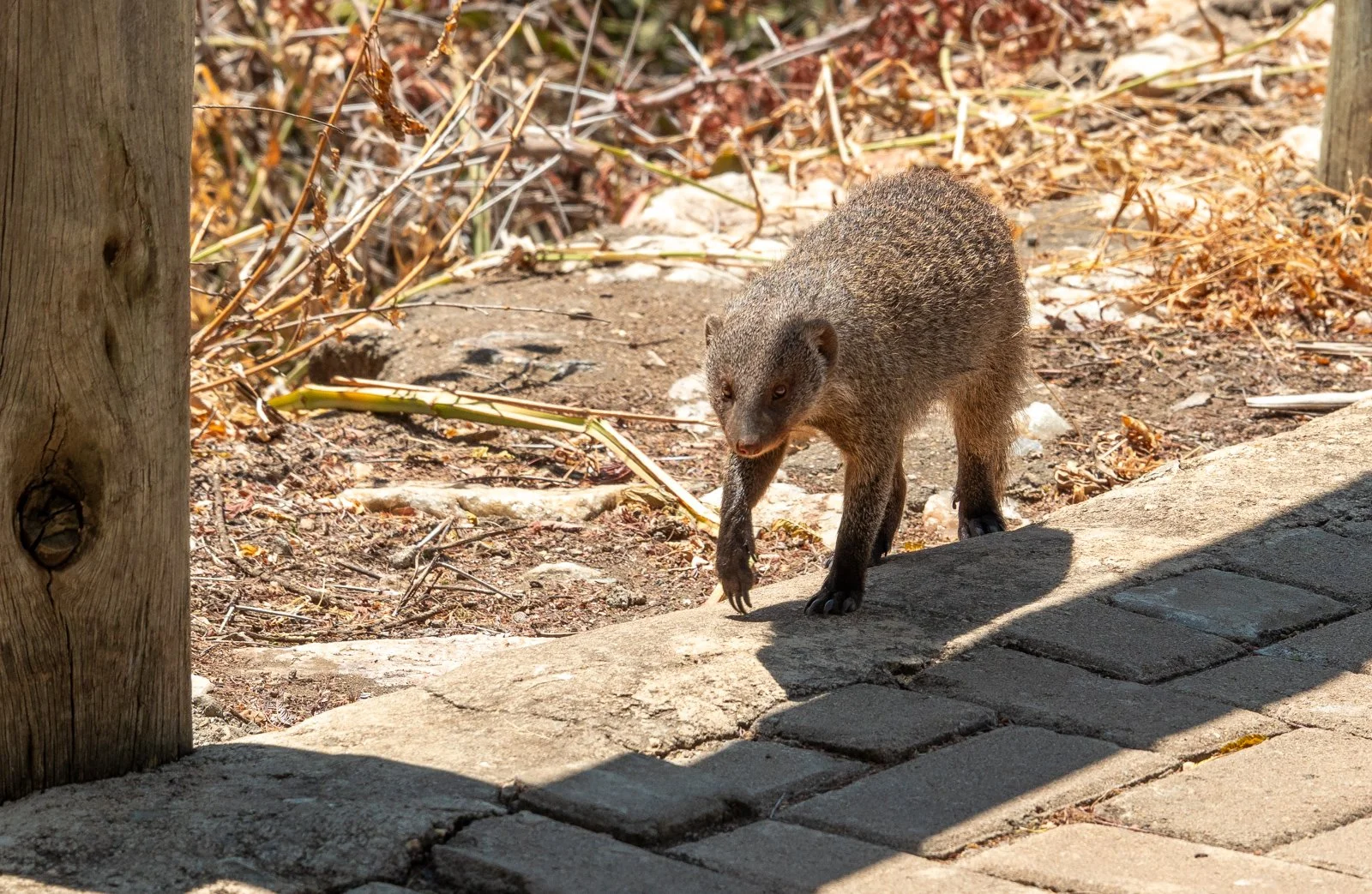
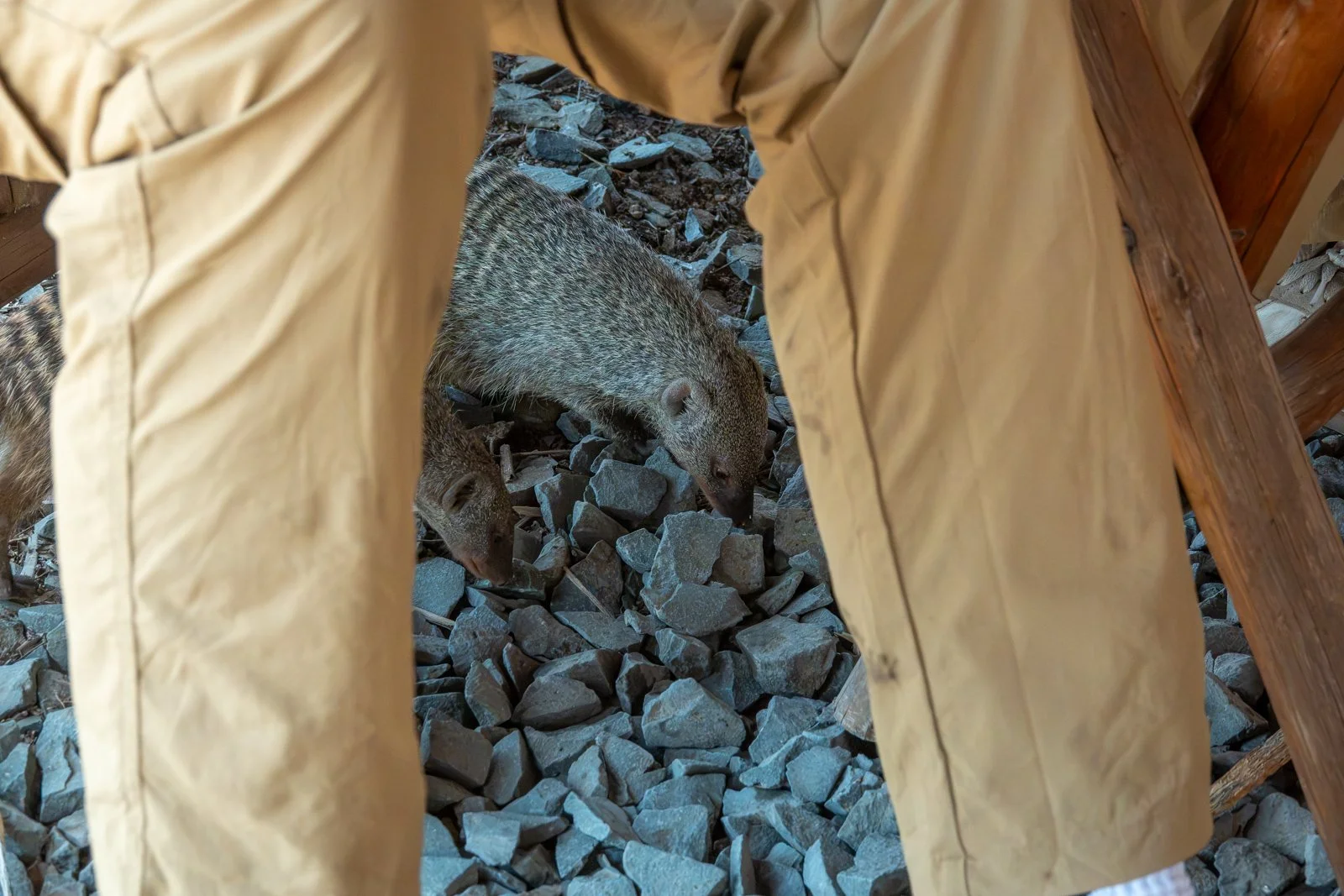
Mongoose run wild around the camp
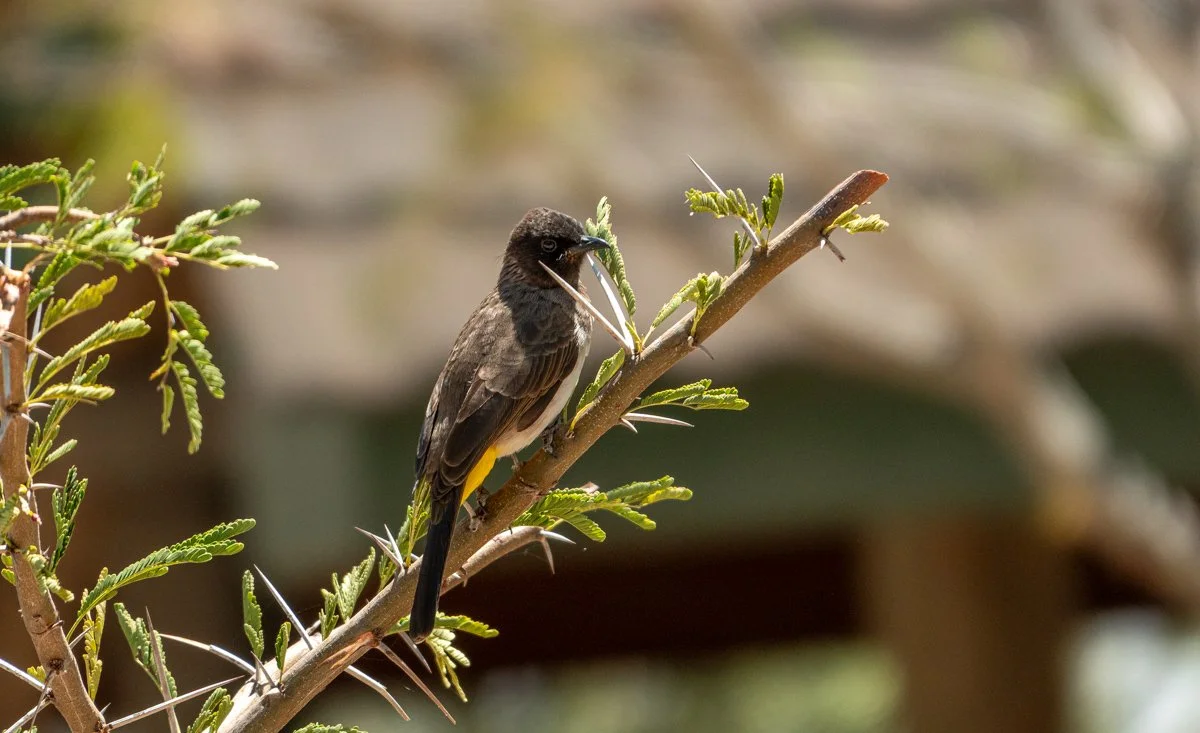
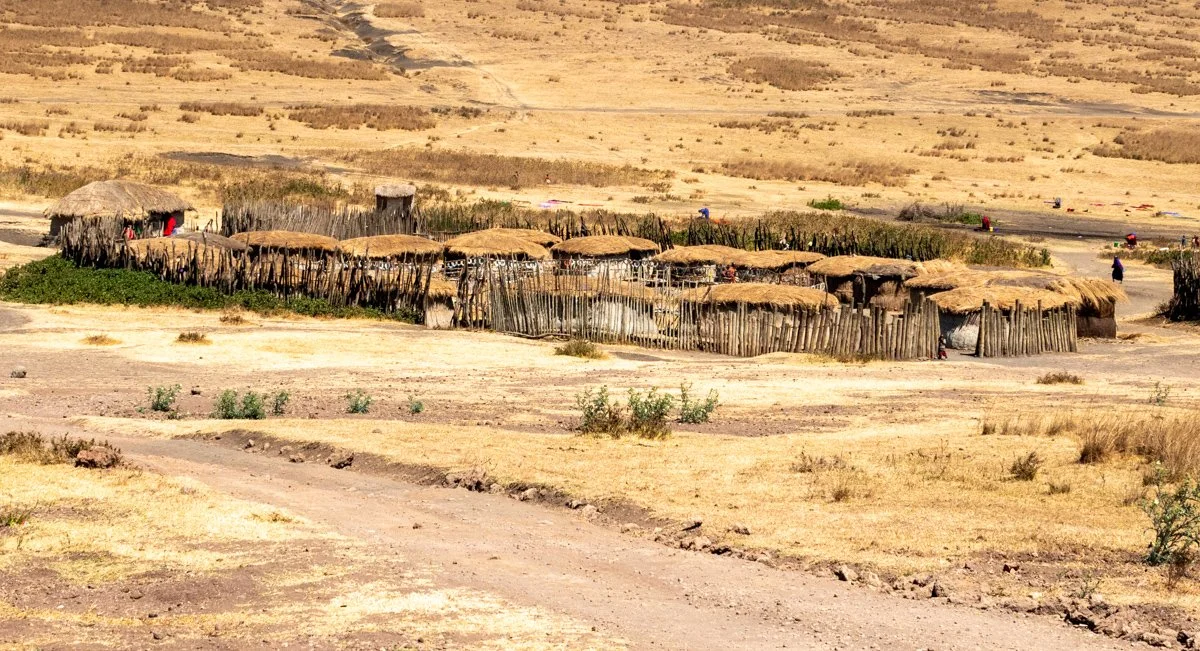
A Masai Mara ‘village’. Note the fence to protect from wandering predators
Ngorongoro Crater
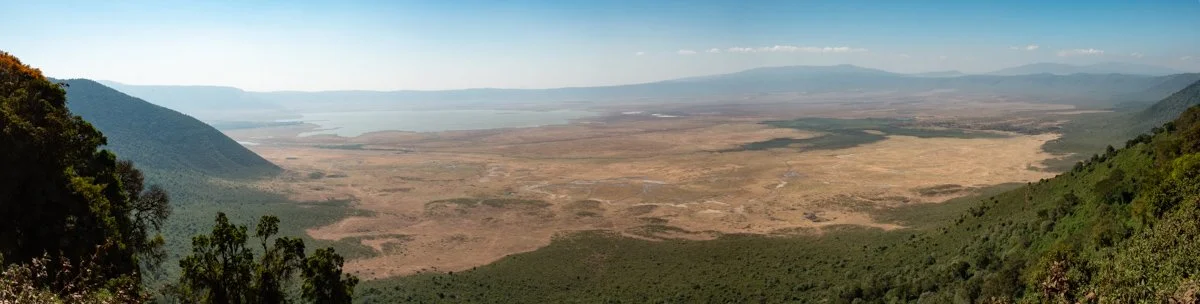
This collapsed caldera of an volcano spans 100 square miles and functions as a self-contained ecosystem as the animals have a difficult time scaling the walls. It is reputed to have the world’s highest concentration of land mammals. We stayed in a camp built on the rim of the crater.
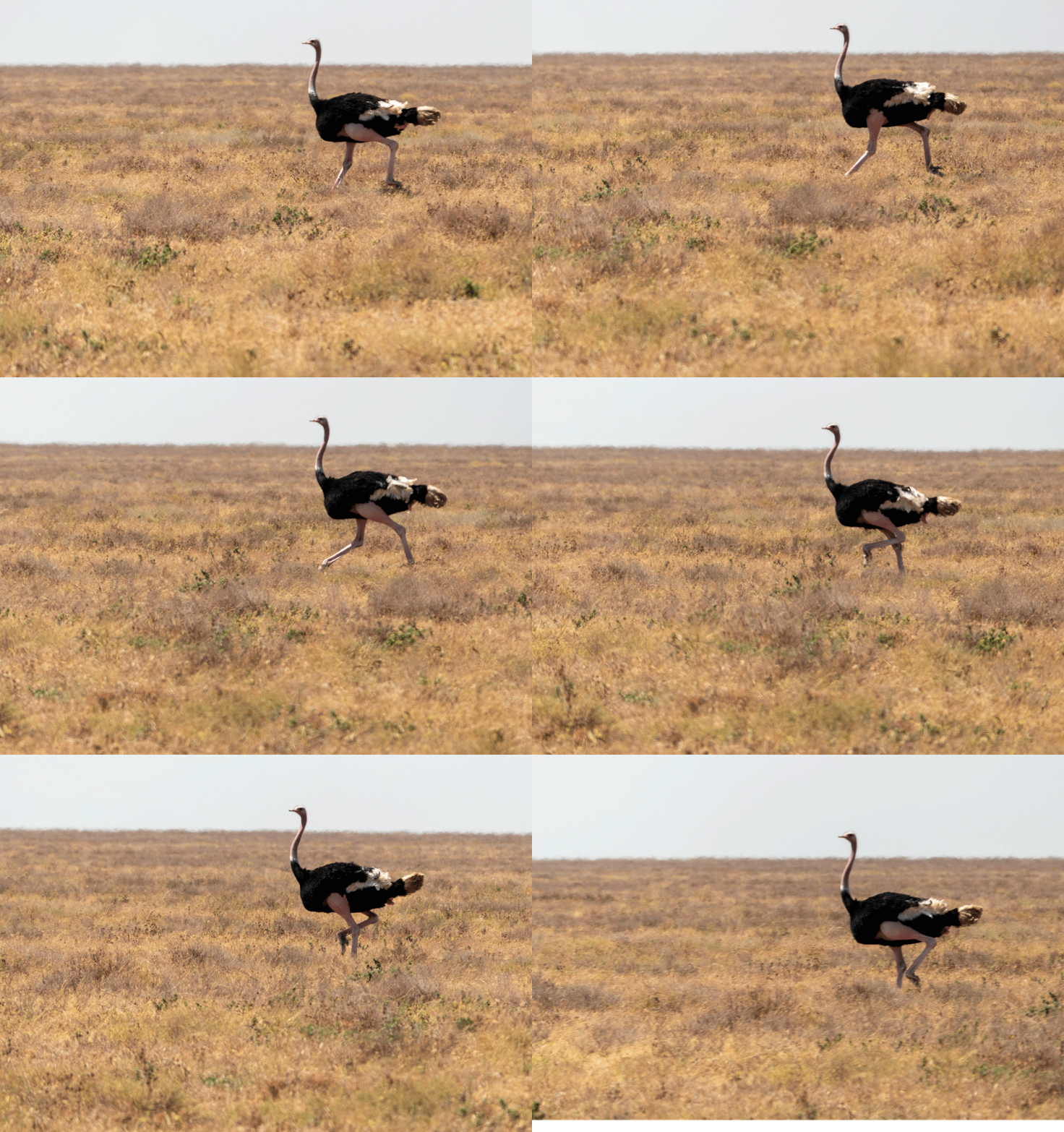
Ostrich running forever on the endless plains of the Serengeti.
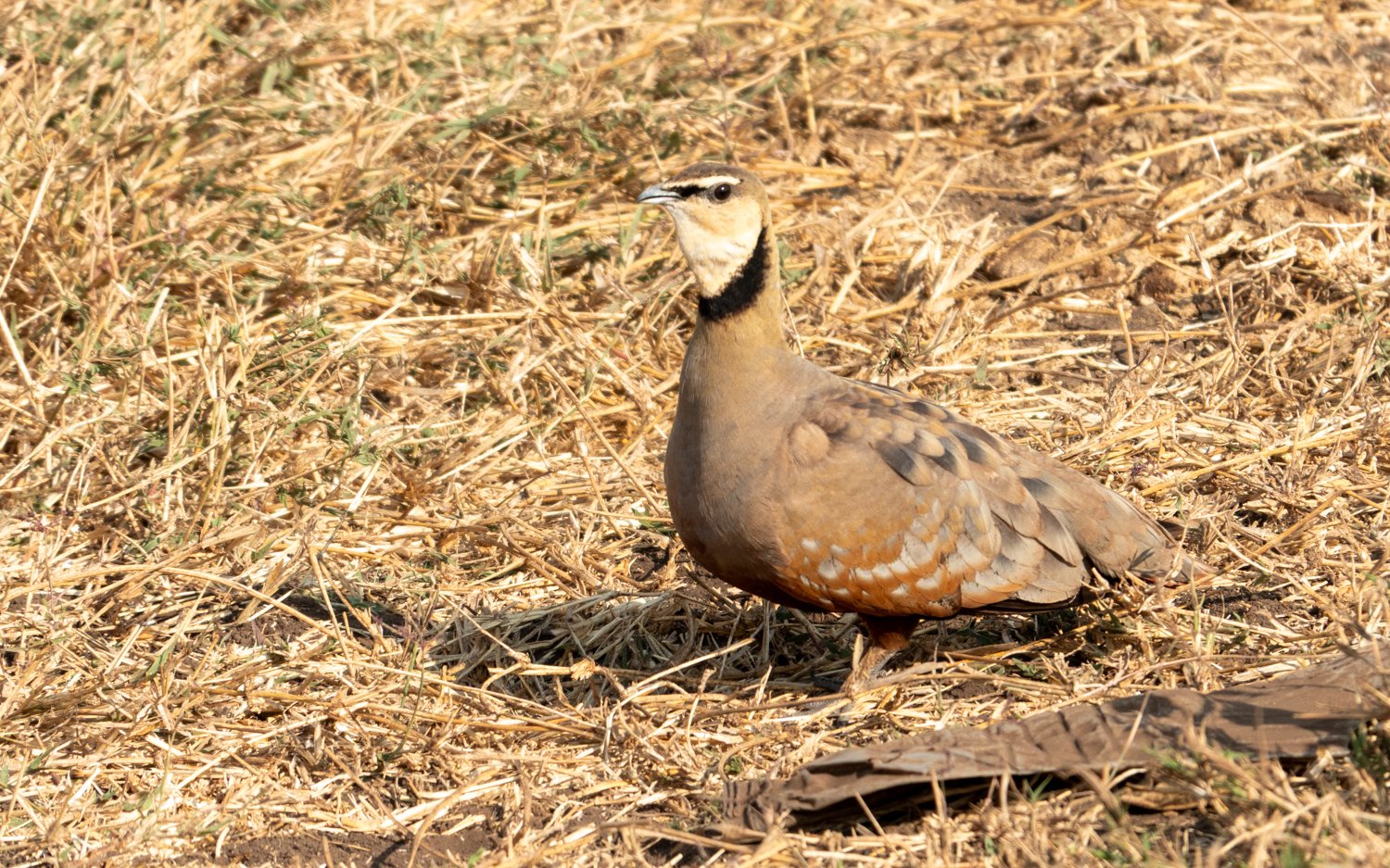
Chestnut-colored sandgrouse (male)
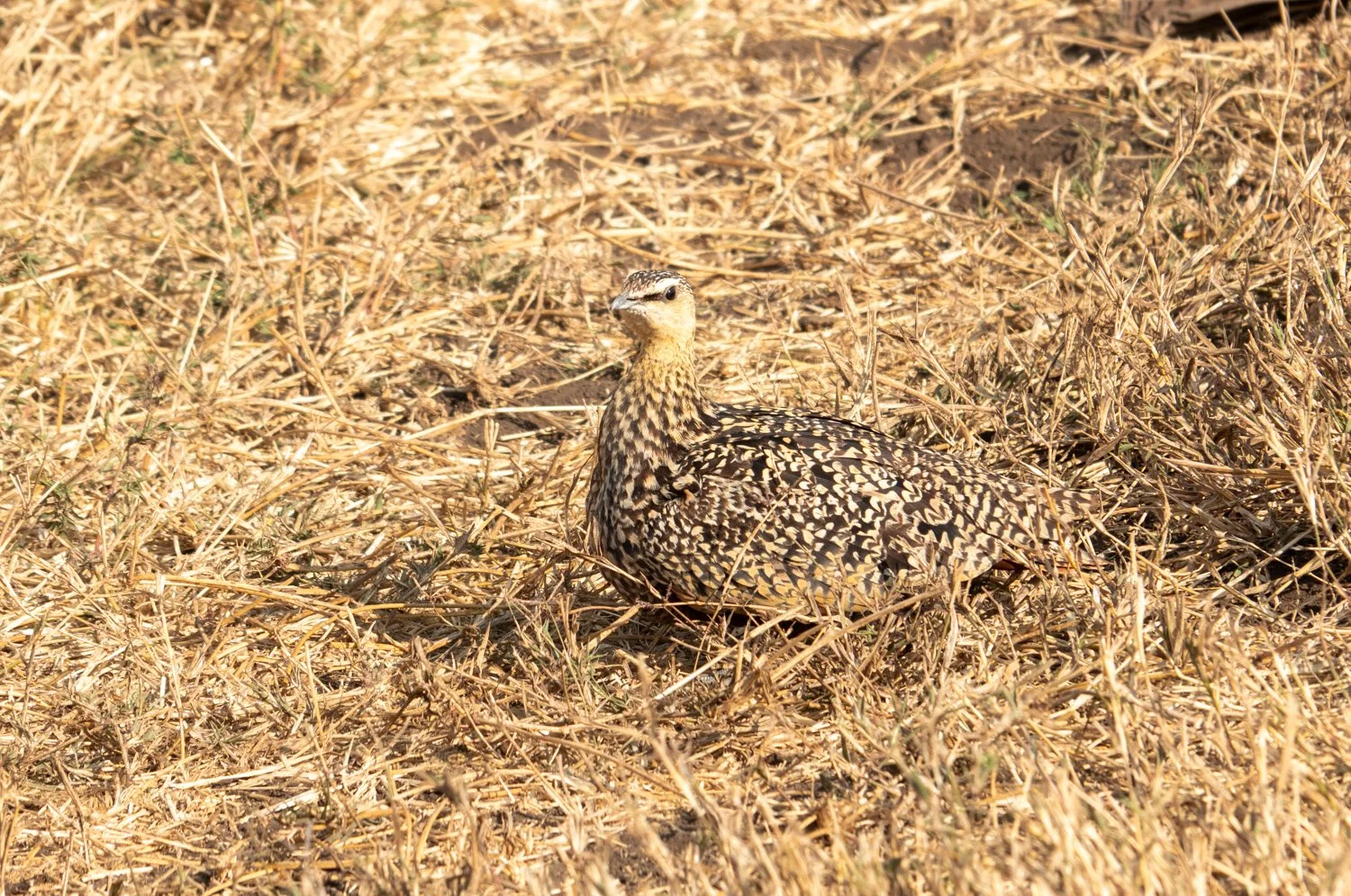
Chestnut-colored sandgrouse (female)
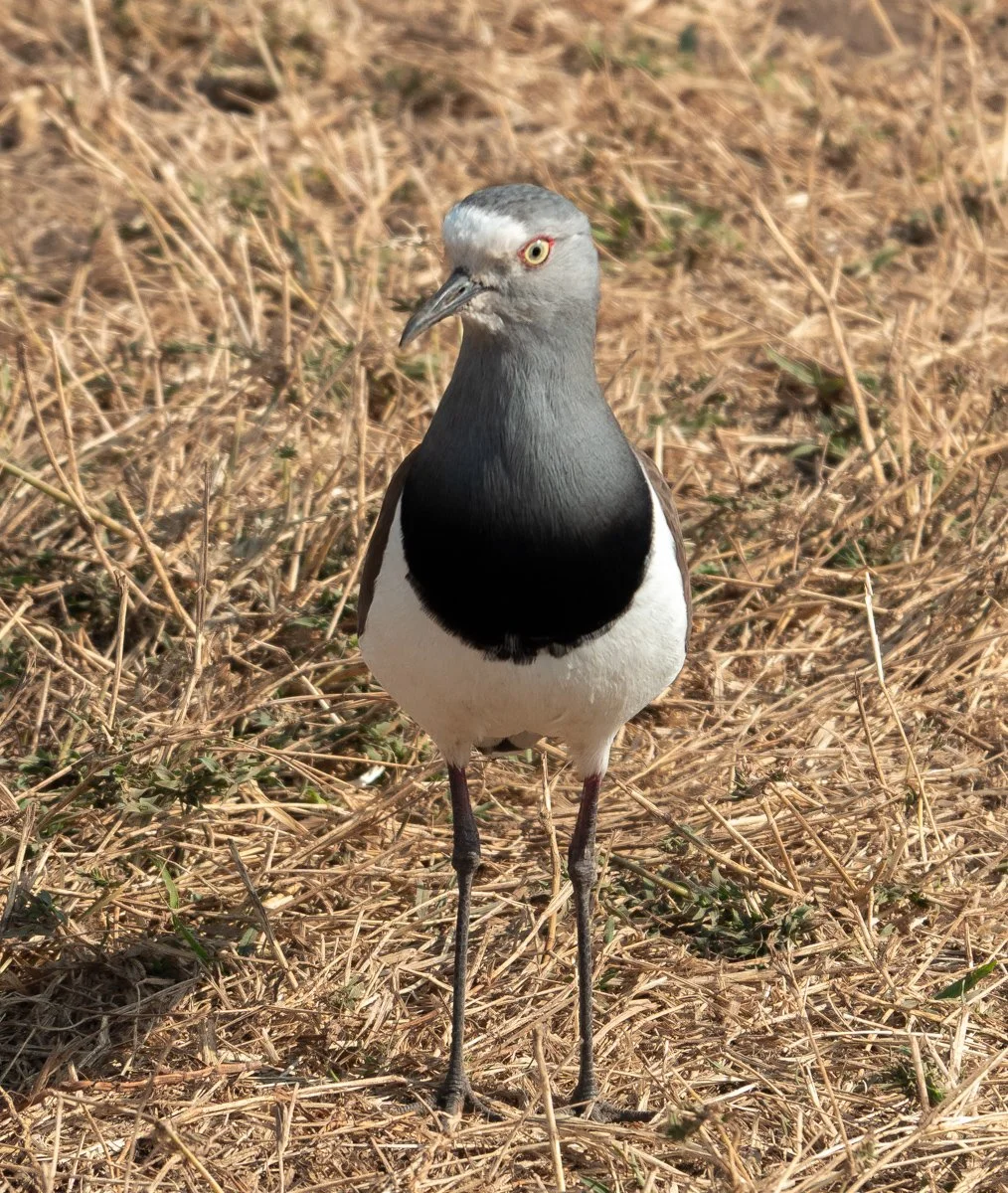
Black-winged lapwing
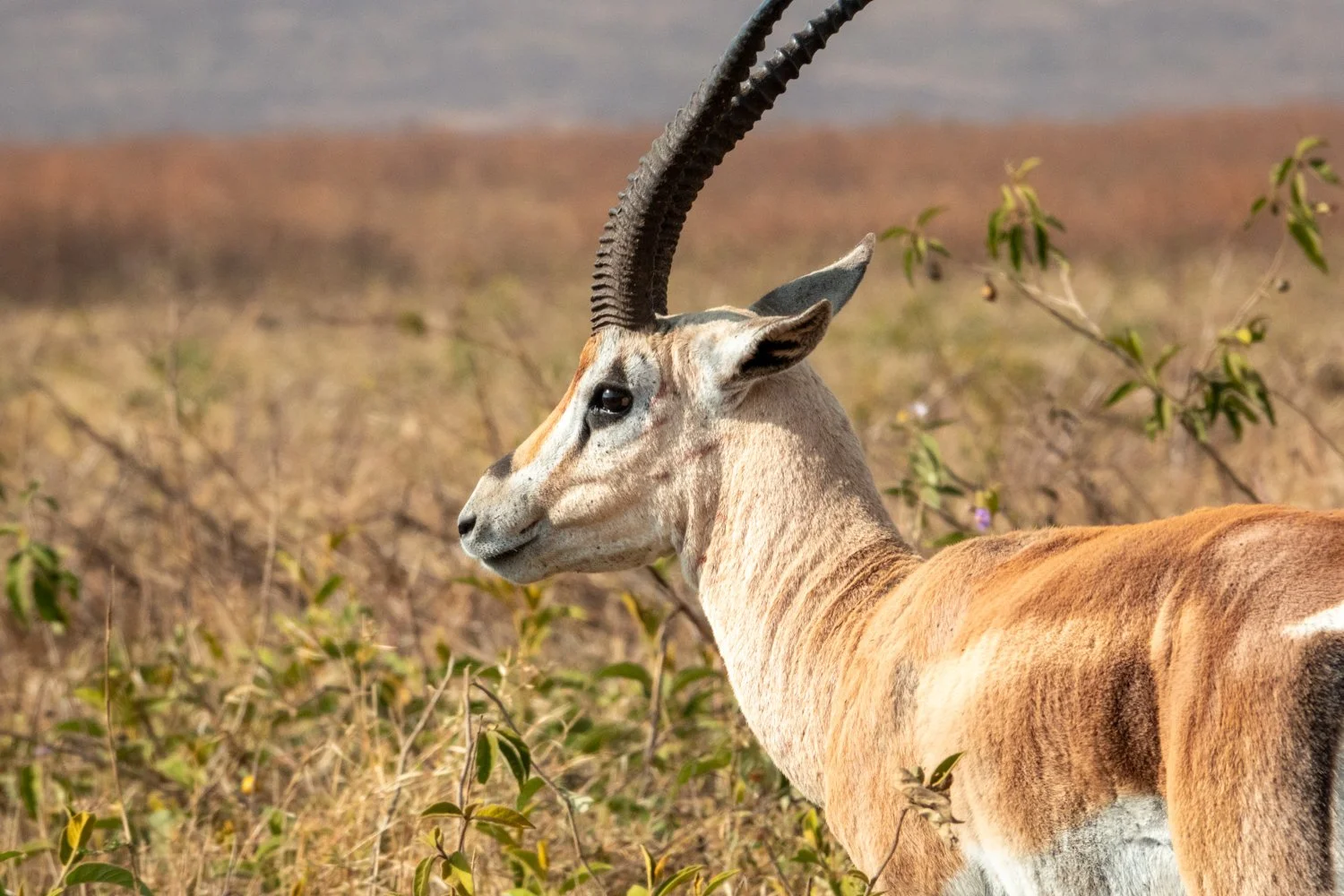
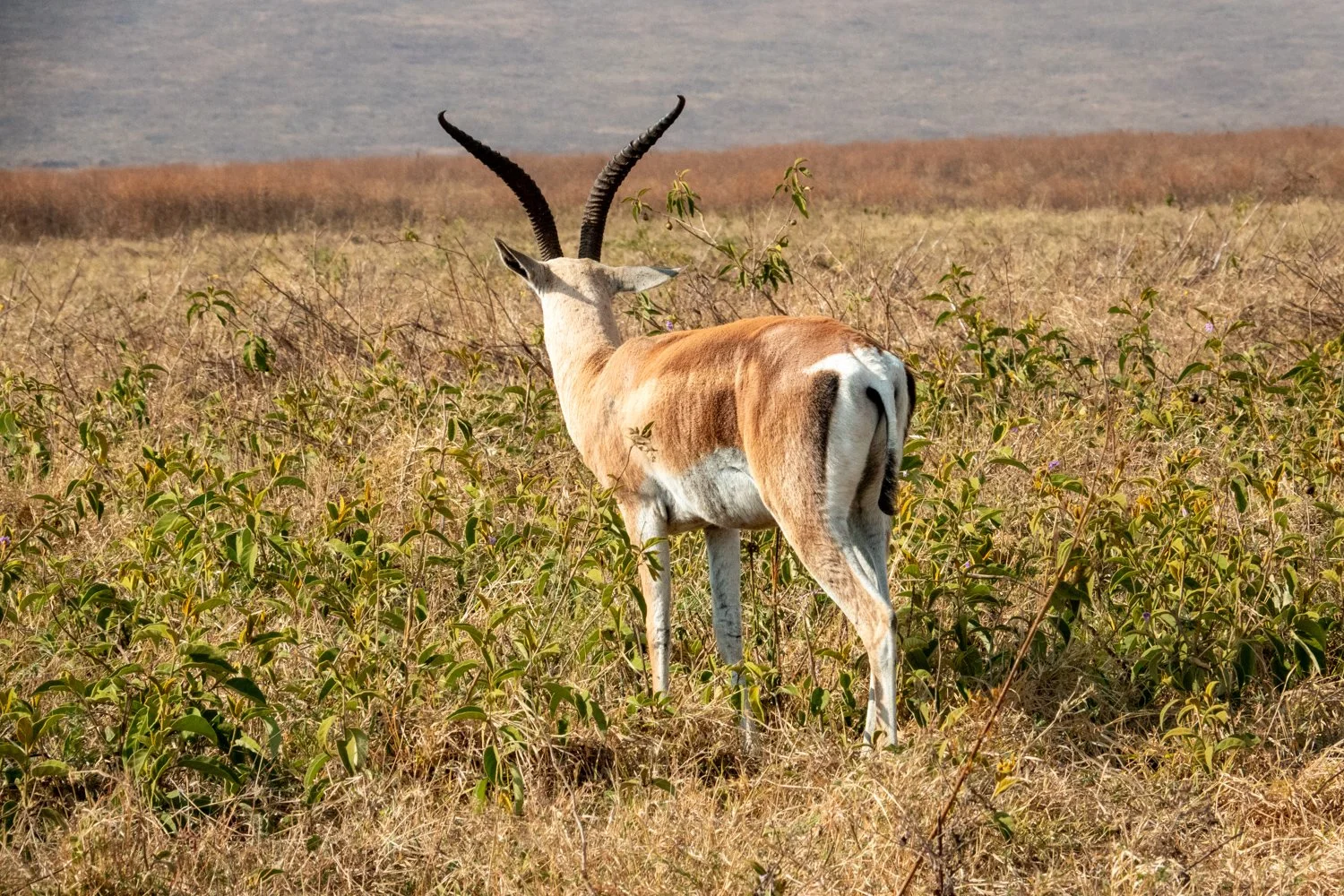
Grant’s gazelle
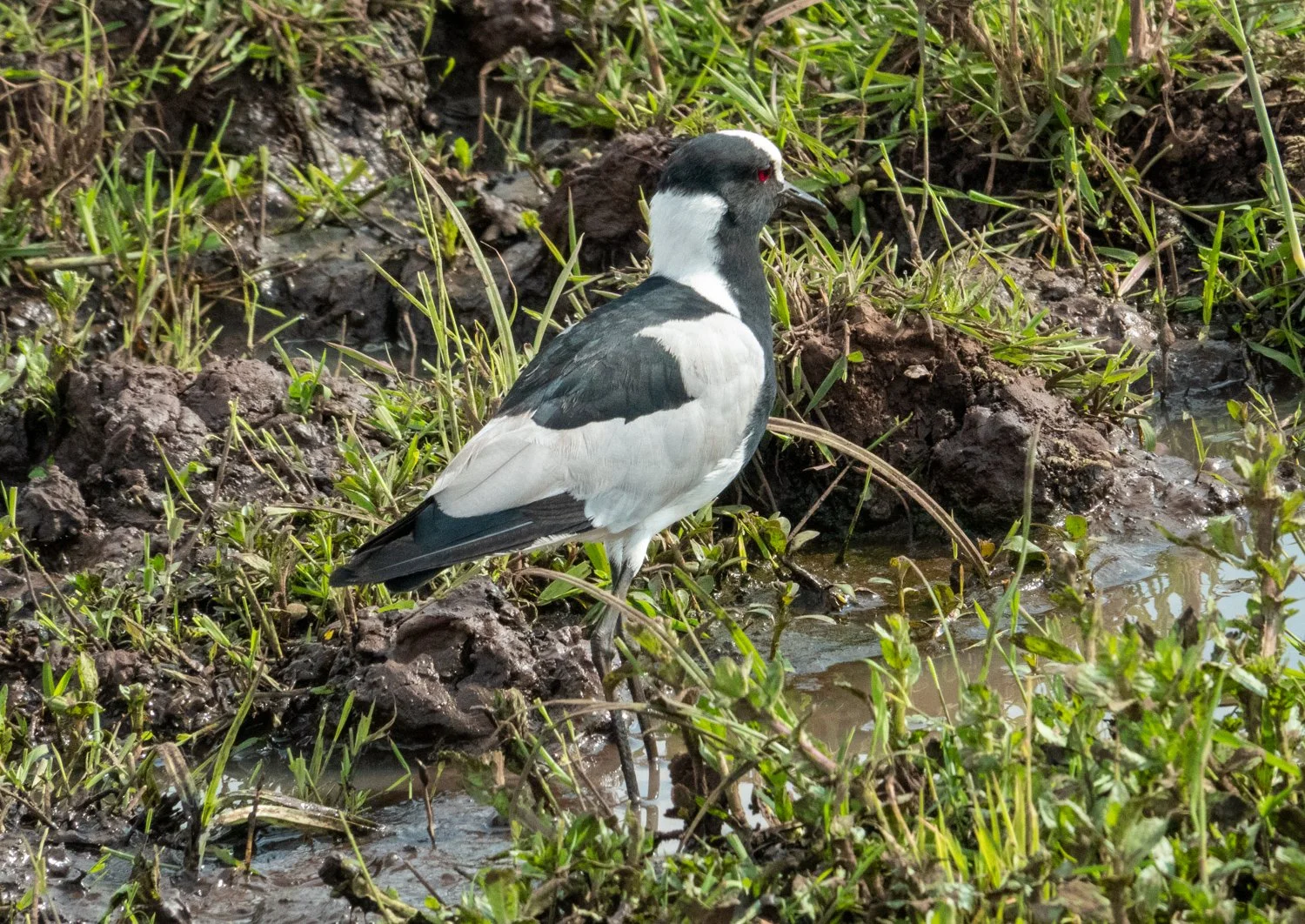
Blacksmith lapwing
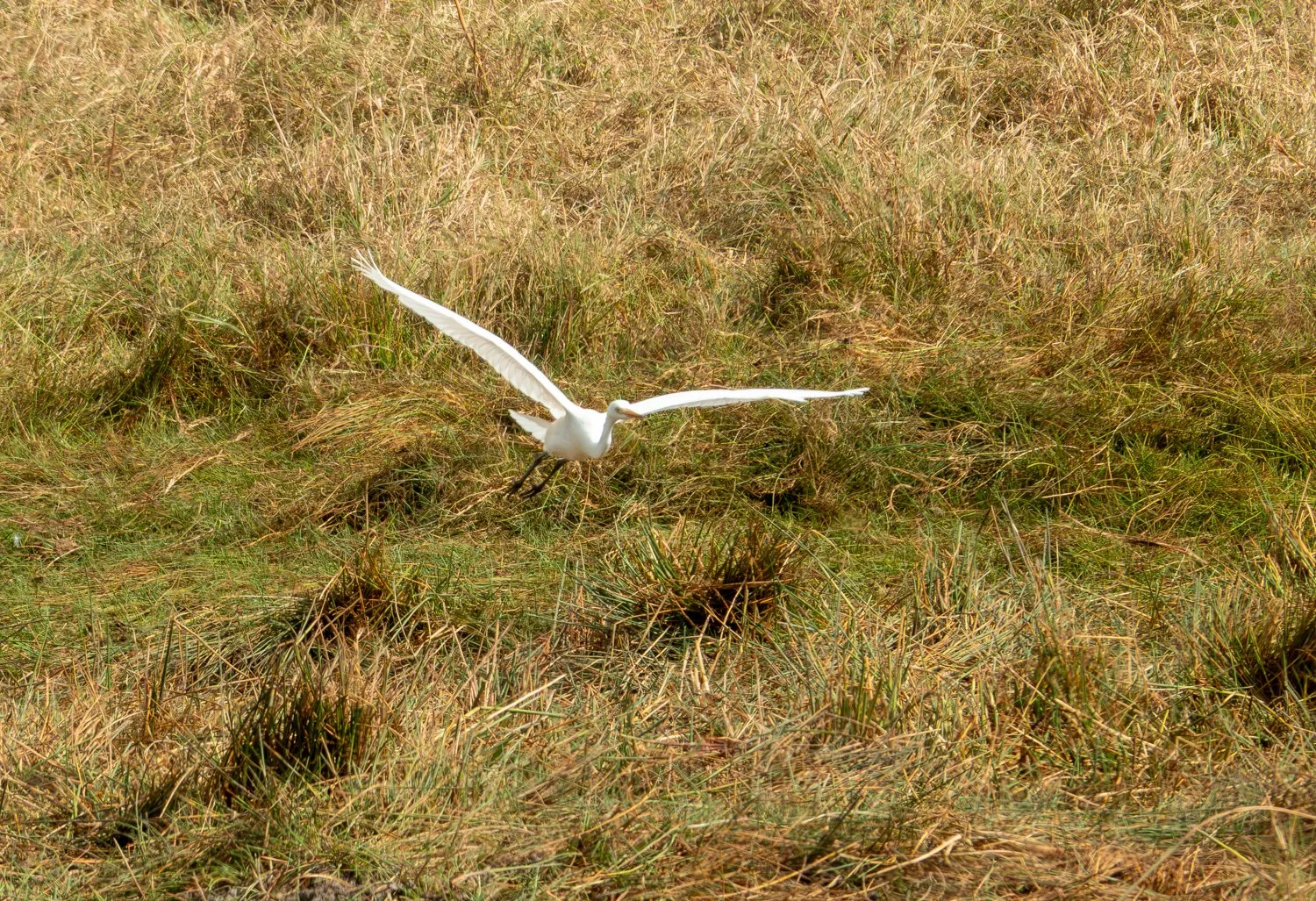
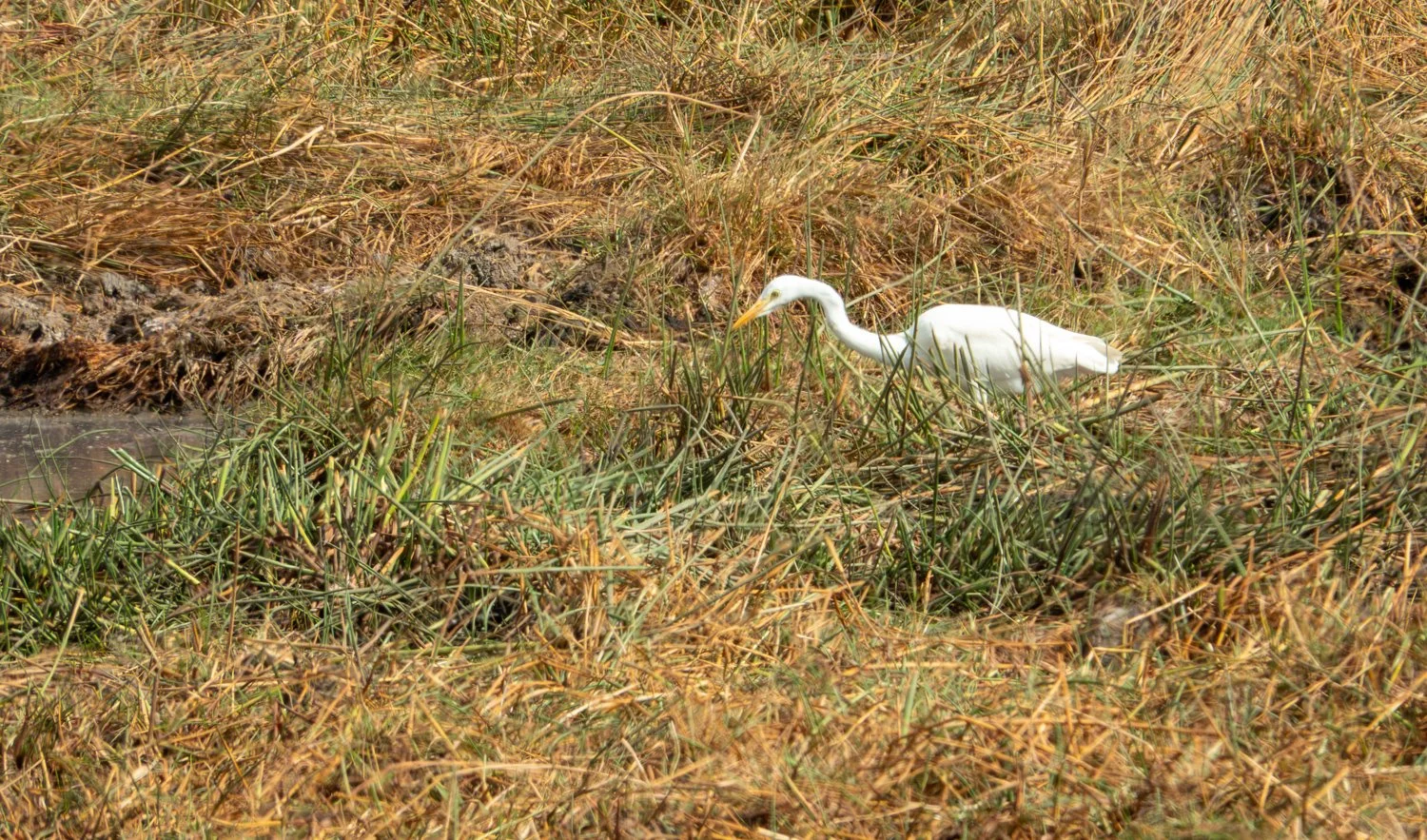
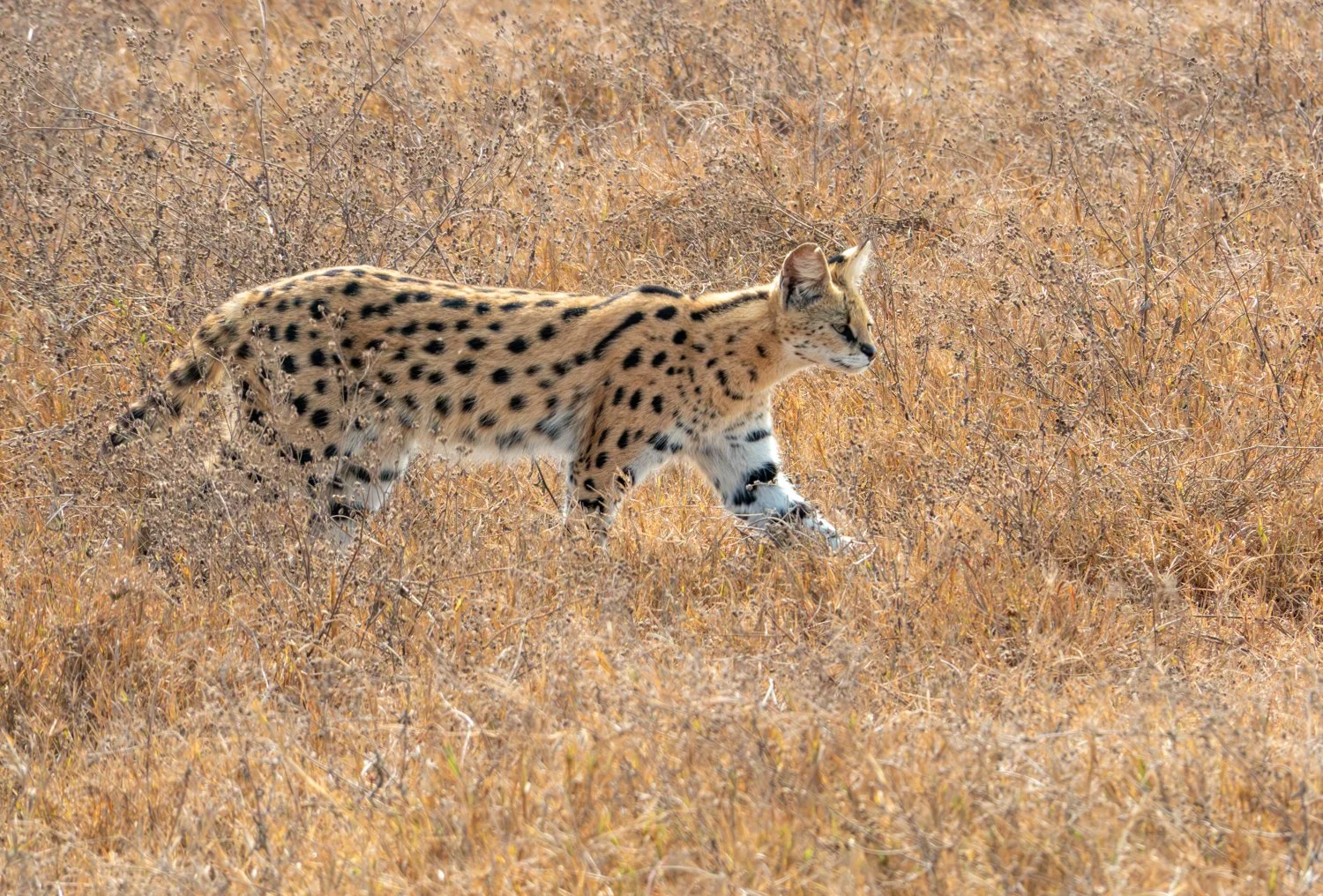
Serval cat
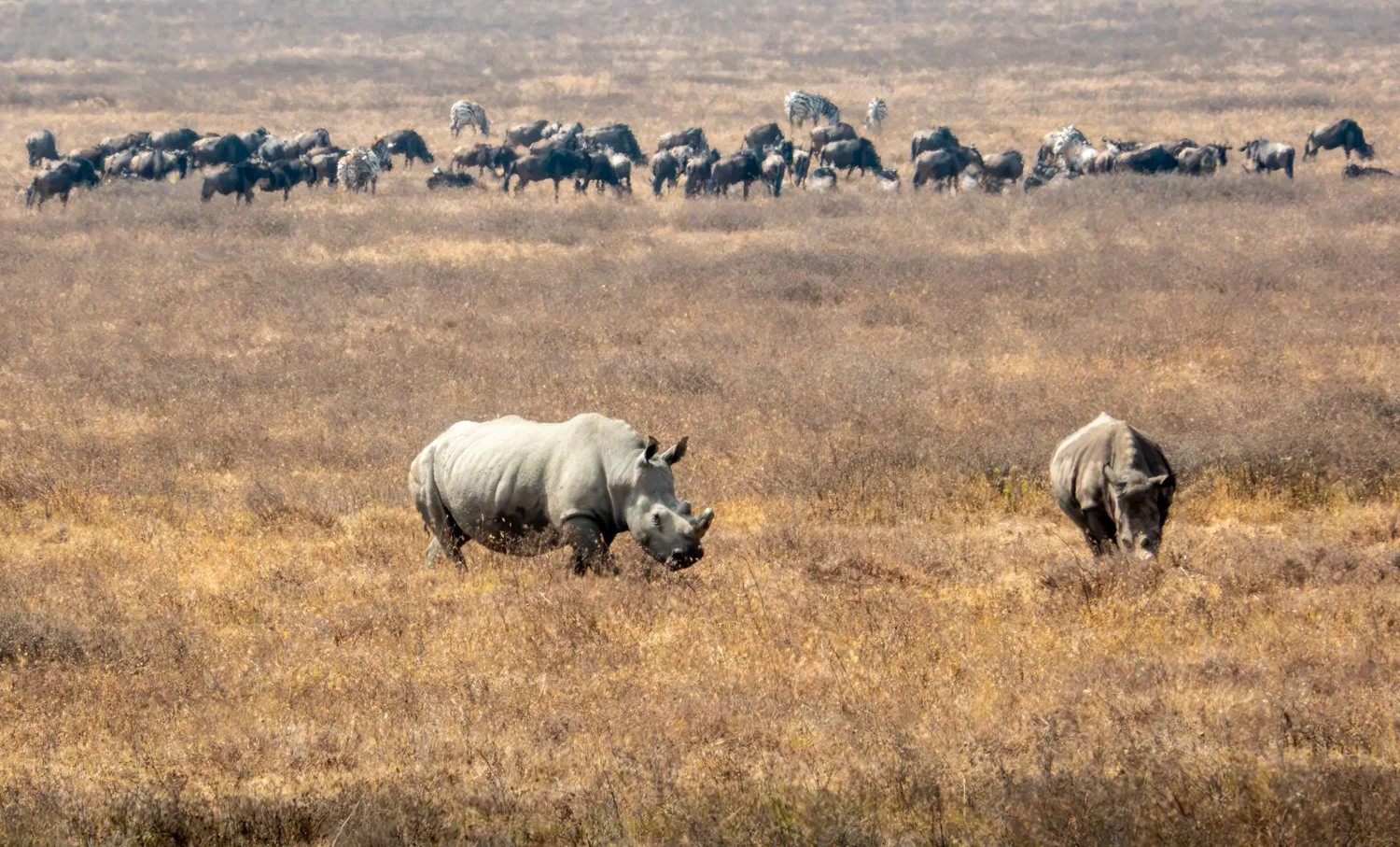
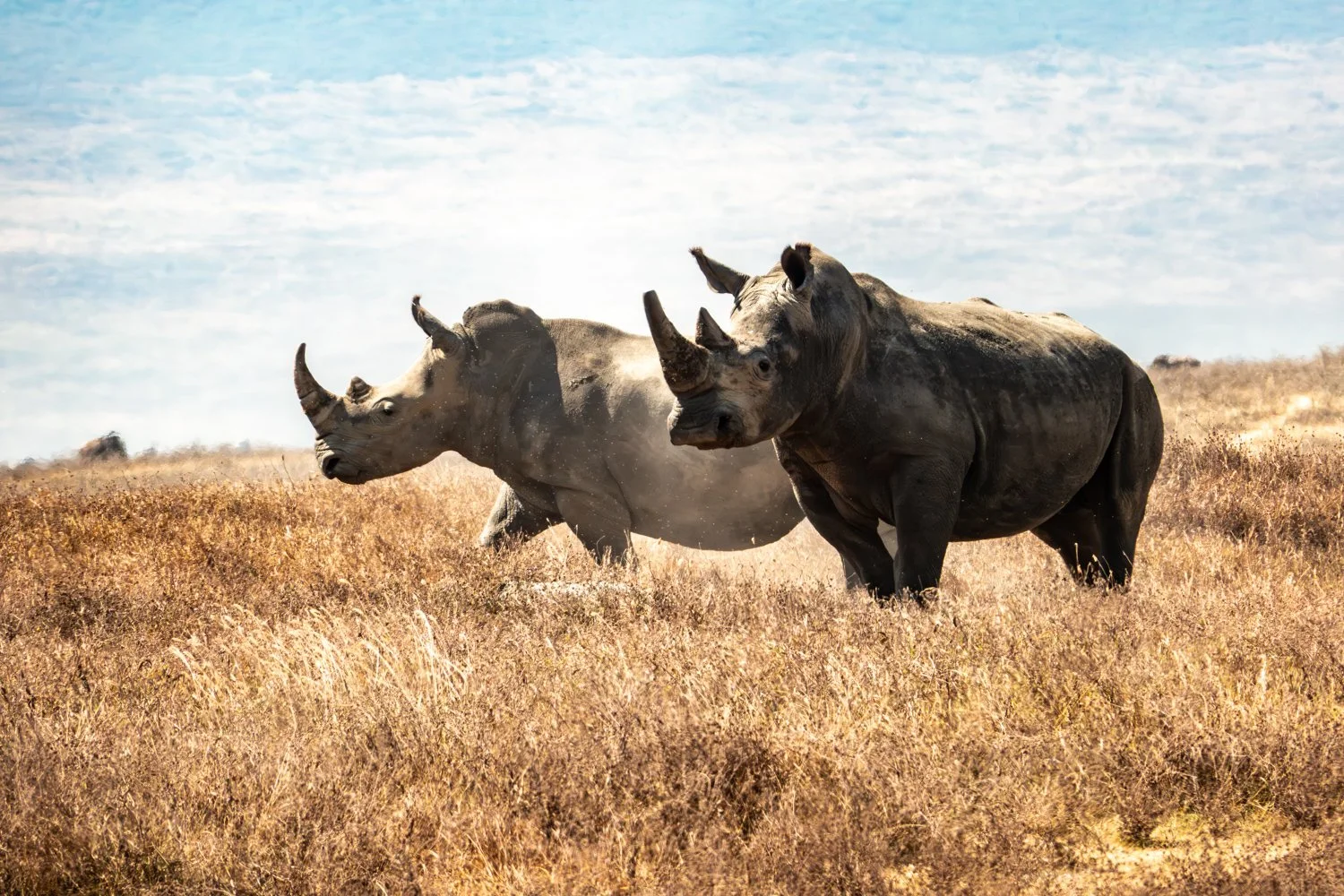
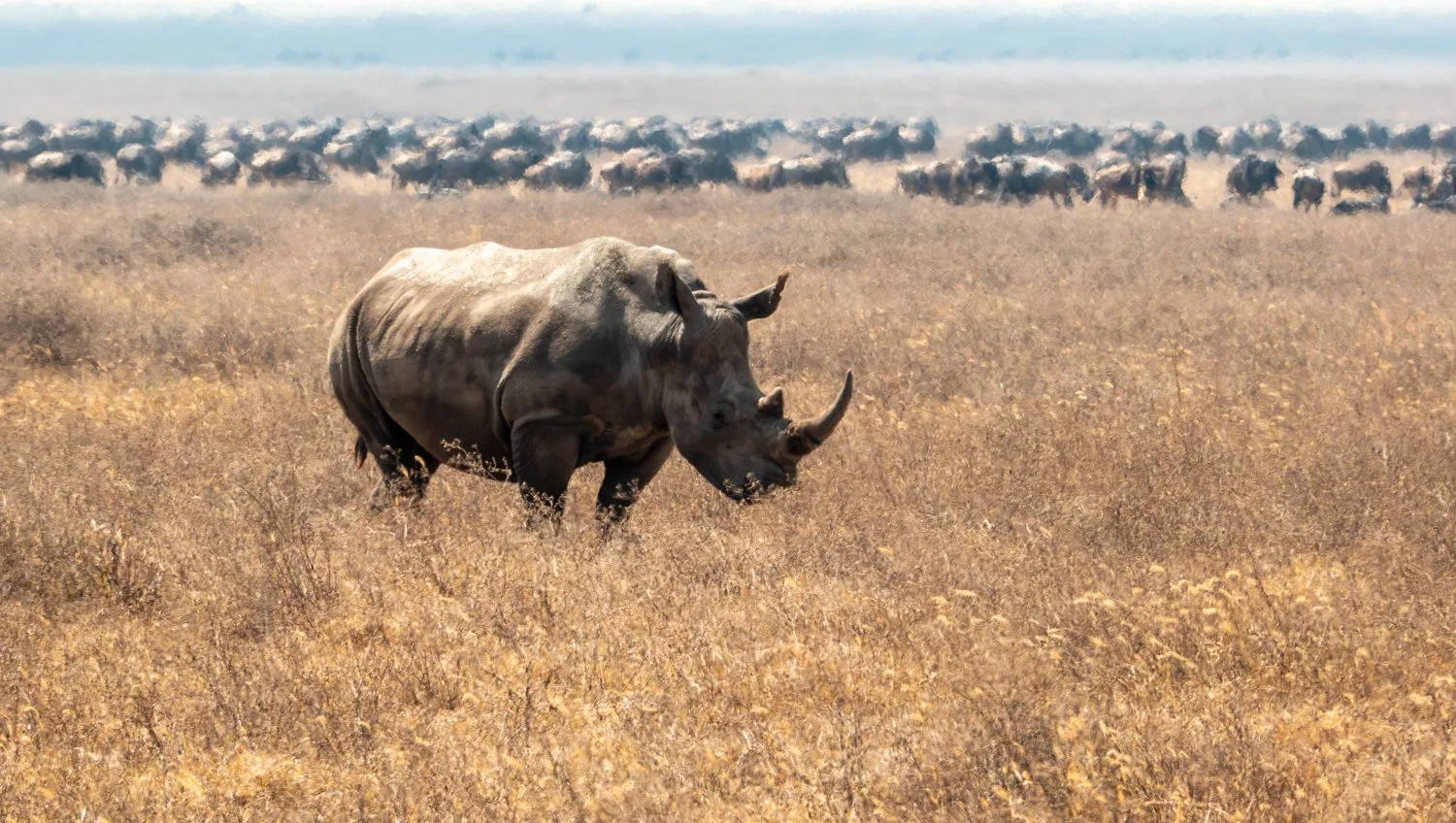
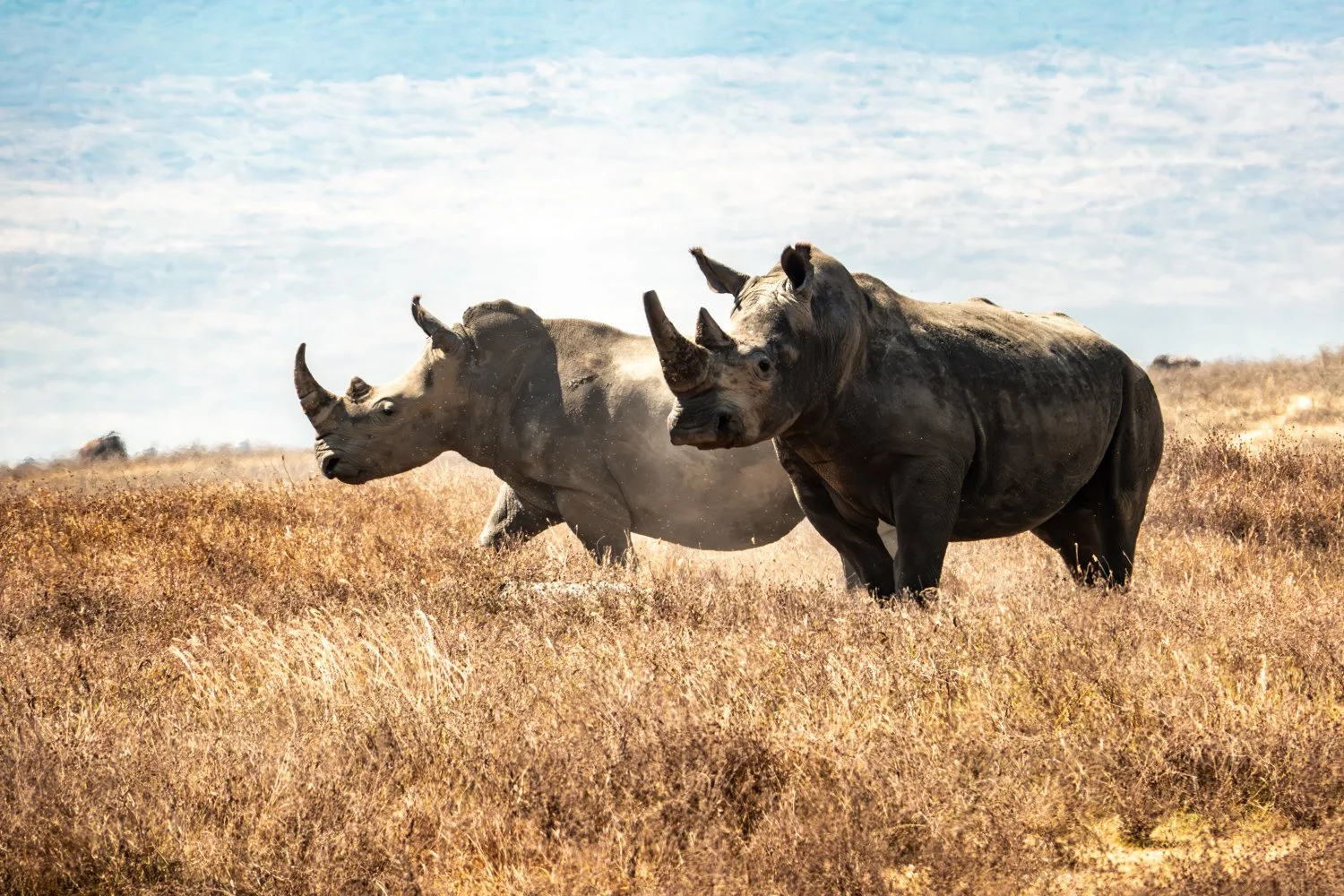
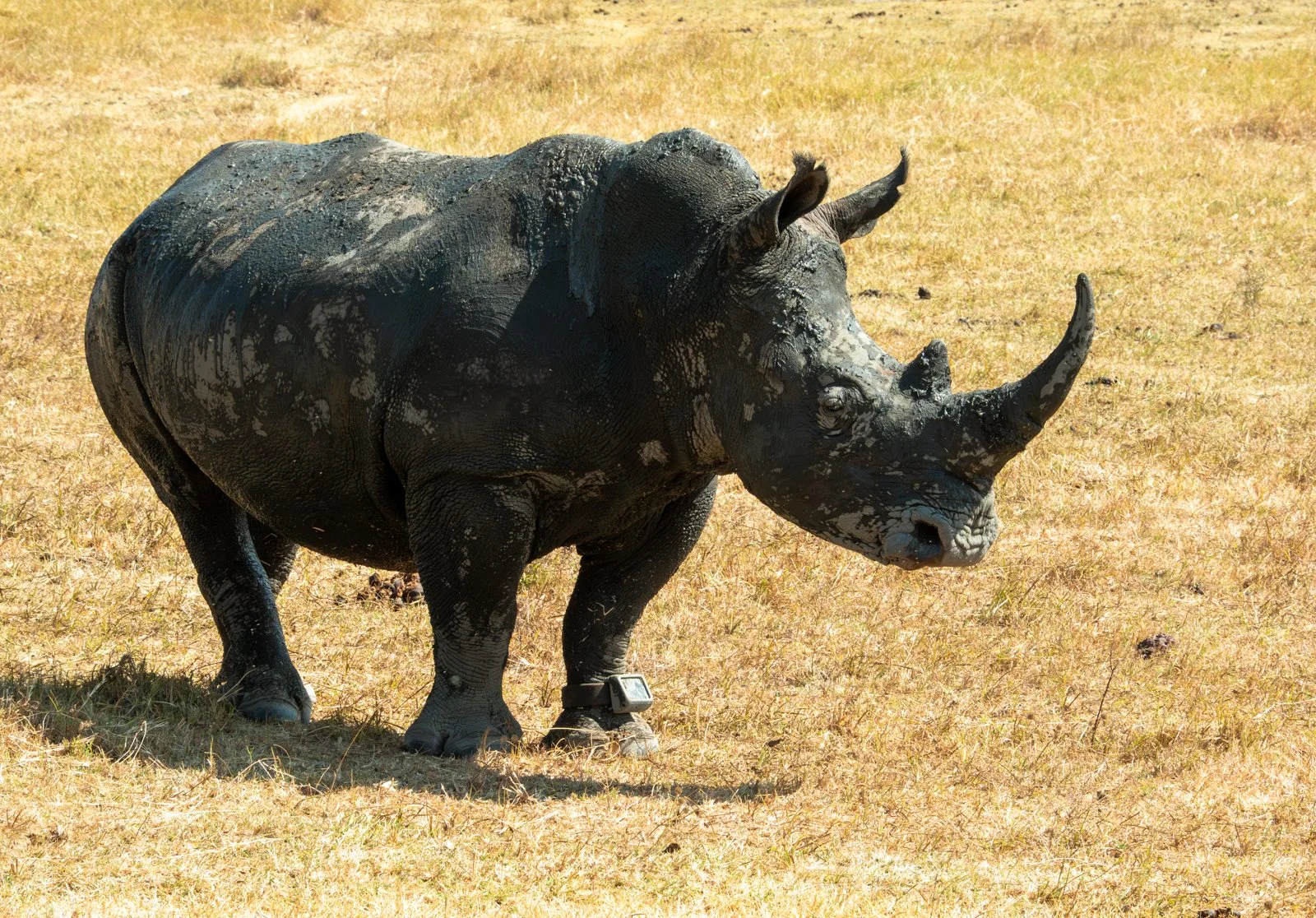
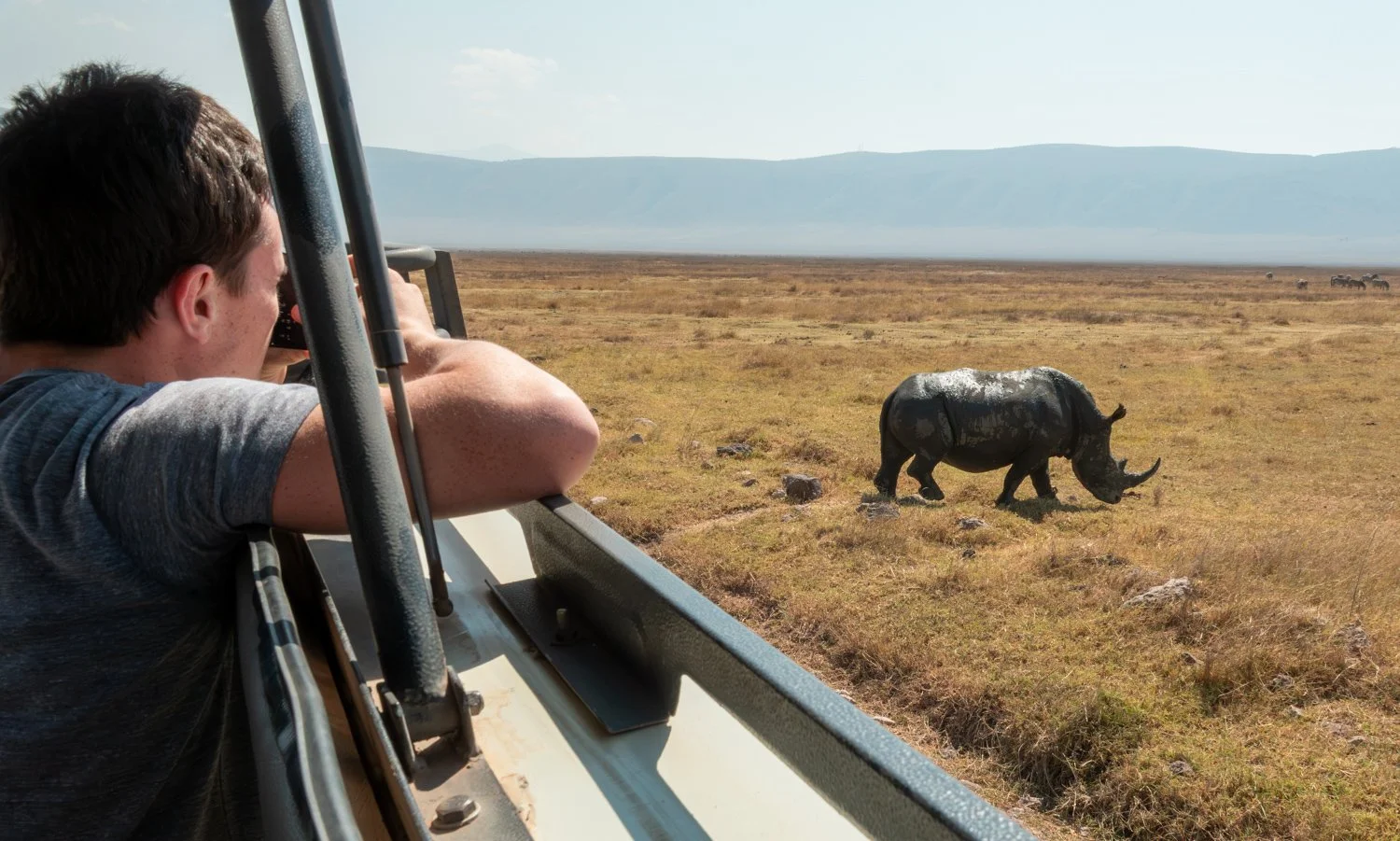
Southern white rhinos that have been transplanted to the crater successfully
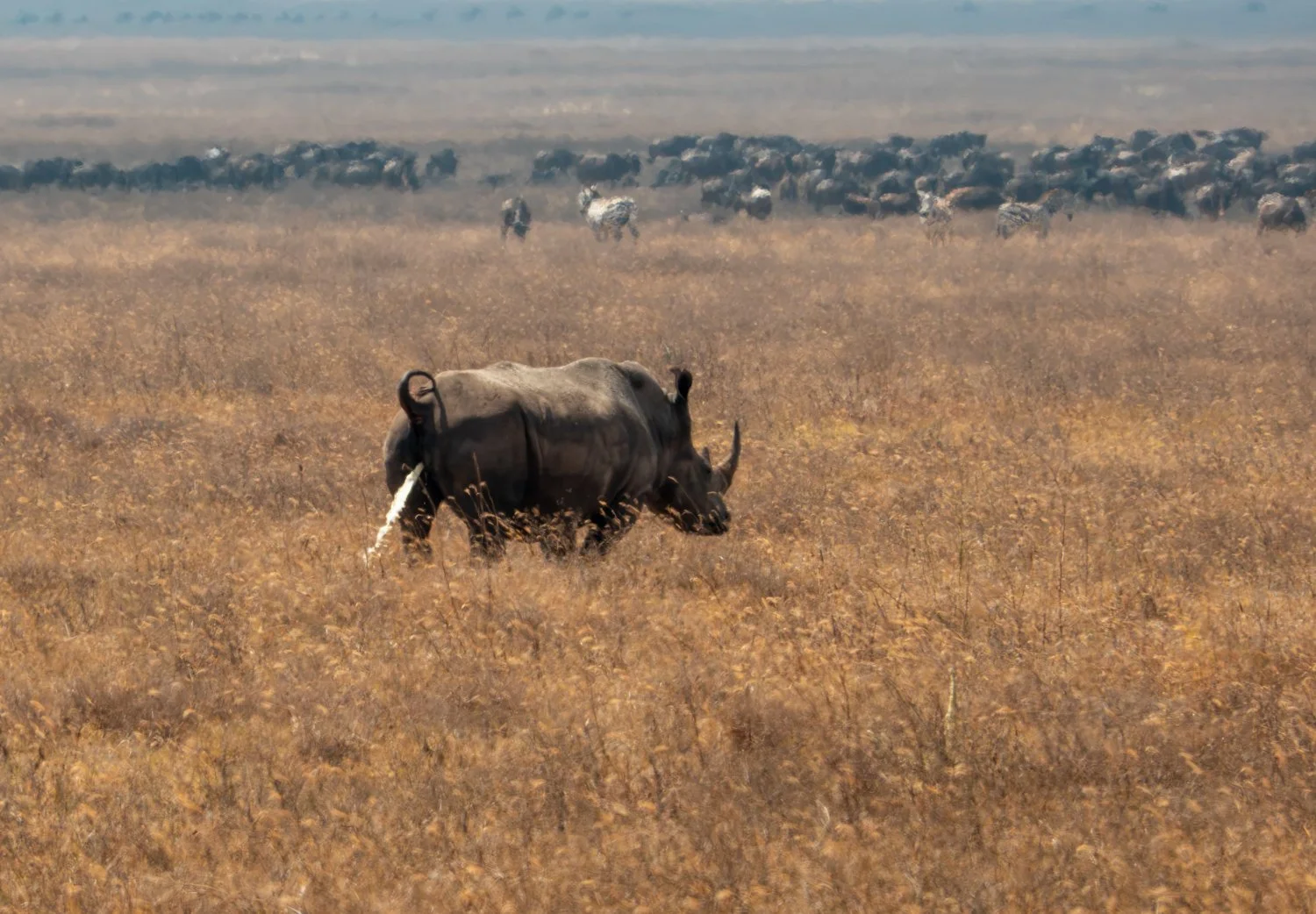
Watering the plains
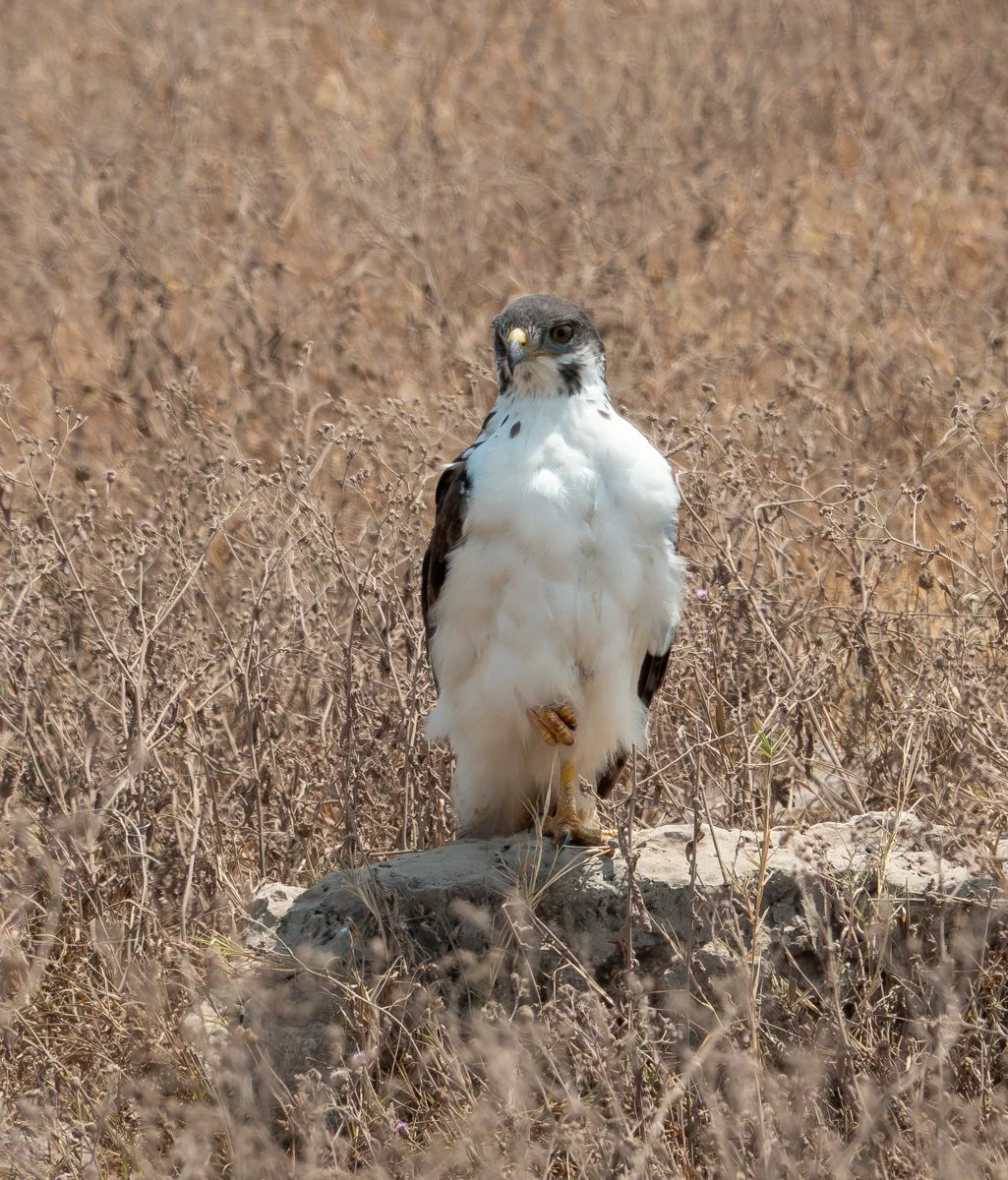
Augur buzzard
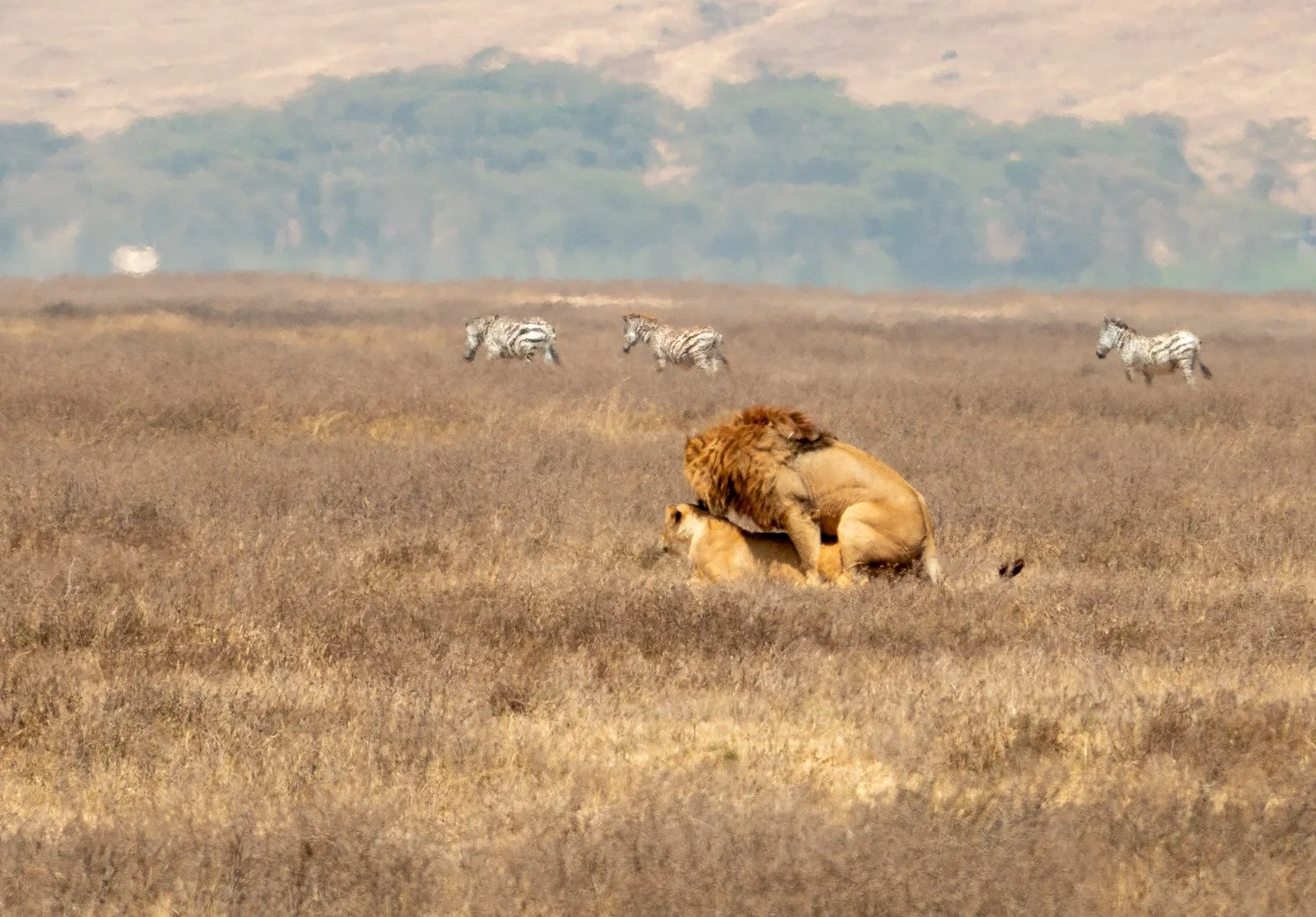
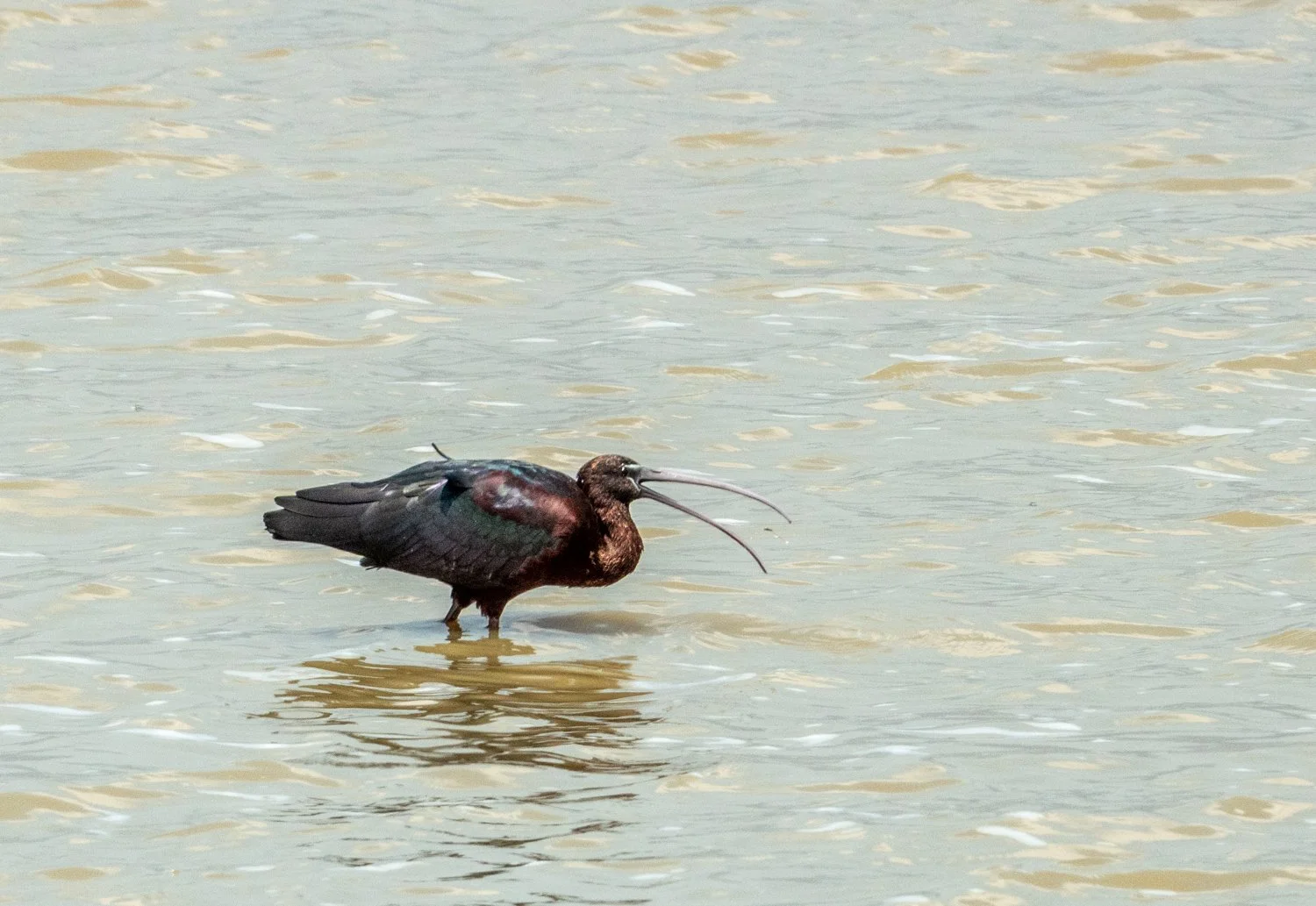
Glossy ibis
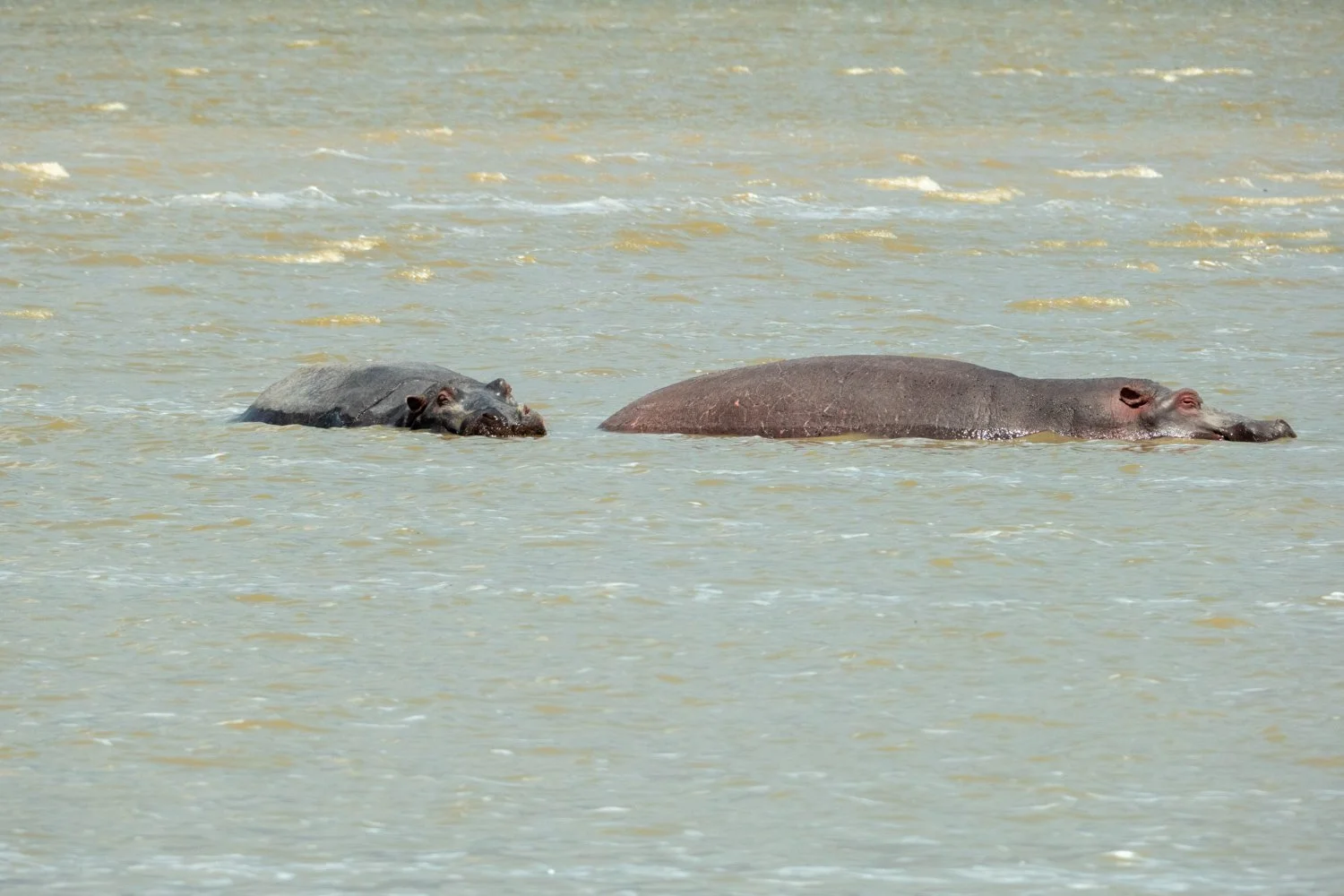
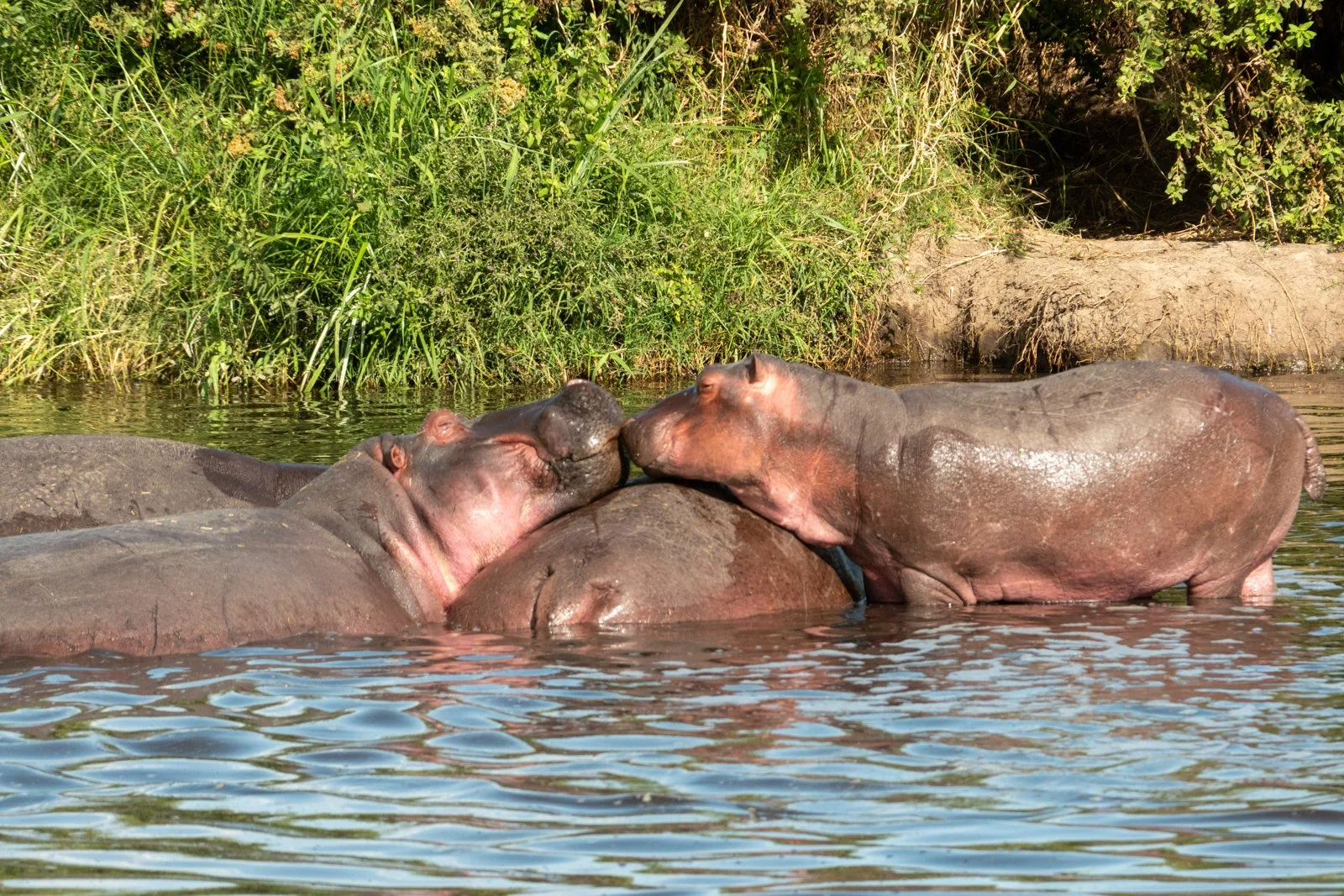
Hippos
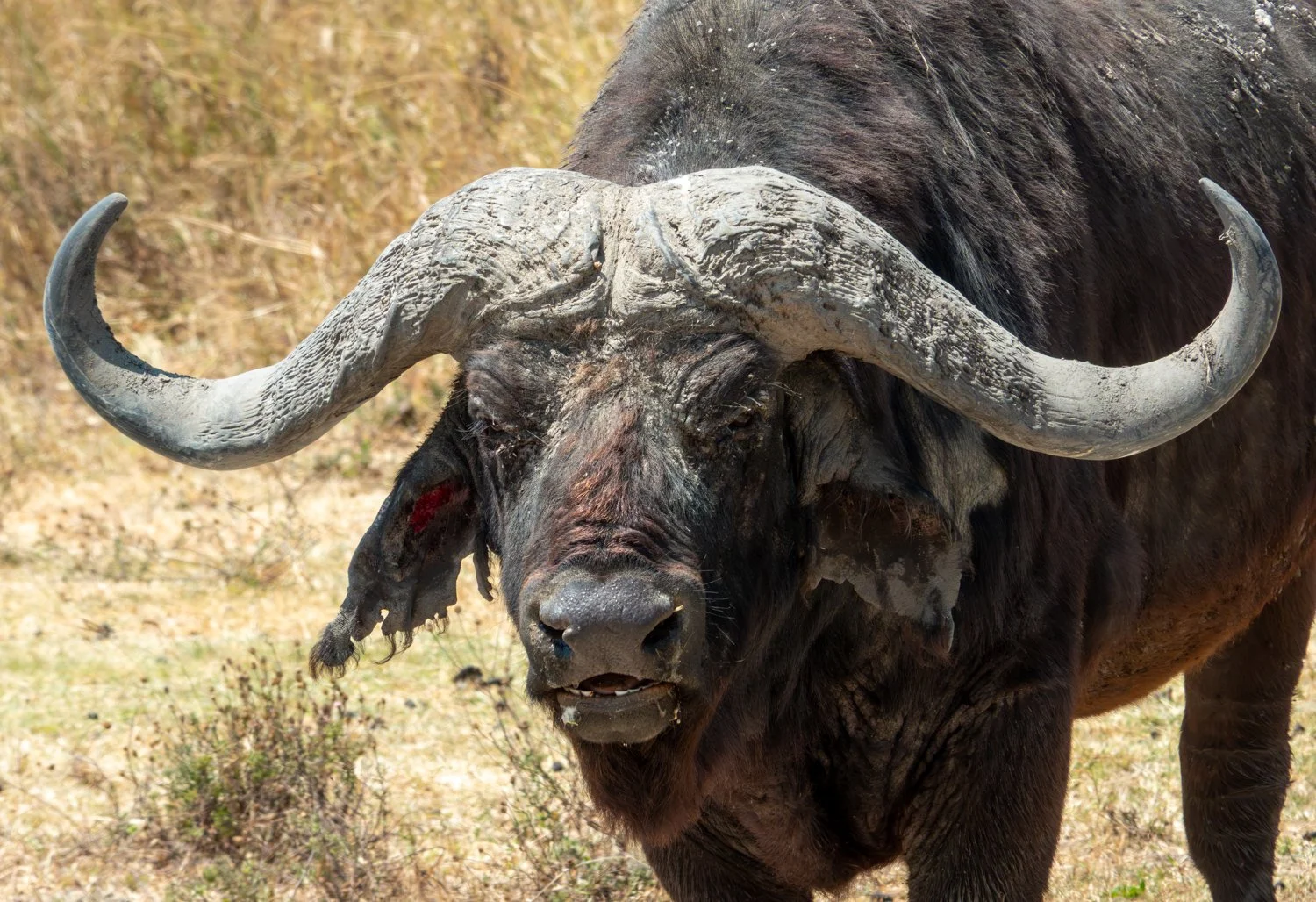
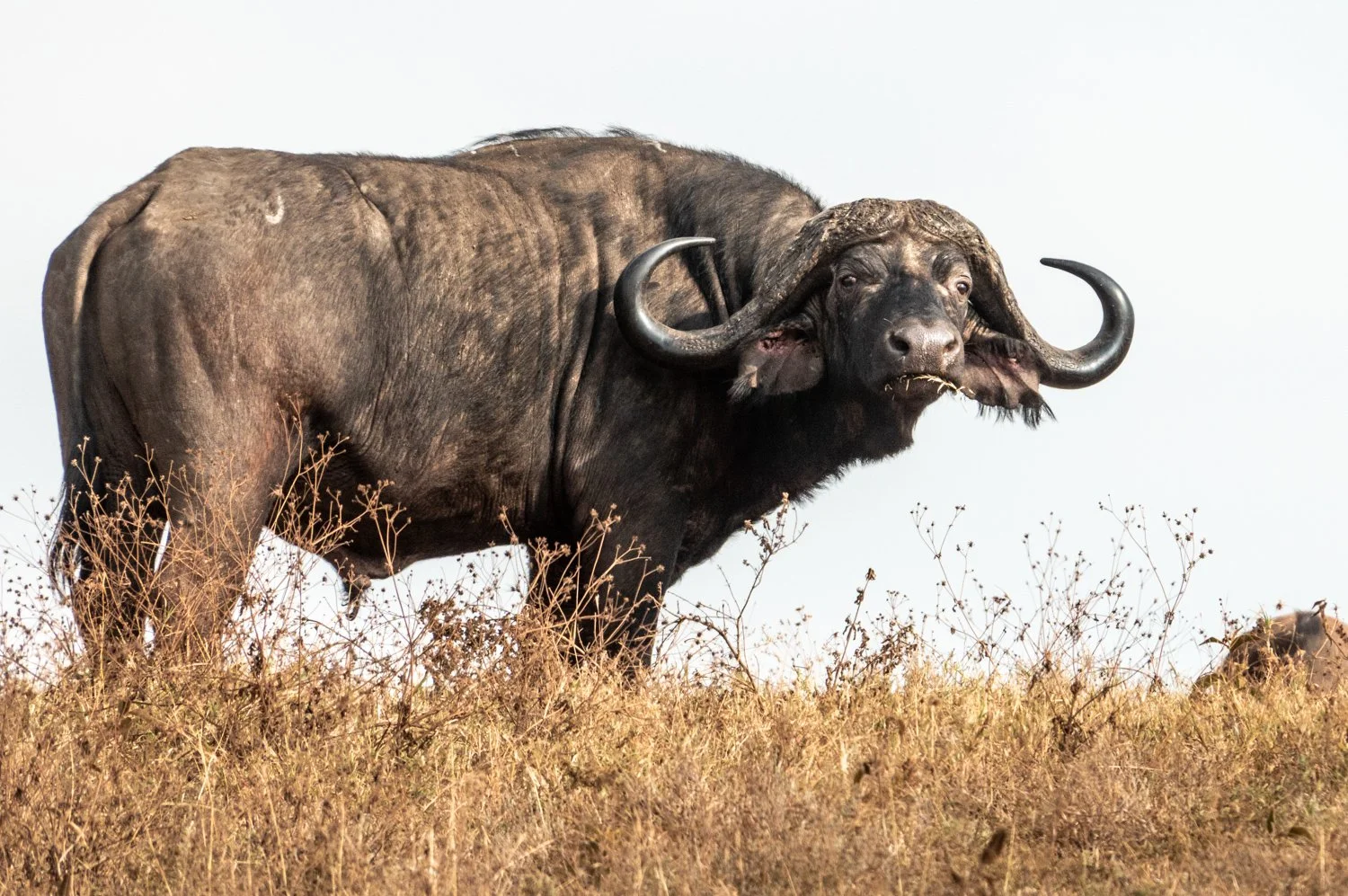
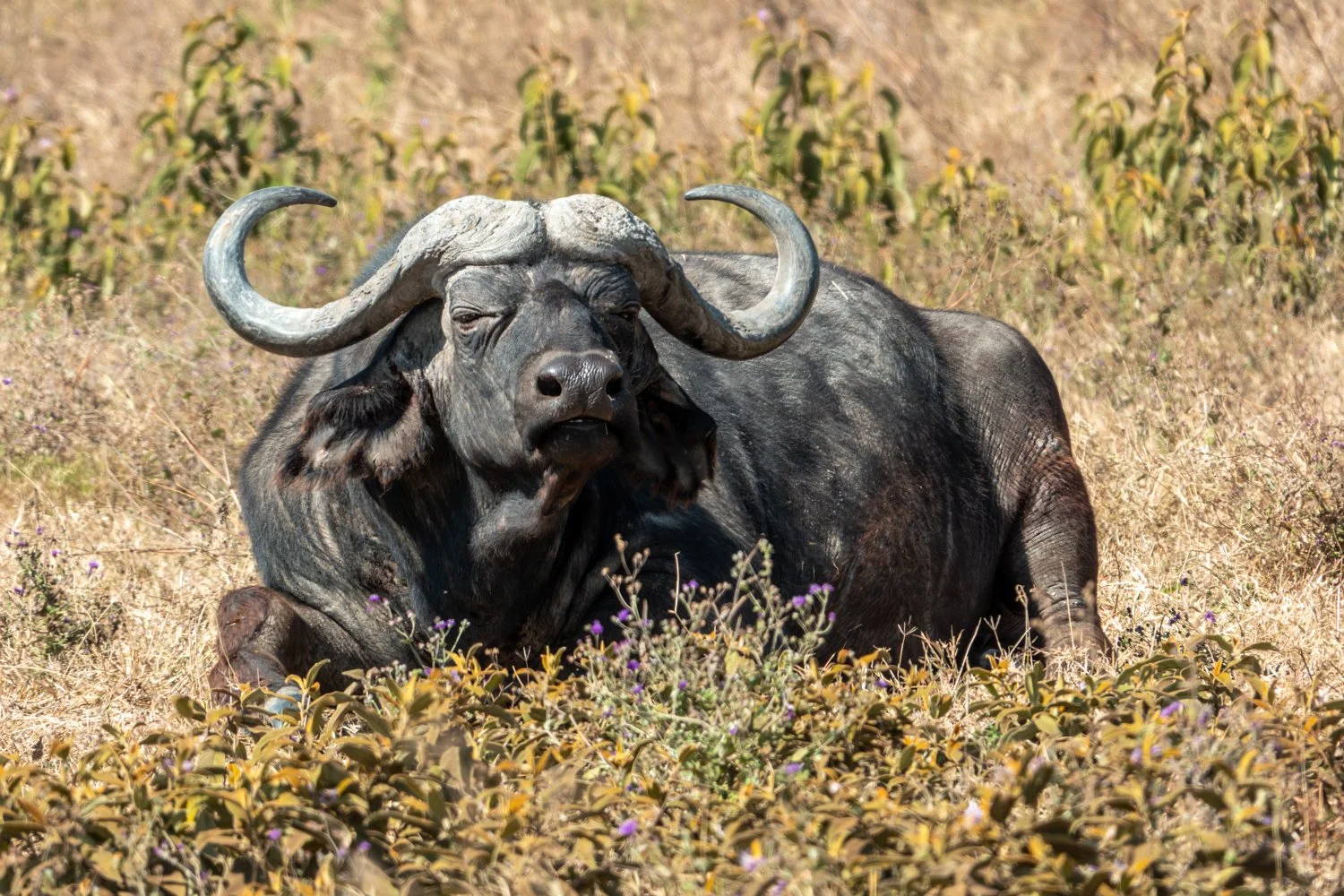
Cape buffalo
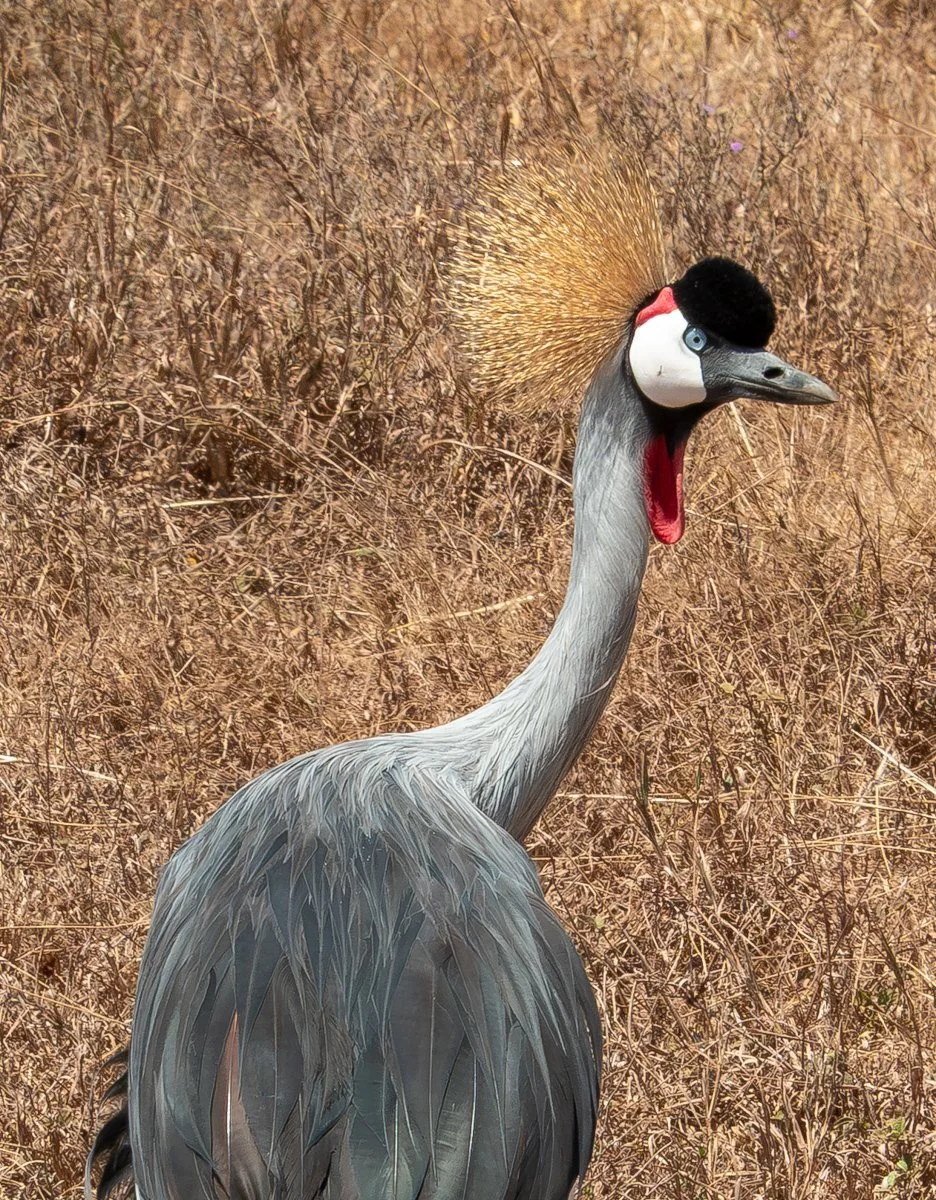
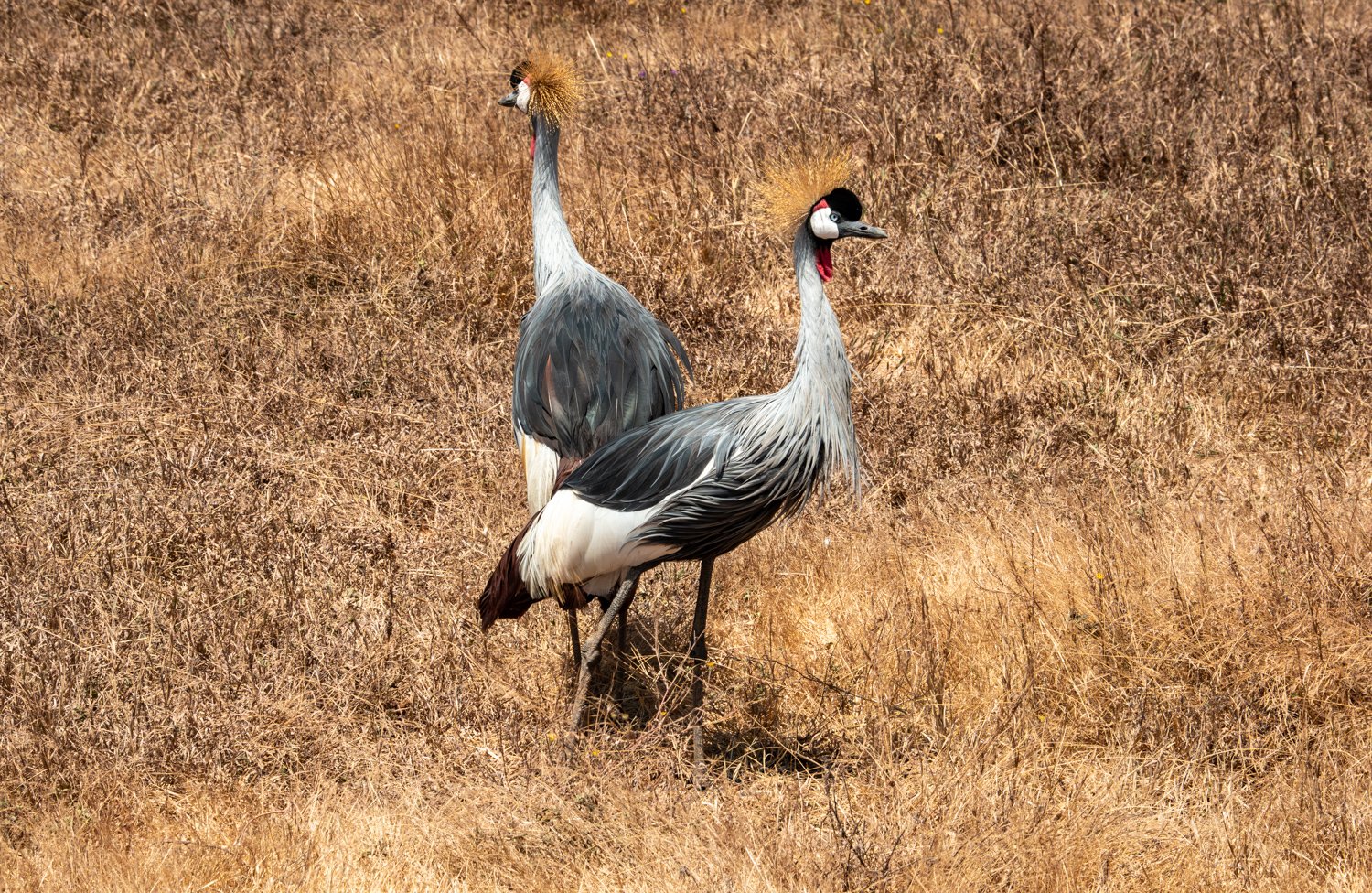
Grey crowned crane
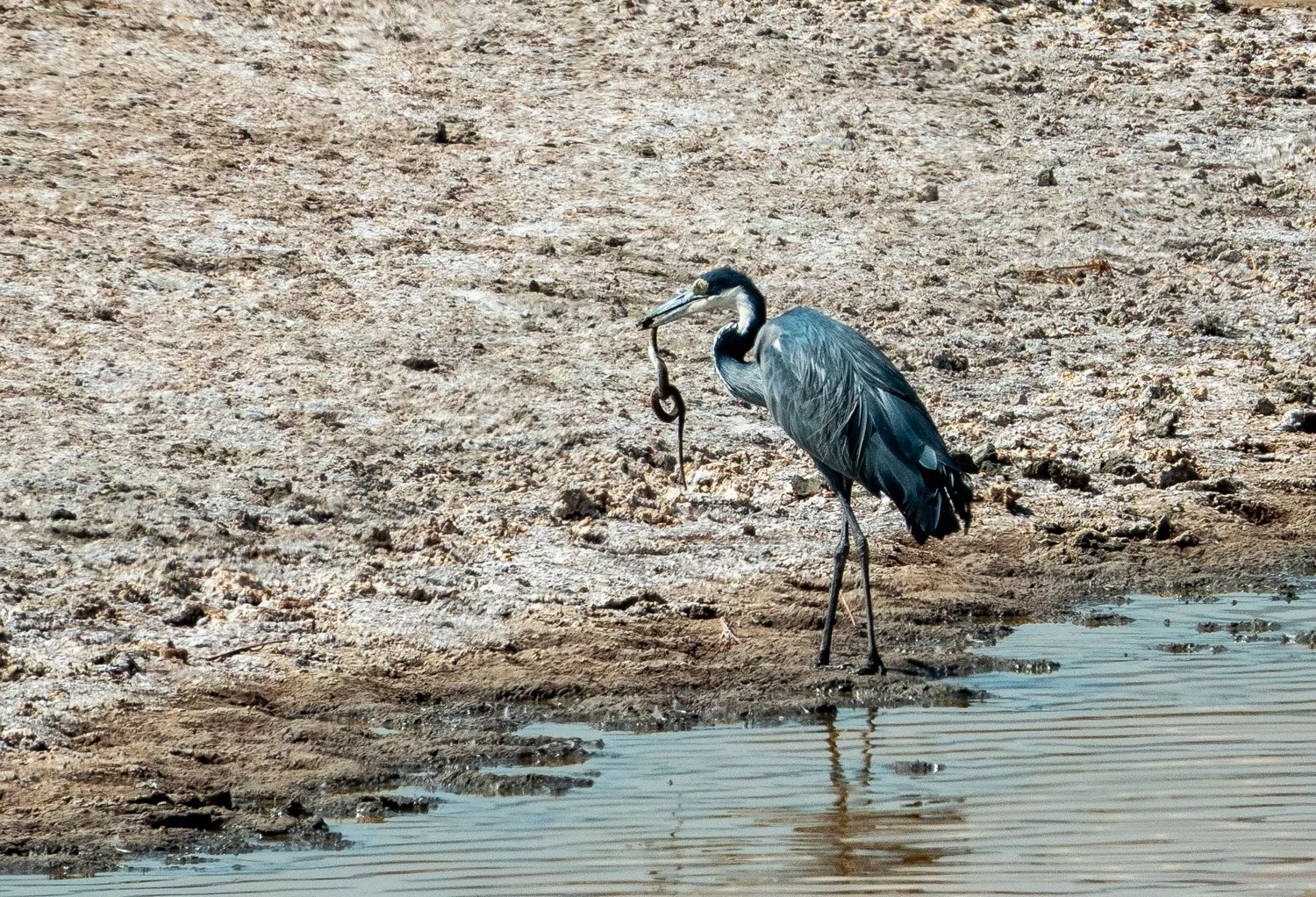
Great blue heron with lunch
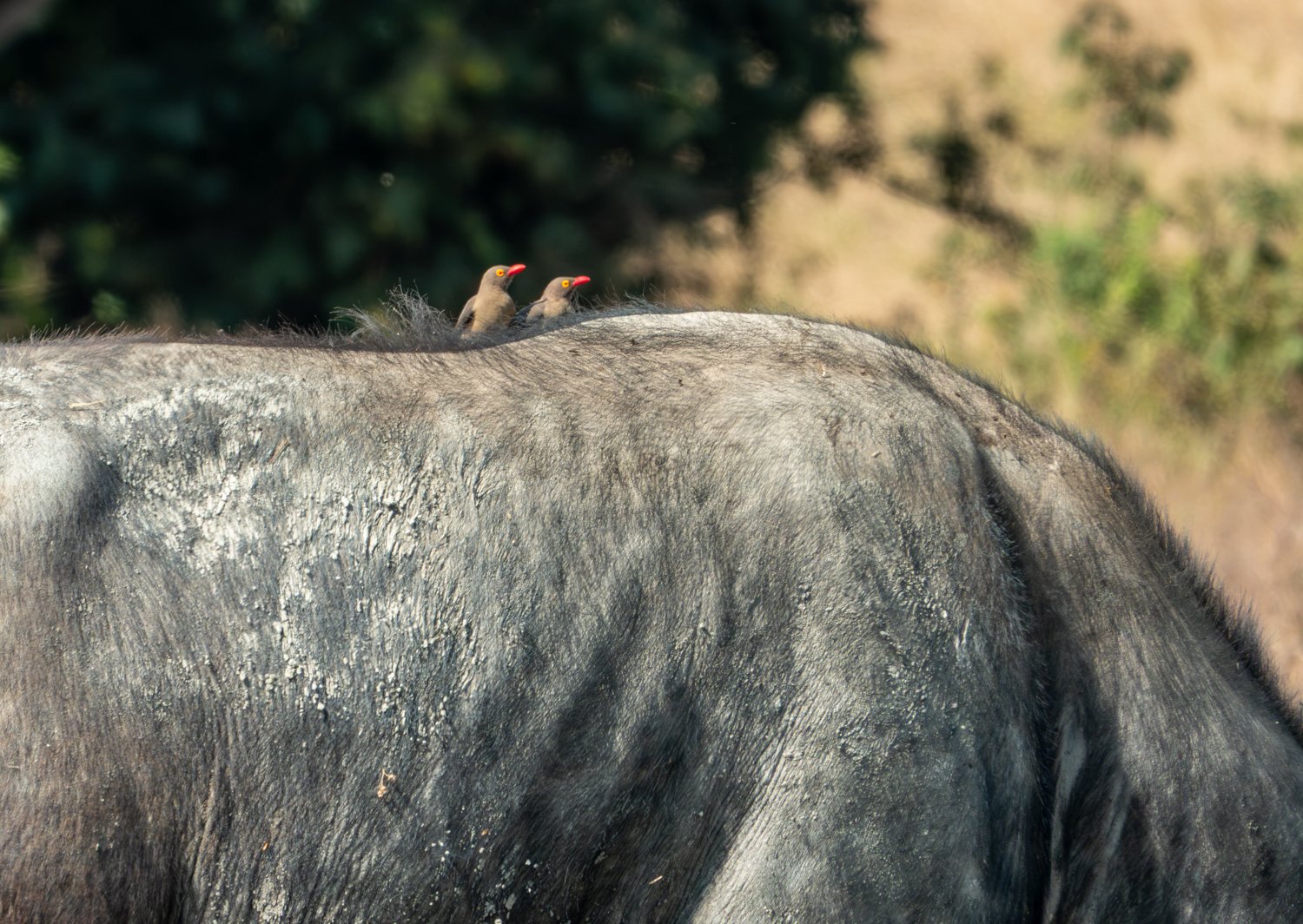
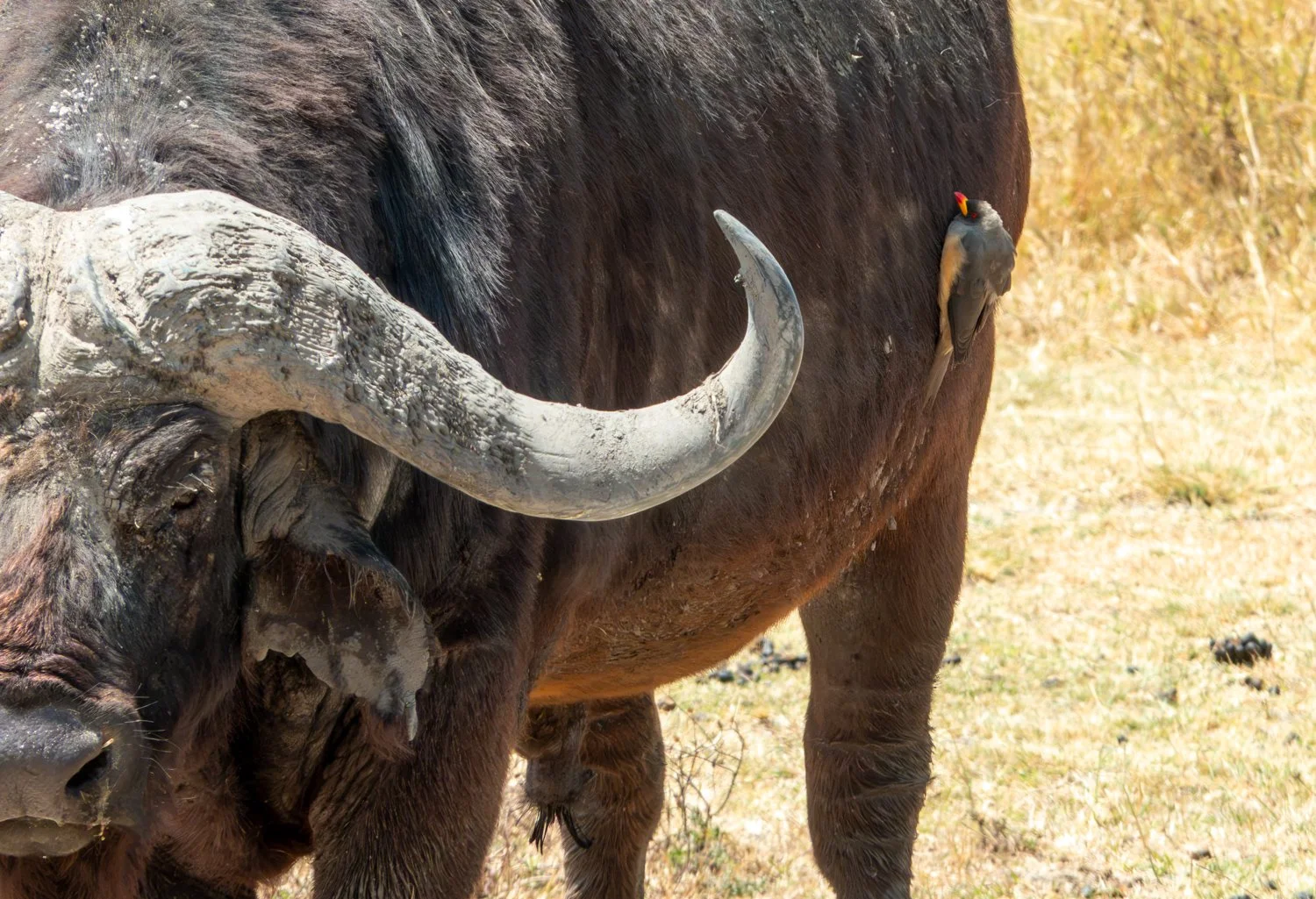
Red-billed oxpeckers on the back of a cape buffalo